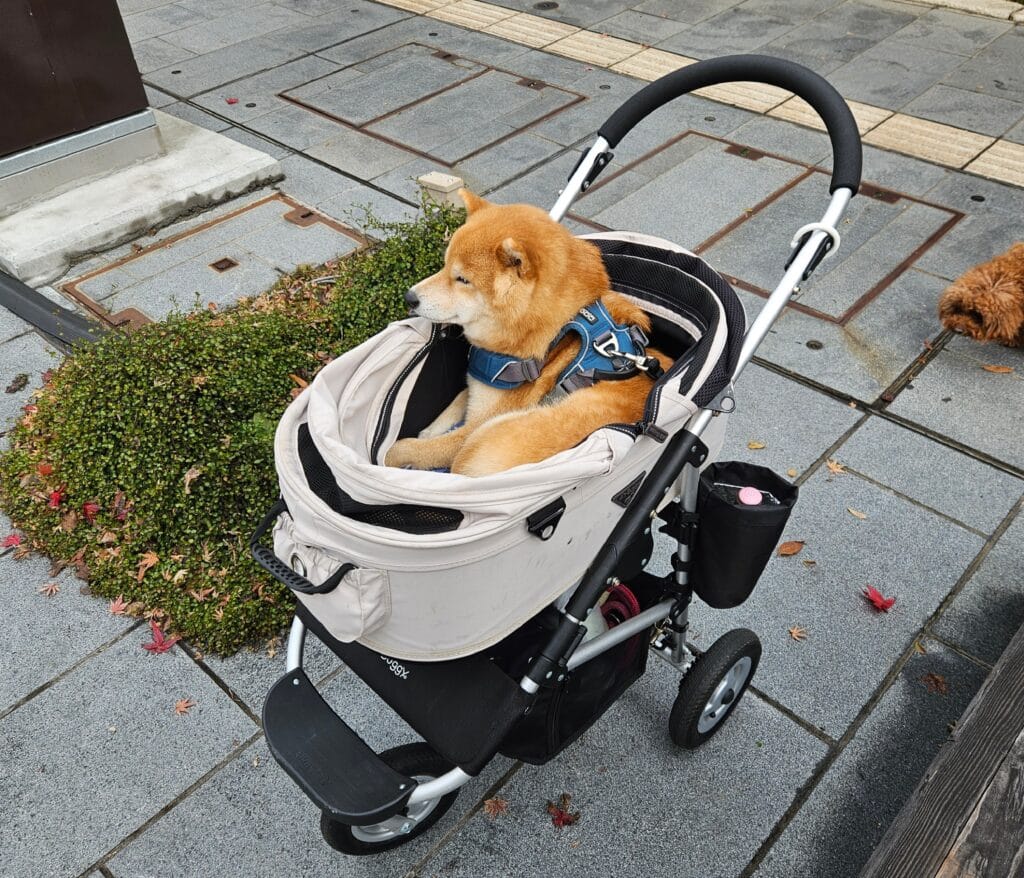
During a recent trip to Nagano, Japan, we noticed something both unexpected and genuinely heartwarming. Dogs, especially Shiba Inus, were being pushed through the streets in strollers. At first, it felt like a novelty. As the days passed, it became clear this was not an isolated moment. Throughout Nagano, we encountered dog strollers repeatedly, far more often than we ever had in other destinations.
The dogs appeared calm and comfortable, sitting upright and quietly observing their surroundings as locals went about their day. Many of the strollers were clearly designed with pets in mind, featuring mesh panels, padding, and storage for supplies. This raised a natural question. Why are dog strollers so common in Japan? Is this simply a passing trend, or does it reflect something deeper about Japanese culture and daily life?

We saw the same phenomenon later in Tokyo at the Roppongi Christmas Illumination, where several dogs were dressed in festive outfits and cosplays while riding in strollers through the crowds. The setting made the practice even more striking. Large public events, bright lights, and heavy foot traffic would be overwhelming for many dogs on foot. In this context, strollers felt less like an accessory and more like a thoughtful solution that allowed pets to safely participate in seasonal celebrations.
In this article, we explore why dog strollers are so popular in Japan, including cities like Nagano where urban design, aging pet populations, and strong emotional bonds between owners and dogs all play a role. We also look at why Shiba Inus are so frequently seen in strollers and how practical considerations, cultural attitudes toward pets, and a focus on animal well-being all contribute to this uniquely Japanese sight.
By grounding these observations in firsthand travel experiences and broader cultural context, we aim to provide a clear and trustworthy explanation rather than relying on stereotypes or surface-level trends.
Dog Strollers Are Everywhere in Japan
As we walked through the city of Nagano, known for its mountain scenery, historic temples, and proximity to the famous Jigokudani Monkey Park, one detail kept catching our attention. Dog strollers were everywhere. At first, we assumed we had simply noticed a one-off moment. Maybe a senior dog, or a particularly pampered pet. But as we continued exploring, the pattern became impossible to ignore.
Whether we were walking through busy shopping streets or quieter neighborhood parks, dogs of all sizes were being pushed along in purpose-built strollers. Shiba Inus, in particular, appeared again and again. This was not limited to tourist areas or specific times of day. It seemed to be a normal part of everyday life.
Seeing a Shiba Inu calmly sitting in a stroller was undeniably charming, but it was also striking how relaxed the dogs appeared. Known for their alert expressions and independent personalities, these dogs seemed comfortable and secure, taking in the surroundings without signs of stress. The strollers were clearly practical rather than decorative, offering shade, padding, and ventilation that made them feel more like mobile resting spaces than novelty items.
As endearing as the sight was, it raised a genuine question. Why was this so common? Was it simply a visual trend unique to Japan, or was there a practical and cultural reason behind it? The consistency of what we observed suggested something deeper than aesthetics, pointing toward thoughtful pet care, urban living realities, and the strong emotional bond many Japanese owners have with their dogs.
How Japan Views Pets
To understand why dog strollers are so common in Japan, it helps to look at how pet ownership is viewed more broadly. In many Japanese households, pets are treated as close family members rather than simply animals kept for companionship. This approach is reflected in the time, attention, and financial resources many owners are willing to invest in their pets’ comfort and well-being.
In contrast to countries where dogs are often expected to spend time outdoors or serve functional roles, Japanese pet ownership tends to emphasize daily care, emotional connection, and quality of life. This mindset has contributed to a wide range of pet-focused products and services, including specialized food, grooming salons, clothing, and strollers designed specifically for dogs.
Practical factors also play an important role. In densely populated cities such as Tokyo and Nagano, living spaces are often compact, and many residents live in apartments without private outdoor areas. As a result, daily walks and outings require navigating busy sidewalks, public transport, and crowded commercial districts. For elderly dogs, dogs recovering from illness, or smaller breeds that tire easily, long walks are not always realistic.
Within this context, dog strollers serve a clear and practical purpose. They allow owners to include their pets in everyday activities while reducing physical strain and exposure to stress. Rather than limiting a dog’s experiences, strollers often expand them, making it easier for pets to accompany their owners safely through urban environments. The combination of cultural values around attentive pet care and the realities of city living helps explain why dog strollers have become such a familiar sight across Japan.
The Practical Reasons for Dog Strollers
Beyond cultural attitudes toward pets, there are also clear practical reasons why dog strollers are so common in Japan. In cities such as Tokyo and Nagano, public transportation plays a central role in everyday life. Trains and buses are often the most efficient way to get around, but traveling with pets comes with specific rules.
On most forms of public transportation in Japan, dogs are required to be fully contained in a carrier or stroller. This policy helps maintain cleanliness, safety, and comfort for all passengers, especially during busy commuting hours. Loose pets are generally not permitted, regardless of size or temperament. As a result, pet owners who rely on trains or buses often need a secure way to transport their dogs.
In this context, dog strollers are not simply a lifestyle choice. They are a practical solution that allows owners to move freely while complying with transportation regulations. A stroller makes it easier to navigate stations, transfer between lines, and travel longer distances without causing stress to the dog or inconvenience to others. For many pet owners, especially those without access to a car, a dog stroller becomes an essential part of daily life rather than an optional accessory.
This practical necessity helps explain why dog strollers are so visible in Japanese cities and why their use feels both normal and purposeful rather than excessive.
For smaller breeds and older dogs, a stroller provides a safe and comfortable way to get around without the risk of exhaustion or sensory overload. In Japan’s dense urban areas, where narrow sidewalks and constant foot traffic are common, strollers offer dogs a protected space where they can rest while still taking in their surroundings. This reduces the chances of them being accidentally bumped or overwhelmed in a crowd.
Busy city environments can be challenging for many pets, particularly dogs that are sensitive to noise or unfamiliar movement. Long walks through crowded streets are not always suitable, especially for senior dogs or those with health limitations. A dog stroller helps ease these challenges by limiting physical strain and reducing stress, allowing pets to remain calm while their owners go about their daily routines.
Rather than isolating dogs from the outside world, strollers often make urban life more accessible for them. They provide a balance between safety and exposure, which is why they have become a practical and widely accepted solution for pet owners in Japanese cities.
Why Shiba Inus Love Strollers: Comfort and Style
Among the many dogs we saw riding in strollers during our trip, the Shiba Inu stood out most often. As one of Japan’s most iconic dog breeds, Shiba Inus are widely loved for their alert expressions, confident posture, and independent temperament. Seeing them calmly settled in strollers may seem surprising at first, but there are several practical reasons why this pairing makes sense.
From a physical standpoint, Shiba Inus fall into the small-to-medium size range, which can make long walks challenging under certain conditions. Their thick double coat offers insulation but also makes them more sensitive to temperature extremes. Hot, humid summers and cold winter months can quickly become uncomfortable, especially during extended outings. In these situations, a stroller provides a safe place to rest while still allowing the dog to accompany its owner.
Carrying a Shiba Inu for long periods is not always realistic, particularly in crowded areas or during travel that involves public transportation. A stroller offers a more sustainable alternative, reducing strain for both the dog and the owner. This is especially helpful in busy urban environments where frequent stops, crowds, and noise can quickly become tiring.
There is also a lifestyle element at play. Dog strollers in Japan are often thoughtfully designed and visually appealing, and many owners see them as a practical extension of daily life rather than a novelty. Shiba Inus, with their fox-like appearance and expressive faces, naturally draw attention, and some owners enjoy combining functionality with personal style. In this sense, the stroller serves both as a comfort tool for the dog and a reflection of the owner’s care and pride.
Taken together, these factors help explain why Shiba Inus are so commonly seen in strollers. The practice is less about pampering and more about adapting to climate, city living, and a strong focus on the dog’s overall well-being.
The Emotional Bond: Why Pet Owners Choose Strollers
One of the most important factors behind the widespread use of dog strollers in Japan is the strong emotional connection many owners have with their pets. Dogs are often treated as close family members, and this perspective shapes how people think about daily care, mobility, and quality of life. Comfort and well-being tend to be prioritized, especially when pets are included in public outings.
For many owners, using a stroller is a practical expression of attentiveness rather than indulgence. It allows dogs to stay involved in everyday activities while minimizing discomfort or risk. Whether visiting a café, walking through a park, or navigating a busy shopping area, a stroller makes it easier for pets to remain present without being exposed to excessive physical strain or environmental stress.
This approach is particularly meaningful for elderly dogs or those with health limitations. A stroller enables them to continue experiencing familiar routines and social environments even when long walks are no longer possible. In a society where long-term care and responsibility are taken seriously, this level of consideration often extends naturally to pets as well.
Rather than separating animals from daily life, dog strollers help integrate them in a way that feels safe and respectful of their needs. This balance between emotional care and practical decision-making helps explain why strollers are widely accepted and commonly used by dog owners across Japan.
Dog Strollers in Japan: FAQ
Why do Japanese use dog strollers?
A mix of reasons: dogs must be fully contained on most public transport, cities are crowded, and many owners treat their pets as family members they want to take everywhere.
Are dogs required to be in a carrier on trains in Japan?
Yes. On most trains and buses, dogs must be fully enclosed in a carrier or covered stroller, not simply on a leash, which makes strollers a practical travel solution.
Are dog strollers common across Japan?
Yes. They are a common sight in cities and towns across the country, from busy shopping streets in Nagano to events and illuminations in Tokyo.
Why are Shiba Inus so often seen in strollers?
Shiba Inus are small-to-medium dogs that tire on long city walks, and as one of Japan’s most popular breeds they are simply seen out and about very often.
Are dog strollers good for older or small dogs?
Yes. For smaller breeds and older dogs, a stroller offers a safe, comfortable way to get around without the strain of long walks or crowded, noisy streets.
Are dog strollers just a fashion trend in Japan?
Not only that. Many are stylish and thoughtfully designed, but they mainly serve practical purposes, from transport rules to crowded streets and the comfort of small or older dogs.
How does Japan view pets?
Pets are widely seen as family members in Japan, and in dense cities with small living spaces, strollers are one way owners include their dogs in daily life.
Conclusion: The Rise of Dog Strollers in Japan
Seeing Shiba Inus riding calmly in strollers throughout Nagano was undeniably memorable, but it also highlighted something more meaningful than novelty. The practice reflects a combination of cultural values, urban realities, and a careful approach to pet welfare. From navigating public transportation to managing crowded streets and seasonal weather, dog strollers serve a clear and practical purpose for many Japanese pet owners.
Rather than being used purely for convenience or aesthetics, strollers often function as a tool that allows dogs to remain part of everyday life without unnecessary strain. They help owners balance mobility with responsibility, ensuring pets are safe, comfortable, and included in shared experiences. This is especially important for senior dogs, small breeds, or those sensitive to noise, crowds, or temperature changes.
What stands out most is how this practice reflects the relationship between people and their pets. Dog strollers are not just about transport. They signal attentiveness, long-term care, and an understanding of a dog’s physical limits. In this context, seeing Shiba Inus and other breeds enjoying a stroller ride feels less like a trend and more like a practical expression of thoughtful ownership.
Ultimately, the question is not simply why dog strollers are used in Japan, but what they reveal about everyday life. They illustrate how deeply pets are integrated into family routines and how care, consideration, and inclusion shape even the smallest details of daily movement through the city.
Author

Get My Personal Travel Maps


Leave a Reply