After living in Tokyo for over 3 years, I’ve put together this guide to the best things to do in Tokyo, not the usual copy-paste list, but places I actually go to, eat at, and bring my visiting friends and family to. You’ll find everything from drinking sake in tiny Golden Gai bars to quiet temples, hidden gardens, and the weird side of the city that most tourists never see. I marked which experiences are completely free, because Tokyo can be enjoyed on any budget.
For art and music lovers, read about the Ryuichi Sakamoto exhibition in Tokyo, a remarkable journey through the late composer’s world of sound.
Looking for a souvenir with a story? Try Akoya pearls, and open your own from a pearl vending machine in Akihabara.
Heading to the old capital? See my pick of the best places to visit in Kyoto, from Fushimi Inari to Gion.
For old-school Tokyo nightlife, don’t miss Golden Gai in Shinjuku, a maze of tiny character-filled bars.
Some of these 28 spots are famous for good reason; others are local secrets I only discovered after years of living here. Beyond sightseeing, I also cover where to eat and where to go at night, for me, that’s where Tokyo really comes alive. If you want to dig deeper into the traditions behind these places first, start with my guide to Japanese culture.
One honest warning before you go: in Japan, English will only get you so far, even in Tokyo, the country has one of the lowest English proficiency rates in the world. Don’t let that stop you: I wrote a guide to traveling in Japan without speaking Japanese that covers everything you need. And with Japanese tourism set to change significantly over the next few years, now is genuinely a good time to visit.
Planning to stay longer than a vacation? Check my guide on Japan’s immigration policy.
1. Drink Habushu and Sake from Masu Boxes in Golden Gai

One of my favorite nightlife areas in Tokyo is Shinjuku, and especially Golden Gai. It’s a maze of six narrow alleys packed with around 280 tiny bars, most of them seating fewer than ten people. The area started as a post-war black market and was an illegal red-light district until prostitution was outlawed in Japan in 1958, after that, the tiny bars took over. Today it’s completely safe, and drinking your way through these alleys feels like time-traveling back to old Tokyo.
Two things to know before you go: many bars charge a small cover fee (usually 500 to 1,000 yen, often posted at the door), and a few are regulars-only, if a bar has no English sign and the master waves you off, don’t take it personally, just try the next door. Plenty of bars in Golden Gai genuinely welcome foreigners.
For drinks, I recommend whiskey, Japanese sake, properly called nihonshu, since “sake” just means alcohol in Japanese, or the special Okinawan drink habushu. Habushu is a liquor with a real habu snake inside the bottle, so it’s not for vegetarians or the faint of heart. The snake itself has no taste; it’s a cultural thing.
One of my favorite memories from Golden Gai: when I ordered nihonshu, the bartender deliberately overfilled my glass inside a masu box (a small wooden square cup) until it spilled over, a Japanese tradition to show the house isn’t stingy.
My local routine: before heading into Golden Gai, warm up at a standing bar (tachinomi) in Shinjuku. These no-seat bars are cheap, fast, and perfect for a quick drink and a small dish. Expect 300 to 600 yen drinks and a loud, local atmosphere. One drink, one dish, then move on, that’s how the locals do it.
2. Visit Shrines and Temples: Senso-ji, Kakugo Inari Shrine & Gotokuji Temple

One thing I can really recommend is adding some cultural stops to your Tokyo itinerary. If you are a fan of traditional Japanese architecture, visit Senso-ji in Asakusa, Tokyo’s oldest temple. Yes, it gets crowded, but it is famous for a reason. Go early in the morning or after sunset and you will have a completely different experience. While you are in Asakusa, Kappabashi Street is worth a short detour. It is the street where Tokyo’s restaurants buy their kitchen tools, and a Japanese chef’s knife makes a far better souvenir than anything from the airport.
Want to go off the usual route? A 15-minute walk north of Senso-ji takes you to Yoshiwara, Edo’s famous pleasure quarter and one of Tokyo’s least-known history walks.
When you think about Japanese culture, the “Lucky Cat” (Maneki-Neko) probably comes to mind. There is a Buddhist temple dedicated to it: Gotokuji Temple in Setagaya, where thousands of white cat figurines line the grounds. I like this temple because it is away from the tourist crowds. If you want to buy one of the cats yourself, like the ones you can see in my photo above, make sure you arrive early in the morning before they sell out.
My favorite hidden one is in Ginza. On the rooftop of the Ginza Six building sits the tiny Kakugo Inari Shrine. It originally protected the old Matsuzakaya department store that stood here, and when Ginza Six was built in 2017, they preserved the shrine and placed it on the roof instead of removing it. The shrine itself is small, but the rooftop garden is free to visit and the view is stunning. From up there you can take the best photos of the Uniqlo building and even spot Tokyo Skytree on a clear day.
3. Try Basashi: Japan’s Raw Horse Meat

In my home country, Switzerland, we eat horse meat, so this dish was less of a shock for me than for most visitors. Many people, especially Germans and Brits, find the idea uncomfortable at first. The Japanese eat horse, too, but mostly raw. It is called basashi, thinly sliced raw horse meat, and it is considered a delicacy here, originally from Kumamoto in southern Japan.
If you can get past the mental hurdle, basashi is surprisingly mild. The meat is lean, smooth, and slightly sweet, with none of the heaviness you might expect. It is typically served in small slices with grated ginger or garlic, soy sauce, and sometimes wasabi. It is also safer than you might think: horse meat carries a much lower risk of parasites and bacteria than raw chicken or pork, which is why Japan allows it to be served raw under strict regulations.
My personal recommendation is Basashi Yukhoe, a Korean-style tartare version mixed with raw egg yolk and sesame oil. It is one of my favorite dishes in all of Tokyo. The photo above is from a horse meat restaurant in Ogikubo that I keep coming back to. You can find it on my Google Maps list.
4. Visit Dogenzaka Church in Shibuya or other themed bars
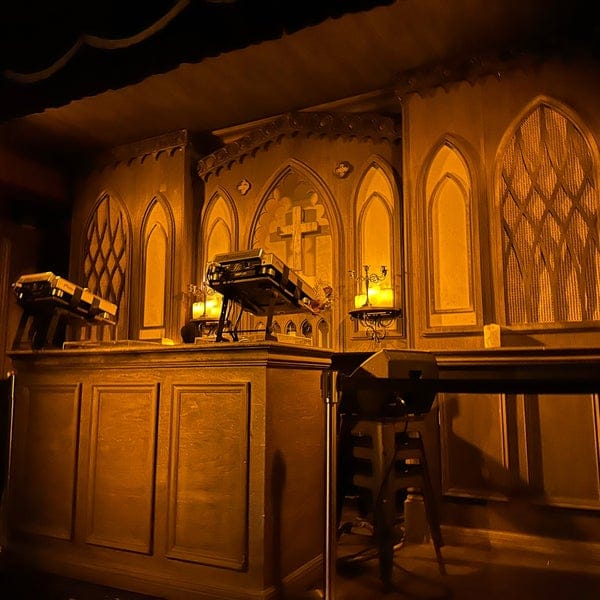
Another great area for nightlife in Tokyo is Shibuya. The streets around Shibuya Crossing are packed with izakayas, bars, and nightclubs, and honestly, just wandering and picking whatever looks interesting works well here. But if you want something you will not find anywhere else in the world, I can recommend the Dogenzaka Church, a Catholic church-themed bar on Dogenzaka hill.
Fair warning: some people might find the concept a bit offensive. The bar is designed like a church, the staff serves drinks in nun dresses, and upstairs there is a girls’ bar with burlesque shows. It is exactly the kind of “only in Tokyo” experience that you either love or skip.
The practical details: entrance is free on weekdays and 200 yen on weekends, with a one drink minimum of 800 yen. The music changes from night to night, so check their website before you go to see what is playing.
If the church bar sounds too wild, Shinjuku has a calmer but equally unusual counterpart: the Vowz Bar near Yotsuya Station. This is not just a monk-themed bar. It is run by real ordained Buddhist monks who serve you drinks, chat with you about life, and sometimes chant sutras at the counter. I even attended my own funeral there: I lay down in a coffin while a monk performed the ritual over me. It sounds morbid, but it was strangely peaceful, and definitely my first time in a coffin. If you want to know how that feels, I wrote about the whole funeral experience in detail.
And if you end up spending your evening in Shibuya instead, I also wrote about a typical night out in Shibuya, from street performances to a late-night onsen. Worth a read if you are in the area.
5. Eat Robatayaki: A Grilled Japanese Delight

A very traditional dining experience you should try is robatayaki, which roughly translates to “fireside cooking”. Fresh meat, seafood, and vegetables are laid out in front of the chefs, who grill everything over hot charcoal in the middle of the restaurant, right before your eyes. In classic robatayaki places, the chefs even hand you the finished dishes on a long wooden paddle across the counter, a tradition that comes from the fishing villages of northern Japan, where the style originated.
My tip: always ask for a counter seat. The grilling is half the show, and watching the chefs work the charcoal is what makes robatayaki special. We learned this the hard way at our favorite robatayaki spot in Nakano, where we first ate on Valentine’s Day in 2024 and sat right at the grill. When we came back later with my friend Jowey, we were seated upstairs, away from the action. The food was still excellent, but the experience is simply better downstairs at the counter.
6. Take a JDM Tour in Tokyo: Daikoku PA

I guess almost everyone has seen The Fast and the Furious: Tokyo Drift. Funnily enough, most of the movie was actually filmed in Los Angeles, and the main “Japanese” characters were played by Korean-American actors. Still, it did one thing right: it made the world (and me) curious about Japan’s real street car scene. JDM (Japanese Domestic Market) car culture is unique, and the legendary meeting point is the Daikoku Parking Area in Yokohama, where tuners, drift cars, and supercar owners gather at night.
Here is the catch: Daikoku PA sits in the middle of a highway junction and is only accessible by car. There is no train station, no pedestrian access, and taxis are often reluctant to wait there. That is why I recommend booking a JDM tour to Daikoku instead of trying to get there on your own. I have visited the PA several times with Wangan OG and was amazed every single time. You never know what shows up: one night it is classic Skylines and RX-7s, the next night someone parks a Lamborghini next to a bosozoku-style van.
7. Visit the Making of Harry Potter Exhibit

Since I was a child, I have been a huge fan of Harry Potter, so this one was a must for me. Tokyo is home to the Warner Bros. Studio Tour Tokyo: The Making of Harry Potter, the largest indoor Harry Potter attraction in the world. It opened in 2023 on the site of the former Toshimaen amusement park in Nerima, about 20 minutes from Ikebukuro, with its own station (Toshimaen) right at the entrance.
Inside, you walk through original-scale sets like the Great Hall, Diagon Alley, and Platform 9¾, and you get behind-the-scenes insights you have never seen before. My favorite part was the moving portraits. They look absolutely real, just like in the movies. And of course, you can try the iconic snacks and a real Butterbeer, which you drink from a souvenir mug you can take home.
One important tip: tickets are only sold online in advance with a timed entry slot. You cannot buy them at the door, and popular dates sell out weeks ahead, so book as soon as your travel dates are fixed.
8. Real LifeAnime Locations

I grew up with anime, and many of these series are part of my childhood. Heidi, the classic series set in the Swiss Alps, was especially popular in Switzerland. It was directed by Isao Takahata, with Hayao Miyazaki working on scene design, years before the two founded Studio Ghibli. Later, I moved on to shonen series like Naruto, One Piece, and Dragon Ball Z, which aired during the day on RTL 2 (dubbed in German).
What many fans don’t realize is that a lot of famous anime scenes are based on real-world locations, and Tokyo is full of them. Visiting these spots, known in Japan as seichi junrei or “anime pilgrimage”, is one of my favorite free things to do in the city. For example, Saitama’s house from One Punch Man actually exists in Setagaya, and the famous staircase from the final scene of Your Name (Kimi no Na wa) is a real place: the stairs at Suga Shrine in Yotsuya, which look exactly like in the movie. I put together a full guide to real-life anime locations in Tokyo with directions and photos from my visits.
9. Dance in a Tokyo Nightclub: Womb, Camelot or Decabar

Tokyo has, in my opinion, some of the best nightlife in the world. Our nights out usually follow the same rhythm: start in an izakaya (a Japanese-style drinking restaurant), move on to a bar, and end the night in a nightclub. If you want to do it like a local, do not rush. Each stage has its own pace.
For a night you will not forget, head to Womb or Camelot, two of the most famous nightclubs in Tokyo, both in Shibuya. Womb is a techno and house institution, known among DJs worldwide for its amazing sound system and one of the biggest mirror balls you will ever see. Camelot is the more mainstream option, playing hip hop and chart music, and it is usually full of a young international crowd. If you want something completely different, Decabar in Shinjuku mixes DJ sets with live performance art and Japanese rope art shows, so check their event schedule before you go.
Two practical things: bring your passport, because clubs in Tokyo check ID at the door and a foreign driver’s license is often not accepted. And expect a cover charge of roughly 1,000 to 4,000 yen depending on the club and the night, usually including a drink ticket.
10. Visit a Showclub in Tokyo

If you want a night out that is more relaxing than clubbing, I recommend a showclub. These venues combine performance, music, and spectacle in one evening. Unlike regular nightclubs, where you dance yourself, here you sit back with a drink and let the show come to you.
One of the most famous spots is Tantra Tokyo in Roppongi, an elegant burlesque club where skilled dancers create an atmosphere that is both classy and bold. The performances change throughout the night, so you never quite know what comes next, which is part of the charm. Tantra also has its own karaoke bar, in case you want to continue the night after the show. If you want to see what it actually looks like inside, I filmed several videos at Tantra. You can find them on my YouTube channel.
11. Visit Girls Bars or Theme Coffee Shops

Japan has a special kind of bar that does not really exist anywhere else: the girls’ bar. The concept is simple. You pay for a time slot, usually with all you can drink included, and a woman behind the counter chats with you while you drink. Mostly in Japanese, so it doubles as a fun language practice session. To be clear, this is conversation entertainment, a lighter and cheaper cousin of the classic hostess club. Nothing more happens, and the bars operate completely legally.
That said, the quality varies a lot. Some girls’ bars are forgettable, while others have turned the concept into a real show. The best example is the Muscle Girls Bar in Ikebukuro, where the women serving your drinks are serious athletes who work out in front of you between rounds. You book all you can drink for 30 to 80 minutes depending on the package, and for an extra fee you can order “services” like getting slapped or kicked by one of the muscle girls. Trust me, it is funnier when you buy it for a friend. I have been going there since my first visit in 2023, and it is still one of the most entertaining bars I know in Tokyo.
If you prefer a more mellow atmosphere, Tokyo also has plenty of themed cafes, from animal cafes to the famous maid cafes in Akihabara, which I cover in the next section.
If you end up in an arcade, read my tips on how Japanese crane games work before you spend all your coins.
12. Eat in an Izakaya

If you visit Japan, you have to eat in an izakaya at least once. An izakaya is a Japanese-style pub that serves a variety of small shared dishes and cheap drinks, and it is where Japanese social life actually happens after work. I start almost all of my nights out in an izakaya with friends. You will find them everywhere in Tokyo, but if you want the real local experience, head to Suginami-ku. I have lived in both Ogikubo and Koenji, and these neighborhoods have some of the best izakayas I have ever visited. Between them lies Asagaya, which is just as good. The izakayas here are cheaper, friendlier, and far more authentic than anything you will find near the big tourist spots.
One warning: some izakayas serve raw chicken (torisashi), which I would avoid for safety reasons. I wrote a full article about why.
For movie fans, there is one famous exception to my “skip the tourist spots” rule: Gonpachi Nishiazabu, known as the inspiration for the iconic fight scene in Kill Bill. It is located in the Roppongi area, a short walk from Roppongi Station, and the crowd is noticeably international, with many Americans. Take your time and explore Roppongi a bit before you go. My first visit was because of the movie. The second and third time, I went back because I genuinely liked their food.
13. Drink from a “Beer Boot” at Japan’s Oldest Beer Hall: Ginza Lion (7-chome)

If you want to feel the soul of Ginza, head to the first floor of the Ginza Lion Beer Hall (7-chome). As a Swiss expat, I have seen plenty of European beer halls, but this “Old Hall” is something special. Built in 1934, it is Japan’s oldest surviving beer hall, a “beer cathedral” that made it through the WWII air raids almost untouched. Look up when you enter: the hall features high ceilings, dark columns, and a massive glass mosaic of a harvest scene behind the bar, made from over 250 shades of glass.
My highlight here is the Bierstiefel, the famous glass boot. Boot-shaped beer glasses are a German and Austrian tradition that you rarely even see in Switzerland, and in Japan they are a total novelty. Since most locals stick to their small glasses of Sapporo, ordering the boot instantly makes you the hero of the hall. People will stop and stare with respect. Pair it with the garlic toast, my standard order there, and you have one of the most fun and affordable evenings Ginza can offer.
If this section makes you thirsty for more, check out my Japanese beer guide covering beer culture, breweries, and more historic beer halls across Japan.
14. Visit Hidden Gardens: Koishikawa Korakuen, Shinjuku Gyoen, or Kokyo Gaien

Tokyo may be known for its skyscrapers and bustling streets, but it also has many serene gardens that offer a peaceful escape from the crowds. My personal favorite is Koishikawa Korakuen, one of the oldest Japanese gardens in Tokyo and still a hidden gem that most tourists miss. I had my first date with my fiancée in this garden, which is why it will always have a special place in my heart. If you only visit one garden in Tokyo, make it this one.
Shinjuku Gyoen is another excellent option and my favorite place in the city to see the cherry blossoms. With over a thousand cherry trees of different varieties, the season here lasts longer than almost anywhere else in Tokyo. Fun fact: it is also one of the few places in Japan where you get a student discount, and student discounts here are usually based on your age rather than your actual student status.
Finally, Kokyo Gaien National Garden is ideal for a leisurely walk, with stunning views of the Imperial Palace. During cherry blossom season, I recommend renting one of the rowing boats on the moat at Chidorigafuchi, right next to the garden. Rowing under the blooming cherry trees is one of the most beautiful things you can do in Tokyo. But be warned: either you pay roughly double for an online reservation, or you wake up very early and queue. We did the early morning option, and it was worth every lost minute of sleep.
Book Tokyo tours and tickets
Many of the experiences on this list are easier with a ticket or guide sorted in advance. You can compare current things to do in Tokyo on Klook below.
15. Best Day Trips from Tokyo: Kawagoe, Kamakura, Odawara & More

If you have time during your stay, I highly recommend at least one day trip from Tokyo. The city itself has endless things to do, but stepping outside gives you a completely different perspective on Japan, and all of these destinations are reachable in about an hour.
One of the easiest and most rewarding options is Kawagoe, often called “Little Edo”. Less than an hour from Tokyo on the Tobu Tojo Line, it offers traditional clay warehouse streets, historic temples like Kita-in, and local food specialties such as sweet potato snacks, which you will find in every shape from chips to ice cream. Compared to other day trips, Kawagoe feels relaxed and walkable, perfect for a slower travel day. I wrote a full Kawagoe travel guide covering the best things to do, hidden spots, and what to eat.
Another popular option is Kamakura, known for its many temples and the famous Great Buddha, an 11 meter bronze statue sitting in the open air. Kamakura is on the coast and gets noticeably touristy on weekends, so go on a weekday if you can. The mix of history, hiking trails, and ocean makes it worth it either way. If you have energy left, continue to Enoshima Island just down the coast, with ocean views, caves, and fresh seafood. We did Kamakura and Enoshima as one trip, and it works well as a combination.
If you are interested in castles and samurai history, Odawara Castle is a great choice. It gives you a real look into Japan’s feudal era, and since it is on the way to Hakone, you can easily combine the two. I took my photo of the castle on exactly such a trip with my parents.
For thrill-seekers, Fuji-Q Highland is one of the best amusement parks in Japan. Located near Lake Kawaguchi at the foot of Mount Fuji, it is home to some of the world’s most extreme roller coasters, including Fujiyama, Eejanaika, and Takabisha. On clear days, you get incredible views of Mount Fuji directly from the park, sometimes even mid-ride. And even if roller coasters are not your thing, Fuji-Q has anime attractions, one of the world’s largest haunted houses, and excellent photo spots. I recommend combining it with Lake Kawaguchi or the Chureito Pagoda for a full Mount Fuji day.
16. Eat Sushi in a High-Class Restaurant: Fukuzushi in Roppongi is my recommendation

Tokyo is home to some of the best sushi in the world, and at every price level. But if you want to treat yourself to one truly high-class sushi experience during your trip, my recommendation is Fukuzushi in Roppongi. It is a small, family-run restaurant hidden behind the main streets of Roppongi, intimate and quiet, the complete opposite of the flashy sushi chains.
I have special memories of this place. My fiancée reserved it as my birthday present in 2024, and it was clearly the best meal I have ever had in Tokyo. The uni in the photo above is from exactly that dinner. At around 33,000 yen per person it is definitely on the expensive side, but for a once-per-trip splurge it was worth every yen.
A few practical notes: the chef does not speak English, but his wife speaks it very well and guides you through the menu. They even have a personal Waseda connection, since their daughter studied there, just like me. Reservations are essential and can be made through their website.
17. Watch a Japanese Baseball Game

For sports fans, watching a Japanese baseball game is a must, even if you do not care about baseball at all. Japanese fans treat every game like a festival: each player has his own chant, the crowd sings in perfect coordination for the entire match, and when the home team scores, thousands of umbrellas or balloons go up at once. It is a level of organized energy you will not find in any other sport.
Tokyo is home to two major teams. The Yomiuri Giants play at the Tokyo Dome, and the Tokyo Yakult Swallows play at the open-air Meiji Jingu Stadium. If you have the choice, I would pick Meiji Jingu on a summer evening, with a beer under the open sky, baseball does not get better than that.
My first game was actually in Yokohama, where I went with my father to see the Yomiuri Giants play away. It was raining the whole time, but we still had a great day, which says a lot about the atmosphere.
One practical tip: bring cash. The famous beer girls who carry kegs on their backs through the stands only accept cash. You can buy beer downstairs at the concession stands with a credit card, but then you miss half the fun, and you have to leave your seat every time.
18. Summer Bon Odori or Hanabi Fireworks Festival

If you are visiting Tokyo in the summer, be sure to catch a bon odori (a traditional summer dance festival) or a hanabi (fireworks) festival. Bon odori takes place all over the city between July and August: locals in yukata dance in circles around a central stage, surrounded by food stalls, lanterns, and taiko drums. The best part is that everyone is welcome to join the dance, even if you have no idea what you are doing. Nobody minds, and someone will usually show you the moves.
There are dozens of these festivals every summer, and my favorites are the bon odori in Nakano, Koenji, and Ebisu. Koenji hosts one of the biggest Awa Odori festivals outside of Tokushima, with thousands of dancers parading through the streets in late August, and it is absolutely worth planning around.
I will be honest: Tokyo summers are brutally hot and humid, and these festivals are pretty much the only reason I would recommend visiting Japan in July or August. But if you are here anyway, they turn the worst season into something special.
19. Eat Wagyu: A Must-Try Japanese Beef Experience

Wagyu beef is the one luxury food you should not skip in Tokyo. You can eat it as steak or yakiniku, but my favorite way is a twist most tourists have never heard of: gyukatsu, wagyu that is breaded like a katsu cutlet, deep-fried for less than a minute, and served still rare inside, with rice, shredded cabbage, miso soup, and several dipping sauces.
My secret tip for the best gyukatsu in Tokyo is Gyukatsu Aona in Shinjuku. While the famous chains make you queue for an hour, Aona is quieter, and in my opinion better. The best part: you get a small stone grill at your table, and the beef arrives mostly raw, so you sear every single slice exactly the way you like it. Medium rare for me, well done for my fiancée, everyone at the table is happy. It turns lunch into a small cooking experience.
20. Try Daifuku: Sweet Japanese Treats
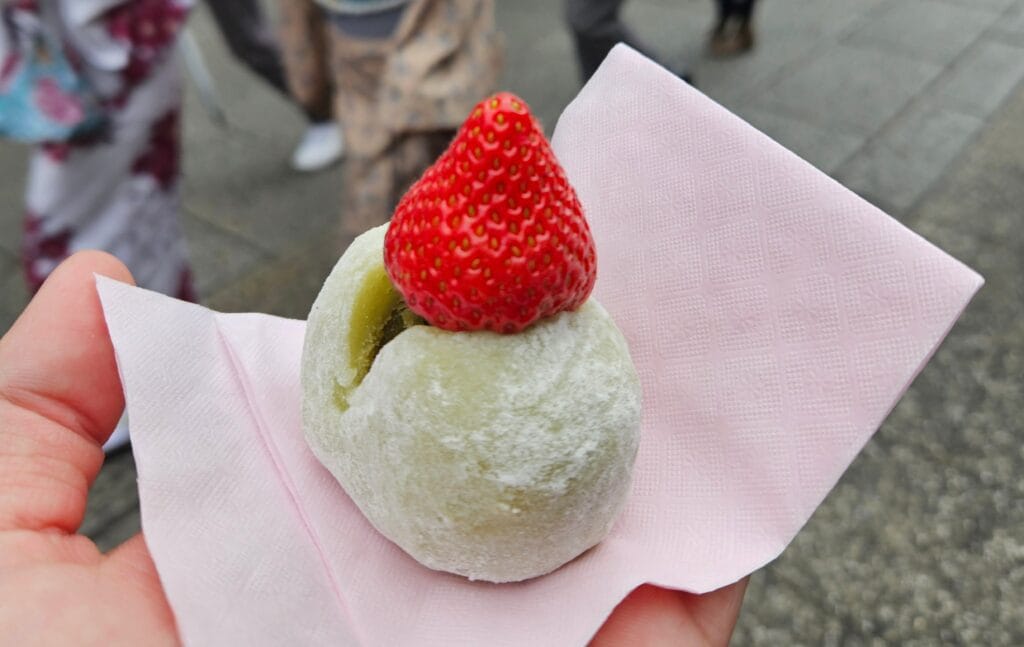
No visit to Japan is complete without trying daifuku, a soft, chewy mochi rice cake stuffed with sweet fillings. The classic version comes with red bean paste, but the real star is ichigo daifuku: a whole fresh strawberry wrapped in bean paste and mochi, so the bite is sweet, slightly sour, and chewy all at once. You will find daifuku at wagashi shops (traditional Japanese sweet shops) all over Tokyo, in department store food halls, and even in convenience stores, though the fresh handmade ones from a proper shop are on a different level.
Of all the desserts in Japan, daifuku is my all-time favorite. My personal picks are the matcha and chocolate versions filled with a whole strawberry. One tip: good daifuku is made fresh and should be eaten the same day, the mochi hardens quickly. So do not buy them as a souvenir for home, buy one, eat it on the spot, and then go back for a second.
21. Eating Fugu: Japan’s Famous Pufferfish
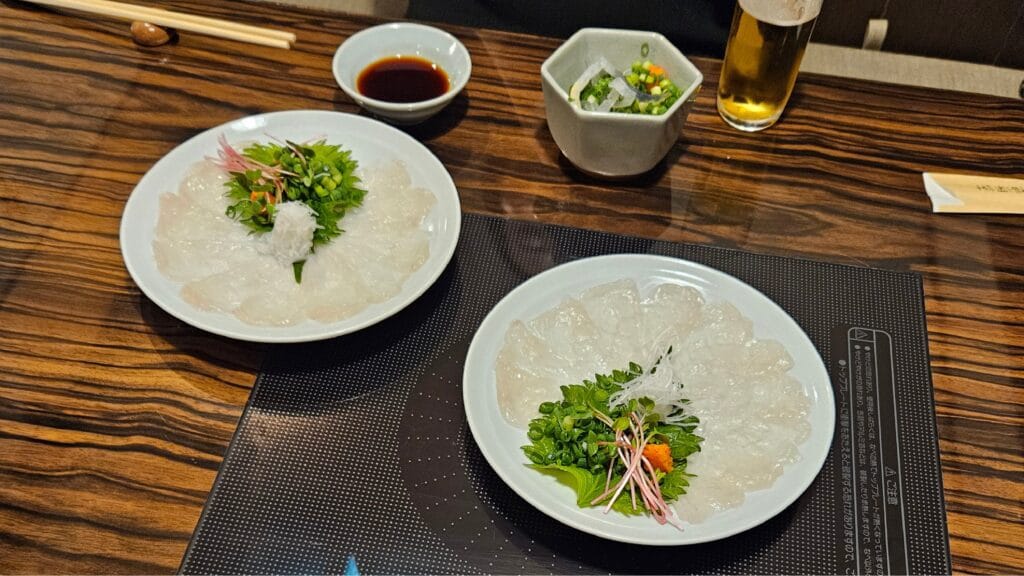
For the daring, fugu (pufferfish) is one of Japan’s most famous culinary experiences. The fish contains a deadly toxin, which is exactly why it may only be prepared by chefs who hold a special fugu license, earned after years of training and a strict exam. In a licensed restaurant, eating fugu is completely safe. The danger you read about in the news comes almost entirely from amateurs who catch and prepare the fish at home.
I will be honest: I was quite scared before my first time. My fiancée basically forced me to try it, and only after reading up on how the licensing system works did I relax. In the end, fugu sashimi is sliced so thin it is almost transparent, with a delicate, mild taste and a slightly chewy texture. It is less about the flavor and more about the experience, and the story you get to tell afterwards.
You will find fugu at high-end restaurants across Tokyo, served as sashimi (tessa) or hot pot (tecchiri), and winter is the classic season for it. We had our first fugu dinner in Osaka, at a restaurant chain that specializes in nothing else. You can read about the whole fugu experience in my separate post.
22. Fireworks in Tokyo: A Summer Tradition
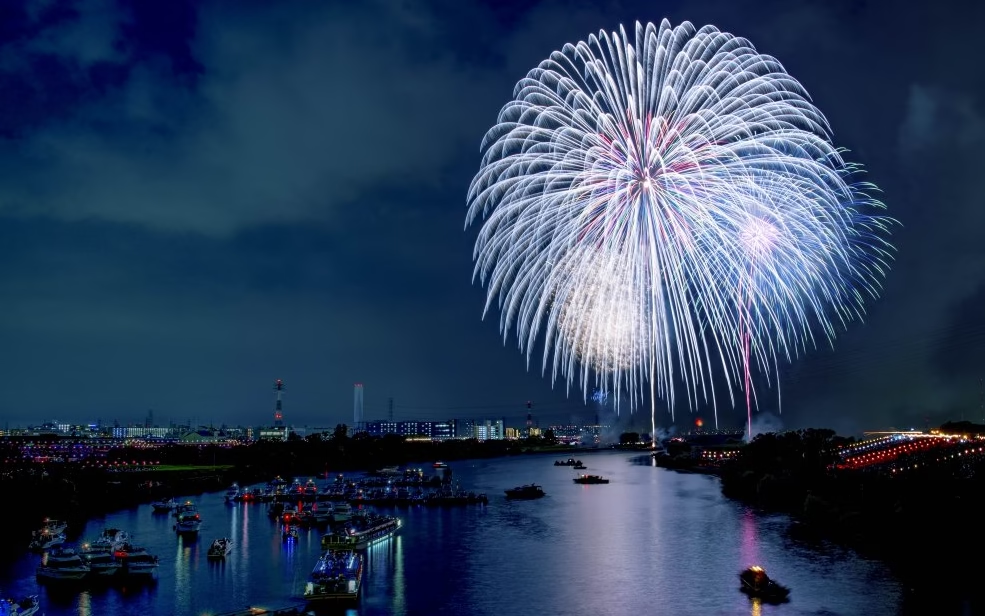
During the summer, I usually attend two or three hanabi (fireworks) festivals in Tokyo. Japanese fireworks festivals are on a completely different scale than what most visitors know from home: tens of thousands of fireworks over more than an hour, whole crowds in yukata, and food stalls everywhere.
The most famous one is the Sumidagawa Fireworks Festival near Asakusa, with close to a million visitors, and it is exactly as crowded as that number sounds. I made a video on my YouTube channel on how to enjoy this festival while avoiding the worst of the crowds. In 2024, I also visited the Itabashi Fireworks with my fiancée and a friend. My biggest lesson from that evening: do not arrive at the last minute. The paths get so packed that you can barely move, and locals on bicycles still try to push through the crowd, which makes it even more chaotic. Come one or two hours early, pick your spot, and bring snacks from a konbini.
If you are planning a summer trip, check my overview of Tokyo fireworks festivals with 2026 dates and locations to see which ones match your travel days.
23. Watch an Illumination in Tokyo

Tokyo loves illuminations, and you can find them all year round, though the city is at its most magical in winter. The most spectacular one runs every evening for free: the projection mapping show on the Tokyo Metropolitan Government Building in Shinjuku, recognized by Guinness World Records as the largest permanent projection mapping display in the world. The entire 243 meter skyscraper turns into a giant screen, with shows like Godzilla climbing the building.
I will admit, when it launched I was not impressed. The early visuals felt generic, like a screensaver projected onto a skyscraper. But they have improved it a lot since then: the newer shows are actually designed around the building’s architecture, and today it is genuinely worth a stop, especially since it costs nothing and runs daily after sunset.
In winter, the whole city joins in. My two favorite areas are the winter illumination in Asakusa, where Senso-ji and the Nakamise street are lit with warm, subtle lighting that fits the historic atmosphere, and the Christmas illuminations in Roppongi, which go in the opposite direction with huge, flashy LED displays. Seeing both gives you the two faces of Tokyo in one evening.
24. Experience the Unique Culture of a Maid Cafe

If you want to experience one of Japan’s most famous “Galapagos” subcultures, you have to visit a Maid Cafe, ideally in Akihabara, where the whole concept was born in the early 2000s. These are themed cafes where the waitresses dress in maid costumes and welcome you as the “master” or “mistress” of the house.
It is much more than just getting a coffee; it is a full performance. When your food arrives, usually something cute like omurice (omelet rice), the maid will draw a picture on it with ketchup, like a cat or a heart. You will also be asked to perform a “magic spell” together, like the famous “Moe Moe Kyun”, to make the food taste more delicious. Yes, you have to do the hand gestures. No, there is no way around it.
It might feel slightly awkward at first, especially if you grew up in Europe like me, but it is a completely harmless and fun part of Tokyo’s pop culture. Two practical things to know: you usually pay a small seating charge on top of your order, and you are not allowed to take photos of the maids unless you pay for a “cheki” (an instant Polaroid photo with them, often decorated by hand). Photos of your own food are fine. I recommend going at least once, simply to see the energy and total dedication to the theme.
25. Walk the “Pedestrian Paradises” (Hokousha Tengoku)

One of my absolute favorite things to do on a weekend is to visit a Tokyo Pedestrian Paradise, known locally as Hokousha Tengoku or simply “Hokoten”. On these days, the city’s busiest main roads in Ginza, Akihabara, and Shinjuku close completely to vehicles, giving the asphalt back to the people.
My fiancée and I love these hours because the “Tokyo Shuffle”, that constant bumping of shoulders on crowded sidewalks, simply disappears. Shopping suddenly feels relaxed instead of stressful.
Ginza (Chuo-dori) is the gold standard. They put out tables and chairs with parasols right in the middle of the street, and we usually grab a coffee and sit in the center of the road to people-watch. There is no better way to take in the luxury district.
Akihabara turns its main “Electric Town” strip into a massive open-air plaza. Without cars, you can finally step back far enough to appreciate the true scale of the neon signs and anime billboards. If you want photos of Akihabara, this is the time to take them.
Shinjuku closes the streets on the east side, turning the chaotic area around Isetan and Bic Camera into a peaceful stroll.
Local tip: these events usually happen on Sundays, and in Ginza on Saturdays as well. From April to September, the streets stay closed until 6:00 PM, which is perfect for catching the golden hour light for photos before heading to dinner. The whole experience is completely free, and it is one of those local secrets that makes living here so special.
26. Visit One of Tokyo’s Cultural Festivals
Throughout the year, Tokyo hosts countless unique festivals. There is one happening somewhere in the city almost every day. I love attending them and writing about the ones that surprise me, and with a bit of luck, your travel dates will line up with one of these.
Oiran Dochu in Shinagawa Oiran were the highest-ranking courtesans of the Edo period, famous for their elaborate kimonos, towering sandals, and slow ceremonial walk. The profession disappeared long ago, but at the Shinagawa Shukuba Matsuri, local women recreate the legendary Oiran procession in full historical costume. Watching the parade move down the old Tokaido road feels like a glimpse straight into the Edo period.
Bakeneko Festival in Kagurazaka This event kicks off the Halloween season in Tokyo. People, Japanese and foreigners alike, dress up as bakeneko, the supernatural shape-shifting cats of Japanese folklore, and dance through the streets of Kagurazaka. My tip: you can buy cat ears at any Don Quijote in Tokyo, which helps you blend right in. It is one of the few festivals where joining is more fun than watching.
Yomiuriland Jewellumination An immersive winter event featuring 6.5 million gemstone-colored LEDs designed by lighting artist Motoko Ishii, draping the entire amusement park in “jewels”. Adults come for the panoramic views from the Sky Shuttle gondola, while kids love the interactive Horror House mission, where they have to return a teddy bear to a ghost. It combines high-speed roller coasters with the most spectacular light show in Tokyo, a perfect high-energy alternative to the city-center illuminations.
Ueno de Panda Spring Festival A lively Lunar New Year celebration at Ueno Park’s Fountain Square that blends Chinese and Japanese culture. Crowds gather for the gachi-chuka stalls (authentic regional Chinese street food) and the traditional bian lian face-changing performances, but the heart of the event belongs to Ueno’s most famous residents: the pandas of Ueno Zoo. I wrote a full guide about the festival and what makes it special.
27. Experience the “Weird” Side of Tokyo
Tokyo might look perfect on the surface, but the longer you stay, the more you notice the strange and fascinating details that make this city truly unique.
One thing that surprises almost every visitor is how normal it is to see people sleeping in public. Late at night, you will spot salarymen in perfect suits passed out on sidewalks, benches, or train station floors, often with their briefcase still next to them. Nobody bothers them, nothing gets stolen, and the next morning they are back at work. It is not dangerous, it is simply what happens in a culture of long workdays, mandatory drinking parties, and the last train leaving around midnight.
While most nights end with a quiet train ride home, some dive much deeper into the city. If you want to see how far the rabbit hole goes, check out my guide on extreme Japanese nightlife experiences, from the high-energy Muscle Girls Bar to the professional discipline of Shinjuku’s underground SM bars.
Then there is the food. Tokyo is one of the best food cities in the world, but it also serves some of the most unusual dishes you will ever come across. From raw horse meat (basashi) to wasabi ice cream to natto, the famously sticky fermented soybeans that even many Japanese either love or refuse to touch, trying “bizarre” food becomes part of the adventure.
Even everyday things can feel strange at first. Vending machines sell everything from hot coffee to fresh eggs, social rules are strict but almost never spoken out loud, and small daily moments keep reminding you that you are far from Europe.
Many tourists arrive with expectations shaped by viral internet videos, but daily life here is far more nuanced. I wrote a detailed guide about common Japan travel myths and the truth behind the stereotypes people believe before visiting.
These moments might feel weird at first, but that is exactly what makes Tokyo so interesting. In the end, it is not the famous sights you remember most, it is the little culture shocks that turn into unforgettable stories.
28. Master the Art of Tokyo Shopping (for Women)
Tokyo is a global fashion capital, but shopping here comes with cultural standards and quirks that are worth knowing before you hit the stores. For a deep dive into the best districts and detailed sizing charts, check out my full Tokyo Fashion Guide. Here are the essentials:
Japanese sizing realities. Clothing in Japan runs significantly smaller than in the West. A Japanese “Medium” often fits like a Western “Small”, and many trend-focused boutiques carry very limited options for taller, larger, or athletic builds. When in doubt, size up and always try things on.
The “Free Size” rule. Many popular Japanese labels only produce “F” (Free Size) garments, meaning one size for everyone. Despite the name, these are typically cut for a slender, petite silhouette, so treat “Free Size” as roughly a Western Small.
Bras and lingerie. Japanese lingerie is famous for its intricate designs, but cup sizes run small here too. Most visitors need to go up one or two cup sizes compared to US or UK standards to get the right fit.
Immaculate vintage. Tokyo has one of the best second-hand scenes in the world, because items are usually in like-new condition. Japanese owners take exceptional care of their clothes. The neighborhoods of Koenji and Shimokitazawa are the two big vintage hubs, and having lived in Koenji myself, I can confirm you can easily lose an entire afternoon there.
Pedestrian Paradises. On Sundays, major shopping streets in Ginza and Akihabara close to cars (see section 25). These “Hokoten” hours are the most relaxed time to shop in the busiest districts.
Fitting room etiquette. Always remove your shoes before stepping onto the raised platform of a fitting room. Many shops also hand you a face cover so your makeup does not stain the clothes. Both are normal, just follow the staff’s lead.
29. Places to Avoid
Joypolis. Sega’s indoor amusement park in Odaiba sounds great on paper, but most of the attractions feel outdated, and I did not enjoy it at all. Your time and money are better spent elsewhere. I wrote a full review explaining why.
Omoide Yokocho. The famous “Memory Lane” in Shinjuku is overrated and permanently crowded. Today it is mostly a photo spot where tourists queue for the same shot, and many of the tiny restaurants charge accordingly. If you want the real izakaya alley experience, you already know from this guide where I would send you instead: Suginami.
Raw chicken restaurants. Torisashi, raw chicken sashimi, is legal and served in some izakayas, but I would avoid it for health reasons. The salmonella risk is real, no matter how fresh the meat is. I wrote a whole article about it. And yes, I still sometimes prank my friends by ordering it for the table.
Ginza Art Aquarium. Visually impressive at first glance, but the goldfish tanks are far too small for the number of fish inside. It left a bad aftertaste for me, and I cannot recommend supporting it.
I love living in Tokyo. It is one of the most international corners of Japan, the food and nightlife are world-class, and there are endless ways to dive into the country’s history. Yes, some areas of Japan struggle with overtourism during peak seasons, but most communities still genuinely welcome visitors who travel with respect, and people in Tokyo are noticeably more open-minded toward foreigners than in the countryside.
That said, please do not stop at Tokyo. Exploring beyond the city not only spreads tourism more sustainably, it is also where you understand Japan on a deeper level, in its historic towns and hot spring villages. For me, an onsen in the countryside is a completely different experience than one in the city. Onsen is not just hot water. It is the mood, the nature around you, and the slow, relaxed time you spend together.
Short on time? My one day in Tokyo walking route takes you from Harajuku to Shinjuku on foot, through some of the city’s most interesting neighborhoods.
Still deciding on your base? I compare Shinjuku, Shibuya, Ginza, Asakusa, Ueno and local neighbourhoods like Koenji in my guide on where to stay in Tokyo, and I break down hotels, food and transport in how much a trip to Japan costs.
Want to leave the city for a day? My guide to the best day trips from Tokyo covers Hakone, Mount Fuji, Kamakura, Nikko and more, and my Japan itinerary shows how Tokyo fits into a longer trip.
Travelling as a family? See my guide to Tokyo with kids, with the best attractions, child fares and family hotels.
Things to Do in Tokyo FAQ
What are the best things to do in Tokyo?
Tokyo rewards travelers who go past the obvious landmarks. Alongside the big sights, the most memorable experiences tend to be the small ones: drinking in the tiny bars of Golden Gai, finding rooftop shrines hidden above the city, eating at a standing bar, and getting lost in neighborhoods that never make the standard lists. This guide covers 28 of them, mixing the famous with the genuinely local.
How many days do you need in Tokyo?
For a first visit, three to five days lets you see the major districts without rushing. A week or more is better if you want to slow down, explore side streets, and take a day trip. Tokyo is huge, so trying to tick everything off in a weekend usually means seeing a lot of trains and not much of the city.
Is Tokyo expensive to visit?
It can be, but it does not have to be. Trains, conveyor-belt sushi, ramen, and standing bars are all reasonable, and many of the best experiences, like wandering neighborhoods or visiting shrines, cost little or nothing. Your biggest variable is usually accommodation, so booking early and staying slightly outside the busiest districts helps a lot.
What is the best area to stay in Tokyo for first-time visitors?
Shinjuku and Shibuya are the most convenient for first-timers, with strong transport links and nightlife on your doorstep. If you prefer something quieter and more local, the neighborhoods along the Chuo Line, like Koenji and Asagaya, give you a more residential feel while staying a short train ride from the center.
Do you need to speak Japanese to visit Tokyo?
No. You can get by in central Tokyo with English and translation apps, and the transport system is well signposted in English. That said, a few basic phrases go a long way, especially in smaller bars and restaurants where English is limited, and they are often the difference between a warm welcome and an awkward start.
What is Tokyo nightlife like?
Tokyo nightlife runs the full range, from tiny six-seat bars in Golden Gai to huge clubs and everything in between. The local rhythm in the small bars is simple: one drink, one dish, then move on. Areas like Shinjuku and Shibuya are the easiest places to start, and the city stays lively well into the early hours.