Tokyo’s Summer Fireworks Tradition
As summer settles over Tokyo, the night skies fill with fireworks. These summer festivals, known in Japanese as hanabi taikai, are a long-standing part of the culture, tied to celebration and community. The Sumidagawa Fireworks Festival is the most famous of them. Held every year along the Sumida River, it is one of Tokyo’s largest displays and one of the oldest fireworks traditions in Japan, with roots in the early 18th century during the Edo period.
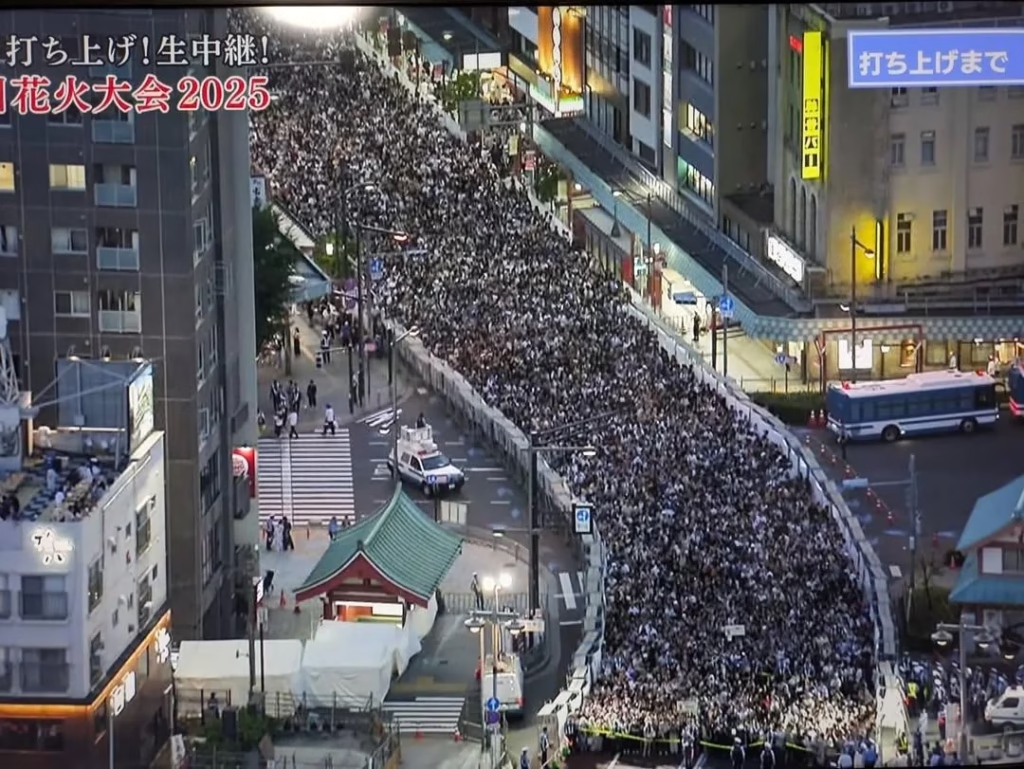
The fireworks are the draw, but the festival is just as well known for its crowds. More than a million people come each year, filling the narrow streets and riverbanks of Asakusa. With that many visitors competing for a good spot, the evening can turn from enjoyable to exhausting. Trains fill up, streets bottleneck, and the summer heat only adds to it.
There is, however, a way to enjoy the display without getting caught in the worst of it. In this guide I will walk through how we watched the festival with far fewer crowds, including our route, our timing, and the quieter spots that made the difference, along with practical tips you can use for any Tokyo fireworks festival.
Starting the Evening in Akasaka
We started our evening around 5:30 PM, when I picked up my girlfriend at her Japanese language school in Akasaka. To our surprise, Akasaka Station was decorated with a Harry Potter theme, with posters and wall panels that gave it a playful atmosphere. Just outside the station there is also a Harry Potter themed cafe, worth a stop if you are in the area.
From Akasaka, we headed to Kitasenju by train. It’s about a one-hour ride, and it allowed us to completely skip the chaos of Asakusa Station, where most people flood in for the event. This early departure is one of the top tips for visiting Tokyo fireworks festivals: start early and approach the venue from a less obvious angle.
Why We Skipped Asakusa
You might wonder why we did not just go straight to Asakusa, the main viewing area and the most popular choice for locals and tourists. The reason is simple. It may be closest to the launch site, but it gets so crowded that it is hard to move, let alone find a place to sit. People camp out for hours, sometimes all day, to claim a small patch of pavement. Between the heat, the noise, and the density of the crowd, what should be a relaxing summer night becomes a real test of patience. If you genuinely want to enjoy the festival without the frustration, the first and most important rule is this: do not go to Asakusa.
Instead, we planned ahead and made our way toward Shioiri Park, a peaceful green space located about a 20-minute walk from Kitasenju Station. This quiet riverside park has become our go-to spot for fireworks nights. It’s one of the best alternative viewing spots for Sumidagawa hanabi, offering an open view of the sky where you can still enjoy the full display without having to navigate through masses of people. The atmosphere is far more relaxed, and you can actually find room to spread out a blanket, have a drink, and enjoy the show the way it’s meant to be seen, comfortably and without stress.
Walking to Shioiri Park
The walk to Shioiri Park from Kitasenju is quiet and flat, passing through residential neighborhoods and small shops. An interesting observation: in Kitasenju, it’s actually prohibited to walk while using your smartphone. There are signs everywhere.
When we arrived at the park around 6:30 PM, there were already people laying out mats, eating snacks, and setting up tripods. But it was nothing compared to the shoulder-to-shoulder crowds in Asakusa. If you’re looking for the best places to watch Sumidagawa fireworks in Tokyo without being overwhelmed, Shioiri Park is a top pick.
A Firework Shaped Like Pikachu
Among the thousands of fireworks that night, one stood out: a firework shaped like Pikachu. For a few seconds the character appeared in a burst of golden-yellow sparks, ears and all, high above the Sumida River.
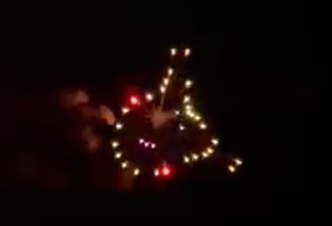
It was more than a fun surprise. It showed the craft behind the festival. Each of these displays is carefully designed by master pyrotechnicians, some of whom train for years to produce character shapes with clean symmetry and precise timing.
My wide-angle lens did not quite capture it, the firework looked smaller and less defined in the original shot, so I added a zoomed-in clip in the video. Even then, it is nothing like seeing it in person. The crowd gasped and phones went up all at once.
In total, the festival launches over 20,000 fireworks across about 90 minutes from two barges anchored on the river. But it was this single Pikachu-shaped firework that left the strongest impression, a reminder that the festival is as creative as it is large.
If you want to see Tokyo at its most cheerful, a character firework lighting up the summer sky is hard to beat.
Walking Toward Asakusa for a Closer Look
Around 7:00 PM we walked toward Asakusa to see the difference. At first the crowds were manageable, but closer to the launch site it changed quickly. The streets were packed, police were directing one-way foot traffic, and there was nowhere left to sit.
This is exactly why planning your approach matters. You do not want to spend a summer evening stuck in a crowd with no easy way through.
When the Fireworks Begin
At 7:15 PM the fireworks began. More than 20,000 were launched from barges on the river over the next 90 minutes, filling the sky with color, shapes, and patterns. It is a genuinely impressive display and a good example of Japan’s craft in seasonal celebration.
Even though we moved back from Asakusa due to the chaos, we still had a fantastic view. In fact, Shioiri Park and nearby areas are among the best places to watch Sumidagawa fireworks in Tokyo because you get the visuals without the madness.
Getting Home Afterward
Once the show ends, getting out is the hardest part. Thousands of people head for the stations at the same time, staff work to manage the flow, and catching a train quickly is close to impossible.
One of the smartest things you can do is not leave the moment it ends. Wait it out. We took a train to Ueno, then walked to Akihabara for some late-night Chinese food. The 20-minute walk helped us decompress, and we avoided the long station lines completely.
Practical Tips for the Sumidagawa Fireworks
If you want to enjoy the Sumidagawa Fireworks Festival without the stress, here are your golden rules:
- Start early: Leave by 5:00 PM or earlier.
- Skip Asakusa: Seriously, just don’t go there.
- Go via Kitasenju and walk to Shioiri Park.
- Bring a mat, snacks, drinks, and a fan.
- Don’t rush home: wait an hour or two or head somewhere else.
Follow these steps and you’ll skip the worst of the crowds, they really do work.
Frequently Asked Questions
When is the Sumidagawa Fireworks Festival?
It is held on the last Saturday of July each year, usually starting around 7:00 to 7:15 PM and running about 90 minutes along the Sumida River near Asakusa.
How many fireworks are launched?
Over 20,000 fireworks are set off from two barges on the river during the show, making it one of the largest displays in Japan.
Is the Sumidagawa Fireworks Festival free?
Yes. It is a public event viewed from parks, riverbanks, and streets along the Sumida River, so there is no ticket required to watch.
Where can you watch without the crowds?
Skip Asakusa. A great alternative is Shioiri Park, about a 20-minute walk from Kitasenju Station, where you get an open view of the sky with room to lay out a mat and relax.
How do you avoid the crowds and the train crush?
Leave early, by around 5:00 PM, approach from Kitasenju rather than Asakusa, and do not rush home the moment it ends. Wait an hour or move on to an area like Ueno or Akihabara to skip the station queues.
Are there other fireworks festivals in Tokyo?
Yes. Sumidagawa is the most famous, but Tokyo hosts many fireworks festivals through the summer, such as the Itabashi Fireworks Festival on the Arakawa River. See my Tokyo fireworks festivals guide for dates and locations.
Tokyo Has Many Fireworks Festivals Beyond Sumidagawa
The Sumidagawa event is the most famous, but Tokyo offers many other fireworks festivals throughout the summer. Each one has its own style, atmosphere, and scale. Itabashi Fireworks Festival along the Arakawa River is known for its massive 700-meter wide “Niagara Falls” firework and a relaxed riverside vibe. Edogawa Fireworks Festival attracts huge crowds with more than 14,000 fireworks launched in synchronized bursts. Adachi Fireworks Festival takes place earlier in the season and is popular with locals because it feels more neighborhood-friendly. There is also the Jingu Gaien Fireworks Festival, which combines fireworks with concerts and has a strong city-center atmosphere. If you want to explore all of Tokyo’s firework options and learn how each event works, I wrote a full Japan fireworks guide with details, tips, and routes to help you plan the best summer night.
Author

Get My Personal Travel Maps


Leave a Reply