
The best hotel chains in Japan for most travellers are the reliable mid-range business chains like Mitsui Garden, Richmond, Daiwa Roynet and Sotetsu Fresa Inn, the budget classics Toyoko Inn, Super Hotel and APA, and the design-led brands from Hoshino Resorts. If you want the ryokan feeling without the ryokan price, look for hotels with a large public bath, a modern onsen ryokan brand or a Kyoto machiya rental.
Japanese chain hotels are clean, safe and consistent, which makes booking easy once you know what each brand offers. Below is an overview of the main chains, what to expect from the rooms and the best modern alternatives to a traditional ryokan.
What to expect from Japanese chain hotels
- Small rooms: standard double rooms in city business hotels are often about 11 to 16 square metres. A “semi-double” bed is narrower than a European double bed.
- Great amenities: pyjamas, slippers, toothbrush, a kettle and a high-tech toilet are standard.
- Check-in and check-out: check-in is often from 3 pm, check-out around 10 or 11 am. Luggage storage is free.
- Location: many chain hotels are right next to major stations.
- Coin laundry: very common, useful on longer trips.
If you wonder how star ratings work in Japan, read my article on how hotels are ranked in Japan.
Best budget hotel chains
Toyoko Inn
Toyoko Inn has hundreds of hotels across Japan, usually close to stations. Rooms are very simple and small, but the price is fair and a basic breakfast is normally included. Great for short stays and practical travellers.
Super Hotel
Super Hotel is known for good value, a free breakfast and, at some locations, a natural hot spring bath. Rooms are compact and functional.
APA Hotel
APA is one of the largest chains in Japan. Rooms are among the smallest you will find, but locations are good and some hotels have a large bath. Fine if you only sleep there.
My own choice in this group is Toyoko Inn. I avoid APA Hotel because of the views of its founder, and I explain why in my article on the APA hotel controversy.
Best mid-range hotel chains
This is the sweet spot for most visitors: a bit more space, better design and often a large public bath, at prices that are usually reasonable outside peak seasons.
| Chain | Good for | Notes |
|---|---|---|
| Mitsui Garden Hotels | Couples, design lovers | Stylish rooms, many locations have a large bath |
| Richmond Hotels | Value and comfort | Slightly bigger rooms than typical business hotels |
| Daiwa Roynet | Business and leisure | Reliable, good desks and beds |
| Sotetsu Fresa Inn | Budget to mid-range | Modern, often near big stations |
| Hotel Gracery | Central locations | Shinjuku location has the famous Godzilla head |
| Candeo Hotels | Relaxing after a long day | Known for rooftop spas at several hotels |

Design and lifestyle brands
OMO by Hoshino Resorts
OMO hotels are city hotels with a fun local concept. Staff offer neighbourhood walks and tips, and the rooms are designed with clever storage and bunk options for families or friends.
Other boutique options
Major cities also have many independent design hotels and small boutique brands. They are often more personal than the chains and good for a special night.
When I want more comfort, my favourites are Mitsui Garden and Prince Hotels. Both are a real step up from a basic business hotel.
Modern ryokan alternatives
A traditional ryokan with kaiseki dinner and a private onsen is a wonderful experience, but it can cost a lot per person per night and may feel formal. Here are modern ways to get a similar feeling.
- Hotels with a large public bath: many mid-range chains have a daiyokujo, a shared hot bath split by gender. You get the onsen ritual without leaving the city.
- KAI by Hoshino Resorts: small modern onsen ryokan in hot spring towns, with regional food and local culture programmes.
- Machiya stays in Kyoto: restored wooden townhouses you rent as a whole, often with tatami rooms and a small garden.
- Japanese-style rooms in hotels: some hotels offer washitsu rooms with tatami and futon, a nice option for families.
- Onsen day trips: stay in a normal hotel and visit a hot spring facility for the afternoon.
If you want the full traditional experience, my onsen ryokan guide explains what is included, and the onsen etiquette guide explains how bathing works.
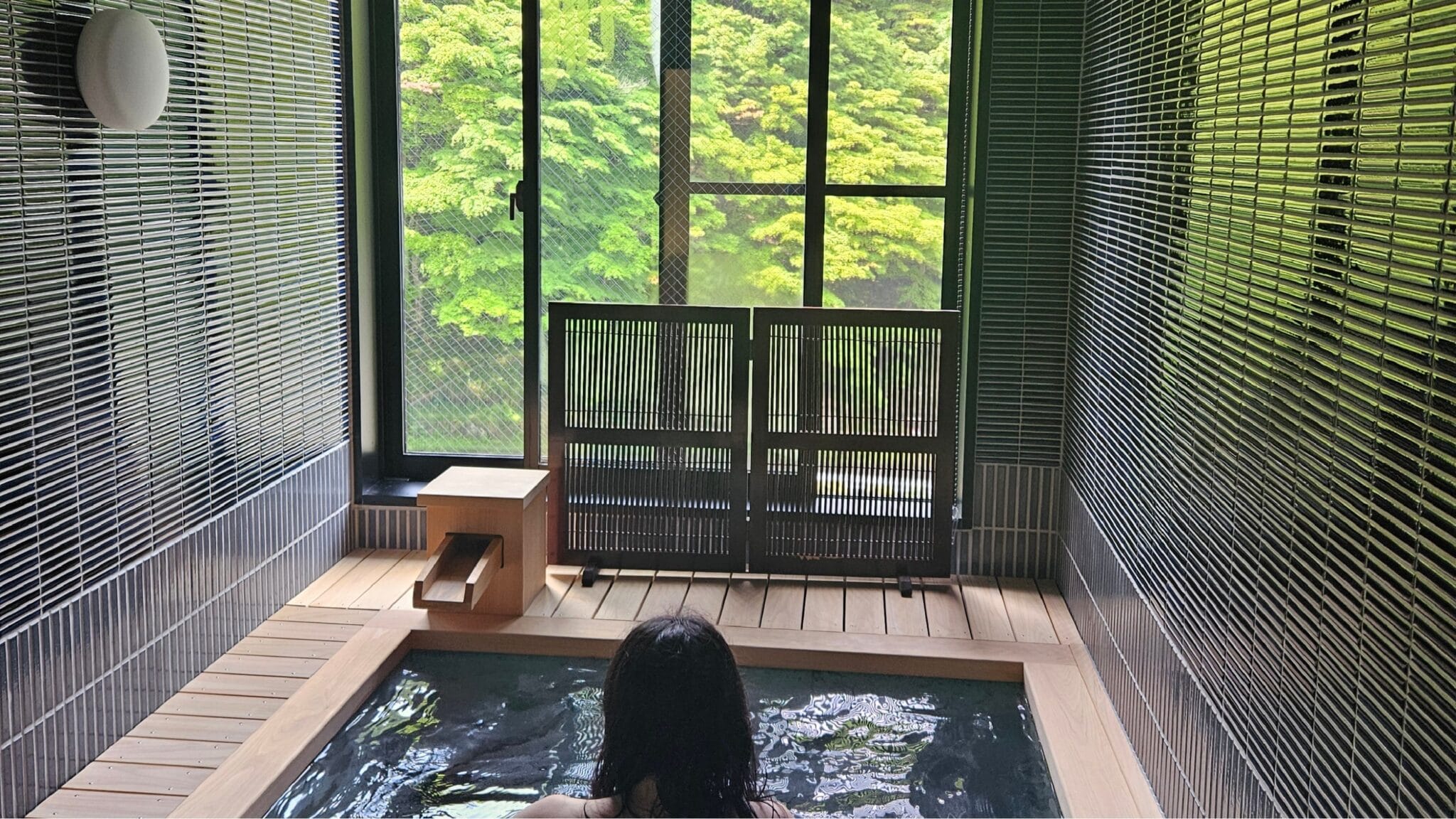
I stayed at Ueyama Ryokan, at the Shoji Mount Hotel and at a ryokan in Aizu-Wakamatsu, and I liked all of them. My advice: ryokans are very specific to their place, so do not look for a chain. Search locally in the area you want to visit.
Capsule hotels and hostels
If you travel solo on a budget, capsule hotels are a fun experience. Modern capsule hotels have clean shared bathrooms, lockers and lounges. Some are men-only, and many have separate floors for women. They are better for one or two nights than for a long stay, because space for luggage is very limited.
How to choose the right hotel
- Location first: pick a hotel within a few minutes’ walk of a station on a line you will use a lot
- Check the room size: it is listed on most booking sites in square metres
- Bed type: two people in a “semi-double” is tight, book a double or twin
- Large bath: a big plus after long days of walking
- Book early: for cherry blossom season, Golden Week, Obon and New Year
For area recommendations, see my guide on where to stay in Tokyo.
Booking tips: direct or through a booking site?
Most Japanese chains have their own websites and loyalty programmes, and booking direct sometimes gives you a slightly better rate, free breakfast or points. International booking sites are easier to compare and often offer free cancellation. It is worth checking both before you book.
- Member rates: many chains offer free membership with small discounts or late check-out
- Non-smoking rooms: most hotels are fully non-smoking now, but some older ones still have smoking floors, so check the room type
- Accommodation tax: some cities, such as Tokyo and Kyoto, add a small local tax per person per night, often paid at the hotel
- Peak dates: prices can double during cherry blossom season, Golden Week and big events

Frequently Asked Questions
What is the best hotel chain in Japan?
There is no single best. Mitsui Garden and Richmond are great mid-range picks, Toyoko Inn and Super Hotel are good budget options, and Hoshino Resorts is strong for design and onsen stays.
Are Japanese hotel rooms really that small?
In city business hotels, yes. Rooms of about 11 to 16 square metres are normal. Mid-range and higher-end hotels are more spacious.
Is a ryokan worth it?
For at least one night, yes, especially in an onsen town. If your budget is tight, a hotel with a large public bath gives you a similar relaxing feeling.
Do Japanese hotels include breakfast?
Some budget chains include a simple breakfast. Many mid-range hotels offer a buffet for an extra fee. Convenience stores are always a cheap backup.
Can tattooed guests use hotel baths?
Policies differ. Some hotels ban tattoos in the public bath, others allow covered small tattoos. Check before booking if this matters to you.
How much does a hotel in Tokyo cost per night?
Prices change a lot by season and area. Budget business hotels can start around 8,000 to 12,000 yen for a room outside peak times, mid-range hotels are often well above that.
Final thoughts
Japanese hotel chains make planning simple: pick a good location, check the room size and enjoy a large bath where you can. Mix in one ryokan or onsen night for the full experience. For Kyoto and Osaka, read my guide on where to stay in Kyoto and Osaka.
Author

Get My Personal Travel Maps


Leave a Reply