

Some of the best art in Switzerland is not in Zurich, Basel or Bern. It is in a yellow-brick factory from 1903 at the edge of a farming village in the Bucheggberg, where you park next to a barn, walk past stone spheres on the lawn and step into a building that once turned 700 tons of potatoes a year into schnapps.
This is the Alte Brennerei in Unterramsern, one of the largest private art spaces in the country. Since 2010 the old distillery has hosted changing exhibitions of Swiss and international artists. The art changes from show to show, but the building stays the same: raw, scarred and full of history, which makes every visit feel different.
I first came here on a sunny Sunday afternoon in October 2026 to see “Der Mensch im Zentrum”, a major exhibition of the late Solothurn sculptor Schang Hutter, and left having seen one of the most moving shows I have visited in years. This guide covers the building, its history and how to visit, and I will keep adding the exhibitions I see here over time.
Here is everything you need to know: the story of the building, the kinds of exhibitions it shows, my review of the Schang Hutter exhibition, how the Alte Brennerei connects to the H.R. Giger Museum in Gruyères, and how to plan your visit.
Quick Facts: Alte Brennerei Unterramsern
- Address: Hauptstrasse 61, 4588 Unterramsern (Canton Solothurn)
- What it is: A private art gallery with more than 1,000 m² of exhibition space plus a sculpture garden, inside a former potato schnapps distillery
- Exhibitions: Three formats a year: Primeart (emerging artists), Art (established artists) and a Christmas exhibition
- Latest exhibition I visited: Schang Hutter, “Der Mensch im Zentrum”, until 18 October 2026
- Opening hours: The gallery opens during its exhibitions, not all year. Check the official Alte Brennerei website before you go
- Getting there: About 20 minutes by car from Solothurn; public transport in the Bucheggberg is limited
From Potato Schnapps to Contemporary Art: The Story of the Alte Brennerei
The building’s history explains why it looks the way it does. According to the gallery’s own history page, the distillery was built in 1903 and started production in 1905. It was one of twelve potato schnapps distilleries founded across Switzerland during a milk crisis, when farmers could not sell their dairy products and needed another way to earn money from their land.
Unterramsern won the distillery over neighbouring villages for a very practical reason: it had plenty of water, which the process needed in huge quantities. Farmers delivered around 70 horse-drawn wagonloads of potatoes a year, about 700 tons, which were washed, steamed, milled, fermented in large vats and finally distilled. The farmers were organised as a cooperative, and the man who ran the distillery also ran the village restaurant and paid the farmers for their potatoes.
The business only lasted until 1928. After that the building was used to store potatoes and for other jobs, and its 25-metre chimney was torn down in 1943 during the air-raid alerts of the Second World War. Since 2010, the old factory has been an art gallery run by Alfred Maienfisch and Tom Gantner, and in 2014 it became a company, Die alte Brennerei GmbH.
Why the Building Is Part of the Art
What makes the Alte Brennerei special is that nobody tried to turn it into a white cube. The walls still show crumbling plaster, old brickwork, rust stains, pipes, burn marks and the outlines of machines that were removed long ago. A crystal chandelier hangs in the main hall next to bare concrete. Sculptures stand in former tank rooms and storage cellars, lit by single spotlights.

This backdrop changes how you see the art. Clean, polished works suddenly look fragile against the scarred walls, and dark, emotional works feel as if they belong to the building.
What’s On: Exhibitions at the Alte Brennerei
The gallery runs three kinds of exhibitions every year:
- Primeart: young and emerging artists, often their first larger show
- Art: established artists from Switzerland and abroad
- Christmas exhibition: works by the gallery’s artists plus special shows with big historical names, which have included Picasso, Toulouse-Lautrec, Tinguely and Niki de Saint Phalle
Works are for sale, which gives the place a different energy from a public museum: you are standing in front of pieces that could go home with someone that afternoon. Because exhibitions change several times a year, it is worth checking the gallery’s website for the current show before you visit.
Exhibitions I Have Visited
Below are my reviews of the exhibitions I have seen at the Alte Brennerei, newest first. I add each new visit here, so this page also works as an archive of the gallery’s shows.
Schang Hutter: “Der Mensch im Zentrum” (until 18 October 2026)
The exhibition brings together works from across Hutter’s career, from the second half of the 20th century into the early 2000s. Its title, “The Human at the Centre”, is a good summary of his whole life’s work: how people keep their dignity when forces bigger than them take over, and why we must not forget what humans have done to each other. His recurring message, as the organisers put it, was simple: stop making wars.
Who Was Schang Hutter?
Schang Hutter (1934–2021) was one of Switzerland’s most important post-war sculptors, and for anyone from Solothurn his long, thin, fragile figures are part of the city’s identity. He was born in Solothurn on 11 August 1934, the son of the stonemason and sculptor Jean Hutter, and trained as a stonemason in the family workshop while studying at the arts and crafts school in Bern.
From 1954 to 1961 he studied sculpture at the Academy of Fine Arts in Munich. That time shaped everything he made afterwards. In post-war Munich he studied alongside men who had fought in the war, and through their stories he learned, as a young Swiss who had grown up untouched by it, what had happened in the camps and on the front. That shock never left his work.
Back in Switzerland he worked from Solothurn, later from Hamburg, West Berlin, Derendingen, Genoa and Attiswil. His best-known themes are vulnerability, isolation and violence against the individual. His figures are stretched, wobbly, often bandaged or bent, and they almost never look heroic. You can read his full timeline on the official Schang Hutter biography.
The “Shoah” Sculpture That Shook Bern
Hutter’s most famous public moment came on 28 February 1998, when his steel sculpture Shoah was placed in front of the Federal Palace in Bern. It was a direct reminder of Switzerland’s refusal of Jewish refugees during the Second World War, at a time when the country was having a painful debate about its wartime role. The sculpture was removed by members of the right-wing Freedom Party, which turned it into a national story. Other major works include the memorial figure Dying Concentration Camp Prisoner (1964–1972) and Der Verletzlichkeit Raum geben (Giving Room to Vulnerability, 1999) in Bern.
He received the Art Prize of the Canton of Solothurn in 1986 and died in Solothurn on 14 June 2021, aged 86. Today his estate is managed by his son, David Hutter.
The Figure in the Spotlight

One of the first works I saw stands alone in a large, empty storage room in front of an old wooden barn door. A tall, pale figure with impossibly long legs raises one arm, as if waving or trying to get attention. A single spotlight throws a circle of light on the concrete floor and a long shadow behind it. It looks fragile and a little comic at the same time, which is typical of Hutter: his figures are never only tragic, they are also very human.
The Text That Stops You

Right next to it stands a large painted wooden box covered in red stencilled text, written in small letters. It is a first-person account of exactly the experience that shaped Hutter in Munich: fellow students telling him about the war, about shooting prisoners, about the cold, and the young sculptor being told about the extermination of the Jews. One line reads “alle meine mitstudenten waren im krieg” (all my fellow students had been at war). The text ends with the speaker unable to speak about it, unable even to respond with his own craft.
Reading it in a cold, half-dark distillery cellar is a physical experience. It also explains every other work in the exhibition. Once you have read it, the thin, defenceless figures in the other rooms stop being stylised sculptures and start feeling like witnesses.
Three Figures in the Tank Room

In a small concrete room still lined with the distillery’s old black pipes stand three tall, thin figures in dark bronze. They lean into each other, one holding the others with stick-like arms. Are they supporting each other or holding each other back? Hutter leaves that open. The industrial pipes behind them make it feel like an installation built for this exact room, even though it was not made for it.
Hands Up

The work that stayed with me most is a reddish-brown figure with both hands raised high, fingers spread like blades, mouth open and eyes wide. Up close you see every cut and weld in the metal. The gesture is impossible to read neutrally: surrender, panic, a scream, someone being searched. It is a simple pose, and in a room with stained and pockmarked walls it hits very hard.
Drawings and Works on Paper

In another room, the mood changes. Large black-and-white works on paper with sweeping, almost violent brushstrokes hang on walls covered in old graffiti and peeling paint, with a painted figure in black, white and pink standing in the middle of the room. After the heavy cellar rooms, this part of the show feels like breathing out, without losing the restlessness that runs through the whole exhibition.
Alongside the exhibition, the organisers planned a film screening, a panel discussion and guided tours. If you can, join one of the tours: the works become even more powerful when someone explains the stories behind individual pieces.
From Unterramsern to Gruyères: The H.R. Giger Connection
The Alte Brennerei regularly shows big names you would not expect in a small farming village. Over the years it has shown work ranging from the Swiss painter Cuno Amiet to H.R. Giger, the Swiss artist behind the creature in Alien.
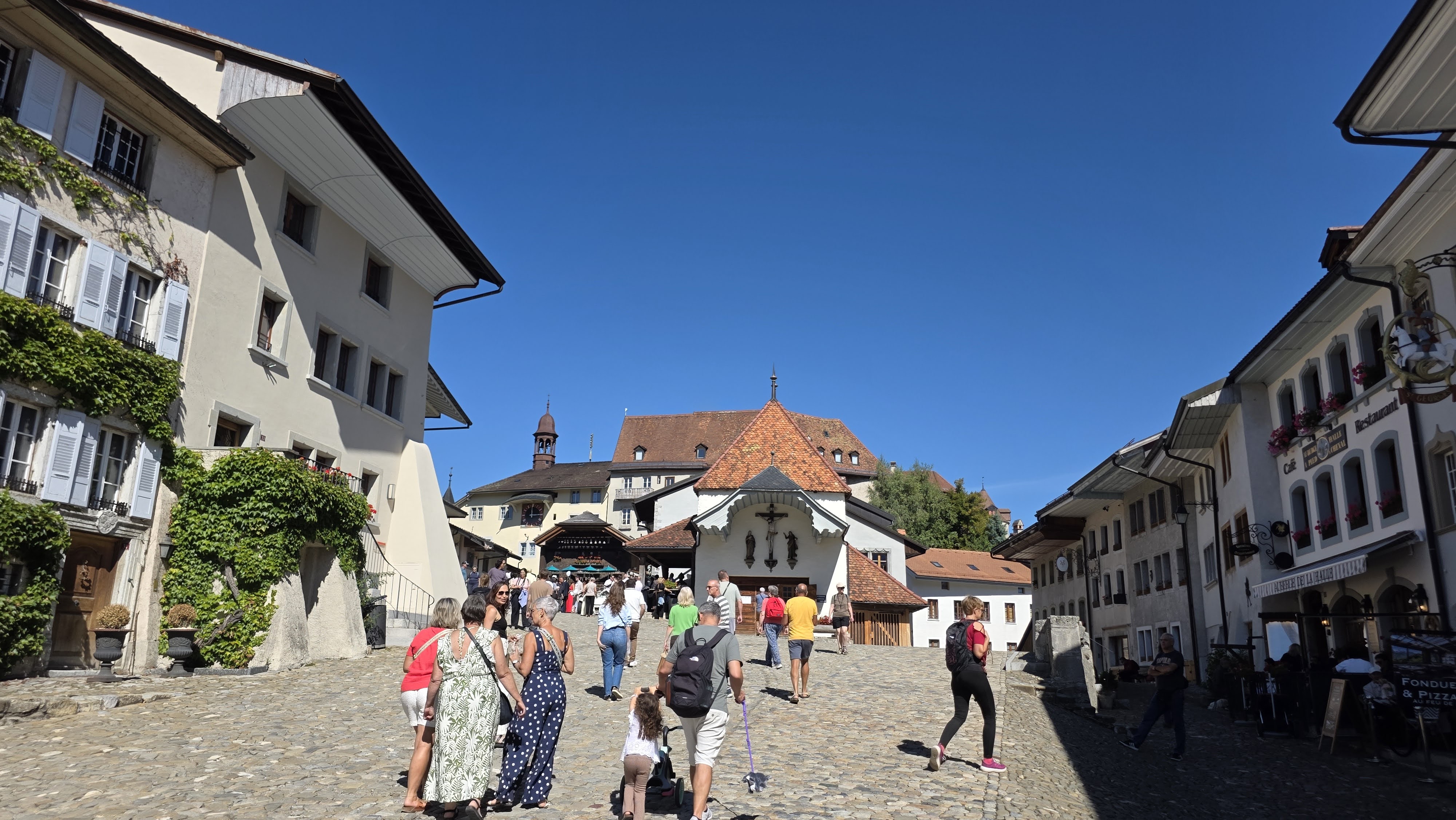
If the Alte Brennerei makes you want more Swiss art in unusual places, the H.R. Giger Museum in Gruyères is the perfect next stop for a road trip. I wrote about it in my guide to Gruyères and the H.R. Giger Museum and Bar. Giger and Schang Hutter could not look more different, and yet they share more than you might think:
- Both put the human body at the centre. Hutter stretches and breaks it to show vulnerability. Giger fuses it with machines to show fear and desire.
- Both were shaped by the 20th century’s darkest moments. Hutter by the stories of war he heard in Munich, Giger by the nightmares he turned into biomechanical worlds.
- Both are best experienced in unusual buildings. Hutter in a raw potato distillery, Giger in an old château in the medieval village of Gruyères.
Seeing both within a few days gives you a fascinating picture of how two Swiss artists dealt with the same century in completely different ways.
Planning Your Visit to the Alte Brennerei
Getting There
Unterramsern is a small village in the Bucheggberg, the rolling farmland between Solothurn and Bern. The easiest way to get there is by car: it takes about 20 minutes from Solothurn, and there is parking right next to the gallery. Public transport in the Bucheggberg is limited, so if you come by train and bus, check your connection in the SBB app before you leave and plan your return trip.
Opening Hours and Tickets
The Alte Brennerei is not a museum with fixed daily hours. It opens during its exhibitions, often on specific days and afternoons. Always check the current dates on the official website before you drive out.
My Tips for Your Visit
- Bring a jacket. The old cellar and tank rooms stay cool even on a warm day.
- Take your time. Plan at least an hour. The building has many rooms over several floors, and some works are tucked away in corners you could easily miss.
- Walk around the garden. The sculptures and glass works outside are part of the experience.
- Combine it with Solothurn. Spend the morning in Solothurn’s old town, have lunch, then drive out to Unterramsern in the afternoon.
Make a Day of It in Solothurn
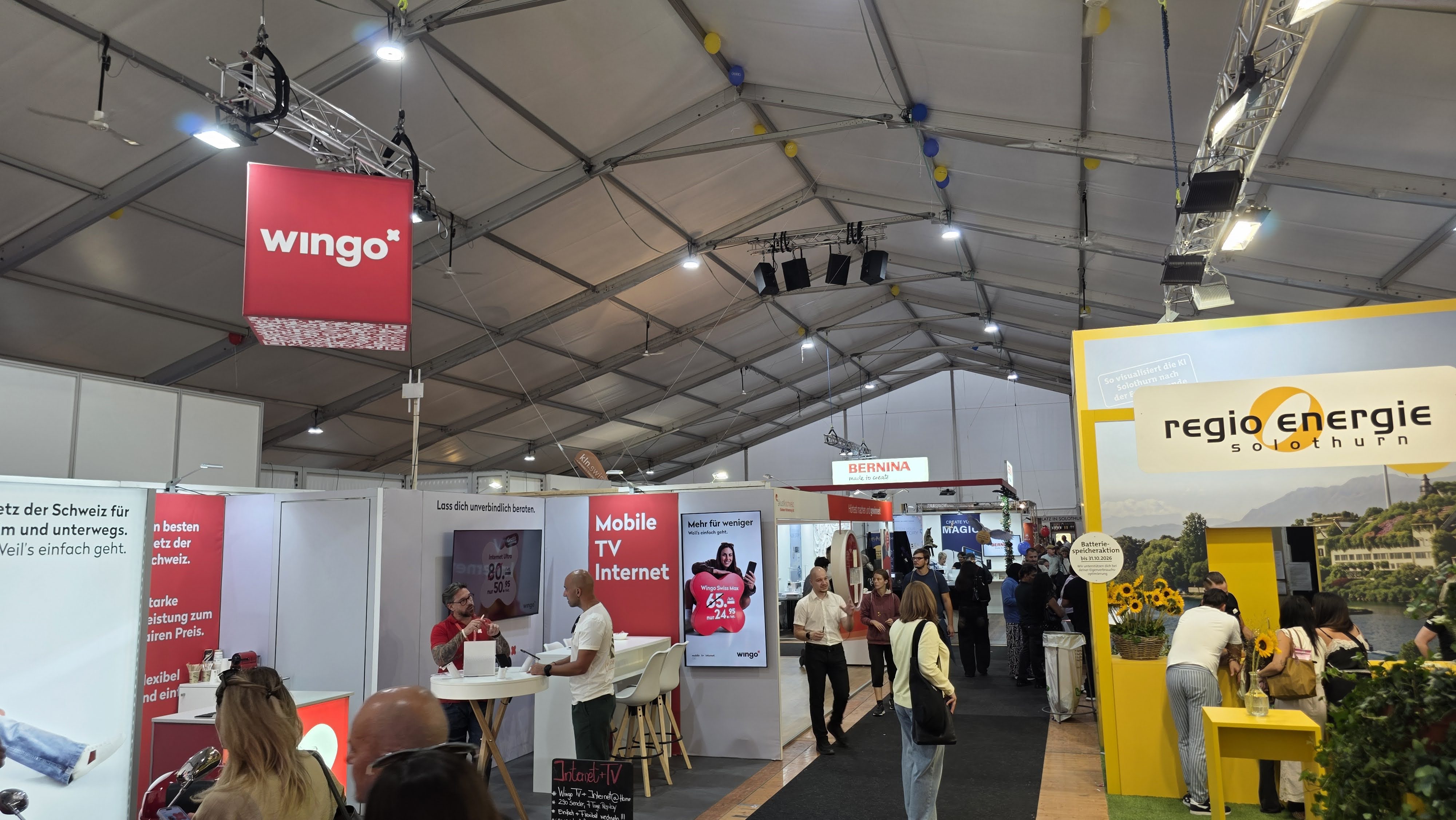
Solothurn is only a short drive away and is the natural base for a visit. Have a look at my guide to the best restaurants in Solothurn for lunch or dinner, and if you visit in autumn, my HESO Solothurn guide covers the city’s big autumn fair. In summer, the Aare boat from Solothurn to Biel is a lovely way to see the region from the water, with a stop at the stork village of Altreu. For more museums with a strong sense of Swiss history, I also recommend the Ballenberg Open-Air Museum and the Landesmuseum in Zurich. You will find all my Swiss articles in my Switzerland travel guide.
Frequently Asked Questions
What is the Alte Brennerei in Unterramsern?
It is a private art gallery in a former potato schnapps distillery built in 1903 in Unterramsern, Canton Solothurn. Since 2010 it has shown Swiss and international art across more than 1,000 m² of exhibition space and a sculpture garden.
What exhibitions are on at the Alte Brennerei?
The gallery runs three formats a year: Primeart for emerging artists, Art for established artists, and a Christmas exhibition. The Schang Hutter exhibition “Der Mensch im Zentrum” runs until 18 October 2026. Check the official website for the current show.
Is the Alte Brennerei open every day?
No. It opens during its exhibitions, usually on specific days. Check the dates on the gallery’s website before you go.
Who was Schang Hutter?
Schang Hutter (1934 to 2021) was a sculptor from Solothurn known for thin, fragile human figures about vulnerability, war and violence. His steel sculpture Shoah, placed in front of the Federal Palace in Bern in 1998, became one of the most discussed public artworks in Switzerland.
Is the Alte Brennerei worth the trip?
Yes. The combination of a raw industrial building, a sculpture garden and serious art makes it one of the most unusual galleries in Switzerland, and it is easy to combine with a day in Solothurn.
Final Thoughts
The Alte Brennerei does not explain the art to you; it lets the walls, the cold and the silence do the work. Seeing Schang Hutter’s fragile figures in a building where farmers once brought their potatoes to be turned into schnapps was unforgettable, and it made me want to come back for every new show.
If you are anywhere near Solothurn, check what is on and go. I will add my next visit to this page. And if you are planning a wider Swiss art trip, continue to Gruyères for the opposite side of the Swiss imagination in the H.R. Giger Museum.
Author

Get My Personal Travel Maps



Leave a Reply