There is no journey quite like a California road trip through the American West. After navigating over 1,500 miles of winding coastline and desert expanse, I can tell you that preparation is everything. This journey was a massive loop that touched the Pacific Ocean, the high-altitude peaks of Arizona, and the lowest salt flats in North America.
This isn’t just a drive; it’s a cross-section of American culture. We began in the refined, aromatic streets of Little Italy, San Diego, before trading the sea breeze for the neon-soaked heat of the Mojave Desert.
Driving through these extremes, from the humid coast to the arid Grand Canyon, requires more than just a GPS. In this guide, I’m sharing my firsthand experience on how to manage the long stretches of the I-15, the best tech to keep you on track, and critical safety tips (like how to spot a rattlesnake before you step on it). Whether you are exploring the “People’s Palace” in San Francisco or the snow-capped Hogsmeade in Hollywood, this is the practical blueprint for your own Western odyssey.
San Diego: The Launchpad
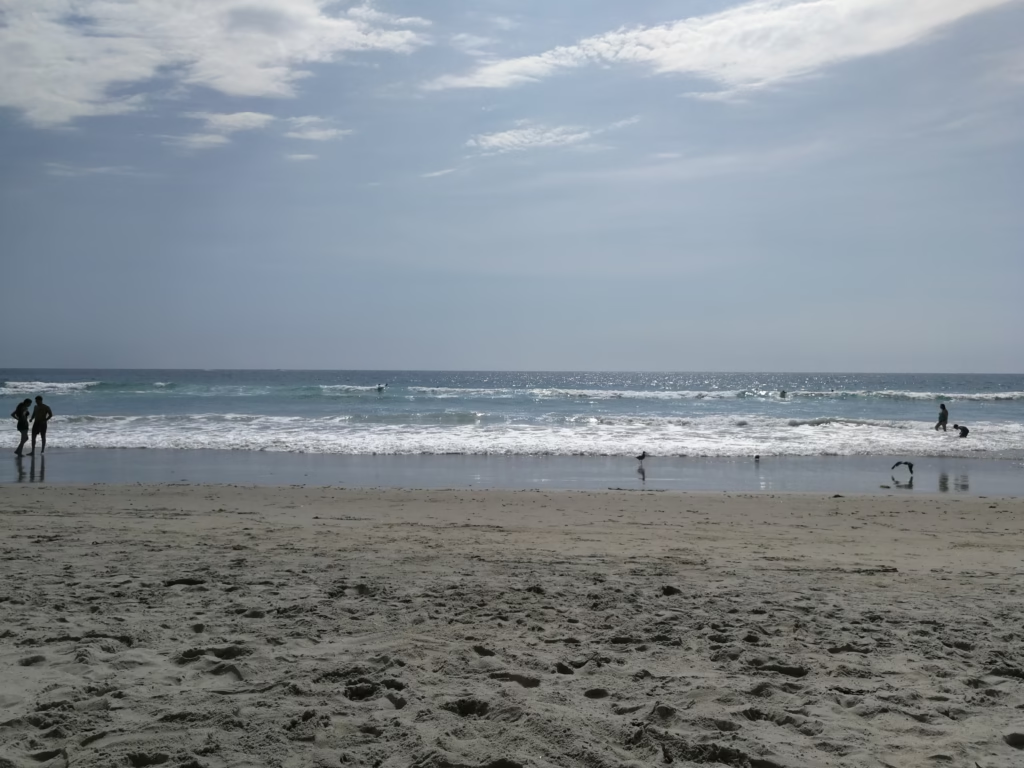
We started in San Diego, a city defined by its perfect weather and massive international student community. My brother was here for a language exchange, which gave us the perfect excuse to explore beyond the typical tourist traps.
Little Italy (Italy Town)
This was a major highlight. Originally a fishing village for Italian immigrants, it is now the trendy heart of the city. We walked down India Street, which is lined with amazing patios and high-end boutiques. It’s a pedestrian-friendly area that manages to feel like a slice of Europe in the middle of Southern California.
- What to do: Grab a gelato at a local shop and sit in the Piazza della Famiglia, a 10,000-square-foot open plaza with a beautiful fountain. It’s the best spot for people-watching and soaking in the upscale urban vibe.
The Harbor & La Jolla
We spent significant time near the water watching the naval ships and sailboats. If you have an afternoon, head to La Jolla Cove. While the sea lions here are famous, the area also offers incredible cliffside walking trails and sea caves you can explore by kayak.
Palm Springs: Modernism in the Heat
Heading east, we hit Palm Springs. This city is a global mecca for Mid-century Modern architecture. It looks like a movie set from the 1960s with flat-roofed houses, geometric designs, and iconic neon signs.
The Desert Experience
The heat here is a “dry heat,” which is manageable but intense. The geography is striking; the San Jacinto Mountains rise nearly 10,000 feet straight up behind the palm trees, creating a dramatic backdrop for the desert floor.
- What to do: If you need to escape the triple-digit temperatures, take the Palm Springs Aerial Tramway. The floor of the cable car rotates 360 degrees as it ascends 8,500 feet into the mountains. It can be 30 degrees cooler at the top, sometimes with snow even in the spring.
Flagstaff & The Grand Canyon: Into the High Country

From the desert, we climbed into the mountains of Arizona to Flagstaff. This town sits at 7,000 feet and is surrounded by a massive pine forest. It’s a historic stop on Route 66 with a rugged, “Old West” mountain feel.
The Grand Canyon South Rim

We drove an hour north from Flagstaff to reach the park. Standing at the edge of the South Rim, the sheer scale of the canyon is something your brain almost can’t process, it looks like a massive, high-definition painting until you see a tiny bird fly a mile down into the depths.
- Expert Tip: Don’t just stand at the crowded first viewpoint. Walk the Rim Trail toward Hopi Point or Hermit’s Rest. The further you walk, the more the crowds disappear, and the silence of the canyon truly takes over.
- Safety Warning: Be extremely careful where you step! Always watch out for rattlesnakes along the trails. I almost stepped directly on one while walking; they blend in perfectly with the rocks and dirt, so keep your eyes on the path at all times.
Las Vegas: Luxury Buffets & The Reality of Gambling
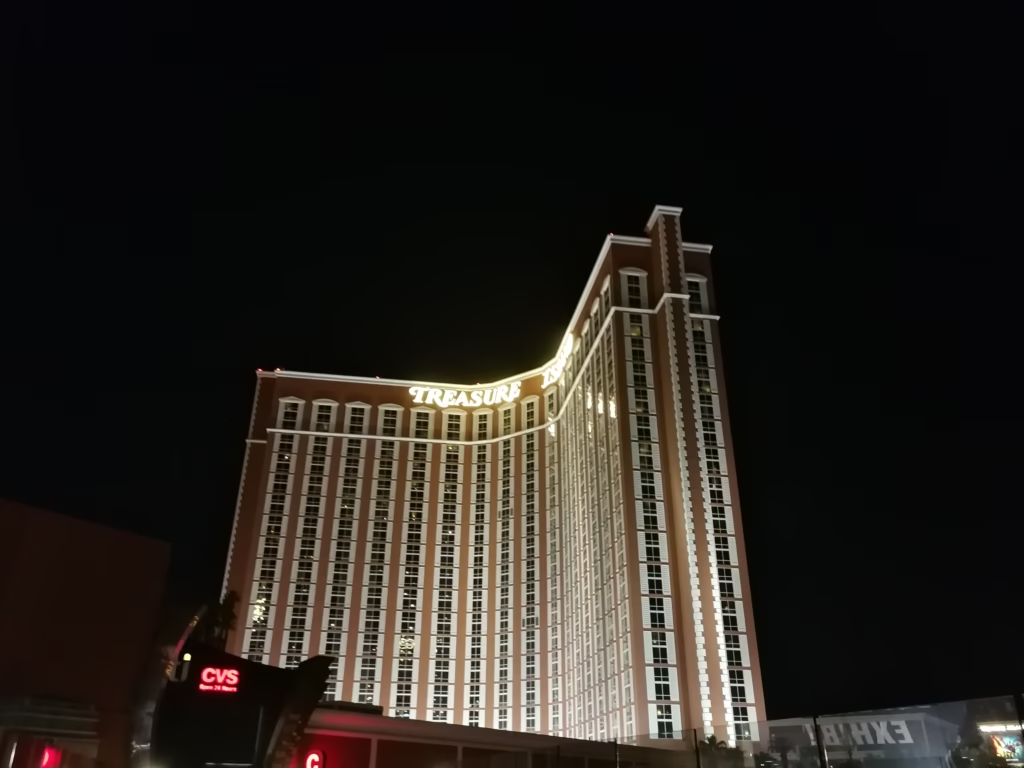
We did a “short path” through Vegas. We weren’t there for the party scene; we were there for the spectacle and the world-class culinary scene.
The Bacchanal Buffet at Caesars Palace
If you’re going to eat in Vegas, you have to do it right. We went to the luxury buffet at Caesars Palace, and it was worth every cent. It features nine open kitchens and hundreds of daily dishes.
- What to eat: Focus on the high-value items, chilled crab legs, oysters, prime rib, and the street taco station. The dessert bar alone looks like a high-end jewelry store filled with pastries. It is the gold standard of dining in the city.
A Word on Gambling
We skipped the casino floors entirely. Honestly, gambling is for total losers who don’t understand math and have achieved nothing in life. It’s a trap for people looking for a shortcut. We were there for the architecture and the food, not to throw away our travel budget on machines built to make us lose.
Death Valley: The Alien Landscape
Crossing back into California, we entered Death Valley National Park, the hottest, driest, and lowest place in North America.
Must-See Geological Wonders
- Badwater Basin: This is the lowest point in the US (-282 feet below sea level). It is a vast salt flat that looks like a frozen lake but feels like a furnace.
- Artist’s Palette: A one-way scenic drive through hills colored with vibrant shades of purple, green, and pink caused by volcanic minerals.
- Zabriskie Point: The most famous overlook in the park, offering a panoramic view of the yellow and brown “badlands” that look like ripples in the earth.
Los Angeles: The Entertainment Capital
Arriving back in the coastal megalopolis, we focused on the classic Hollywood experience.
Universal Studios Hollywood
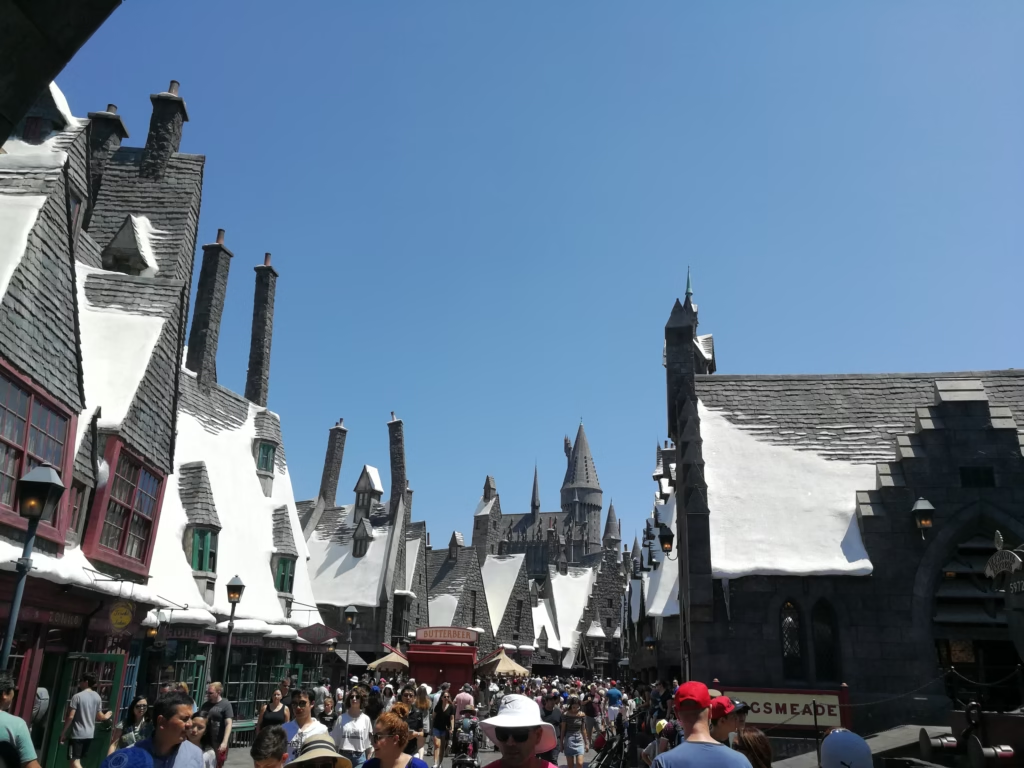
As a fan of the Wizarding World of Harry Potter, this was a dream. The immersion in Hogsmeade is incredible.
- Pro Insight: The Universal version in Japan is almost an exact copy of this LA location. If you’ve seen one, the layout will feel very familiar, but the “Forbidden Journey” ride inside the Hogwarts castle is a masterpiece of engineering.
The Hollywood Sign & The Walk of Fame
You can’t visit LA without seeing the Hollywood Sign. We found a vantage point to get the perfect photo of the iconic white letters on Mt. Lee. We also spent time on Hollywood Boulevard to see the Walk of Fame.
- The Experience: It is surreal to walk over the brass stars of legends. It’s a busy, tourist-heavy area, but seeing the TCL Chinese Theatre and the handprints of the stars makes you feel like you are at the center of the movie industry.
Santa Monica: The End of the Trail
We gave Santa Monica its own section because the vibe is completely different from the rest of LA. It’s where the city finally meets the Pacific Ocean in a blast of salt air and sunshine.
The Santa Monica Pier
The pier is the official western terminus of Route 66. Walking over the old wooden planks with the Pacific Ocean crashing below is the quintessential California experience. It features an iconic solar-powered Ferris wheel and a massive arcade, but the real draw is simply the view of the coastline stretching toward Malibu.
Muscle Beach and the Promenade
Next to the pier is the original Muscle Beach, where you can watch people doing incredible gymnastics. We also walked through the Third Street Promenade, a massive outdoor shopping mall that is great for catching street performers and grabbing a coffee before hitting the road again.
The Coastal Drive: Wildlife & San Simeon
Driving north toward San Francisco, we stayed on the coast to see the wilder side of California.
The Sea Lions of Piedras Blancas
Near San Simeon, we stopped at a beach covered in hundreds of elephant seals and sea lions. They are huge, loud, and completely wild. Unlike a zoo, you are watching them interact in their actual habitat. There is a free boardwalk that offers a safe, elevated view of the animals as they fight for space on the sand.
San Francisco: The Final Destination
Our journey ended in the “City by the Bay.” It is a place of massive hills, historic architecture, and a very modern urban struggle.
San Francisco City Hall
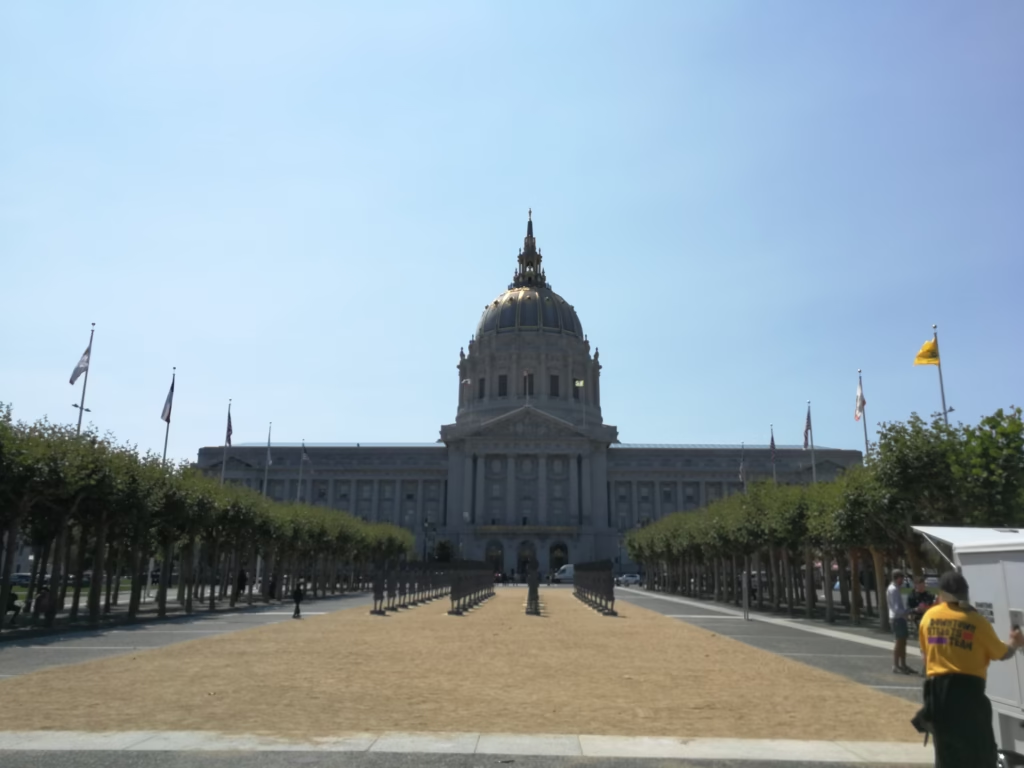
This was one of the most surprising parts of the trip. Located in the Civic Center, it is known as the “People’s Palace.” We actually went inside, which I highly recommend. The grand staircase and the gold-leaf dome, which is taller than the one in Washington D.C., are breathtaking.
The Iconic Sights
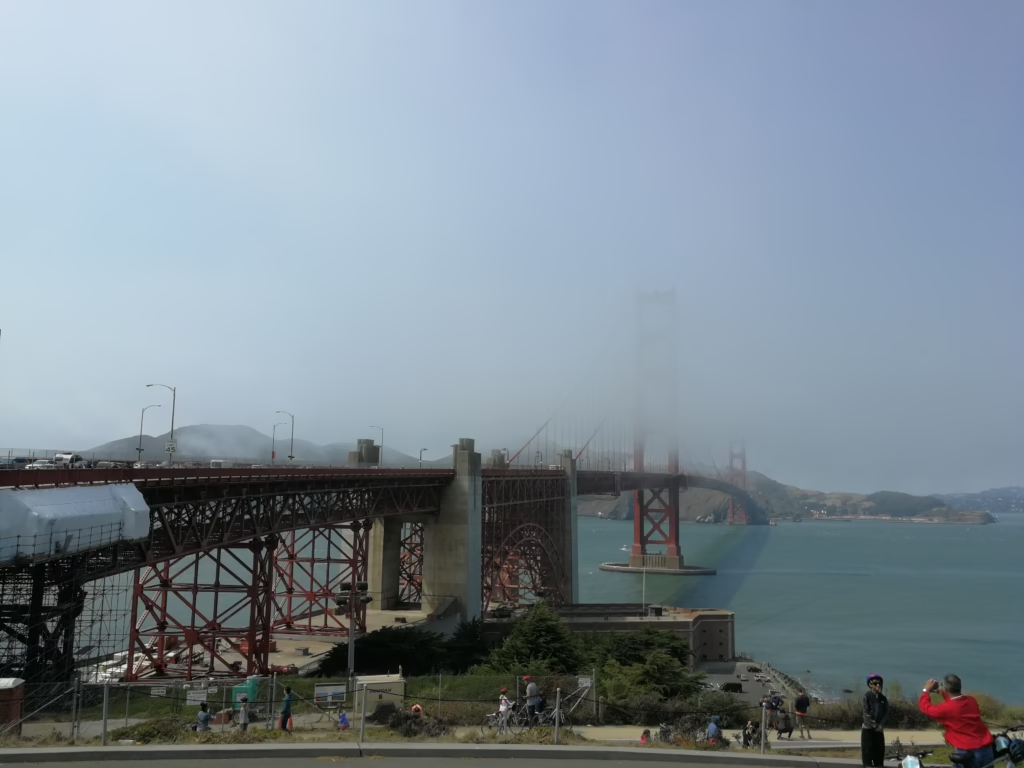
- The Big Bridge: We saw the Golden Gate Bridge from the Presidio. It’s an engineering marvel that defines the city’s skyline.
- Painted Ladies: Also known as “Postcard Row,” these Victorian houses in Alamo Square are the most photographed homes in the world.
- Alcatraz: We saw the island from the shore. You can take a boat tour to the old prison, but you must book weeks in advance as it sells out fast. We had no time for the island tour this time, but seeing it from the pier is still impressive.
The City’s Edge: A Reality Check
It is important to be honest, San Francisco has a very visible drug and homelessness problem. In the downtown areas and near Market Street, you will see many addicts on the sidewalk. It is a sad, stark reality that exists right next to the beautiful architecture of the city.
The Tech: Driving a Toyota via Dollar Car Rental
We rented our car through Dollar, and getting a newer Toyota with “AI-style” features was a lifesaver.
Why the Tech Matters
- Adaptive Cruise Control: On the 5-hour stretches of desert highway, the car “thinks” for you, adjusting speed automatically to follow the car in front.
- Lane Trace (Spurhalterung): The car subtly steers itself to stay in the center of the lane, which is massive for preventing fatigue on a 1,500-mile trip.
- Automatic Emergency Braking: In the heavy, unpredictable traffic of Los Angeles, having that extra layer of sensor-based safety provides immense peace of mind.
If you love road trips, read about our Borneo road trip through Sabah and my South Africa guide.
California Road Trip FAQ
How long is a San Diego to San Francisco road trip?
Our loop through California and the American West ran over 1,500 miles, starting in San Diego and ending in San Francisco by way of the desert and the Grand Canyon. It is a big drive, so pacing and prep matter.
What is the route for this California road trip?
We went San Diego, Palm Springs, Flagstaff and the Grand Canyon, Las Vegas, Death Valley, Los Angeles, Santa Monica, the San Simeon coast, and finally San Francisco. The order lets you swing inland through the desert before returning to the Pacific coast.
What should you do in Little Italy, San Diego?
Walk India Street for its restaurants and cafes, then grab a gelato in the Piazza della Famiglia, a 10,000-square-foot plaza with a fountain that is perfect for people-watching. It is the trendy heart of the city and an easy highlight.
Is Palm Springs worth visiting?
Yes, especially if you like Mid-century Modern architecture, which the whole city is built around. To escape the triple-digit heat, ride the Palm Springs Aerial Tramway, whose floor rotates 360 degrees as it climbs roughly 8,500 feet up the San Jacinto Mountains.
How do you visit the Grand Canyon from Flagstaff?
It is about a one-hour drive north to the South Rim. Instead of crowding around the first viewpoint, walk the Rim Trail toward Hopi Point or Hermit’s Rest, where the crowds thin out and the views keep opening up.
What is the best buffet in Las Vegas?
We loved the Bacchanal Buffet at Caesars Palace, which has nine open kitchens. Focus on the high-value items like chilled crab legs, oysters, prime rib, and the street taco station, and save room for the dessert bar.
What is the lowest point in Death Valley?
Badwater Basin, at 282 feet below sea level, is the lowest point in the United States. It is a vast salt flat that looks like a frozen lake but feels like a furnace in the heat.
What is there to do in Santa Monica?
The Santa Monica Pier marks the western end of Route 66, and walking its old wooden planks above the Pacific is a classic California moment. Nearby you will find the original Muscle Beach and the Third Street Promenade for shopping.
Where can you see sea lions on the California coast?
Near San Simeon, there is a beach covered with hundreds of elephant seals and sea lions. Unlike a zoo, you are watching them completely in the wild as they interact, which is well worth a stop on the coastal drive.
Is San Francisco safe for tourists?
The main sights are rewarding, but be honest with yourself about the city too: downtown and the Market Street area have a very visible drug and homelessness problem, so stay aware of your surroundings there while still enjoying the landmarks.
What car should you rent for a California road trip?
We rented a newer Toyota through Dollar, and the driver-assist features were a real help: adaptive cruise control on the long desert highways and lane-tracing to cut down on fatigue over five-hour stretches.
Author

Get My Personal Travel Maps


Leave a Reply