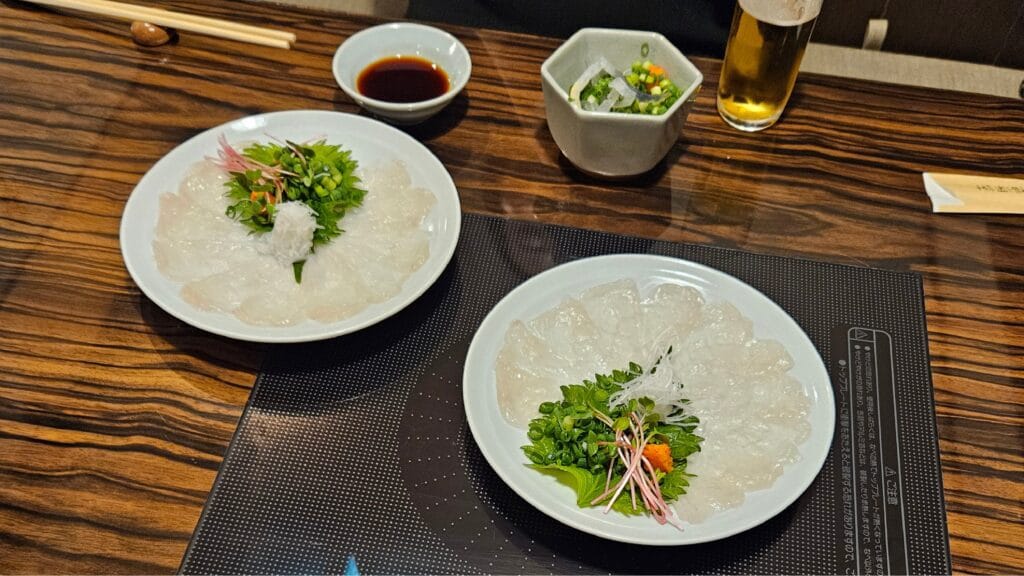
Eating fugu in Osaka, the legendary Japanese pufferfish, is a bucket list experience for many food lovers. The dish has an almost mythical status in Japan, partly because of its clean, delicate flavor and partly because of its long history of strict handling regulations. For travelers, fugu often sits at the crossroads of curiosity and caution.
My own relationship with the dish started long before I finally tasted it. On a previous trip to Osaka with my family, we walked past several fugu restaurants, each one marked by the iconic pufferfish lanterns hanging above the entrance. I suggested we try it, but the idea made everyone uneasy. The potential toxicity felt like too much of a gamble, even though licensed chefs spend years training to prepare it safely. Their hesitation was understandable, so we skipped the experience and stuck to more familiar dishes.
That earlier decision stayed with me. I knew that fugu was regulated carefully in Japan, and I had spoken with several locals over the years who reassured me that the risk is extremely low when dining at reputable restaurants. With that background and a bit more confidence, I decided that this trip would be different. I booked a table at Guenpin Namba, a well regarded fugu restaurant known for its experienced chefs and consistent quality.
Sitting down to my first full fugu meal felt like a small personal milestone. I had read about the preparation techniques, watched chefs at work in other cities, and listened to travelers describe the subtle flavor that keeps them coming back. Experiencing it firsthand offered a clearer understanding of why the dish has survived centuries of scrutiny and still draws curious diners from around the world.
Spoiler: I survived. And more importantly, the experience was thoughtful, memorable, and far less intimidating than its reputation suggests.
Preparing for the Fugu in Osaka Experience
Even though fugu poisoning cases are extremely rare in certified restaurants, the thought of eating a fish that contains one of the world’s most potent toxins still made me uneasy. Japan’s regulations for handling fugu are among the strictest in the world, and only licensed chefs who complete years of apprenticeship are allowed to prepare it. I knew all of this, yet the mix of curiosity and apprehension was hard to shake.
That’s why I drank three beers before even stepping foot in the restaurant. It wasn’t about doubting the chefs or questioning Japan’s safety standards. I simply needed a bit of liquid courage to settle my nerves and acknowledge that this was a personal leap. I had talked for years about trying fugu in Osaka, but saying it and actually doing it felt very different once the moment arrived.
Guenpin Namba is a highly regarded restaurant specializing in Tiger Pufferfish, known in Japan as Torafugu. Their reputation is built on more than 38 years of experience, along with a nationwide network of over 80 locations. Consistency and safety are central to their brand, and this was one of the main reasons I chose them. If I was going to eat fugu for the first time, I wanted to do it somewhere that treats the tradition with respect and precision.
Walking inside helped calm me. The interior balanced modern refinement with classic Japanese elements. Light wooden panels, clean lines, and soft lighting created a calm atmosphere that felt intentionally reassuring. Nothing was flashy. Nothing tried too hard. It had the quiet confidence of a place that knows exactly what it does well. A large stylized fugu displayed near the entry caught my eye and reminded me that this was the point of no return, but instead of fear, I felt a growing sense of anticipation.
The restaurant’s staff welcomed me with the kind of attentive but unobtrusive service that Japanese dining is known for. Their professionalism added another layer of trust. If any place could guide a nervous first timer through a fugu experience, it was this one.
A Fugu Feast: From Sashimi to Hotpot
Our fugu tasting experience included a full lineup of dishes, each one highlighting a different texture and flavor profile of the fish. Fugu is known for its subtlety, so tasting it in multiple preparations is the best way to appreciate how versatile it actually is. We decided to order a full course set, which is the recommended way to experience fugu in Osaka, especially for first timers. From sashimi sliced paper thin to lightly fried pieces with a crisp exterior, every dish offered its own character and taught me something new about why this fish holds such a special place in Japanese cuisine.
🐡 Fugu Sashimi (Tessa) – 1,300 Yen
The meal started with paper-thin slices of raw fugu, arranged beautifully on a plate like a delicate flower. Served with ponzu sauce, thinly sliced green onions, and grated daikon, it had a subtle, slightly chewy texture. The taste? Mild but refreshingly umami-packed.
🍲 Fugu Hotpot (Tecchiri) – 2,600 Yen per person
Next came the fugu hotpot, where fresh pufferfish chunks were cooked in a light dashi broth with vegetables and tofu. The fish absorbed the broth’s delicate flavors, creating a warm and comforting dish.
🔥 Grilled Fugu – 2,700 Yen
The grilled version brought out an entirely different side of fugu. Cooked over charcoal, it had a slightly crispy texture with a subtle smoky aroma. The dipping sauces—ponzu and special soy sauce—added an extra depth of flavor.
🍚 Fugu Rice – 1,200 Yen
For the final dish, we had fugu-infused rice, cooked in a broth made from fugu bones. The rice was aromatic, packed with umami, and topped with fresh herbs and citrus zest.
🍺 Total Cost: Around 5,000 Yen Per Person (+ Beer!)
Of course, I needed more beer to keep my nerves in check. I ordered two more beers at the restaurant (each costing around 600 Yen), which made me even more relaxed—and a little too happy.
The Truth About Fugu Poisoning: Is It Really That Dangerous?
The short answer? Not in a licensed restaurant.
Fugu’s reputation as a deadly dish mostly comes from historical cases where untrained individuals tried to prepare the fish themselves. In reality, the strict regulations in Japan mean that cases of fugu poisoning in restaurants are almost non-existent.
Licensed fugu chefs must go through two to seven years of rigorous training, learning:
✔️ How to identify different pufferfish species
✔️ Which parts of the fish are toxic
✔️ The precise method of removing poisonous organs
✔️ The correct way to slice and serve the fish
The exam to become a certified fugu chef is so difficult that only a small percentage pass. Thanks to these high standards, eating fugu at a reputable restaurant like Guenpin Namba is completely safe.
Fugu is just one example of how Japanese cuisine combines tradition, skill, and strict standards. If you are curious to explore more iconic dishes and regional specialties, I have gathered my experiences and recommendations in the Japanese Food Guide.
My Girlfriend’s Dark Humor About Fugu
Before we started eating, my girlfriend made a dark yet hilarious joke:
“If you eat fugu and die, you’re very lucky… you know why? You’ll be in the newspaper.”
This made me pause for a second. Would my tragic yet dramatic death make headlines? Would people read about my demise and think: “Well, at least he went out in style.”
Thankfully, I didn’t have to reflect too much on that thought—I made it through the meal alive and satisfied.
Final Thoughts: Should You Try Fugu?
If you ever find yourself in Osaka and want to try one of Japan’s most distinctive culinary experiences, I genuinely recommend booking a meal at Guenpin Namba. For many travelers, fugu is surrounded by equal parts curiosity and hesitation, and I completely understand why. Before trying it myself, I spent years hearing stories, reading about the certification process, and wondering whether the flavor could possibly justify the hype. What I learned is that fugu is less about shock value and more about appreciating a tradition that Japan has refined with remarkable care.
Guenpin Namba stands out because it makes the entire experience feel approachable. The staff explain the dishes clearly, the preparation is handled with obvious expertise, and the atmosphere is calm enough that you can actually enjoy the subtleties of the meal. Each course highlights a different technique, which helped me understand why locals respect fugu as a seasonal delicacy rather than just a novelty for tourists.
For anyone who feels nervous, that’s completely normal. Even with all the safety regulations and the restaurant’s strong reputation, I still felt a mix of excitement and anxiety before sitting down. What helped was letting myself ease into the moment instead of overthinking it. In my case, that meant having a couple of beers beforehand to settle my nerves. I’m not saying that’s the official method, but it certainly made the start of the meal a little more relaxed and a lot more enjoyable.
Trying fugu ended up being one of the most memorable food experiences of my time in Japan. Not because it was dangerous, but because it offered a new perspective on how deeply tradition, skill, and respect shape Japanese cuisine. If you’re open to adventure and want a story you’ll remember long after your trip ends, Guenpin Namba is an excellent place to start.
Author

Get My Personal Travel Maps
Keep Reading: More Articles You'll Love
 Is Japanese Food Actually Chinese? The Surprising Origins of Japanese Cuisine
  Living in Japan vs Korea – The Ultimate Expat Guide
  Japan Travel Myths vs Reality: What Tourists Still Get Wrong About Japan
  Tattoos in Japan: Rules, Culture, Onsen & Changing Attitudes
  My First 30 Days in Tokyo: Essential Administrative Steps for International Students
  10 Bizarre Foods in Japan You Have to Try Once
  Matsumoto Itinerary: The Perfect 3-Day Guide Including Kamikochi