Naoshima Island is one of Japan’s most unique travel destinations and is widely known as the country’s famous art island. Located in the Seto Inland Sea between Okayama and Kagawa Prefecture, Naoshima attracts visitors from around the world with its combination of contemporary art, world-class museums, striking architecture, and beautiful coastal scenery.
Many travelers visit Naoshima to see iconic attractions such as Yayoi Kusama’s Yellow Pumpkin, the Chichu Art Museum, and the architectural works of Tadao Ando. However, after exploring the island myself, I discovered that Naoshima offers far more than a collection of museums and outdoor sculptures. The island serves as a remarkable example of how contemporary art, innovative architecture, and rural revitalization can transform a small fishing community into one of Japan’s most celebrated cultural destinations.
What makes Naoshima truly special is the seamless integration of art with the surrounding landscape. Tadao Ando’s minimalist concrete structures emerge naturally from the rugged coastline, while galleries, installations, and renovated traditional homes blend into everyday island life. Rather than feeling like an open-air museum, Naoshima feels like a living community where art and nature exist in harmony. For travelers seeking one of the most memorable experiences in Japan, Naoshima is far more than an art island. It is a destination that challenges the way we think about culture, architecture, and travel itself.
How to Get to Naoshima Island
Reaching Naoshima is part of the experience. Most travelers visit the island from either Okayama via Uno Port or from Takamatsu in Kagawa Prefecture. During our trip, we traveled from Kōchi before continuing north to catch the ferry to Naoshima.
If you are planning a day trip to Naoshima, I strongly recommend taking one of the earliest ferry departures available. Arriving early gives you enough time to visit major attractions such as the Chichu Art Museum, Yayoi Kusama’s Yellow Pumpkin, Benesse House, and the Art House Project without feeling rushed.
The ferry ride across the Seto Inland Sea is more than just transportation. As the mainland slowly disappears behind you, the atmosphere begins to change. Small islands emerge on the horizon, fishing boats drift across the calm water, and the pace of life noticeably slows. The transition into what locals often call “Setouchi Time” becomes especially apparent when Naoshima’s coastline comes into view and Yayoi Kusama’s iconic Red Pumpkin welcomes visitors at Miyanoura Port.
For many travelers, this first glimpse of Naoshima is the moment the journey truly begins.
Best Things to Do in Naoshima
Stepping off the ferry at Miyanoura Port, the atmosphere changes immediately. Unlike Japan’s busy cities, Naoshima moves at a slower pace. While many visitors head straight for the island’s famous museums, some of the most memorable moments come from simply exploring the coastline, quiet villages, and hidden art installations scattered across the island.
Visit the Chichu Art Museum
One of the most famous attractions on Naoshima is the Chichu Art Museum. Designed by renowned Japanese architect Tadao Ando, the museum is built largely underground to preserve the natural landscape above. Inside, visitors can experience works by artists such as Claude Monet, James Turrell, and Walter De Maria.
The highlight for many visitors is Monet’s Water Lilies room, where natural sunlight changes the viewing experience throughout the day. Unlike traditional museums, the architecture itself becomes part of the artwork, making the Chichu Art Museum one of the most unique museums in Japan.
See Yayoi Kusama’s Yellow Pumpkin
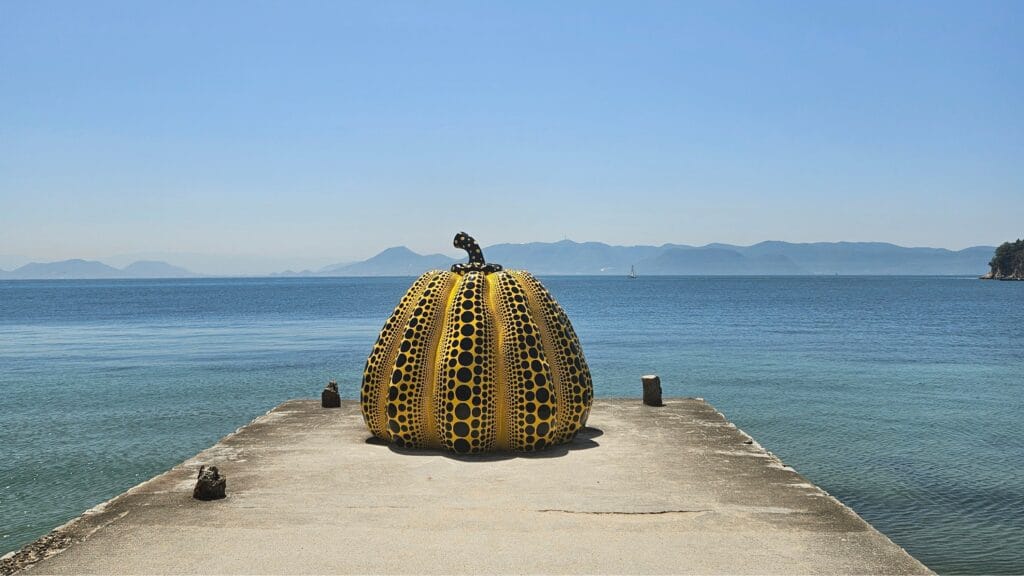
No visit to Naoshima Island is complete without seeing Yayoi Kusama’s famous Yellow Pumpkin. Located near Benesse House at the end of a concrete pier, the bright yellow sculpture covered in black polka dots has become the symbol of Naoshima and one of Japan’s most photographed artworks.
Set against the backdrop of the Seto Inland Sea, the sculpture perfectly captures the island’s blend of contemporary art and natural beauty.
Explore the Art House Project in Honmura
The Art House Project in Honmura offers a completely different experience. Instead of traditional galleries, abandoned homes, temples, and historic buildings have been transformed into immersive art installations by contemporary artists.
Walking through Honmura feels less like visiting a museum and more like discovering art woven into everyday life. The project demonstrates how Naoshima successfully used contemporary art to revitalize a rural community while preserving its cultural heritage.
Naoshima Travel Tips: What to Know Before You Visit
After spending a day exploring the island, a few practical lessons stood out that can help you avoid common mistakes and make the most of your time on Naoshima.
Book Chichu Art Museum Tickets in Advance
One of the most important things to know before visiting Naoshima is that the Chichu Art Museum operates with timed-entry tickets. Advance reservations are strongly recommended, especially during weekends, holidays, and the Setouchi Triennale festival period.
During our visit, we saw several travelers arrive without reservations and discover that their preferred entry times were already sold out. If the museum is a priority for your itinerary, book your ticket before arriving on the island.
Rent an E-Bike Instead of Relying on the Bus
Although Naoshima has a local bus network, services can become crowded during peak travel periods. We found that renting an electric bicycle near Miyanoura Port offered far greater flexibility and allowed us to explore the island at our own pace.
The route between the ferry terminal, Benesse House, and the Chichu Art Museum involves several surprisingly steep hills. While standard bicycles are available, an e-bike makes the experience significantly more enjoyable, especially during warmer months.
Check Museum Opening Days Carefully
Many first-time visitors are surprised to learn that several museums on Naoshima and neighboring Teshima close on Mondays. When a Monday falls on a public holiday, closures are often moved to Tuesday instead.
Before booking accommodation, ferries, or train tickets, it is worth checking the latest schedules on the Benesse Art Site website to avoid disappointment.
Slow Down and Enjoy the Island
The biggest mistake many visitors make is trying to rush between attractions. While Naoshima’s museums and art installations are world-famous, the island’s charm extends far beyond its galleries. Some of our favorite moments came from cycling along the coastline, wandering through Honmura’s quiet streets, and simply taking in the views across the Seto Inland Sea.
Getting Around Naoshima: Why an E-Bike Is the Best Option
One of the first things you’ll notice after arriving at Miyanoura Port is the row of bicycle rental shops located directly across from the ferry terminal. While Naoshima does have a local bus network, buses can become crowded during peak travel periods and operate on a limited schedule. For most visitors, renting a bicycle is the most efficient and enjoyable way to explore the island.
Renting a Bike on Naoshima
Most bicycle rental shops require visitors to present a valid form of identification before renting a bike. During our visit, shops such as TVC Service and Little Plum asked for either a passport or residence card and took a copy before handing over the bicycle.
While the process felt stricter than bike rental systems we had used elsewhere in Japan, including Matsumoto’s public bicycle network, it was a straightforward procedure. Having your passport or ID readily accessible can save time, especially when several ferries arrive at once and rental queues begin to form.
Why an E-Bike Is Worth the Extra Cost
At first glance, Naoshima appears relatively flat. However, appearances can be deceiving. The route between Miyanoura Port, Benesse House, and the Chichu Art Museum includes several long and surprisingly steep climbs.
Standard bicycles typically cost around ¥500 to ¥800 per day, while electric-assist bicycles generally range between ¥1,200 and ¥1,500. Although the difference may seem significant, I strongly recommend choosing the e-bike.
Even outside the peak summer season, the combination of hills and humidity can make cycling physically demanding. The electric assist allows you to spend more time enjoying the museums, viewpoints, and art installations rather than arriving exhausted at each destination.
The Best Cycling Route Around Naoshima
Most visitors follow a circular route around the island. From Miyanoura Port, they cycle south toward the Benesse House area, visit Yayoi Kusama’s famous Yellow Pumpkin and the Chichu Art Museum, then continue through Honmura and the Art House Project before returning to the port.
If you want to avoid the largest crowds, consider reversing the route. During our visit, many travelers headed directly to the Chichu Art Museum after arriving. Starting in Honmura first can provide a quieter experience before the museum district becomes busy.
Road Conditions and Safety
Naoshima’s roads are generally well-maintained and easy to navigate. However, cyclists should pay particular attention when riding through Honmura’s narrow residential streets. These are active local neighborhoods rather than tourist zones, and it is common to encounter residents, parked vehicles, and the island’s many cats around the smaller alleyways.
Taking your time and riding respectfully not only improves safety but also allows you to appreciate the quieter side of Naoshima that many visitors overlook.
Yayoi Kusama’s Yellow Pumpkin: The Symbol of Naoshima
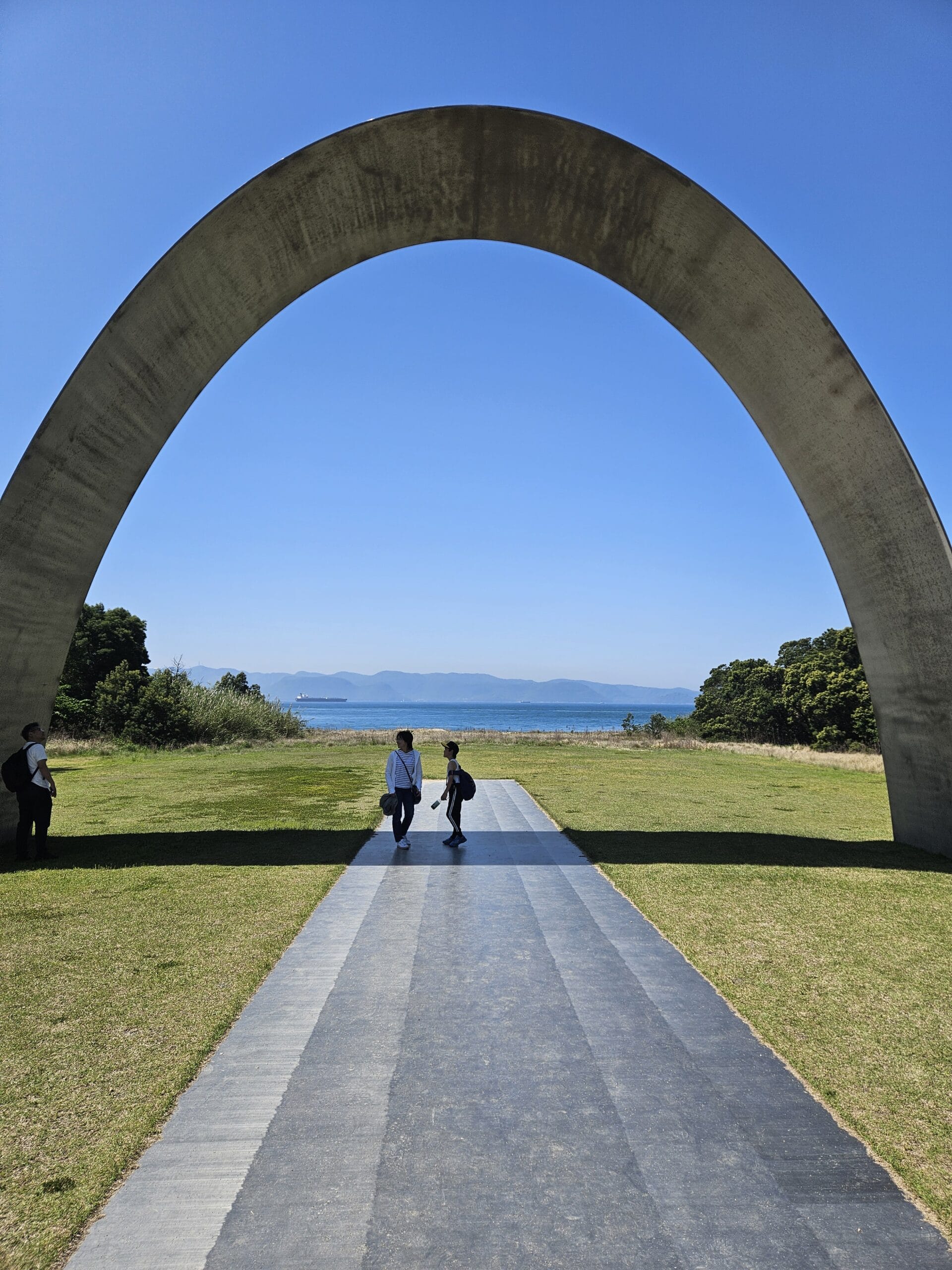
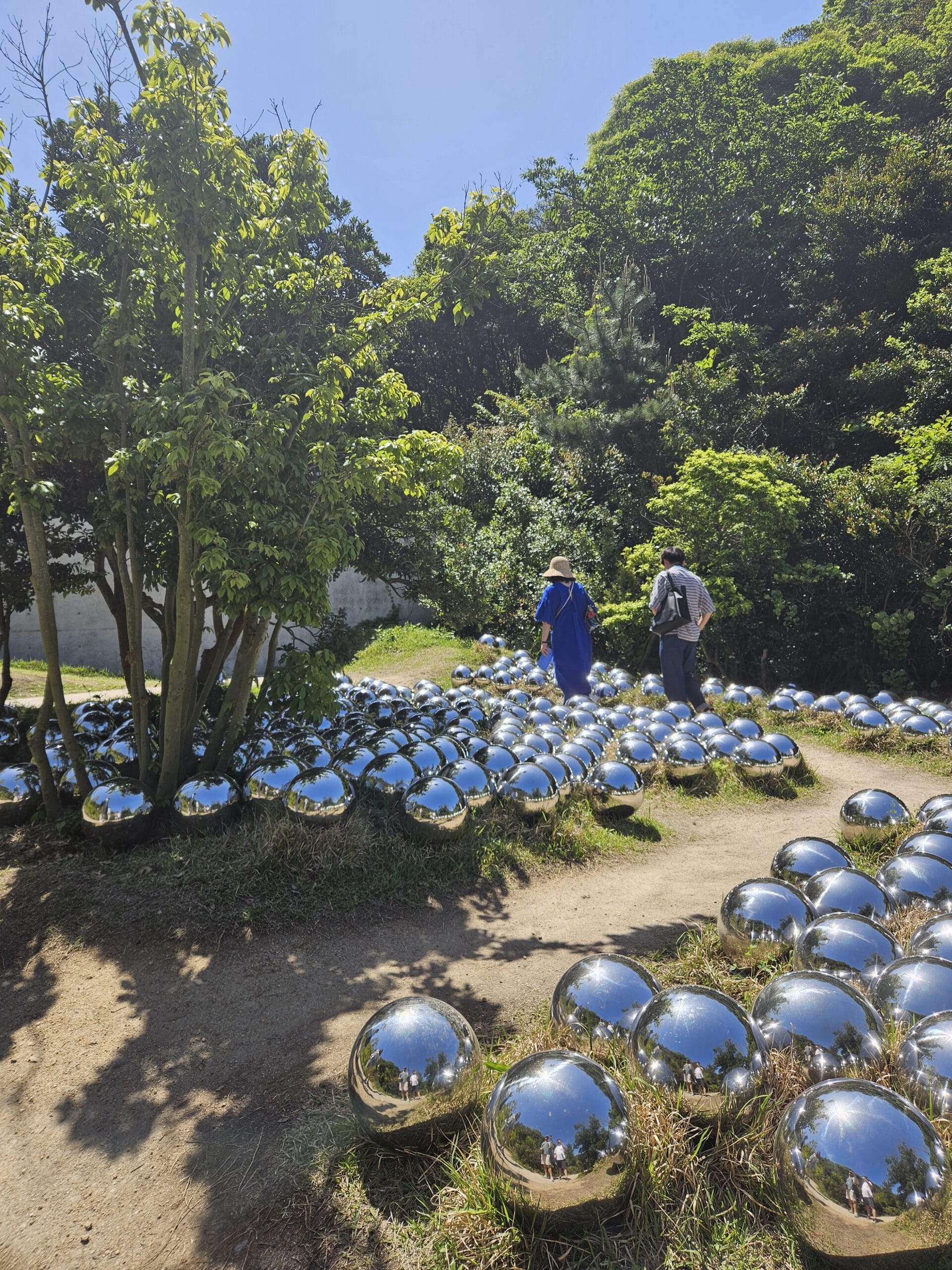

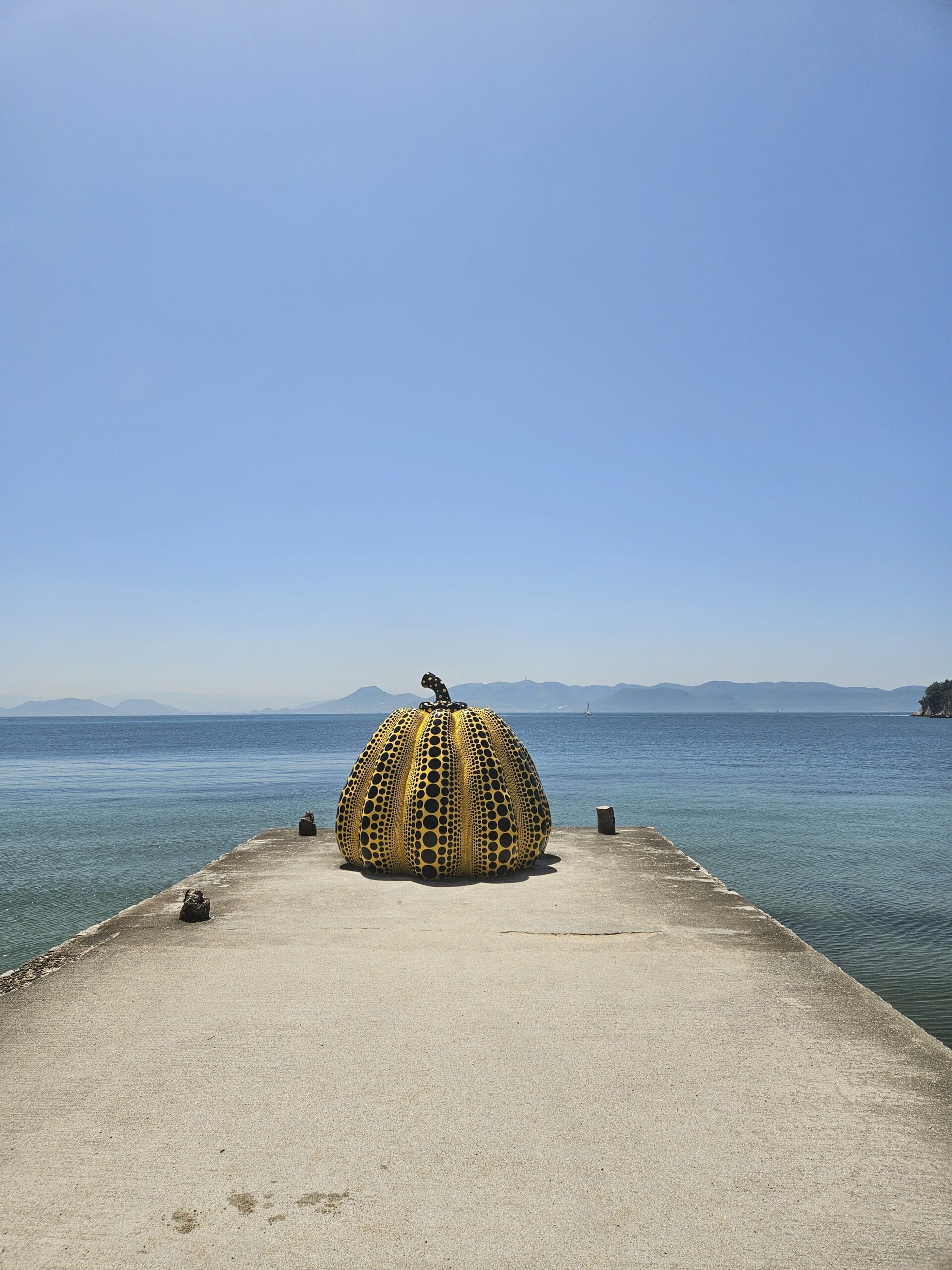
No trip to Naoshima is complete without visiting Yayoi Kusama’s “Yellow Pumpkin” (1994). Perched at the end of a concrete pier in the Benesse House Museum area, this Yayoi Kusama’s Yellow Pumpkin: The Symbol of Naoshima
No visit to Naoshima Island is complete without seeing Yayoi Kusama’s famous Yellow Pumpkin. Located at the end of a concrete pier near Benesse House Museum, the bright yellow sculpture covered in Kusama’s signature black polka dots has become the defining image of Naoshima and one of the most recognizable works of contemporary art in Japan.
Set against the blue waters of the Seto Inland Sea, the artwork perfectly captures what makes Naoshima unique. Rather than being displayed inside a traditional gallery, the sculpture exists as part of the landscape itself, changing with the weather, seasons, and shifting light throughout the day.
The Story Behind the Yellow Pumpkin
The Yellow Pumpkin was originally installed in 1994 and has since become one of the most photographed attractions on Naoshima. Its cultural significance extends far beyond social media popularity, representing the island’s transformation into a world-renowned destination for contemporary art and architecture.
Visitors returning after several years may notice that the sculpture’s history includes a dramatic chapter. In August 2021, a powerful typhoon swept the pumpkin into the sea, causing significant damage. Following extensive restoration work, the sculpture returned to its original location in October 2022 with a reinforced structure designed to better withstand the challenging coastal conditions of the Seto Inland Sea.
Following Yayoi Kusama’s Art Across Japan
For travelers interested in Yayoi Kusama’s life and artistic legacy, Naoshima is only one stop on a larger journey through Japan.
In Matsumoto, Kusama’s birthplace, visitors can explore her work at the Matsumoto City Museum of Art. Unlike the coastal setting of Naoshima, the museum’s installations are framed by the dramatic scenery of the Japanese Alps and offer insight into the artist’s personal connection to the region.
Another famous Yellow Pumpkin can be found at the Fukuoka Art Museum in Ohori Park. While the artwork itself is instantly recognizable, the experience differs greatly from Naoshima, where the sculpture interacts directly with the sea, wind, and surrounding landscape.
Why the Naoshima Pumpkin Feels Different
What makes the Yellow Pumpkin on Naoshima so memorable is its location. Unlike most museum pieces protected behind walls or barriers, the sculpture stands exposed to the elements. Visitors can watch waves crash beneath the pier, observe changing weather rolling across the Seto Inland Sea, and experience the artwork as part of the island’s environment.
This relationship between art, architecture, and nature is at the heart of the Naoshima experience and helps explain why the Yellow Pumpkin remains one of the most iconic attractions in Japan.
Hidden Gems on Naoshima: Local Treats and Unique Souvenirs
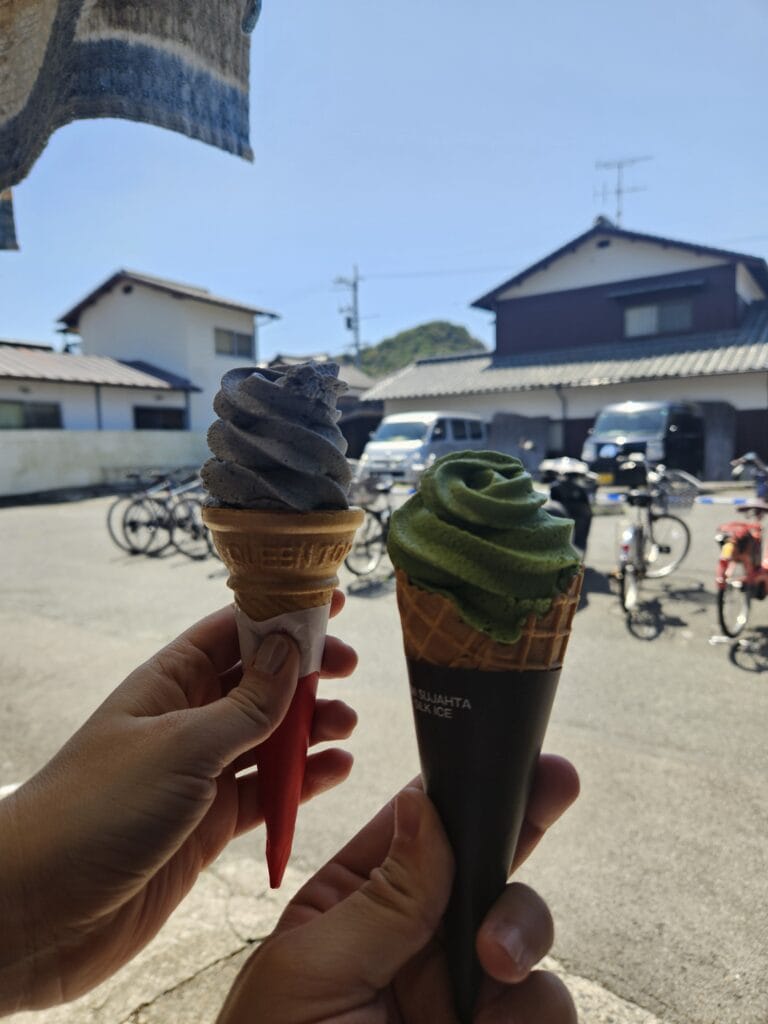
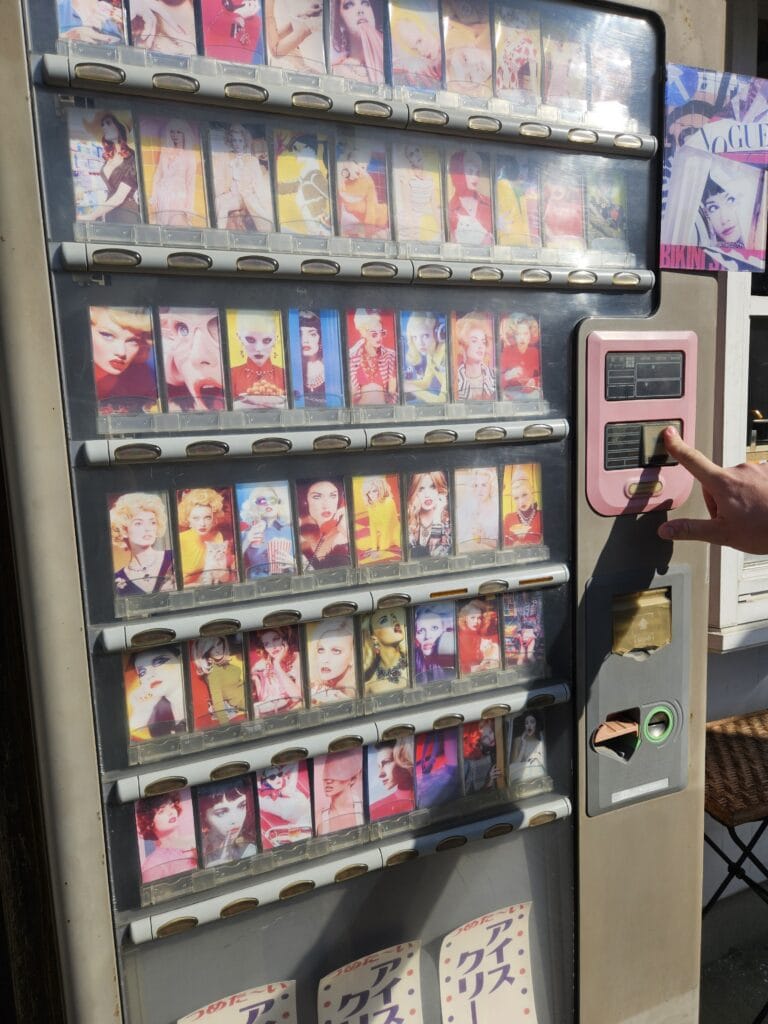
While attractions such as the Chichu Art Museum and Yayoi Kusama’s Yellow Pumpkin draw most visitors to Naoshima, some of the island’s most memorable experiences can be found in the quieter corners of Honmura.
After cycling across the island, we stopped at Akaitaba, a small café in Honmura known for its matcha and black sesame (kurogoma) soft serve. The combination was surprisingly refreshing after a morning of exploring. The matcha delivered the deep, slightly bitter flavor that green tea lovers expect, while the black sesame added a rich, nutty texture that felt distinctly Japanese. If you’re spending the day cycling between museums and art installations, it makes for an excellent break.
Discover Naoshima’s Art Vending Machine
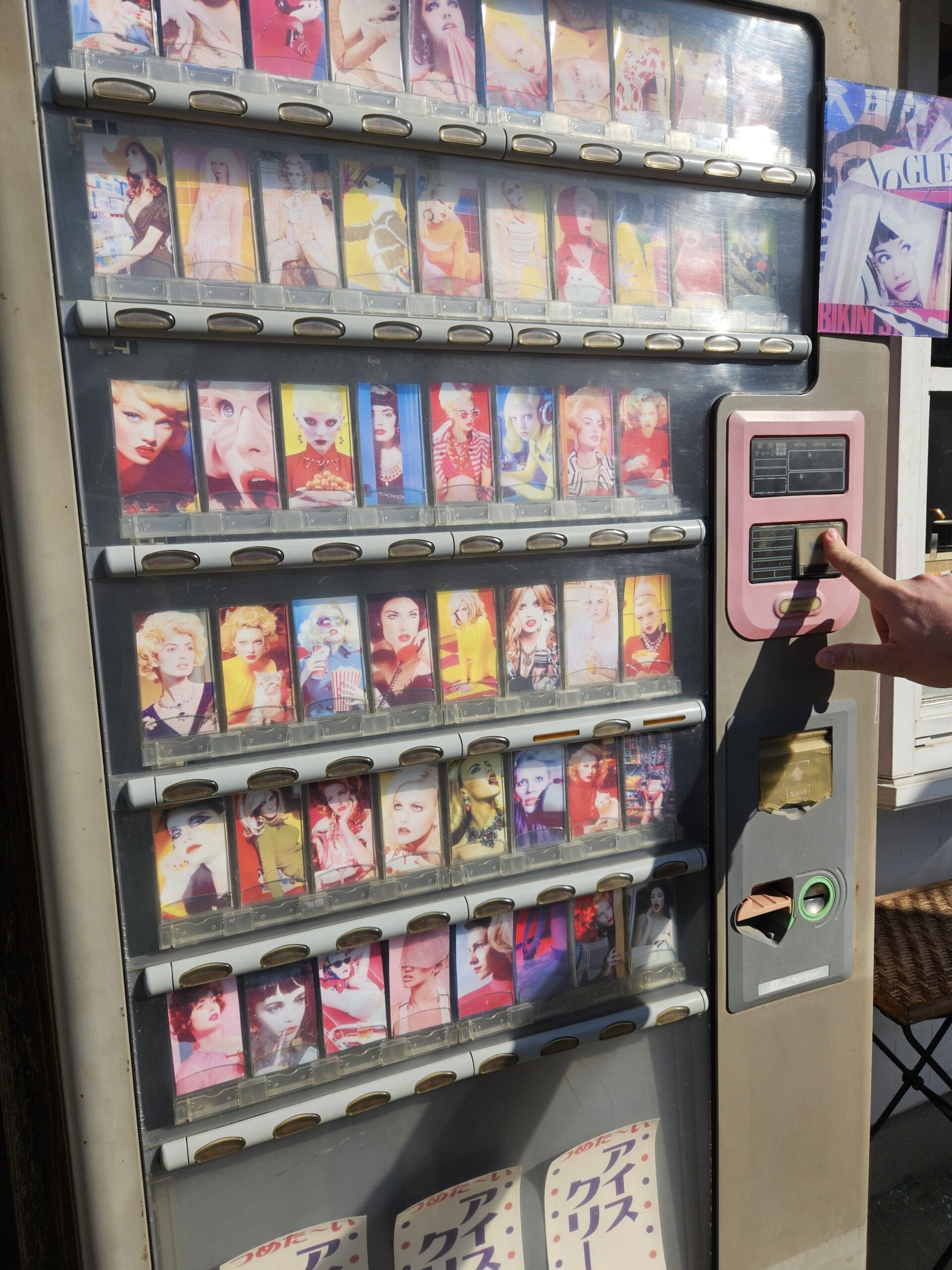
One of the most unusual souvenirs we encountered on Naoshima was the island’s famous Art Vending Machine near the Haisha Art House. At first glance, it resembles an ordinary Japanese vending machine, but instead of drinks, visitors purchase mystery boxes containing miniature artworks, handmade charms, and small creations by local artists.
For around ¥500, it offers a fun alternative to traditional museum gift shops and reflects the creative spirit that defines Naoshima. Every purchase is a surprise, making it one of the island’s more unique attractions and an easy way to take home a small piece of the local art scene.
Exploring Beyond the Main Attractions
Many visitors focus exclusively on Naoshima’s famous museums, but some of the island’s charm lies in wandering without a strict itinerary. Honmura’s narrow streets, hidden cafés, small galleries, and unexpected art installations reward those who slow down and explore at their own pace.
These quieter discoveries may not appear on every travel guide, but they often become the moments people remember most after leaving Naoshima.
Naoshima’s Natural Beauty and Seto Inland Sea Views
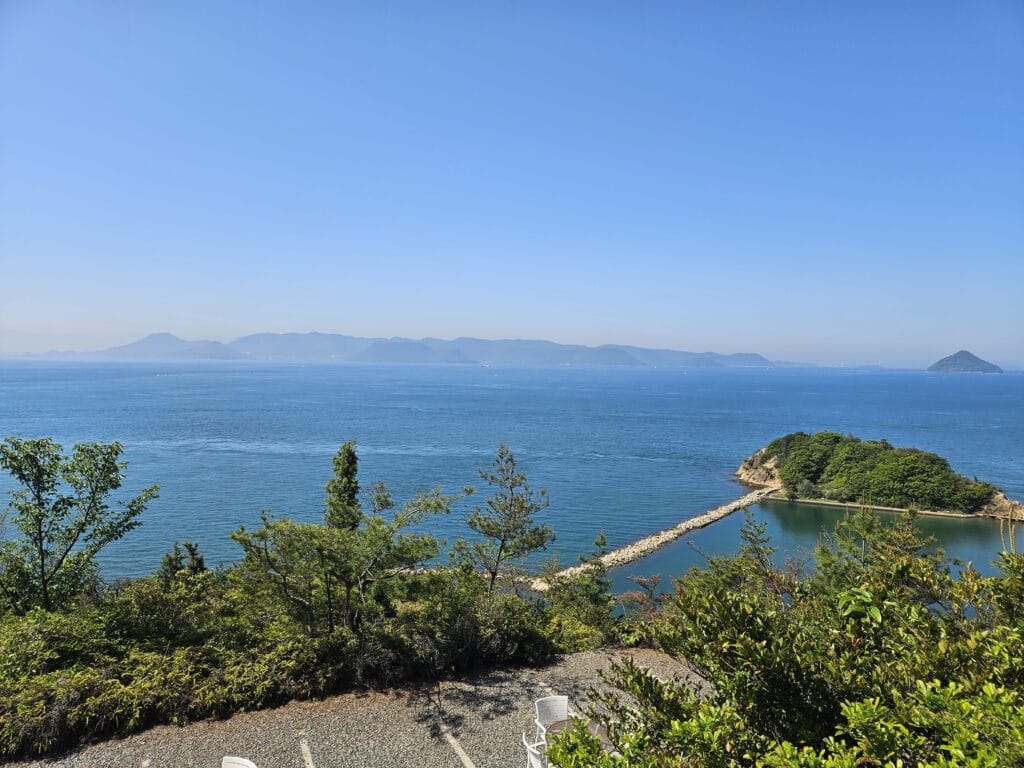
While Naoshima is best known for its museums and contemporary art installations, the island’s natural scenery is equally deserving of attention. Beyond the galleries, visitors will discover rugged coastlines, quiet beaches, pine-covered hills, and some of the most beautiful views in Japan’s Seto Inland Sea.
The contrast between nature and architecture is one of Naoshima’s defining characteristics. Dense Japanese black pine forests, coastal vegetation, and granite shorelines surround the minimalist concrete structures designed by Tadao Ando, creating a landscape where art feels inseparable from its environment.
Exploring the Coastline
One of the most scenic routes on the island follows the coastline between Gotanji Beach and the Benesse House museum area. Along the way, visitors can enjoy panoramic views across the Seto Inland Sea, hidden coves, rocky shorelines, and peaceful stretches of coast that remain largely untouched by mass tourism.
During our visit, some of the most memorable moments occurred away from the museums. Sitting beside the water, watching ferries cross between the islands, and taking in the quiet atmosphere offered a completely different perspective on Naoshima.
The Unique Climate of the Setouchi Region
Naoshima benefits from the mild climate of the Setouchi region, which is often compared to the Mediterranean due to its relatively low rainfall and abundant sunshine. These conditions contribute to the island’s relaxed atmosphere and make outdoor exploration enjoyable throughout much of the year.
On clear days, visitors can see across the water toward Shikoku, while sunrise and sunset often transform the entire coastline with warm golden light. For photographers, the hours around sunrise and sunset are among the best times to experience Naoshima’s natural beauty.
More Than an Art Island
What surprised me most about Naoshima was how often the scenery rivaled the artwork itself. The island’s appeal is not limited to museums and sculptures. Its coastline, sea views, and slower pace of life are equally important parts of the experience.
For travelers seeking a destination that combines contemporary art, architecture, and nature, Naoshima offers one of the most unique landscapes in Japan.
Is Naoshima Worth Visiting? Final Thoughts
After exploring Naoshima Island, I can confidently say that it remains one of the most unique destinations I have visited in Japan. While many travelers arrive for famous attractions such as the Chichu Art Museum, Yayoi Kusama’s Yellow Pumpkin, and Tadao Ando’s architecture, the island’s true appeal extends far beyond its museums.
What stayed with me most was the atmosphere. Life moves at a different pace on Naoshima. Between the galleries, coastal roads, fishing villages, and quiet viewpoints overlooking the Seto Inland Sea, the island encourages visitors to slow down and appreciate the journey as much as the attractions themselves.
Renting an e-bike was one of the best decisions we made. The freedom to stop at hidden beaches, unexpected art installations, and scenic lookouts transformed the experience from a simple museum visit into a full island adventure. For most travelers, especially those visiting on a day trip, I would strongly recommend an electric bicycle over walking or relying entirely on the local bus network.
If you visit during the warmer months, be mindful of local wildlife, including Japanese giant hornets that occasionally appear near wooded areas and hiking paths. Staying on marked routes and giving wildlife space is generally all that is required for a safe and enjoyable visit.
Explore More of Kagawa Prefecture
If your itinerary allows, consider spending additional time in Kagawa Prefecture after visiting Naoshima. The region is famous throughout Japan for Sanuki Udon, often regarded as some of the country’s best noodles. Beyond the island’s art scene, Kagawa offers beautiful countryside, coastal scenery, and opportunities to experience a different side of rural Japa
Why Naoshima Stands Out
Many destinations offer great museums. Others offer beautiful scenery. Very few successfully combine contemporary art, world-class architecture, local culture, and natural landscapes in the way Naoshima does.
For travelers looking for one of the most distinctive experiences in Japan, Naoshima is absolutely worth visiting. Whether you come for the art, the architecture, the cycling, or simply the views across the Seto Inland Sea, the island leaves a lasting impression long after the ferry ride back to the mainland.
Author

Get My Personal Travel Maps
Keep Reading: More Articles You'll Love
 Matsumoto Itinerary: The Perfect 3-Day Guide Including Kamikochi
  Is Japanese Food Actually Chinese? The Surprising Origins of Japanese Cuisine
  Living in Japan vs Korea – The Ultimate Expat Guide
  Japan Travel Myths vs Reality: What Tourists Still Get Wrong About Japan
  Hiroshima Travel Guide: 3-Day Itinerary, Okonomiyaki, Hotels & Itsukushima Shrine Tips
  My First 30 Days in Tokyo: Essential Administrative Steps for International Students
  Tattoos in Japan: Rules, Culture, Onsen & Changing Attitudes