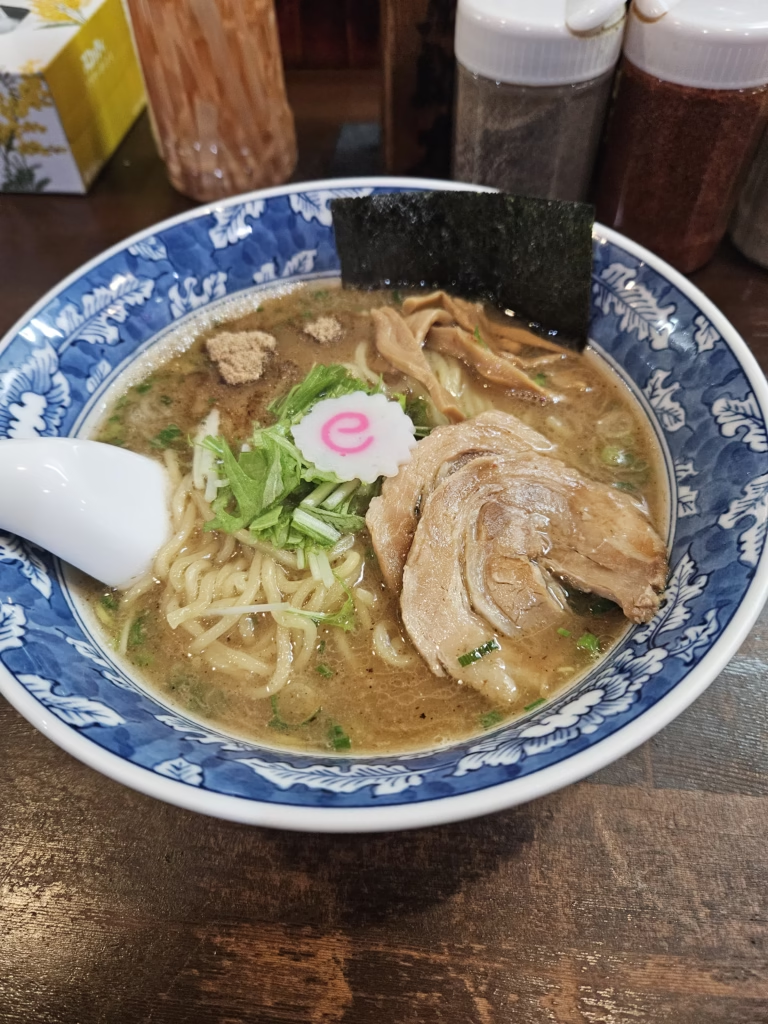
Many visitors are surprised to learn how much Chinese influence can be found in Japanese cuisine. When exploring the origins of Japanese food, it quickly becomes clear that some of Japan’s most popular dishes, ingredients, and cooking techniques were influenced by ideas that arrived from China centuries ago.
This pattern extends far beyond food. Throughout history, Japan adopted and adapted many elements of Chinese civilization, including writing systems, Buddhism, architecture, and philosophy. Rather than simply copying these influences, Japan transformed them into something uniquely its own. Japanese cuisine developed in much the same way.
Understanding the origins of Japanese food helps explain why dishes such as ramen, gyoza, and certain noodle varieties share similarities with Chinese cuisine. It also answers common questions travelers often ask, including: Is ramen Chinese or Japanese? Did Japanese food come from China? And how much of modern Japanese cuisine was influenced by Chinese culture?
The answer is more nuanced than many people expect. While traditional Japanese cuisine has deep indigenous roots and was also shaped by influences from Korea, Southeast Asia, and later Europe, Chinese culinary traditions played a major role in the development of many foods that are now considered everyday staples in Japan.
Not every imported food came from China. A German cake became a Japanese department-store classic, as I explain in why Baumkuchen is so popular in Japan.
In this guide, we’ll explore the history of Japanese cuisine, examine the Chinese influence on Japanese food, and separate common myths from historical fact.
Why Many Popular Japanese Foods Have Chinese Influences
The relationship between Japanese and Chinese cuisine goes back more than a thousand years. Throughout history, Japan adopted ingredients, cooking techniques, and food traditions from China, then gradually adapted them to local tastes and ingredients.
Some of the earliest influences arrived alongside Buddhism and cultural exchanges between China and Japan. These exchanges helped introduce foods and culinary practices that would later become important parts of Japanese cuisine, including tofu, soy-based products, tea culture, and various noodle traditions.
A second major wave of influence occurred during the late 19th and early 20th centuries. As Japan modernized during the Meiji era and international trade increased, Chinese communities grew in port cities such as Yokohama, Kobe, and Nagasaki. Chinese immigrants opened restaurants and introduced regional cooking styles that were often unfamiliar to the Japanese population.
During this period, Japanese diets also began to change. Meat consumption increased, cooking with oil became more common, and people became interested in new flavors and preparation methods. Chinese restaurants helped popularize dishes that would later evolve into Japanese favorites.
Among the most influential Chinese culinary contributions were:
- Noodle-based dishes and wheat-based foods
- Dumplings and filled pastries
- Stir-frying techniques
- Rich meat and bone broths
- Soy sauce-based flavoring methods
- New approaches to cooking vegetables and proteins
Over time, Japan adapted these influences into distinctly Japanese dishes. Ramen evolved differently from Chinese noodle soups, gyoza developed a thinner wrapper and crispier texture, and many Chinese-inspired recipes were adjusted to suit Japanese tastes.
As a result, some of Japan’s most popular everyday foods have Chinese roots, even though the versions enjoyed in Japan today are often quite different from their original Chinese counterparts.
Ramen: How a Chinese Noodle Dish Became a Japanese Icon

Ramen is one of Japan’s most famous foods, but its history reveals a strong Chinese influence. Understanding the origins of ramen helps answer one of the most common questions about Japanese cuisine: Is ramen Chinese or Japanese?
The earliest versions of ramen arrived in Japan during the late nineteenth and early twentieth centuries, largely through Chinese immigrants living in port cities such as Yokohama, Kobe, and Nagasaki. At the time, noodle dishes served by Chinese communities were often referred to as “Chinese soba” (chuka soba), reflecting their foreign origins.
The dish was inspired by Chinese wheat noodles served in a savory broth, but it did not remain unchanged. Japanese chefs and regional food cultures gradually adapted the concept, creating entirely new styles that differed significantly from their Chinese predecessors.
Some of Japan’s most famous ramen varieties include:
- Tonkotsu ramen from Kyushu, known for its rich pork-bone broth
- Miso ramen from Hokkaido, featuring a hearty miso-based soup
- Shoyu ramen from Tokyo, built around a soy sauce-flavored broth
- Shio ramen, a lighter style seasoned primarily with salt
Today, ramen is widely regarded as a Japanese national dish. While its historical roots can be traced to Chinese noodle soups, centuries of adaptation and regional innovation transformed it into something uniquely Japanese.
So, is ramen Chinese or Japanese?
The most accurate answer is that ramen originated from Chinese noodle traditions but evolved into a distinctly Japanese dish. Its history perfectly illustrates how Japanese cuisine absorbed outside influences and transformed them into a culinary identity of its own.
Gyoza: The Japanese Version of Chinese Dumplings

Gyoza is another excellent example of how Chinese food traditions influenced modern Japanese cuisine. The dish is closely related to the Chinese dumpling known as jiaozi and is one of the clearest examples of a popular Japanese food with Chinese origins.
The modern popularity of gyoza in Japan is often linked to the period following the Second World War. Many Japanese soldiers and civilians returning from China had become familiar with Chinese dumplings and helped introduce them to a wider Japanese audience. As the dish spread across Japan, local cooks adapted it to suit Japanese tastes and dining habits.
Although Japanese gyoza and Chinese jiaozi share the same roots, there are several notable differences.
Japanese gyoza is typically:
- Pan-fried to create a crispy bottom layer
- Made with a thinner wrapper
- Often seasoned with garlic and cabbage
- Served with a dipping sauce made from soy sauce, vinegar, and chili oil
Traditional Chinese jiaozi is more commonly:
- Boiled, steamed, or pan-fried depending on the region
- Made with a thicker wrapper
- Filled with a wider variety of ingredients
- Served in different ways depending on local culinary traditions
Despite these differences, the connection between the two dishes is unmistakable. Japanese gyoza evolved directly from Chinese jiaozi, making it one of the most obvious examples of Chinese influence on Japanese food.
Today, gyoza is firmly established as part of everyday Japanese cuisine. It appears in ramen shops, izakayas, family restaurants, and homes across the country. While its origins lie in China, decades of adaptation have created a distinctly Japanese style that many visitors now associate with Japan itself.
Fun fact: European dumplings like ravioli and Chinese dumplings like jiaozi developed independently. There is no historical connection between them, even though they look similar.
Chahan (Fried Rice): A Chinese Dish That Became a Japanese Favorite

Chahan, Japan’s version of fried rice, is one of the clearest examples of a Chinese dish being adopted into everyday Japanese cuisine. Unlike ramen or gyoza, which underwent significant regional development in Japan, chahan remains relatively close to its Chinese roots.
Fried rice originated in China centuries ago as a practical way to use leftover rice. The technique of stir-frying cooked rice with vegetables, eggs, meat, and seasonings spread throughout East Asia and eventually became popular in Japan through Chinese restaurants and immigrant communities during the late nineteenth and early twentieth centuries.
Japanese chahan shares the same basic concept as Chinese fried rice:
- Cooked rice is stir-fried over high heat
- Ingredients such as egg, pork, vegetables, or seafood are added
- Soy sauce and other seasonings provide flavor
- The dish is designed to be quick, affordable, and versatile
Over time, Japanese cooks made small adjustments to suit local preferences. Compared with many Chinese versions, Japanese chahan is often:
- Slightly lighter in flavor
- Less oily
- Made with fewer ingredients
- More focused on the taste of the rice itself
Despite these differences, the cooking technique and overall concept remain largely unchanged from their Chinese origins. For this reason, food historians generally view chahan as one of the strongest examples of direct Chinese influence on Japanese cuisine.
Today, chahan can be found everywhere in Japan, from neighborhood ramen shops and Chinese-style restaurants to family kitchens. While it is considered a familiar Japanese comfort food, its roots clearly trace back to centuries-old Chinese culinary traditions.
Mapo Tofu: A Sichuan Classic Adapted for Japanese Tastes
Mapo tofu is another popular dish in Japan that can be traced directly to Chinese cuisine. The dish originated in China’s Sichuan province and is famous for its combination of tofu, minced meat, chili peppers, and the distinctive numbing sensation created by Sichuan peppercorns.
Mapo tofu was introduced to Japan through Chinese restaurants during the early to mid-twentieth century. As the dish gained popularity, Japanese chefs began modifying the recipe to better suit local tastes.
Traditional Sichuan mapo tofu is typically:
- Very spicy
- Rich in chili oil
- Made with Sichuan peppercorns
- Known for its intense and complex flavor
The Japanese version is often:
- Less spicy
- Milder and slightly sweeter
- Lower in oil
- Designed to appeal to a wider audience
These changes helped transform mapo tofu from a regional Chinese specialty into a common household meal in Japan. Today, it is widely available in restaurants, supermarkets, and ready-made meal kits across the country.
Despite its popularity in Japan, the origins of mapo tofu are well documented. The dish was created in Sichuan and later adapted by Japanese cooks, making it another clear example of how Japanese cuisine absorbed foreign influences and reshaped them into something that fit local preferences.
For anyone wondering whether mapo tofu is Chinese or Japanese, the answer is straightforward: the dish originated in China, but the version commonly eaten in Japan has been significantly adapted to create its own distinct identity.
Nikuman and Other Everyday Foods With Chinese Origins
Not every Chinese influence on Japanese cuisine became a famous national dish like ramen or gyoza. Many foods that Japanese people eat regularly have roots in Chinese culinary traditions, even if most people rarely think about their origins.
One of the best examples is Nikuman. These steamed buns are derived from the Chinese baozi, a popular food found throughout China. Filled with seasoned meat or vegetables and wrapped in a soft dough, baozi were introduced to Japan and gradually adapted into the nikuman commonly sold in convenience stores, supermarkets, and street food stalls today.
While Japanese nikuman and Chinese baozi share the same basic concept, Japanese versions are often slightly sweeter and designed to suit local tastes. The connection between the two dishes remains unmistakable.
Other examples of Chinese influence can be found throughout Japanese cuisine:
- Chuka soba (Chinese-style noodles), which helped pave the way for modern ramen
- Tenshinhan, a Japanese-Chinese dish consisting of an omelet served over rice
- Shumai, steamed dumplings adapted from Chinese siu mai
- Chuka salad, a Japanese interpretation of Chinese-style vegetable dishes
- Various stir-fried dishes inspired by Chinese cooking techniques
Many of these foods are part of what is known in Japan as “chuka ryori” (Chinese cuisine) or “wafu chuka” (Japanese-style Chinese cuisine). Over time, they became so integrated into everyday life that many people now view them as ordinary Japanese comfort foods.
The story of nikuman and similar dishes highlights an important theme in the history of Japanese food: Japan rarely copied foreign dishes exactly. Instead, recipes were adapted, simplified, and refined until they became part of Japan’s own culinary identity. While the origins may be Chinese, the versions enjoyed in Japan today often reflect decades of local evolution and cultural exchange.
Why Understanding Food Origins Matters
Exploring the origins of Japanese food is about more than historical accuracy. It provides a deeper understanding of how cultures influence one another and how national cuisines evolve over time.
Food rarely develops in isolation. Throughout history, ingredients, cooking techniques, and recipes have traveled across borders through trade, migration, and cultural exchange. Japanese cuisine is no exception. Many dishes commonly eaten in Japan today were shaped by influences from China, Korea, Southeast Asia, and later Europe, before being adapted into forms that feel distinctly Japanese.
Understanding these origins helps in several ways:
- It provides historical context for how Japanese cuisine developed.
- It highlights the cultural exchanges that shaped East Asian food traditions.
- It helps travelers better understand the differences between Chinese and Japanese versions of similar dishes.
- It reveals how Japan transformed foreign influences into something uniquely its own.
At the same time, recognizing Chinese influences does not make Japanese cuisine any less Japanese. Dishes such as ramen, gyoza, and chahan have become deeply embedded in Japan’s culinary identity through decades, and in some cases centuries, of local adaptation and innovation.
For food enthusiasts, understanding where a dish comes from adds another layer of appreciation. A bowl of ramen becomes more than just a meal. It becomes part of a larger story connecting Chinese noodle traditions, Japanese regional creativity, and the cultural exchanges that helped shape modern East Asia.
The history of Japanese cuisine is not a story of copying. It is a story of adaptation, refinement, and transformation. Knowing that history makes the food on your plate even more fascinating.
Why These Dishes Feel Japanese Today
If ramen, gyoza, chahan, and many other popular foods have Chinese roots, why do they feel so distinctly Japanese today?
The answer lies in centuries of adaptation and refinement. Japan rarely adopted foreign dishes unchanged. Instead, recipes were gradually modified to match local ingredients, regional tastes, and Japanese culinary traditions.
Over time, Japanese chefs and home cooks transformed many imported dishes by:
- Reducing the amount of oil used in cooking
- Creating more balanced and subtle flavor profiles
- Emphasizing seasonal ingredients
- Standardizing preparation methods and quality
- Developing unique regional variations
- Paying greater attention to presentation and aesthetics
Ramen provides a perfect example. While its origins can be traced to Chinese noodle soups, modern varieties such as Tonkotsu, Miso, and Shoyu ramen were developed in Japan and have become closely associated with specific Japanese regions.
The same pattern can be seen with gyoza, mapo tofu, nikuman, and many other dishes. Although their roots lie outside Japan, decades of local innovation transformed them into foods that are now deeply embedded in Japanese culture.
This process is not unique to Japan. Many cuisines around the world evolved by adopting and adapting foreign influences. Italian pasta, Korean jjajangmyeon, and American pizza all have histories shaped by cultural exchange and local reinvention.
As a result, the origin of a dish and its cultural identity are not always the same thing. A food may have begun in one country while becoming an important part of another country’s culinary heritage. Japanese cuisine offers some of the best examples of this transformation.
The origins of many everyday Japanese dishes can be traced to China, but the versions enjoyed in Japan today have developed their own distinct character. Their history is both Chinese and Japanese, reflecting centuries of cultural exchange, adaptation, and creativity.
What Foods Actually Originated in Japan?
While many everyday dishes in modern Japan were influenced by Chinese cuisine, it would be inaccurate to conclude that Japanese food is simply a variation of Chinese food. Japan developed its own culinary traditions over centuries, creating dishes, preparation methods, and food philosophies that are distinctly Japanese.
Traditional Japanese cuisine places a strong emphasis on seasonality, simplicity, ingredient quality, and the natural flavors of food. This approach differs significantly from many Chinese culinary traditions, which often focus on stir-frying, complex sauces, and bold regional flavor profiles.
Many foods commonly associated with Japan have either indigenous Japanese origins or evolved so extensively within Japan that they are considered uniquely Japanese cultural creations.
Some of the strongest examples include:
- Sushi
- Sashimi
- Tempura (although influenced by Portuguese cooking techniques)
- Kaiseki cuisine
- Onigiri
- Miso soup
- Natto
- Mochi
- Wagashi (traditional Japanese sweets)
- Various regional seafood and rice-based dishes
Understanding the difference between influence and origin is important. A cuisine can borrow ingredients, techniques, and ideas from other cultures while still developing its own unique identity. This is exactly what happened in Japan.
The following dishes represent some of the clearest examples of foods that are deeply connected to Japanese history, culture, and culinary traditions. While outside influences occasionally played a role in their development, their modern forms are widely recognized as uniquely Japanese contributions to world cuisine.
Sushi: One of Japan’s Most Influential Culinary Creations

Sushi is often regarded as one of the clearest examples of a food with a strong Japanese origin. While earlier forms of preserved fish and fermented rice dishes existed elsewhere in Asia, the sushi recognized around the world today was largely developed in Japan.
Modern sushi, particularly nigiri sushi, emerged during the Edo period (1603 to 1868). The version most familiar today was created in Edo, now Tokyo, during the early nineteenth century, around the 1820s and 1830s. As the city grew into one of the largest urban centers in the world, demand increased for convenient meals that could be prepared and eaten quickly.
To meet this need, sushi vendors began serving fresh seafood from Tokyo Bay on hand-pressed portions of vinegared rice. This style became known as Edomae sushi and is considered the direct ancestor of modern nigiri sushi.
Unlike earlier fermented fish dishes, Edomae sushi focused on freshness and flavor. Chefs used techniques such as marinating, curing, or lightly preserving fish to enhance taste while maintaining quality. These innovations allowed sushi to evolve from a preservation method into a distinct culinary art form.
Today, sushi is one of Japan’s most famous cultural exports and a symbol of Japanese cuisine worldwide. Although its distant ancestors can be traced to older preservation techniques found in other parts of Asia, the sushi served in restaurants across the globe is overwhelmingly the result of Japanese innovation and development.
Miso Soup: A Japanese Staple With Ancient Roots
Miso soup is one of the most iconic foods in Japan and has been a daily part of Japanese cuisine for centuries. While the earliest fermented soybean pastes are believed to have originated in China and were introduced to Japan around the seventh century, the miso known today developed largely through Japanese innovation and regional adaptation.
Over more than 1,300 years, Japanese producers refined fermentation techniques and created a wide variety of regional styles. These include the lighter and sweeter white miso commonly associated with Kyoto, as well as darker and more robust varieties found in northern Japan.
By the Kamakura period (1185 to 1333), miso had become an important food among the samurai class because it was nutritious, easy to store, and suitable for long military campaigns. During the Edo period (1603 to 1868), improvements in production and distribution made miso more widely available, allowing miso soup to become a staple of everyday meals throughout Japan.
Today, miso soup is served alongside rice, fish, and other traditional dishes in homes, restaurants, and ryokan across the country. Although its distant origins can be linked to earlier Chinese fermented soybean products, the varieties of miso and the role of miso soup in daily life are uniquely Japanese developments.
Miso soup demonstrates how Japan often transformed imported ideas into something distinctly its own. While the original concept arrived from abroad, centuries of local refinement turned miso into one of the defining ingredients of Japanese cuisine.
Onigiri: Japan’s Original Convenience Food
Onigiri is one of the oldest and most distinctly Japanese foods still enjoyed today. Simple, portable, and deeply connected to Japan’s rice culture, onigiri has been a staple of Japanese life for more than a thousand years.
Historical references to rice balls appear as early as the Heian period (794 to 1185), when cooked rice was shaped into compact portions that could be easily carried and eaten while traveling. Over time, onigiri became a practical food for farmers, soldiers, merchants, and travelers, earning a reputation as one of Japan’s earliest forms of convenience food.
Unlike dishes such as ramen or gyoza, which can be traced to Chinese culinary traditions, onigiri developed directly from Japan’s long-standing relationship with rice cultivation. Rice has been at the center of Japanese agriculture, religion, and daily life for centuries, making onigiri a natural expression of Japanese food culture.
Traditional onigiri is made by hand-shaping rice into triangles, cylinders, or rounded forms and often wrapping it with nori seaweed. Common fillings include salted salmon, umeboshi (pickled plum), kombu, tuna mayonnaise, and various regional specialties.
Today, onigiri remains one of the most popular foods in Japan. It can be found everywhere, from convenience stores and train stations to homemade lunch boxes and family gatherings. Despite countless modern variations, its core concept has remained remarkably unchanged for centuries.
For those exploring the origins of Japanese food, onigiri is one of the clearest examples of a dish that emerged directly from Japan’s own agricultural traditions and cultural history. It reflects a uniquely Japanese approach to simplicity, practicality, and respect for staple ingredients.
Udon and Soba: Imported Ideas, Uniquely Japanese Traditions
Udon and Soba are among Japan’s most beloved noodle dishes and illustrate how foreign influences were transformed into distinctly Japanese culinary traditions.
Historians generally believe that early noodle-making techniques were introduced to Japan from China between the eighth and ninth centuries. However, the noodles enjoyed in Japan today evolved significantly over the following centuries, developing characteristics, preparation methods, and cultural traditions that are uniquely Japanese.
Udon is known for its thick, chewy wheat noodles and is enjoyed throughout Japan in countless regional styles. Soba, made primarily from buckwheat flour, occupies a special place in Japanese food culture and differs substantially from Chinese noodle traditions due to its ingredients, flavor profile, and cultural significance.
By the Edo period (1603 to 1868), soba had become especially popular in Edo, present-day Tokyo. Its relatively quick preparation, affordability, and nutritional value made it a favorite among urban residents. Specialized soba shops appeared throughout the city, helping establish the dish as an everyday staple.
Over time, Japan developed numerous regional variations, including:
- Hot noodle soups served in flavorful broths
- Cold noodles served with dipping sauces
- Seasonal toppings reflecting local ingredients
- Distinct preparation methods passed down through generations
Soba also became connected to Japanese customs and traditions. For example, many households eat toshikoshi soba on New Year’s Eve as a symbol of longevity and a fresh start for the coming year.
While the distant origins of noodle-making in Japan may be linked to Chinese influence, udon and soba evolved far beyond their early inspirations. Their ingredients, cultural significance, regional diversity, and centuries of development make them unmistakably Japanese foods today.
The history of udon and soba demonstrates that culinary identity is often shaped not only by where an idea originated, but also by how it develops over time. Few dishes illustrate this process better than Japan’s iconic noodle traditions.
Tempura: A Portuguese Technique Transformed in Japan
Tempura is often considered one of Japan’s most iconic foods, yet its origins reveal an interesting story of cultural exchange. The frying technique that eventually led to modern tempura is widely believed to have been introduced by Portuguese traders and missionaries during the sixteenth century, when Japan first established regular contact with Europe.
Between the 1540s and 1570s, Portuguese visitors brought cooking methods that involved coating food in batter before frying it. Japanese cooks adopted these techniques but gradually modified them to suit local ingredients, tastes, and culinary traditions.
Over time, several distinctly Japanese characteristics emerged:
- A lighter, more delicate batter
- An emphasis on seafood and seasonal vegetables
- Careful temperature control during frying
- A focus on preserving the natural flavor of the ingredients
By the Edo period (1603 to 1868), tempura had become a popular street food in Edo, present-day Tokyo. Vendors prepared seafood and vegetables quickly in hot oil, making tempura a convenient meal for the city’s growing population. Unlike many modern versions, early Edo-style tempura was often fried in sesame oil, which contributed a distinctive aroma and flavor.
As Japanese cuisine evolved, tempura moved beyond its origins as casual street food and became a highly refined culinary art. Today, skilled chefs carefully select ingredients, prepare batter moments before frying, and serve tempura in courses designed to highlight texture, seasonality, and balance.
Although the original frying technique arrived from Portugal, the tempura enjoyed today is fundamentally a Japanese creation. Centuries of adaptation transformed a foreign cooking method into one of the most recognizable symbols of Japanese cuisine.
Tempura demonstrates an important theme throughout the history of Japanese food: influences may come from abroad, but Japan often reshapes them into something entirely its own.
Kaiseki: The Highest Expression of Japanese Culinary Philosophy

Kaiseki is widely regarded as one of the purest and most sophisticated forms of Japanese cuisine. Unlike many everyday dishes that were influenced by foreign culinary traditions, kaiseki developed primarily within Japan and reflects core Japanese values such as seasonality, balance, simplicity, and attention to detail.
The origins of kaiseki can be traced to the sixteenth century and the development of Japanese tea ceremony culture. Influential tea masters, particularly Sen no Rikyū, promoted ideals of restraint, harmony, and appreciation for natural beauty. Early kaiseki meals were simple dishes served before tea ceremonies, designed to complement rather than overshadow the tea experience.
Over time, these modest meals evolved into a highly refined dining tradition. During the Edo period (1603 to 1868), kaiseki became increasingly sophisticated, incorporating carefully selected ingredients, advanced preparation techniques, and an artistic approach to presentation.
Several principles continue to define kaiseki today:
- Emphasis on seasonal ingredients at their peak freshness
- Careful balance of flavors, textures, and colors
- Elegant presentation inspired by nature
- Multiple small courses served in a deliberate sequence
- Respect for simplicity and ingredient quality
Unlike cuisines that focus on rich sauces or bold seasoning, kaiseki seeks to highlight the natural character of each ingredient. Every course is designed to create harmony between taste, appearance, aroma, and season.
Today, kaiseki is considered one of Japan’s most prestigious culinary traditions and is often served in high-end restaurants and traditional ryokan. The experience is not simply about eating but about appreciating craftsmanship, hospitality, and the changing seasons.
Takoyaki: An Osaka Street Food Original

For those exploring the origins of Japanese food, kaiseki stands as one of the clearest examples of a culinary tradition that developed within Japan itself. More than any single dish, it embodies the philosophy and aesthetic principles that have shaped Japanese cuisine for centuries.
Takoyaki is one of Japan’s most recognizable street foods and is strongly associated with Osaka’s food culture. Consisting of a savory batter filled with pieces of octopus, takoyaki is cooked in a specially designed molded pan that creates its distinctive round shape.
The dish was invented in Osaka during the 1930s by street vendor Tomekichi Endo and quickly gained popularity throughout the Kansai region before spreading across Japan. Today, takoyaki is a staple at festivals, street markets, and dedicated specialty shops.
Traditional takoyaki is typically topped with:
- Takoyaki sauce
- Dried bonito flakes (katsuobushi)
- Seaweed powder (aonori)
- Japanese mayonnaise
One interesting example of cultural adaptation can be found in the mayonnaise itself. Japanese mayonnaise was inspired by Western mayonnaise, which was introduced to Japan in the early twentieth century. Japanese manufacturers later modified the recipe, creating a richer, slightly sweeter version that became a distinctive condiment in its own right.
Despite this small foreign influence, takoyaki is fundamentally a Japanese creation. The concept, preparation method, flavor profile, and cultural significance all originated in Japan, making it one of the clearest examples of a modern Japanese dish.
Takoyaki also reflects an important aspect of Japanese food culture: the ability to incorporate foreign ingredients while creating something entirely new. Although some toppings or condiments may have international origins, the dish itself remains unmistakably Japanese and deeply connected to Osaka’s culinary identity.
For anyone exploring foods that originated in Japan, takoyaki stands alongside sushi, onigiri, and kaiseki as a dish that was developed and popularized within Japan rather than adapted from an existing foreign recipe.
Okonomiyaki: Japan’s Famous Savory Pancake

Okonomiyaki is one of Japan’s most beloved comfort foods and a dish that developed largely within Japan itself. Often described as a savory pancake, okonomiyaki combines a batter made from flour with ingredients such as cabbage, meat, seafood, and various toppings.
The roots of okonomiyaki can be traced to simple flour-based dishes from the Edo period (1603 to 1868). However, the modern version known today emerged during the early twentieth century and became especially popular after the Second World War. During a time of food shortages, people created filling and affordable meals using whatever ingredients were available.
The name “okonomiyaki” is commonly translated as “grill what you like,” reflecting the dish’s flexibility and the wide variety of ingredient combinations that can be used.
Two of the most famous regional styles are:
- Osaka-style okonomiyaki, where ingredients are mixed into the batter before cooking
- Hiroshima-style okonomiyaki, where ingredients are layered separately and often include noodles
These regional variations demonstrate how Japanese cuisine continues to evolve while maintaining strong local identities.
Today, okonomiyaki is considered one of the defining dishes of Japanese street food culture. It is served in specialty restaurants, at festivals, and in homes throughout the country. Unlike ramen or gyoza, which originated from Chinese culinary traditions, okonomiyaki developed primarily within Japan and reflects the country’s creativity in transforming simple ingredients into satisfying meals.
Visitors interested in Hiroshima’s food culture often visit Okonomimura, a multi-story building dedicated to okonomiyaki restaurants. The venue showcases numerous local interpretations of Hiroshima-style okonomiyaki and highlights the dish’s importance to the region’s culinary identity.
Okonomiyaki remains one of the clearest examples of a food that evolved in Japan and became an integral part of the country’s modern food culture.
Tonkatsu and Gyukatsu: Western Influences Reimagined in Japan

Tonkatsu and Gyukatsu are excellent examples of how Japan adopted foreign culinary techniques and transformed them into distinctly Japanese dishes. Both belong to a category of cuisine known as yōshoku, meaning Western-inspired food adapted to Japanese tastes and dining traditions.
The origins of tonkatsu can be traced to the late nineteenth century during the Meiji era (1868 to 1912), when Japan opened itself to greater Western influence. Inspired by European breaded meat cutlets, Japanese chefs modified the concept by using panko breadcrumbs, serving the dish with shredded cabbage, rice, and miso soup, and pairing it with a uniquely Japanese sweet and savory tonkatsu sauce.
Gyukatsu developed later as a variation using beef instead of pork. Unlike tonkatsu, which is fully cooked before serving, gyukatsu is often prepared rare or medium-rare and served with a hot stone, allowing diners to cook the meat further according to their preference.
Today, both dishes are popular throughout Japan and are commonly found in specialty restaurants, department stores, and casual dining establishments.
Typical characteristics include:
- Crispy panko breadcrumb coating
- High-quality pork or beef cutlets
- Finely shredded cabbage as a side dish
- Rice, miso soup, and pickles
- Japanese dipping sauces and condiments
Although the original inspiration came from Europe, tonkatsu and gyukatsu evolved into uniquely Japanese dishes through local adaptation, presentation, and dining customs. They demonstrate how Japan often embraced foreign ideas while creating foods that became an integral part of its own culinary identity.
For anyone exploring the origins of Japanese food, tonkatsu and gyukatsu provide a fascinating example of how international influences can be transformed into something distinctly Japanese over time.
Japanese Curry: From India to Britain to Japan

Japanese curry is one of Japan’s most popular comfort foods, yet its origins lie far beyond Japan’s borders. Many visitors are surprised to learn that Japanese curry did not originate in Japan. Instead, it traces its roots to India, reached Japan through Britain, and was eventually transformed into a uniquely Japanese dish.
The story of Japanese curry began during the Meiji era (1868 to 1912), when Japan opened itself to greater international influence. At the time, the British Navy had already adopted curry from India as part of its military diet. Through contact with Britain, Japan was introduced to curry and began adapting it to local tastes and ingredients.
Unlike traditional Indian curries, Japanese curry evolved into a dish with its own distinct character. Japanese cooks created a version that was thicker, milder, and slightly sweeter, making it appealing to a broad range of tastes.
Typical characteristics of Japanese curry include:
- A thick, stew-like consistency
- Mild spice levels compared to many Indian curries
- A rich and slightly sweet flavor profile
- Meat and vegetables such as potatoes, carrots, and onions
- Serving over a generous portion of rice
The dish became increasingly popular through the Japanese military, schools, and households. Over time, it evolved into one of the most widely consumed meals in the country and is now considered a staple of everyday Japanese cuisine.
One of the most common questions travelers ask is: Is Japanese curry Indian?
The most accurate answer is that Japanese curry has Indian roots, but the version served in Japan today is distinctly Japanese. After passing through Britain and undergoing decades of adaptation in Japan, it developed flavors, ingredients, and preparation methods that differ significantly from both Indian and British curries.
Today, Japan has created numerous regional and modern variations, including curry udon, seafood curry, and katsu curry, which combines Japanese curry with a crispy breaded pork cutlet. These dishes further demonstrate how thoroughly curry has been integrated into Japanese food culture.
Japanese curry is a perfect example of how cuisines evolve through cultural exchange. While its origins can be traced back to India, the dish enjoyed across Japan today has become a uniquely Japanese interpretation that reflects the country’s ability to adapt foreign influences into something entirely its own.
Oden: Japan’s Traditional Winter Comfort Food

Oden is one of Japan’s most beloved winter dishes and has a history stretching back several centuries. Consisting of ingredients such as daikon radish, boiled eggs, fish cakes, konjac, and tofu simmered in a light dashi-based broth, oden is a staple of Japanese cold-weather cuisine.
The origins of oden can be traced to the Muromachi period (1336 to 1573) and a dish known as dengaku. In its earliest form, dengaku consisted of tofu skewers grilled and coated with miso. Over time, the dish evolved as new ingredients and cooking methods were introduced.
During the Edo period (1603 to 1868), oden gradually transformed into the broth-based dish recognized today. The practice of simmering various ingredients together in a flavorful stock became increasingly popular, particularly among urban residents looking for affordable and satisfying meals.
Common ingredients found in modern oden include:
- Daikon radish
- Boiled eggs
- Chikuwa and other fish cakes
- Konjac
- Tofu products
- Ganmodoki and regional specialties
Unlike many dishes influenced by Chinese or Western cuisine, oden developed primarily within Japan and reflects the country’s preference for subtle flavors, seasonal eating, and communal dining.
One of the most common questions travelers ask is: What is oden?
Oden is a Japanese one-pot dish in which various ingredients are slowly simmered in a light dashi broth for several hours, allowing them to absorb flavor while maintaining their individual textures.
Today, oden is especially popular during autumn and winter. It can be found in homes, specialty restaurants, izakaya, and even convenience stores throughout Japan. For many Japanese people, it is closely associated with colder weather and feelings of comfort and nostalgia.
The long history of oden demonstrates how simple ingredients and traditional cooking techniques can evolve into a dish that remains deeply connected to Japanese culture centuries later.
Sukiyaki: Japan’s Famous Communal Hot Pot

Sukiyaki is one of Japan’s most iconic shared meals and a dish closely associated with gatherings, celebrations, and traditional dining experiences. Made with thinly sliced beef, vegetables, tofu, mushrooms, and noodles simmered in a sweet and savory soy-based broth, sukiyaki is a classic example of Japanese comfort food.
The modern form of sukiyaki emerged during the Meiji era (1868 to 1912), a period of rapid modernization and cultural change. For centuries, meat consumption in Japan had been limited due to religious and cultural influences. As restrictions eased during the Meiji period, beef became increasingly popular, leading to the development of new dishes centered around it.
Sukiyaki quickly gained popularity because it combined high-quality ingredients with an interactive dining experience. Rather than being prepared entirely in the kitchen, the dish is traditionally cooked at the table, allowing diners to participate in the meal’s preparation.
Typical sukiyaki ingredients include:
- Thinly sliced beef
- Tofu
- Napa cabbage
- Shiitake mushrooms
- Green onions
- Shirataki noodles
One of the most distinctive aspects of sukiyaki is the custom of dipping the cooked ingredients into raw beaten egg before eating. This practice softens the flavors of the hot broth and creates a rich, creamy texture that is strongly associated with Japanese dining culture.
Many travelers ask: What is the difference between sukiyaki and other hot pot dishes?
Unlike many hot pots that focus on simmering ingredients in a light broth, sukiyaki uses a sweeter soy sauce-based seasoning known as warishita and places greater emphasis on beef as the centerpiece of the meal.
Today, sukiyaki remains a popular dish for family gatherings, celebrations, and special occasions throughout Japan. It is often enjoyed during the winter months and is considered one of the country’s most recognizable communal dining traditions.
Although the increased consumption of beef was influenced by Japan’s modernization during the Meiji era, sukiyaki itself developed within Japan and reflects a uniquely Japanese approach to shared meals, hospitality, and social dining. Its combination of table-side cooking, carefully balanced flavors, and communal atmosphere has made it a lasting symbol of Japanese food culture.
Shabu-Shabu

Shabu-shabu is one of Japan’s most popular communal meals, known for its simplicity, high-quality ingredients, and interactive dining experience. Diners briefly cook thin slices of meat and vegetables in a pot of simmering broth before dipping them into flavorful sauces.
The modern form of shabu-shabu was developed in Japan during the 1950s. While the concept was inspired by Chinese hot pot traditions, Japanese restaurateurs adapted the idea to reflect local culinary preferences, placing greater emphasis on ingredient quality, lighter flavors, and precise preparation.
The name “shabu-shabu” is onomatopoeic and comes from the swishing sound made when thin slices of meat are moved back and forth through the hot broth.
Typical ingredients include:
- Thinly sliced beef or pork
- Napa cabbage
- Mushrooms
- Tofu
- Green vegetables
- Udon noodles or other accompaniments
One of the most common questions travelers ask is: What is the difference between shabu-shabu and sukiyaki?
While both are Japanese hot pot dishes enjoyed communally, shabu-shabu uses a light broth and relies on dipping sauces such as ponzu or sesame sauce for flavor. Sukiyaki, by contrast, is cooked in a sweeter soy sauce-based broth and often includes dipping the ingredients in raw egg before eating.
Shabu-shabu became popular because it highlights the natural flavor and texture of premium ingredients rather than masking them with heavy seasonings. This focus on simplicity and quality aligns closely with broader principles found throughout Japanese cuisine.
Today, shabu-shabu is enjoyed across Japan in specialty restaurants, family gatherings, and all-you-can-eat establishments. Although its roots can be linked to Chinese hot pot traditions, the dish evolved into a uniquely Japanese dining experience centered on fresh ingredients, careful preparation, and shared meals.
Shabu-shabu illustrates how Japanese cuisine often takes inspiration from foreign culinary ideas while transforming them into something that reflects Japanese tastes, aesthetics, and food culture.
Yakitori: Japan’s Art of Grilled Chicken Skewers

Yakitori is one of Japan’s most popular casual foods and a staple of izakaya culture. Consisting of bite-sized pieces of chicken grilled on skewers, yakitori is enjoyed throughout the country, from street stalls and festivals to specialized restaurants that focus exclusively on the craft.
The origins of yakitori can be traced back to the Edo period (1603 to 1868), although the dish became far more widespread during the twentieth century as urban dining culture and izakaya establishments expanded. Today, it is considered one of the most recognizable examples of Japanese grilled cuisine.
The basic concept of grilling meat on a stick is not unique to Japan. Similar cooking methods developed independently in many cultures around the world. What distinguishes yakitori is the uniquely Japanese approach to preparation, seasoning, and presentation.
Key characteristics of traditional yakitori include:
- Precise cutting and preparation of different chicken parts
- Grilling over high-quality binchotan charcoal
- Careful control of cooking temperature
- Seasoning with either salt (shio) or tare sauce
- Serving multiple cuts, including thigh, breast, skin, liver, and heart
One of the most common questions visitors ask is: What makes yakitori different from other grilled skewers?
The answer lies in the attention to detail. Skilled yakitori chefs carefully select cuts, control cooking times, and use binchotan charcoal, which burns at high temperatures while producing minimal smoke and unwanted flavors. This allows the natural taste of the chicken to remain the focus.
Another defining feature is tare, a sweet and savory sauce typically made from soy sauce, mirin, sake, and sugar. Combined with simple salt seasoning, these flavor profiles have become strongly associated with Japanese grilling traditions.
Today, yakitori is deeply connected to Japan’s social dining culture. It is commonly enjoyed alongside drinks in izakayas and is often shared among friends, colleagues, and family members.
Although skewered meat is a global concept, yakitori evolved into a distinctly Japanese culinary tradition through its techniques, ingredients, and cultural significance. It remains one of the clearest examples of how Japan transformed a simple cooking method into a refined and recognizable national specialty.
Donburi: Japan’s Classic One-Bowl Meal

Donburi is one of the most practical and popular meal formats in Japanese cuisine. The concept is simple: a bowl of rice topped with ingredients such as beef, chicken, seafood, tempura, or vegetables, creating a complete and satisfying meal in a single dish.
Donburi developed during the late Edo period (1603 to 1868), particularly in the eighteenth and early nineteenth centuries, as Japan’s growing urban population demanded meals that were quick, filling, and affordable. By serving toppings directly over rice, restaurants could provide convenient meals for workers, merchants, and travelers without sacrificing flavor or nutrition.
One of the most common questions visitors ask is: What is donburi?
Donburi refers to a category of Japanese rice bowl dishes in which various ingredients are served on top of a bowl of steamed rice. Rather than being a single recipe, it is a style of meal that includes many different regional and specialty variations.
Popular examples include:
- Gyudon, thinly sliced beef simmered with onions
- Oyakodon, chicken and egg cooked in a savory broth
- Katsudon, breaded pork cutlet served over rice
- Tendon, tempura served on top of rice
- Kaisendon, fresh seafood served over rice
Unlike dishes such as ramen or gyoza, which have clear connections to Chinese culinary traditions, donburi developed directly within Japan as a practical way to serve complete meals. The concept reflects the central role rice has played in Japanese society for centuries.
Today, donburi remains a staple of everyday Japanese food culture. It is served in specialty chains, family restaurants, local eateries, and homes throughout the country. Its simplicity, affordability, and endless variety have made it one of the most enduring meal styles in Japan.
For anyone exploring the origins of Japanese food, donburi is a strong example of a culinary concept that emerged within Japan and became deeply integrated into daily life. While the toppings may vary widely, the idea of combining rice and carefully prepared ingredients into a single bowl is unmistakably Japanese.
Tamagoyaki: Japan’s Delicately Layered Omelet
Tamagoyaki is one of the most recognizable egg dishes in Japanese cuisine and a staple of sushi restaurants, bento boxes, and home cooking. Known for its distinctive layered appearance and slightly sweet flavor, tamagoyaki showcases the precision and attention to detail that characterize many traditional Japanese foods.
The origins of tamagoyaki can be traced to the Edo period (1603 to 1868), when specialized cooking techniques and tools became increasingly refined. During this time, cooks developed the rectangular tamagoyaki pan that is still widely used today, allowing thin layers of egg to be cooked and rolled repeatedly to create the dish’s signature texture.
Traditional tamagoyaki is made using:
- Eggs
- Soy sauce
- Mirin
- Sugar
- Dashi in some regional variations
The cooking process requires skill and patience. Multiple thin layers of egg are cooked individually and rolled together, creating a soft, fluffy texture with a delicate balance of sweet and savory flavors.
One of the most common questions visitors ask is: What is tamagoyaki?
Tamagoyaki is a Japanese rolled omelet made by layering and rolling seasoned egg mixtures in a rectangular pan. The result is a light, tender omelet that can be served hot, cold, or as part of other dishes.
Tamagoyaki is especially important in sushi culture, where it is often served as tamago nigiri. In many traditional sushi restaurants, the quality of the tamagoyaki is considered a reflection of the chef’s skill because achieving the perfect texture and flavor requires careful technique.
Beyond sushi restaurants, tamagoyaki is a common feature of Japanese lunch boxes, home-cooked meals, and special occasions. Its versatility and simple ingredients have helped it remain popular for centuries.
Unlike many dishes that evolved through foreign influence, tamagoyaki is generally regarded as a distinctly Japanese creation. Its specialized preparation methods, cultural significance, and long history make it a clear example of a food that developed within Japan and became an enduring part of the country’s culinary identity.
Chawanmushi: Japan’s Elegant Savory Egg Custard
Chawanmushi is one of the most refined dishes in Japanese cuisine and is known for its delicate texture and subtle flavors. Served warm in a small cup or bowl, chawanmushi is a steamed egg custard containing ingredients such as seafood, chicken, mushrooms, and seasonal vegetables.
The dish developed during the Edo period (1603 to 1868). While the technique of steaming food has ancient roots throughout East Asia and was influenced by earlier Chinese culinary traditions, chawanmushi evolved into a distinctly Japanese creation through its ingredients, presentation, and role within formal dining.
One of the most common questions visitors ask is: What is chawanmushi?
Chawanmushi is a Japanese savory egg custard made by combining beaten eggs with dashi broth and steaming the mixture until it achieves a smooth, silky texture. Unlike sweet custards found in many Western cuisines, chawanmushi is a savory dish designed to highlight delicate flavors and carefully selected ingredients.
Traditional ingredients often include:
- Shrimp
- Chicken
- Shiitake mushrooms
- Kamaboko fish cake
- Ginkgo nuts
- Mitsuba herbs
The preparation requires careful temperature control because overheating can create air bubbles and ruin the custard’s smooth consistency. Achieving the perfect texture is considered an important culinary skill.
Chawanmushi is frequently served as part of kaiseki meals, traditional Japanese banquet cuisine, and formal restaurant courses. Its understated appearance reflects a key principle of Japanese cooking: emphasizing balance, seasonality, and ingredient quality rather than strong seasoning.
Unlike many casual dishes, chawanmushi is often associated with refinement and hospitality. The dish demonstrates how Japanese cuisine transformed a simple cooking technique into a sophisticated culinary experience.
Although steaming methods were influenced by broader East Asian food traditions, the modern form of chawanmushi is unmistakably Japanese. Its ingredients, presentation, and cultural role make it one of the clearest examples of a dish that embodies the elegance and attention to detail found throughout traditional Japanese cuisine.
Mochi: A Traditional Food Deeply Connected to Japanese Culture
Mochi is one of Japan’s oldest and most culturally significant foods. Made from glutinous rice that is steamed and pounded into a soft, elastic dough, mochi has been an important part of Japanese cuisine and tradition for more than a thousand years.
Historical records trace mochi back to the Heian period (794 to 1185), when it was already associated with ceremonies, religious rituals, and celebrations. Because rice was highly valued in Japanese society, foods made from rice often carried symbolic meaning beyond simple nutrition.
Traditional mochi is produced through a labor-intensive process known as mochitsuki. During this ceremony, steamed glutinous rice is repeatedly pounded with large wooden mallets in a mortar while another participant turns and moistens the rice between strikes. The process transforms the rice into the smooth and stretchy texture for which mochi is known.
One of the most common questions travelers ask is: What is mochi?
Mochi is a Japanese rice cake made from glutinous rice that is steamed, pounded, and shaped into various forms. It can be enjoyed in both sweet and savory dishes and plays an important role in Japanese seasonal traditions.
Popular examples include:
- Daifuku filled with sweet red bean paste
- Kinako mochi coated with roasted soybean flour
- Isobeyaki mochi grilled and wrapped in seaweed
- Ozoni, a traditional New Year’s soup containing mochi
Mochi is especially associated with the Japanese New Year, when families gather to make and eat mochi as a symbol of prosperity, longevity, and good fortune for the year ahead. These traditions have helped preserve its importance across generations.
Unlike many foods that evolved through foreign influence, mochi is closely tied to Japan’s own rice culture and agricultural history. Its production methods, ceremonial significance, and role in seasonal celebrations make it one of the clearest examples of a food with a strong Japanese origin.
Today, mochi remains a beloved part of Japanese cuisine, appearing in traditional sweets, festival foods, religious ceremonies, and modern desserts. Its enduring popularity reflects the deep connection between food, culture, and tradition in Japan.
Daifuku: One of Japan’s Most Beloved Traditional Sweets
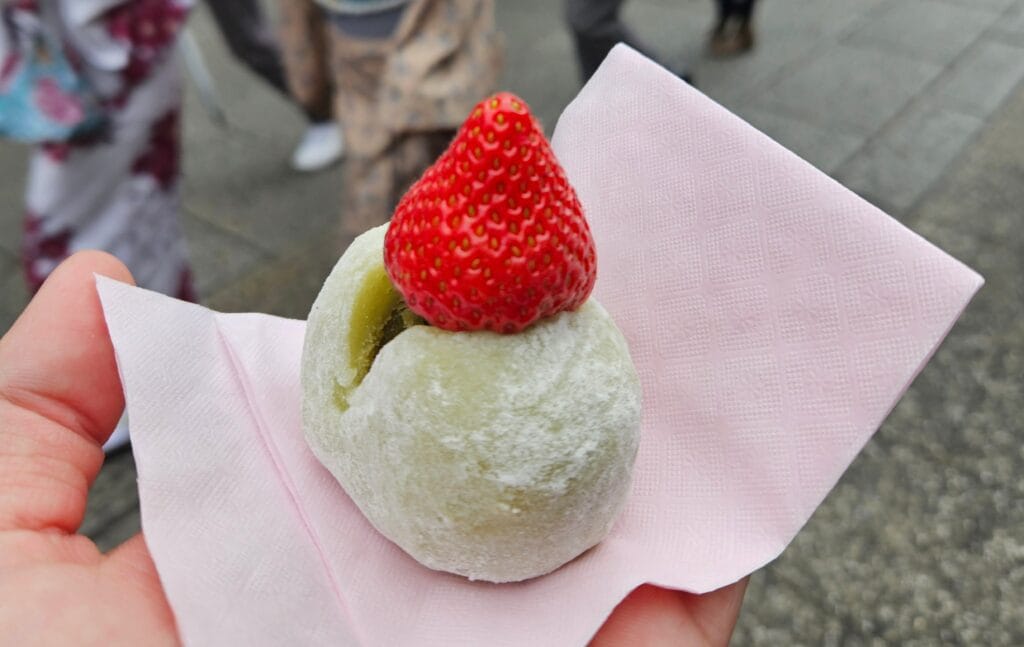
Daifuku is one of the most popular traditional Japanese sweets and a classic example of wagashi, Japan’s traditional confectionery culture. Consisting of soft mochi wrapped around a sweet filling, daifuku combines simplicity, texture, and balance in a way that reflects many of the core principles of Japanese desserts.
Daifuku developed during the Edo period (1603 to 1868), evolving from earlier forms of mochi. Originally, mochi was often enjoyed on its own or in ceremonial settings, but the addition of anko, a sweet paste made from red azuki beans, transformed it into a more accessible and enjoyable confection for the general population.
One of the most common questions visitors ask is: What is daifuku?
Daifuku is a Japanese sweet made from soft mochi dough filled with sweet red bean paste or other fillings. It is one of the most widely enjoyed traditional desserts in Japan and can be found in specialty sweet shops, department stores, and seasonal markets throughout the country.
Traditional fillings include:
- Sweet red bean paste (anko)
- White bean paste (shiro-an)
- Matcha-flavored fillings
- Chestnut paste
- Seasonal fruit
Over time, numerous variations emerged. One of the most famous modern examples is ichigo daifuku, which combines mochi, sweet bean paste, and a whole strawberry. Other versions incorporate grapes, citrus fruits, cream, or contemporary flavors while maintaining the traditional mochi exterior.
Unlike many foods that were heavily influenced by foreign cuisines, daifuku developed within Japan’s own confectionery traditions. Its ingredients, preparation methods, and cultural significance are deeply rooted in Japanese food history.
Today, daifuku remains one of the most recognizable examples of Japanese sweets and is often served alongside tea as part of traditional hospitality. Its enduring popularity demonstrates how Japan transformed simple ingredients such as rice and beans into refined desserts that continue to be enjoyed centuries after their creation.
For anyone exploring the origins of Japanese food, daifuku represents a clear example of a confection that emerged and evolved within Japan, reflecting the country’s long tradition of craftsmanship, seasonality, and appreciation for subtle flavors.
Dango: A Traditional Sweet Connected to Japanese Seasons
Dango is one of Japan’s oldest and most recognizable traditional sweets. Made from rice flour and shaped into small dumplings, dango has been enjoyed for centuries and remains closely connected to Japanese festivals, seasonal celebrations, and everyday snack culture.
Historical records suggest that dango has existed in Japan since at least the Heian period (794 to 1185), making it one of the country’s longest-standing traditional foods. Over time, regional variations emerged, but the basic concept has remained remarkably consistent: simple rice flour dumplings prepared and served in a variety of ways.
One of the most common questions visitors ask is: What is dango?
Dango is a Japanese sweet made from rice flour that is shaped into small balls, usually served on skewers and enjoyed either plain or with various toppings and sauces. Unlike mochi, which is made by pounding glutinous rice, dango is typically made from rice flour dough.
Popular varieties include:
- Mitarashi dango topped with a sweet soy sauce glaze
- Anko dango served with sweet red bean paste
- Yomogi dango flavored with Japanese mugwort
- Hanami dango, the colorful three-colored version associated with spring
Among these, hanami dango is perhaps the most famous. The pink, white, and green dumplings are strongly associated with cherry blossom season and are commonly enjoyed during hanami, the traditional practice of viewing sakura blossoms.
Dango also appears at festivals, shrines, and seasonal celebrations throughout Japan. Its long history and cultural connections make it much more than a simple snack. For many people, it represents a link between food, nature, and the changing seasons.
Unlike dishes that evolved from foreign influences, dango developed directly from Japan’s own rice-based food traditions. Its ingredients, preparation methods, and role in seasonal customs make it a clear example of a food with a strong Japanese origin.
Today, dango continues to be enjoyed across Japan, from traditional tea houses and temples to modern cafés and street food stalls. Its enduring popularity reflects the deep connection between Japanese cuisine, cultural traditions, and the appreciation of seasonal beauty.
Anmitsu: A Classic Japanese Dessert Often Mistaken for Bingsu
Anmitsu is a traditional Japanese sweet that combines agar jelly, fruit, sweet bean paste, and syrup into a refreshing dessert enjoyed throughout Japan. It became popular during the Meiji era (1868 to 1912), when kanten (agar jelly) became widely used in Japanese confectionery.
The foundation of anmitsu consists of small cubes of agar jelly served with a variety of toppings, which may include:
- Sweet red bean paste (anko)
- Seasonal fruits
- Mochi or shiratama dumplings
- Sweet peas
- Black sugar syrup (kuromitsu)
One of the most common questions visitors ask is whether anmitsu is related to Korean bingsu.
The answer is no. Although both desserts can include fruit and sweet toppings, they developed independently and are based on entirely different ingredients and culinary traditions.
Bingsu is a Korean dessert built around finely shaved ice and has its own history within Korean cuisine. Modern versions often include fruit, condensed milk, red beans, or ice cream.
Anmitsu, by contrast, is based on agar jelly rather than ice. Its origins lie within Japan’s traditional wagashi culture, and its texture, preparation methods, and historical development are fundamentally different from bingsu.
The key differences include:
- Anmitsu uses agar jelly as its base
- Bingsu uses shaved ice as its base
- Anmitsu comes from Japanese confectionery traditions
- Bingsu originates from Korean dessert culture
- The textures and eating experience are entirely different
While the two desserts may appear visually similar in photographs because both can contain fruit and sweet toppings, food historians generally regard them as separate creations that evolved independently.
Today, anmitsu remains a popular dessert in traditional tea houses, wagashi shops, and cafés throughout Japan. Its balance of sweetness, texture, and seasonal ingredients reflects many of the characteristics that define traditional Japanese confectionery.
For anyone exploring foods that originated in Japan, anmitsu is a strong example of a dessert that emerged from Japanese culinary traditions and continues to be enjoyed as part of the country’s rich sweets culture.
Zenzai: Japan’s Traditional Sweet Red Bean Soup
Zenzai is a classic Japanese dessert that combines sweet red beans with mochi, creating a warm and comforting dish that has been enjoyed for centuries. Particularly popular during the colder months, zenzai is closely associated with seasonal traditions, New Year celebrations, and traditional Japanese sweets culture.
The origins of zenzai can be traced back to at least the Muromachi period (1336 to 1573). While sweet bean preparations were influenced by broader East Asian culinary traditions, including Chinese desserts that used beans and sweetened ingredients, zenzai evolved within Japan into a distinctly Japanese dish with its own preparation methods and cultural significance.
One of the most common questions visitors ask is: What is zenzai?
Zenzai is a Japanese dessert made from sweetened azuki beans, often served with grilled or soft mochi. Depending on the region, the consistency can range from a thick bean soup to a more stew-like dessert.
Traditional ingredients include:
- Azuki red beans
- Sugar
- Mochi rice cakes
- Salt for balance
One of the defining characteristics of zenzai is its connection to seasonal customs. The dish is especially popular during winter and is commonly served around New Year celebrations, when mochi is widely consumed as a symbol of prosperity and longevity.
Regional variations exist throughout Japan. In some areas, zenzai refers specifically to a chunky sweet bean soup, while other regions use the term for slightly different bean-based desserts. Despite these local differences, the combination of sweet azuki beans and mochi remains the defining feature.
Unlike many modern desserts influenced by Western confectionery, zenzai remains deeply rooted in traditional Japanese food culture. Its ingredients reflect Japan’s long history of rice cultivation and the widespread use of azuki beans in wagashi, the country’s traditional sweets.
Today, zenzai can be found in tea houses, traditional confectionery shops, shrines during seasonal festivals, and homes throughout Japan. Its enduring popularity demonstrates how simple ingredients can become an important part of a nation’s cultural identity.
For anyone exploring the origins of Japanese food, zenzai is a strong example of a dessert that developed within Japan and became closely intertwined with seasonal traditions, comfort food culture, and the country’s appreciation for simple yet meaningful dishes.
Senbei: Japan’s Traditional Rice Crackers
Senbei are among Japan’s oldest and most popular traditional snacks. Known for their crisp texture and wide variety of flavors, senbei have been enjoyed for centuries and remain a staple of Japanese snack culture today.
The history of senbei can be traced back to at least the Nara period (710 to 794). Early rice-based crackers were influenced by Chinese snacks introduced through cultural exchange, but over time Japan developed its own distinct styles, ingredients, and preparation methods. The senbei commonly found today differ significantly from their early counterparts and are considered a uniquely Japanese food tradition.
One of the most common questions visitors ask is: What are senbei?
Senbei are Japanese rice crackers typically made from rice flour or cooked rice that is shaped, grilled, or baked before being seasoned with various flavors. They range from soft and chewy to crisp and crunchy, depending on the region and preparation method.
Traditional varieties often feature:
- Soy sauce seasoning
- Seaweed wrapping (nori)
- Sesame seeds
- Sweet glaze coatings
- Regional spice blends
During the Edo period (1603 to 1868), senbei became increasingly popular among the general population, particularly in cities such as Edo (modern Tokyo) and Kyoto. Improvements in rice production and transportation helped make the snack widely available throughout the country.
One of the defining characteristics of senbei is its regional diversity. Different parts of Japan developed their own styles, resulting in a remarkable variety of shapes, textures, and flavors. Some regions specialize in thick grilled crackers, while others are known for lighter and more delicate versions.
Unlike many modern snack foods, senbei remains closely connected to traditional Japanese ingredients and cooking methods. Soy sauce, rice, and charcoal grilling techniques all contribute to the distinctive flavor profile that has made the snack popular for generations.
Today, senbei can be found everywhere from traditional confectionery shops and temple districts to supermarkets and specialty snack stores. They are commonly enjoyed with green tea and are often purchased as regional souvenirs during travel.
For anyone exploring the origins of Japanese food, senbei represents a fascinating example of how an early foreign influence was gradually transformed into a uniquely Japanese culinary tradition. Its long history, regional diversity, and enduring popularity make it one of the most recognizable traditional snacks in Japan.
Bento: Japan’s Art of the Packed Meal

Bento is one of the most recognizable aspects of Japanese food culture. Combining rice, protein, vegetables, and side dishes in a carefully arranged box, bento reflects Japan’s emphasis on balance, presentation, nutrition, and practicality.
The origins of bento can be traced back to at least the Kamakura period (1185 to 1333), when travelers and workers carried hoshi-ii, a form of dried cooked rice that could be easily transported and rehydrated when needed. This practical approach to portable meals laid the foundation for the bento culture that would develop over the following centuries.
During the Edo period (1603 to 1868), bento evolved into more elaborate meal boxes used for travel, theater performances, festivals, and special occasions. Decorative lacquered containers and carefully arranged foods became increasingly common, reflecting the growing importance of presentation in Japanese dining culture.
One of the most common questions visitors ask is: What is a bento?
A bento is a Japanese boxed meal that typically contains a balanced combination of rice, protein, vegetables, and side dishes arranged in separate compartments. The goal is to create a complete meal that is both visually appealing and nutritionally balanced.
Traditional bento often include:
- Steamed rice
- Grilled fish or meat
- Pickled vegetables
- Tamagoyaki (Japanese rolled omelet)
- Seasonal side dishes
Over time, many different styles emerged, including:
- Ekiben sold at railway stations
- Makunouchi bento served during events and performances
- Homemade school and work lunches
- Character-themed kyaraben designed to resemble popular characters
What makes bento uniquely Japanese is not simply the container but the philosophy behind it. A well-made bento aims to balance colors, flavors, textures, and nutritional value while maintaining an attractive presentation.
Today, bento remains an essential part of daily life throughout Japan. They are prepared at home, sold in department stores, available in convenience stores, and served on trains across the country. Millions of people rely on bento as a convenient and satisfying meal every day.
For anyone exploring the origins of Japanese food, bento is a strong example of a culinary tradition that developed within Japan and reflects many of the values associated with Japanese cuisine: efficiency, attention to detail, seasonality, and aesthetic presentation. More than just a lunch box, bento represents a uniquely Japanese approach to meal preparation and dining culture.
Natto: Japan’s Traditional Fermented Soybean Dish

Natto is one of the most distinctive and traditional foods in Japanese cuisine. Known for its strong aroma, sticky texture, and unique flavor, natto has been a part of Japanese food culture for more than a thousand years and remains a common breakfast food across much of the country.
The origins of natto are often traced to the Heian period (794 to 1185), although the exact circumstances of its creation remain uncertain. According to popular legends, fermented soybeans were accidentally discovered when cooked soybeans stored in rice straw naturally fermented. Regardless of its precise origin, natto became firmly established within Japanese cuisine and developed into one of the country’s most recognizable traditional foods.
One of the most common questions visitors ask is: What is natto?
Natto is a Japanese food made by fermenting soybeans with the bacterium Bacillus subtilis. During fermentation, the beans develop their characteristic sticky strands, pungent aroma, and savory flavor.
Traditional natto is typically served with:
- Steamed rice
- Soy sauce or seasoning packets
- Japanese mustard (karashi)
- Green onions
- Raw egg in some variations
Natto became particularly popular in eastern Japan, especially in regions such as Kanto and Tohoku, where it remains a breakfast staple. Many Japanese households regularly eat natto as part of a traditional morning meal alongside rice, miso soup, and other side dishes.
One reason for natto’s enduring popularity is its nutritional value. It is rich in protein, fiber, vitamins, and beneficial compounds produced during fermentation, making it an important source of nutrition for many people.
Unlike foods that were heavily adapted from foreign culinary traditions, natto is closely tied to Japan’s own fermentation culture. Alongside products such as miso, soy sauce, and sake, it reflects the long history of fermentation techniques that have shaped Japanese cuisine.
Although its texture and aroma can be challenging for first-time visitors, natto remains an important part of Japanese food heritage. Its long history, unique preparation method, and continued presence in daily life make it one of the clearest examples of a traditional food with a strong Japanese identity.
For anyone exploring the origins of Japanese food, natto provides insight into how fermentation became a cornerstone of Japanese culinary culture and helped create some of the country’s most distinctive flavors.
The Reality Behind Japanese Cuisine
So, is Japanese food actually Chinese?
The answer is no, but Chinese influence on Japanese cuisine is far greater than many people realize.
Throughout history, Japan adopted ingredients, cooking techniques, and culinary ideas from neighboring cultures, particularly China. Foods such as ramen, gyoza, chahan, and mapo tofu can trace important parts of their history to Chinese culinary traditions. Other dishes, such as Japanese curry and tempura, were influenced by Britain, India, and Portugal before being adapted to local tastes.
At the same time, many of Japan’s most iconic foods developed largely within Japan itself. Sushi, onigiri, kaiseki cuisine, mochi, natto, tamagoyaki, and numerous regional specialties reflect centuries of Japanese innovation, agricultural traditions, and cultural values.
The history of Japanese food is therefore not a story of simple imitation. It is a story of adaptation, refinement, and transformation.
If there is one theme that appears repeatedly throughout Japanese culinary history, it is Japan’s ability to take outside influences and reshape them into something uniquely Japanese. This process can be seen not only in food, but also in architecture, religion, art, and language.
Understanding the origins of Japanese cuisine helps answer common questions such as:
- Did Japanese food come from China?
- Is ramen Chinese or Japanese?
- What foods originated in Japan?
- How did Japanese cuisine develop?
The most accurate answer is that Japanese cuisine is the result of both native traditions and centuries of cultural exchange. Some dishes have foreign roots, while others were created entirely within Japan. Together, they form one of the world’s most distinctive and influential culinary traditions.
Rather than asking whether Japanese food is Chinese or Japanese, a better question may be how Japan transformed influences from around the world into a cuisine that is now recognized globally as uniquely its own.
Looking at the history of Japanese cuisine, it is difficult to imagine modern Japanese food without Chinese influence. Many of the ingredients, techniques, and dishes that are now deeply embedded in everyday Japanese life can be traced, directly or indirectly, to centuries of cultural exchange with China. Ramen, gyoza, chahan, soy-based foods, noodle traditions, and numerous cooking methods all reflect this connection. While Japan transformed these influences into something uniquely its own, the reality is that modern Japanese cuisine would be fundamentally different without Chinese culture. The Japanese food enjoyed today is not simply a product of isolation or independent development, but the result of more than a thousand years of adaptation, refinement, and exchange. In many ways, understanding Chinese influence is essential to understanding how Japanese cuisine became what it is today.
Japanese Food Origins FAQ
Is Japanese food actually Chinese?
Not exactly. Many beloved Japanese dishes, including ramen, gyoza and fried rice, do have Chinese origins, but Japan adapted them so thoroughly that they became something distinct. At the same time, plenty of foods are genuinely Japanese inventions. The honest answer is that Japanese cuisine is a mix of homegrown dishes and foreign ideas made unmistakably Japanese.
Which Japanese foods originally came from China?
Ramen, gyoza (dumplings), chahan (fried rice), mapo tofu and nikuman (steamed buns) all trace back to China. Japan reworked each one, changing the broth, seasoning, wrapper or cooking style until it suited Japanese tastes, which is why they now feel completely Japanese despite their Chinese roots.
Is ramen Chinese or Japanese?
Both, in a sense. Ramen grew out of Chinese wheat-noodle soups brought to Japan, but the modern dish, with its regional broths like tonkotsu and miso, its toppings and its whole culture, was developed in Japan. Today ramen is considered an icon of Japanese food even though its origins are Chinese.
Is sushi originally Japanese?
Sushi as we know it is Japanese, though the underlying idea of preserving fish in fermented rice came from Southeast Asia and China centuries ago. Japan transformed it over time into fresh nigiri and rolls, and the refined, fish-forward sushi eaten today is very much a Japanese creation.
What foods actually originated in Japan?
Genuinely Japanese dishes include sushi in its modern form, miso soup, onigiri, takoyaki, okonomiyaki, kaiseki cuisine, mochi and many traditional sweets. Even some of these built on imported ingredients like rice, but they were developed and perfected in Japan rather than adopted from abroad.
Is tempura Japanese or Portuguese?
The batter-frying technique behind tempura was introduced by Portuguese traders in the 1500s, but Japan refined it into the light, delicate style served today. So tempura is a good example of a foreign technique that became a distinctly Japanese dish.
Is Japanese curry really Japanese?
Japanese curry has a roundabout history: curry came from India, reached Japan via the British in the Meiji era, and was then adapted into the thicker, milder, slightly sweet version that is now a national comfort food. It tastes nothing like Indian curry and is firmly part of Japanese home cooking.
Final Thoughts
The history of Japanese cuisine is far more complex and fascinating than many people realize.
While iconic foods such as sushi, onigiri, mochi, natto, and kaiseki were largely developed within Japan, many everyday dishes that people commonly associate with Japanese food have roots in foreign culinary traditions, particularly those of China. Ramen, gyoza, chahan, and numerous other staples are examples of how cultural exchange helped shape the food landscape of modern Japan.
However, the story is not one of imitation. Japan rarely adopted foreign dishes unchanged. Instead, it refined, adapted, and transformed them, creating new foods that became deeply embedded in Japanese culture and identity. This process can be seen throughout Japanese history, not only in food but also in art, architecture, religion, technology, and language.
Perhaps the most important takeaway is that modern Japanese cuisine would be fundamentally different without centuries of cultural exchange with China. Many of the ingredients, cooking techniques, food traditions, and everyday dishes that are now considered part of Japanese life can be traced, directly or indirectly, to Chinese influence. Without that connection, the Japanese food enjoyed by millions of people today would likely look very different.
At the same time, recognizing Chinese influence does not diminish Japanese cuisine. If anything, it highlights one of Japan’s greatest strengths: the ability to absorb ideas from elsewhere and transform them into something uniquely Japanese.
Understanding where food comes from adds depth to every meal. It reminds us that cuisines do not develop in isolation. They evolve through trade, migration, innovation, and cultural exchange. Japanese cuisine stands as one of the world’s best examples of this process, combining indigenous traditions with outside influences to create a culinary identity that is now admired across the globe.
Author

Get My Personal Travel Maps


Leave a Reply