Koh Samui is one of those places that stuck with me long after I left. I spent a week in Thailand built around the island — four days on Samui itself, a quick overnight escape to Koh Phangan, then one last day back on Samui before flying out. In that short stretch I packed in a lot: lazy mornings on beaches far quieter than the guidebooks suggest, a few too many late nights around Chaweng, a solo boat trip out to Pig Island, and one genuinely terrible restaurant meal I’ll warn you about so you don’t repeat my mistake.
This isn’t a recycled list of the same ten tips you’ve read on every other Samui page. It’s what I actually did, what I’d do again, and what I’d skip. I’ll cover the beaches worth your time (the popular ones aren’t the best ones), where to go after dark if Chaweng’s chaos isn’t your thing, how the Pig Island day trip really goes, and why one hyped-up restaurant left such a bad taste. Whether this is your first trip or your fifth, my goal is simple: save you time, money, and at least one bad dinner.
Introduction
I went into my Koh Samui trip braced for crowds. It’s one of Thailand’s most-visited islands, and I assumed that meant elbow-to-elbow beaches and overpriced everything. Some of that was true, but it still won me over. We flew in from Bangkok on a quick hop, and the approach comes in from the east, so you get a long, clear look at Samui’s coastline before the wheels touch down. I based myself near Chaweng to stay close to the nightlife, slipped over to Koh Phangan for a night, then spent one afternoon on a solo boat trip to Pig Island while my girlfriend caught up on work.
That afternoon turned out to be the best part of the trip. The waters around the southern islands are home to pink-tinged dolphins. Their coloring comes from blood vessels close to the surface of pale skin rather than pigment, and spotting one breaking the water a few meters from the boat felt genuinely surreal.
Below, I’ll walk you through the trip the way it actually unfolded: the beaches that surprised me, where to spend an evening if Chaweng feels like too much, exactly how the Pig Island boat trip works, the one restaurant I’d tell you to skip, and the practical stuff nobody mentions. Scooters, getting around, the surprisingly tough waterfall hike, and what the nightlife is really like. Let’s get into it.
Best beaches to visit in Koh Samui
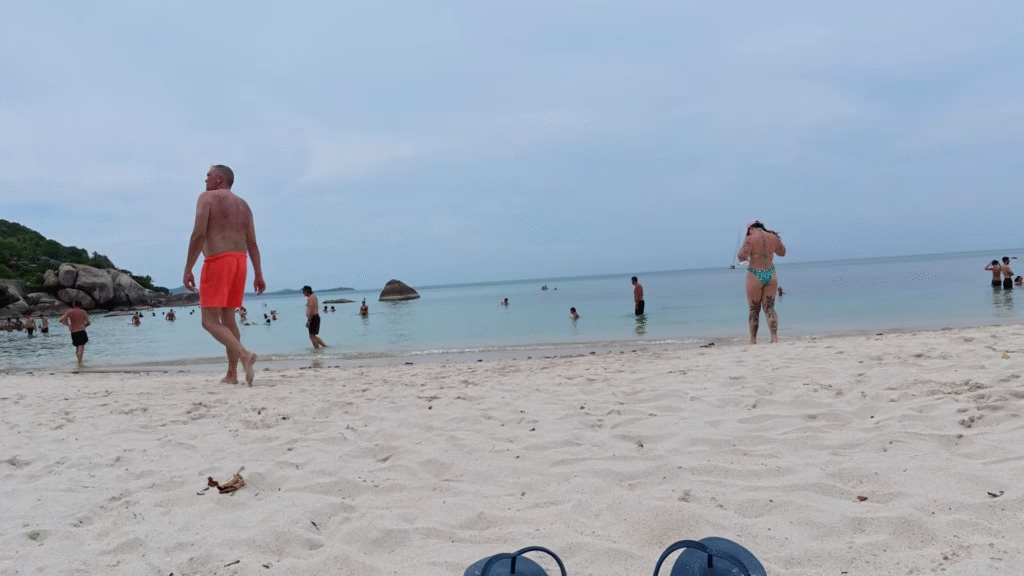
I stayed near Chaweng for the nightlife, but the beach right outside my hotel turned out to be the one I liked least. Chaweng is long, lively, and lined with loungers, vendors, and jet skis, which is fine for people-watching but not for a quiet swim. Once I rented a scooter and started exploring, I realized Samui’s better beaches are spread around the coast, and most of them sit away from the main tourist strip. Here are the ones that were worth the ride.
Lamai Beach. Lamai is the easy winner if you want Chaweng’s convenience without the chaos. It’s the island’s second-busiest beach, so you still get restaurants, beach bars, and places to rent a sunbed, but the sand is softer, the water is clearer, and the whole stretch feels calmer. I spent a slow afternoon here with a book and barely got hassled by vendors. It’s about a 15 to 20 minute scooter ride south of Chaweng, and the southern end near the Hin Ta and Hin Yai rocks is quieter than the central part. Go in the morning if you want the beach closer to empty.
Silver Beach (Crystal Beach). This was my favorite, and it’s the one I’d tell a friend to prioritize. Locally it’s signposted as Silver Beach, though a lot of guides and taxi drivers call it Crystal Beach, so use either name. It’s a small cove tucked between Chaweng and Lamai, maybe 100 meters of sand, framed by big granite boulders, with some of the clearest water I saw on the island. Because it’s small and a little awkward to reach by car, it never felt overcrowded even at midday. There are a couple of low-key resorts and a restaurant or two for drinks and lunch, so you can easily spend half a day here. Snorkeling around the rocks at either end is genuinely good for a beach this accessible.
Bophut and the beaches near Fisherman’s Village. The north coast around Bophut has a different feel altogether: flatter water, a more local and expat rhythm, and Fisherman’s Village a short walk away for cafés, dinner, and the Friday walking street. The sand here isn’t the postcard-white you get on the east coast, and the swimming is shallow, so it’s less about a perfect beach day and more about the setting. I’d come here in the late afternoon, swim, then stay on for sunset and food rather than treat it as a full beach session.
Maenam and the quiet coves. If you’ve got a scooter, the north and west coasts reward a bit of wandering. Maenam Beach is long, shaded with palms, and noticeably cheaper and sleepier than the east coast, which makes it a favorite for travelers who want to slow down. Between the named beaches you’ll also find small unmarked stretches where you can pull over and have the sand mostly to yourself. These coves were some of my favorite stops precisely because they weren’t on anyone’s list.
The short version: skip Chaweng for actual beach time and head to Lamai for convenience, Silver/Crystal for the prettiest swim, and Bophut or Maenam if you want quiet over perfect sand. Renting a scooter is what makes this possible, since the best spots are spread out and most are a short ride from the busy center.
Things to do near Chaweng Beach at night
Staying near Chaweng put me right in the middle of Samui’s nightlife, which is loud, neon, and goes late. It’s fun for a night or two, but I found myself drifting toward calmer spots after dark, and the best evenings of my trip were the ones I spent away from the main strip. Here’s how I’d spend an evening, from the busiest option to the most laid-back.
Chaweng’s main strip, for one big night. If you came to Samui to party, this is where it happens. The central stretch of Chaweng Beach Road is packed with bars, clubs, and the kind of places that hand out flyers and pour cheap buckets. Green Mango and the surrounding lanes are the long-running heart of it. It’s worth doing once if that’s your scene, but go in knowing it’s crowded, the music is everywhere, and drink prices climb the closer you get to the clubs.
Fisherman’s Village in Bophut, for the best all-rounder. This was my favorite evening on the island. About 20 minutes north of Chaweng, Fisherman’s Village is an old teak-shophouse street that’s been turned into a walkable strip of restaurants, cocktail bars, and boutiques without losing its character. Coco Tams on the beach is the spot everyone mentions, and for good reason: you sit on beanbags in the sand, order a cocktail, and around 9 p.m. there’s a fire show right on the beach. If you visit on a Friday, the Fisherman’s Village Walking Street takes over the whole road with food and craft stalls. It’s lively but never felt chaotic, which is exactly the balance Chaweng misses.
Night markets and street food, for the best value. Some of my best meals were the cheapest. The Chaweng and Lamai night markets are full of grilled skewers, fresh seafood, pad thai cooked in front of you, mango sticky rice, and fruit smoothies for a fraction of restaurant prices. Even staying in the Chaweng area, you can eat extremely well for very little if you skip the tourist-facing restaurants and follow the stalls with queues of locals.
Beach lounges, for winding down. When I didn’t want a late night, I’d grab a drink at one of the beachfront lounges where you sit close to the water with the waves doing most of the talking. It’s the opposite energy to the clubs and a good way to end a day on the beach without committing to a big night out.
The honest takeaway: Chaweng is worth one night if you want the party, but for most evenings I’d point you to Fisherman’s Village in Bophut. It has the cocktails, the fire show, the food, and the atmosphere, without the crowds and the inflated prices a few minutes down the coast.
Day trip from Koh Samui to Pig Island and a pink dolphin sighting
This ended up being the single best day of my Samui trip, and I did it solo one afternoon while my girlfriend caught up on work. I booked a tour that covered both islands and the boat ride out, so here’s exactly how it goes and what you’re actually paying for.
Where it leaves from. Almost every Pig Island tour departs from the south of Samui, near Thong Krut Pier. Your hotel transfer comes first, around 20 to 40 minutes depending on where you’re staying, then it’s a short hop by speedboat or traditional longtail out to the islands. The whole thing is a half day, roughly five to six hours door to door, which is why it slots so easily into one afternoon.
Koh Tan, the snorkeling stop. Most tours stop here first and give you about an hour in the water. The reef is shallow and beginner-friendly, with healthy coral, clouds of fish, and if you’re lucky a turtle. Visibility is genuinely good in dry season and noticeably murkier after rain, so if snorkeling matters to you, pick a calm, clear day and book a morning departure.
The dolphin on the way. Somewhere between the islands, the guide cut the engine and pointed: a dolphin breaking the surface a few meters off the boat, catching the light with a soft pinkish tint to its skin. The crew called it a pink dolphin, and whatever the exact science, seeing one that close was the kind of thing you don’t plan for and never forget. Worth knowing if you want to chase the real ones properly: Thailand’s famous pink dolphins are usually seen up near Khanom on the mainland, so treat a sighting on a Samui trip as a lucky bonus rather than a guarantee.
Pig Island (Koh Madsum), the main event. This is the island everyone comes for. A small group of pigs lives right on the beach and wanders straight up to you, and yes, they’ll wade into the shallows next to you. You can feed them (the guide hands out fruit and veg, and they go genuinely feral for watermelon), take photos, and just hang out on the sand. I’ll be honest, the pigs are the whole show. It’s a quirky, fun hour or two rather than a hidden paradise, so set your expectations and you’ll have a great time.

Getting back. After the islands you cruise back to the pier and get dropped at your hotel. I came back sandy, sunburned, and grinning, and it was still the most memorable half-day of the whole trip.
Honest tips before you book. Go in the morning for calmer water, more active pigs, and fewer crowds. Bring cash, sunscreen, and a waterproof phone case, because facilities on the islands are basic. And if a dolphin shows up, count yourself lucky, because it’s a bonus, not a booking guarantee.
Cabaret (Ladyboy) Show in Koh Samui: A Fun, Unique Night Out
One of the more unexpected highlights of my trip was catching a cabaret show, and it was far more entertaining than I’d guessed walking in. These performances are a long-running part of Thailand’s nightlife, and Samui’s are some of the liveliest on the islands. Think dazzling costumes, big choreography, and high-energy lip-sync routines that run from pop classics to Thai hits to the occasional Beyoncé number, all delivered with serious stage presence.
Most of the well-known shows are clustered in and around Chaweng, which makes one easy to fold into a night out. You can catch a set after dinner, then carry on to the bars on the same strip. The performers are genuinely talented, not just in the dancing but in the charisma and comic timing they bring, and they work the crowd rather than just performing at it.
What I liked most was how light-hearted the whole thing is. It’s part show, part interactive night out: you laugh, you cheer, and you leave with a story. Tickets are cheap, and at some bars the show is free if you buy a drink, so you don’t need to plan ahead. Walk through Chaweng in the evening and the lights and signs will pull you in.
A couple of practical notes from my night. The “free with a drink” deal usually means drinks are priced a bit higher to cover it, which is fair enough, just know it going in. If a performer poses for a photo with you, a small tip (20 to 100 baht) is the norm and appreciated. And if you want a proper seated theater show rather than a bar set, those exist too and are worth asking your hotel about.
So if you want something bold and a little different on your Samui itinerary, the cabaret show delivers. It’s not just a performance, it’s a celebration of expression, talent, and the playful side of Thai nightlife.
My honest take on Cocoon restaurant in Koh Samui
Every trip has one let-down, and for us it was Cocoon. I’d had high hopes given how often it comes up, so I want to be fair and specific about why our evening there fell flat, rather than just venting. Here’s what actually happened.
The booking mix-up. When we reserved, the staff noted our slot as roughly 5:45 to 6 p.m., and on the night it really did feel like they expected us in and out inside fifteen minutes. We turned up around six to what felt like a table already on the clock. It set an awkward, rushed tone before we’d even ordered, and nobody smoothed it over.
The food and price. For what we paid, the food was average at best. Nothing was offensively bad, it just didn’t come close to justifying the prices or the reputation. On an island where you can eat brilliantly for a fraction of the cost, paying premium money for a forgettable meal stung.
The reviews, and why I’d take them with a pinch of salt. During our visit, the staff offered a free drink in exchange for leaving a review. That’s a common enough tactic, but it’s worth knowing if you’re choosing a restaurant based on its rating, because incentivized reviews tend to skew rosy. I’d weigh the glowing ones accordingly and look for detailed, specific feedback instead.
To sum up: a rushed and awkward booking experience, average food at premium prices, and a ratings picture I’d read with some skepticism. With so many genuinely great places to eat on Samui, I wouldn’t spend one of my holiday dinners here again.
A few practical things I wish I’d known before arriving, learned the hard way or just worth passing on.
Rent a scooter, but rent it carefully. A scooter is the best way to see Samui. It unlocks the quiet beaches, the lookout points, the waterfalls, and the Big Buddha, and it’s far cheaper than relying on taxis. Two real cautions, though. First, you’re legally required to have an International Driving Permit with a motorcycle category, and police do run checkpoints, especially around Chaweng and Lamai, where they fine tourists without one. Second, take time-stamped photos of every existing scratch before you ride off, because a few rental shops are known for claiming pre-existing damage when you return the bike. Wear the helmet, go slow on the steep hill roads, and you’ll be fine.
Big Buddha and the waterfalls. The Big Buddha (Wat Phra Yai) is the easy, iconic stop: a big golden statue, peaceful grounds, and a nice view, best in early morning or late afternoon when it’s cooler and quieter. For waterfalls, Na Muang 1 and 2 are the main ones, set in lush jungle. Na Muang 1 is an easy walk; Na Muang 2 is a steeper, sweatier climb, so wear proper shoes and expect company in high season. Flow is strongest in and just after the rainy months and can be thin in the dry season, so adjust expectations accordingly.
Getting around with Grab and Bolt. Both ride apps work on Samui and saved me a fortune compared to the street taxis, which are notoriously expensive here and rarely use a meter. Fares are upfront in the app, so there’s nothing to haggle. Keep a little cash on hand, since not every driver takes card in-app, and be patient in remote corners of the island where fewer drivers circulate.
A quick hop to Koh Phangan. If the Full Moon Party is on your radar, you don’t need to base yourself there. Fast ferries and speedboats run the short crossing from Samui regularly, so you can go over for the night and come straight back. I did exactly that and it worked perfectly. Just check the ferry schedule and the Full Moon date in advance, since boats get busy and prices climb around party night.
Know the vibe: busy, and quieter alternatives nearby. Samui is lively and at times noisy, which is part of its appeal but not for everyone. If you want something calmer, Koh Phangan away from the party beaches is more laid-back, and Koh Tao is quieter still and brilliant for diving and snorkeling. All three are easy to combine on one trip.
The cannabis situation has changed, so read this. If you visited a few years back expecting weed shops on every corner, things are different now on paper. Thailand tightened the law in mid-2025, and as of 2026 cannabis is officially medical-use only: buying flower legally requires a prescription from a licensed Thai doctor, many dispensaries have closed, and recreational sales are gone. Public smoking, including drifting smoke that bothers other people, is treated as a public nuisance and can bring a serious fine or worse.
That’s the law. The reality I experienced is a bit messier. Despite the rules, I still caught the smell of cannabis all over the place, in busy streets, around bars, and yes, even drifting through a 4-star hotel. Enforcement is uneven, and plenty of people clearly still smoke regardless of what the regulations say. So two takeaways: don’t assume it’s a free-for-all, because the legal risk is real now and you don’t want to be the tourist who gets fined, but also don’t be surprised if you smell it around you anyway. If the smell bothers you, factor that in when choosing where to stay, and consider a calmer island like Koh Tao if you’d rather avoid it. (The law here is still shifting, so it’s worth a quick check close to your trip.)
Final Thoughts
Koh Samui won me over despite the crowds, and the trick to enjoying it is knowing where to point yourself. Here’s the short version of everything above:
For beaches, skip the busy main strip and head to Lamai, Silver Beach (Crystal), or the quieter coves near Maenam and Bophut for nicer sand and a calmer vibe. For nights out, trade Chaweng’s chaos for cocktails and the fire show at Coco Tam’s in Fisherman’s Village. The Pig Island day trip is the one I’d book again in a heartbeat, magical, quirky, and easy to do solo. The one place I’d skip is Cocoon restaurant: rushed service, a strange booking experience, and prices that don’t match the food. And throughout your trip, rent a scooter, chase a waterfall or two, lean on Grab and Bolt to get around, and consider a quick hop to Koh Phangan for the nightlife without having to stay over.
If you’re planning a bigger Thailand trip, I’ve got firsthand guides to plenty more of the country. Start with my Bangkok guide if you’re flying in through the capital, then head south to the limestone cliffs and beaches in my Krabi guide, or north for temples and mountains in my Chiang Mai guide. I’ve also got detailed write-ups on Maya Bay, James Bond Island, and the Monkey Cave if you want to go deeper on the south. And for the full picture, from the cinematic cliffs of the south to the cultural heart of the north, my complete Thailand guide ties it all together.
Wherever you go next, travel honest and travel curious.
Author

Get My Personal Travel Maps
Keep Reading: More Articles You'll Love
 Koh Phangan: From Backpacker Paradise to Family-Friendly Island in 2025
  Is Japanese Food Actually Chinese? The Surprising Origins of Japanese Cuisine
  Isshiki Beach: Tokyo’s Hidden Coastal Escape You’re Not Supposed to Know About
  The Ultimate Krabi Adventure: From Iconic Cliffs to Mangrove Wonders
  Busan Travel Guide: Things to Do, See & Eat in Korea
  Chiang Mai Unfiltered: 3 Days of Temples, Ethical Giants, and Sticky Falls
  Our Unforgettable Okinawa Trip: Exploring Ishigaki and Miyako-jima