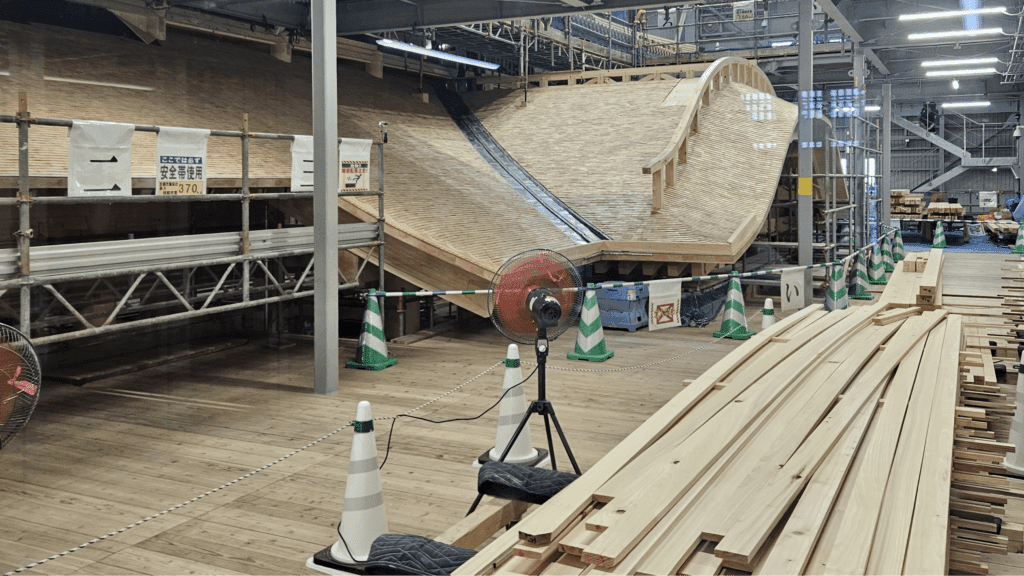
Shuri Castle in Naha, Okinawa is one of the most significant cultural landmarks in the Ryukyu Islands. As the former royal palace of the Ryukyu Kingdom, it served as a political and ceremonial center for centuries and became a symbol of Okinawa’s distinct heritage. Its striking red facades, intricate woodwork, and architectural blend of Chinese and Japanese influences helped draw visitors from around the world.
In 2019, a fire destroyed much of the main complex, marking one of the most painful moments in the site’s modern history. My girlfriend had the chance to visit Shuri Castle before the fire during her first trip to Okinawa, and she often talks about how impressive the main hall and surrounding courtyards were in person. Hearing her describe it adds a personal reminder of what was lost and why the castle holds such deep meaning for many people.
Reconstruction efforts are now well underway, and the project has become a source of pride for the community. The restoration shows the resilience of the Okinawan people and their commitment to preserving a cultural treasure for future generations.
A Historical Treasure
Originally constructed in the 14th century, Shuri Castle served as the royal palace of the Ryukyu Kingdom and remained central to the island’s political, cultural, and spiritual life for centuries. As the seat of the Ryukyuan kings, it was where diplomatic missions were received, state rituals were performed, and major political decisions were made. The castle played a key role in the kingdom’s unique position between larger regional powers, since the Ryukyu Islands conducted extensive trade with China and maintained distinct cultural exchanges with Japan and Southeast Asia. This international orientation shaped the identity of the kingdom and influenced many of the traditions that survive in Okinawa today.
Shuri Castle’s architecture reflected this blend of influences. The vivid red lacquered structures, sweeping tiled roofs, and decorative elements borrowed from Chinese palace design contrasted with local Okinawan craftsmanship and Japanese architectural techniques. The result was a style that could not be found elsewhere in Japan. The layout of the castle also reflected its ceremonial importance. The great courtyard hosted state audiences, while inner halls served political functions and religious rituals tied to the Ryukyuan belief system. The castle’s sacred spaces, including areas associated with ancestral worship, reinforced its role as a spiritual anchor for the kingdom.
Even after the Ryukyu Kingdom was formally incorporated into Japan in the late 19th century, the site remained a powerful symbol of Okinawan identity. Generations of residents viewed Shuri Castle as a reminder of their distinct heritage, and efforts to preserve and restore it continued throughout the 20th century. Its cultural significance deepened as Okinawa navigated periods of hardship, reconstruction, and modernization. By the time it was fully restored in the early 2000s, Shuri Castle had become one of the most recognizable landmarks in the region and a source of local pride for people across the islands.
The Destruction of Shuri Castle Naha
In 1945, during the Battle of Okinawa, Shuri Castle in Naha was severely damaged by bombing as the site became a strategic military position. Much of the complex was reduced to rubble, and for years the area served different purposes under postwar administration. Despite these challenges, local historians, craftsmen, and cultural preservationists pushed for the castle’s restoration. Their efforts gained momentum in the 1970s and 1980s, supported by detailed archaeological research and surviving architectural records. Using traditional construction techniques and materials that reflected the original Ryukyuan design, the reconstruction work focused on accuracy and cultural authenticity. By the late 20th century, Shuri Castle had been faithfully rebuilt and was recognized as a cultural treasure, attracting visitors who came to learn about Okinawan history and appreciate the craftsmanship of the restored structures.
The renewed castle became a symbol of cultural resilience. It helped many Okinawans reconnect with the legacy of the Ryukyu Kingdom and provided an educational anchor for younger generations. The site also contributed to a deeper understanding of Okinawa’s unique identity within Japan, since it showcased traditions that differ from those found on the mainland.
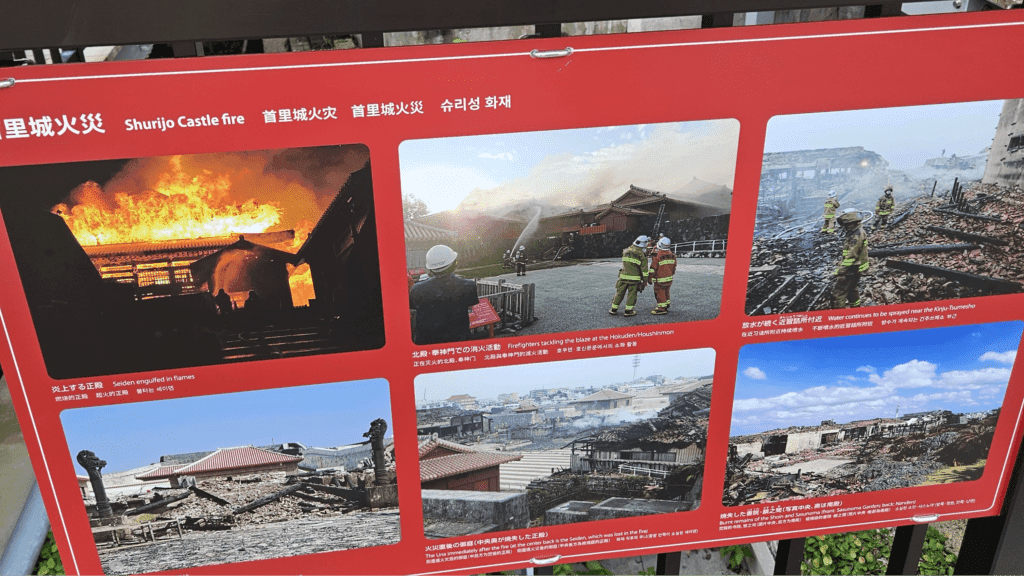
Tragically, on October 31, 2019, a fire broke out in the main hall, known as Seiden, and the blaze spread rapidly through adjacent buildings. The destruction was swift and overwhelming, leaving charred remains where some of the most recognizable features of Shuri Castle once stood. The loss resonated deeply across Okinawa and beyond, because the structure represented more than an architectural landmark. It embodied centuries of cultural memory, community pride, and the enduring spirit of the Ryukyuan people. Many residents described the fire as a personal loss, since Shuri Castle stood as a symbol of identity and continuity in a region shaped by both hardship and renewal.
The Rebuilding Effort
In the wake of the fire, the people of Okinawa responded with determination, unity, and a clear commitment to cultural preservation. The reconstruction project that followed became a collective effort supported by the Okinawan government, cultural organizations, local businesses, and thousands of private donors from across Japan and overseas. Many residents described the rebuilding as a responsibility to future generations, since Shuri Castle in Naha represents centuries of Ryukyuan identity and tradition.
The restoration team includes architects, historians, engineers, and skilled craftsmen who specialize in traditional Ryukyuan construction. Their work involves careful examination of old photographs, archival blueprints, and detailed historical records that document the structure of the original buildings. Whenever possible, they are using traditional materials and methods to maintain historical accuracy, including specific wood joinery techniques and lacquer finishes characteristic of Ryukyuan architecture. The approach reflects a broader goal of rebuilding the castle not just as a tourist attraction but as a faithful continuation of Okinawa’s cultural legacy.
Although the full restoration will take several years, each phase of progress has reinforced a sense of pride within the community. Public viewing areas, educational exhibits, and reconstruction updates allow visitors to learn about the process and understand the level of expertise involved. The ongoing work has become a reminder of Okinawa’s resilience, and many residents are optimistic that Shuri Castle will once again stand as a vibrant symbol of their heritage and cultural strength.
The rebuilding of Shuri Castle Naha goes beyond restoring a physical structure; it is about preserving the identity and culture of Okinawa. The castle embodies the history, spirit, and resilience of the Okinawan people, making its reconstruction a powerful symbol of collective effort and cultural pride.
A Cultural Journey in Naha: Discovering Wolfbräu

In the wake of the fire, the people of Okinawa responded with determination, unity, and a strong sense of responsibility toward their cultural heritage. The reconstruction project that followed became a coordinated effort supported by the Okinawan government, cultural organizations, local businesses, community volunteers, and thousands of private donors from across Japan and abroad. Many residents described the rebuilding process as a duty to future generations, since Shuri Castle in Naha represents centuries of Ryukyuan identity, diplomacy, and craftsmanship.
The restoration team includes a wide range of specialists, from architects and engineers to historians and traditional Ryukyuan craftsmen. Their approach is grounded in meticulous research that draws from archival blueprints, historical documents, archaeological findings, and preserved photographs. Whenever possible, they use authentic materials and traditional building methods, including characteristic wood joinery techniques and the distinctive lacquer finishes associated with classical Ryukyuan design. This careful process reflects a broader goal: to recreate Shuri Castle not only as a historical attraction but as a living continuation of Okinawa’s cultural legacy.
Although the full restoration will take several years, every visible milestone has strengthened local pride. Public viewing platforms, educational exhibits, and guided explanations of the reconstruction allow visitors to understand the expertise involved and appreciate the cultural importance of the project. For many Okinawans, watching the castle slowly rise again has become a powerful reminder of the region’s resilience.
When we visited Okinawa, my girlfriend and I planned to experience both its historical sites and its nightlife. After talking about Shuri Castle and reflecting on how meaningful it is to the island, we spent the evening exploring Naha. We eventually started drinking a bit before heading out to visit Churasun6, which is known as one of the biggest show clubs in Japan. The contrast between learning about Okinawa’s past during the day and experiencing its modern entertainment scene at night added a memorable balance to the trip and showed how deeply tradition and contemporary culture coexist on the island.
Conclusion: The Resilience of Okinawa
Okinawa is a place where history, community, and everyday life blend in a way that stays with you long after the trip ends. Standing near the remnants of Shuri Castle with my girlfriend, knowing she had once seen it fully restored before the fire, gave our visit a deeply personal meaning. Hearing her describe the vivid red halls and the atmosphere of the courtyards helped me imagine what had been lost, but it also made me appreciate the care going into rebuilding it. Being there together felt like witnessing a part of Okinawa’s story that is still unfolding.
Later that night, as we shared a pint at Wolfbräu and talked about everything we had learned that day, I realized how quickly Okinawa draws you in. The island has a way of shifting from reflective and historical to warm and lively without ever feeling forced. That mix is part of what makes it so memorable. You feel the resilience of the Ryukyuan spirit at Shuri Castle, and you feel the same welcoming energy in the casual moments of Naha’s nightlife.
Our time in Okinawa also showed us that the prefecture is much more than its capital city. While Naha offers an incredible mix of culture and convenience, the smaller islands like Ishigaki and Miyakojima reveal another side of Okinawa entirely. Their quiet beaches, clear waters, and slower pace make them perfect places to understand the natural beauty that shapes island life. Visiting these islands added depth to our trip and made us appreciate Okinawa as a whole, not just its most well-known sites.
Leaving Okinawa, I felt that resilience is not just something you learn about; it is something you experience. Whether exploring Shuri Castle, relaxing in a local pub, or taking a ferry to a quieter island, the spirit of Okinawa is present in every moment.
More culture? Click here.
Author

Get My Personal Travel Maps
Keep Reading: More Articles You'll Love
 Is Japanese Food Actually Chinese? The Surprising Origins of Japanese Cuisine
  Japan Travel Myths vs Reality: What Tourists Still Get Wrong About Japan
  Living in Japan vs Korea – The Ultimate Expat Guide
  Our Unforgettable Okinawa Trip: Exploring Ishigaki and Miyako-jima
  Tattoos in Japan: Rules, Culture, Onsen & Changing Attitudes
  Matsumoto Itinerary: The Perfect 3-Day Guide Including Kamikochi
  My First 30 Days in Tokyo: Essential Administrative Steps for International Students