
Valentine’s Day is celebrated around the world as a day of love, but the way people express that love varies widely from one culture to another. In many European countries, the holiday is a shared event where couples exchange gifts, enjoy romantic dinners, give flowers, and spend quality time together. In Japan, the meaning and structure of the celebration are quite different. The focus is centered on chocolate, social etiquette, and thoughtful gestures rather than mutual gift giving.
Living in Japan completely changed how I view Valentine’s Day. Growing up in Switzerland, I was used to seeing couples exchange gifts, flowers, or plan a romantic evening together. In Japan, I quickly discovered that the tradition works very differently. On February 14, women are generally the ones who give chocolate, while men wait until White Day on March 14 to return the gesture.
What surprised me most was how much meaning can be attached to a simple box of chocolate. Some gifts are given out of social obligation to colleagues or classmates, while others are carefully handmade for someone special. My own experience fell into the latter category. My girlfriend made chocolates herself and even included our initials, H and M, which made the gift feel far more personal than many expensive presents I have received in Europe. A month later, White Day gives men the opportunity to respond with a gift of their own, creating a unique two-step tradition that reflects both thoughtfulness and reciprocity.
1. Valentine’s Day in Europe: A Day of Romance and Gifts
One aspect that often surprises Japanese visitors to Europe is how visible Valentine’s Day becomes in public spaces. Restaurants fill with couples, florists experience some of their busiest days of the year, and city centers often display themed decorations. In countries such as Switzerland, France, Italy, and Germany, it is perfectly normal to see couples walking around with large bouquets of flowers or carrying gift bags on February 14. The celebration is not limited to young couples either. Married couples who have been together for decades often take the opportunity to enjoy a special dinner or exchange a small gift.
As a Swiss person, I have always found Valentine’s Day to be less about the gift itself and more about the shared experience. While chocolates and flowers are common, many couples spend more money on creating memories than on physical presents. A reservation at a favorite restaurant, a weekend trip, tickets to a concert, or even a simple evening in a cozy mountain chalet can be considered more meaningful than an expensive gift. The focus is often on spending quality time together rather than following a strict set of traditions.
Another notable difference is that Valentine’s Day in Europe is generally viewed as a celebration of the relationship itself rather than an obligation placed on one gender. Both partners are expected to contribute to the occasion in some way. This mutual approach creates a very different atmosphere compared to Japan, where the tradition historically placed the responsibility of giving chocolate on women. Many Europeans are surprised when they first learn about the concepts of giri-choco and White Day because the idea of separating gift-giving into different dates feels unusual from a European perspective.
At the same time, Valentine’s Day is not universally loved across Europe. Some people see it as an overly commercial holiday created to sell flowers, jewelry, and chocolates. Nevertheless, even many critics still use the occasion as an excuse to spend time with their partner. Whether celebrated with an expensive dinner in Paris, a ski weekend in the Swiss Alps, or a homemade meal in a small apartment, Valentine’s Day across Europe remains centered on one simple idea: creating meaningful moments together.
- Flowers (especially roses): The classic way to express love is by giving red roses.
- Romantic dinners: Many couples book a fancy restaurant or cook a special meal at home.
- Exchanging gifts: Jewelry, perfume, love letters, or small thoughtful gifts are common.
- Mutual appreciation: Both partners usually give each other gifts and express their feelings.
A unique aspect of Valentine’s Day in some European countries is the tradition of anonymous love letters or cards, which is especially popular among young people. This is not the case at Valentine’s Day in Japan.
How It Differs from Japan
The biggest difference from Japan is that Valentine’s Day in Europe is a two-way exchange. Both men and women give each other gifts, and the celebration focuses on shared affection rather than one person taking the lead. Couples usually see February 14 as a moment to express love in a balanced way. Each partner gives something thoughtful, whether it is a small present, a handwritten card, or a planned date. The experience feels mutual and equally meaningful for both sides.
In Japan, the structure of the holiday is very different. Valentine’s Day follows a specific gender-based tradition in which only women give gifts on February 14. The type of chocolate they choose reflects the nature of the relationship. Some chocolates are meant for colleagues or acquaintances, while others are reserved for someone they truly care about. This creates a clear distinction between social obligation and genuine affection. Men do not reciprocate until White Day on March 14, when they return the gesture with gifts of their own.
These contrasting customs highlight how differently the two regions approach the expression of love. Europe focuses on shared experiences and mutual appreciation, while Japan separates the celebration into two stages that emphasize effort, gratitude, and the role of giving.
2. Valentine’s Day in Japan: Women Give Chocolate!
Valentine’s Day in Japan is entirely different. On February 14, only women give chocolate to men, which surprises many people who are used to the European style of mutual gift giving. Men do nothing on this day, at least not yet, which often adds a playful twist to the celebration.
The type of chocolate a woman chooses is very important because it reveals the intention behind the gift. Each category carries its own meaning, and people in Japan pay close attention to these distinctions. There are three main categories of chocolate, and understanding them helps explain how carefully structured the holiday is. These categories also show how Japan blends emotion, social etiquette, and respect into a single tradition that has become a meaningful part of modern culture.
From lighthearted social gifts to heartfelt handmade creations, the classification of chocolate shapes the entire experience of Valentine’s Day in Japan and gives it a depth that goes far beyond simply buying sweets at a store.
1. Honmei-Choco (本命チョコ) – “True Love” Chocolate
This is the type of chocolate I received. My girlfriend made it herself and even added our initials, H and M, to the chocolates inside the box. What made the gift special was not the value of the ingredients, but the amount of time and thought she invested into creating it. Every piece looked different, and it was obvious that a lot of care had gone into the presentation.
Most of the chocolates were made using Meiji chocolate, one of Japan’s most famous chocolate brands. However, the white chocolate was particularly special because it was made using chocolate from Kohibido in Hokkaido. We had visited the factory together during a previous trip, sampled their products, and it quickly became my favorite white chocolate. Knowing that she remembered that detail and chose it specifically for Valentine’s Day made the gift far more meaningful than something bought off a shelf.
As a Swiss person, I grew up in a country famous for its chocolate, so I never expected a box of handmade chocolates to leave such a strong impression on me. Yet what stood out was not the chocolate itself. It was the effort behind it. In Japan, Valentine’s Day often places more emphasis on thoughtfulness and personal effort than on the monetary value of a gift. Looking at those chocolates with our initials inside, I understood why handmade honmei-choco is considered the most meaningful type of Valentine’s gift.
2. Giri-Choco (義理チョコ) – “Obligation” Chocolate
This type of chocolate is given to male colleagues, bosses, classmates, or friends as a polite gesture with no romantic intention at all. The word giri (義理) means duty, obligation, or social responsibility, which perfectly reflects the purpose behind this tradition. Rather than expressing love, giri-choco is intended to show appreciation, maintain positive relationships, and acknowledge the people you interact with regularly.
For many foreigners, including myself, this concept can feel unusual at first. In Switzerland, giving chocolate to a colleague on Valentine’s Day would often be interpreted as a romantic gesture. In Japan, however, context matters. A small box of chocolates can simply mean “thank you for your support” or “I appreciate working with you.” The gift is often less about the chocolate itself and more about maintaining harmony within a social group.
Historically, giri-choco was especially common in Japanese offices. Female employees would often prepare chocolates for male coworkers, supervisors, and managers regardless of whether they had any personal feelings for them. While the practice has become less common in recent years, many companies and social circles still continue the tradition.
Men working in large offices sometimes receive several boxes of giri-choco on Valentine’s Day. This can create humorous situations where employees leave work carrying bags full of chocolates despite not receiving a single romantic gift. The tradition has become so widespread that many Japanese people can immediately tell whether a chocolate is likely to be giri-choco or honmei-choco simply by the packaging, presentation, and level of effort involved.
Although some critics see giri-choco as an outdated social obligation, it remains a fascinating example of how Japanese culture places importance on courtesy, reciprocity, and maintaining smooth interpersonal relationships. Even something as simple as a piece of chocolate can carry a social meaning far beyond its value as a sweet treat.
3. Tomo-Choco (友チョコ) – “Friendship” Chocolate
This type of chocolate is exchanged between female friends and is often one of the most fun parts of Valentine’s Day for many young women in Japan. Friends enjoy making cute, creative, or themed chocolates to share with one another as a way to celebrate their bond. The intention behind tomo choco is simple. It expresses appreciation, friendship, and support, with no romantic meaning at all. It is a lighthearted tradition that strengthens connections and brings a sense of joy to the day.
There is also jibun choco, written as 自分チョコ, which translates to chocolate for oneself. Many women buy high-quality or beautifully packaged chocolates as a personal treat on Valentine’s Day. It is a way to enjoy the holiday without depending on anyone else and to celebrate a bit of self-care. After all, there is nothing wrong with treating yourself to something delicious.
Why is Valentine’s Day in Japan Focused on Chocolate?
The custom of women giving chocolate started in the 1950s, when Japanese chocolate companies promoted Valentine’s Day as a “chocolate-giving day.” Over time, this became a national tradition, and today, it is one of the most commercially significant events in Japan.
3. White Day – When Men Give Back!
One of the most unique parts of Valentine’s Day in Japan is the follow-up tradition known as White Day. It is celebrated exactly one month later, on March 14. This is the day when men return the favor and give gifts to the women who gave them chocolate on Valentine’s Day. The idea behind White Day is simple. It creates a sense of balance and appreciation, and it allows men to show gratitude through their own gesture. Many choose to give sweets, small accessories, or flowers, which turns the holiday into a two-step exchange that feels thoughtful and meaningful.
The “Triple Rule”
There is an unwritten rule that a man’s return gift should be three times the value of the chocolate he received. This means:
- Giri-Choco (obligation chocolate) is usually repaid with small sweets or cookies.
- Honmei-Choco (love chocolate) should be repaid with something much more valuable, such as jewelry, perfume, or a romantic date.
If a man gives a very expensive return gift, it often signals strong romantic interest. A modest gift, on the other hand, may simply be a polite acknowledgment rather than a declaration of affection. As an outsider looking in, White Day can sometimes feel like Valentine’s Day has been optimized by a committee of marketers. Between Valentine’s Day, White Day, luxury chocolates, department store promotions, and the unwritten expectations around gift values, it is easy to joke that Japan has reached the final boss stage of capitalism. What began as a simple chocolate campaign evolved into an entire second holiday that encourages another round of spending just one month later.
4. Why is Valentine’s Day in Japan Day So Different?
The reason for Japan’s unique Valentine’s Day culture lies in its structured traditions and commercial influences:
- Clear social rules: Japan values organized and well-defined customs, which is why there are clear categories of chocolate for different relationships.
- Traditional gender roles: In the past, Japanese society had clearer gender expectations, which influenced how Valentine’s Day developed.
- Marketing influence: Japanese companies played a huge role in shaping the tradition by promoting chocolate as the main Valentine’s gift.
5. Personal Reflection: A Sweet and Thoughtful Tradition
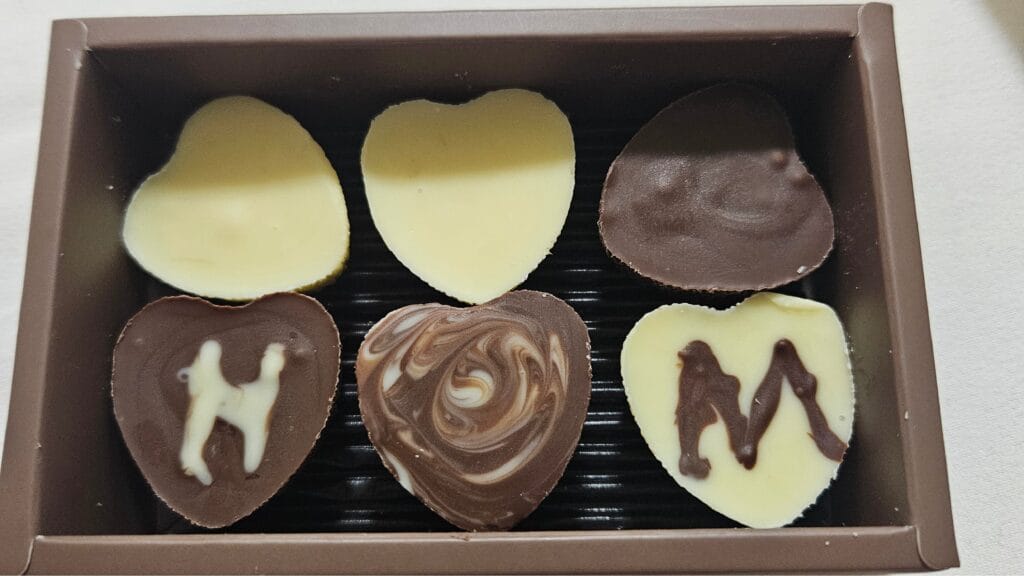
Even though Japan’s Valentine’s Day is different from what we’re used to in Europe, it has a special charm, especially because of the thoughtfulness behind Honmei-Choco.
Your girlfriend making handmade chocolate with your initials inside (H + M) is a perfect example of how meaningful and heartfelt this tradition is. Unlike in Europe, where expensive gifts are common, in Japan, the emphasis is on effort and sincerity. Handcrafted chocolates symbolize love, care, and devotion—which makes them more precious than store-bought gifts.
Although it might feel strange that only women give gifts first, the idea of men returning the favor on White Day balances the tradition in a unique way. Plus, the handmade aspect of Japanese Valentine’s gifts adds a personal and intimate touch, making it even more special.
6. Conclusion: Two Cultures, Two Beautiful Ways to Express Love
While Valentine’s Day in Europe is a mutual celebration that often includes flowers, romantic dates, and shared gifts, the Japanese version places its focus on chocolate, clear social traditions, and the two-step process that continues with White Day. Each approach reflects the cultural values behind it. Europe highlights shared experiences and open expressions of affection. Japan emphasizes intention, effort, and the meaning behind the type of chocolate that is given.
Both versions of the holiday have their own charm. A romantic dinner in Europe can be unforgettable, but a thoughtful handmade chocolate gift in Japan carries its own kind of emotional depth. What matters most is choosing a way to show love that feels sincere and personal to the relationship.
Enjoying Valentine’s Day in Japan with these traditions in mind adds another layer of appreciation. It turns a simple exchange into something heartfelt, personal, and connected to moments we have lived together.
Author

Get My Personal Travel Maps
Keep Reading: More Articles You'll Love
 Is Japanese Food Actually Chinese? The Surprising Origins of Japanese Cuisine
  Living in Japan vs Korea – The Ultimate Expat Guide
  Japan Travel Myths vs Reality: What Tourists Still Get Wrong About Japan
  Shiroi Koibito Park Sapporo: Complete Visitor Guide & Review
  Tattoos in Japan: Rules, Culture, Onsen & Changing Attitudes
  What is Bingsu? The Ultimate Guide to Korea’s Famous Snowy Dessert
  My First 30 Days in Tokyo: Essential Administrative Steps for International Students