Here is something most people planning Japan never hear: winter in Tokyo is mostly sunny. While Switzerland sits under a grey lid of fog for weeks, Tokyo gets crisp blue mornings, cold but dry air, and on clear days you can see Mount Fuji from the city. The sun sets before 16:30, which sounds like a downside until you realise what Tokyo does with all that darkness: it switches on millions of lights, opens Christmas markets and turns ordinary streets into places you want to walk at night.
Winter is one of the most underrated times to visit Japan. Everyone talks about cherry blossoms and autumn leaves, but from December to February the air is clear, there is far less rain than in other seasons, and sightseeing is much more relaxed than in summer, when the humidity makes every walk feel like a sauna session. These are the things I think you should not miss in Tokyo in winter, from the first Christmas lights in November to the plum blossoms at the end of February.
1. Christmas markets in Tokyo and Yokohama

Christmas markets do not have a long tradition in Japan, which is exactly what makes them fun. You see mulled wine, wooden stalls and Christmas pyramids, but everything works the Japanese way: queues, ticket systems, collectible mugs and a calm crowd. Most markets run from late November until 25 December.
Tokyo Christmas Market at Meiji Jingu Gaien. The biggest and most German one, with a large Christmas pyramid, solid wooden stalls, bratwurst, pretzels and stollen. When I went in 2023, I was surprised how calm and organised it felt despite the crowds. The quality of the drinks varied a lot though: of the two mulled wines I tried, one was really excellent and the other was so sweet we could not finish it, so try small portions at different stalls. In 2025, entry cost 1,000 yen on weekdays and 1,500 yen on weekends, usually with a collectible mug for your first drink. All details are in my guide to the Tokyo Christmas Market at Meiji Jingu.
Yokohama Red Brick Warehouse. We went in December 2025, and it is the opposite of Tokyo: smaller, more open and right on the harbour, with views of the illuminated Minato Mirai skyline. The food is mostly sausages and meat, but the mulled wine and hot cocoa were very good. In 2025 the general ticket cost about 500 yen, about 1,000 yen on peak days, and parts of the area were free. Afterwards you can walk to the Cosmo World ferris wheel or eat in Chinatown. More in my Yokohama Christmas market guide.

Azabudai Hills. For quality, my favourite is the newer Christmas market at Azabudai Hills. The food, the glühwein and the beer there are the best I have had at any Christmas market in Tokyo. I went with my wife and my brother,. If quality matters most to you, this is the one to go to.
Prices and dates change every year and are usually announced in autumn, so check the official websites before you go.
2. Winter illuminations

If the Christmas markets are the cosy part of winter, the illuminations are the loud part. Japanese cities compete every year with LED shows, and many run from early November until February, so they are not only a Christmas thing. Most of the city ones are free: the blue tree tunnel in Shibuya, Marunouchi’s champagne-gold street trees, and the light shows around Roppongi Hills and Tokyo Midtown. In Shinjuku, the Tokyo Metropolitan Government Building turns into a giant screen for Tokyo Night and Light, a free projection mapping show every evening.
The amusement park illuminations outside the centre charge entry, but they are on a different scale. Yomiuriland Jewellumination covers a whole park in millions of lights, and in Asakusa you can combine the old temple district with its winter illumination.
A general rule: illuminations are busiest from 23 to 25 December and on weekend evenings between 18:00 and 20:00. Go on a weekday after 20:00 and they are much calmer.
3. Christmas the Japanese way
Christmas is not an official holiday in Japan, and only around one percent of the population is Christian. Instead, Christmas Eve is a date night, a bit like Valentine’s Day in Europe. Couples book restaurants weeks in advance, families order a Christmas cake with strawberries and whipped cream, and millions of people eat fried chicken because of a marketing campaign from the 1970s. I wrote about that strange story in my article on why Japan eats KFC at Christmas.
Our own Christmas Eve is dinner at home with my wife, her sister and our nieces, with a strawberry shortcake from a bakery that we bought spontaneously on the way. If you want to understand how the season works here, read my guides to Christmas in Japan and Christmas in Tokyo.
4. Clear views of Mount Fuji
Cold, dry air means visibility. December to February are the months when you have the best chance to see Fuji, even from Tokyo itself, from observation decks or from some train lines in the morning. In summer, Fuji can hide behind haze for weeks.
For the full view, take a day trip. Lake Kawaguchiko has the classic postcard view across the water, and in Hakone you can combine Fuji views with a hot spring. Go early: the mountain is usually clearest in the morning, and clouds tend to roll in around midday.
5. Hot springs and snow monkeys

Winter is onsen season. Sitting in a hot outdoor bath while it is freezing is one of the great pleasures of Japan, and you do not have to go far from Tokyo for it. My onsen and ryokan guide explains where to go, and if it is your first time, read up on onsen etiquette before you go.
If you want the classic winter picture, the snow monkeys of Jigokudani in Nagano bathe in a hot spring, and they are most photogenic when there is snow. I have been there twice and wrote a full snow monkey onsen guide.
6. Skiing, as a day trip or in Hokkaido
Japan has some of the best powder snow in the world, and you can ski without leaving the Tokyo region for long. The ski resorts in Niigata and Nagano are close to Shinkansen stations, so a day trip on the bullet train is realistic. My guide to skiing in Japan compares the regions, and my Ryuoo Ski Park trip shows how to do it on a budget.
For a proper ski holiday, fly to Hokkaido. Start with my overview of the best ski resorts in Hokkaido, and if you are going to Niseko, read my Grand Hirafu tips first.
7. Winter food
When it gets cold, convenience stores switch to oden simmering next to the till, nikuman steamed buns and hot drinks in the vending machines. In the evening, you can hear the yaki imo trucks selling roasted sweet potatoes through the neighbourhoods, and restaurants serve hot pots like nabe and sukiyaki. Strawberry season starts in December, which is why Japanese Christmas cakes are always strawberry and cream, and in Christmas season stollen and baumkuchen are everywhere.
[MAX: your personal favourite winter food or drink in Tokyo, one sentence. If you skip this, I delete the marker.]
8. New Year: hatsumode and lucky bags
New Year is the big family holiday in Japan, and it changes the city. On 31 December, people eat toshikoshi soba for a long life, and at midnight temples ring their bells 108 times. From 1 January, shrines fill up for hatsumode, the first shrine visit of the year, with food stalls, fortune slips and long but well-organised queues.
In the first days of January, department stores sell fukubukuro, lucky bags with surprise contents at a big discount, and people queue for the popular brands before opening. Be aware that from about 29 December to 3 January many restaurants, museums and some shops are closed, so plan your meals ahead.
[MAX: do you go to hatsumode, and if yes, where? One sentence. If you skip this, I delete the marker.]
9. February: snow festival and plum blossoms
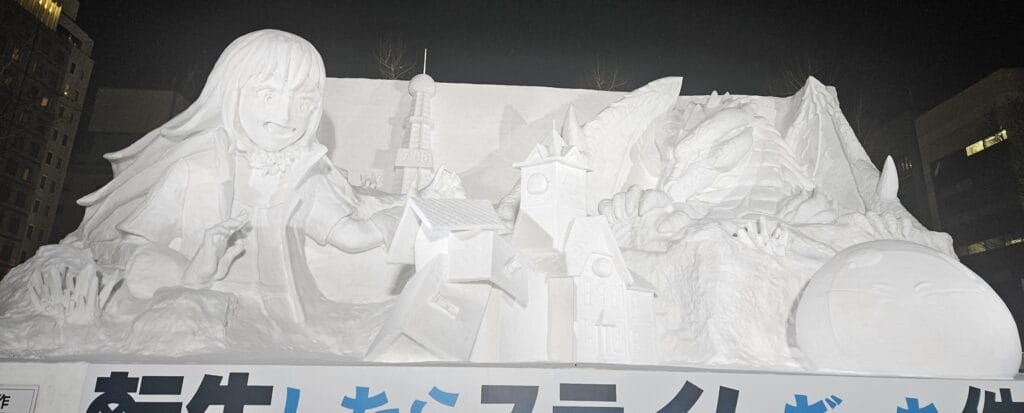
February is the quietest month in Tokyo, which makes it a good time for cheaper hotels and emptier sights. It is also the month of the Sapporo Snow Festival in early February, with giant snow and ice sculptures in the centre of Sapporo. It is a short flight from Tokyo and easy to combine with Otaru in winter.
Back in Tokyo, the first plum blossoms open in February. They come before the cherry blossoms, are much less crowded and smell wonderful. If you are planning spring as well, here is my Tokyo cherry blossom guide.
Practical tips for Tokyo in winter
- Weather: daytime around 10 to 14 degrees, nights close to freezing. Snow in the city is rare. Layers are better than a heavy coat, because trains and shops are heated. My Japan packing list has what to bring.
- Christmas Eve is date night: restaurants are fully booked on 24 December. If you want a nice dinner, reserve early or go on the 23rd.
- New Year closures: from about 29 December to 3 January, many restaurants, museums and some shops close.
- Hotels: the end of December is a peak season for domestic travel, so book early. January after the holidays and February are cheaper.
- Daylight: the sun sets before 16:30 in December, so do your outdoor sightseeing in the morning and save the evening for lights and markets.
Planning more of Japan in winter? Kyoto is beautiful and quiet in the cold months, see my guide to Kyoto in winter, and for the bigger picture, start with things to do in Tokyo.
Frequently Asked Questions
Is Tokyo worth visiting in winter?
Yes. It is dry and sunny, the views are clear, the illuminations are on and it is less humid and less crowded than spring or summer. Just plan around the New Year closures.
How cold is Tokyo in winter?
Usually around 10 to 14 degrees during the day and around 2 to 5 degrees at night from December to February. January is the coldest month.
Does it snow in Tokyo?
Rarely. Tokyo gets a few light snowfalls in some winters, usually in January or February, but it seldom stays. For real snow, go to Nagano, Niigata or Hokkaido.
Can you see Mount Fuji from Tokyo in winter?
Often, yes. Winter has the clearest air of the year, and on sunny mornings Fuji is visible from observation decks and high buildings in Tokyo.
When do Christmas markets open in Tokyo?
The big ones usually open in late November and close on 25 December. Dates for each year are announced in autumn.
Is Christmas a holiday in Japan?
No. 25 December is a normal working day. Christmas is a commercial and romantic event, while New Year is the big family holiday.
What is the best month to visit Tokyo in winter?
December for Christmas markets and illuminations, January after the holidays for fewer crowds, and February for the Sapporo Snow Festival, plum blossoms and the cheapest hotels.
Author

Get My Personal Travel Maps


Leave a Reply