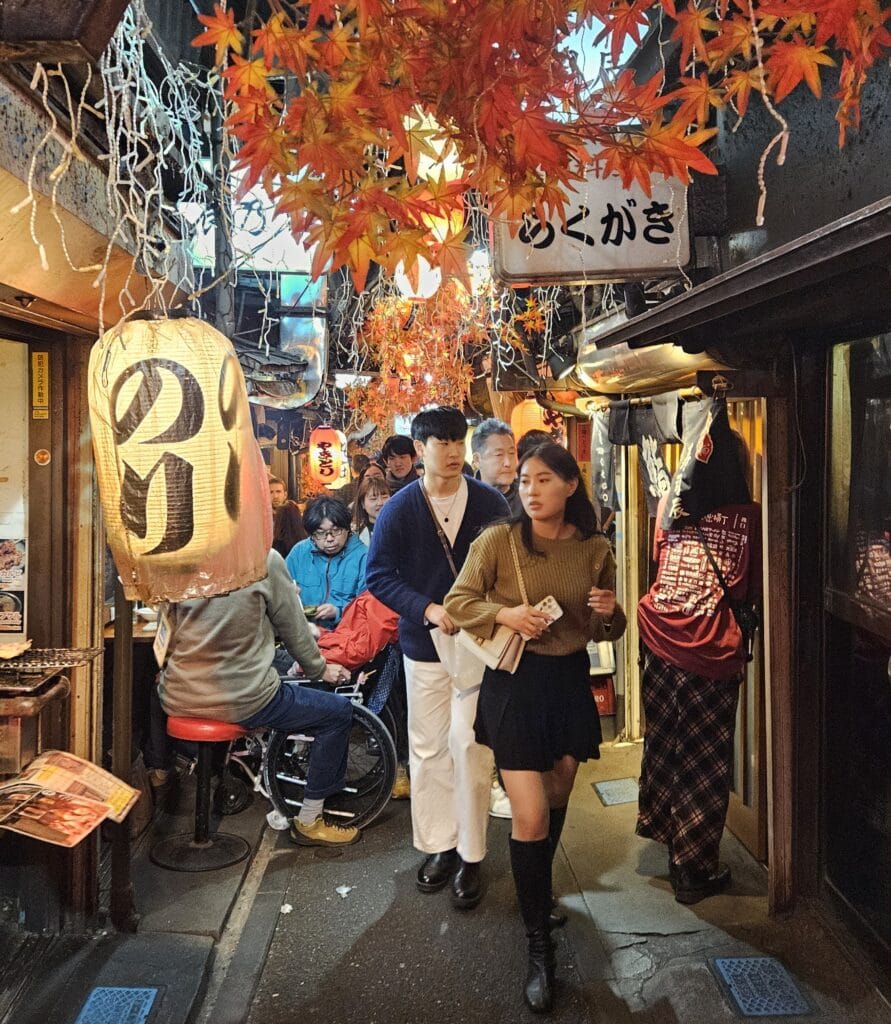
An izakaya is a Japanese pub where people go to drink and share small plates of food. It is one of the best ways to experience everyday Japanese culture: relaxed, social and usually affordable. You order a drink first, then several dishes for the table, and keep ordering as the evening goes on.
This izakaya guide covers how it works, from the small starter you did not order (otoshi) to the bill at the end, plus what to eat, what to drink and a few etiquette tips. I lived in Tokyo for three years while studying at Waseda, and izakaya are everywhere in the city, from station fronts to quiet side streets.

What Is an Izakaya?
The word combines “i” (to stay) and “sakaya” (sake shop). Originally people stayed at the sake shop to drink, and over time small dishes were added. Today, izakaya range from tiny counter bars with a handful of seats to big chain restaurants with tablets and English menus.
Common types include:
- Chain izakaya: large, cheap, easy for groups, often with picture menus.
- Local neighbourhood izakaya: small, often family run, with daily specials on a handwritten board.
- Specialist izakaya: focused on yakitori, seafood, oden, or grilled dishes like robatayaki.
- Standing bars (tachinomi): no chairs, very cheap, quick drinks. See my guide to standing bars in Shinjuku.
How an Izakaya Visit Works
- Enter and get seated. Staff shout “irasshaimase” (welcome). Show the number of people with your fingers.
- Get your oshibori. A wet towel for your hands, not your face.
- Order drinks first. Many groups start with beer. “Toriaezu nama” (a draft beer for now) is the classic first order.
- Receive the otoshi. A small starter you did not order. It is part of the table charge.
- Order food in rounds. A few dishes at a time, shared by everyone.
- Toast with “kanpai” before the first sip.
- Ask for the bill with “okaikei onegaishimasu”. You usually pay at the register.
What You Pay For: Otoshi, Table Charge and Nomihoudai
The bill can surprise first time visitors. Here is what to expect:
- Otoshi or table charge: usually about 300 to 700 yen per person. It is normal and not a scam, although you can politely ask in advance whether there is one.
- Drinks: draft beer and highballs often cost about 400 to 800 yen. Sake and shochu vary more.
- Food: small plates often cost about 300 to 1,000 yen each.
- Nomihoudai (all you can drink): many izakaya offer it for a fixed time, often 90 or 120 minutes, sometimes only with a course meal.
A relaxed evening often ends up at around 3,000 to 5,000 yen per person, depending on how much you drink. There is no tipping in Japan.

What to Eat at an Izakaya
Menus differ, but these dishes appear almost everywhere:
| Dish | What it is |
|---|---|
| Edamame | Salted soybeans, the classic beer snack |
| Karaage | Japanese fried chicken |
| Yakitori | Grilled chicken skewers, with salt (shio) or sauce (tare) |
| Sashimi moriawase | Mixed sashimi platter |
| Tamagoyaki | Rolled omelette, slightly sweet |
| Agedashi tofu | Fried tofu in a light broth |
| Potato salad | Creamy Japanese style, surprisingly popular |
| Hokke | Grilled Atka mackerel |
| Ochazuke or onigiri | Rice dishes to finish the evening |
Adventurous eaters may also find raw chicken on the menu. Read my article on torisashi in Japan before you try it.
What to Drink
- Nama biiru: draft beer, usually from a big Japanese brewery.
- Highball: whisky with soda, very popular and light.
- Chuhai or sour: shochu with soda and fruit flavour, lemon sour is a favourite.
- Sake (nihonshu): served cold or warm, often by the glass or carafe.
- Shochu: distilled spirit from barley, sweet potato or rice, served on the rocks or mixed with water.
- Umeshu: sweet plum liqueur.
- Oolong tea or soft drinks: perfectly normal if you do not drink alcohol.
Izakaya Etiquette
- Wait for everyone to have a drink before saying kanpai.
- In groups, pour drinks for others rather than yourself.
- Do not stick chopsticks upright in rice.
- Smoking rules differ. Many izakaya are now non smoking, but some small places still allow it.
- Some small izakaya prefer regulars or have no English menu. If staff seem unsure, a polite “sumimasen” and moving on is fine.
- Splitting the bill is common in groups, but individual payments may not be possible at busy places.
Where to Find Good Izakaya in Tokyo
Almost every neighbourhood has izakaya, especially around train stations. Some areas are famous for their atmosphere:
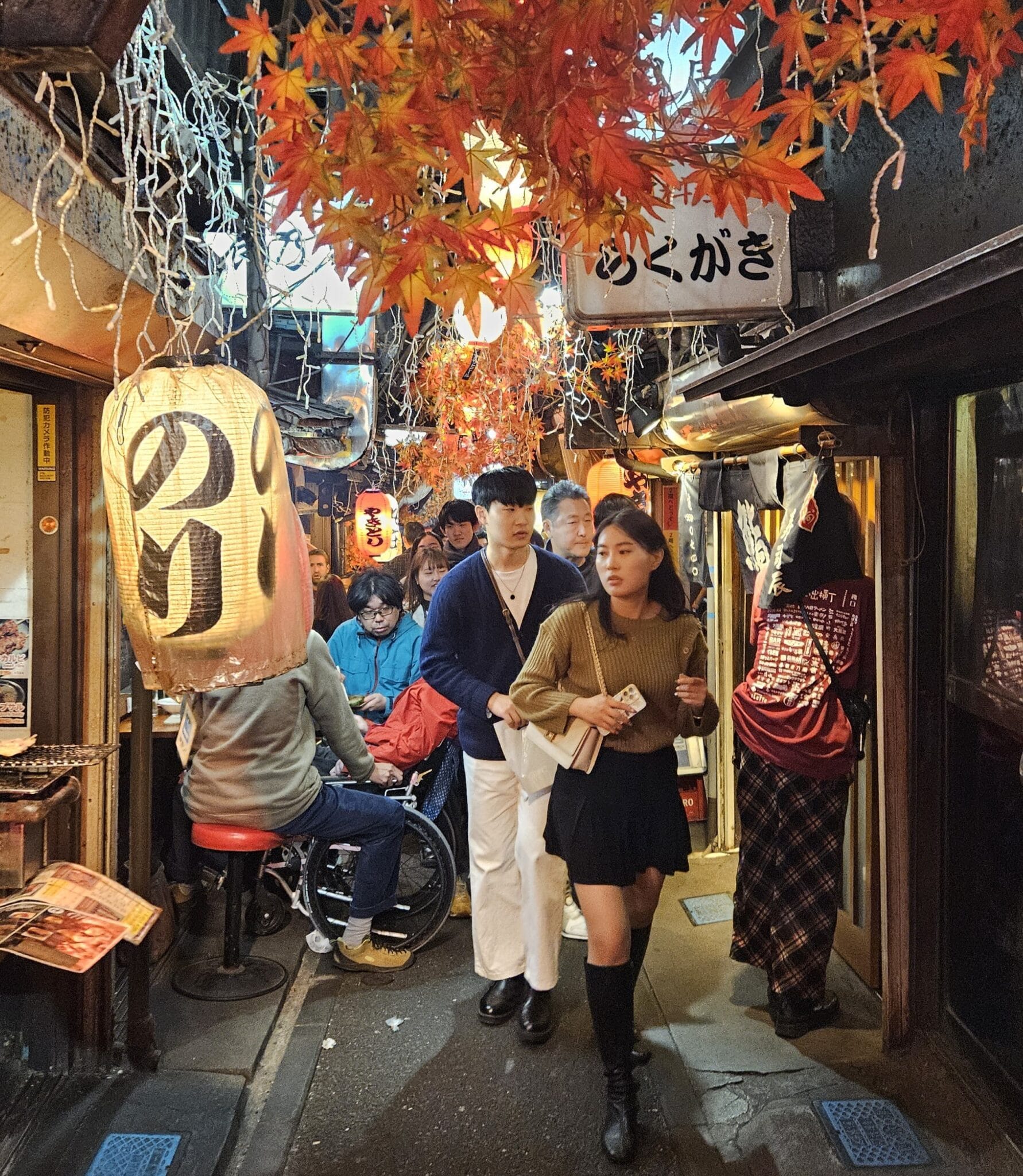
- Omoide Yokocho in Shinjuku: narrow alleys of tiny bars and grills. See my Omoide Yokocho guide.
- Yurakucho under the train tracks: classic salaryman spots.
- Ebisu, Nakano and Koenji: lively local scenes with many small places.
- Ueno and Okachimachi: cheap, busy and fun.

How to Order When You Cannot Read the Menu
Not every izakaya has an English menu, especially small local places. Some strategies that work well:
- Use the tablet: many chains have touch screen ordering with an English option.
- Point at other tables: say “ano ryouri to onaji mono” (the same as that dish) or simply point and smile.
- Ask for a recommendation: “osusume wa nan desu ka?” often gets you the best dish of the day.
- Order a course: some places offer a set menu chosen by the chef, which removes the guesswork.
- Use a camera translation app: it works surprisingly well on printed menus, less so on handwritten boards.
Do not worry about ordering too little at first. Izakaya are designed for ordering in rounds, so start with drinks and two or three dishes, then add more as you go. Staff expect this, and it also helps you discover what you like before committing to a big order.
Frequently Asked Questions
What do you pay for at an izakaya?
You pay for your drinks and dishes, plus usually a small table charge that includes the otoshi starter. There is no service charge to tip on top.
Can I refuse the otoshi?
At most places the otoshi is part of the seating charge and cannot be refused. If you want to avoid it, ask before you sit down or choose a standing bar.
Do I have to drink alcohol at an izakaya?
No. Oolong tea, soft drinks and non alcoholic beer are always available, and nobody will mind.
Are izakaya good for vegetarians?
There are vegetable dishes, but many use fish stock or meat based sauces. Ask about dashi if you avoid fish.
How long can you stay at an izakaya?
There is usually no limit unless you book nomihoudai or a course with a time limit, often 90 to 120 minutes. Busy places may tell you when your time is up.
Do I need a reservation?
For small groups, usually not. For larger groups, Friday nights and popular places, booking helps.
Final Thoughts
An izakaya night is one of the easiest ways to feel like a local in Japan. Order a drink, share a few plates and go with the flow. For more evening ideas, read my Tokyo nightlife guide.
Author

Get My Personal Travel Maps



Leave a Reply