
Japan is home to an incredible range of culinary experiences, from delicate sushi and rich bowls of ramen to more adventurous dishes such as fugu, the carefully prepared pufferfish that has become one of the most iconic examples of Japanese culinary skill. Among all these traditions, one dining style that often stays under the radar for many travelers is robatayaki. The word robatayaki means “fireside grilling,” and it refers to an old Japanese cooking method where fresh ingredients are grilled slowly over hot charcoal. The technique began in northern Japan, where fishermen cooked their daily catch over open fires, and it has been preserved in modern ryokans and izakayas across the country.
Robatayaki is special because it brings you very close to the cooking process. Chefs grill seafood, vegetables, and meat right in front of you. They use long wooden paddles to move ingredients over the fire and serve them directly to the table. You can see the flames, smell the charcoal, and hear the sizzling sound as each item cooks. It feels warm, authentic, and much more personal than a standard restaurant meal.
I have enjoyed robatayaki several times during my travels in Japan, and each experience felt different. One of the most memorable moments happened during a stay in a traditional ryokan. The atmosphere was quiet and calm. We were served seasonal fish with crispy skin and a soft interior, together with mountain vegetables that tasted naturally sweet. The slow grilling and careful presentation made the meal feel deeply connected to the region and to the traditional way of cooking.
Another time, we visited Okajoki in Nakano, which offered a completely different mood. Ryokans feel peaceful, while Okajoki is lively and full of friendly energy. The chefs worked with great precision and recommended new dishes throughout the night. The counter seating allowed us to watch everything closely, from the preparation to the final touches. My personal favorite dish here was the grilled scallops. They were tender and full of natural sweetness, and the charcoal added a gentle smoky flavor that made them unforgettable.
Places like Okajoki in Nakano show how some of Tokyo’s best food experiences are found outside the main tourist areas. Understanding how neighborhoods like Nakano, Koenji, or Shinjuku connect by train makes it much easier to plan meals like this without rushing. I explain how to move through Tokyo efficiently and build food focused days in my Tokyo Travel Guide, based on routes I regularly use myself.
Robatayaki shows how Japanese cuisine blends tradition, craftsmanship, and respect for ingredients. It highlights the value of personal experience because tasting food that is cooked right in front of you creates a deeper appreciation for the method. It is a dining style that feels both rustic and refined at the same time.
Robatayaki is just one example of how Japanese cuisine focuses on technique, seasonality, and respect for ingredients rather than heavy seasoning. I cover this philosophy across dishes like sushi, gyukatsu, yakitori, and regional specialties in my Japanese Food Guide, which explains how these cooking styles differ and where travelers can experience them authentically.
If you want to explore a side of Japanese cuisine that many visitors miss, robatayaki is worth adding to your list. It offers a unique mix of atmosphere, flavor, and cultural depth, and each visit leaves a long-lasting memory.
The Origins of Robatayaki
It has its roots in northern Japan, particularly in Sendai and Hokkaido. The method traces back to fishermen who grilled their daily catch over an open flame while at sea, using a simple portable charcoal stove known as an irori. The irori was not just a cooking tool. It was also the heart of traditional Japanese homes in colder regions, where people gathered around it for warmth, cooking, and conversation. The combination of necessity, cold climate, and abundant seafood shaped the early character of robatayaki.
Fishermen relied on this technique because it was practical and efficient. Fresh fish could be seasoned lightly with salt, placed over the charcoal, and eaten immediately. The heat from the irori preserved the natural flavors of the fish without masking them, and the slow grilling kept the texture firm and clean. This practical method gradually became part of local food culture as inland towns adopted the style, and families prepared meals around the irori in their own homes.
As Japan modernized, the cooking method did not disappear. Instead it gained new cultural significance. Traditional inns in Hokkaido and northern Honshu began serving meals inspired by this old coastal practice. The rustic charm of grilling over open charcoal became a symbol of hospitality and comfort. Guests could watch staff prepare each dish at the fireside, creating a warm and personal atmosphere.
Eventually, the technique moved from rural homes and fishing boats into urban dining. Restaurants in cities like Tokyo and Osaka began to specialize in robatayaki, and they developed a distinctive presentation style. Instead of a household irori, chefs used long counters lined with charcoal pits. They placed ingredients on large wooden paddles, grilled them slowly, and served them directly to guests. This created an interactive experience where diners could observe the entire process, ask questions, and enjoy the scent and warmth of the grill.
Today robatayaki carries both the spirit of its seafaring origins and the refinement of modern Japanese cuisine. It represents a bridge between old coastal life and contemporary dining culture. Despite being simple at its core, the method requires skill, patience, and familiarity with the ingredients. This long journey from fishing boats to specialized restaurants explains why robatayaki still feels authentic and deeply rooted in tradition, even when eaten in the middle of a busy Tokyo neighborhood.
What Makes Robatayaki Unique?
Unlike other Japanese grilling techniques such as yakitori, which focuses on skewered chicken cooked quickly over high heat, or teppanyaki, where ingredients are seared on a flat iron plate with precise speed and showmanship, robatayaki is built around a slower rhythm and a more communal atmosphere. It is not only a cooking method. It is a social experience that brings people together around the warmth of the fire.
Traditionally, guests sit around a long counter shaped to face the open hearth. The glowing charcoal becomes the center of the room, giving off heat, light, and a rustic aroma that fills the space. This setup encourages interaction with both the chefs and other diners. People observe the grilling, comment on the dishes, and share their reactions as the food is served. The entire environment feels connected and relaxed, similar to gathering around a campfire, but with the precision and refinement of Japanese culinary craft.
The chefs play an important role in this atmosphere. They prepare each ingredient within clear view, from seasoning the seafood to turning the vegetables at just the right moment. Their movements are calm and controlled, yet the proximity makes the experience feel personal. To complete the presentation, they use long wooden paddles called shamoji. These paddles were originally used by fishermen to handle hot items over the fire, and in robatayaki they serve both a practical and symbolic purpose. When the chef lifts a freshly grilled item and extends it across the counter to the guest, it creates a moment of anticipation. It is almost like receiving a gift directly from the heart of the fire.
This theatrical but genuine interaction sets robatayaki apart. Guests are not only eating. They are participating in a small ritual of preparation, observation, and enjoyment. The glow of the charcoal, the sound of sizzling seafood, and the movement of the paddles create a dining experience that feels alive and connected. Even in modern restaurants, this tradition continues to define robatayaki as a warm and communal way to share food in Japan.
At Okajoki in Nakano, the ambiance perfectly captured the spirit of robatayaki—warm, lively, and filled with the mouthwatering aroma of food grilling over high-quality charcoal. The chefs worked in front of us, expertly tending to the flames and placing beautifully charred skewers, seafood, and vegetables onto our plates with practiced precision.
The Robatayaki Menu: Simplicity Meets Perfection
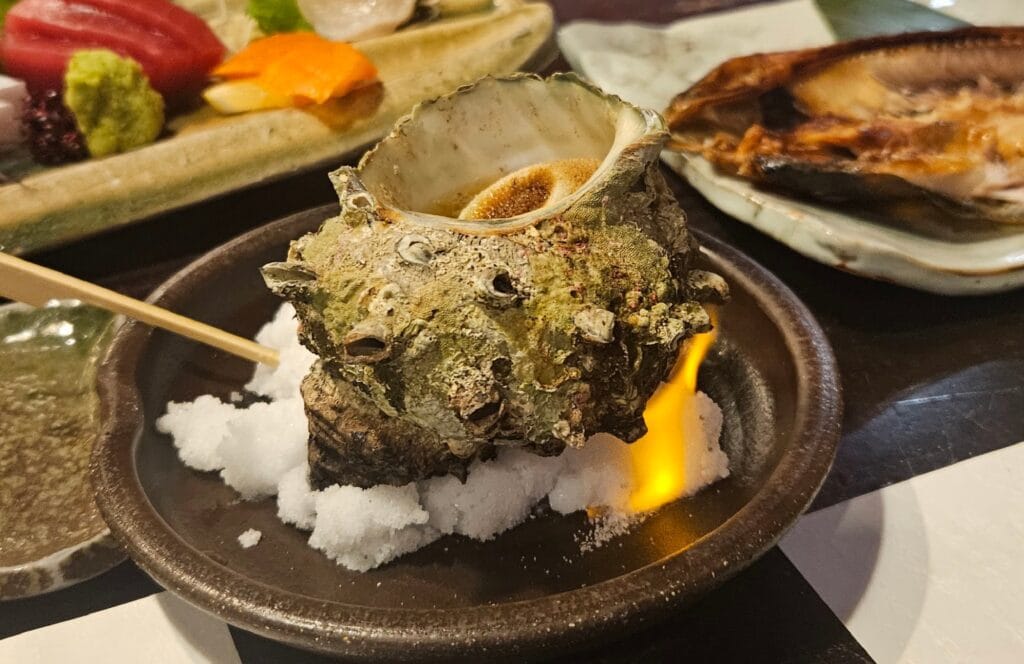
One of the biggest draws of robatayaki is the sheer simplicity of the ingredients. The technique relies on high-quality produce, seafood, and meats, often seasoned with just salt or a touch of soy sauce to enhance their natural flavors. Some standout dishes we enjoyed included:
- Grilled Hokkaido Scallops: Fresh and succulent, served in their shells with a drizzle of butter and soy sauce.
- Yakinasu (Grilled Eggplant): Smoky and tender, topped with miso paste for an umami-packed bite.
- Shishamo (Grilled Smelt Fish): A small fish grilled whole, eaten from head to tail for its crispy texture and rich flavor.
- Charcoal-Grilled Wagyu: Juicy, smoky, and incredibly tender, showcasing the finest marbling of Japanese beef.
- Shiitake Mushrooms: Earthy and meaty in texture, proving that vegetables can be just as satisfying as meat when grilled over charcoal.
Pairing these dishes with a cup of warm sake or a refreshing shochu cocktail elevated the entire experience.
Experiencing Robatayaki in a Ryokan
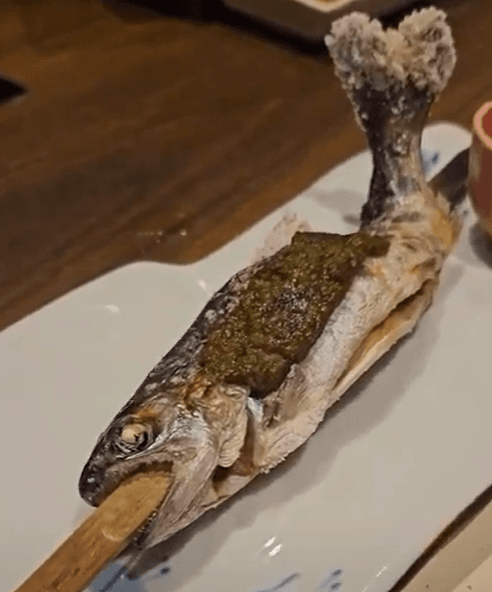
Our first encounters with robatayaki were in ryokans, the traditional Japanese inns that often feel more like cultural experiences than simple accommodations. Ryokans usually appear in international listings as two star or sometimes three star hotels, but this rating is misleading. Japan does not have a standardized hotel star ranking system, so many ryokans receive low star ratings simply because they do not fit Western hotel criteria. In reality, the level of service, the quality of the food, and the overall hospitality easily reach the standard of much higher rated hotels abroad.
One of our most memorable experiences happened in Hakone, where we stayed at a ryokan called KOHAN. The location was peaceful, surrounded by mountains and natural hot springs. The moment we entered the tatami-mat room, the world outside felt distant. Everything was quiet. The staff prepared the dinner right in front of us, and the robatayaki was the heart of the meal. Seasonal fish, vegetables, and small local specialties were grilled slowly over charcoal, and the pace of the meal allowed us to appreciate every flavor. It felt almost ceremonial.
One of our most memorable robatayaki experiences took place in Hakone, a region known for its mountains, hot springs, and calm atmosphere. We visited a traditional ryokan for dinner, and the moment we stepped inside, the outside world felt distant. The building had a quiet and warm feel that contrasted with the busy tourist areas of Hakone. The staff welcomed us with great care and guided us to the dining area, where the robatayaki grill was already glowing with charcoal.
Why You Should Try Robatayaki
If you’re looking to experience a different side of Japanese cuisine, robatayaki should be on your must-try list. It offers more than just a meal—it’s a sensory experience that blends rich flavors, interactive dining, and a deep-rooted cultural tradition. Whether at a lively city restaurant like Okajoki in Nakano or in the peaceful setting of a ryokan, robatayaki is a unique and memorable way to savor Japan’s culinary artistry.
Have you ever tried robatayaki? Share your favorite dishes and experiences in the comments below!
Author

Get My Personal Travel Maps
Keep Reading: More Articles You’ll Love
 Is Japanese Food Actually Chinese? The Surprising Origins of Japanese Cuisine
  Living in Tokyo vs Zurich – The Ultimate Expat Guide
  Living in Japan vs Korea – The Ultimate Expat Guide
  Japan Travel Myths vs Reality: What Tourists Still Get Wrong About Japan
  My First 30 Days in Tokyo: Essential Administrative Steps for International Students
  Tattoos in Japan: Rules, Culture, Onsen & Changing Attitudes
  Matsumoto Itinerary: The Perfect 3-Day Guide Including Kamikochi


Leave a Reply