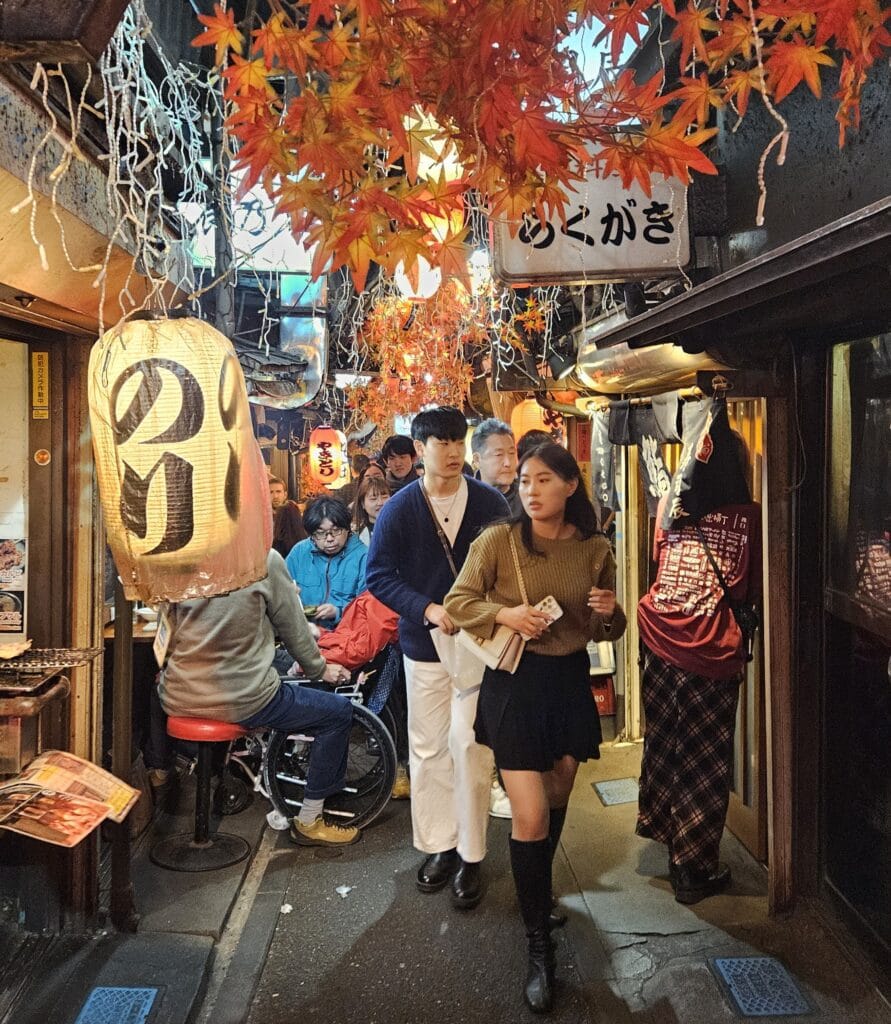
Tokyo has countless hidden corners, but Omoide Yokocho, also known as “Piss Alley,” remains one of the most photographed spots in Shinjuku. Tucked beside the station, this narrow passage is lined with tiny izakayas, glowing lanterns, and yakitori smoke. For a photographer, it is a dream; for a hungry traveler seeking value, it can be a disappointment.
As a local resident who has spent years exploring the city (and even compared the lifestyle in my guide on living in Tokyo vs Zurich), I’ve seen this alley transform from a gritty post-war relic into a high-priced tourist hub. Here is why I recommend you bring your camera, but skip the meal.
1. The Visual Atmosphere is Unbeatable
From a cinematic perspective, Omoide Yokocho is impressive. The lantern-lit lanes and stacked signs create a sense of history that feels like a movie set. As a travel writer, I find the alley worth exploring because it tells a story of Tokyo’s rebuilding years. However, this aesthetic comes at a literal price. Because it is featured in every Tokyo travel guide, the area has become highly commercialized.
2. A “Tourist Trap” Pricing Reality
Over the years, the alley has shifted from a local hangout to a stop specifically for foreign visitors. During my visits, I’ve noticed that most locals walk right past the alley without stopping. A simple yakitori set that usually costs around ¥700 in a neighborhood izakaya can cost ¥1,500 or more here.
While the food isn’t “bad,” it lacks the value and variety found in other districts. If you want high-quality food nearby without the “tourist tax,” I highly recommend walking a few minutes away to try the best gyukatsu in Tokyo instead.
3. Cramped and Rushed Experience

Most stalls here have only six to ten stools. It’s part of the charm, but it also means you’ll be squeezed between strangers in a very smoky environment. Because of the long lines of tourists waiting outside, staff often feel pressured to keep customers moving. This doesn’t leave much room to relax and enjoy a slow evening.
1. It’s a Tourist Trap with Overpriced Food
If you are expecting an authentic and budget-friendly dining experience, Omoide Yokocho may leave you disappointed. Although the alley once served as a cluster of affordable eateries, it has changed significantly. Today, most locals walk through without stopping, which is usually a clear sign that a spot has become a “tourist trap.”
The shift is most evident when examining the pricing. A simple yakitori set that usually costs around ¥600 to ¥800 in a traditional local shotengai is often listed for ¥1,500 or more here. These aren’t premium cuts; they are the same style of skewers you can find in almost any other district for half the price. Drinks follow the same trend, with beers often priced at nearly double the usual Tokyo rate.
The Visual Peak: Visit at Night While I recommend skipping the food, you absolutely should visit at night. This is when the alley truly comes alive. The glowing orange lanterns, the weathered wooden signs, and the thick yakitori smoke catching the light create a cinematic, “Old Tokyo” vibe that is impossible to find elsewhere. If you go during the day, it looks a bit grey and tired—but under the cover of darkness, it’s one of the most photogenic spots in Shinjuku.
The Strategy for a Better Night Come after the sun goes down to capture your stunning photos and short videos. Soak in the atmosphere for 20 minutes, then head to neighborhoods like Ebisu or Shinjuku Sanchome. These areas are where the locals actually gather for reliable food and comfortable seating. You’ll get a far more satisfying sense of Tokyo’s true izakaya culture, and your wallet will thank you for it.
Cramped, Uncomfortable, and Not Worth the Wait
Omoide Yokocho is famous for its nostalgic charm, but the reality of sitting down to eat there often clashes with the “relaxed” evening travelers imagine. Most izakayas here are essentially microscopic, operating with just a single counter and six to ten stools.
As a resident, I’ve seen many groups get frustrated here; because the spaces are so tight, it is nearly impossible for a group of three or four to sit together. Even as a couple, you’ll likely be split up or squeezed into corners where you’re bumping elbows with strangers. If you’re carrying a backpack or shopping bags from a day in Shinjuku, there is simply nowhere to put them.
The “High Turnover” Pressure The atmosphere is undeniably old-school, but that includes the heavy charcoal smoke that drifts directly into your face while you eat. While this looks great for “street food” photography, it can be overwhelming for a full meal. Furthermore, because the lines outside are often 30 to 45 minutes long, the staff are trained for speed. You may feel a subtle (or not-so-subtle) pressure to finish your skewers and move on to make room for the next tourist in line.
Finding Breathing Room in Shinjuku If you find yourself overwhelmed by the claustrophobic energy of the West Exit alleys, remember that one of the city’s largest green escapes is just a short walk away. I often recommend that travelers balance their narrow-alley photography with a stroll through Shinjuku Gyoen earlier in the day. It’s the perfect way to see a different side of Shinjuku—one where you actually have space to breathe before diving back into the neon chaos.
In my experience, the best way to “do” Omoide Yokocho is to walk through at night for the visuals, then head 10 minutes away to a spot in Shinjuku Sanchome where you can actually stretch your legs and hold a conversation.
It’s More for Tourists Than Locals
In Japan, the most reliable way to gauge a restaurant’s quality isn’t a star rating—it’s the crowd. If you want a truly authentic experience, look for the “Salarymen.” In respected izakayas across Tokyo, you’ll find office workers and long-time residents who stop by every night because the food is consistent and the prices are fair. When the people who live and work in the neighborhood are the main customers, you’ve found the “real” Tokyo.
The Shift Toward Tourism Omoide Yokocho, unfortunately, has lost this core demographic. While the alley retains its beautiful post-war charm, it no longer functions as a neighborhood gathering point. On a typical weeknight, I notice that the diners are almost exclusively foreign visitors.
Many stalls have shifted their business models to cater to short-term travelers:
- Simplified Menus: Many shops now rely on English-only picture menus with “sets” that prioritize speed over the seasonal variety typical of a high-quality izakaya.
- Loss of “Regular” Culture: In Japanese dining, the backbone of a business is the relationship between the chef and the regulars. When a shop relies on one-time tourists, the incentive to maintain that deep level of hospitality and attention to detail often fades.
- Transaction over Tradition: Instead of the slow, rhythmic pace of a local bar, the focus here is often on quick turnover to clear the queue of people waiting outside for photos.
Where the Locals Actually Go
If your goal is to experience Japanese food culture the way we do, it’s worth hopping on the Chuo Line. Neighborhoods like Nakano or Koenji offer a much more accurate picture of everyday dining. In Nakano, for example, the retro alleys are filled with “real” hidden gems where the chef remembers your name and the menu reflects the season, not just the tourist season.
In these less-traveled corners, you’ll find better value, more diverse menus, and a deeper connection to the city’s living history. Omoide Yokocho is a visual treasure, but for a meal that actually resonates with the soul of Tokyo, look where the locals are heading after the office lights go out.
Final Verdict: Come for the Aesthetic, Eat Somewhere Else
Omoide Yokocho is undeniably one of the best places in Tokyo for photography. The glowing lanterns, weathered wooden signs, and yakitori smoke create a cinematic atmosphere that feels timeless. If you’re a content creator or traveler who loves a retro aesthetic, this alley delivers exactly the scenes you’ve seen online.
However, as someone who lives in Tokyo, I’ve seen the dining experience become increasingly geared toward one-time tourists rather than quality-conscious diners. Between the inflated prices, cramped stools, and the pressure from staff to finish quickly, it’s not the ideal spot for a relaxed meal.
[Image: Omoide Yokocho at night showing the thick smoke and glowing lanterns]
The Local Strategy, I always recommend visiting at night to capture the visuals, then heading elsewhere actually to eat. If you want a similar nostalgic vibe but with a higher density of local regulars and better value, take the Chuo line a few stops west to Harmonica Yokocho in Kichijoji. You’ll get the same narrow-alley magic, but the experience feels far more authentic and much less like a tourist performance.
Capture your hero shots in Shinjuku, soak in the historic energy of the West Exit, and then move to a neighborhood that prioritizes the plate over the picture.
Better Alternatives for an Izakaya Experience:
✔️ Ebisu – A vibrant area with many authentic izakayas popular with locals.
✔️ Shinjuku Sanchome – Great for small, casual izakayas without the tourist crowds.
✔️ Koenji – A cool, artsy neighborhood with cheap but delicious food.
✔️ Golden Gai – Similar to Omoide Yokocho but with more variety and better service.
✔️ Nakano – A lively area known for its retro izakayas, hidden gems, and otaku culture.
✔️ Ogikubo – A quieter, more local spot with excellent ramen and cozy izakayas.
Bottom Line? Snap your photos at Omoide Yokocho—but enjoy your food somewhere else!
Author

Get My Personal Travel Maps
Keep Reading: More Articles You’ll Love
 Living in Tokyo vs Zurich – The Ultimate Expat Guide
  Is Japanese Food Actually Chinese? The Surprising Origins of Japanese Cuisine
  Christmas in Roppongi: Winter Illuminations, Market & Tokyo Tower Views
  Kabukicho Tokyo: The Ultimate Insider Guide to Shinjuku’s Wildest District
  The Ultimate Guide to the Best Furniture Stores in Tokyo: MUJI vs. Nitori vs. IKEA
  Is Tokyo Really Safe? What I Learned Living Here for 3 Years
  Halloween in Tokyo: From Shibuya to Shinjuku and Beyond


Leave a Reply