
If you’re planning a hike in Seoraksan National Park from Sokcho, leave your standard alpine expectations at the park gate. Many travelers staying in Sokcho assume the nearby mountains will offer the same kind of manageable day hikes found in Switzerland, North America, or even parts of Japan. On paper, the trail distances inside Seoraksan often look surprisingly short. A 10km route may sound like a relaxed half-day walk through the mountains. In reality, the rugged granite landscape of Gangwon-do transforms even “short” hikes into physically demanding expeditions.
Before most visitors even begin climbing, they first pass one of the park’s most iconic landmarks: the enormous Tongil Daebul (Great Unification Buddha) near Sinheungsa Temple. Standing at the entrance to Seoraksan, this massive bronze statue creates a striking contrast with the violent granite peaks towering behind it. It almost acts as a warning for what lies ahead. The peaceful temple atmosphere quickly gives way to steep staircases, exposed rock formations, and relentless elevation gain once you enter deeper into the national park.
This catches many foreign visitors completely off guard, especially travelers from Europe who assume the route times will match the distances shown on the map. A hike that appears manageable during breakfast in Sokcho can easily turn into a full-day physical challenge once you are deep inside the mountains. Certain trails, especially the legendary Dinosaur Ridge (Gongryong Ridge), are famous for this. While the distance itself does not initially sound extreme, the technical terrain and constant elevation changes turn the route into a brutal 10-hour-plus alpine marathon that many hikers split across two days.
For anyone planning a Seoraksan itinerary, the most important advice is simple: do not judge these mountains by distance alone. Start early, bring more water than you think you need, and prepare for far more elevation gain than the trail signs suggest.
Sokcho and Seoraksan at a Glance
- Where: Sokcho, a coastal city in Gangwon Province and the gateway to Seoraksan National Park
- Getting there: About 2.5 hours by express bus from Seoul
- Main draw: Seoraksan’s granite peaks, the Heundeulbawi and Ulsanbawi rocks, and a cable car
- Best time: Autumn (mid-October to early November) for foliage; spring for fewer crowds
- Local food: Makguksu buckwheat noodles and fresh east-coast seafood
- Also see: The Great Unification Buddha, Sokcho fish market and Abai Village
The Hiking Culture: Hobby vs. Sport
Coming from Switzerland, hiking is essentially in my DNA, but we often approach it very differently from hikers in South Korea. In the Swiss Alps, hiking is usually treated as a lifestyle hobby rather than a competitive sport. The goal is the “Genuss” of the experience: breathing the crisp mountain air, sitting beside an alpine lake for half an hour, stopping at a mountain hut for coffee or Rösti, and taking time to truly appreciate the landscape around you. The journey itself matters just as much as reaching the summit.
That mindset became especially noticeable while hiking in Seoraksan National Park. Many Korean hikers approach the mountains with incredible intensity and discipline. You’ll see people in full professional hiking gear with trekking poles, compression sleeves, expensive backpacks, and enough stamina to sprint uphill at a pace that honestly feels unreal to most Europeans. On steep trails like the route toward Heundeulbawi Rock or Ulsanbawi, locals often move so fast that they barely pause at the viewpoints before continuing upward.
For first-time visitors researching hiking in Korea, this can actually be a bit intimidating. If you are used to hiking in Europe, Canada, or the United States, you may expect scenic breaks, slower pacing, and gentler trail systems. Seoraksan is different. Many of the routes are dominated by endless staircases, sharp elevation gains, and rugged granite terrain that demands constant effort. Even relatively short hikes can become physically exhausting much faster than the distance on the map suggests.
We decided to stick to the Swiss philosophy of hiking instead. Rather than treating the mountain like a race, we stopped frequently to admire the dramatic Taebaek Mountain scenery, listen to the wind moving through the forests, and take in the changing views over the valleys below. While countless “sprinters” rushed past us on the stairs, we found that slowing down made the entire Seoraksan hiking experience far more memorable. In a place this beautiful, constantly chasing the next peak almost feels like missing the point.
The Hike: Heundeulbawi Rock (3km)

Following some surprisingly accurate Google Reviews from other Swiss travelers, we decided to tackle the 3km hike to Heundeulbawi Rock, one of the most famous beginner-friendly trails in Seoraksan National Park. On paper, the route sounds almost laughably short, especially if you are used to hiking in the Alps or North America. A 3km mountain trail would normally suggest a fairly relaxed walk with moderate elevation gain. In Seoraksan, however, distance means almost nothing without considering the terrain.
The single most important piece of advice for this hike is simple: do not underestimate the stairs.
What begins as a pleasant forest trail near Sinheungsa Temple quickly transforms into a relentless vertical ascent carved directly into the mountainside. Large sections of the route consist almost entirely of steep metal staircases and uneven stone steps that seem to continue endlessly upward. At times, it feels less like hiking and more like climbing a giant outdoor staircase suspended between granite cliffs.
The higher you climb, the more dramatic the scenery becomes. Massive rock walls rise around the trail, the forest slowly opens below you, and the views toward the peaks of Seoraksan become increasingly spectacular. The physical effort is intense, but the scenery constantly rewards you for continuing upward.
One thing that surprised us was the pace of many local hikers. Korean hikers often fly up these staircases with incredible speed and stamina, while many foreign visitors are forced to stop regularly to catch their breath. There is absolutely no shame in taking breaks here. Even though Heundeulbawi is considered one of the more accessible hikes in Seoraksan, the constant elevation gain can still be exhausting, especially during colder months when the mountain air remains sharp and dry.
If you are planning a Sokcho and Seoraksan itinerary, this trail is honestly one of the best introductions to Korean mountain hiking culture. It offers dramatic granite scenery, iconic viewpoints, and just enough suffering on the stairs to make the summit feel properly earned.
- The Rock: Heundeulbawi is a massive, 16-ton spherical boulder balanced on a flat rock. Legend says anyone can move it with a push, but it never falls.
- The Verticality: The final stretch to the rock (and even further up to Ulsanbawi) is almost entirely vertical stairs bolted into the granite. It’s a real leg-burner, even if you’re used to the Alps.
- March Weather: If you visit in March, be aware that the air remains biting cold at higher elevations, even if it feels like spring in the city. The mountain trails can also be subject to seasonal closures due to ice melt or fire prevention, so always check the official park status before setting out.
The Great Unification Buddha (Tongil Daebul)
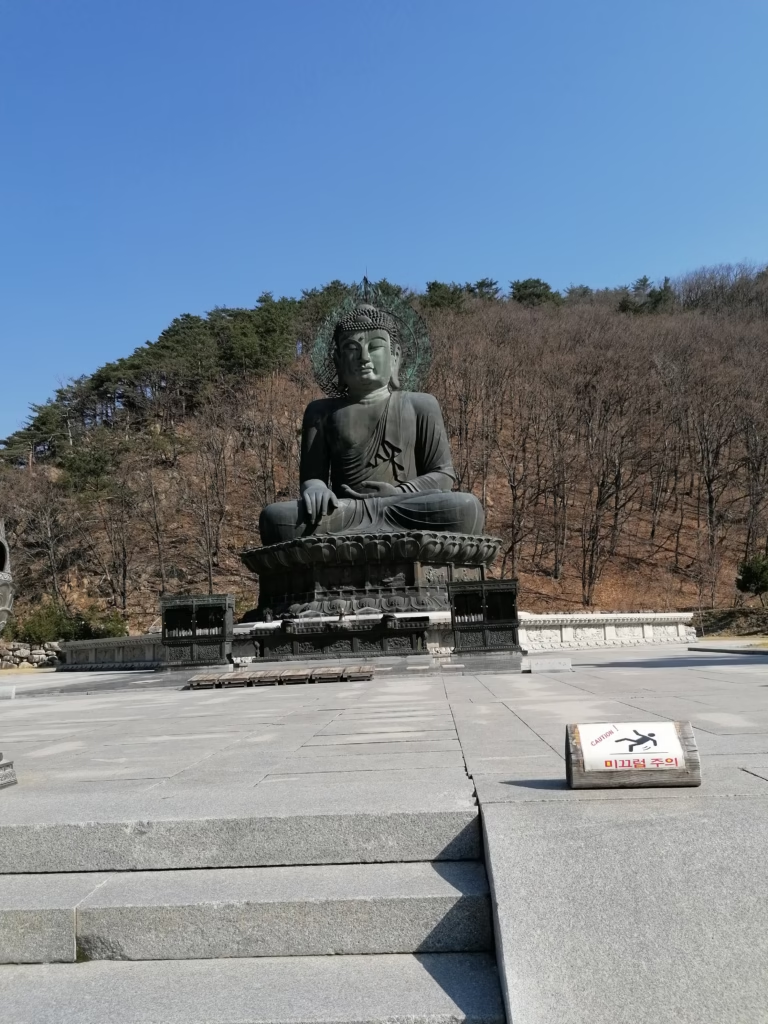
Before you start your ascent, you cannot miss the Great Unification Buddha at Sinheungsa Temple. It is an easy, worthwhile pause before the climb begins.
Standing 14.6 meters (48 feet) tall and weighing 108 tons, this bronze giant is officially named Tongil Daebul. It was built with over 300,000 small donations to represent the Korean people’s hope for the reunification of North and South Korea. The statue is incredibly symbolic; the forehead is adorned with amber and jade, and it sits in the “Earth Witness” mudra, symbolizing enlightenment.
Insider Detail: Inside the hollow bronze structure are three pieces of the Buddha’s sari (sacred remains) donated by the Myanmar government and the Tripitaka (original Buddhist scriptures).
Evening in Sokcho: 까막골막국수 (Kkamakgol Makguksu)
After spending hours punishing your knees on Seoraksan’s endless staircases, there’s honestly nothing better than returning to Sokcho for a proper recovery meal. While many tourists immediately search for seafood restaurants near the harbor, one of the most satisfying local specialties after a long hike is actually Makguksu, Gangwon Province’s famous cold buckwheat noodle dish.
Following recommendations from locals and Korean food blogs, we ended up at 까막골막국수 (Kkamakgol Makguksu), a well-known local restaurant that specializes in traditional Gangwon-style noodles. Places like this perfectly capture the atmosphere of Sokcho itself: simple, casual, and focused entirely on the food rather than presentation.
What Makes Makguksu Special?
Makguksu is very different from the Japanese soba many travelers may already know. The noodles are made from buckwheat, but the texture is rougher, chewier, and much more rustic. The dish is usually served cold, often with ice still floating in the broth, making it incredibly refreshing after a physically exhausting day inside Seoraksan National Park.
The combination of cold noodles, spicy seasoning, vinegar, sesame oil, and crunchy vegetables creates something that feels surprisingly restorative after hiking. In many ways, it is the perfect contrast to the heavy mountain terrain surrounding Sokcho.
The Must-Try Dish: Myeongtae-hoe Makguksu
For the most authentic local experience, order the Myeongtae-hoe Makguksu. This regional variation includes seasoned pollock, a specialty strongly associated with Gangwon-do and Korea’s northeastern coast.
The pollock has a slightly chewy texture and a sweet-spicy marinade that mixes perfectly with the cold buckwheat noodles. The flavor profile is incredibly balanced: refreshing, spicy, slightly sour, nutty, and deeply savory at the same time. It’s one of those dishes that initially sounds unusual to foreign visitors but ends up becoming one of the culinary highlights of the trip.
After climbing thousands of stairs in Seoraksan, the cold noodles almost feel medicinal.
Sokcho’s Food Culture Beyond Seafood
Many international visitors associate Sokcho mainly with seafood markets and grilled fish, but the city’s food culture goes much deeper than that. Because of its location near the mountains, Sokcho developed a unique cuisine influenced by both coastal ingredients and hearty mountain food traditions.
Makguksu became especially popular among hikers because it is filling without feeling heavy. After spending an entire day climbing toward places like Heundeulbawi or Ulsanbawi, greasy food can honestly feel overwhelming. The cold buckwheat noodles instead leave you refreshed and ready to continue exploring the city afterward.
For anyone planning a Sokcho and Seoraksan itinerary, combining a mountain hike with a traditional Makguksu dinner is almost mandatory. It’s one of those simple travel experiences that ends up feeling far more memorable than expensive tourist restaurants.
Sokcho and Seoraksan FAQ
Where is Seoraksan?
Seoraksan National Park is in Gangwon Province on South Korea’s east coast, right next to the city of Sokcho. It is one of Korea’s most famous mountain parks, known for its granite peaks and autumn colours.
How do you get to Sokcho from Seoul?
Express buses run from Seoul to Sokcho in about 2.5 hours. From Sokcho, local buses reach the Seoraksan park entrance in around 20 to 30 minutes.
Is Seoraksan hard to hike?
There is something for every level. The short walk toward Heundeulbawi and Ulsanbawi rocks is popular and moderate, while the full ridge hikes are long and strenuous. A cable car offers easy views without a big climb.
When is the best time to visit Seoraksan?
Autumn, roughly mid-October to early November, is the most spectacular for fall foliage, but also the busiest. Spring and early summer are quieter and still beautiful.
What is there to do in Sokcho?
Besides Seoraksan, Sokcho has a lively seafood and fish market, Sokcho Beach, Abai Village with its hand-pulled ferry, and local specialties like makguksu buckwheat noodles.
What is makguksu?
Makguksu is a Gangwon speciality of chilled buckwheat noodles, often topped with vegetables, egg and sometimes myeongtae-hoe, which is seasoned pollock. It is light, refreshing and a Sokcho favourite.
How many days do you need in Sokcho and Seoraksan?
One full day covers a Seoraksan hike and a Sokcho meal, but two days let you add the beach, the fish market and Abai Village without rushing.
Your Journey Continues Beyond Sokcho
While Sokcho is the ultimate gateway to the mountains, the rest of South Korea has just as much to offer. Whether you’re looking for southern coastal beauty or the energy of the capital, check out these guides to plan your next stop:
- The Big Picture: Start with my South Korea Insider Guide for a comprehensive overview of every province.
- Island Adventure: Explore the volcanic landscapes and dramatic hiking trails of Jeju Island.
- Southern Coastal Beauty: Discover the quiet island charm and unique architecture of Namhae.
- West Coast Surf: Head to the Taean Peninsula to catch the best sunsets and local surf at Mallipo.
- K-Culture & Neon: Experience the high-energy streets and endless food options in Seoul.
- Jeongdongjin’s Edge of the World: Walk the dramatic Badabuchae-gil coastal trail and witness the world’s closest sunrise at the station where the rails meet the sea.
Looking for the best route? View my full South Korea Destination Map to see how all these locations connect for your perfect itinerary.
Author

Get My Personal Travel Maps


Leave a Reply