I have been to Street Parade five or six times now, and every single year I forget how big it actually is until I step out of the train station and get swallowed by the crowd. Zurich turns into a completely different city for one Saturday in August. The banks close, the trams reroute, and something like 900,000 people show up to dance behind trucks blasting techno along the lake. If you have never been, it is hard to explain just how much this one event takes over the whole city, and how strange it is to know that this same city once tried to ban the thing entirely.
What I want to do here is give you the full picture. Not the polished version you get from tourism brochures, but the actual history of how this started as an illegal sounding protest with barely any people, how it almost got shut down before it really began, what it genuinely feels like on the ground today after doing it enough times to know the rhythm of it, and the safety stuff nobody tells you before your first time.
How It All Started
Street Parade began in 1992, and it looked nothing like what it is today. A math student named Marek Krynski had seen what was happening in Berlin with the Love Parade, where organizers got around Germany’s strict rules on street parties by registering the whole thing as a political demonstration instead of a festival. He copied the trick in Zurich almost exactly. He called his version a “Demonstration for Love, Peace, Liberty, Generosity and Tolerance,” rounded up seven trucks to act as makeshift sound systems, and hoped for the best. Only one truck actually worked properly on the day. Around a thousand people showed up anyway and danced through the city center behind it.
It helps to know what Zurich was like before that. This was a genuinely conservative city through the 1980s, run on strict closing times and a real suspicion of youth culture. Krynski has described the Zurich of that era in Swiss German as schtier, meaning flat, dull, nothing going on. When acid house and the first wave of techno reached Switzerland at the end of the decade, there was almost nowhere legal to actually dance to it past midnight. Zurich’s clubbers were stuck with illegal warehouse parties and whatever they could piece together themselves. That first Street Parade was less a party and more a statement that this music, and the people who loved it, deserved a real place in the city.
It grew fast from there. By the second edition in August 1993, attendance had already jumped roughly tenfold to around 10,000 people, and the lineup pulled in real credibility from the scene, including Sven Väth and Dr. Motte himself, the Berlin founder whose legal loophole had inspired the whole idea in the first place. Zurich’s underground had found its outlet, and it was growing faster than the city was ready for.
The Ban That Almost Ended It
In 1994, the city tried to kill it. Police chief Robert Neukomm refused to grant a permit, arguing the event had gotten too big, too loud, and left the streets too messy, and that in his view it only mattered to an insignificant slice of the population. Two editions in, as far as the authorities were concerned, the experiment was over.
That decision backfired badly. The pushback was loud enough, from media, from politicians, from ordinary Zurich residents, that the city reversed course within weeks. But the reversal came with a condition. The parade would have to move out of the narrow old town streets and onto the open lakefront quays around Bürkliplatz. Krynski later called that forced relocation a stopgap measure that turned out to be a stroke of luck, because the old town could never have physically handled what was coming. The 1994 edition drew around 40,000 people, four times the year before, proving the ban had done nothing to slow the momentum. If anything, it handed the parade the room it needed to become enormous.
From Protest March to a Million People
What followed was one of the fastest growth curves any street event has ever managed. Attendance more than tripled to 120,000 in 1995, and Zurich police themselves called it the largest and most peaceful demonstration the city had ever seen, a description worth sitting with given it came from the same institution that had tried to shut the whole thing down a year earlier. In 1996, organizers formalized things by founding the Verein Street Parade, the nonprofit association that still runs the event today, and attendance nearly tripled again to 350,000.
The rest of the decade kept climbing. Radio Street Parade launched in 1999, broadcasting around the clock during parade week, and in 2000 the event was shown live on Swiss and German television for the first time, pulling in an audience far beyond the people actually standing on the quays. Then came 2001, the tenth anniversary, staged under the motto Love, Freedom, Tolerance. An estimated one million people showed up, and for the first time Street Parade officially overtook Berlin’s own Love Parade as the biggest event of its kind anywhere in the world. The city that had refused it a permit seven years earlier was now hosting the largest techno gathering on the planet, and it has held that title pretty much ever since.
Love Mobiles, Mottos, and the Legal Trick That Still Holds
It’s worth explaining what is actually rolling down the Zurich lakefront every August, because the format has barely changed since 1992 even as the scale exploded around it. Love Mobiles are the core unit of the whole event: decorated trucks carrying sound systems, DJs, and dancers, moving at walking pace so the crowd can dance alongside them for hours at a time. What started as seven trucks in 1992 has grown into a rotating fleet of around thirty each year, backed up by roughly nine additional stages set along the route for artists who aren’t riding a truck.
Every edition also carries a motto, and that tradition is not just decoration. It keeps the original demonstration framing alive even though the event now looks nothing like a protest march. Mottos have ranged from Let the Sun Shine during the brutal 2003 heatwave to a blunt PEACE! during a washed out, rainy 2002, all the way to Together We Move for the most recent edition. They get printed on merchandise and shouted from Love Mobiles, but they also do real legal work, because Street Parade is still registered as a political demonstration rather than a commercial festival. That status is exactly why it can run without an entry fee, funded instead through sponsorships, drink stand licensing, and voluntary donations from the crowd. Every DJ who plays, no matter how famous, performs for free. Since 1996 there has also been a smaller counter event called the Antiparade, running in parallel and pushing back against how commercial the main parade has become, similar to what Berlin’s Fuckparade does against its own Love Parade legacy. Not everyone in the scene loves what Street Parade turned into, and that tension is part of its history too.
Setbacks, Storms, and a Turning Point in How Seriously They Take Safety
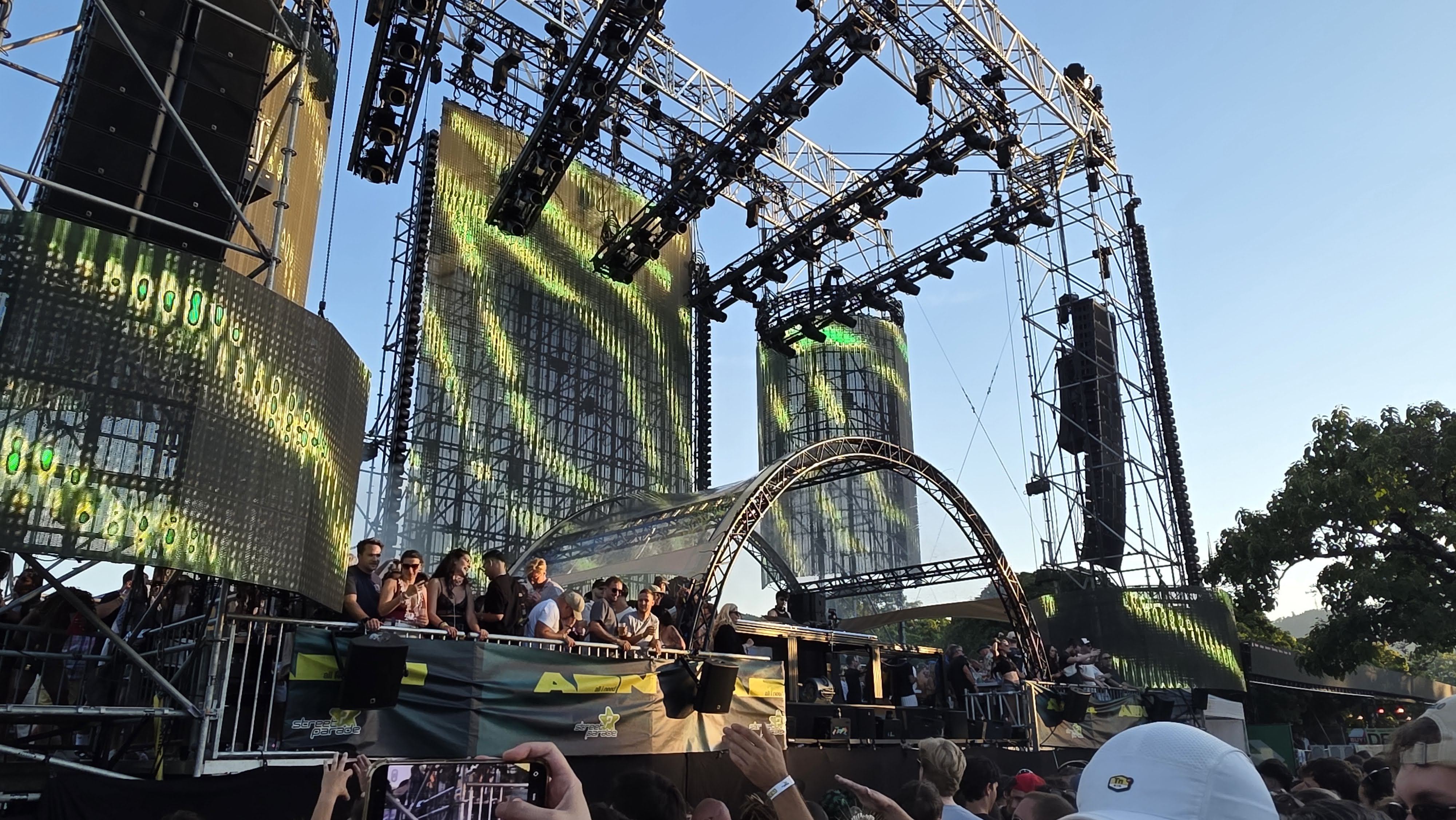
Not every year went smoothly. There was a soaked, gray 2002 that organizers turned into a rallying cry with that PEACE! motto, and a brutal 37 degree heatwave the following year that they leaned into instead. That same year, in 2003, the route itself was reversed and the starting point moved from the western to the eastern side of the lake, a change made specifically to cut down on noise complaints from residents along the original path. Financially, 2005 was a genuine scare. Rising costs nearly pushed the nonprofit association into the red, and organizers responded by bringing in broader sponsorship deals and introducing licensed beer sales along the route, a decision that drew its own criticism from people worried it would make crowds rowdier.
The most sobering moment in the parade’s history came from outside Zurich entirely. In July 2010, twenty one people died in a crowd crush at that year’s Love Parade in Duisburg, Germany, the very event that had inspired Krynski to start Street Parade eighteen years earlier. At that year’s Zurich edition, organizers held a minute of silence for the victims. It was a stark reminder of how differently things could have gone, and it quietly marked a turning point in how much resource Zurich puts into crowd safety and route design. That is a big part of why the modern parade runs with multiple first aid stations, more than a dozen ambulances, and hundreds of additional staff every single year, something I only really appreciated once I started paying attention to how the day is actually run rather than just how it feels to be in the crowd.
Two Silent Summers and the Comeback
For twenty eight straight years, rain, heat, and budget scares aside, Street Parade always happened. Then in 2020 and 2021, it simply didn’t. COVID forced Swiss authorities to cancel both editions outright, the first real gap in the event’s history apart from that shaky 1994 standoff, and by far the longest one.
The comeback in 2022 came together late and under real pressure, with organizers securing approval only shortly before the date and scrambling to rebuild two years of lost logistics and volunteer staffing almost from scratch. It happened anyway, under the fittingly reflective motto THINK, and drew roughly 900,000 people, proof that three decades of momentum and goodwill with the city don’t evaporate just because the trucks sat idle for two summers.
Where Street Parade Stands Today
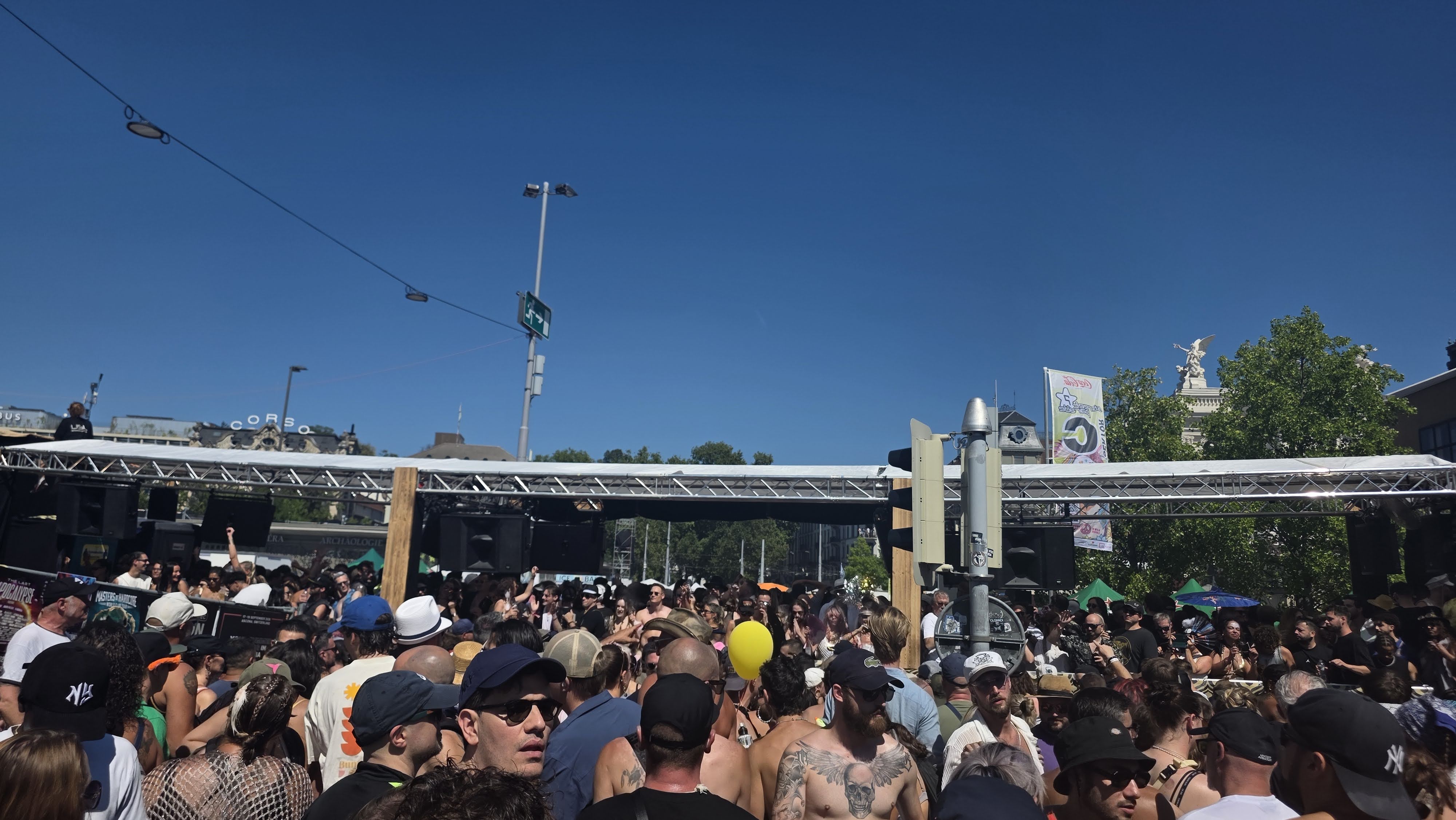
The event that exists now is both recognizably the same thing Krynski started in 1992 and something the city has fully absorbed into its own identity. In 2017, Street Parade was added to Switzerland’s list of intangible cultural heritage, official recognition that would have been unthinkable to the police chief who tried to shut it down in 1994. In 2023, a sitting Swiss Federal Councillor joined the crowd for the first time, which tells you a lot about how far this event has traveled from its outlaw roots. It is now organized by a core committee of around twenty people, backed by roughly 2,500 volunteers on the day itself.
The most recent editions have settled in the 800,000 to 920,000 range, below the all time peak of around 1.1 million but still comfortably the biggest event of its kind in the world. The most recent edition, the 33rd, was held on a Saturday in early August under the motto Together We Move, drawing roughly 900,000 people along a 2.4 kilometer lakefront loop past nine stages and more than 200 performing artists. A study commissioned around the event put its economic impact on the Swiss economy at over 100 million francs in a single weekend, spread across hotels, restaurants, transport, and retail, a very different number from the insignificant portion of the population argument the city once used to try to ban it.
What It Is Actually Like on the Ground
Here is the thing nobody quite prepares you for: it is crowded. Not festival crowded, but genuinely packed shoulder to shoulder in places, especially anywhere near Bürkliplatz or the Bahnhofstrasse end where several Love Mobiles converge and the crowd has nowhere to spread out. Bellevue and the stretch along the Quaibrücke get dense too, but they move a little more freely. If you love that kind of energy, being pressed into a wall of people all moving to the same beat is genuinely part of the magic. If you don’t, it can be a lot, and it is worth knowing that going in rather than discovering it the hard way with your first Love Mobile.
My own routine has settled into something pretty simple after doing this a few times. I get into Zurich around one in the afternoon, before the worst of it builds up, find a stretch of the route that feels right for the day, and just stay for the whole thing, all the way through until the parade actually winds down in the evening. Then I head straight for the last train home instead of sticking around for the club nights that follow. That part is a deliberate choice on my end. The official after parties get seriously expensive on Street Parade night. Every club in the city books its biggest lineup of the year, and door prices and drink prices climb accordingly because the organizers know the demand is guaranteed. After a full day out in the sun and the crowd, paying club prices on top of that has never once felt worth it to me, and I’d rather be home before the after party crowd even gets going.
If Crowds Aren’t Your Thing
If big crowds genuinely are not your thing, there is a way around it that took me a couple of editions to actually figure out. Head toward Chinawiese by the Zürichhorn, on the quieter end of the route away from the main squares. You get real room to breathe there, you can actually jump in the lake and cool off when it gets hot, and you can wander over to join the parade itself only when you are actually in the mood for it rather than committing to hours in a packed crowd. It is a completely different experience from being wedged in at Bürkliplatz, and honestly it is how I would tell a first timer to ease into the day rather than diving straight into the densest part of it.
Staying Safe: What You Should Actually Know
I don’t want to gloss over this part, because it genuinely matters. Street Parade has had real, documented incidents of needle spiking, where people reported feeling a sudden prick followed by symptoms like dizziness or disorientation. In 2022 alone there were eight reported cases and six that went to police as formal reports. Medical staff on site have pointed out that actually injecting a drug through a needle in a moving crowd is genuinely difficult to pull off cleanly, and that a lot of reported symptoms likely involve fear and adrenaline as much as any actual substance, but that doesn’t make the needle pricks themselves any less real, and there is a genuine infection risk any time an unknown needle is involved. One case that made headlines later turned out to be fabricated, which is worth knowing, but it doesn’t erase the other reports from that same day. The number of cases has dropped noticeably in the years since, as organizers adjusted their security concept and briefed medical staff, police, and bar staff to watch for anyone who looks distressed.
Drink spiking carries the same advice that applies at any big event with alcohol involved. Keep your drink with you, and if you’ve left it unattended even for a minute, get a fresh one instead of trusting it. Go with people you actually trust and agree to check in with each other, especially once the crowd gets dense enough that it’s easy to lose your group entirely. If you or someone near you suddenly seems far more out of it than what they had to drink would explain, don’t wait it out, get to one of the medical tents.
The city also runs genuinely useful harm reduction services on the day that a lot of first timers don’t know exist. The Drug Information Center runs a free, anonymous drug checking service right at Bürkliplatz, where you can actually get a substance tested for what it really contains before you decide anything. There’s a mobile counseling team near Tessinerplatz focused on alcohol, and a booth called GummiLove covering safer sex while under the influence. The advice the city itself hands out is straightforward and worth repeating: drink at least three deciliters of water every hour, because heat, alcohol, and anything else all push your body temperature up together, never mix substances, never use anything alone, and if you genuinely feel unwell, get to shade and call 144. None of it is meant to scare you off enjoying the day. It’s there because the organizers know exactly how big and how hot this event gets, and they’ve built the infrastructure to match.
None of this should keep you from going. I keep going back every year I can. But I would rather you walk in knowing what to actually watch out for than find out the hard way.
Frequently Asked Questions
What is Street Parade?
Street Parade is an annual electronic music street party in Zurich and one of the largest in the world. It takes over the city’s lakefront each August with DJs, dancing, and a crowd that now runs into the hundreds of thousands.
When and where is Street Parade held?
It takes place every August along Zurich’s lakefront, with the route and Love Mobiles converging around Bürkliplatz and the Bahnhofstrasse end of the city.
How did Street Parade start?
It began in 1992, founded by a math student named Marek Krynski who had seen Berlin’s Love Parade. He registered the whole event as a demonstration to get around strict rules on street parties, a legal approach that still underpins it today.
What are Love Mobiles?
Love Mobiles are the core unit of the event: decorated trucks carrying sound systems and DJs that roll slowly along the lakefront. The format has barely changed since 1992, even as the scale exploded around it.
How many people attend Street Parade, and is it free?
Attendance tripled to around 120,000 by 1995 and has since grown into a roughly million-strong event. It is free to attend, as it is still legally classed as a demonstration, and in 2017 it was added to Switzerland’s list of intangible cultural heritage.
How do you stay safe at Street Parade?
It gets genuinely shoulder-to-shoulder near the busiest points, so plan to move slowly and avoid the tightest crush. The event has also had documented incidents of needle spiking, so keep an eye on yourself and your friends, watch your drinks, and seek help from staff or medics if you feel suddenly unwell.
Why I Keep Going Back
What gets me every single time is how much this event changed Zurich’s own identity. This is a city that used to shut its bars early and treat electronic music as a nuisance, and it now hosts the biggest techno party on the planet, protected as cultural heritage, generating well over 100 million francs for the local economy in a single weekend. The 1994 ban that was supposed to end Street Parade is the exact reason it exists in the form it does today, out on the open lakefront with room to grow into something this enormous. In Japan, the festival closest to it in spirit is Rainbow Disco Club in the coastal town of Izu Inatori.
If you want to make a proper trip out of it, our Switzerland travel guide is a good place to start planning around Zurich. And if you are curious what Zurich’s nightlife looks like on a normal weekend rather than during one massive parade, I wrote about Bar Nights at the Landesmuseum Zürich too. If you want to see how another Swiss city does its own street party on a much smaller scale, check out Stadtfest Solothurn and the Solothurn events calendar.
If you like big European party cities, Prague has one of the best nightlife scenes I have seen.
Make a weekend of it: on the Sunday, recover at one of the city’s lake or river baths with my Zurich Badi guide.
Author

Get My Personal Travel Maps


Leave a Reply