Rainbow Disco Club is widely regarded as one of the most unique electronic music festivals in Japan. Held each year in the coastal town of Izu Inatori, a few hours south of Tokyo, the festival attracts music lovers from across Japan and around the world who come together for a weekend of house music, nature, camping, and a distinctly different atmosphere from what many visitors expect from Japan.
Unlike Tokyo’s fast-paced energy, Rainbow Disco Club has a relaxed and welcoming vibe. One of the first things we noticed was how different the crowd felt compared to the capital. People seemed less concerned about appearances and more focused on enjoying the music, the surroundings, and the experience itself. Many attendees embraced alternative fashion styles that are rarely seen in everyday Tokyo life, creating an open and creative atmosphere that felt refreshingly authentic.
For us, the adventure started long before reaching the festival grounds. Traveling from Tokyo to Izu Inatori was an experience in itself, with the urban landscape gradually giving way to mountains, forests, and stunning coastal views. Adding to the excitement, this was my girlfriend’s first music festival ever, so neither of us knew exactly what to expect.
In this complete Rainbow Disco Club guide, I’ll share everything we learned during our visit, including how to get to the festival, ticket information, accommodation options, food and drink prices, the festival atmosphere, practical tips, and whether Rainbow Disco Club is worth visiting. If you’re planning a trip to one of Japan’s most famous electronic music festivals, this guide will help you make the most of your experience.
The Journey: Tokyo to Izu Inatori – Our Experience
Getting to Rainbow Disco Club is part of the adventure. The festival takes place in Izu Inatori on the eastern coast of the Izu Peninsula, a region known for its dramatic coastline, hot springs, and lush mountain scenery. While many visitors travel from Tokyo, it is worth planning your journey carefully, as the festival venue is located far from the capital and transportation options become more limited once you leave the main train lines.
We began our journey on Friday afternoon, leaving Tokyo around 1 PM. As the skyscrapers and crowded streets gradually disappeared behind us, the scenery transformed into a landscape of forests, mountains, and ocean views. The contrast with Tokyo was striking and perfectly reflected the atmosphere we would later find at the festival itself.
For visitors attending Rainbow Disco Club for the first time, the trip can take several hours depending on your accommodation. We had booked a secluded villa in the area, which offered incredible privacy and beautiful surroundings, but also added extra travel time after reaching Izu Inatori. If you are planning to stay outside the main festival camping area, be prepared for additional transfers by taxi, shuttle bus, or local transportation.
Although the journey requires some effort, arriving in Izu feels like entering a completely different world from Tokyo. The slower pace, fresh sea air, and natural surroundings create the perfect setting for a weekend focused on music, community, and escaping the pressures of everyday city life.
The Villa: A Secluded Retreat
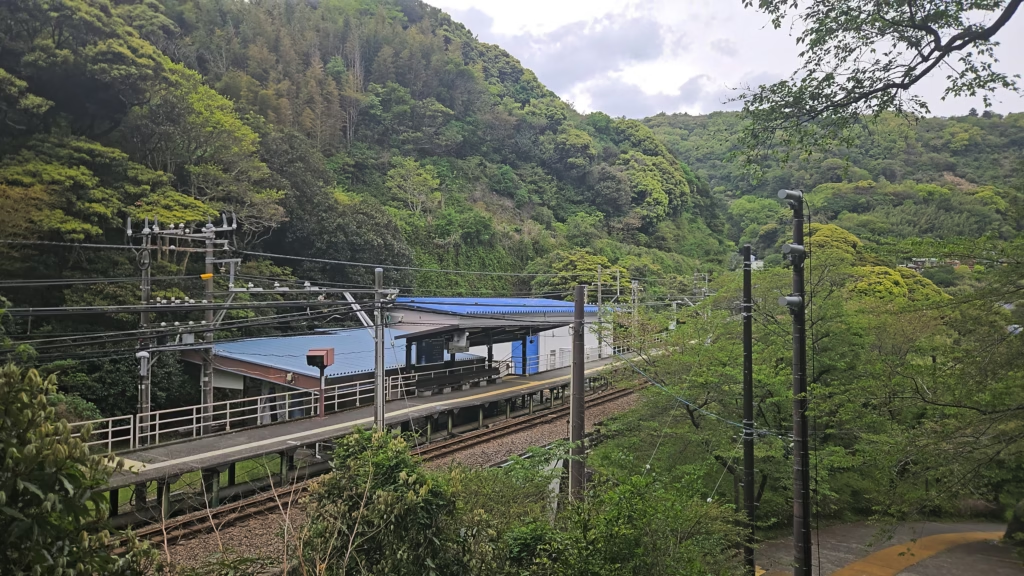
We arrived at our accommodation in Higashiizu around 5 PM after a scenic journey from Tokyo. Instead of staying at one of the hotels near the festival grounds, we chose a secluded villa surrounded by nature. Booked through Booking.com, the property offered stunning views, complete privacy, and a peaceful atmosphere that felt worlds away from the crowds and noise of the city.
The location perfectly matched the spirit of Rainbow Disco Club. Surrounded by forests and the natural beauty of the Izu Peninsula, it provided the ideal place to relax between festival days. After spending time in Tokyo, waking up to birdsong instead of traffic was a welcome change.
That said, there was one major drawback. The villa was located roughly 25 minutes on foot from the nearest train station, with much of the route passing through a quiet forest path. While the walk was beautiful during the day, it became less convenient after a long evening at the festival. Public transportation in the area is also limited compared to Tokyo, and the local trains only run about once per hour. Missing a train could easily add significant waiting time to your journey.
If you’re planning your own Rainbow Disco Club trip, the accommodation location is something worth considering carefully. While remote villas offer a unique experience and often better value, staying within walking distance of a station or using the festival camping facilities may save considerable time and effort throughout the weekend. Looking back, we would probably choose a place closer to the train line next time, even if it meant sacrificing a little privacy.
For visitors unfamiliar with rural Japan, this is one of the biggest differences compared to Tokyo. Outside the capital, train schedules are less frequent, taxis can be limited, and transportation requires more planning. Factoring this into your itinerary will make your Rainbow Disco Club experience much smoother and more enjoyable.
The Shuttle to the Festival: A Challenge
By 6 PM, we headed to the train station for the first day of the festival. The good news was that the shuttle to the festival from Izu Inatori station was free, and it took us directly to the venue. The shuttle service runs every 15 minutes, which is fantastic, but here’s the catch—it stops at 9 PM. This limitation is something to keep in mind if you plan on staying at a villa far from the festival grounds.
If you miss the shuttle after 9 PM, you’ll need to find your way back to the station on your own, and this could be tricky. If you’re traveling in a group, make sure you have a backup transportation plan. There are only two taxi companies available, and the festival shuttle tickets are typically sold out weeks in advance, which means you need to act quickly if you want to secure a ride.
Why Rainbow Disco Club Is One of Japan’s Most Beautiful Music Festivals

Despite the occasional transportation challenges, the festival’s location was one of its greatest strengths. Set among the forests and rolling hills of the Izu Peninsula, Rainbow Disco Club offers a setting that feels completely removed from the energy of Tokyo. Instead of skyscrapers, neon signs, and crowded streets, attendees are surrounded by greenery, fresh air, and views that make it easy to forget that one of the world’s largest cities is only a few hours away.
The natural environment plays a major role in shaping the atmosphere of the festival. During the day, people relax on the grass, explore the grounds, and enjoy the scenery between performances. As the sun begins to set, the landscape transforms, creating a backdrop that enhances the music in a way that would be impossible in an urban setting.
Rainbow Disco Club is also one of the most international music festivals in Japan. Throughout the weekend, we met visitors from Europe, North America, Australia, and across Asia. English was widely spoken, and many attendees had specifically traveled to Japan for the event. This international atmosphere makes Rainbow Disco Club particularly appealing for foreign visitors looking for a festival where they can easily meet people from around the world.
Throughout the weekend, we met visitors from Europe, North America, Australia, and across Asia. English was heard almost as often as Japanese, and many attendees had traveled specifically for the festival. There were also many international couples and long-term foreign residents of Japan, which contributed to the event’s welcoming and cosmopolitan atmosphere.
For travelers who have experienced Tokyo’s nightlife, Rainbow Disco Club offers an interesting contrast. Tokyo is famous for its clubs, bars, and late-night entertainment districts, where the focus is often on the city itself. Here, the emphasis shifts toward music, nature, and community. Rather than moving between venues in a busy urban environment, everyone gathers in one place and shares the experience over an entire weekend.
This combination of beautiful scenery, a diverse international crowd, and carefully curated music is what makes Rainbow Disco Club stand out within Japan’s festival scene. It feels less like a commercial event and more like a gathering of people who genuinely love electronic music and the culture surrounding it. By the end of the weekend, it was easy to understand why so many visitors return year after year and why the festival has earned such a strong reputation both within Japan and internationally.
What Is the Atmosphere Like at Rainbow Disco Club?
Rainbow Disco Club Lineup Review: The Best Sets and Performances
Of course, the main reason most people come to Rainbow Disco Club is the music, and the festival certainly delivers. Spread across multiple stages and surrounded by the natural scenery of the Izu Peninsula, the event creates an atmosphere that feels very different from a typical club night or city-based music festival. Instead of rushing from stage to stage, people seemed to take their time, discover new artists, and simply enjoy the experience.
One of the things I appreciated most was the balance between international headliners and respected local artists. Whether you’re deeply involved in the electronic music scene or simply curious to explore new sounds, the lineup offers plenty of opportunities to discover something unexpected.
Some of my personal highlights included Soichi Terada, Chaos in the CBD, Antal, and Palms Trax. Each artist brought a distinct style and energy, which kept the weekend feeling fresh and varied. At one moment, you could find yourself relaxing to warm, melodic house music under the afternoon sun, while later in the evening the atmosphere would shift into something much more energetic as the dance floors filled up.
What stood out wasn’t necessarily a single track or dramatic festival moment, but the overall quality of the performances. The DJs were given time to build their sets properly, allowing the music to evolve naturally rather than feeling rushed. This created a more immersive experience than many festivals where artists are limited to short time slots.
The closing set by Palms Trax on the main RDC stage was a perfect example. As the sun began to disappear and the crowd gathered for one final celebration, the atmosphere felt genuinely special. The combination of music, lighting, and the surrounding environment created one of those festival moments that people remember long after the weekend ends. Looking around, it was clear that many attendees were simply enjoying being present in the moment rather than recording everything on their phones.
That feeling ultimately captures what makes Rainbow Disco Club different. The festival is not only about seeing famous DJs or hearing the biggest tracks. It is about spending a weekend immersed in music, surrounded by nature, and sharing the experience with a crowd that genuinely appreciates the culture behind electronic music. Even for someone who has attended other festivals before, the atmosphere felt unique and surprisingly authentic.
Is the Food at Rainbow Disco Club Worth It? Prices, Vendors & Best Dishes

Another standout aspect of the festival was the food. While festivals in Europe can sometimes fall short when it comes to food offerings, Rainbow Disco Club Festival 2025 raised the bar with its wide range of delicious options.
The food area was filled with stalls offering a variety of international and Japanese dishes. We tried everything from fried oysters (where you can play a balancing game to win an extra oyster) to grilled fish, soba, udon, burgers, Beef Stroganoff, and even Cuban sandwiches. Everything was cooked to perfection, and each dish was packed with flavor.

One question many visitors ask before attending is: How expensive is the food at Rainbow Disco Club, and is it worth eating at the festival? Based on our experience, the food was one of the biggest highlights of the entire weekend.
Food prices were surprisingly affordable, especially when compared to many major music festivals in Europe and North America. Most dishes ranged from roughly 600 to 1,500 yen, making it possible to enjoy a full meal without feeling like you were paying inflated festival prices. Considering the remote location of the event and the quality of the food available, the pricing felt extremely fair.
Another pleasant surprise was the variety. Rather than relying on generic festival food, Rainbow Disco Club featured a diverse selection of vendors serving everything from Japanese specialties to international cuisine. This gave the food area its own atmosphere and made exploring the stalls almost as enjoyable as exploring the music stages.
My personal highlights were the freshly grilled fish and an excellent Cuban sandwich, both of which easily exceeded my expectations. The grilled fish was simple but perfectly prepared, while the Cuban sandwich was packed with flavor and became one of my favorite meals of the weekend. These were the kinds of dishes I would happily order even outside of a festival setting.
Many vendors accepted cashless payment methods such as PayPay, which was convenient when the mobile network cooperated. However, because thousands of visitors were concentrated in a relatively remote area, internet connectivity occasionally became unreliable. As a result, I strongly recommend carrying some cash as a backup, even if you normally rely on mobile payments in Japan.
For food lovers, Rainbow Disco Club stands out from many other music festivals. The event does not treat food as an afterthought. Instead, it feels like an important part of the overall experience. Between the quality of the vendors, the reasonable prices, and the relaxed outdoor setting, the food area became one of our favorite places to spend time between performances.
If you’re wondering whether you should budget extra for meals at Rainbow Disco Club, the answer is yes, but not because the food is expensive. The real challenge is resisting the temptation to try everything. The combination of high-quality food, fair prices, and unique vendors makes the festival a surprisingly rewarding destination for music fans and food enthusiasts alike.
How expensive are drinks at Rainbow Disco Club?
One question many first-time visitors have is: How expensive are drinks at Rainbow Disco Club, and what alcohol options are available? Based on our experience, drink prices were generally reasonable compared to other major music festivals in Japan, but there are a few things worth knowing before you arrive.
The main Red Bull Stage bars primarily focused on Red Bull-based cocktails and mixed drinks. While this fits the sponsorship and branding of the stage, it can become slightly inconvenient if you simply want a traditional highball, vodka soda, or another standard alcoholic drink. In some cases, ordering your preferred drink required additional purchases, increasing the overall cost compared to what many visitors might expect.
For festival-goers wondering whether Rainbow Disco Club is expensive, the answer is generally no. Basic drinks were fairly affordable by Japanese festival standards, and prices were considerably lower than at many international music festivals. However, costs can add up quickly if you spend the entire day purchasing drinks at the stage bars.
Fortunately, we discovered a better option. The food and vendor area featured several independent bars offering a wider selection of alcoholic and non-alcoholic beverages. Here, visitors could find beer, highballs, cocktails, spirits, and soft drinks without being limited to energy drink-based options. The selection was broader, ordering was simpler, and the overall value felt better.
If you’re planning your first visit to Rainbow Disco Club, my recommendation is simple: explore the food area before ordering multiple drinks at the main stages. Not only will you find more variety, but you’ll also gain a better understanding of the festival’s food and beverage offerings. This small tip can help improve your experience and potentially save you money throughout the weekend.
Overall, Rainbow Disco Club offers a good range of drink options, and most visitors should have no trouble finding something they enjoy. Just remember that the bars away from the stages may provide the best combination of selection, convenience, and value.
Getting Around Rainbow Disco Club: Shuttles, Taxis & Transportation Tips
Shuttle Service: Sold Out and Poorly Organized

One of the few areas where Rainbow Disco Club could improve is transportation, particularly the shuttle bus system. While the festival itself was exceptionally well organized, getting to and from the venue proved to be one of the most challenging aspects of the weekend.
The official shuttle buses operate regularly throughout the day and are the most convenient transportation option for many visitors. However, one issue we encountered was that shuttle tickets can sell out well before the festival begins. In our case, we underestimated how quickly they would disappear and found ourselves without a return shuttle reservation for the evening.
This became a problem on the first night when we decided to stay until around 1 AM to fully enjoy the music. By that point, the shuttle service was no longer operating, leaving taxis as the primary option for returning to our accommodation. While taxis are available in the area, the supply is limited, especially when thousands of festival attendees are trying to leave the venue at roughly the same time.
Adding to the challenge, payment options varied between taxi companies. One accepted only cash, while another accepted digital payment methods such as PayPay. If you plan to rely on taxis, it is a good idea to carry cash as a backup and save the contact information of local taxi companies before arriving at the festival.
We were fortunate to find a licensed taxi without too much difficulty, but not everyone was as lucky. During busy periods, some visitors appeared to be accepting rides from unofficial drivers. While I cannot comment on individual situations, I would strongly recommend using only licensed taxi services for safety and peace of mind.
For future visitors, my biggest recommendation is simple: secure your transportation plans as early as possible. Shuttle tickets should be treated almost like festival tickets themselves. Book them as soon as reservations open, especially if you are staying outside the camping area or plan to remain at the festival until late at night.
Despite these transportation frustrations, they were ultimately a small part of an otherwise fantastic weekend. Rainbow Disco Club remains one of the most unique music festivals in Japan, but transportation logistics are something worth planning carefully if you want your experience to be as smooth and stress-free as possible.
How to Get to Rainbow Disco Club Without a Car
The following morning brought our biggest logistical challenge of the weekend. After making our way to the local station, we discovered that transportation options were far more limited than we had expected. Rural train services on the Izu Peninsula operate much less frequently than those in Tokyo, and missing a train can significantly impact your schedule. After waiting and realizing that reaching the festival by rail would take much longer than planned, we decided to look for an alternative.
Fortunately, we were able to secure a taxi, which ultimately got us to the festival without too much delay. However, this highlighted another important reality of attending Rainbow Disco Club: taxi availability is limited. With thousands of festival-goers traveling between hotels, villas, train stations, and the venue, demand can quickly exceed supply, particularly during peak arrival and departure times.
For visitors unfamiliar with the area, it is worth remembering that the Izu Peninsula is very different from central Tokyo. Transportation infrastructure is designed for a much smaller local population, and services can become overwhelmed when a large festival arrives. What might seem like a simple backup plan in the city can become difficult to arrange in a more rural setting.
Based on our experience, one of the best things you can do is organize transportation well in advance. If shuttle bus tickets are available, reserve them as early as possible. If you expect to use taxis, consider booking them ahead of time rather than relying on finding one on demand. Even choosing accommodation within walking distance of the venue or a major station can dramatically reduce stress throughout the weekend.
While transportation was occasionally frustrating, it is important to view it as part of the overall Rainbow Disco Club experience. The festival’s remote location is also one of its greatest strengths. The mountains, forests, ocean views, and relaxed atmosphere are precisely what make the event feel so different from festivals held in large urban areas. With a bit of planning, visitors can avoid most of the logistical headaches and focus on enjoying the music, scenery, and unique atmosphere that make Rainbow Disco Club one of Japan’s most beloved festivals.
The Experience: Tips and Recommendations for Future Attendees
Essential Rainbow Disco Club Tips for First-Time Visitors
If there is one lesson we learned from attending Rainbow Disco Club, it is the importance of planning ahead. Unlike some festivals where you can make arrangements at the last minute, Rainbow Disco Club attracts thousands of visitors from across Japan and overseas, which means accommodation, transportation, and festival-related services can fill up surprisingly quickly.
Our biggest challenges throughout the weekend were not related to the festival itself, but rather to logistics. Shuttle buses reached capacity, taxis were in high demand, and transportation options in the Izu area are far more limited than what most people are used to in Tokyo. While none of these issues ruined the experience, they did create unnecessary stress that could have been avoided with earlier planning.
If you’re planning to attend Rainbow Disco Club in the future, I strongly recommend booking your festival tickets, accommodation, and transportation as soon as they become available. This is especially important if you intend to use festival shuttle buses or stay in one of the more convenient hotels near the venue. The closer your accommodation is to the festival grounds or a major train station, the smoother your overall experience is likely to be.
Looking back, we would have reserved our shuttle tickets immediately and spent more time researching accommodation options before booking. While our secluded villa offered incredible privacy and beautiful surroundings, a location closer to the festival would have saved us considerable travel time throughout the weekend.
Fortunately, these logistical challenges were minor compared to everything the festival got right. The music, atmosphere, food, scenery, and welcoming community more than compensated for the occasional transportation headache. By planning ahead and learning from our experience, future visitors can focus entirely on enjoying one of the most unique and rewarding festival experiences that Japan has to offer.
Don’t Forget the Kids (and Dogs)

One feature that genuinely surprised me was how family-friendly Rainbow Disco Club felt. Many people associate electronic music festivals with late nights, loud crowds, and an adult-focused atmosphere, but Rainbow Disco Club takes a noticeably different approach. Throughout the festival grounds, it was common to see parents attending with young children, creating an environment that felt welcoming and inclusive rather than exclusive.
The festival includes a dedicated children’s area where kids can play, participate in activities, and enjoy the event in a safe space away from the busiest sections of the venue. Seeing families relaxing together on picnic blankets while music played in the background added to the festival’s laid-back atmosphere and reinforced the strong sense of community that Rainbow Disco Club is known for.
Another feature that stood out was the number of dogs attending the festival. Unlike many major events where pets are prohibited, Rainbow Disco Club embraces a more relaxed outdoor festival culture. Throughout the weekend, visitors could be seen walking their dogs around the venue, and many attendees appeared to enjoy sharing the experience with their four-legged companions. The combination of open spaces, natural surroundings, and a generally respectful crowd helped create an environment where both people and pets seemed comfortable.
These family-friendly elements contribute significantly to what makes Rainbow Disco Club unique within Japan’s festival scene. Rather than focusing solely on music, the event creates a broader cultural experience where friends, couples, families, children, and even pets can enjoy the weekend together. This welcoming atmosphere is one of the reasons the festival attracts such a diverse audience and continues to stand out as one of the most distinctive music festivals in Japan.
Rainbow Disco Club Departure Guide: Lockers, Luggage & Train Tips
One practical challenge we encountered on the final day involved luggage storage at Izu Inatori Station. Like many other festival attendees, we arrived at the station hoping to use the coin lockers, only to discover that every single one was already occupied. With hundreds of people leaving the festival at roughly the same time, this is a common problem that many visitors may not anticipate.
Fortunately, we discovered an alternative that was not clearly advertised. The station staff offered a temporary luggage storage service, allowing travelers to leave their bags directly with them for 1,000 yen per item. The luggage was stored securely and could be collected later in the afternoon before the service closed at 5:30 PM. This turned out to be a lifesaver, as it allowed us to continue exploring the area without dragging suitcases around all day.
Interestingly, many other festival-goers seemed unaware that this option existed. Throughout the morning, I noticed several confused visitors searching unsuccessfully for empty lockers or trying to figure out what to do with their luggage. After learning about the staffed storage service, I ended up sharing the information with several other attendees who were facing the same problem.
If you’re planning to attend Rainbow Disco Club in the future, this is one tip worth remembering. Coin lockers at Izu Inatori Station can fill up quickly, especially on the final day of the festival. Arriving early may help, but if the lockers are already full, don’t panic. Ask the station staff whether temporary luggage storage is available. It could save you a great deal of stress and allow you to enjoy your last day in the Izu area much more comfortably.
Is Rainbow Disco Club Worth It? Final Verdict
One of the most interesting aspects of Rainbow Disco Club was the people. Having lived in Tokyo for several years, I was struck by how different the atmosphere felt compared to some of the city’s most famous districts. Areas such as Shibuya, Harajuku, and Omotesando are often associated with fashion trends, carefully curated outfits, beauty culture, and social media-driven aesthetics. Rainbow Disco Club felt like the complete opposite.
The festival attracted a crowd that was noticeably more relaxed, diverse, and focused on the experience itself. While fashion was certainly present, it was not the polished, trend-focused style that many visitors associate with Tokyo. Instead, people dressed for comfort, self-expression, and practicality. Vintage clothing, outdoor wear, alternative fashion, handmade accessories, and well-worn festival outfits were everywhere. Many attendees looked as though they had come to spend an entire weekend immersed in music and nature rather than to take photos for social media.
Visitors expecting a typical Tokyo nightlife crowd may be surprised. There was very little of the highly styled image-conscious culture often associated with districts like Shibuya. The gyaru aesthetic that helped define parts of Tokyo’s youth culture for decades was largely absent, as were luxury fashion displays and the pressure to look perfectly put together. Instead, the atmosphere felt welcoming, authentic, and refreshingly unpretentious.
This difference is one of the reasons Rainbow Disco Club stands out among Japanese festivals. The event attracts people from a wide range of backgrounds, including artists, musicians, designers, creatives, long-time electronic music fans, international visitors, and locals who simply enjoy escaping the city for a weekend. Conversations felt natural, people were approachable, and there was a strong sense of community throughout the festival grounds.
Combined with the natural surroundings of the Izu Peninsula, the relaxed crowd created an atmosphere that was completely different from central Tokyo. Rather than neon lights, crowded shopping streets, and endless advertising screens, the backdrop consisted of forests, mountains, ocean air, and open spaces. The result was a festival experience that felt more connected to nature and far removed from the intensity of urban life.
For me, this was one of the defining characteristics of Rainbow Disco Club. Beyond the music, food, and performances, it offered a glimpse into an alternative side of Japan that many tourists never encounter. It showed that Japanese culture is not only about technology, fashion trends, and big cities. There is also a thriving community of people who value creativity, individuality, music, and genuine human connection. That atmosphere is ultimately what made Rainbow Disco Club feel so special and why it remains one of the most unique festivals I have attended in Japan.
If you want to book a calm villa near the festival, click here.
Author

Get My Personal Travel Maps
Keep Reading: More Articles You'll Love
 Is Japanese Food Actually Chinese? The Surprising Origins of Japanese Cuisine
  Living in Tokyo vs Zurich – The Ultimate Expat Guide
  Living in Japan vs Korea – The Ultimate Expat Guide
  Japan Travel Myths vs Reality: What Tourists Still Get Wrong About Japan
  My First 30 Days in Tokyo: Essential Administrative Steps for International Students
  Halloween in Tokyo: From Shibuya to Shinjuku and Beyond
  Tattoos in Japan: Rules, Culture, Onsen & Changing Attitudes