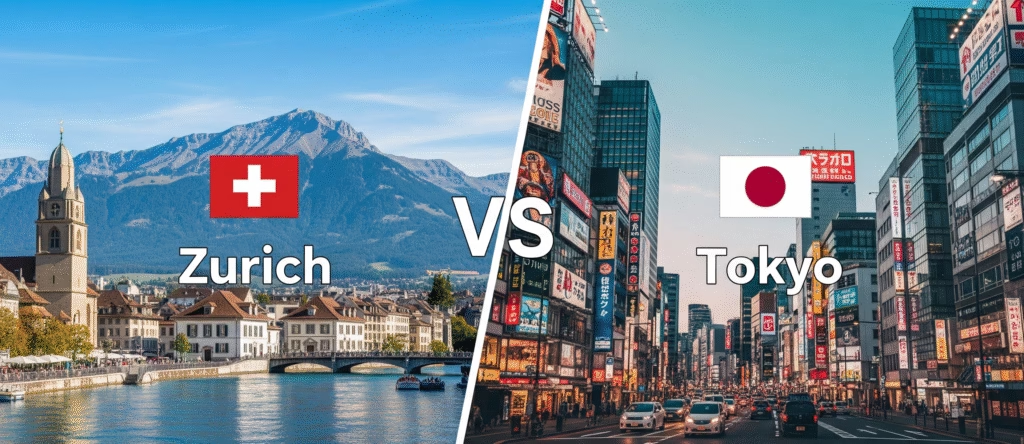
Choosing where to build a life is never easy—especially when you’re deciding between two of the most developed, fascinating, and very different cities on earth. Tokyo and Zurich both attract thousands of expats, digital nomads, and professionals every year.
I was born in Solothurn, Switzerland, and later lived for two years in Zurich while working and studying. After that, I moved to Tokyo, where I’ve now spent several years completing my degree and working in the tech industry. From daily errands to big career moves, I’ve experienced firsthand how these two cities shape your routines, your friendships, and your sense of what home can feel like.
This living in Tokyo vs Zurich comparison guide will help you look past postcard impressions and understand what life in both cities is really like. My perspective on Tokyo comes from living there long term, completing my master’s degree in computer science at Waseda University, and later working as a software engineer in the city. Those years gave me a clear understanding of daily life in Tokyo, from navigating work culture and housing challenges to managing the cost of living. With that background, this guide explores what you can expect in 2025—from cost comparisons between Zurich and Tokyo to professional expectations and the factors that determine which city aligns best with your priorities.
Whether you’re planning a short relocation or a long-term expat journey, you’ll find the details you need here to make an informed choice.
Cost of Living (All Prices in USD)
One of the first questions everyone asks is: How much will it cost to live there?
While Tokyo and Zurich are both expensive by global standards, the cost structures are quite different. Below you’ll find a detailed comparison of major daily expenses in 2025.
🏡 Housing
Tokyo
Japan, especially Tokyo, is famous for high rental costs and small spaces. A compact studio apartment in central Tokyo typically costs between $1,200–$1,800 per month, excluding utilities. Older buildings can be a bit cheaper but often have poor insulation, thin walls, and outdated bathrooms with no central heating. Many landlords still require a Japanese guarantor and several months’ worth of deposits and fees upfront, which can make moving in feel like an obstacle course.
Zurich
Zurich is even more expensive, though you usually get more comfort for the price. A 1-bedroom apartment in a desirable district typically costs between $2,500–$3,500 per month. Apartments are usually spacious, well-insulated, and equipped with modern appliances. Unlike Tokyo, there is no key money, but you will need a 2–3 month security deposit and strong references to even be considered. Waiting lists for good flats are common, and it’s normal to compete with dozens of applicants for a single listing.
If you plan to live centrally, Zurich is almost always more expensive month to month. However, many people find the quality of housing noticeably higher. This is one of the main differences you’ll notice when living in Tokyo vs Zurich: in Switzerland, you pay a premium for space, energy efficiency, and a quieter environment. But when you compare housing costs to the much higher average salaries in Zurich, Switzerland is clearly the huge winner in terms of what you actually get for your money.
🛒 Groceries and Fresh Produce
Tokyo
Groceries in Tokyo are generally high-quality but not cheap. Fruits can be shockingly expensive; for example, a single melon might cost $10–$20. Everyday vegetables, rice, and packaged foods are more moderately priced but still higher than in many Western countries. Imported products like European cheese or cereal can cost two to three times more than in Switzerland. Supermarkets are clean and well-organized, though the selection of international brands is smaller compared to Zurich.
Zurich
Groceries in Zurich are among the most expensive in Europe. Even a basic basket of fresh vegetables and fruit often costs 30–50% more than in Tokyo. Meat and dairy are particularly pricey, and shopping at specialty stores can feel like a luxury. However, the overall quality is excellent—nowhere have I found groceries that consistently feel fresher and better than in Switzerland. Supermarkets like Migros and Coop are fantastic: not only is the produce reliably fresh, but the stores themselves are beautifully designed, bright, and pleasant to shop in. Even basic branches feel clean, modern, and well-organized, which is a huge contrast to Tokyo, where most supermarkets—even chains like Seiyu—can feel cramped, outdated, or lacking any style. Discount chains like Aldi and Lidl help a little, but day-to-day costs remain high. On the plus side, Zurich supermarkets are efficient and stocked with a wider variety of European brands and more ready-to-eat options.
🍽️ Eating Out
Tokyo
Eating out in Tokyo is surprisingly affordable, considering the city’s reputation. A simple meal like ramen or a lunch set typically costs about $7–$10, while a mid-range restaurant dinner easily reaches $20–$35 per person. There’s incredible variety, including sushi, tempura, and countless regional dishes. However, if you crave rich European flavors or good bread, you may feel limited. Forget finding proper Italian food—though the Chinese food is excellent in Tokyo. And bread is almost always terrible.
Zurich
Eating out in Zurich is significantly more expensive. A basic lunch can cost $18–$25, and even casual dinners easily run $40–$60 per person. Zurich has a solid selection of international restaurants, and you can find good Italian, French, and Mediterranean options without much effort. The quality of ingredients is excellent, but the high prices make dining out feel like a treat rather than an everyday habit. Interestingly, you’ll often find better and more authentic Asian food in Zurich than you will European food in Tokyo, where Italian or French restaurants rarely taste quite right. Bread, however, is reliably fantastic—this is Switzerland after all.
🚇 Transportation
Tokyo
Japan’s train systems are famously efficient, clean, and punctual, but they aren’t cheap. A monthly commuter pass in Tokyo costs $70–$130, depending on your route and distance. Local trains and subways are reliable to the minute, though rush hour can be overwhelming. Long-distance trains like the Shinkansen are very fast but extremely expensive compared to buses or domestic flights. Even short weekend trips on the bullet train can cost over $100 each way.
Zurich
Zurich’s public transportation is equally modern and well-organized, but on a smaller scale. Trams, buses, and S-Bahn trains connect every corner of the city and surrounding suburbs. A monthly pass usually costs $90–$120, giving you unlimited access to all zones. Intercity trains are frequent and comfortable, but tickets can be pricey unless you use discount cards or saver fares. One huge advantage over Tokyo is that you aren’t dependent on reloading a Suica card or carrying cash. The SBB EasyRide feature in the Swiss public transport app lets you simply swipe to start your journey, and GPS tracks where you go—charging your credit card automatically at the best price. This feels much more convenient compared to constantly topping up a Suica balance manually. Taxis are expensive in both cities and rarely used for daily commuting.
💡 Utilities and Internet
Utilities (electricity, water, heating) are similar in both cities, averaging $160–$250 per month for a small apartment. Zurich apartments tend to have better insulation, so you may pay less for heating per square meter, but because units are larger, the total bill can still be higher.
Internet speed is excellent in Zurich and good in Tokyo:
- Zurich: Among the fastest in Europe, with unlimited fiber plans around $50–$70 per month. Contracts are straightforward and often bundled with TV and mobile plans. Internet speeds are not just good—they are often double or even more compared to Tokyo, making streaming, remote work, and large downloads feel effortless.
- Tokyo: Typically costs $40–$60 per month, with fast but sometimes bureaucratic setup. Tokyo, for example, ranks below Zurich in average internet speed worldwide, though it’s still fast enough for everyday tasks and remote work.
🏥 Healthcare
Both countries have outstanding healthcare systems, but the models are completely different:
Tokyo
- Universal healthcare covers most treatments.
- You usually pay 30% of costs out-of-pocket, with insurance covering the rest.
- Costs for routine visits and prescriptions are generally affordable.
Zurich
- Mandatory private insurance is required by law.
- Monthly premiums range from $300–$500 per adult, depending on your plan and deductible.
- Co-pays and deductibles are higher, but service quality and speed are excellent.
- Dental care is almost always separate and very costly.
When living in Tokyo vs Zurich, you’ll notice that while care is excellent in both cities, Switzerland’s insurance model requires higher monthly payments and more budgeting.
💰 Cost Comparison Table (USD)
| Category | Tokyo | Zurich |
|---|---|---|
| Rent (1 BR) | $1,200–$1,800 per month | $2,500–$3,500 per month |
| Groceries | High, especially fruit | Very high across all categories |
| Eating Out | $7–$35 per meal | $18–$70 per meal |
| Transportation | $70–$130 monthly pass | $90–$120 monthly pass |
| Utilities | $160–$250 per month | $220–$300 per month |
| Internet | $40–$60 per month | $50–$70 per month |
| Healthcare | 30% co-pay | Mandatory insurance ($300–$500/month) |
Verdict:
If you’re budget-conscious, Tokyo generally offers lower day-to-day costs—especially for housing, eating out, and insurance. Zurich provides a higher salary to balance expenses, but the overall cost of living is among the highest in the world. However, in both cities, the quality and reliability of infrastructure, public transport, and healthcare are outstanding, setting a high standard compared to almost anywhere else.
Finding a place to live is one of the biggest challenges when relocating abroad. Both Tokyo and Zurich have unique systems, cultural expectations, and price structures around renting, deposits, and apartment standards. Below you’ll find a clear comparison to help you prepare.
Types of Apartments
Tokyo
In Japan, especially in major cities like Tokyo, apartments tend to be compact and minimalist. It’s common to find tiny studio layouts called 1R (one room) or slightly larger 1K (one room plus kitchen). Even family-sized apartments can feel surprisingly small by Western standards. Many buildings are old, with thin walls, basic insulation, and bathrooms that haven’t been updated in decades.
Traditional Japanese touches are still common, including tatami mat floors, sliding paper doors, and deep soaking tubs. Newer high-rise apartments—called “mansions” in Japan—offer better soundproofing, modern appliances, and amenities like parcel lockers, but these come at a premium.
Zurich
Zurich apartments are generally larger and built to a very high standard. Even mid-range units often feature underfloor heating, triple-glazed windows, spacious kitchens with built-in dishwashers, and modern bathrooms. The average apartment feels more solid, well-insulated, and practical. High-rise complexes are less common than in Asia, but many buildings have shared laundry rooms, elevators, and secure entry systems.
In Zurich, most apartments have balconies and large windows, and storage rooms are usually included. While space is still at a premium, the layouts feel much more generous compared to Tokyo.
Renting Process
Tokyo
Renting an apartment in Japan involves significant paperwork and multiple fees. You usually need:
- Key money (reikin): A non-refundable “thank you” gift to the landlord, often equal to 1–2 months’ rent. (That sucks a lot)
- Deposit (shikikin): Typically 1–2 months’ rent, refundable minus cleaning or repair costs. (You often lose part of this too, which sucks again a lot)
- Agent fee: Usually around one month’s rent.
- First month’s rent: Paid upfront.
This means moving in can easily require 4–6 months’ rent in cash, which shocks most newcomers. Foreigners frequently struggle to secure apartments without a Japanese guarantor (hoshounin), and some landlords openly refuse to rent to non-Japanese tenants. Many expats rely on specialized real estate agents who cater to foreigners.
Zurich
In Zurich, the process is simpler on paper but intensely competitive in practice:
- Deposit: Typically 2–3 months’ rent, held in a special blocked account until you move out.
- First month’s rent: Paid upfront.
- References: You’ll need proof of income, credit checks, and personal references.
- Application competition: It’s not uncommon for 30–50 people to apply for a single apartment, and landlords can be picky.
Unlike Tokyo, there is no key money, but the competition and bureaucracy can feel equally frustrating. Many expats work with relocation services to improve their chances. Still, the Zurich real estate market feels much more transparent and fair—you don’t get scammed by landlords with hidden fees or deposits you never see again. Even though it can be hard to find an apartment, once you do, the quality of housing is excellent and you can expect a clear, professional process that feels far nicer and more trustworthy than renting in Japan.
Example Prices
Below is a rough idea of typical rent costs for a modern 1-bedroom apartment in a central area, so you can better understand the cost of living Zurich vs Tokyo 2025:
| Location | Monthly Rent (USD) |
|---|---|
| Tokyo | $1,200–$1,800 |
| Osaka | $900–$1,400 |
| Zurich | $2,500–$3,500 |
| Winterthur | $1,800–$2,500 |
Keep in mind that prices can be significantly lower in smaller cities or suburban areas, but in Zurich, even “budget” apartments cost more than Tokyo’s mid-range options.
Furnishing and Appliances
Tokyo
Apartments are usually unfurnished, meaning no fridge, no washing machine, and sometimes not even ceiling lights. You’re expected to supply everything yourself, and this can add high upfront costs. Also, many landlords strongly prefer Japanese tenants and may decline foreign applicants without explanation.
Zurich
Most apartments come semi-furnished, typically including a fully equipped kitchen with an oven, fridge, stovetop, and dishwasher. Washing machines are often in shared basement laundry rooms. Built-in closets and lighting are standard, reducing the hassle of move-in.
Lease Length and Renewal
Tokyo:
Standard leases are two years. Landlords generally expect you to renew or move out at the end of the term. Renewal fees are common (often one month’s rent).
Zurich:
Leases are usually open-ended and automatically renew. You can stay indefinitely as long as you follow the rules and pay rent on time. Notice periods (typically three months) are required if you decide to leave.
Tips for Finding an Apartment
Tokyo:
Use English-friendly websites like RealEstate Japan or agencies that specialize in expat clients. Be prepared for complex paperwork and to pay large sums upfront.
Zurich:
Check Homegate, Immoscout24, and local Facebook groups (careful for scams) for listings. Prepare all documents in advance and consider offering to pay the deposit immediately to improve your chances.
Verdict:
Zurich tends to offer more spacious, modern apartments with fewer hidden fees, but the overall cost is much higher and the competition is fierce. Tokyo requires significant deposits, more paperwork, and often smaller, older units, but monthly rent can be almost half the price. If you prefer convenience, space, and excellent insulation, Zurich has the edge. If you’re budget-conscious or excited about Japanese culture and can navigate the system, Tokyo can be a rewarding (if sometimes frustrating) place to rent.
Work Culture and Career
Moving abroad isn’t just about sightseeing—it often means adapting to a completely different work environment. While Japan and Switzerland are both advanced economies, the contrast between Tokyo and Zurich workplaces is extreme. If you’re used to Swiss professional life, working in Japan can feel like stepping into another era. Here’s what you can expect.
Hierarchy and Respect
Tokyo
Japan is famous for its rigid hierarchy and formality in the workplace. Age, tenure, and job title strongly determine how you speak to colleagues and managers. Even in modern companies, deference to seniority is an essential part of daily life. Politeness is deeply embedded in communication, including the use of honorific language (keigo) and ritual greetings when arriving and leaving. Open disagreement is almost never seen in meetings.
Zurich
In Zurich, the job market is much more open to international professionals. English is widely used in many companies, especially in finance, pharmaceuticals, and IT. While German (or Swiss German) helps a lot, you can often get by in English—something almost unthinkable in Tokyo.
Salaries are higher, and the entire process—from applications to onboarding—is more transparent and efficient. Work visas are easier to secure if you have in-demand skills and a contract, and companies are familiar with hiring non-Swiss employees. However, it’s important to know that finding a job without a valid visa or residence permit is much harder than in Tokyo. There is strong competition from highly qualified candidates across Europe, and Swiss immigration prioritizes applicants in this order: 1) Swiss citizens, 2) EU/EFTA nationals, and only 3) everyone else, including professionals from Asia. This means that even if you have great qualifications, you usually need a job offer first to get your visa approved.
Working Hours and Expectations
Tokyo
Long working hours are normal, and unpaid overtime—sometimes several hours per day—is deeply ingrained. Presenteeism (staying late simply to be seen working) is a cultural expectation in many companies. Even when official policies promote work-life balance, in reality, most employees feel pressure not to leave before their manager.
Recently, a few firms have tried to reduce excessive hours, but change has been slow.
Zurich
Work culture in Zurich is like heaven if you compare it to Japan. Most companies maintain a 40–42 hour workweek, and overtime is strictly regulated and compensated. In my last job in Zurich, I earned three times more salary than in Tokyo and enjoyed seven weeks of vacation, including paid overtime I could use as time off. Paid leave isn’t just a formality—employees actually take it, and colleagues respect boundaries.
Verdict:
If you value your free time, Zurich sets an example of what balanced work looks like.
Communication Style
Tokyo
Japanese business communication is famously indirect. You are expected to “read the air” (kuuki o yomu), intuit meaning from vague statements, and avoid conflict at all costs. Meetings often feel slow and consensus-driven, with decisions requiring multiple sign-offs from different departments.
Zurich
Communication in Swiss offices is direct, clear, and solution-oriented. Disagreement is not seen as disrespectful. If you have an idea, you share it. If there is a problem, you discuss it without shame. People appreciate efficiency and transparency, and you rarely need to guess what your colleagues think.
Dress Code
Tokyo:
Most companies expect a conservative dress style, especially in traditional industries. Dark suits, white shirts, and ties for men; formal blouses and knee-length skirts for women. Tattoos, colorful hair, and piercings are often frowned upon.
Zurich:
While finance and law remain formal, many workplaces—especially in tech, creative fields, and international companies—embrace a relaxed dress code. Smart casual is common, and no one cares if you wear sneakers. In many offices, your manager dresses just like everyone else.
Job Hunting as a Foreigner
Tokyo
Foreigners often struggle to break into the Japanese job market without strong Japanese language skills. Even global companies frequently expect at least conversational Japanese. Industries like English teaching, IT, and translation are more accessible, but for other roles, Japanese is usually essential.
Visa sponsorship is tied to full-time employment, so securing a job offer before arriving is strongly recommended. Also, interviews for permanent positions can be exhausting—sometimes involving up to seven rounds, especially for technical roles. Once you’re hired, job security is high, and dismissals are extremely rare.
If you are considering moving to Japan, it’s a good idea to read guides about Black and White companies, as workplace conditions vary enormously.
Zurich
In Zurich, the job market is much more open to international professionals. English is widely used in many companies, especially in finance, pharmaceuticals, and IT. While German (or Swiss German) helps a lot, you can often get by in English—something almost unthinkable in Tokyo.
Salaries are higher, and the entire process—from applications to onboarding—is more transparent and efficient. Work visas are easier to secure if you have in-demand skills and a contract, and companies are familiar with hiring non-Swiss employees.
Salaries and Benefits
Salaries can vary by industry and experience, but here’s what you can expect:
| Aspect | Tokyo | Zurich |
|---|---|---|
| Average Salary | $30,000–$50,000/year | $80,000–$120,000/year |
| Annual Bonus | Common (1–2 months’ salary) | Common (1–2 months’ salary) |
| Paid Leave | ~10–20 days/year (rarely used) | ~25–35 days/year (actually used) |
| Health Insurance | Universal, affordable | Mandatory, expensive |
In my experience, the cost of living in Zurich is roughly double, but the salaries are triple, making life far more comfortable. In addition, benefits like pensions, paid parental leave, and professional development support are much stronger in Switzerland.
Verdict:
If you value high salaries, clear communication, predictable hours, and real work-life balance, Zurich is in a different league compared to Tokyo. If you’re fascinated by traditional etiquette, consensus-driven teamwork, and the challenge of navigating Japanese corporate culture, Tokyo can still be rewarding—but you must be prepared for long days and a very formal environment.
Universities and Higher Education
If you’re moving abroad to study or considering pursuing a degree during your time overseas, Tokyo and Zurich both offer excellent universities, though the culture, expectations, and everyday experiences are very different.
University Culture
Tokyo
Japanese universities are known for their prestige and the intense entrance exams you must pass to get in. However, once admitted, the academic environment—especially at the undergraduate level—can feel surprisingly relaxed compared to European or American universities. Many Japanese students see college as a chance to build social networks and participate in clubs rather than focus purely on academics, unless you’re in a technical or research-intensive major.
Graduate programs, on the other hand, are more demanding. Master’s and PhD students are expected to take strong initiative, focus on research, and spend long hours in the lab. Relationships with professors remain formal, and hierarchy strongly influences how you interact.
International students are welcomed at many institutions, but outside the handful of English-language programs, you’ll need at least basic Japanese proficiency to navigate daily life, student services, and paperwork.
Zurich
Swiss universities have a reputation for academic rigor and independence. Unlike Japan, undergraduate programs tend to be structured but academically challenging from the first year, with a clear expectation that students take responsibility for their progress. Professors are approachable, but grading standards can feel stricter.
In fact, Swiss universities are significantly harder to pass than Japanese ones—it is genuinely tough. If you don’t study hard and stay disciplined, you can fail courses without much sympathy. The rules are enforced very strictly: for example, if you submit a paper even three seconds too late, you can receive a failing grade. This can have serious consequences, such as being forced to return to your home country. Swiss universities are known for not making exceptions, no matter
Campus life in Zurich is less club-focused than in Japan; there’s more emphasis on academic achievement, internships, and research work. Student associations exist, but they don’t play quite the same central social role. Overall, studying in Zurich feels more similar to other European countries in terms of academic pressure and student life balance.
International Programs and Language
Tokyo
Leading universities like Waseda, Keio, and the University of Tokyo offer a selection of English-language degree programs, especially in business, engineering, and international relations. However, outside these specialized tracks, lectures and materials are nearly always in Japanese.
Even in “international” programs, daily administration—registering for courses, paying fees, applying for scholarships—often requires Japanese. Many exchange students describe this as the biggest challenge.
Zurich
In Zurich, most undergraduate programs are taught in German, but many Master’s and PhD programs are offered in English, especially in technical fields like engineering, computer science, and natural sciences. ETH Zurich, in particular, is famous for its high-quality English-language graduate courses.
Administrative processes are more standardized and available in English, and there is usually far less bureaucracy compared to Japan.
Tuition and Costs
Tokyo
Tuition in Japan depends on the institution:
- Public universities: $5,000–$8,000 per year
- Private universities: $8,000–$15,000 per year
Scholarships are available, particularly for high-achieving students or those in government-sponsored exchange programs. However, living costs in Tokyo can be substantial.
Zurich
Tuition fees in Switzerland are surprisingly low by international standards:
- Public universities (including ETH Zurich and University of Zurich): $1,500–$3,000 per year
- Private programs: vary widely, but still often lower than Japan
Many students are surprised to find that tuition is not the main cost driver—living expenses in Zurich are the real challenge. Even with low fees, budgeting for rent, insurance, and food requires careful planning.
Campus Facilities and Support
Tokyo
Japanese universities usually offer well-equipped facilities: libraries, labs, gyms, and cultural centers. However, student dormitories are often limited in capacity and can have strict rules. Many students rent apartments off-campus, which adds complexity and cost.
International student offices exist, but you may find they lack full English support, especially for administrative issues.
Zurich
Swiss universities are famous for clean, modern campuses with excellent libraries, study spaces, and research labs. Student housing is available but limited, so many students share apartments in the city.
Dedicated international centers help with visas, orientation, and integration. In general, services are more streamlined and consistently offered in English.
However, you really have to be self-reliant. Unlike Tokyo, where staff often help you with everything—from opening a bank account to finding accommodation—in Switzerland you are expected to handle most things on your own. You get the essential information and guidance, but after that, it’s up to you to figure things out independently.
Apply as a Foreigner to Top Universities
Applying for a master’s degree or exchange program in Tokyo or Zurich is generally straightforward, but there are big differences in the process:
Tokyo
- You start by choosing your program and preparing documents: transcripts, recommendations, proof of Japanese or English proficiency, and your research proposal.
- Many programs require you to travel to Japan to take entrance exams, which can be expensive for European applicants.
- The system remains surprisingly paper-based—expect to print, stamp, and mail multiple copies of your application documents.
Zurich
- The process is fully online and transparent.
- You submit transcripts, CV, motivation letter, and language certificates digitally.
- Admissions decisions are often made within a clear timeframe, and most communication happens by email.
The contrast is striking: Zurich feels modern and efficient, while Japan still relies heavily on traditional, manual systems.
Verdict
If you want to immerse yourself in Japanese culture and don’t mind learning the language, studying in Tokyo can be rewarding, with unique experiences and excellent programs—especially if you plan to work in Asia long-term.
If you prefer an internationally-oriented campus, predictable processes, and more affordable tuition (with higher living costs), Zurich is an outstanding choice, especially for science, engineering, and business.
Language and Learning Curve
Language is one of the most important—and sometimes intimidating—parts of moving to Tokyo or Zurich. Even if you have experience learning other languages, both Japanese and German (including Swiss German) bring unique challenges that shape everything from grocery shopping to your long-term career prospects.
Difficulty Level
Japanese
Japanese is often seen as one of the hardest languages in the world. Grammar is logical and pronunciation is fairly straightforward. But the writing system is famously complex, requiring you to learn:
- Kanji (Chinese characters): Thousands of symbols to memorize—honestly, for many people, nearly impossible to master fully.
- Hiragana: A phonetic script used for native words and grammar endings. You can learn it in a couple of days.
- Katakana: Another phonetic script, mainly for foreign words, also learnable in a few days.
Even after years of study, reading newspapers or official documents can feel like deciphering a secret code.
German (Swiss German)
Standard German grammar is definitely more complex than English, with cases and gendered nouns. But the writing system uses the Latin alphabet, making reading and writing much more approachable than Japanese.
The real curveball in Zurich is Swiss German dialect, which sounds very different from High German and is often used in everyday conversation. Even fluent German speakers from Germany sometimes can’t follow it at first.
However—and this is crucial—you can absolutely survive in Zurich with only English. Almost everyone under 40 speaks fluent English, and in professional environments—especially in tech and computer science—English is more important than German.
Usefulness of the Language
Japanese
Learning Japanese has clear advantages if you plan to live long-term in Japan, enjoy anime or Japanese pop culture, or work in Japan-related industries. Japanese is widely studied worldwide, so finding classes, tutors, and materials is relatively easy.
German (Swiss German)
German is one of Europe’s major languages, used across Germany, Austria, and parts of Belgium. It’s an excellent investment if you plan to work or live elsewhere in Europe. In Switzerland, learning German helps you integrate and navigate bureaucracy. But in Zurich, many companies, especially in IT, engineering, and international business, run primarily in English. The importance of German is much lower than in other parts of Switzerland.
English Proficiency in Daily Life
Tokyo
Outside tourist spots and some global companies, English is limited. You will need Japanese for:
- Rental contracts
- Utility setup
- Doctor visits
- Reading government letters
Many expats say this “forced immersion” accelerates learning (it did for me), but it can feel overwhelming.
Zurich
Zurich is consistently rated among the most English-proficient cities in Europe. Nearly everyone speaks English well, from shop staff to bank clerks. In many companies—especially startups and IT departments—English is effectively the working language. For example, in computer science jobs, it is common for meetings, emails, and documentation to be conducted entirely in English.
This makes life in Zurich surprisingly easy for newcomers who don’t speak German yet.
Learning Curve and Motivation
If you’re deciding what to study, think about what motivates you most:
- Japanese is a gateway to pop culture, anime, and unique professional opportunities in Japan.
- German is highly useful across Europe, but not strictly required in Zurich’s international workplaces.
- English alone is often enough in Zurich for both professional and social life.
Tips for Learning
For Japanese:
- Learn Hiragana and Katakana first (this is very easy with Duolingo)
- Use apps like Wanikani or Anki to gradually tackle Kanji.
- Watch Japanese media with Japanese subtitles for immersion.
For German (and Swiss German):
- Start with High German grammar and vocabulary.
- Listen to Swiss German podcasts to get used to the sound.
- Use apps like Babbel, DeutschAkademie, and Duolingo.
- Focus on spoken German if you plan to pick up Swiss German later.
Verdict
If you’re passionate about Japanese culture and committed to living in Japan long-term, Japanese is worth the effort—just be prepared for a long learning journey.
If you want faster integration and career options across Europe, German is a great investment. But realistically, Zurich is one of the few places where you can move, work, and build a life almost entirely in English. If you work in IT, engineering, or international business, English may be all you need.
Food and Culinary Scene
Food is one of the highlights of living in both Tokyo and Zurich, but the culinary cultures could hardly be more different. From everyday meals to eating out with friends, here’s what you can expect.
General Overview
Tokyo
Japanese cuisine is known for its subtle flavors, seasonal ingredients, and meticulous presentation. Meals often revolve around rice, fish, pickled vegetables, and clear soups. Many people find Japanese food healthy and refined, but over time, some expats feel it can become repetitive and too mild—especially if you prefer richer European flavors. Also, vegetables are almost completely missing from many restaurant dishes unless you order them separately.
Zurich
Swiss food is hearty, rich, and rooted in Alpine traditions. Typical meals include potatoes, bread, cheese, and meat—especially pork and beef. Dishes like fondue, raclette, and rösti are beloved classics. Compared to Japan, Zurich’s food feels heavier and more caloric. You’ll also find a strong Italian and French influence, with pasta, risotto, and fresh salads widely available.
That said, Zurich’s food scene is very international—you can easily find excellent Thai, Chinese, and even Japanese restaurants all over the city.
Most expats describe Zurich cuisine as satisfying but expensive. You’ll never go hungry, but you’ll pay for it.
Dining Out
Tokyo
Eating out in Tokyo offers incredible variety, from standing sushi counters to Michelin-starred kaiseki restaurants. However, most restaurants specialize in one dish—soba, ramen, yakitori—so variety comes from trying different places, not one menu.
Costs are moderate to high:
- A bowl of ramen: ~$7–10
- Sushi lunch set: ~$10–15
- Mid-range dinner: ~$20–35 per person
Tokyo also has excellent international cuisine. You can easily find good Thai, Korean, and Chinese food. Western options exist too, but truly authentic European dishes (especially good bread and Italian food) are harder to find and often disappointing.
Zurich
Dining out in Zurich is a luxury experience compared to Japan. Even simple restaurants can feel upscale:
- A casual lunch: ~$18–25
- A mid-range dinner: ~$40–70 per person
- Fondue for two: ~$60–80
Zurich has a wide variety of international restaurants, including excellent Italian, French, and Middle Eastern options. The city has a strong café culture, and many places serve fresh, high-quality meals all day. The main drawback is price—eating out regularly will drain your budget fast.
Food Variety and Spice
Tokyo
Japanese food tends to be mild, emphasizing umami over spice. If you crave chili heat or strong flavors, you’ll have to search for specialty restaurants or cook at home. While wasabi adds a kick to sushi, most dishes are delicately seasoned.
Zurich
Swiss food is generally not spicy, but it is rich and salty. You’ll find strong cheeses, cured meats, and buttery sauces. For variety, you can turn to Zurich’s many international spots, especially Italian trattorias and Turkish kebab shops. In day-to-day Swiss cooking, heat and bold spice are rare.
Shopping for Ingredients
Tokyo
Supermarkets offer excellent fish and vegetables, but prices can be high, especially for fruit. Imported goods—European cheese, olive oil, pasta—are expensive. Cooking European dishes at home costs significantly more than sticking to local staples.
If you enjoy cooking, you’ll quickly notice the lack of Western-style bakeries or affordable imported sauces.
Zurich
Grocery stores like Migros and Coop are beautifully organized but pricey. Fresh produce and meat are excellent quality. You’ll find a wide range of Italian, French, and German products. Even budget supermarkets (Aldi, Lidl) carry decent basics. If you love cheese, bread, and good coffee, Zurich is a paradise—as long as you’re willing to pay.
Overall, shopping for ingredients feels easier and more familiar to Europeans.
Dietary Restrictions
Both cities have improved a lot in catering to special diets:
Tokyo:
Vegetarian and vegan options are limited. Dashi (fish stock) is hidden in many dishes you’d expect to be plant-based. Vegan restaurants exist but are mostly in hip neighborhoods like Shibuya or Shimokitazawa.
Zurich:
Vegan and vegetarian options are widely available. Most restaurants offer at least one plant-based dish, and dedicated vegan places are growing quickly. Supermarkets have strong gluten-free and lactose-free sections.
Personal Perspective
From living in both cities, many expats find Japanese food cleaner and lighter, but eventually a bit repetitive, especially if you crave dairy, bread, or rich sauces. In Zurich, even everyday meals feel heavy and indulgent, and variety comes mainly from international restaurants rather than Swiss staples.
One thing that surprises many newcomers: in Zurich, good bread is everywhere, while in Tokyo it’s nearly impossible to find bread that doesn’t taste sweet or fluffy.
Verdict
If you love delicate flavors, fresh fish, and seasonally crafted meals, Tokyo offers a culinary experience that’s hard to beat.
If you prefer rich European food, a wider range of international options, and the comfort of familiar tastes, Zurich will feel more satisfying—just be prepared for high prices.
Social Life and Friendships
No matter how beautiful a country is, the experience of living there depends a lot on the connections you build. While Tokyo and Zurich both have polite, welcoming people, their cultures around socializing and making friends are very different.
First Impressions and Openness
Tokyo
Japanese society is famously polite but reserved. People are nearly always courteous, but it often takes a long time to build deeper friendships. Many foreigners describe their Japanese acquaintances as friendly but quite formal, especially in the beginning.
You may find that people don’t invite you to their homes quickly or share personal details until a certain level of trust is established. Building close bonds is a slow, step-by-step process—but once you’re part of someone’s circle, friendships can be incredibly loyal and long-lasting.
Zurich
Swiss people, especially in Zurich, can also seem reserved at first. Small talk is not a big part of the culture, and many locals value personal space and privacy. However, compared to Japan, Zurich residents are more likely to warm up after a few friendly interactions, especially in a work or hobby context.
While you might not get an invitation home immediately, you’ll usually find it easier to have direct conversations and understand where you stand in a friendship. Once you’ve built rapport, relationships tend to be straightforward and genuine.
It’s also worth noting that younger people in Zurich often break these stereotypes—they tend to be more open, informal, and quicker to include new friends in social activities.
Making Friends as a Foreigner
Tokyo
The foreign community in Tokyo is tight-knit. You’ll find plenty of English-language meetups, hobby groups, and sports clubs to help you connect. However, building meaningful friendships with Japanese locals often requires some proficiency in the language—and patience.
Social norms like avoiding confrontation and prioritizing group harmony can make it hard to know exactly how close you are to someone. Nomikai (after-work drinking) is a common way to bond, but even then, relationships often stay compartmentalized between “work friends” and “private friends.”
Zurich
Zurich has a large international population, especially in industries like banking, pharmaceuticals, and IT. As a result, there are many social circles that welcome newcomers. Meetup groups, professional associations, and language exchanges are popular and active.
Because English is so widely spoken, you don’t necessarily need German to make friends. Many Swiss people are curious about other cultures and happy to practice English or share their own traditions, especially if you show openness in return.
Dating and Relationships
Tokyo
Dating culture in Japan is generally conservative. While dating apps are popular, relationships often progress slowly and can feel formal. Public displays of affection are uncommon, and many people prefer to keep their private lives discreet, especially in public or at work.
Zurich
Dating in Zurich feels more direct and Western. Apps like Tinder and Bumble are widely used, and meeting someone through hobbies or mutual friends is also common. Relationships tend to evolve naturally, without as many unspoken rules or milestones. Public displays of affection are normal, and people are generally open about their intentions.
Community and Expat Networks
Tokyo
Tokyo has long-established expat communities with embassies, chambers of commerce, and international schools hosting regular events. You’ll find plenty of opportunities to connect with other foreigners, but outside major cities, the foreign population shrinks dramatically, which can feel isolating.
Zurich
Zurich has a large, growing expat community. International companies and startups create a diverse environment, and you’ll find a wide range of English-speaking networks, from professional associations to cultural clubs. Whether you need legal advice, a dentist, or a social event, there are well-established services for newcomers.
Social Etiquette
Both cultures value respect and non-confrontation, but the ways they express it differ:
Tokyo:
- Silence is often comfortable and even expected.
- Direct disagreement is avoided whenever possible.
- Indirect communication is the norm—people rarely say exactly what they think.
Zurich:
- Conversations are more direct and efficient, but still polite.
- It’s perfectly normal to disagree or express your opinion clearly.
- Swiss people tend to be reserved about personal details at first, but you’ll rarely be left guessing what someone means.
Verdict
If you prefer a society where friendships grow slowly but deeply and where privacy and harmony are highly respected, Tokyo may be a good fit.
If you enjoy more direct communication, faster inclusion in social circles, and a work environment where English is often the default, Zurich will likely feel easier, warmer, and more familiar.
If you enjoy more direct communication, faster inclusion in social circles, and a work environment where English is often the default, Zurich will likely feel easier, warmer, and more familiar.
Safety and Uncomfortable Encounters
When comparing daily life in Tokyo and Zurich, personal safety is generally excellent in both cities—violent crime is very rare, and you can walk around most neighborhoods without concern. However, many women who have lived in both places notice clear differences in how often unwanted attention or uncomfortable encounters happen.
Tokyo
Despite its reputation for politeness and order, Japan has a serious problem with harassment, especially on public transportation. Upskirting and groping incidents (chikan) are well-documented, and there are entire women-only train cars during rush hour because these behaviors have been so common.
It’s also not unusual for women to be stared at or followed, especially in crowded stations or quieter streets after dark. Some expat women report being shoved or confronted by older men simply for taking up space or because of xenophobic attitudes. While the country is statistically very safe, the lack of strong social deterrence or consequences for this behavior can make commuting stressful.
Overall, Japan’s low violent crime rate doesn’t always translate into feeling comfortable as a woman—particularly on trains or in nightlife areas.
Zurich
Switzerland has an excellent reputation for safety, and Zurich is no exception. Violent crime is rare, and trains and trams are considered safe at all hours. Many women feel comfortable walking alone at night in most neighborhoods.
That said, Zurich is not entirely free of problems. Certain areas—especially Langstrasse, the city’s red-light and nightlife district—can feel less secure late at night. Street harassment is much less common than in many big cities, but it does occasionally happen, usually in the form of unwanted comments rather than physical contact.
Compared to Tokyo, Zurich feels more predictable: there are clear zones and times when you need to be more cautious, but outside those contexts, day-to-day life is relaxed. Workplaces are also significantly safer and more professional, with strong protections against harassment and clear reporting channels.
Verdict
If you are a woman considering moving alone, it’s important to be aware that Japan has higher rates of public sexual harassment, especially on public transportation, and there is often little social accountability for this behavior.
While Zurich is not perfect, it has far fewer creeps overall, clear expectations of respect in public spaces, and much stronger workplace protections. Most women find commuting and daily life noticeably safer and more comfortable in Zurich—especially outside nightlife hotspots like Langstrasse.
Daily Life and Infrastructure
Moving to a new country isn’t just about culture and work—it’s about how smooth your everyday life feels. Both Tokyo and Zurich have outstanding infrastructure by global standards, but daily conveniences, bureaucracy, and technology can feel worlds apart.
Convenience Stores and Everyday Shopping
Tokyo
Japanese convenience stores (konbini) are legendary for their quality and variety. 7-Eleven, Lawson, and FamilyMart are on almost every corner, offering fresh meals, bill payment, ATM services, and even concert tickets. Many are open 24 hours, making them genuinely convenient for any schedule.
Supermarkets are clean, well-organized, and stocked with high-quality produce, though prices can be high, especially for imported goods (60% is imported) and fresh fruit.
Zurich
Zurich’s approach is very different. Until recently, there were no 24/7 stores, but a couple of locations now operate around the clock, mainly at the main train station. Realistically, though, you don’t need them—Swiss people plan their shopping, and most stores have long hours during the week.
Grocery stores like Migros and Coop are excellent and better than in Japan, with a huge range of European products and fresh bread, cheese, and meat. Aldi and Lidl also offer more affordable options. Overall, everyday shopping feels more predictable and less rushed than in Japan.
Internet and Mobile Services
Tokyo
Internet speeds are good, but the setup process can feel like the 1990s. Contracts are often only in Japanese, require multiple documents, and sometimes need an in-person technician visit just to get started. Mobile phone plans are expensive, with two-year commitments still common.
While prepaid SIM cards exist, they cost more per gigabyte and can be hard to top up without local payment methods. Also the Internet is very slow in Tokyo. Tokyo is just on place 72 of all cities world wide.
Zurich
Switzerland has some of the best digital infrastructure in the world. Setting up broadband is fast, fully online, and contracts are simple. Mobile data plans are flexible and competitively priced. Internet in Zurich can be 100times faster than in Tokyo (crazy right??). To be fair I did not tried the Swisscom 10Gbs plans.
E-banking in Zurich is on another level: almost everything is instant, secure, and paperless. Apps like Twint work seamlessly with every bank account, making Japan feel 20 years behind by comparison.
Safety and Cleanliness
Both cities are extremely safe, with low crime rates, and you can walk alone at night in most neighborhoods without concern.
Tokyo:
Streets are generally clean, but you will see litter here and there—cigarette butts, discarded cans, or abandoned bikes. Trash sorting rules are strict and can feel overwhelming at first. While Japan has a reputation for tidiness, some areas are noticeably less orderly, especially outside central districts.
Zurich:
Zurich is immaculately clean. Public spaces are well maintained, and littering is socially unacceptable. You’ll rarely see any rubbish on the street. The only exception is occasional glass bottles in nightlife areas on weekends, but even that is quickly cleaned up.
Government Services and Bureaucracy
Tokyo
Many expats are surprised by how time-consuming and manual even simple tasks are. Opening a bank account, registering your address, or signing up for health insurance can require multiple visits and stacks of paperwork.
While some city offices offer interpreters, you’ll often need help from a Japanese speaker. Even minor changes can take weeks to process.
Zurich
Government services in Switzerland are genius-level efficient. Almost everything is handled online—taxes, insurance, permits, and address changes. In fact, I spent less time at the city office in 28 years living in Switzerland than I did in my first two months in Japan.
Clear rules, multilingual forms, and fast processing make daily life feel effortless.
Public Transportation
Tokyo
Tokyo’s train system is arguably the best in the world for punctuality and coverage. Trains run almost everywhere, with buses filling the gaps. However, you have to manage different fare systems and sometimes buy paper tickets. Taxis are safe but expensive.
Zurich
Zurich’s public transport is equally reliable but feels more modern in how you pay. With SBB EasyRide, you simply swipe your phone when you start a trip, and GPS tracks your journey—you never even think about tickets or zones. Trams, buses, and trains are clean, punctual, and integrated on one app.
Banking and Payments
Tokyo
Cash is still king. While mobile payment apps like PayPay and Suica are popular, there are dozens of competing systems that don’t always work seamlessly together. Many restaurants and small shops prefer cash, and ATMs sometimes close at night or charge extra fees.
Zurich
Switzerland is almost entirely cashless. You can pay everywhere by card or Twint, even for small purchases like a coffee. E-banking apps are standardized and intuitive, and transactions are instant. The whole system feels simple, modern, and designed to make life easy.
Verdict
If you value spotless streets, world-class trains, and a deep sense of order, Tokyo will feel inspiring—just be prepared for old-fashioned paperwork and a cash-first culture.
If you prefer digital convenience, faster bureaucracy, seamless payments, and an infrastructure that feels 20 years ahead, Zurich is unmatched. The combination of Swiss efficiency, clean public spaces, and world-class e-banking makes daily life feel almost frictionless.
Nature and Travel Opportunities
While both Tokyo and Zurich are dense urban centers, their natural landscapes and travel experiences are dramatically different. If you love spending weekends exploring mountains, lakes, and countryside, here’s what you can expect.
Landscapes and Variety
Tokyo
Japan is incredibly diverse geographically. Within just a few hours of Tokyo, you can experience:
- Snow-capped mountains
- Volcanic lakes
- Subtropical beaches in Okinawa
- Historic temples surrounded by cedar forests
Every region has its own distinctive scenery and seasonal highlights. The Japanese love of nature is woven into daily life, from hanami (cherry blossom viewing) in spring to momiji (autumn leaves) in fall.
However, while Japan’s landscapes are beautiful, pollution in rivers and some beaches near big cities can be an issue. Swimming in rivers around Tokyo is not common, and water quality isn’t comparable to Europe.
Zurich
Switzerland is a paradise for nature lovers, and Zurich sits at the gateway to the Alps. Within an hour, you can reach:
- Crystal-clear lakes and rivers you can actually swim in
- Snowy mountain resorts
- Rolling vineyards
- Dense pine forests
One striking difference: Swiss rivers and lakes are so clean you can drink from fountains and swim almost everywhere—something that feels impossible in Tokyo. The entire country feels organized, pristine, and accessible, with trails and campsites meticulously maintained.
Access and Transportation
Tokyo
Domestic travel is fast and reliable, thanks to the Shinkansen bullet train network and regional trains covering nearly every destination. But trips can be pricey, especially on high-speed trains.
Example travel times from Tokyo:
Many expats invest in a Japan Rail Pass to save money over time.
Zurich
Switzerland’s transport system is a masterpiece of integration and simplicity. Trains, buses, trams, and boats all work seamlessly, with connections timed to the minute.
You don’t even need tickets in advance—SBB EasyRide lets you check in on your phone, and GPS automatically calculates the best fare.
Example travel times from Zurich:
- Lucerne: ~45 minutes by train
- Interlaken: ~2 hours
- Zermatt: ~3.5 hours
Because Switzerland is compact, weekend trips are easy and spontaneous.
Outdoor Activities
Tokyo
Outdoor recreation is a big part of Japanese life. Popular activities include:
- Hiking (hundreds of marked trails)
- Skiing and snowboarding in Nagano and Hokkaido
- Surfing near Chiba
- Hot springs in mountain towns
Each season offers something special, and many locals take trips year-round.
Zurich
Switzerland is basically designed for outdoor adventures. Activities include:
- Hiking in the Alps (well-marked trails everywhere)
- Swimming in lakes and rivers right in the city
- Skiing and snowboarding in world-famous resorts like Zermatt and Davos
- Mountain biking, paragliding, and climbing
Unlike Tokyo, you don’t need to travel far for clean water or nature—Lake Zurich is right in the city center, and you can jump in anytime (in Summer).
Travel Abroad
Tokyo
Japan is well-connected to Southeast Asia, Australia, and the US West Coast. Flights are frequent but can be pricey, especially during holidays.
Zurich
Zurich’s airport is a major European hub with budget and premium flights to nearly every country. Quick getaways to Italy, France, and Spain are affordable and frequent.
Verdict
If you love varied natural scenery, seasonal festivals, and exploring islands and mountains, Japan offers endless options—but often at higher costs and with more travel planning.
If you want pristine lakes you can swim in, spotless hiking trails, and easy, affordable weekend trips, Switzerland is in a league of its own. The combination of crystal-clear rivers, clean air, and perfect infrastructure makes Zurich an outdoor paradise that feels effortless to enjoy.
Tokyo – Pros and Cons
✅ Pros
- Spectacular Nature and Diversity
From subtropical islands in Okinawa to snow-capped mountains near Nagano, Japan offers incredible variety in landscapes and experiences. - World-Class Infrastructure
Trains, public facilities, and roads are reliable, punctual, and extensive—you can get almost anywhere without a car. - Rich Traditional Culture
Centuries-old festivals, temples, and rituals create a deep sense of history and continuity. - Valuable Language
Japanese is widely studied globally, and learning it opens up cultural and professional opportunities, especially in Asia-related fields. - International Food Scene in Big Cities
Tokyo has an outstanding range of global restaurants—from great Chinese and Korean food to inventive fusion cuisine.
✅ Cons
- Higher Cost of Living (compared to salary)
Housing, transportation, and imported goods are expensive, especially in central Tokyo. - Reserved Social Culture
Friendships often develop slowly, and social norms can feel formal or hard to read. - More Strange Encounters
Creepy behavior and harassment, especially on trains, are real issues for many women. - Bureaucracy and Slow Processes
Even basic tasks like opening a bank account or updating your address can require multiple visits and paperwork. - Milder Food Flavors
If you love spicy or rich food, Japanese cuisine can feel too subtle or repetitive over time.
Zurich – Pros and Cons
✅ Pros
- Incredible Natural Beauty
Pristine lakes, mountains, and hiking trails are all within easy reach—and rivers are clean enough to swim in. - Modern, Digital Infrastructure
E-banking, online government services, and seamless public transport apps make daily life feel 20 years ahead of Japan. - Higher Salaries and Benefits
Salaries are often 2–3 times higher than in Japan, with generous vacation time (up to 6–7 weeks), paid overtime, and strong labor protections. - Open, Direct Communication
While people may seem reserved at first, relationships tend to be clear, straightforward, and professional. - English is Widely Used
Especially in IT and multinational companies, English is often the main working language, making integration much easier. - High Quality of Life
Zurich consistently ranks among the world’s most livable cities for safety, healthcare, and public services.
✅ Cons
- Very High Cost of Living
Rent, groceries, and dining out are all among the most expensive in the world. Even simple meals or basic services cost far more than in Japan (but compared to the salary it is still way better) - More Reserved Social Culture at First
It can take time to build friendships, and people value privacy. - Smaller City Feel
Zurich is compact compared to Tokyo—some may find the nightlife and cultural scene quieter or less varied. - Strict Rules and Regulations
From recycling to noise control, Swiss society has a rule for everything, and expectations for compliance are high.
Quick Takeaway
If you love traditional culture, varied nature, and don’t mind slower processes and a more formal society, Tokyo can feel inspiring and endlessly fascinating.
If you prefer modern conveniences, higher salaries, pristine outdoor spaces, and a more direct social culture where English is enough, Zurich may be the better fit—just be ready for the high cost of living.
Conclusion and Personal Recommendations
Deciding whether to live in Tokyo or Zurich isn’t only about comparing costs or ticking boxes. It’s about picturing the day-to-day life you want and the values you care about most.
Both cities are modern, safe, and beautifully organized, but they offer very different experiences. This Tokyo vs Zurich comparison guide is meant to help you look past the obvious and imagine what your daily routine would actually feel like.
If you thrive in a setting that feels carefully curated, deeply respectful, and rooted in centuries of tradition, Tokyo will likely inspire you. There’s a quiet beauty in the way Japanese society balances order with creativity—even if it sometimes feels formal or slow to change. You’ll find endless opportunities to explore diverse landscapes, immerse yourself in a rich cultural heritage, and learn a language that opens doors in Asia and beyond. For many, this combination is exactly what makes living in Japan so unforgettable.
On the other hand, if you prefer a more direct, pragmatic culture with a high standard of living and effortless digital infrastructure, Zurich may feel like a better fit. The city blends cutting-edge technology, pristine nature you can enjoy without leaving town, and a professional environment where English is often enough to thrive. Salaries are high, public services are world-class, and everyday life feels organized and predictable in a way that removes many small stresses before they start.
Here are a few personal recommendations to help guide your decision:
✅ Choose Tokyo if…
- You love variety in landscapes and want to explore everything from beaches to snowy mountains.
- You value tradition, structure, and the respectful formality of Japanese society.
- You’re excited to learn Japanese and engage deeply with local culture.
- You don’t mind that daily life sometimes feels bureaucratic and cash-based.
✅ Choose Zurich if…
- You prefer clear rules, fast processes, and modern digital systems for almost everything.
- You want high salaries, generous vacation time, and strong worker protections.
- You love the outdoors, from hiking in the Alps to swimming in clean city rivers.
- You appreciate a direct, professional social culture where English is widely accepted.
Whichever you choose, you’ll grow in ways you can’t yet imagine. You’ll learn to navigate new customs, celebrate different traditions, and discover perspectives that stay with you for life.
If you’re still unsure, consider spending a few weeks in each city before making a long-term commitment. Even a short stay can clarify which environment feels more like home—and which challenges you’re excited to take on.
If you are willing to move to Tokyo as a student, my guide for getting accepted at top Universities in Japan could be interesting for you. And if you visit Tokyo as a tourist I can recommend you my Tokyo tourism guide.
Author

Get My Personal Travel Maps
Keep Reading: More Articles You'll Love
 Is Japanese Food Actually Chinese? The Surprising Origins of Japanese Cuisine
  Living in Switzerland vs Korea – The Ultimate Expat Guide
  Living in Japan vs Korea – The Ultimate Expat Guide
  Japan Travel Myths vs Reality: What Tourists Still Get Wrong About Japan
  My First 30 Days in Tokyo: Essential Administrative Steps for International Students
  Tattoos in Japan: Rules, Culture, Onsen & Changing Attitudes
  Matsumoto Itinerary: The Perfect 3-Day Guide Including Kamikochi