
Picture this: it is a clear December afternoon, you finally arrive at Tokyo Skytree after a morning in Asakusa, and the sunset slot you wanted is sold out. The next free entry is after dark, and the queue for same-day tickets is already folding back on itself. That is the most common Skytree mistake, and it is completely avoidable. If you want a specific time, especially sunset, book a date and time ticket online in advance. It is cheaper than buying on the day, and you skip most of the waiting.
Here is everything you need to know: what the two decks are, what tickets cost, why reserving makes sense, the best time to go, and whether Skytree is worth it compared to Tokyo’s other viewpoints.
I went all the way up to the Tembo Galleria, the highest point of the tower. My one tip: reserve in advance, especially for the top. The Galleria has fewer tickets than the main deck, so it sells out quickly.
Tokyo Skytree in numbers (and why the height is a joke)
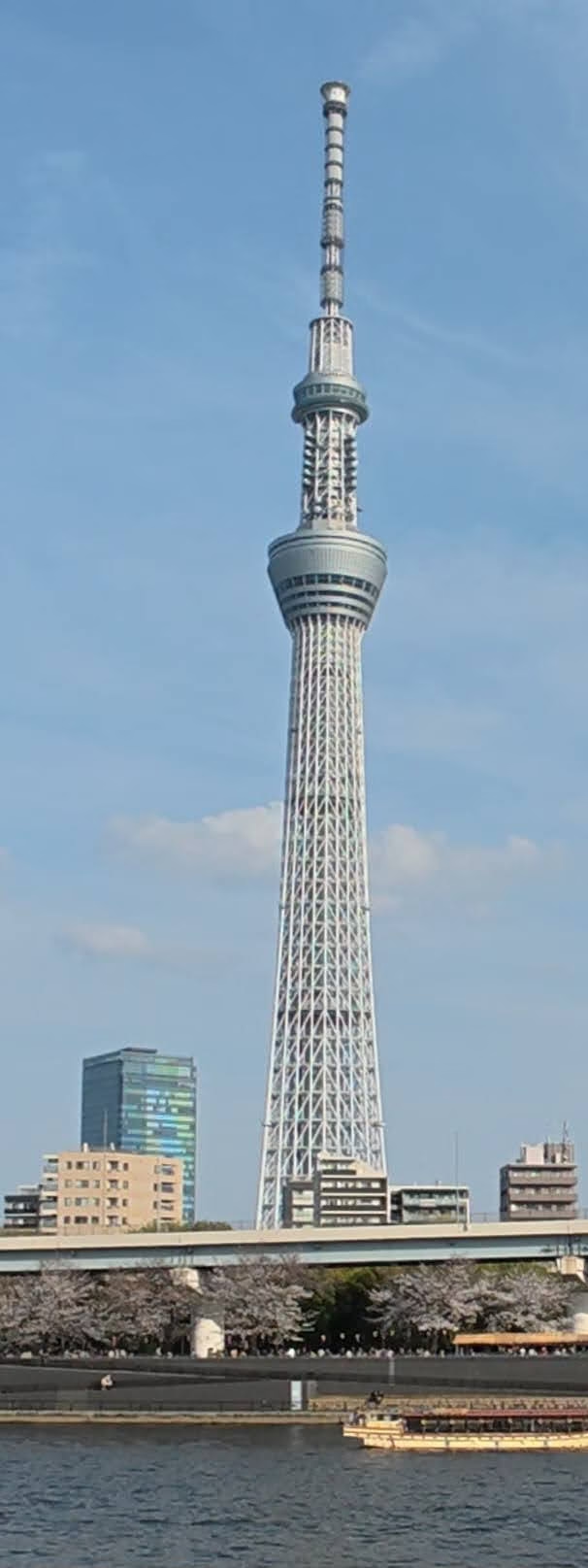
Tokyo Skytree opened in May 2012 and is 634 metres tall. That makes it the tallest tower in the world and the tallest structure in Japan. The number was chosen on purpose: in Japanese, 6-3-4 can be read as “mu-sa-shi”, and Musashi is the old name of the province that covered Tokyo. So the height itself is a little wordplay about the city’s history.
The tower was built mainly as a broadcasting tower for digital TV and radio, because the growing number of skyscrapers made the signal from the older Tokyo Tower weaker. Its design mixes modern engineering with traditional ideas: the central concrete column works a bit like the central pillar (shinbashira) of a Japanese five-storey pagoda, which helps it deal with earthquakes. The base is a triangle that turns into a circle as the tower rises.
At night, Skytree is lit in different patterns. The two classic ones are “Iki”, a light blue that stands for the spirit of old Edo, and “Miyabi”, a purple inspired by elegance and tradition. On special days you will see other colours.
Tembo Deck vs Tembo Galleria: which one do you need?
Skytree has two observation levels:
- Tembo Deck (350 metres): The main observation deck, spread over three floors with huge windows all around. This is where you find the glass floor panels where you can look straight down, a cafe, and a restaurant. For most people, this is enough.
- Tembo Galleria (450 metres): The upper level, reached by a second elevator from the Tembo Deck. It is a glass-covered spiral ramp that winds up around the tower to the highest point, called Sorakara Point at 451.2 metres. It feels like walking in the sky, and it is quieter than the lower deck.
Is the extra 100 metres worth it? On a clear day, yes, especially if you love photos and want the “walking above the city” feeling. On a cloudy or hazy day, the difference is small, and you can save the money. You can add the Galleria on the Tembo Deck if tickets are left, but if you already know you want the very top, buy the combo ticket in advance. The Galleria has fewer tickets and sells out first.
Tokyo Skytree ticket prices
Prices depend on three things: which deck, whether it is a weekday or a weekend or holiday, and whether you buy in advance online or on the day. Prices change from time to time, and different sources show slightly different numbers, so always check the official Tokyo Skytree site before you buy. As a rough guide for adults:
| Ticket | Advance (online) | Same day |
|---|---|---|
| Tembo Deck only | about 1,800 to 2,300 yen | about 2,100 to 2,600 yen |
| Combo (Tembo Deck + Tembo Galleria) | about 2,700 to 3,100 yen | about 3,100 to 3,500 yen |
| Tembo Galleria add-on (bought on the Tembo Deck) | about 1,000 to 1,500 yen, subject to capacity | |
The pattern is always the same: weekdays are cheaper than weekends, national holidays count as weekends, and buying in advance saves a few hundred yen per person. Children and students pay less. For a family of four, booking ahead can easily save the price of lunch.
What is the Fast Skytree ticket?
There is also a more expensive “Fast Skytree Ticket” aimed at foreign visitors, which lets you skip the regular ticket line on the day. It costs noticeably more than a normal ticket. If you can plan a few days ahead, a normal advance date and time ticket already solves most of the waiting problem, so the fast ticket mainly makes sense if you decide last minute on a very busy day.
Why you should reserve your Skytree ticket
You can absolutely walk up and buy a ticket on the day. On a rainy Tuesday morning, that is fine. But there are four good reasons to reserve:
- It is cheaper. Online advance tickets cost less than same-day tickets.
- You choose your time. Date and time tickets give you a fixed entry slot. Sunset slots in particular sell out first, often weeks ahead in busy seasons.
- Shorter waiting. With an advance ticket, you skip the ticket purchase line and go to the entrance at your time. You might still wait a few minutes for the elevator, but not the long same-day queue.
- Busy seasons are really busy. Golden Week (end of April to early May), Obon in August, the New Year holidays, Christmas and weekends with clear weather all bring crowds. Same-day tickets can sell out on these days.
How far ahead? Online booking opens some weeks before the date (check the current window on the official site). For a weekday visit outside holidays, a few days is usually enough. For sunset on a weekend or during holidays, book as soon as you know your date.
One more tip: arrive about 15 to 20 minutes before your slot. The entrance is on the 4th floor of the Solamachi complex, and finding it the first time takes a moment.
The best time to visit Tokyo Skytree
Sunset: the best (and most popular) slot
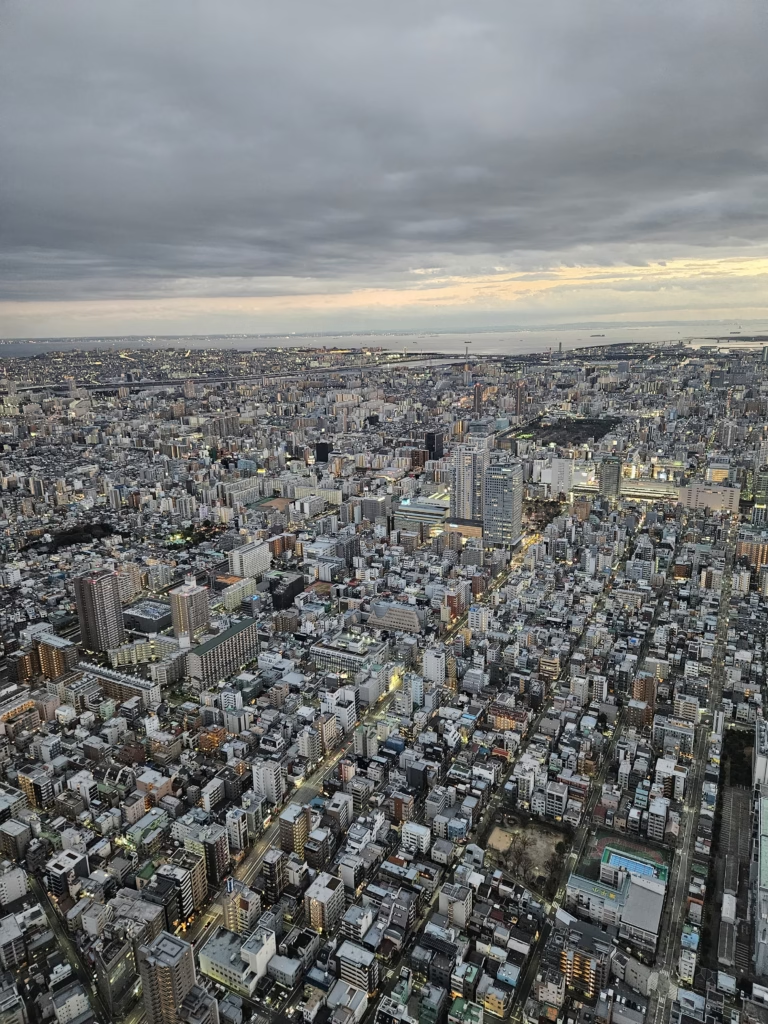
The magic moment is the last hour before sunset. You see the city in daylight, then watch the sky turn orange and pink, and then the lights of Tokyo switch on one by one below you. Book a slot that starts about 30 to 45 minutes before sunset so you have time to walk around. Sunset in Tokyo is around 4:30 pm in December and around 7 pm in June, so check the date.
Morning: for Mount Fuji
Mount Fuji is about 100 kilometres away and is only visible on clear days. Your best chances are in the cold, dry months from roughly November to February, early in the morning before haze builds up. In summer, humid air often hides it completely.
Night: for the city lights
After dark, Tokyo turns into an endless carpet of lights. Night is also usually less crowded than sunset. If you love night views, read my guide to Tokyo at night for more spots.
Times to avoid: weekend afternoons with clear weather, holidays, and rainy or foggy days (you might pay to look at a white cloud). Check the weather and the live camera on the official site if you can.
Getting there and combining Skytree with Asakusa
Skytree sits in Sumida ward, on the east side of central Tokyo. Two stations serve it:
- Tokyo Skytree Station on the Tobu Skytree Line, one stop from Asakusa.
- Oshiage Station on the Hanzomon, Asakusa and Keisei lines, with direct trains from places like Shibuya and from Narita Airport.
From Senso-ji in Asakusa, you can also walk in about 20 to 25 minutes, crossing the Sumida River on the way. It is a nice walk and gives you the classic photo of the tower over the river. This makes Skytree a perfect afternoon stop after a morning in Asakusa. If you want to go all in, dress up first: my Asakusa kimono rental guide explains how it works. For a full day plan, see my one day in Tokyo walking route.
What else is at the bottom of the tower
The base of Skytree is a whole complex called Tokyo Skytree Town. Even without going up, you can spend a few hours here:
- Tokyo Solamachi: a big shopping mall with hundreds of shops and restaurants, plus a food floor with Japanese snacks and souvenirs.
- Sumida Aquarium: a modern aquarium inside the complex, famous for its penguins and jellyfish. Good for rainy days.
- Planetarium: the Konica Minolta Planetarium “Tenku”, with shows that work even without Japanese.
- Character shops: Pokemon Center, Ghibli and other anime shops make it popular with families. My guide to Tokyo with kids has more ideas like this.
Is Tokyo Skytree worth it? Skytree vs the alternatives
Tokyo has several great viewpoints, and each has its own strengths:
| Viewpoint | Height | Strength | Weakness |
|---|---|---|---|
| Tokyo Skytree | 350 / 450 m | Highest view in Japan, Fuji on clear days | Far from west Tokyo, you do not see Skytree in your photos |
| Shibuya Sky | about 230 m | Open-air rooftop, great sunset over Shibuya | Sunset tickets sell out very fast |
| Tokyo Tower | 150 / 250 m | Classic, central, iconic | Lower view |
| Tokyo Metropolitan Government Building | about 200 m | Free entry, Shinjuku views | Views through glass, simpler experience |
The honest verdict: if you want the highest view and the feeling of seeing all of Tokyo at once, Skytree is worth it, especially on a clear day and in combination with Asakusa. If you only have one viewpoint in your trip and you stay in the west of the city, Shibuya Sky or the free government building might fit your route better. You can find more ideas in my Tokyo travel guide.
Frequently Asked Questions
Do I need to book Tokyo Skytree tickets in advance?
Not always, but it is recommended. Advance tickets are cheaper, give you a fixed time and help you avoid the same-day queue. For sunset, weekends and holidays, booking ahead is strongly recommended.
How much does Tokyo Skytree cost?
About 1,800 to 2,600 yen for the Tembo Deck and about 2,700 to 3,500 yen for both decks for adults, depending on day and booking method. Check the official site for current prices.
Is the Tembo Galleria worth it?
On a clear day, yes, for the spiral glass walkway and the highest view. On a cloudy day, the Tembo Deck alone is enough.
How long do you need at Tokyo Skytree?
About 1 to 1.5 hours for the decks, 2 hours if you add the Galleria and take your time. Add more if you want to visit Solamachi or the aquarium.
Can you see Mount Fuji from Tokyo Skytree?
Yes, on clear days, most often on winter mornings. In summer it is often hidden by haze.
Which is better, Tokyo Skytree or Tokyo Tower?
Skytree has the higher and more dramatic view. Tokyo Tower is more central and is the more classic symbol of the city. Many people say the best view is from Skytree, while the best view of Tokyo Tower is from somewhere else.
What is the best time to visit Tokyo Skytree?
Just before sunset for day and night views in one visit, or clear winter mornings for Mount Fuji.
Book your slot, check the weather, and combine Skytree with a walk through Asakusa and along the Sumida River. That way the tallest tower in the world becomes the best part of your day, not the longest queue. If you visit in summer, also look at the Sumidagawa fireworks festival, which happens right in this area.
Author

Get My Personal Travel Maps



Leave a Reply