
This post contains affiliate links. If you book through them, I may earn a small commission at no extra cost to you. More about this.
Interlaken sits between two turquoise lakes, Lake Thun and Lake Brienz, with the Eiger, Mönch and Jungfrau rising behind it. It is the gateway to the Jungfrau region, one of the most spectacular areas of the Swiss Alps. I live in Switzerland, and this is the guide I would give to friends visiting: the best things to do, the valleys and mountains around Interlaken, prices and how to plan your days.
Interlaken at a Glance
- Getting there: about 2 hours by train from Zurich, about 1 hour 50 by the Luzern-Interlaken Express from Lucerne.
- How long: 2 to 4 days.
- Best time: June to September for hiking and all mountain lifts.
- Highlights: Jungfraujoch, Grindelwald First, Lauterbrunnen, Schilthorn, Harder Kulm and the lakes.
- Tip: check the mountain webcams before going up; clear days are worth gold.
Best Things to Do in and Around Interlaken
Harder Kulm
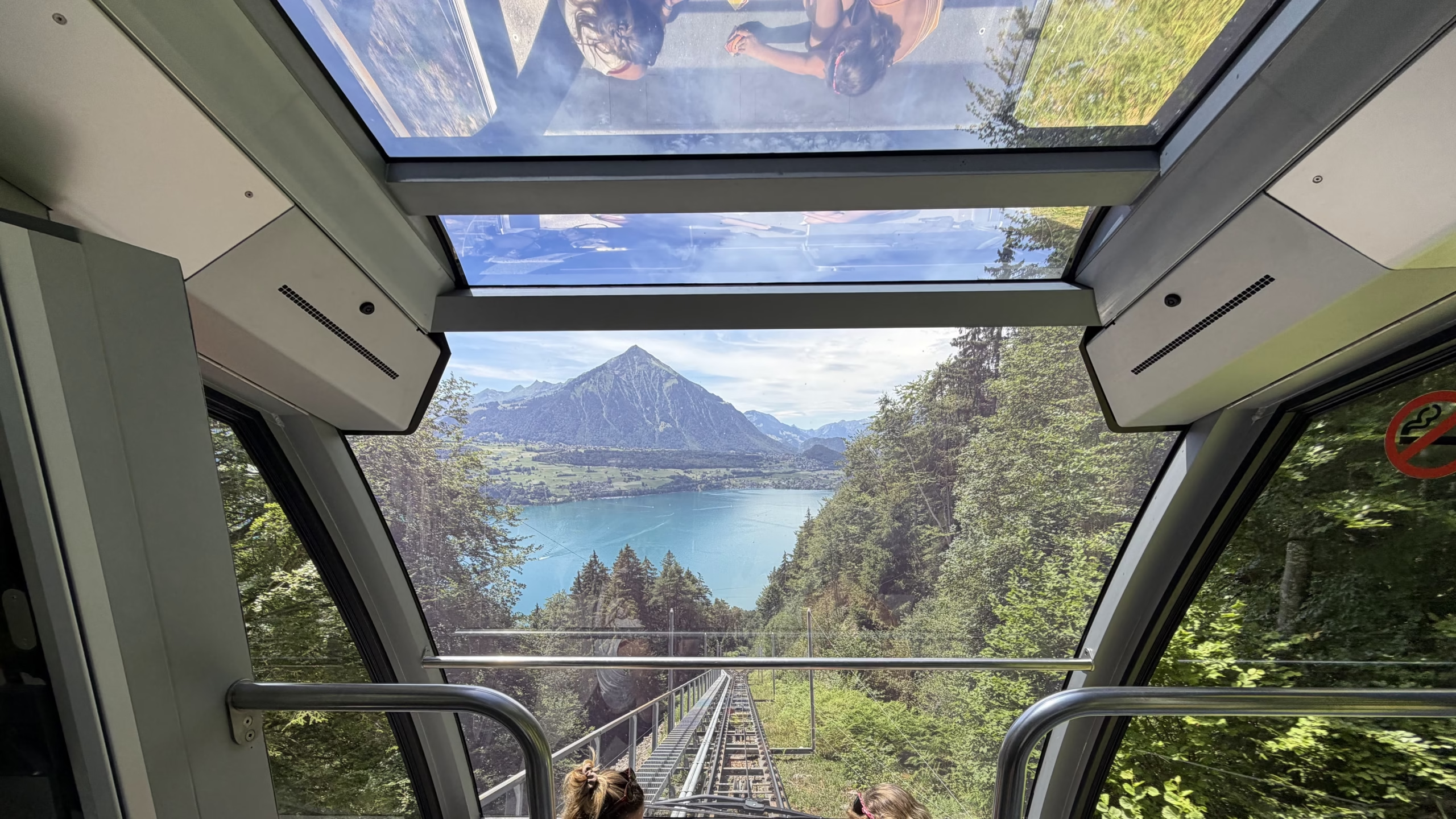
A short funicular ride from Interlaken takes you to Harder Kulm, with a panoramic platform over both lakes and the Jungfrau peaks. It is the easiest view for an evening and runs from spring to late autumn.
Lauterbrunnen Valley
About 20 minutes by train from Interlaken Ost, Lauterbrunnen is a valley of 72 waterfalls and steep rock walls. The Staubbach Falls drop almost 300 metres right next to the village and are free to see. The Trümmelbach Falls, glacier water thundering inside the mountain, cost about CHF 18 for adults. From Lauterbrunnen, trains and cable cars take you up to the car-free villages of Wengen and Mürren.
Schilthorn and Piz Gloria
From Mürren, cable cars continue to the Schilthorn at almost 3,000 metres, with the revolving Piz Gloria restaurant from the James Bond film. A full-price return from Stechelberg costs about CHF 115, with large discounts for Swiss Travel Pass and Half Fare Card holders.
Grindelwald and First
Grindelwald, about 35 minutes from Interlaken, lies at the foot of the Eiger. The gondola to First costs about CHF 76 return in summer (half price with a rail pass) and includes the First Cliff Walk. Add the First Glider, First Flyer zipline or mountain carts for adventure, or hike to the Bachalpsee lake.
Jungfraujoch: Top of Europe
Jungfraujoch, at 3,454 metres, has the highest railway station in Europe, an ice palace and views over the Aletsch Glacier. It is the big highlight and also the most expensive: around CHF 260 return from Interlaken at full price in summer, less with a pass. A seat reservation is required in summer. Book Jungfraujoch tickets for a clear day.
Lake Brienz, Lake Thun and Iseltwald
Boat cruises on both lakes are relaxing and included with the Swiss Travel Pass. The village of Iseltwald on Lake Brienz became famous from a Korean drama, and the small pier now charges a few francs to step on it. The turquoise water of Lake Brienz is one of the most photographed scenes in Switzerland.
Paragliding
Interlaken is one of the world’s most popular places for tandem paragliding, landing in the middle of town. Expect about CHF 170 to 220 for a flight.

Prices at a Glance
| Excursion | Approx. full price | With Swiss Travel Pass |
|---|---|---|
| Jungfraujoch return from Interlaken (summer) | about CHF 260 | about CHF 180 |
| Grindelwald First gondola return (summer) | about CHF 76 | about CHF 38 |
| Schilthorn return from Stechelberg | about CHF 115 | about CHF 46 |
| Trümmelbach Falls | about CHF 18 | not included |
| Lake boats | varies | free |
Not sure which pass to buy? I compare the options in is the Swiss Travel Pass worth it?, and you can buy the Swiss Travel Pass online.
Sample 3-Day Interlaken Itinerary
| Day | Plan |
|---|---|
| 1 | Arrive, Harder Kulm at sunset, walk along the Aare |
| 2 | Lauterbrunnen, Trümmelbach Falls, Mürren and Schilthorn |
| 3 | Grindelwald and First, or Jungfraujoch on a clear day |

Where to Stay
- Interlaken: the most hotels and restaurants, easy transport.
- Grindelwald: mountain atmosphere and Eiger views.
- Wengen or Mürren: car-free, quiet villages with incredible views.
- Lauterbrunnen: central in the valley, with campsites and guesthouses.
Hotels are expensive and fill up in July and August, so book early.
Search hotels in Interlaken and the Jungfrau region:
Getting Around
- Trains run from Interlaken Ost to Lauterbrunnen and Grindelwald; cable cars and mountain railways continue up.
- Most local transport is covered or discounted with the Swiss Travel Pass or Half Fare Card.
- Many lifts close for maintenance in spring and late autumn.
Combine Interlaken with Lucerne and Zermatt in my 7-day Switzerland itinerary, and read more about the country in the Switzerland travel guide. To understand prices, see how much a trip to Switzerland costs.
Frequently Asked Questions About Interlaken
How many days do I need in Interlaken?
Two to four days. Two days cover Lauterbrunnen and one big mountain; four days let you add Jungfraujoch, First and the lakes.
Is Jungfraujoch worth it?
On a clear day, it is unforgettable, but expensive. Alternatives with great views include Schilthorn, First and Harder Kulm.
What is the best time to visit Interlaken?
June to September for hiking and all lifts. December to March is for skiing in Grindelwald, Wengen and Mürren.
Do I need a car in Interlaken?
No. Trains, buses, boats and cable cars cover everything, and Wengen and Mürren are car-free.
Is the Swiss Travel Pass worth it for Interlaken?
It gives free lake boats and discounts on mountain railways. For many mountain trips, the Half Fare Card can be cheaper; compare both.
Where should I stay, Interlaken or Grindelwald?
Interlaken is the most practical base; Grindelwald, Wengen and Mürren offer more mountain atmosphere.
Final Thoughts
Interlaken is the perfect base for the Swiss Alps: lakes, waterfalls, glaciers and some of the most famous peaks in Europe, all within an hour. Pick your mountain days according to the weather, enjoy the lakes when it is cloudy, and book Jungfraujoch for the clearest day.
Author

Get My Personal Travel Maps




Leave a Reply