Wedding Rings in Tokyo: Finding the Best Japanese Wedding Ring Brand
When shopping for a Wedding Rings in Tokyo locals and residents often recommend, you will inevitably hear about Okachimachi (near Ueno). This district is Japan’s famous wholesale jewelry hub, and while it is the go-to place for high-quality loose diamonds and competitive prices, the environment can feel industrial. It often lacks the specialized bridal “omotenashi” (hospitality) and polished experience found in the luxury flagships of Ginza. We specifically skipped Ueno because we wanted the dedicated care and service that only the major Japanese houses provide.
Our search was focused on discovering the Best Japanese wedding ring brands because we wanted something truly unique. Since we will be living and getting married in Switzerland, we decided against an international brand like Cartier. Global luxury names are common across Europe; by choosing a uniquely Japanese brand, the chance of someone at a Swiss wedding having the same ring is incredibly low. We wanted a piece of jewelry that represents our time in Japan with craftsmanship that stands out back home.
The In-Store Comparison: Comfort and Service
To provide an authentic comparison for travelers searching for the best wedding rings in Tokyo, we conducted a firsthand comfort test across four of Ginza’s most famous bridal jewelry flagships. Rather than focusing only on prestige or branding, we evaluated the factors that actually matter when buying Japanese wedding rings: walk-in availability, reservation policies, English support, the expertise of bilingual staff, customization options, delivery timelines, and most importantly, the tactile comfort of the platinum bands during real in-store try-ons. Since many couples specifically visit Ginza to compare luxury Japanese wedding ring brands like Mikimoto, Tasaki, and I-PRIMO against international houses such as Cartier, we wanted to document the actual experience from the perspective of foreign residents preparing for marriage in Japan.
1. Mikimoto: The Most Comfortable Fit

When it was finally time to pick up our rings from the Mikimoto Ginza Main Store, we noticed that the boutique had become significantly busier than during our original consultation. Even customers arriving for pickups sometimes had to wait, so making a reservation is highly recommended not only for the initial appointment, but also for the collection day itself. The pickup experience felt almost ceremonial and reflected the level of Japanese hospitality the brand is known for.
After being seated, the staff carefully presented the finished rings, explained the final sizing and engraving details once again, and guided us through the care instructions for the platinum bands. They also took commemorative photos for us inside the boutique, turning the pickup into a memorable part of the wedding journey rather than a simple transaction. To celebrate the occasion, we were served a small complimentary glass of champagne while the staff walked us through everything step by step. The experience felt extremely polished, personal, and far more intimate than what we expected from a luxury jewelry store in Tokyo.
2. I-PRIMO: Our First Stop

We started our wedding ring search at I-PRIMO in Ginza without making a reservation. Among people researching the best wedding rings in Tokyo, I-PRIMO is one of the most frequently recommended Japanese bridal specialists because of its enormous catalog of more than 200 ring designs. Compared to luxury houses that focus on a smaller curated lineup, I-PRIMO feels much more like a dedicated “bridal consultation experience,” where the goal is to systematically help couples narrow down their ideal style, metal type, stone setting, and long-term comfort preferences.
For couples who are extremely detail-oriented or undecided about what style they want, this huge variety can actually be a major advantage. You can compare everything from ultra-minimal platinum bands to more decorative diamond-focused designs in a single appointment. However, the downside is that the process can become surprisingly time-consuming. If you are visiting Tokyo on a tight schedule or hoping to quickly choose matching rings in one afternoon, the overwhelming number of choices can lead to decision fatigue very quickly.
One important detail many tourists researching Japanese wedding ring brands may not realize is that I-PRIMO mainly uses standardized display sizes for its showroom models. While you can visually compare the designs, you cannot fully experience how the final ring will actually fit your finger once custom-sized. This became especially noticeable after visiting other Ginza flagships like Mikimoto and Tasaki, where multiple sample sizes allowed for a far more accurate comfort test. Since wedding rings are something you wear every day for decades, the difference in fit and interior curvature becomes far more important than most people initially expect.
Another interesting observation was how strongly I-PRIMO focuses on the emotional and symbolic side of Japanese bridal culture. Many of their ring collections are tied to romantic themes, stars, mythology, or wedding symbolism, which creates a very different atmosphere compared to international luxury jewelry brands. The boutique itself felt approachable and welcoming rather than intimidating, making it especially beginner-friendly for younger couples starting their first serious jewelry shopping experience in Tokyo.
3. Tasaki: Luxury Service and Flexible Options
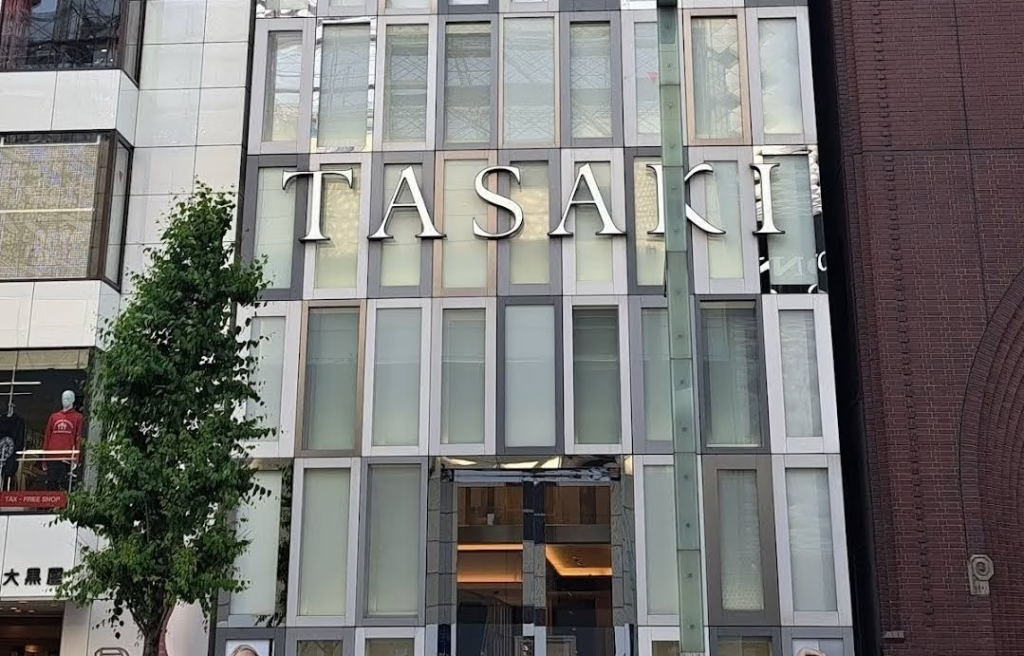
Next, we visited the Tasaki flagship in Ginza, again without making an appointment beforehand. Among people searching for luxury Japanese wedding ring brands, Tasaki stands out for combining traditional Japanese craftsmanship with much more modern and fashion-forward design language. The brand is especially famous for its proprietary “Sakuragold,” a distinctive soft pink-gold tone developed exclusively by Tasaki that has become highly popular among couples looking for something different from standard yellow gold or platinum wedding bands.
Compared to our earlier experience at I-PRIMO, the atmosphere at Tasaki immediately felt more high-end and personalized. The boutique experience was closer to what many people imagine from a global luxury flagship in Ginza. We were warmly welcomed despite not having a reservation and were served complimentary champagne while browsing different collections. The consultation itself felt slower, calmer, and more refined, with staff taking significant time to explain material differences, comfort details, customization options, and long-term wearability.
One major advantage that became obvious during the live try-ons was Tasaki’s in-store sizing system. Unlike stores that only provide one standard sample size, Tasaki carries multiple ring sizes for many of their models. This allowed us to properly test how each ring actually sat on the finger, how the interior curvature felt, and how different widths changed the comfort level during movement. For anyone researching where to buy wedding rings in Tokyo, this is an extremely important detail because comfort often feels completely different once a ring is worn in the correct size.
Tasaki also offered noticeably more flexibility for international customers and residents dealing with travel schedules or wedding timelines. Depending on the model, couples can choose between fully custom-made rings with a production wait time of around two months or faster “ready-to-wear” versions available in standard sizes. This flexibility makes Tasaki particularly attractive for foreigners living in Japan temporarily, couples planning overseas weddings, or travelers who cannot easily return to Tokyo multiple times for fittings and pickup appointments.
Another thing we noticed was how balanced Tasaki’s identity feels between Japanese elegance and international luxury. While brands like Cartier emphasize heritage prestige, Tasaki felt more contemporary and experimental without losing the refined Japanese hospitality experience that many foreign visitors specifically come to Ginza to experience.
- Custom Made: You can have a brand-new ring made for you with a 2-month wait time.
- Ready-to-Wear: If you are in a hurry, they offer reproduced rings in standard sizes that can be acquired much faster.
This mix of high-end hospitality and practical inventory made Tasaki a very strong contender for us.
4. Cartier: The International Reality
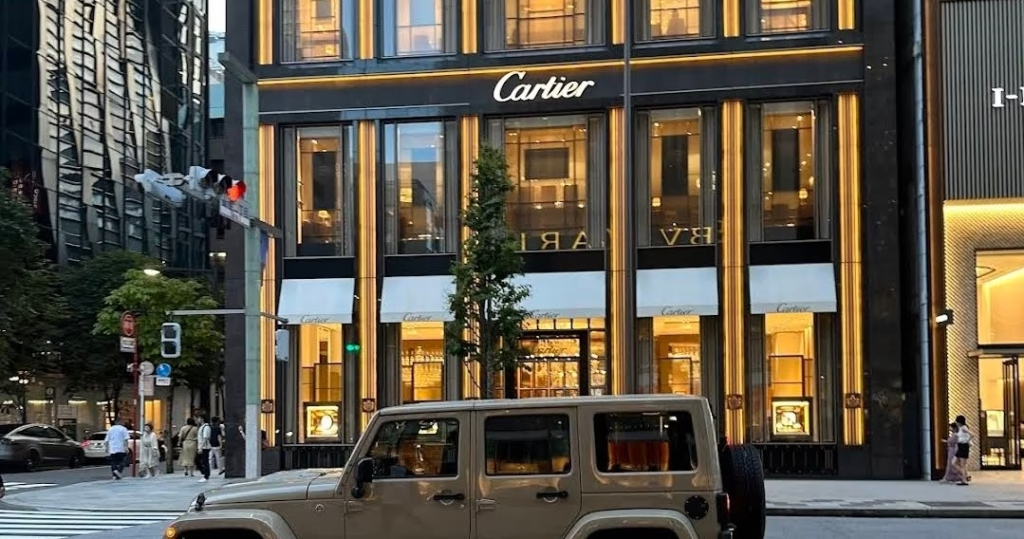
We also visited Cartier to compare the Japanese bridal experience against one of the world’s most recognizable international luxury brands. Even without a reservation, the staff managed to find us a consultation slot, and one of the advisors was a native English speaker, which made communication extremely smooth for foreign visitors shopping for wedding rings in Tokyo.
The overall service was highly professional and polished, exactly what you would expect from a global luxury flagship in Ginza. However, compared to the Japanese brands we tested, Cartier felt noticeably more international and less uniquely tied to Japanese bridal culture. Since we were specifically searching for a ring that would symbolize our years living in Japan before moving back to Switzerland, this became an important emotional factor in our decision. In Europe, especially in Switzerland, Cartier is already extremely well known and relatively common among luxury wedding bands. Part of the appeal of choosing a Japanese brand was finding something with a stronger connection to our life in Tokyo and a lower chance of seeing the exact same rings at home.
Comfort was another area where the difference became surprisingly noticeable. Although Cartier’s craftsmanship was excellent, their bands felt less ergonomic on the finger compared to brands like Mikimoto and Tasaki, whose interior curvature and fit felt more optimized for long daily wear. Cartier was also the most expensive option we tested during our Ginza comparison.
One interesting insight for international buyers was pricing. Even though many Cartier products are associated with Switzerland and European luxury production, the prices in Japan were actually slightly lower than what we had previously seen in parts of Europe such as Italy. The staff could even pull up international price comparisons in real time, which was surprisingly transparent and useful for travelers considering whether it is cheaper to buy luxury jewelry in Japan versus overseas.
Price and Service Comparison (USD/JPY)
Conversion Rate: $1.00 USD = 158.71 JPY
| Mikimoto | Tasaki | I-PRIMO | Cartier | |
| Est. Price (Pair) | Est. Price (Pair)¥250k – ¥600k ($1,575 – $3,780) | Est. Price (Pair)¥300k – ¥700k ($1,890 – $4,410) | Est. Price (Pair)¥150k – ¥400k ($945 – $2,520) | Est. Price (Pair)¥400k – ¥1.2M+ ($2,520 – $7,560) |
| Comfort Level | Comfort LevelHighest (Best fit) | Comfort LevelHigh (Champagne service) | Comfort LevelGood (Practical) | Comfort LevelLower (Expensive) |
| Famous For | Famous ForWorld’s first cultured pearls & heritage platinum | Famous ForModern design & proprietary Sakuragold | Famous ForBridal specialty & massive design variety | Famous ForGlobal prestige & iconic 1895 collection |
Key Logistics for Residents
The 1-2 Month Wait Time
One important thing many tourists do not realize when researching where to buy wedding rings in Tokyo is that you usually cannot simply walk into a Ginza boutique and leave with fully finished rings the same day. In most cases, Japanese wedding rings are made to order or sent to specialized workshops for precision sizing, polishing, and custom engraving. Depending on the brand and design, the process typically takes between one and two months from purchase to pickup.
For couples living in Japan, this system feels very natural because the focus is placed on craftsmanship, perfect fit, and personalization rather than instant availability. However, for short-term visitors traveling through Tokyo, the timeline can become a major logistical challenge. Unless you choose a standard ready-to-wear model without engraving, it is often difficult to complete the entire process during a normal vacation. Among the brands we visited, Cartier probably offered the highest chance of immediate same-day purchase for certain standard models, but even there, engraving and custom adjustments would still require additional time.
This slower production process also highlights an interesting difference between Japanese bridal culture and many Western luxury shopping experiences. The purchase is treated less like buying an accessory and more like commissioning a long-term symbolic item that is carefully prepared specifically for the couple.
Where to Go (Ginza Flagships)
- Mikimoto Main Store: 4-5-5 Ginza (The iconic nine-story building with circular windows).
- Tasaki Flagship: 5-7-5 Ginza (Near the main crossing).
- I-PRIMO Ginza: 2-6-9 Ginza (Across from Cartier).
- Cartier Boutique: 2-6-12 Ginza (One of the largest in Asia).
Author

Get My Personal Travel Maps
Keep Reading: More Articles You'll Love
 Is Japanese Food Actually Chinese? The Surprising Origins of Japanese Cuisine
  Ginza Travel Guide: Best Things to Do in Tokyo’s Luxury District
  Living in Tokyo vs Zurich – The Ultimate Expat Guide
  Living in Japan vs Korea – The Ultimate Expat Guide
  Japan Travel Myths vs Reality: What Tourists Still Get Wrong About Japan
  Why is Baumkuchen Popular in Japan? The Secret History of the “King of Cakes”
  The Ultimate Guide to Tokyo Fashion: From Streetwear to High-End Luxury