Halloween in Tokyo has changed dramatically in recent years. For decades, Shibuya Halloween was one of the most famous street celebrations in Asia, attracting hundreds of thousands of locals and tourists to the area around Shibuya Crossing. Today, however, visitors searching for Halloween in Tokyo are often surprised to discover that Shibuya is actively discouraging the event.
Following growing concerns about overcrowding and public safety, particularly after the tragic crowd crush in Seoul’s Itaewon district in 2022, Shibuya Ward introduced strict measures to prevent large-scale Halloween gatherings. Security personnel, crowd control barriers, multilingual warning signs, and restrictions on public drinking have become a common sight throughout the Halloween season. The goal is simple: avoid dangerous crowd density and maintain public order.
While comparisons between Shibuya and Itaewon are frequently made, many observers argue that the two locations differ significantly. Shibuya Crossing and the surrounding streets are generally wider and designed to handle large pedestrian volumes, whereas the Itaewon disaster occurred in a narrow uphill alley that became severely overcrowded. Nevertheless, Tokyo authorities have adopted a cautious approach, prioritizing safety over tradition.
Despite headlines suggesting that Halloween in Tokyo is over, the reality is quite different. The celebration has not disappeared. Instead, it has evolved and shifted to other entertainment districts. In particular, Shinjuku Halloween has emerged as the new center of Tokyo’s nightlife celebrations. Areas around Kabukicho now attract large numbers of costumed revelers, while themed events, club parties, cosplay gatherings, and private celebrations continue across the city.
For travelers planning a Halloween trip to Tokyo, the key takeaway is clear: Shibuya is no longer the place it once was, but Halloween remains one of the most exciting nights of the year. The energy, creativity, and costume culture that made Tokyo famous have simply found new homes throughout the city.
Halloween’s Arrival in Japan: A Cultural Hybrid

To understand why Halloween in Japan has grown into a multi-billion yen industry, it is important to understand that Halloween was never a traditional Japanese holiday. Unlike Christmas, New Year’s, or Obon, Halloween has no religious or historical roots in Japanese culture. Its rise was driven almost entirely by marketing, entertainment, and consumer spending.
The modern Halloween boom began in the 1990s when theme parks such as Tokyo Disneyland started hosting seasonal Halloween events. These celebrations introduced pumpkins, costumes, and themed attractions to a new generation of Japanese consumers. Retailers quickly recognized the commercial potential. Department stores, convenience stores, restaurants, and entertainment companies embraced the holiday, transforming it into one of Japan’s most profitable seasonal events.
What made Halloween particularly successful in Japan was its natural connection to the country’s existing cosplay culture. While Western Halloween traditionally revolves around ghosts, horror, and trick-or-treating, Japanese participants increasingly viewed it as an opportunity for creative self-expression. Anime characters, video game heroes, movie villains, and elaborate handmade costumes became just as common as witches and vampires.
As social media platforms expanded, Halloween evolved from a commercial campaign into a cultural phenomenon. Photos and videos from Shibuya, Shinjuku, and other entertainment districts spread across the internet, attracting both domestic and international attention. By the late 2010s, Halloween had become one of the largest annual youth events in Tokyo, generating billions of yen in spending on costumes, food, entertainment, transportation, and tourism.
In many ways, Halloween in Japan represents one of the most successful marketing campaigns in modern consumer history. What began as a foreign holiday imported for commercial purposes was transformed into a uniquely Japanese celebration centered on cosplay, nightlife, creativity, and urban youth culture.
- The 1970s/80s: The “spooky season” started at the toy giant Kiddy Land in Harajuku, which began selling Halloween merchandise for expats. In 1983, they organized the first “Hello Halloween Pumpkin Parade” to boost sales
- The 1997 Pivot: The true catalyst was Tokyo Disneyland, which launched its first “Disney Happy Halloween” event in 1997. This sanitized the holiday, replacing “scary” themes with kawaii (cute) pumpkins, making it culturally accessible for Japanese families
- The Cosplay Synergy: Halloween found fertile ground because of Japan’s pre-existing cosplay culture. By the 2000s, dressing up was already a staple of anime fandom; Halloween simply provided a “socially acceptable” window for the general public to join in
Shinjuku: The New Halloween Hub
As Shibuya authorities continue their efforts to discourage large-scale Halloween gatherings, much of the city’s Halloween crowd has shifted westward toward Shinjuku. While Shibuya Mayor Ken Hasebe has repeatedly stated that he supports responsible, community-based celebrations, stricter regulations, increased security, and public awareness campaigns have fundamentally changed the atmosphere that once made Shibuya Halloween famous.
Many young people, tourists, and costume enthusiasts now view Shinjuku, particularly the entertainment districts of Kabukicho and Shinjuku Ni-chome, as the new center of Halloween nightlife in Tokyo. The area’s dense concentration of bars, clubs, restaurants, and late-night venues provides a more structured environment than the spontaneous street gatherings that previously defined Shibuya.
However, Shinjuku has also begun implementing measures to control crowd behavior. Local authorities have introduced restrictions on public drinking around major transportation hubs and entertainment districts during Halloween, aiming to reduce congestion, littering, and other forms of nuisance behavior associated with large gatherings.
The result is a significant transformation of Halloween in Tokyo. The era of massive, unsanctioned street parties appears to be fading. In its place, a more organized and distinctly Japanese version of Halloween is emerging, centered around themed club events, cosplay parties, ticketed celebrations, and private venues. Rather than disappearing, Halloween is evolving, adapting to changing regulations while remaining one of the most important annual events in Tokyo’s youth culture calendar.
Shibuya: The Birthplace of Tokyo’s Halloween Phenomenon
Shibuya, long considered the epicenter of Japanese youth culture, was the natural birthplace of what would become Tokyo’s most famous Halloween celebration. While districts such as Roppongi attracted international residents and Harajuku became synonymous with alternative fashion, Shibuya possessed a unique combination of trendsetting influence, nightlife, music, and mass appeal that no other part of Tokyo could match.
By the early 2000s, Halloween in Shibuya was evolving from a small gathering of foreign residents and costume enthusiasts into a citywide phenomenon. The district’s famous scramble crossing, neon-lit streets, and reputation as Japan’s trend capital created the perfect stage for a new form of public celebration. Young people from across Tokyo began gathering in costume, turning the area into a giant open-air festival unlike anything traditionally found in Japan.
What made Shibuya Halloween unique was that it developed organically. Unlike many Japanese festivals, it was not organized by a shrine, local government, or corporate sponsor. Instead, social media, word of mouth, and the district’s cultural influence fueled its growth year after year. As photos and videos spread online, Halloween in Tokyo gained international recognition, attracting tourists, influencers, cosplayers, and photographers from around the world.
By the late 2010s, Shibuya Halloween had become one of the largest Halloween celebrations in Asia, cementing Shibuya’s status as the undisputed center of Tokyo’s Halloween culture and one of the most recognizable symbols of modern Japanese youth culture.
The Organic Rise of the “Scramble” Party
Unlike many of Tokyo’s traditional festivals (matsuri), Halloween in Shibuya was never a top-down, sanctioned event. It began as a series of spontaneous gatherings in the late 1990s and early 2000s, largely driven by international residents and local enthusiasts. By the early 2010s, it reached a critical mass, growing exponentially into a full-scale social phenomenon that attracted hundreds of thousands of revelers from across the globe.
At its peak, the Shibuya Scramble Crossing—the world’s busiest pedestrian intersection—functioned as a massive, open-air stage. For one night, the orderly flow of commuters was replaced by a surreal tide of humanity. Elaborate costumes—ranging from high-fidelity anime cosplay to absurd, “mundane” (jimi) Halloween outfits—flooded the streets, turning the concrete jungle into a vibrant gallery of self-expression.
A Rite of Passage for the Social Media Generation
The infectious energy of Shibuya was more than just a party; it was a vital outlet for creativity and identity.
- Catharsis and Identity: For many young Japanese, Halloween became a unique “rite of passage”—a sanctioned window to escape the rigid social hierarchies of school and work life.
- The Digital Amplification: The rise of platforms like Instagram and TikTok turned the Shibuya streets into a global background for “shareable moments,” further fueling the district’s reputation as a “Cool Japan” landmark.
- Cultural Fusion: This wasn’t a simple import of Western tradition. Tokyoites put a distinct local spin on the holiday, blending it with Japan’s deep-rooted cosplay culture and turning the event into a visual performance art piece.
The Turning Point: From Celebration to “Nuisance”
As Halloween in Shibuya grew in popularity, the celebration began attracting crowds on a scale few had anticipated. By the late 2010s, tens of thousands of costumed revelers were filling Center-Gai, the streets surrounding Shibuya Crossing, and nearby entertainment districts. What had started as a spontaneous gathering of costume enthusiasts gradually evolved into one of the largest annual street events in Japan.
With this rapid growth came increasing pressure on the neighborhood’s infrastructure. Streets became difficult to navigate, public transportation hubs experienced severe congestion, and local businesses and residents faced growing challenges related to litter, noise, and crowd management. Concerns reached a turning point after several highly publicized incidents, most notably the overturning of a small truck during the 2018 Halloween celebrations. Images of the event circulated internationally, reinforcing concerns that the gathering was becoming increasingly difficult to control.
For local authorities, the discussion shifted from celebrating a unique cultural phenomenon to managing public safety risks. Questions about crowd control, emergency access, alcohol consumption, and the impact on residents began to dominate public debate. What was once viewed as a symbol of Tokyo’s vibrant youth culture increasingly became a challenge for city officials tasked with balancing tourism, entertainment, and public order.
This change in perception ultimately laid the foundation for the stricter regulations, anti-drinking campaigns, and crowd-control measures that would reshape Halloween in Shibuya during the years that followed.
| Year | Milestone in Shibuya Halloween History |
| 1983 | First “Hello Halloween Pumpkin Parade” held at Kiddy Land, Harajuku. |
| 1997 | Tokyo Disneyland launches its first official Halloween event. |
| 2014-2018 | Peak “Chaos Years”; Shibuya Scramble becomes a global viral sensation. |
| 2019 | First public drinking ban introduced by Shibuya Ward. |
| 2023 | Mayor Ken Hasebe issues the “Do Not Come to Shibuya” edict. |
The current strict regulations—including permanent year-round street drinking bans and the barricading of the Hachiko statue—mark the end of this organic street-party era. While the energy has since migrated toward Shinjuku and indoor venues, the legacy of Shibuya as the place where Tokyo truly “learned to celebrate” Halloween remains central to the city’s modern history.
The Shibuya Ban: A Growing Concern

Despite Halloween’s deep roots in Tokyo young people culture, not everyone was thrilled about the massive crowds that gathered every year. In recent years, Shibuya, the epicenter of Tokyo Halloween street parties, has attempted to curb the chaos, implementing a series of measures designed to reduce the number of people gathering in the streets. The primary concern was public safety and the disturbance caused by such large gatherings.
In 2023, the local government made an official announcement that it would enforce a ban on public drinking and encourage people to avoid the streets on Halloween night. This was in response to concerns about overcrowding, public intoxication, and, more recently, the Itaewon incident. The Itaewon tragedy, which occurred in Seoul, South Korea, in 2022, where over 150 people lost their lives during Halloween celebrations, cast a shadow over Halloween celebrations around the world. The tragedy highlighted the risks associated with large gatherings and served as a grim reminder of how quickly things can spiral out of control.
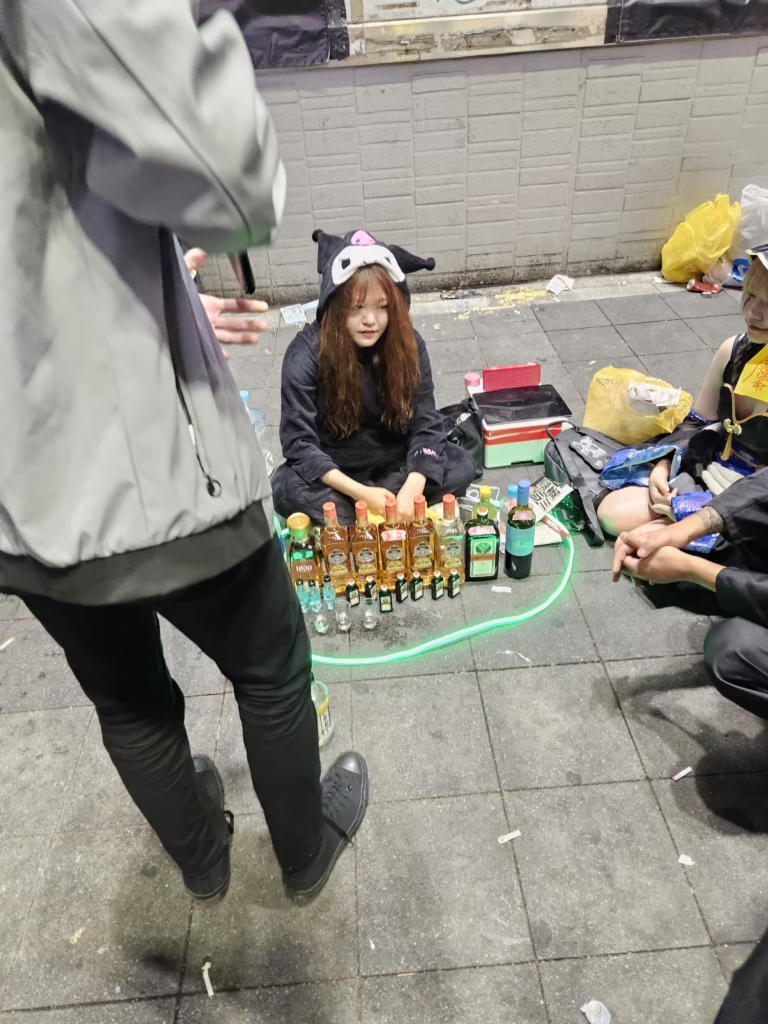
Shibuya’s efforts to restrict Halloween in Shibuya festivities, such as increased police presence and fines for public drinking, were part of a broader effort to prevent an Itaewon-like incident from happening in Tokyo. The local government also tried to shift the celebrations indoors, promoting events in bars and clubs to encourage people to enjoy the festivities in a more controlled environment. Despite these efforts, Halloween in Shibuya (Halloween in Tokyo) remains an enduring part of the city’s culture, with young people continuing to find ways to celebrate in the streets, albeit in a less organized manner. For those planning to visit during high-traffic events, it’s worth checking our Honest Guide: Is Tokyo Safe for Tourists? to understand how the city manages safety beyond the Halloween crowds.
Shinjuku’s Attempt to Ban Halloween
Following the aggressive restrictions in Shibuya, Shinjuku has emerged as the primary alternative for Tokyo’s Halloween revelers. However, the shift has brought a new set of challenges for local authorities trying to balance public order with Shinjuku’s long-standing reputation as a sanctuary for subcultures.
Managed Freedom: Shinjuku’s Strategic Approach
Unlike Shibuya’s “zero-tolerance” policy, Shinjuku has historically taken a more nuanced approach. While the Shinjuku Ward office began issuing formal warnings against unauthorized street gatherings in 2022, the enforcement has remained noticeably different from its neighbor:
- Subcultural Sanctuary: Shinjuku is the ancestral home of Tokyo’s LGBTQ+ community (Ni-chome) and the gritty, neon-lit nightlife of Kabukicho.1 These areas have decades of experience managing large, expressive crowds, making a total “ban” on self-expression culturally difficult to enforce.
- Infrastructure Advantage: Shinjuku’s main thoroughfares, such as Yasukuni-dori and Shinjuku-dori, are significantly wider than Shibuya’s narrow “Center-Gai,” allowing for better natural crowd flow and reducing the immediate risk of an Itaewon-style bottleneck.
The 2024/2025 Regulatory Shift
As the “Shibuya overflow” became more pronounced, Shinjuku was forced to formalize its defenses. According to the Official Shinjuku City Website, the ward now implements a 12-hour ban on street drinking (from 6:00 PM to 6:00 AM) around Shinjuku Station and Kabukicho during peak Halloween dates.
| Feature | Shinjuku’s Policy | Shibuya’s Policy |
| Messaging | “Drink responsibly / No street drinking” | “Do not come / Halloween is canceled” |
| Police Presence | Focused on traffic flow and Kabukicho entry | Massive checkpoints and barricades |
| Business Impact | Bars and clubs remain the focus | Many businesses urged to close early |
Why Shinjuku is Winning the “Post-Ban” Era

For many young Tokyoites, the shift from Shibuya to Shinjuku feels less like the death of Halloween and more like its evolution. While Shibuya has become increasingly defined by crowd-control barriers, security campaigns, and restrictions aimed at discouraging large gatherings, Shinjuku offers an environment that remains closely aligned with the spirit of self-expression that made Halloween in Tokyo so popular in the first place.
Shinjuku has long been one of Tokyo’s most diverse entertainment districts. From the neon-lit streets of Kabukicho to the welcoming bars of Ni-chome, the area has built a reputation as a place where individuality is celebrated and social boundaries are often more relaxed. Halloween naturally complements this identity. Rather than gathering around a single intersection, visitors disperse throughout bars, clubs, restaurants, and nightlife venues, creating a more decentralized and sustainable celebration.
Although police patrols and crowd-management measures have increased in recent years, the atmosphere remains fundamentally different from modern-day Shibuya. The focus is less on occupying public streets and more on participating in the district’s existing nightlife culture. Costumes, cosplay, themed events, and spontaneous encounters still play a central role, but within an environment that is better equipped to absorb large crowds.
The result is what might be described as a “naturalized” Japanese Halloween. The celebration has matured from a largely spontaneous street gathering into a structured nightlife event that reflects the realities of modern Tokyo. Rather than disappearing under government restrictions, Halloween has adapted to its surroundings, becoming integrated into the entertainment culture of districts like Shinjuku while preserving the creativity, freedom, and sense of transformation that made it popular in the first place.
Halloween: A Mainstay in Tokyo’s Young People Culture

The Resilience of Tokyo’s Halloween Culture
Despite the increasingly strict regulations in Shibuya and the evolving rules in Shinjuku, Halloween has secured a permanent place within Tokyo’s cultural landscape. What began as a commercially imported celebration has developed into something far more significant: a rare opportunity for self-expression in a society often characterized by strong social expectations, conformity, and clearly defined public roles.
For one night each year, many participants are given permission to temporarily step outside those boundaries. Office workers become superheroes, students transform into anime characters, and entire groups of friends spend months planning elaborate costumes. The appeal of Halloween in Tokyo is not simply about drinking or partying; it is about creativity, identity, and the freedom to become someone else, even if only for a few hours.
This helps explain why repeated restrictions have not eliminated the celebration. The demand for Halloween remains strong because it fulfills a social and cultural function that few other modern Japanese events provide. Rather than disappearing, the festival continues to adapt, moving between districts, venues, and formats as circumstances change.
Today, Halloween in Japan exists in a form that is distinctly its own. It is no longer merely an imported Western holiday, nor is it solely a marketing campaign driven by retailers. Instead, it has become a unique expression of contemporary Japanese youth culture, blending cosplay, nightlife, social media, fashion, and personal expression into one of the most recognizable annual events in Tokyo.
A Sanctuary for Self-Expression
For young Tokyoites, Halloween serves as a rare “social hall pass.” In a culture that typically prizes wa (harmony) and conformity, this holiday provides a sanctioned window to:
- Escape Norms: For 24 hours, the strict dress codes of school and salaryman life are replaced by total creative freedom.
- Performance Art: Costumes in Tokyo aren’t just outfits; they are high-effort projects. Revelers spend months crafting looks that blend global trends with uniquely Japanese influences like anime, manga, and folklore.
- Cultural Hybridity: This is “Japanized” Halloween. While it looks Western on the surface, its execution—focusing on group photography and meticulous cosplay rather than traditional door-to-door trick-or-treating—is a homegrown phenomenon.
The Shift to “Managed” Celebration
As large-scale street gatherings face increasing regulation, Halloween in Tokyo is not disappearing. Instead, it is evolving into a more structured and sustainable form. Across the city, the focus is gradually shifting toward ticketed club events, themed nightlife experiences, cosplay conventions, hotel parties, and special Halloween programs organized by businesses and entertainment venues. What was once a largely spontaneous street phenomenon is becoming an established part of Tokyo’s annual event calendar.
This transformation reflects a broader maturation of the holiday. Organized events offer greater safety, improved crowd management, and a more predictable experience for both participants and local residents. At the same time, they preserve the elements that made Halloween in Japan so successful: creativity, self-expression, community, and spectacle. While the chaotic scenes once associated with Shibuya Crossing may be fading into history, the creative spirit that fueled them remains very much alive.
The continued popularity of Halloween demonstrates that the celebration has moved beyond its origins as a marketing campaign or imported Western tradition. For many young Japanese people, Halloween provides a rare opportunity to express individuality, connect with like-minded communities, and participate in a shared cultural experience. These motivations are far stronger and more enduring than any single regulation or municipal policy.
In that sense, Halloween has become a symbol of modern Japan itself: a society that continuously adapts foreign influences, reshapes them through local culture, and ultimately creates something entirely unique. What began as a commercial import has evolved into a distinctly Japanese tradition, one that continues to reflect the creativity, diversity, and changing identity of contemporary Tokyo.
The Future of Halloween in Tokyo after Shibuya Halloween ban
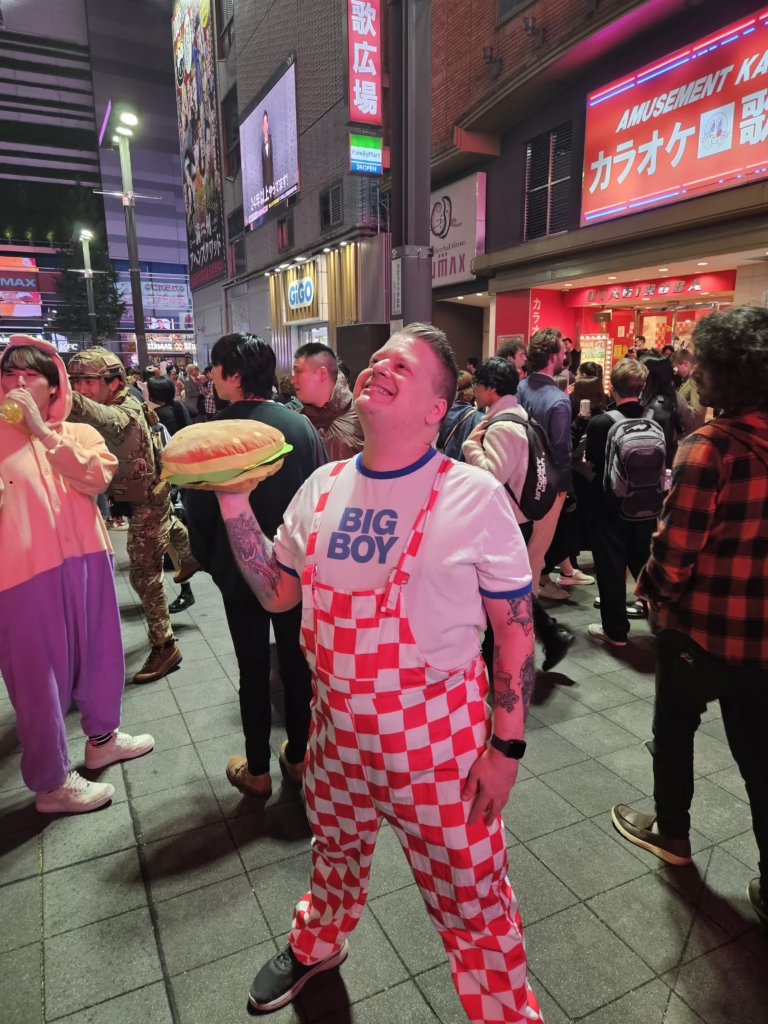
As we look toward 2026 and beyond, it is clear that the restrictions introduced in Shibuya have not ended Halloween in Tokyo. Instead, they have accelerated its transformation. The era of largely unmanaged crowds flooding Shibuya Crossing and Center-Gai appears to be over, but the holiday itself has demonstrated a remarkable ability to adapt to changing social and political realities.
Today’s Halloween celebrations are increasingly defined by organized events, nightlife venues, cosplay gatherings, themed attractions, and ticketed experiences spread across Tokyo’s entertainment districts. Rather than concentrating hundreds of thousands of people into a single location, the celebration is becoming more decentralized and integrated into the city’s existing cultural and nightlife infrastructure.
In many ways, this evolution mirrors the broader story of Halloween in Japan. What began as a foreign commercial import was reinterpreted through Japanese youth culture, transformed by cosplay, social media, fashion, and nightlife, and ultimately became something uniquely local. The latest shift toward more organized celebrations is simply the next chapter in that process.
For visitors searching for Halloween in Tokyo, the experience may look different from the viral images that dominated the internet during the 2010s. Yet the core appeal remains unchanged. People still gather to express themselves, showcase their creativity, and become part of a shared cultural moment. The location may change, the rules may evolve, and the format may become more structured, but the spirit that made Halloween one of Tokyo’s most iconic annual events continues to thrive.
Far from disappearing, Halloween has secured its place in modern Japanese culture. Its resilience demonstrates how global traditions can be adapted, reshaped, and ultimately absorbed into local society. As Tokyo continues to evolve, Halloween will likely evolve with it, remaining a powerful expression of creativity, community, and contemporary urban culture for years to come.
From Street Anarchy to Curated Experiences
The trend is moving away from spontaneous street gatherings and toward high-production, controlled environments. This shift offers several advantages for the future of the holiday:
- The Rise of Mega-Clubs: Venues in Shinjuku and Roppongi are filling the void left by the streets, offering safe, high-energy spaces where costume culture can thrive without the risk of crowd crush.
- Themed Micro-Events: Neighborhoods like Kagurazaka, with its Bakeneko (Ghost Cat) Festival, show a successful model for “community-first” Halloween that balances local tradition with spooky themes.
- Digital Integration: For many, the “celebration” now happens as much on social media as it does in person, reducing the physical pressure on city infrastructure while maintaining the cultural impact.
Conclusion: A Permanent Cultural Fixture
Ultimately, Halloween has become far more than a seasonal celebration in Tokyo. For many young people, it represents a rare opportunity for self-expression in a society where social roles, workplace expectations, and public behavior are often carefully defined. The ability to temporarily step outside those boundaries, adopt a new identity, and participate in a shared creative experience has become one of the holiday’s most enduring attractions.
This helps explain why repeated restrictions have failed to diminish Halloween’s popularity. The demand for community, creativity, and personal expression remains strong, even as the format of the celebration continues to evolve. Rather than gathering in a single location, participants are increasingly spreading across clubs, bars, themed events, cosplay gatherings, and organized festivals throughout the city.
Whether experienced in the neon-lit nightlife districts of Shinjuku, at a ticketed costume event, or during one of Tokyo’s growing number of organized Halloween festivals, the spirit of the holiday remains remarkably resilient. The celebration has successfully adapted to changing regulations while preserving the elements that made it popular in the first place.
In many ways, Halloween in Tokyo perfectly illustrates how Japan absorbs global influences and reshapes them into something uniquely local. What began as a foreign commercial import has evolved into a distinctly Japanese cultural phenomenon that blends cosplay, fashion, nightlife, social media, and youth culture. The locations may change and the rules may become stricter, but Halloween has firmly established itself as one of Tokyo’s most recognizable annual traditions, and all signs suggest it will remain an important part of the city’s cultural landscape for years to come.
Author

Get My Personal Travel Maps
Keep Reading: More Articles You’ll Love
 Is Japanese Food Actually Chinese? The Surprising Origins of Japanese Cuisine
  Living in Tokyo vs Zurich – The Ultimate Expat Guide
  Living in Japan vs Korea – The Ultimate Expat Guide
  Japan Travel Myths vs Reality: What Tourists Still Get Wrong About Japan
  My First 30 Days in Tokyo: Essential Administrative Steps for International Students
  Tattoos in Japan: Rules, Culture, Onsen & Changing Attitudes
  Kabukicho Tokyo: The Ultimate Insider Guide to Shinjuku’s Wildest District


Leave a Reply