
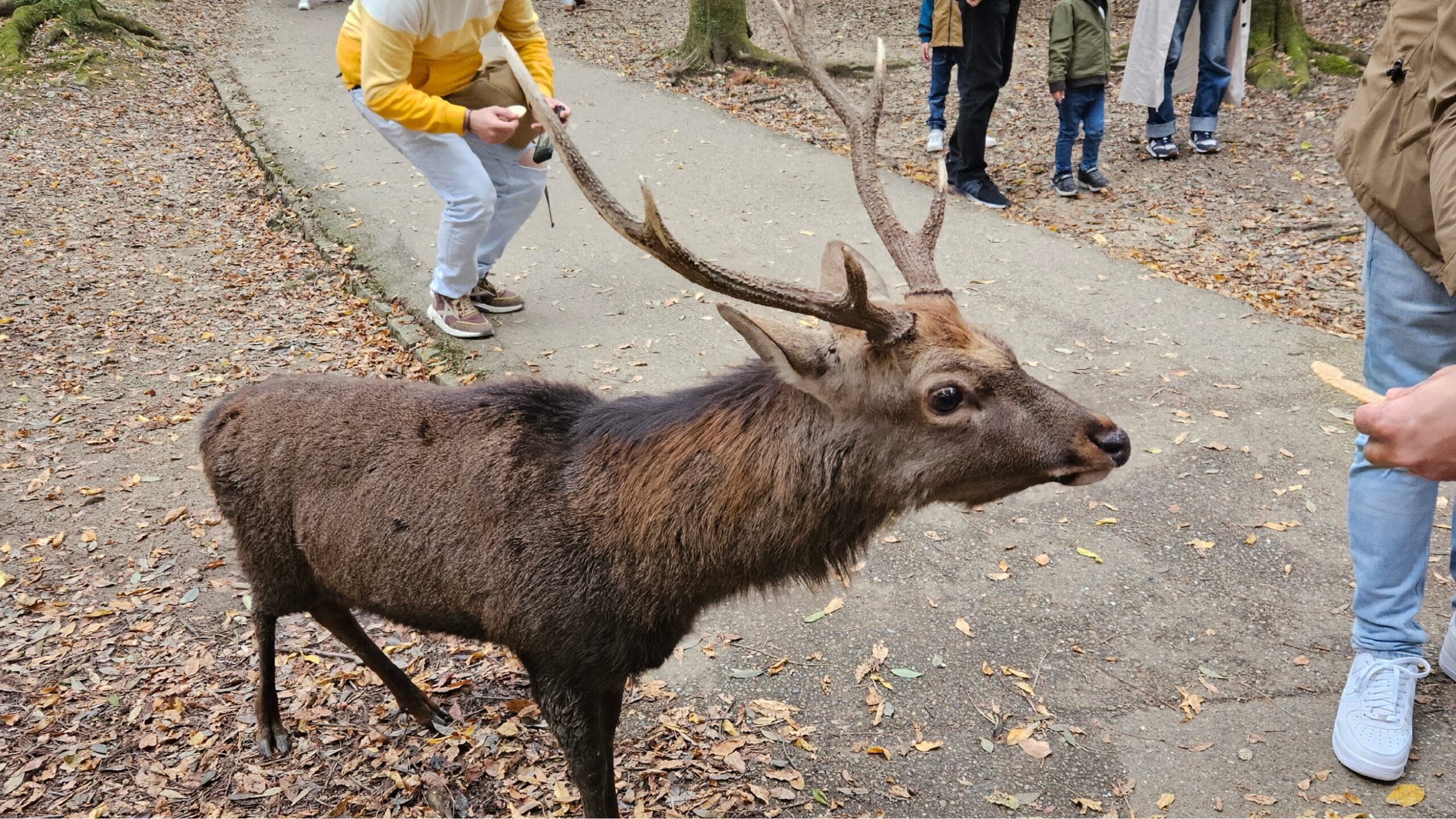
Every autumn, the ancient capital of Nara becomes the stage for one of Japan’s most unusual and visually striking traditions, the Nara Deer Antler Cutting Ceremony, or Shika no Tsunokiri. The ritual, held over a few days each autumn at Rokuen Park near Kasuga Taisha Shrine, attracts thousands of visitors who gather to witness Shinto priests, herders, and bucks in a centuries-old performance balancing reverence, safety, and controversy.
To supporters, it is a cultural act of respect that allows people and deer to coexist safely. To critics, it raises uncomfortable questions about animal welfare and the blurred line between protection and spectacle. And as debates unfold, particularly online, a growing divide has emerged between Japanese locals defending the practice and foreign observers questioning it.
Origins: A 350-Year Tradition of Coexistence
The roots of Shika no Tsunokiri stretch back to 1672, when the local magistrate of Nara introduced the practice to address an escalating problem. During the autumn breeding season, male deer, their antlers fully grown and their tempers high, had begun injuring townspeople, damaging temple grounds, and harming other deer.
Cutting their antlers, officials reasoned, would protect both humans and animals. What started as a practical safety measure gradually evolved into a ceremonial ritual tied to Kasuga Taisha Shrine, one of Nara’s most sacred Shinto sites.
According to shrine mythology, the deity Takemikazuchi-no-Mikoto descended from the heavens riding a white deer from Kashima Shrine in modern-day Ibaraki Prefecture. The deer that roam Nara Park today are considered messengers of the gods, so sacred, in fact, that killing one was historically punishable by death. Even today, the animals are protected as a national natural monument.
This unique relationship between faith and fauna is what makes the ceremony not just an event, but a reflection of Nara’s cultural identity.
Inside the Ceremony: Tradition Meets Precision
Held every autumn, traditionally in early October and recently in early November, the Nara Deer Antler Cutting Ceremony unfolds at Rokuen, a grassy arena constructed in 1929 specifically for this ritual. Check the Nara Deer Preservation Foundation website for the dates.
Each session begins with a Shinto priest’s prayer to ensure the safety of both deer and humans. Then, a team of skilled herders, known as seko, enter the arena, dressed in traditional garb and carrying ropes. As drums beat, the seko work together to gently corral and lasso a male deer by its antlers, a task requiring experience, strength, and agility.
Once captured, the deer is carefully restrained while a priest offers it sacred water to calm it. Then, using a small saw, the antlers are trimmed, a process said to be painless, since deer antlers lose nerve sensitivity after hardening. Afterward, the deer is released back into Nara Park, unharmed but no longer able to injure others during mating season.
The removed antlers are later presented to Kasuga Taisha’s deity as an offering, symbolizing harmony between humans and nature.
Cultural Significance: More Than a Spectacle

For locals, Shika no Tsunokiri is a proud symbol of Nara’s harmony with nature. The ceremony embodies the Japanese concept of kyōsei, coexistence, and reminds residents of their duty to live respectfully alongside sacred creatures.
Families have attended for generations, and schoolchildren are taught about the deer’s divine origins. The event also plays a key role in tourism, drawing both domestic and international visitors to Nara each October. Tickets typically cost ¥1,000 for adults and ¥500 for children, with sessions running several times daily.
Supporters argue that this managed ritual is far more humane than alternatives such as culling or tranquilization. According to the Nara Deer Preservation Foundation, which organizes the ceremony, the process is safe and necessary to prevent injuries and property damage while preserving cultural heritage.
Nara Deer Abuse Controversy: The Online Debate
Despite centuries of acceptance, the Nara Deer Antler Cutting Ceremony has increasingly faced scrutiny, particularly from foreign visitors and animal rights advocates online. Viral videos on social media often show deer being chased, restrained, or visibly distressed, sparking comments accusing Japan of animal cruelty.
These clips, often stripped of cultural context, have fueled the Nara deer abuse controversy. Critics argue that the spectacle prioritizes entertainment over welfare, likening the ceremony to a form of public humiliation for the animals.
Some international publications and advocacy groups have questioned whether “tradition” should exempt the practice from ethical reconsideration, especially in a country known for its strict wildlife protection laws.
However, local experts respond that these criticisms oversimplify a complex relationship between people and deer that has existed for more than a millennium. The antler cutting, they insist, is temporary and harmless, serving as a preventative safety measure rather than an act of dominance or cruelty.
Deer Protection in Nara Park: A Daily Challenge
Beyond the ceremony itself, the welfare of Nara’s 1,400-plus deer population remains a daily balancing act. The animals, which freely roam Nara Park, interact constantly with visitors, accepting special “deer crackers” (shika senbei) and often bowing in exchange, a behavior trained over generations.
However, coexistence is not without tension. As tourism surged before the pandemic, incidents of deer biting or head-butting tourists increased. At the same time, many deer fell ill after being fed inappropriate foods such as bread or plastic-wrapped snacks.
The Nara Deer Preservation Foundation regularly issues warnings to visitors, explaining that while the deer appear tame, they are still wild animals. Rangers patrol the park to monitor health conditions, remove litter, and guide tourists on safe interactions.
During the rutting season, male deer can become aggressive, charging at people or other deer. In these months, the trimmed antlers play a vital role in reducing injuries and ensuring peaceful coexistence. From a wildlife management perspective, officials argue, this is an act of deer protection, not exploitation.
Shika no Tsunokiri Tradition: A Living Heritage
To many Japanese, the Shika no Tsunokiri tradition is not simply about antlers; it represents a living bridge between ancient spirituality and modern conservation. The ritual is registered as an Important Intangible Folk Cultural Asset, highlighting its cultural value within Japan’s heritage framework.
Local Shinto priests emphasize that the act is rooted in respect, not domination. In Shinto philosophy, humans and nature are interconnected, and maintaining balance through rituals is part of sustaining harmony.
Moreover, deer antlers grow back each year. In biological terms, cutting them is similar to trimming fingernails, a regenerative process. This fact is often cited by proponents to counter animal cruelty claims.
Still, the ceremony’s visual intensity, with ropes, restraint, and physical struggle, makes it a difficult sight for some viewers, especially those unfamiliar with its background.
Japanese vs Foreigner Deer Treatment Debate
The controversy has also exposed a deeper cultural divide, the Japanese vs foreigner deer treatment debate. Many Japanese netizens express frustration at foreign criticism, arguing that outsiders misunderstand the spiritual and historical context of the ceremony.
Conversely, international observers, particularly Western tourists and animal-welfare advocates, often view the event through the lens of modern rights ethics, emphasizing stress and consent.
In this context, the antler-cutting ritual becomes more than a wildlife event: it turns into a symbol in the wider debate over how Japan treats its deer. For many Japanese observers, the practice is an internal matter of tradition and safety, a way of protecting both people and animals in Nara Park, rather than a spectacle to be judged by international animal-rights standards. For many overseas critics, the very same act is seen first and foremost through the lens of animal welfare.
This cultural clash reflects broader tensions seen in other Japanese traditions, such as whaling or dolphin hunting, where historical continuity collides with global perceptions of morality. In Nara’s case, the question lingers: is Shika no Tsunokiri a compassionate act rooted in Shinto respect for life, or is it an outdated ritual maintained for spectacle and tourism?
Hezumaryu, a former YouTuber known for prank videos, successfully ran for the Nara City Council and was elected in July 2025 with 8,320 votes. He campaigned heavily on protecting deer in Nara Park and frequently used social media to highlight alleged misconduct by visitors toward the animals.
Local commentary on message boards suggests he’s become a polarising figure, lauded by some for standing up “for the deer” and criticised by others for staging controversies to gain internet attention.
Modern Adaptations and Ethical Oversight
In recent years, organizers have implemented safety and transparency measures to address concerns. Veterinarians are present during the event to monitor each deer’s condition. The tools used for cutting are sanitized and designed to minimize discomfort.
The ceremony is also limited to a small number of selected deer, ensuring that most of the park’s population remains undisturbed. Furthermore, the seko undergo strict training, often passed down through generations, to ensure humane handling.
Educational materials in English and Japanese now accompany the event, explaining its history and dispelling misconceptions. Some local guides even conduct ethical tours, highlighting the ceremony’s conservation aspects and encouraging responsible tourism.
Public Perception: Between Reverence and Reconsideration
Japanese media coverage of the ceremony tends to emphasize tradition, focusing on its elegance and history rather than the debate surrounding it. National broadcasters often highlight the skill of the seko and the calm demeanor of the priests, portraying it as a timeless spectacle of harmony.
Foreign media, however, often frame it within the context of animal welfare. Headlines such as “Cruel or Cultural?” or “Japan’s Controversial Deer Ritual” capture attention abroad, but can also deepen misunderstanding among audiences unfamiliar with Shinto beliefs.
Social media has amplified both admiration and outrage. Videos of the ceremony receive millions of views, with comments ranging from “beautiful cultural heritage” to “barbaric ritual.” This polarization has turned Shika no Tsunokiri into a flashpoint in discussions about tradition vs modern ethics.
Tourism and the Global Audience
For Nara, tourism remains a double-edged sword. The deer are both an icon and an economic engine, attracting millions of visitors yearly. Local businesses, from souvenir shops to traditional inns, depend on the park’s popularity.
The Nara Deer Antler Cutting Ceremony adds a seasonal highlight that draws domestic tourists and international curiosity alike. However, as global awareness of animal rights grows, the event’s international image becomes increasingly sensitive.
Some travel agencies now frame it as an educational cultural experience, focusing on coexistence rather than spectacle. Others avoid promoting it altogether to sidestep controversy. The city’s tourism board has begun refining its messaging, emphasizing deer protection and historical preservation.
Beyond Nara: The Broader Question of Tradition
The Shika no Tsunokiri debate mirrors a broader question faced by many traditional societies: how to preserve heritage while adapting to evolving ethical norms.
For Japan, a nation that prizes both continuity and harmony, the answer may lie in transparency and dialogue. By openly explaining the purpose of such rituals, engaging with critics respectfully, and maintaining strict welfare standards, ancient practices can coexist with modern expectations.
The ceremony’s continued survival depends not only on cultural pride but also on public trust, both domestically and internationally.
Frequently Asked Questions
What is Shika no Tsunokiri?
Shika no Tsunokiri is the Japanese name for the Nara Deer Antler Cutting Ceremony, an autumn tradition in which Shinto priests and skilled herders trim the antlers of the wild deer that roam Nara Park.
When and where is the Nara deer antler-cutting ceremony held?
Shika no Tsunokiri takes place over a few days each autumn, traditionally in October and recently in early November, at Rokuen, a purpose built arena near Kasuga Taisha Shrine in Nara Park. Sessions run several times a day, with tickets around 1,000 yen for adults and 500 yen for children.
How old is the Nara antler-cutting tradition?
It dates back to 1672, when the local magistrate of Nara introduced it to stop male deer from injuring townspeople and other deer during the autumn breeding season. That makes it a roughly 350-year-old tradition.
Why are the antlers cut at all?
During the autumn rutting season, male deer become aggressive and their sharp antlers can injure people and other deer. Trimming them is a safety measure that dates back to 1672.
Does cutting the antlers hurt the deer?
Organizers and vets say no. Antlers lose their nerve sensitivity once they harden, so trimming is compared to cutting fingernails, and they regrow the following year.
How is the ceremony performed?
Each session opens with a Shinto priest’s prayer for the safety of both deer and humans. A team of herders called seko then corral and lasso a male deer by its antlers, restrain it, and offer it sacred water to calm it before the antlers are trimmed with a small saw. The cut antlers are presented to Kasuga Taisha’s deity as an offering.
Why are Nara’s deer considered sacred?
By shrine mythology, the deity Takemikazuchi descended from the heavens riding a white deer, so Nara’s deer are seen as messengers of the gods. They were once so sacred that killing one was punishable by death, and today they are protected as a national natural monument. Honestly, though, that reverence is hard to take at face value when you watch the ceremony itself, where the same deer are chased down and lassoed in what looks far more like a rodeo than an act of worship.
How many deer live in Nara Park?
More than 1,400 deer roam Nara Park freely, famous for accepting shika senbei crackers and bowing in exchange. They are protected but still wild animals, and the preservation foundation warns that they can bite or head-butt, especially during rutting season.
Is the ceremony considered animal cruelty?
In my honest opinion, yes, and it is hard to see it any other way. Grown deer are chased, cornered, and pinned down with ropes in front of a crowd, which is a terrifying, high-stress ordeal for a wild animal no matter how quickly the antlers come off. Officials defend it as a humane, temporary safety measure rooted in Shinto respect, but calling it tradition does not change what the deer actually goes through.
Who is Hezumaryu?
Hezumaryu is a former “nuisance” YouTuber who was elected to the Nara City Council in July 2025 with 8,320 votes. He styles himself as a defender of the deer and built much of his profile confronting tourists he accused of mistreating them. Yet an expose by the channel Japanalysis documents him feeding the deer cola and Mentos himself, exactly the kind of junk the park warns people never to give the animals. He is also a polarising figure known for anti-Chinese and anti-immigrant content.
Conclusion: A Ceremony at the Crossroads
The Nara Deer Antler Cutting Ceremony endures as one of Japan’s most complex traditions, celebrated, criticized, yet undeniably significant. For centuries, it has symbolized the delicate relationship between humans and nature in Nara.
Today, it also embodies the friction between heritage and human empathy, between cultural identity and global ethics.
Whether viewed as compassionate protection or as an outdated display, Shika no Tsunokiri forces reflection on how societies define respect for life, and who gets to decide what “tradition” truly means.
In the end, perhaps the debate itself, passionate yet peaceful, rooted in care for animals and culture alike, is proof that the spirit of coexistence in Nara still thrives.
Read More About Animals in Japan
To understand the complex and often controversial relationship between Japanese tradition, modern entertainment, and animal welfare, explore our in-depth guides below:
- Shirouo Alive Fish Drink Fukuoka: A Unique Japanese Culinary Experience Learn about the odorigui (dancing eating) tradition where tiny, transparent fish are swallowed alive in a glass of sake.
- Punch the Monkey: The Ethics of Japanese Zoos: Education or Exploitation? An honest look at why many Japanese zoos face international criticism for cramped concrete enclosures and whether the “cute” culture outweighs animal welfare.
- Kingyo-Sukui: Discover Japan’s Traditional Goldfish Scooping Game The history of this festival staple and the high mortality rates of the fish involved in the name of childhood fun.
- Okinawa Snake Wine: The Fascinating Truth About Habu Sake A look into the production of medicinal spirits involving venomous pit vipers, and why they are sometimes drowned alive in the process.
- Is the Ginza Art Aquarium Museum Worth Visiting? Evaluating the ethical concerns of housing thousands of goldfish in cramped, brightly lit artistic displays for the sake of a perfect Instagram photo.
- Exploring Tokyo’s Halloween Cat Festival: A Journey of Courage, Culture, and Cats Why bringing domestic cats into the sensory overload of a loud, crowded Tokyo festival is a growing concern for animal behaviorists.
Author

Get My Personal Travel Maps




Leave a Reply