
Sushi etiquette in Japan is simpler than many people think. Eat nigiri in one bite, with your hands or chopsticks, dip the fish side lightly into soy sauce (not the rice), use pickled ginger to clean your palate between pieces, and do not add extra wasabi or soy sauce when the chef has already seasoned the sushi.
The rules depend a bit on where you eat. A conveyor belt restaurant is relaxed and casual, while a high-end omakase counter has more unwritten rules. This guide covers both, plus the most common mistakes visitors make.

The basic sushi etiquette rules
- Hands or chopsticks: both are fine for nigiri. Many Japanese people eat nigiri with their fingers at the counter. Sashimi is always eaten with chopsticks.
- One bite: nigiri is made to be eaten in one bite. Biting it in half often makes it fall apart.
- Soy sauce on the fish: turn the piece slightly and dip the fish side, not the rice. Rice soaks up soy sauce and breaks.
- Do not drown it: pour only a little soy sauce into your dish. Leaving a full dish looks wasteful.
- Ginger is a palate cleanser: eat gari between pieces, not on top of the sushi.
- Eat soon: sushi tastes best right after it is served, when rice and fish are at the right temperature.
Wasabi: to mix or not to mix?
In good sushi restaurants the chef already puts a small amount of wasabi between the fish and the rice. Adding more, or mixing a big lump of wasabi into your soy sauce, can seem like you do not trust the chef’s balance.
At casual places like kaiten-zushi chains, wasabi is often left out and offered in small packs, especially because many children eat there. Here it is totally fine to add some to your taste. A small dab on the fish is the more elegant way than stirring it into the soy sauce.
Etiquette at a sushi counter or omakase
An omakase meal means you leave the choice to the chef. It is a personal experience, and a few manners make it nicer for everyone.
- Be on time: many counters serve all guests at the same time, so being late affects the whole room.
- No strong perfume: it disturbs the delicate smells of the fish.
- Ask before taking photos: many chefs are fine with a quick picture of the food, some are not.
- No extra soy sauce if it is brushed on: when the chef brushes the piece with sauce (nikiri), eat it as it is.
- Tell them about allergies early: ideally when you book, not in the middle of the meal.
- Keep the phone silent: talking on the phone at the counter is rude.
I wrote about a counter experience in my review of Roppongi Fukuzushi.
Etiquette at conveyor belt sushi (kaiten-zushi)
Conveyor belt sushi is cheap, fun and very popular with Japanese families. Most chains now work with touch screens, and your order comes on a separate express lane.
- Never put a plate back: once you take it off the belt, it is yours.
- Do not touch plates you do not take: no lifting lids or touching the sushi of others.
- Stack your plates: the bill is counted by plates or by your screen orders.
- Green tea: put matcha powder in your cup and use the hot water tap at your seat. Be careful, the water is very hot.
- Use the shared items properly: use clean chopsticks or the serving tools for ginger and condiments.
Not sure which chain to try? My ranking of Japan’s sushi chains compares the big names.
In which order should you eat sushi?
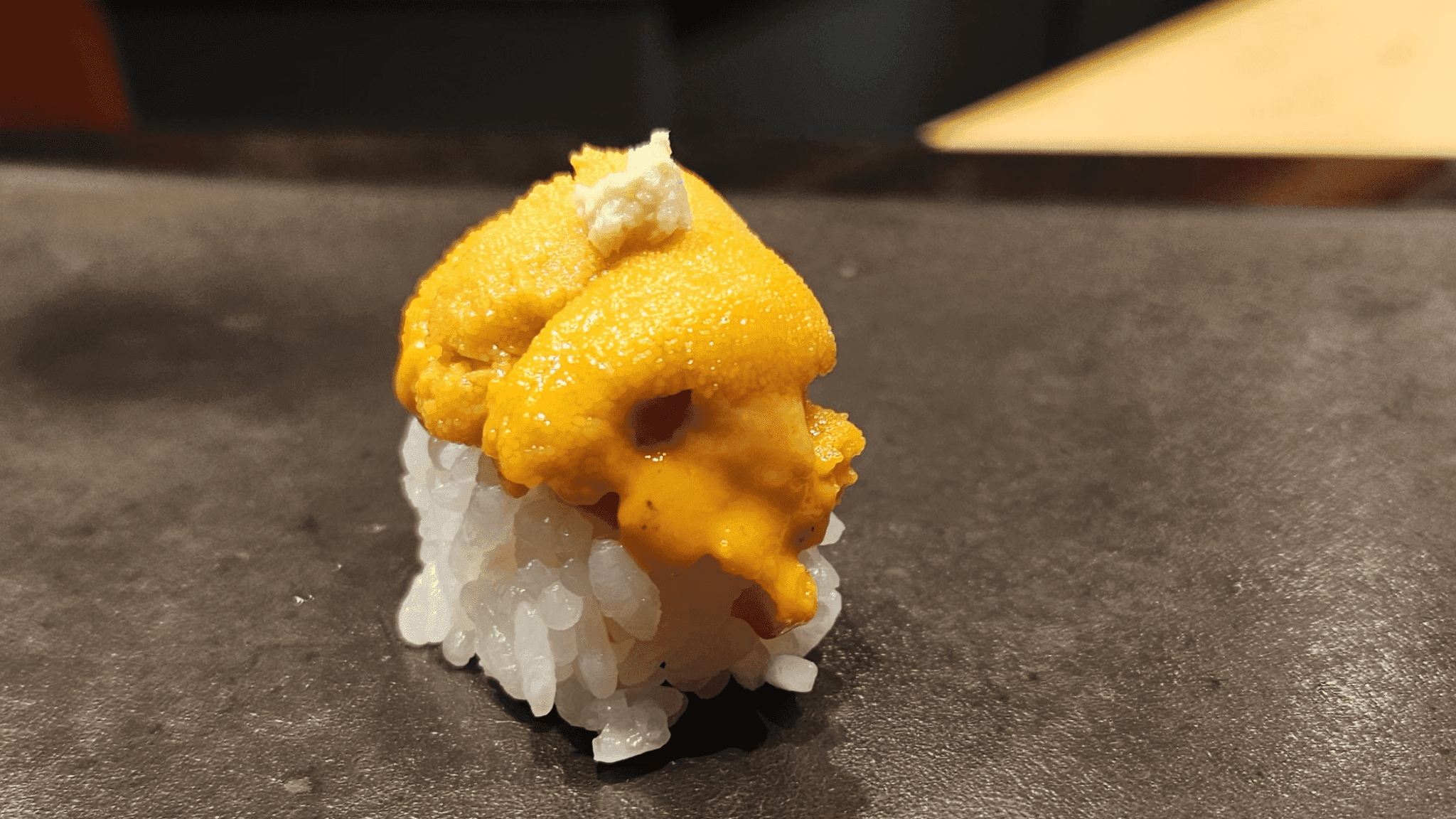
There is no strict rule, but many people go from lighter to richer flavours: white fish first, then shellfish and silver fish like mackerel, then fatty tuna, eel and sweet egg (tamago). At an omakase, the chef decides the order for you.
Types of sushi you will see
- Nigiri: a small hand-pressed block of rice topped with fish or another topping, the classic at sushi counters
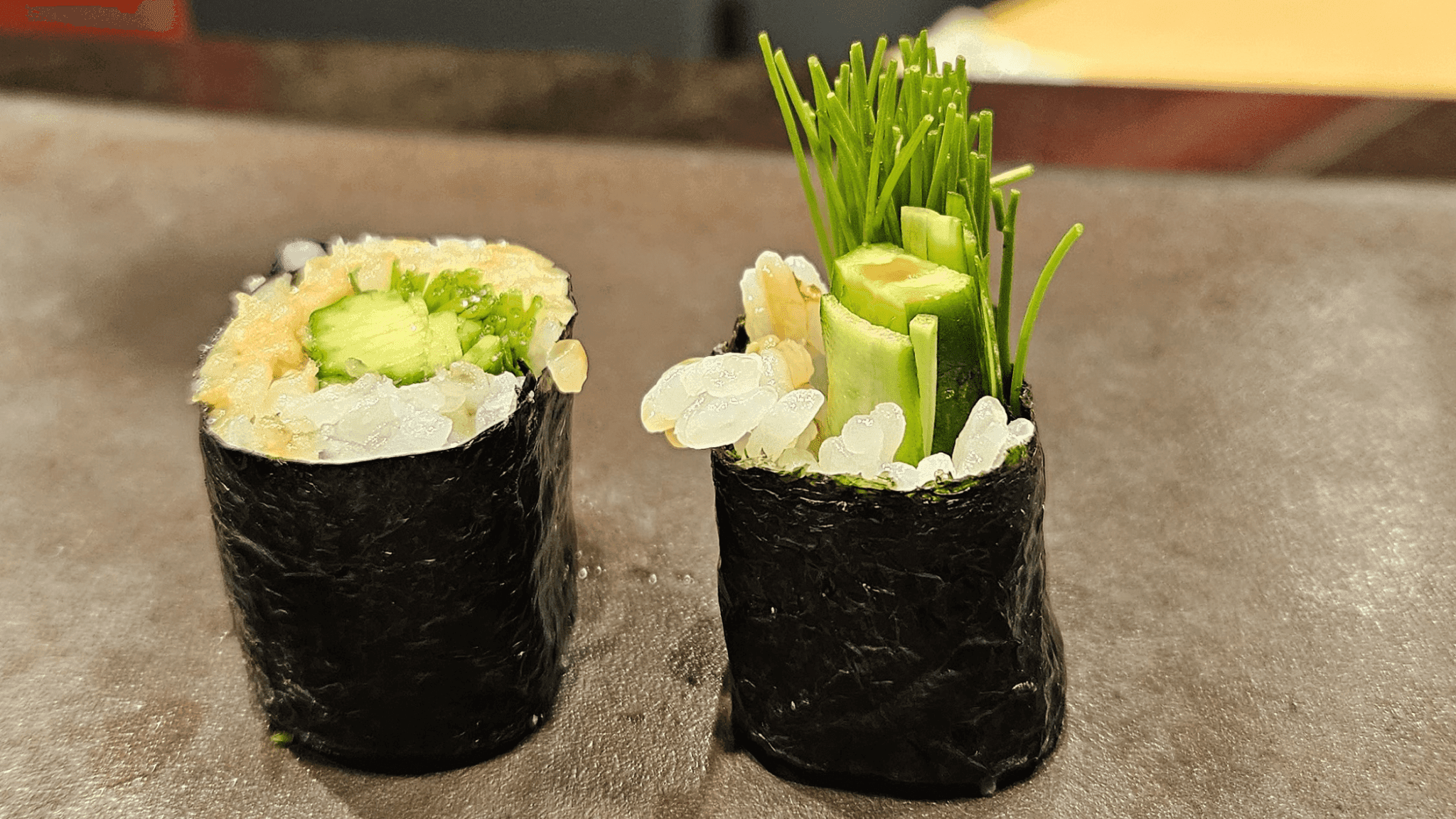
- Maki: rolls wrapped in seaweed, such as thin cucumber or tuna rolls
- Gunkan: “battleship” sushi, rice wrapped in a band of seaweed and topped with fish roe or sea urchin
- Temaki: hand rolls shaped like a cone, eaten right away with your hands while the seaweed is crisp
- Chirashi: a bowl of sushi rice with sliced fish on top, eaten with chopsticks
- Inari: sweet fried tofu pockets filled with rice, a good option if you do not eat fish
Rolls like the California roll exist in Japan but are much less common than abroad. If you want to try local styles, ask for the seasonal fish of the day.
Common sushi mistakes visitors make
- Dipping the rice side into soy sauce until it falls apart
- Putting ginger on top of the sushi
- Rubbing wooden chopsticks together, which suggests you think they are cheap
- Passing food from chopsticks to chopsticks, which is linked to funerals in Japan
- Sticking chopsticks upright in rice
- Asking for spicy mayo or other add-ons at a traditional counter
- Trying to tip, which is not done in Japan
For general table manners, see my guide on Japan etiquette for tourists.
Useful sushi words
| Word | Meaning |
|---|---|
| Omakase | Chef’s choice |
| Nigiri | Hand-pressed rice with a topping |
| Gari | Pickled ginger |
| Sabi nuki | Without wasabi |
| Okaikei onegaishimasu | The bill, please |
You may also hear sushi slang such as “agari” for tea or “murasaki” for soy sauce. These are words used by sushi chefs, so as a guest it is more natural to use the normal words.
Frequently Asked Questions
Is it rude to eat sushi with your hands?
No. Eating nigiri with your fingers is traditional and common at sushi counters. Use chopsticks for sashimi.
Should you dip sushi rice in soy sauce?
No, dip the fish side lightly. The rice absorbs too much soy sauce and can fall apart.
Is it rude to mix wasabi in soy sauce?
At a casual chain nobody will mind. At a high-end counter it is better not to, because the chef has already added the right amount of wasabi.
How much is a sushi plate in Japan?
At budget conveyor belt chains, plates usually start at around 100 to 150 yen, and premium plates cost more. Omakase meals at counters can cost from a few thousand yen to much more.
Where should you eat sushi in Japan?
For value, try a kaiten-zushi chain. For a special meal, book a counter restaurant. Fish markets and standing sushi bars are a good middle ground.
Do you tip at sushi restaurants in Japan?
No. Tipping is not part of Japanese culture. Some high-end restaurants add a service charge to the bill.
What do you eat with sushi?
Miso soup, green tea, pickled ginger and sometimes a small salad or chawanmushi (steamed egg custard). Beer and sake are popular drinks.
Final thoughts
Good sushi etiquette is mostly about respect for the chef and the food. Eat it fresh, use soy sauce lightly and enjoy the moment. For more about Japanese food, read my Japanese food guide.
Author

Get My Personal Travel Maps




Leave a Reply