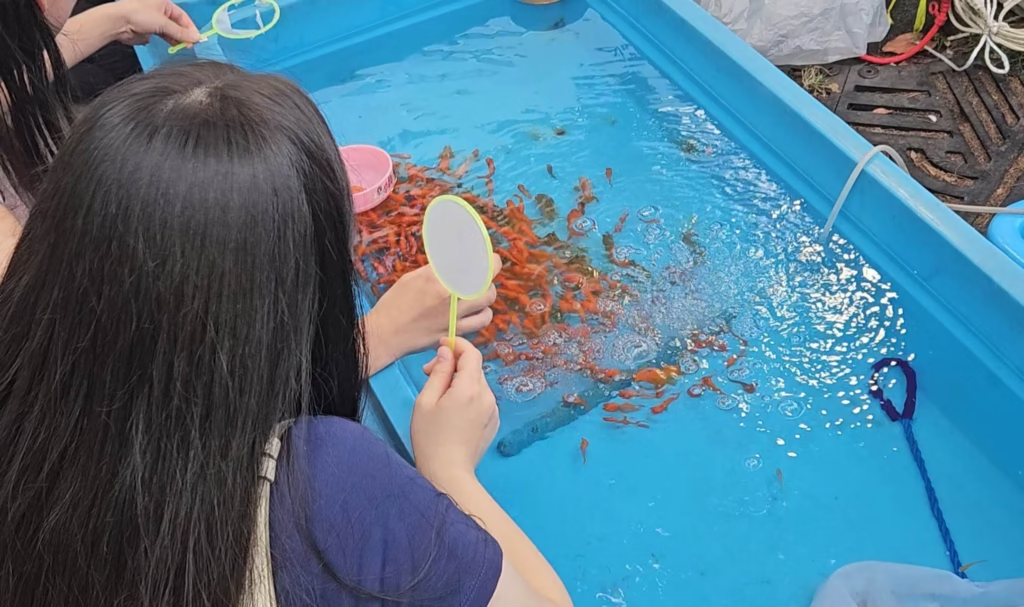
Kingyo-Sukui, known in English as Japanese goldfish scooping, is one of the most recognizable traditional games found at summer festivals across Japan. The game invites participants to catch swimming goldfish using a fragile paper scoop called a poi. What looks simple at first usually proves challenging, since the paper can tear with even the slightest excess pressure. That balance of patience, technique, and a little bit of luck is what keeps both newcomers and experienced festivalgoers coming back to try again.
This activity has been part of Matsuri culture for generations. Its presence at local festivals reflects more than entertainment. It represents the lighthearted, communal atmosphere that defines summertime in Japan, where food stalls, games, and neighborhood traditions come together. Kingyo-Sukui often becomes a shared memory for families and travelers who want to experience an authentic part of Japanese festival life.
In the photo above, you can see my fiancé giving the game a try. Watching someone you know experience Kingyo-Sukui firsthand highlights how easily the game draws people in. It also shows how quickly a simple festival pastime can turn into a memorable moment.
In this article, we will explore the origins of Kingyo-Sukui, how the game is played, the variations found across different regions, and why Japanese goldfish scooping continues to resonate with people of all ages at festivals throughout Japan.
The History of Kingyo-Sukui
The roots of Kingyo-Sukui can be traced back to the Edo period (1603–1868), when goldfish were first introduced as a popular household pet and status symbol. During this time, goldfish were displayed at street stalls and small community events, where children often tried to catch them for fun. Early forms of Japanese goldfish scooping used small nets made from cloth or thin bamboo mesh. These tools made catching fish simple, so the experience was less about technique and more about casual play.
As Japan transitioned into the early 20th century, festival organizers began replacing the durable nets with delicate paper scoops. This shift changed the activity from a basic children’s pastime into a game that required attention, steady movement, and strategy. The fragility of the paper introduced a sense of suspense, since every dip could be the one that finally tears the scoop. This small change is what transformed Kingyo-Sukui into a skill-based activity that appealed to people of all ages.
Throughout the early Showa era, Kingyo-Sukui became a familiar sight at summer Matsuri. These festivals were community-centered, often held at shrines or temples, and served as opportunities for residents to gather, share food, and enjoy seasonal entertainment. The game blended naturally with the atmosphere of lantern-lit pathways, rhythmic taiko drums, and the relaxed social setting of festival nights. Its rising popularity was partly due to its accessibility. Anyone could participate, and even unsuccessful attempts tended to leave participants smiling.
During the post-war period, Kingyo-Sukui evolved in step with Japan’s rapid social and cultural changes. By the 1950s, it had solidified its place as a festival staple. Goldfish breeders began supplying higher-quality varieties, and stall operators developed standardized equipment and rules. As a result, the game became more consistent from region to region, though local variations still exist.
In recent decades, Kingyo-Sukui has expanded beyond casual festival play. Some communities now host organized goldfish scooping competitions, complete with regulation paper scoops, timed rounds, and ranking systems. The most well-known contests attract skilled participants who treat the game almost like a sport, demonstrating controlled hand movements and remarkable precision. Despite these modern adaptations, the heart of Kingyo-Sukui remains the same. It continues to offer a simple, joyful moment during summer festivals and carries forward a tradition that has shaped Japanese seasonal culture for generations.
How Kingyo-Sukui is Played

At the core of Kingyo-Sukui is the simple yet challenging task of using a delicate paper scoop to catch goldfish from a shallow pool of water. Although the rules are straightforward, the game relies on a balance of patience, timing, and careful control of movement. The paper scoop, called a poi, is designed to soften and weaken as it absorbs water. This gradual decline in durability adds tension to every attempt, since each motion must be deliberate enough to guide a goldfish yet gentle enough to keep the scoop intact.
For many participants, the first few seconds are a test of observation. Players watch how the goldfish move, look for patterns in their swimming, and adjust their approach accordingly. Even beginners quickly learn that rushing creates unnecessary ripples, which makes the fish scatter. Skilled players often describe the process as a mix of strategy and calm focus, where reading the water becomes just as important as the act of scooping itself.
With that in mind, the basic rules of Japanese goldfish scooping usually unfold in the following steps:
- Setup: The game takes place in a small pool or container filled with water, typically with several goldfish swimming inside. The water is clear, allowing players to see the fish, but the paper scoops used to catch them are fragile.
- Scoop: Each player is handed a paper scoop (poi), which is a thin piece of paper stretched over a delicate frame. The scoop is designed to catch goldfish, but the paper becomes more fragile as it gets wet.
- Objective: The goal is to scoop as many goldfish as possible before the paper scoop breaks. The scoop will often tear if it gets too wet, making it harder to catch fish with each passing attempt.
- Prizes: In some festival settings, players can keep the goldfish they catch as a prize, while in others, the game is purely for fun. The number of fish caught may also determine the player’s success or the prize they receive.
- Challenges: As the scoop gets wet, it becomes increasingly difficult to catch more fish. The paper scoop is fragile, and if it breaks, the game ends. The player who catches the most goldfish within the time or without breaking their scoop is declared the winner.
Kingyo-Sukui is often played at summer festivals in Japan, known as Matsuri, where participants of all ages join in the fun. From children to adults, everyone can enjoy the challenge of catching lively goldfish while keeping the fragile paper scoop intact. These festivals are a highlight of the season, and Kingyo-Sukui fits seamlessly into the wider atmosphere of celebration.
During the summer months, Japan also hosts other well-known events such as Obon festivals and large-scale Hanabi (firework) shows. These gatherings create the same lively, community-focused setting that makes Kingyo-Sukui so memorable. Whether visitors are dancing at an Obon celebration, watching fireworks illuminate the night sky, or trying their hand at Japanese goldfish scooping, each activity reflects the festive spirit that defines summer in Japan.
Goldfish and the Cultural Significance
Goldfish, or kingyo, hold a long-standing place in Japanese culture. They are often seen as symbols of prosperity, good fortune, and longevity, which gives Kingyo-Sukui meaning beyond entertainment. Historically, goldfish were bred as ornamental pets during the warmer months, which is one reason they became closely associated with summer. Their presence at seasonal festivals reflects this connection and adds to the feeling of nostalgia many people experience when they see them.
In Japanese aesthetics, goldfish are often appreciated for their smooth, fluid movements. Watching them glide through clear water aligns with cultural values that emphasize calmness, balance, and a sense of quiet beauty. These qualities echo broader themes found throughout Japanese art and tradition. The act of scooping a goldfish with a fragile paper poi also holds symbolic weight. It highlights the idea that even simple moments require attention and care, and it reflects the appreciation for small, fleeting experiences that appear often in Japanese literature and design.
Goldfish in Kingyo-Sukui also have a practical cultural presence. Many families keep goldfish as pets, and it is common for festival-goers to bring home the fish they catch. For some, the small tank or bowl becomes a reminder of the festival itself, carrying forward the symbolic associations of good fortune and seasonal celebration.
The Modern-Day Kingyo-Sukui: National Competitions and Tournaments
Although Kingyo-Sukui is primarily associated with local festivals, it has also evolved into a competitive sport. The National Goldfish Scooping Championship, held annually in Yamatokōriyama in the Nara Prefecture, is a prime example of how the game has grown in popularity.
Yamatokōriyama is famous for its long history of goldfish farming, and the city hosts the national championship to celebrate this tradition. The competition attracts skilled players from across Japan who compete in various categories, including individual and team challenges. Some of the top competitors in the event can scoop goldfish with incredible speed and precision, turning what was once a simple pastime into a serious competition.
While the championship attracts a dedicated following, it is still the community-based festival events where Kingyo-Sukui truly shines. The game continues to be a highlight of summer festivals across Japan, with families, friends, and even strangers coming together to enjoy the activity.
Kingyo-Sukui at Summer Matsuri Festivals
The presence of Kingyo-Sukui at summer Matsuri is an integral part of festival culture in Japan. These summer festivals in Japan is known for bring communities together through lively parades, street food, music, and a wide range of traditional Japanese games. Within this festive atmosphere, Japanese goldfish scooping stands out as one of the most recognizable activities, thanks to its long-standing place in goldfish scooping history and its strong connection to childhood memories.
Kingyo-Sukui is often featured alongside other nostalgic attractions at Matsuri, where its simple setup and gentle pace make it accessible for both children and adults. Its charm lies not only in the challenge of catching goldfish with a delicate scoop but also in the sense of tradition the game carries. Whether at a small neighborhood event or a large regional celebration, Kingyo-Sukui remains a crowd favorite that helps preserve the cultural identity of summer festivals in Japan.
The game also contributes to the social aspect of Matsuri. Families, friends, and even strangers gather around the pool to cheer each other on, sharing laughter and a bit of friendly competition. For many Japanese children, Kingyo-Sukui offers an early connection to their cultural roots, giving them a hands-on way to experience a pastime that has been passed down through generations. This blend of community spirit and tradition is what keeps Kingyo-Sukui firmly embedded in the rhythm of Japanese festival life.
Conclusion: The Enduring Charm of Kingyo-Sukui
In conclusion, Kingyo-Sukui is more than a simple festival pastime. It represents a meaningful piece of Japan’s cultural heritage, shaped by centuries of goldfish scooping history and kept alive through its presence at summer festivals in Japan are known for. Its blend of tradition, skill, and lighthearted fun has helped Japanese goldfish scooping remain relevant in a world where many older customs fade over time.
The game’s appeal lies in its simplicity. Anyone can join in, yet true success requires patience and careful technique. This balance is one reason Kingyo-Sukui continues to captivate festival-goers of all ages. Whether you experience it at a small neighborhood Matsuri or watch the excitement of a goldfish scooping championship, the game stands alongside other traditional Japanese games as an essential part of the country’s summertime atmosphere.
As people continue to celebrate Matsuri across Japan, it is clear that Kingyo-Sukui will remain a cherished element of these seasonal gatherings. Its long history, cultural symbolism, and ability to bring communities together ensure that Kingyo-Sukui will continue delighting participants for many years to come.
Disclaimer: Animal Welfare Considerations in Kingyo-Sukui
While Kingyo-Sukui (goldfish scooping) is a cherished part of Japanese summer festivals, it’s important to recognize that the goldfish used in the game can experience significant stress. The handling and environment during the festival may not be ideal for the animals’ well-being. Goldfish often face challenges related to the quality of the water, the stress from being scooped and handled, and the general conditions of the event.
Unfortunately, many of the goldfish do not survive long after the festival due to these conditions. We encourage participants who take home goldfish to seek proper care and ensure their pets are kept in a healthy and supportive environment, including an appropriate tank, clean water, and a balanced diet.
As awareness of animal welfare continues to grow globally, some festivals in Japan have started exploring alternative games that avoid the use of live animals. It is important for festival-goers to stay mindful of the ethical considerations involved in traditional activities like Kingyo-Sukui, especially since discussions about animal treatment can vary widely depending on cultural norms and personal valuesapan’s approach to animal welfare can feel different from what many visitors expect. When living in Japan, you often learn to adapt to local practices, some of which may be viewed as controversial from an international perspective. Examples often mentioned in public discussions include animal cafés, where people can interact with cats, owls, or other animals; dog-rental services that allow short-term companionship; and longstanding regional traditions such as the deer-related events in Nara or the production of certain Okinawan liquors that historically involved live snakes. Some residents and visitors find these practices culturally significant or personally unobjectionable, while others express concern about the welfare implications.
These differences do not reflect a lack of compassion among Japanese people, but rather a cultural landscape where attitudes toward animals, tradition, and entertainment have developed in unique ways. For anyone spending time in Japan, understanding these nuances helps create a more balanced perspective on how traditional customs and modern animal-welfare conversations intersect.
Navigating Japan’s Animal Traditions: Ethics, Culture, and Conservation
Exploring Japan often means coming face-to-face with practices that challenge Western perspectives on animal rights. Our guides dive deep into the heart of these controversies:
- The Odorigui Debate: Swallowing Fukuoka’s transparent Shirouo fish alive—is it a culinary thrill or an outdated cruelty?
- The Concrete Jungle: Why Japan’s zoos, often criticized for “cramped and cold” enclosures, are facing a reckoning in the age of global animal welfare.
- Goldfish & Glass: Analyzing the Ginza Art Aquarium. We ask: is the aesthetic beauty worth the stress placed on thousands of living creatures?
- Festival Casualties: From the high mortality rates of festival Kingyo-sukui (goldfish scooping) to the sensory overload of Tokyo’s Cat Festivals.
- Spirit vs. Species: Investigating the drowning of Habu vipers for medicinal sake and the 300-year-old antler-cutting rituals of Nara’s sacred deer.
- Exploring Tokyo’s Halloween Cat Festival: A Journey of Courage, Culture, and Cats Why bringing domestic cats into the sensory overload of a loud, crowded Tokyo festival is a growing concern for animal behaviorists.
Author

Get My Personal Travel Maps
Keep Reading: More Articles You'll Love
 Is Japanese Food Actually Chinese? The Surprising Origins of Japanese Cuisine
  Living in Japan vs Korea – The Ultimate Expat Guide
  Japan Travel Myths vs Reality: What Tourists Still Get Wrong About Japan
  Tattoos in Japan: Rules, Culture, Onsen & Changing Attitudes
  My First 30 Days in Tokyo: Essential Administrative Steps for International Students
  Living in Tokyo vs Zurich – The Ultimate Expat Guide
  Matsumoto Itinerary: The Perfect 3-Day Guide Including Kamikochi