Can you really see Rome in one day on foot? We wondered the same thing before we tried it, and the answer is yes, if you walk it in the right order. Last spring we set out from near Termini just after sunrise and traced a single, mostly flat route through the city’s greatest hits: the Colosseum, the Roman Forum and Palatine Hill, Piazza Venezia, the Pantheon, Trevi Fountain, the Spanish Steps, an unplanned stop at Castel Sant’Angelo, and finally the Vatican Museums at dusk. We covered just over 20,000 steps and took exactly one taxi all day, and only at the very end, when our feet had earned it.
This is the full, self-guided version of that day: the exact stops, the times we arrived, what we paid, which tickets you have to book ahead, and the small detours that turned out to be the best part. We’re sharing it because most “Rome in a day” guides either pack in too much or skip the practical details that actually make the walking work. Things like how far apart the sights really are, where to refuel, and when to show up to beat the crowds.
A quick note on timing: our visit happened to fall during the papal conclave, so the Sistine Chapel was sealed shut when we arrived. More on that surprise later, but it’s a good reminder that even a carefully planned day in Rome leaves room for the unexpected.
🏛️ 8:30 AM – The Colosseum: Ancient Power & Stone
- 📍Location: Colosseo Metro stop
- 🥾 Walking: From Termini or nearby hotels (~1.5 km)
- 🚗 Uber (skipped): ~€15–€20
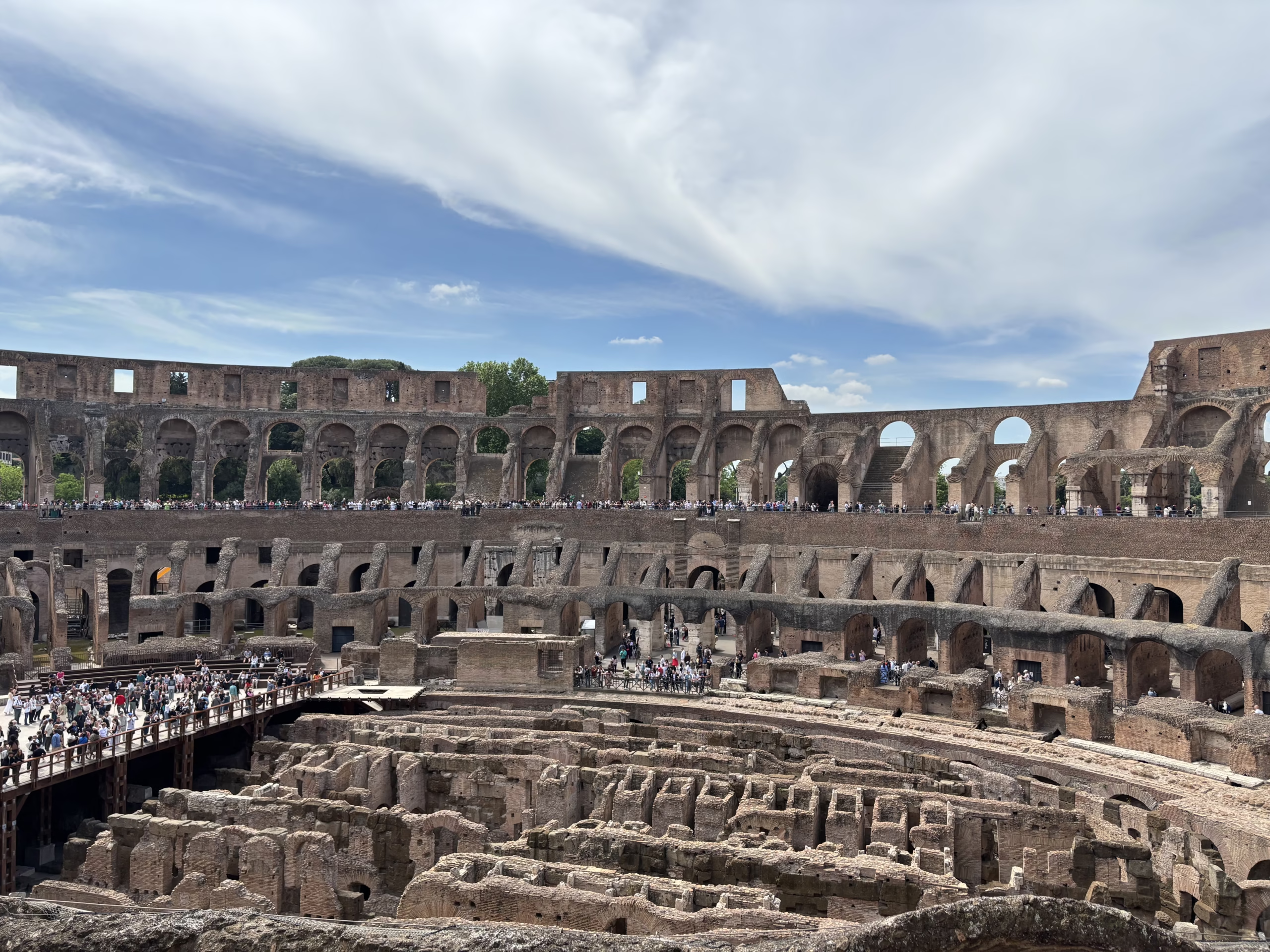
- 🎟️Ticket: Colosseum & Roman Forum (The Underground Tickets for the Colosseum are very hard to get in the touristic season)
Your Colosseum ticket includes the Roman Forum and Palatine Hill, and the entrance is a short walk from the exit, so go straight there while the morning is still cool. We wandered through marble columns, crumbling temples, and moss-covered ruins that once formed the center of public life in ancient Rome. It unfolds like an open-air museum, with paths that wind past the spots where senators, soldiers, and ordinary citizens debated, traded, and worshipped.
Don’t rush this part. The Temple of Saturn, the Arch of Septimius Severus, and the House of the Vestal Virgins are worn by time, but their scale still lands. We found the plaques worth reading, though honestly the bigger reward was just standing still and taking in the sense of how much history is layered into one patch of ground.
One detail most visitors walk right past: the grave of Julius Caesar. It sits beneath the ruins of the Temple of Caesar, marked by a simple stone altar, and even now, more than 2,000 years after the Ides of March, people still leave fresh flowers there. We weren’t expecting it, and it quietly became one of the more moving moments of the morning.
From the Forum, climb up to Palatine Hill, one of the seven hills of Rome and, by legend, the birthplace of Romulus. The path is gentle and shaded by pine trees. At the top you get two of the best free views in the city: the green sweep of the Circus Maximus on one side, and a bird’s-eye look over the whole Forum on the other, with rooftops glowing in the sun.
Plan on roughly 1.5 to 2 hours here before heading toward Piazza Venezia.
🏛️ 9:00 AM – Roman Forum & Palatine Hill
- 🥾 Walking: Direct exit from the Colosseum
- 🚗 Uber: Not applicable
- 🎟️ Tickets: Roman Forum
Good news if you’re watching your budget: the Roman Forum and Palatine Hill are included on the same ticket as the Colosseum, so there’s nothing extra to buy here. The entrance is just a couple of minutes from the Colosseum exit, and going straight in around 9 AM means you beat both the heat and the tour groups that flood in later.
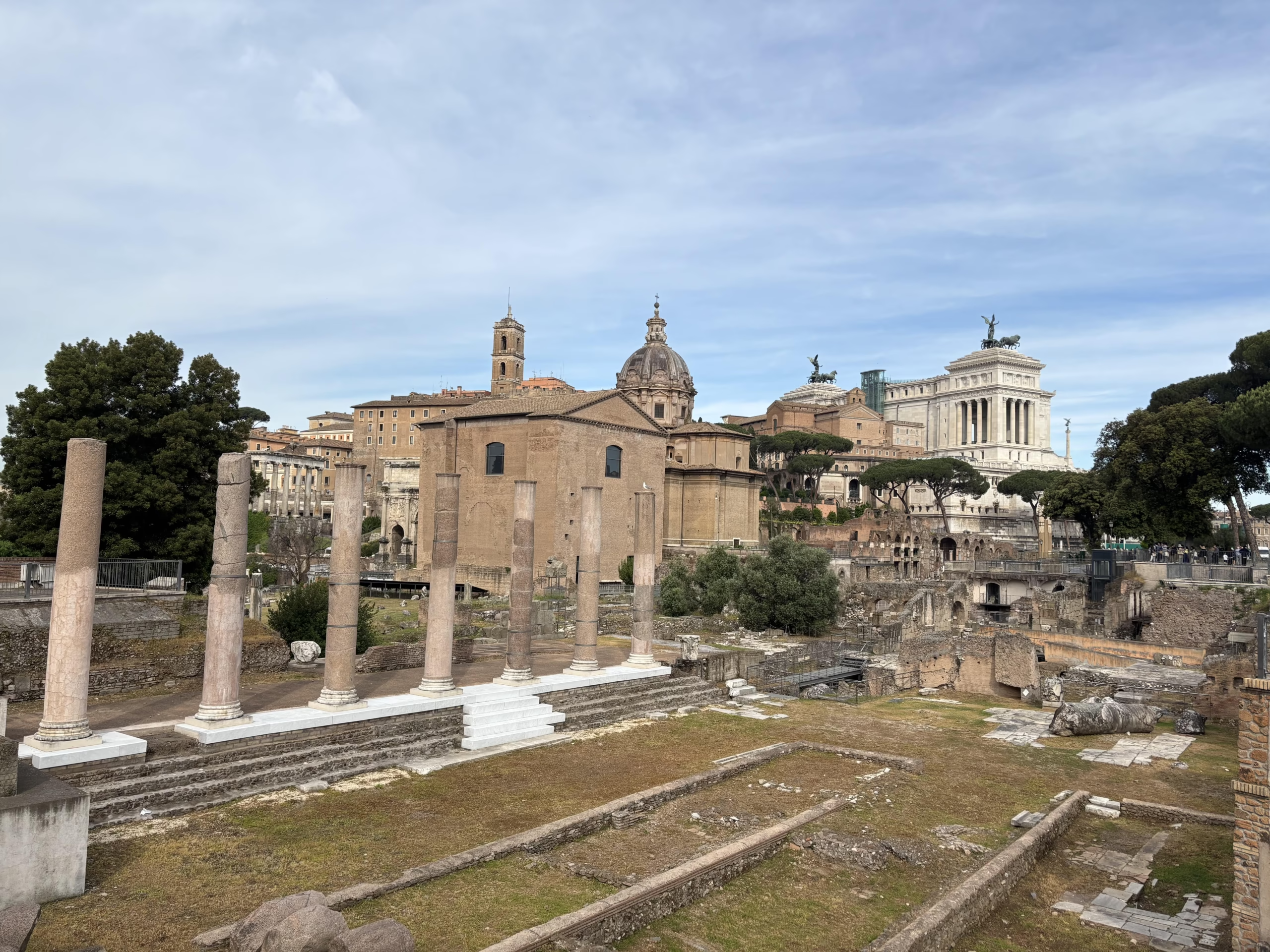
We wandered through marble columns, crumbling temples, and moss-covered ruins that once formed the political center of ancient Rome. The whole site unfolds like an open-air museum, and every path seems to hold the footsteps of the senators, soldiers, and citizens who debated, traded, and worshipped right where you’re standing. It’s not hard to picture toga-clad senators arguing over laws or an emperor parading through after a victory.
A few things worth seeking out rather than wandering past: the Temple of Saturn, the Arch of Septimius Severus, and the House of the Vestal Virgins. They’re worn by time, but the scale still lands. We found it worth reading a few of the plaques, though honestly the bigger reward was just slowing down and taking in the atmosphere.
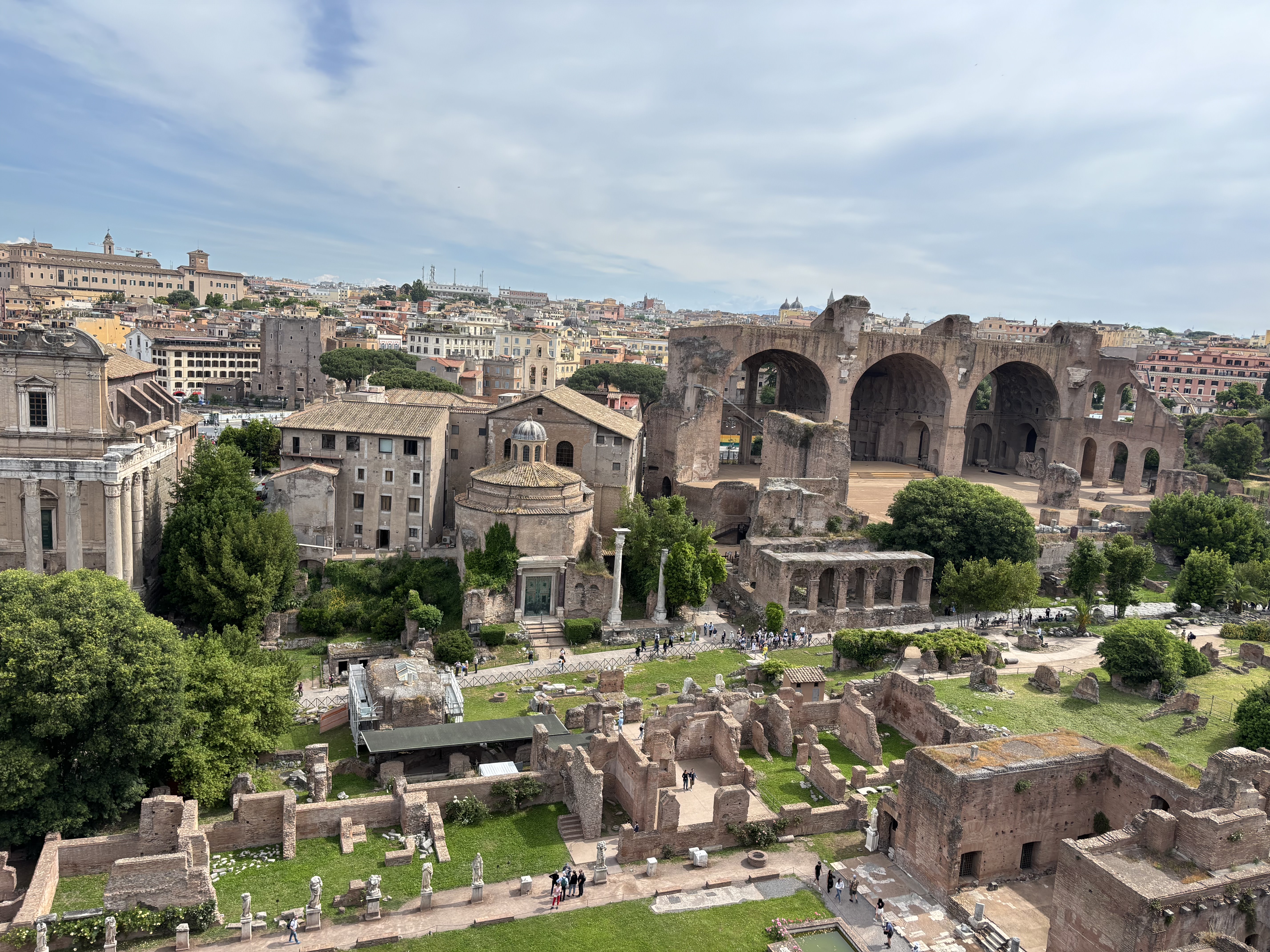
One detail most visitors miss completely is the grave of Julius Caesar. It sits beneath the ruins of the Temple of Caesar, marked by a simple stone altar, and even now, more than 2,000 years after the Ides of March, people still leave fresh flowers there. We weren’t expecting it, and it quietly became one of the more moving moments of the morning. If you want to find it, look for the small semicircular structure with a low altar inside; there’s often a little cluster of flowers giving it away.
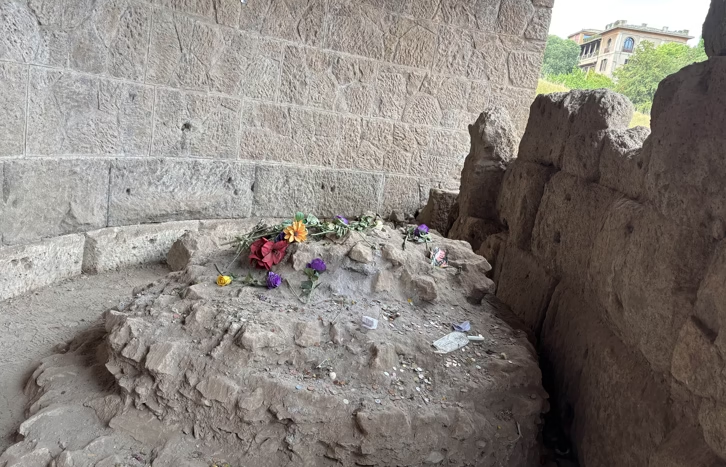
From the Forum, climb up to Palatine Hill, one of the seven hills of Rome and, by legend, the birthplace of Romulus. The path is gentle and shaded by pine trees, so it’s an easy walk even after a morning on your feet. At the top you get two of the best free views in the city: the green sweep of the Circus Maximus on one side, and a bird’s-eye look over the entire Forum on the other, with rooftops glowing in the sun. It’s the natural spot to pause, drink some water, and reset before the next leg.
Practical notes:
- Plan on roughly 1.5 to 2 hours total for the Forum and Palatine combined.
- Shade is limited in the Forum, so a hat, sunscreen, and water make a real difference in summer. There are public water fountains (the famous “nasoni”) dotted around to refill for free.
- Wear proper shoes. The ground is uneven gravel and ancient stone, not paved paths.
- If your ticket includes timed entry, the time usually applies to the Colosseum only, but double-check your specific ticket so you don’t miss a slot.
From here it’s about a 15-minute walk to Piazza Venezia, our next stop.
🏛️ 11:15 AM – Piazza Venezia
- 🥾 Walking: 15 min from Palatine
- 🚗 Uber (skipped): ~€10, 5–7 min
The walk to Piazza Venezia is half the experience, so don’t rush it. You’ll head along Via dei Fori Imperiali, a wide avenue flanked by the remains of the imperial forums, with columns rising on both sides and ancient stones underfoot. It feels like strolling through a timeline, and every few steps reveals another slice of the city’s layered history. Worth knowing: parts of this road are closed to cars on Sundays and holidays, which makes for a much quieter, more pleasant walk if your timing lines up.
Soon the huge white marble structure of the Altare della Patria comes into view, also called the Vittoriano or the Monument to Victor Emmanuel II. Towering over the square, it honors the first king of unified Italy and is one of the most commanding sights in modern Rome. With its grand staircases, Corinthian columns, bronze quadriga statues, and the eternal flame guarded by soldiers, it feels every bit as epic as the ruins behind you, just in a far more recent way.
A lot of visitors skip this one, either because it isn’t ancient or because it’s not on the standard tour routes, but we think that’s a mistake. It’s bold, unapologetically grand, and deeply symbolic for Italians (locals have nicknamed it “the wedding cake” and “the typewriter” for its shape). It’s also one of the most underrated photo spots in the city. The sweeping steps and massive colonnades make a dramatic backdrop, and the climb up the front steps is free.
Here’s the part most people don’t realize: there’s a glass elevator at the back of the monument that takes you to the rooftop terrace for one of the best 360-degree views in Rome, looking straight down Via dei Fori Imperiali toward the Colosseum. It costs only a few euros and is almost never crowded, making it far better value than many of the city’s busier viewpoints.
This stop is a natural halfway-marker between ancient and modern Rome, and a good moment to pause before the next stretch toward lunch and the Pantheon.
Practical notes:
- From here it’s roughly a 10-minute walk to lunch near the Pantheon.
- Climbing the front steps and entering the monument is free; only the rooftop elevator (the Terrazza delle Quadrighe) has a small charge.
- Allow about 30 to 45 minutes here, or an hour if you go up to the terrace.
The eternal flame is guarded around the clock, and there’s a small military museum inside if you want to step out of the sun for a bit.
🍝 12:00 PM – Lunch at Ristorante il Buco Roma
- 📍Address: Via Santa Maria in Via, 32
- 🥾 Walking: ~10 min from Piazza Venezia
- 🚗 Uber (skipped): ~€10
By midday you’ll have earned a proper sit-down meal, and we timed lunch for around noon on purpose. Arriving before the main Italian lunch rush (which really gets going closer to 1 PM) meant we walked straight in without a wait. We picked Ristorante il Buco, tucked into a quiet side street just a few minutes’ walk from the Pantheon, so it doubles as the perfect stop right before the next cluster of sights.
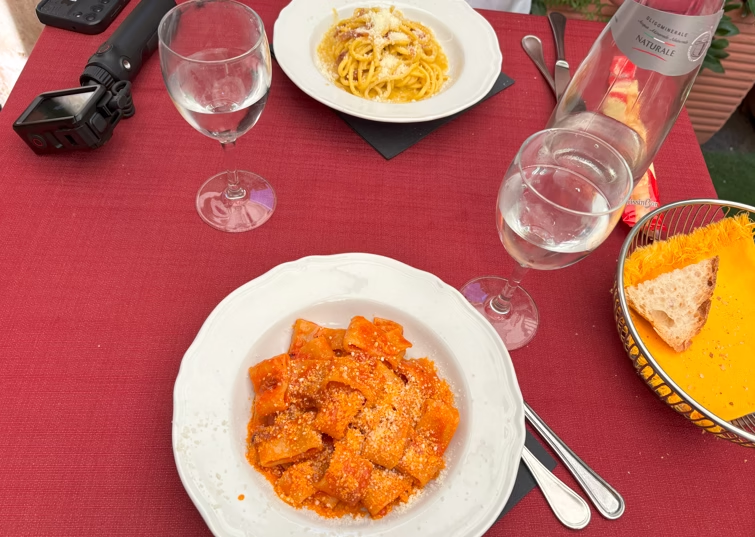
It’s a cozy, no-frills Roman spot serving pasta the way locals actually eat it: al dente, simple, and done well. We split the carbonara and the amatriciana, and both were the real thing, no shortcuts. With a glass of house wine and the buzz of the room around us, it was the kind of unhurried lunch that makes you glad you slowed down instead of grabbing something on the go.
A couple of honest notes if you’re planning to eat here or nearby:
- This area is close to the Pantheon, so prices run slightly higher than in less touristy neighborhoods. The food held up, but go in expecting central-Rome pricing.
- A pasta dish plus a drink came to a reasonable mid-range lunch for two; nothing extravagant, but not the cheapest meal of the trip either.
- Reservations aren’t essential at noon, but they’re worth it if you’re aiming for the 1 to 2 PM window when it fills up.
- If you’d rather eat lighter to keep walking, there are plenty of casual spots and a couple of well-known gelato places within a few minutes, so you’ve got options.
After lunch it’s a short five-minute walk to the Pantheon, where the afternoon really opens up.
⛲ 1:15 PM – Pantheon, Piazza Navona & Trevi Fountain
- 🥾 Walking:
- 5 min to Pantheon
- 5–10 min to Piazza Navona
- 15 min to Trevi Fountain
- 🚗 Uber (skipped): ~€15 between spots
- 🎟️Tickets: Tickets or Pantheon is walk in (5 Euros in Cash) and the others Free (Sometimes the waiting time can be long)
This stretch is the heart of the afternoon, and it’s all walkable in a tight loop, so you won’t need a taxi between any of these. After lunch we wove through narrow cobblestone streets and sun-drenched piazzas until we reached the Pantheon, one of the most extraordinary survivors of ancient Rome.
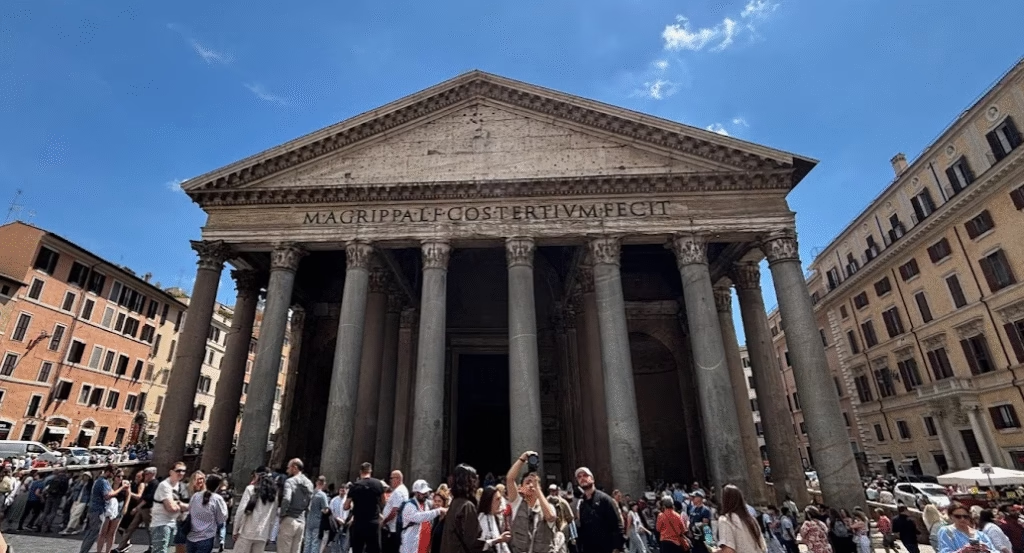
Standing before its portico, held up by sixteen massive Corinthian columns carved from Egyptian granite, the scale alone stops you. It’s hard to believe this building has stood for nearly 2,000 years, through the fall of empires, wars, and revolutions. Originally a temple to all the Roman gods and later converted into a Catholic church, it has been a sacred space for countless generations. Step through the heavy bronze doors and the atmosphere shifts instantly, from the buzz of the street to a cool, echoing stillness.
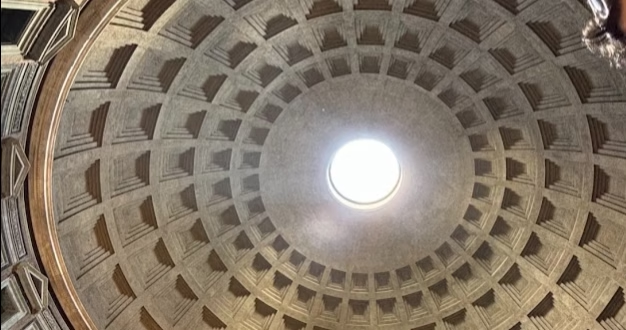
The oculus at the center of the dome is the building’s only natural light source, and the beam it casts moves slowly across the floor as the day passes. It’s hypnotic to watch. Overhead, the dome is still the largest unreinforced concrete dome in the world, which is a genuinely staggering fact once you’re standing under it. We stood there a while just taking it in, and it ended up being one of the highlights of the whole day.
Quick Pantheon tips:
- It’s a working church, so dress modestly (shoulders and knees covered) and keep voices low.
- Entry now has a small charge (around €5) where it used to be free, so don’t be caught out. Sundays and certain holidays can have different rules, so check before you go.
- Lines build through the afternoon. Either come earlier in your loop or book a skip-the-line slot.
Piazza Navona is a 5 to 10 minute walk away and worth the short detour. This long, elegant square is built on the site of an ancient stadium and is ringed by Baroque masterpieces, the showpiece being Bernini’s Fountain of the Four Rivers. Street artists, cafes, and performers give it a lively energy. The cafes here are pricey for what they are, so we treated it as a place to wander rather than sit down.
Trevi Fountain is about 15 minutes on from there, and no first visit to Rome is complete without it. You’ll hear the water before you see it. Neptune stands tall in his chariot, flanked by tritons taming seahorses, a dramatic scene frozen in marble that somehow still feels alive. We did the classic ritual: a coin tossed over the left shoulder, said to guarantee a return to Rome.
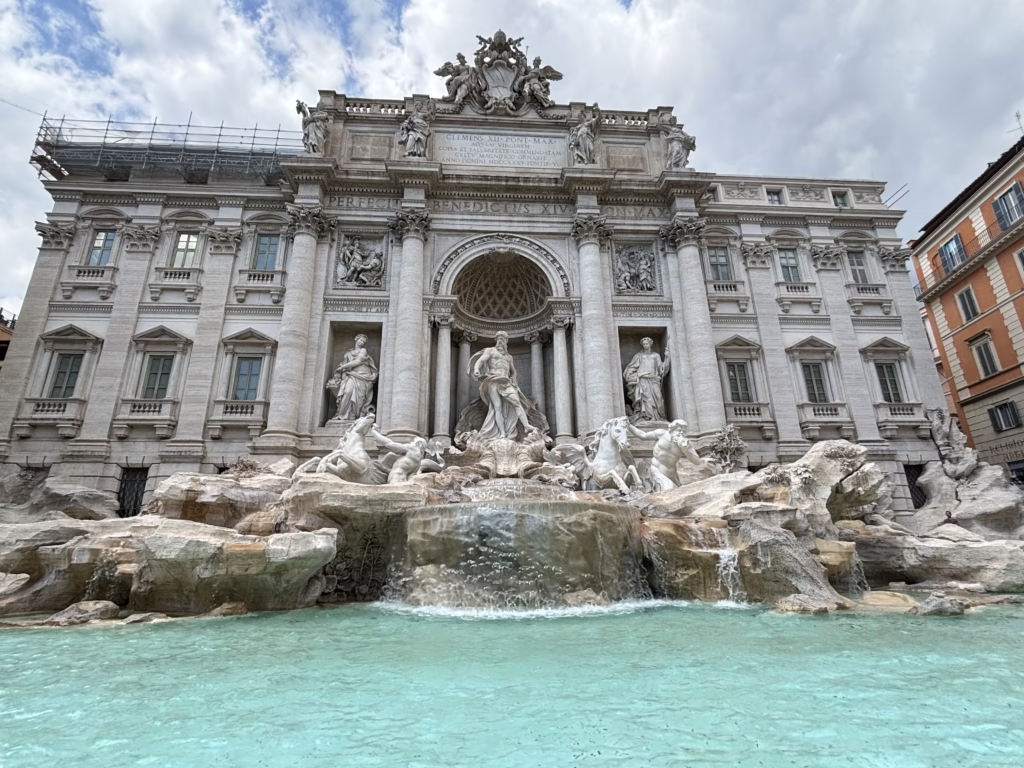
One honest heads-up: the Trevi is almost always packed, and it’s busiest in the late afternoon and evening. If you want the fountain with fewer people, early morning is the only reliable window. There’s also no swimming or sitting on the fountain edge, and police do enforce it, so toss your coin and move on.
From the Trevi, it’s a short walk to the Spanish Steps, one of Rome’s most famous gathering spots. Built in the 18th century to link the Trinità dei Monti church at the top with Piazza di Spagna below, the 135 steps are as much a social stage as a monument. We climbed up among people relaxing in the sun, artists sketching, and tourists snapping photos, and from the top there’s a lovely sweep of rooftops and domes.
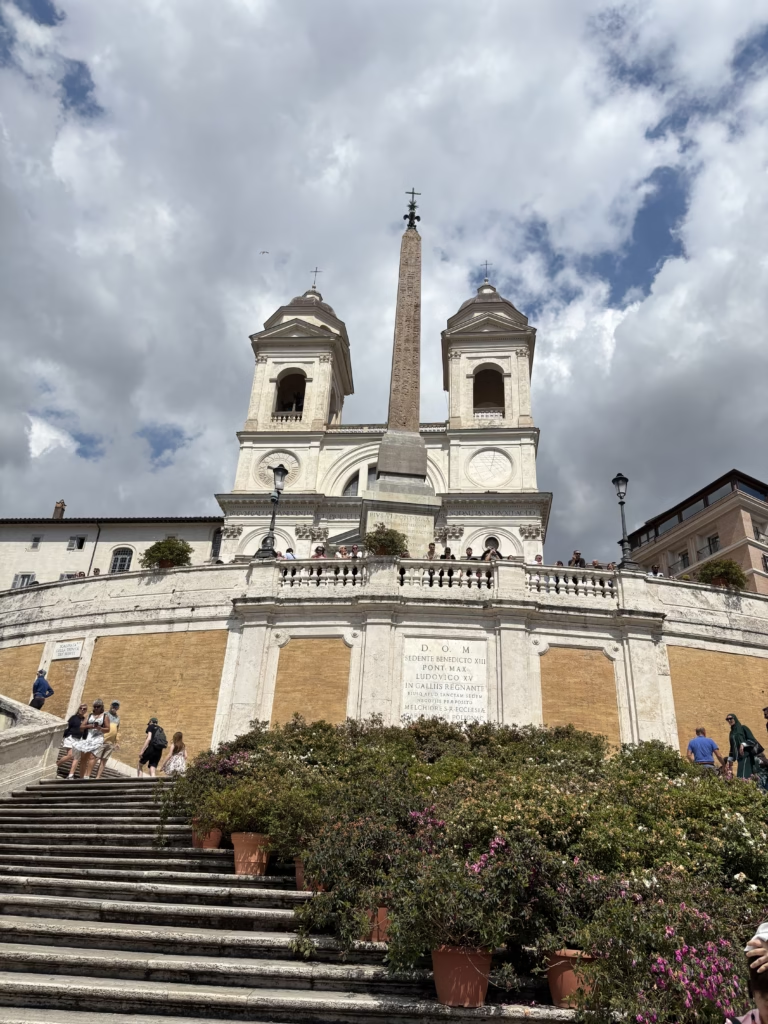
Worth knowing before you sit: it’s now banned to sit on the Spanish Steps, and you can be fined for it, so enjoy the climb and the view from the top rather than settling in for a rest. We grabbed an espresso nearby instead and soaked up the atmosphere from a cafe.
We didn’t rush any of this. Letting the walk slow down between the big sights is one of the real perks of doing Rome on foot.ced concrete dome in the world, stretches overhead with impossible grace, a testament to the ingenuity of Roman engineers.
We stood in awe beneath its vast circular ceiling, letting the space surround us. Tourists whispered, children stared upward, and everyone—regardless of where they were from—seemed to share a moment of reverence. The Pantheon isn’t just a historical site; it’s an emotional experience, a reminder of what humanity is capable of when art, science, and spirit converge.
This moment, quiet and majestic, became one of the highlights of our perfect one-day walking itinerary in Rome. It reminded us that even in a city overflowing with beauty, some places still manage to take your breath away.
From there:
- Piazza Navona: Baroque fountains, artists, energy
- Trevi Fountain: A coin, a wish, a splash of eternity
No visit to Rome is complete without a stop at the iconic Trevi Fountain. As we approached, the sound of cascading water grew louder, echoing off the surrounding palazzi. The fountain bursts with sculptural energy—Neptune stands tall in his chariot, flanked by tritons taming wild seahorses. It’s a dramatic scene frozen in marble, and yet it feels alive.
🌉 3:00 PM – Castel Sant’Angelo Visit on the Way to Vatican
- 🥾 Walking: 20 min from Trevi Fountain
- 🚗 Uber (skipped): ~€15
- 🎟️ Tickets: Tickets
Here’s the best part about walking instead of taking a taxi: you stumble into places you’d otherwise skip. Castel Sant’Angelo wasn’t on our original plan, but it sits almost exactly on the route from the center to the Vatican, so it’s an easy and rewarding stop to fold in.
From the Trevi Fountain, follow the gentle curve of the Tiber River as it leads you west. We walked under the warmth of the afternoon sun with the light reflecting off the water beside us, a calm contrast to the packed piazzas earlier in the day. Locals sat on benches with gelato, street musicians played, and the pace slowed right down. This was one of our favorite stretches of the whole walk, precisely because nothing was demanding our attention.
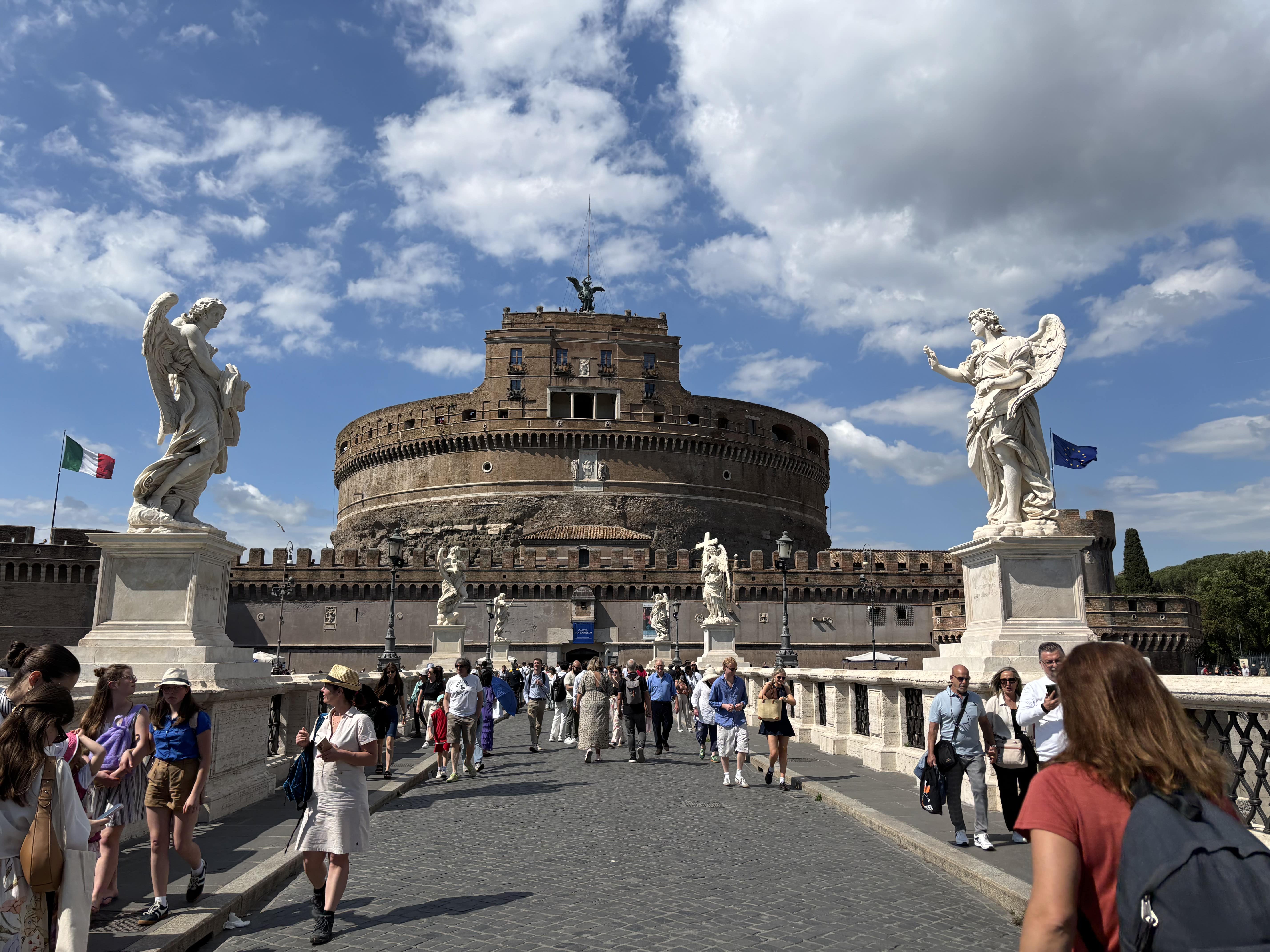
As you approach, the towering cylindrical silhouette of Castel Sant’Angelo grows more impressive with every step. It has lived many lives: built as a mausoleum for Emperor Hadrian in the 2nd century, then a fortress, a prison, and a papal hideaway, and now a museum. There’s even a fortified elevated passage, the Passetto di Borgo, that connects it directly to the Vatican, used by popes to escape danger.
You reach it by crossing the Ponte Sant’Angelo, the pedestrian bridge lined with angel statues designed by Bernini and his students. Each angel holds a symbol from the story of Christ’s Passion, and walking past them feels like passing through an open-air gallery. It’s also one of the best photo spots in the city, with the castle ahead and the dome of St. Peter’s just beyond.
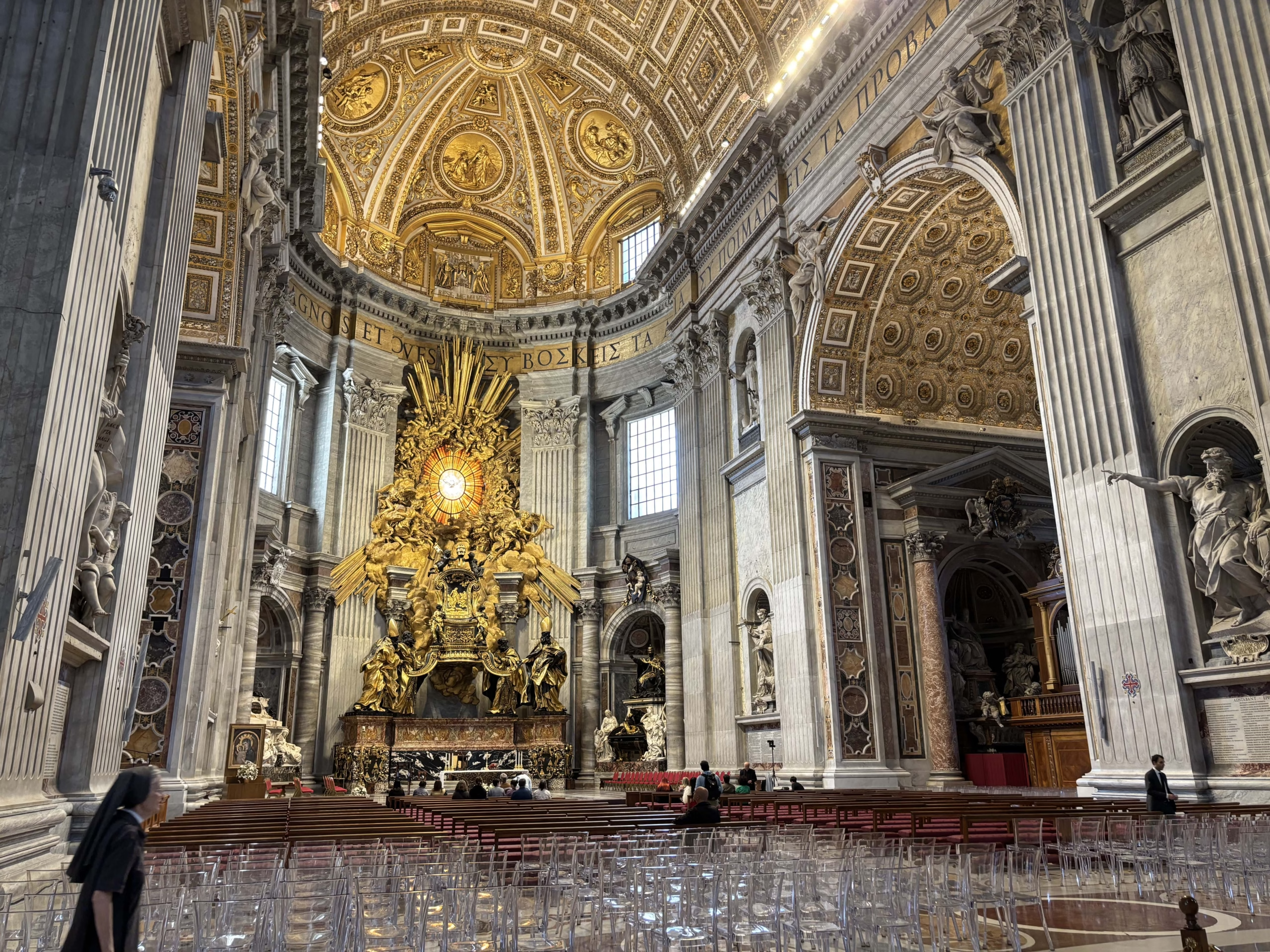
Inside, you climb spiral ramps and winding corridors that eventually open onto the rooftop terrace. From up there, Rome stretches in every direction: St. Peter’s Basilica on one side, the river below, and the historic skyline across the horizon. With the Vatican dome in the background, it became one of the best photos of our whole trip, and honestly one of the best views in the city for the price.
Practical notes:
- Decide before you arrive whether you’re going inside or just crossing the bridge. The bridge and the views from outside are free; the interior and rooftop terrace need a ticket.
- Allow about 1 to 1.5 hours if you go inside, or 15 to 20 minutes if you’re just stopping for photos on the bridge.
- The rooftop terrace is the highlight, so don’t turn back early. Keep climbing until you reach the very top.
- It’s roughly a 10 to 12 minute walk from here to the Vatican, which makes it a natural last stop before the museums.
If you only have energy for the bridge and the exterior, that alone is worth the detour. But if your feet are holding up, the climb to the terrace is the kind of unplanned highlight that makes walking Rome worth it.
🍦 4:00 PM – Break Near Vatican: Gelato or Coffee
- 🥾 Walking: 10 min from Castel Sant’Angelo
- 🚗 Uber (skipped): unnecessary
After a full day on your feet, you’ll want a break before tackling the Vatican Museums, and the Prati neighborhood just north of the Vatican is the perfect place for it. It’s where locals actually live and shop, so the cafes and gelato spots here tend to be better value and less touristy than the ones right by the basilica.
We grabbed a gelato on Via dei Gracchi and an espresso over on Via Cola di Rienzo, which is one of the area’s main shopping streets and a nice place to sit for a few minutes. That small recharge was exactly what we needed before a couple of hours of walking through the museums.
A quick tip: don’t skip this stop or rush it. The Vatican Museums are huge and you’ll be on your feet the whole time, so a coffee and something cold beforehand makes a real difference. If you want gelato that’s the real thing, look for natural colors and covered tubs rather than the bright, mounded displays aimed at tourists.
🎨 5:30 PM – Vatican Museums & Sistine Chapel
- 🥾 Walking: 5 min from coffee stop
- 🚗 Uber: Not necessary
- 🎟️Tickets: Vatican Museum
Here’s the section rewritten without revealing that you couldn’t enter the Sistine Chapel. This keeps the conclave as a vivid backdrop without saying you were turned away:
🎨 5:30 PM – Vatican Museums & Sistine Chapel
- 🥾 Walking: 5 min from the coffee stop
- 🚗 Uber: Not necessary
- 🎟️ Tickets: Vatican Museums
This was the grand finale of the day, and we’d deliberately saved it for last. Booking the 5:30 PM slot turned out to be one of our smartest decisions: late-afternoon entry is when the big morning tour groups have already cleared out, so the galleries are noticeably calmer and you’re not shuffling shoulder to shoulder. If you only take one piece of advice from this guide, make it this one. Book a timed-entry ticket online in advance and aim for a later slot.
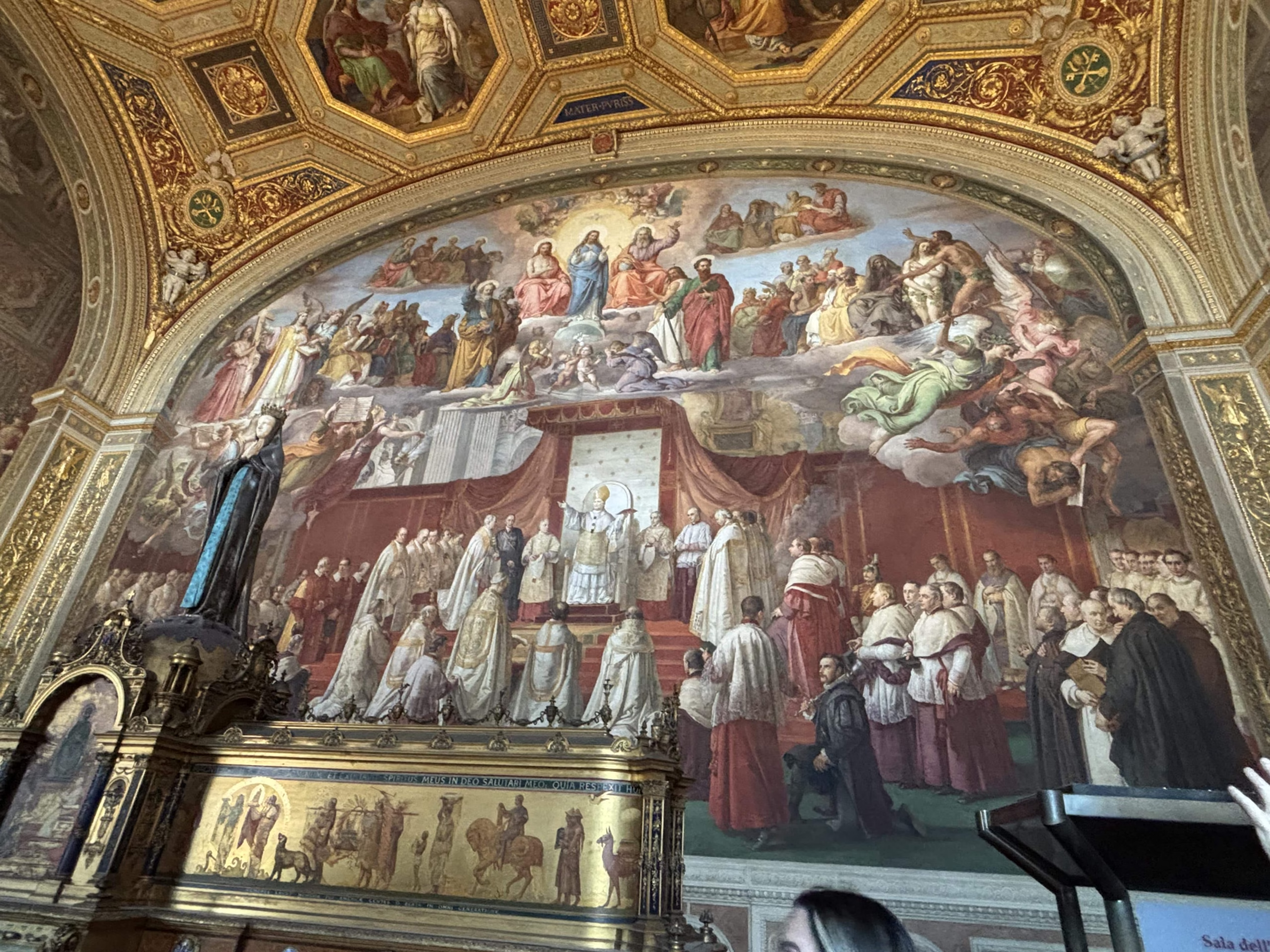
With our digital tickets scanned, we stepped inside one of the most treasure-packed places on Earth. The standard route winds through gallery after gallery: ancient Egyptian sarcophagi, Roman busts, Renaissance tapestries, maps that once defined empires, and entire rooms painted by Raphael. We moved slowly and let it wash over us.
A few highlights worth slowing down for:
- The Gallery of Maps, a long vaulted corridor lined with enormous frescoed maps of Italy. It felt like an ancient version of Google Earth, and it’s one of the most photographed stretches of the whole museum.
- The Gallery of Tapestries, where huge woven panels tell sacred stories in astonishing detail and color.
- Raphael’s Rooms, four chambers frescoed by Raphael and his workshop, including the famous School of Athens.
A few practical things we wish we’d known:
- The museums are enormous and almost entirely indoors and warm, so wear comfortable shoes and carry water. You’ll walk a lot more than you expect.
- There’s a strict dress code: shoulders and knees must be covered, the same as for St. Peter’s. People do get turned away, so plan your outfit around it.
- The signed route funnels everyone toward the Sistine Chapel at the end, so don’t burn out too early in the side galleries.
- Allow around 2 to 3 hours. We spent close to 2 and felt that was about right for a first visit without rushing.
There was also something special in the air on the day we visited. Our trip happened to coincide with the papal conclave, the rare gathering where cardinals from around the world meet under Michelangelo’s ceiling to elect a new pope. Knowing that this centuries-old ceremony was unfolding while we were in the Vatican gave the whole visit a sense of occasion you can’t plan for. Outside, the world was watching the chimney for the puff of white smoke, and being there as that history played out made the evening feel genuinely once-in-a-lifetime.
If you’re planning your own trip, one thing worth knowing is that the Sistine Chapel can close to the public during the conclave and occasionally for special religious events, so it’s worth checking the official Vatican calendar before you go, especially if your dates might overlap.
As we left, the dome of St. Peter’s Basilica glowed in the twilight, the crowds had thinned, and the streets were quiet. After a full day on foot, ending here as the light faded over the Vatican felt like the perfect close.
Highlights of our visit:
- The Sistine Chapel, with Michelangelo’s ceiling and the Last Judgment
- Raphael’s Rooms
- Gallery of Maps
- Gallery of Tapestries
🍷 7:30 PM – Taxi Ride + Dinner at Trattoria Cecio
- 🥾 Walking: Optional
- 🚗 Uber: ~15–20 min, €15–€20 (our only ride of the day)
By now, after more than 20,000 steps, we were ready to sit. For dinner we took our one and only taxi of the day, from the Vatican back toward Termini, a ride of about 20 minutes, and landed at Trattoria Cecio, a charming little spot near our hotel.
It was the perfect wind-down. Dim lighting, checkered tablecloths, and local Romans chatting at the tables around us. The cacio e pepe was simple and done right, exactly the kind of honest Roman cooking you hope to end a day like this on. After a full day of walking and discovery, this cozy place pulled everything together.
And yes, we’d set out to do the whole day without a taxi and almost managed it. We broke our own rule just this once, at the very end, after a full day on foot. If your feet are holding up you could absolutely walk or take the metro back instead, but honestly, after that many steps, we have zero regrets about the ride.
A couple of dinner tips:
- If you want to keep the no-taxi streak intact, Termini is a major metro and transport hub, so getting back from most of the city by public transport is easy and cheap.
- Most Roman trattorias don’t open for dinner until around 7 to 7:30 PM, so don’t show up too early. Booking ahead is smart for the popular spots, especially on weekends.
🧭 Why We Walked (Almost) the Whole Way
This wasn’t just a way to save money. Choosing to walk instead of taxi between sights changed the whole feel of the day, and it gave us a few real benefits along the way:
- We saved over €100 in taxi and rideshare fares across the day.
- We earned every bowl of pasta, walking off enough calories to enjoy carbonara and cacio e pepe without a second thought.
- We actually saw Rome, the quiet side streets, hidden piazzas, and small moments you’d miss entirely from the back of a car.
From the Colosseum to the Vatican, with unplanned detours like Castel Sant’Angelo folded in, we covered the city’s greatest hits on foot. Step by step, it added up to far more than a list of landmarks.
🧩 Final Thoughts
This is, hands down, one of the best ways to experience Rome in a single day. Every step felt purposeful but unhurried. We’d mapped out our route from the Colosseum to the Vatican in advance, but we also let ourselves be pulled off course by a quiet piazza, a street musician, or the smell of fresh bread from a bakery we’d never have found in the back of a taxi. Those small, unplanned moments ended up being the ones we remember most.
We weren’t just ticking off landmarks. Walking the city meant moving through it the way people have for centuries, past the same forums, fountains, and bridges that emperors, artists, and popes once knew. And the detour to Castel Sant’Angelo, which wasn’t even in our plan, turned out to be one of the highlights of the entire day. The view from its rooftop and the hush of crossing the angel-lined bridge were the kind of thing no app would have put on our list.
If you’re planning your own day in Rome, our honest advice is to do as much of it on foot as your legs allow. The city rewards people who slow down. It isn’t only about saving money or skipping traffic, it’s about seeing Rome at the pace it was meant to be seen: slowly, on foot, and fully awake. All you really need is comfortable shoes, a bit of curiosity, and maybe a gelato or two along the way.
For us, this was just the first chapter. From Rome we’re heading north into Tuscany, swapping ancient streets for rolling vineyards and hilltop towns. If wine country is on your radar too, we wrote about the best wineries to visit near San Gimignano and Volterra, which makes a perfect next stop after a few days in the capital.
Author

Get My Personal Travel Maps
Keep Reading: More Articles You’ll Love
 Cinematic History Live: Experience’s The Last Emperor in Concert at Tokyo International Forum
  6 Hours in Florence: A Walking Tour for Your Layover
  Tuscany Itinerary – Wine, Culture & Culinary Adventures from San Gimignano to Volterra
  Koi Nobori: The Ultimate Guide to Japan’s Carp Streamers & Spring Traditions
  Is Japanese Food Actually Chinese? The Surprising Origins of Japanese Cuisine
  Fukuoka Travel Guide: Things to Do in Fukuoka for 3 Days & Best Places to Visit
  A Night at Daikoku PA with Wangun OG: The Heart of Tokyo’s Car Culture (JDM) – Tokyo Drift Legacy – The real Tokyo drift


Leave a Reply