Why Sinchon Is One of Seoul’s Most Underrated Areas
Sinchon is one of those neighbourhoods that does not try too hard, and that is exactly why it works so well. Tucked between two of Korea’s most prestigious universities, Ewha Womans University and Yonsei University, it has a strong student energy without feeling overwhelming or performative. The streets are busy but not chaotic. The food is good and cheap. The bars stay open late but the neighbourhood still feels like somewhere people actually live. If Sinchon reminds you of anywhere in Korea, it is Seomyeon in Busan, the same student-driven energy, the same density of food and shops, just with a southern coastal twist.
I know this because I lived here for over half a year during my Master’s degree at Ewha in 2020. That is not a short visit. You do not stay that long in a place unless it genuinely works for daily life, and that real experience is what makes this guide different from most Sinchon write-ups you will find online. Every restaurant, bar, street and shortcut mentioned here is somewhere I have personally been, eaten, studied or spent time in.
Compared to nearby Hongdae, Sinchon feels calmer and more liveable. Hongdae gets the international attention and the late-night crowds, but locals will tell you that Sinchon has the better food, the more interesting mix of people and a pace that does not exhaust you after three days.
Location Advantage: Right Between Two Major Universities
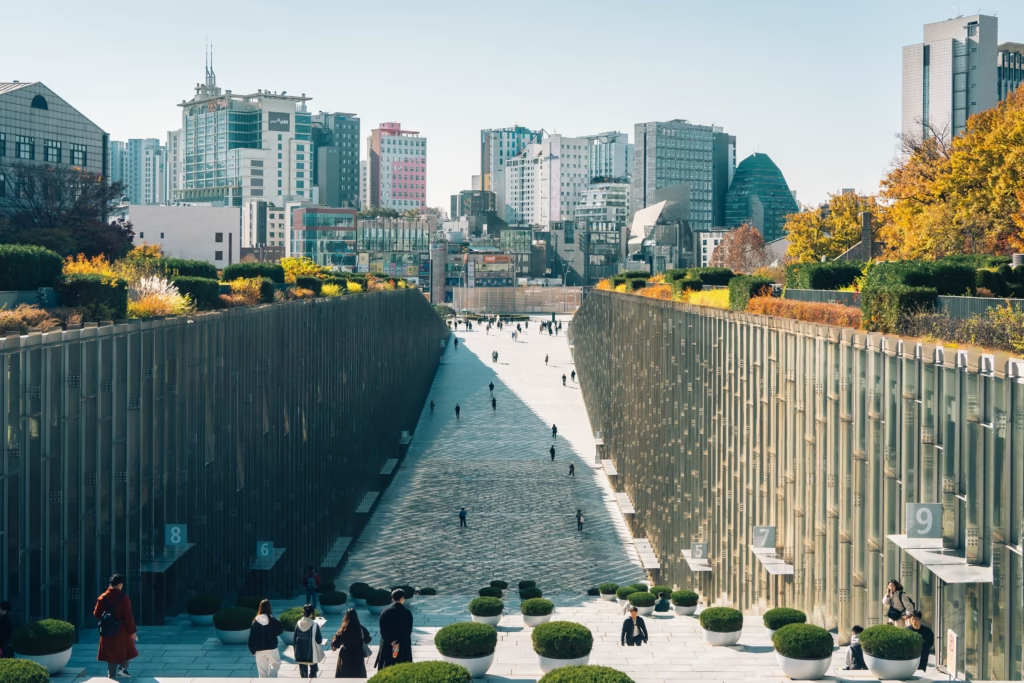
Being located between Ewha and Yonsei creates something you cannot manufacture. Both universities pull in students from across Korea and internationally, which means the neighbourhood has to actually deliver on food, price and atmosphere or it loses its crowd to Hongdae five minutes away. That competition keeps the standards high and the prices honest in a way that purely tourist-facing neighbourhoods never manage.
The result is a constant flow of young people who know what they want and will not pay over the odds for it. The restaurants here are trendy because students made them trendy, not because a developer put them there. The cafes are designed for people who genuinely need to sit for four hours with a laptop and one Americano, which means the wifi is fast, the seats are comfortable and nobody rushes you. The food is good because the people eating it every day will simply stop coming if it is not.
What makes Sinchon particularly interesting is the mix. Ewha draws a strong international student community alongside its Korean student base, and Yonsei has one of the largest international exchange programmes in the country. That mix shows up in the neighbourhood itself, in the food options, the languages you hear on the street and the general openness of the area to people who are clearly not from here. It is one of the few neighbourhoods in Seoul where you can feel like a local within a day or two of arriving, which is not something most parts of the city offer.
This is not a tourist area that happens to have some student cafes in it. It is a real living neighbourhood that has been shaped entirely by the people who eat, study and spend time here every day. The tourists who come and enjoy it are benefiting from standards set by people with high expectations and limited budgets, which is exactly the right foundation for a neighbourhood worth spending time in.
The Hyundai Department Store: Modern Sinchon Landmark
The Hyundai Department Store has anchored the Sinchon neighbourhood since 1998 and unlike a lot of department stores that age into irrelevance, this one has kept pace with the area around it. The building is large, well maintained and covers the full range from high-end Korean and international fashion brands on the upper floors to one of the better food halls in this part of Seoul in the basement.
The shopping floors are clean and well organised in the way that Korean department stores consistently manage to be, with staff who are attentive without being overbearing and a product selection that sits a level above the street-level chains outside. For Korean fashion and beauty brands specifically it is a reliable one-stop option when you want the full range in one place without walking between stores in the heat.
But the basement is the real reason to come.
The food hall underneath Hyundai Sinchon is one of the best in the neighbourhood and genuinely worth visiting even if you have no intention of shopping. Korean department store basement food halls are a category unto themselves, somewhere between a high-end food market, a prepared food court and a specialty grocery, and the Sinchon branch is a strong example of what that looks like done well. Fresh produce, prepared Korean dishes, bakeries, imported goods, banchan by weight and the kind of deli counter that makes you wish you had a kitchen nearby. Even if you just pick up something to eat on the way back to your accommodation it is worth the detour downstairs.
The Hidden Gem: Basement Supermarket
The supermarket in the basement is one of the best in the Sinchon area and significantly more international in its selection than most supermarkets in this part of Seoul. It is the kind of place you wander into for one thing and spend 40 minutes in because the range keeps surprising you.
The imported goods section is where it gets genuinely unexpected. Alongside the usual European chocolate, French wines and Japanese pantry staples, there is raclette cheese. Real raclette. Emmi brand from Switzerland, plus a second lesser-known variety sitting next to it on the shelf. Finding it stopped me completely the first time. You do not expect to turn a corner in a basement supermarket in Sinchon and come face to face with something that belongs on a mountain in the Alps.
For Swiss visitors it is one of those small moments that Seoul occasionally delivers, the city being so internationally connected and so quietly thorough in what it stocks that it catches you off guard. For everyone else it is a reminder that Seoul’s relationship with international food culture goes considerably deeper than most people expect before they arrive.
If you are self-catering or just missing something from home, the Hyundai basement supermarket is worth knowing about. It will not have everything but it will have more than you think.
Food Scene: Why Sinchon Beats Hongdae
Sinchon’s biggest strength is food. Period.
Unlike trend-heavy areas, restaurants here survive only if they are actually good. And that leads to something interesting:
👉 Korean restaurants get replaced very fast
👉 Only strong concepts survive
That’s why when you find a place that’s been there for years, you know it’s worth it.
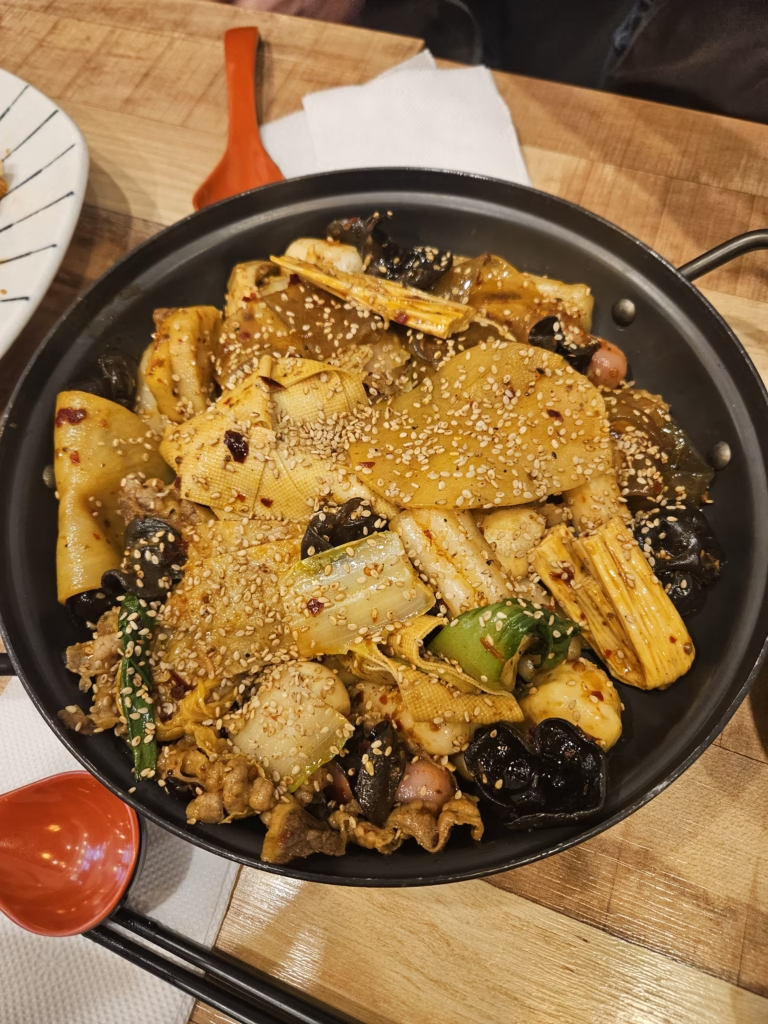
Malatang Spot That Actually Survived
Here’s the rewritten version:
Mido Maeunhyangsot
One of the best meals you can have in Sinchon is at Mido Maeunhyangsot, and the fact that most visitors have never heard of it is exactly why it is worth mentioning.
Malatang restaurants come and go in Sinchon at a pace that makes your head spin. The neighbourhood turns over its food businesses constantly as student tastes shift and rent pressures bite. Mido Maeunhyangsot has survived all of that and kept a loyal following of Ewha and Yonsei students coming back regularly, which in this neighbourhood is the most reliable quality signal there is. You cannot fool a student crowd twice.
The broth is what makes it. Rich, deeply spiced and well-balanced in a way that a lot of malatang places miss, hitting the numbing heat of the Sichuan peppercorn without overwhelming everything else in the bowl. It is the kind of flavour that makes you want to go back before you have even finished the first visit.
One ordering tip that makes a real difference: build your bowl mostly from vegetables and add the meat separately rather than mixing everything together from the start. The textures stay cleaner and the flavours come through better when the components are not all cooked down together from the beginning. The staff will not tell you this unprompted but it changes the meal noticeably.
And do not skip the sweet and sour pork with honey orange sauce. It sounds like an afterthought on the menu and it is genuinely one of the best things on the table. Order it as a side without overthinking it.
Korean Food Turnover Reality
Something worth understanding about Sinchon before you start looking for places to eat is how brutal the neighbourhood is for restaurants that are not genuinely good.
The customer base here is almost entirely students. They eat out multiple times a day, they have limited budgets, they talk to each other constantly and they have no loyalty to a place that does not earn it. A restaurant that opens in Sinchon and coasts on a good location or a nice interior does not last. The turnover is relentless and it happens fast. Spots that seemed busy one semester are gone by the next.
This makes Sinchon one of the most self-regulating food neighbourhoods in Seoul. The places that survive a year do so because they are good. The places that have been there for three, four or five years are almost always exceptional by the standards of what they do. Longevity here is not accidental and it is not carried by nostalgia or habit. It is earned meal by meal from a crowd that will simply go somewhere else the moment the quality slips.
When you are deciding where to eat in Sinchon, a queue of students at lunchtime is the most reliable indicator you will find. No review, no rating and no recommendation ages as quickly as the judgment of a thousand people who eat in the same neighbourhood three times a day.
Café Culture in Sinchon: More Than Just Coffee
Sinchon has one of the strongest café cultures in Seoul and it is entirely student-driven, which means it operates on a different set of priorities than the Instagram-optimised coffee shops you find in Gangnam or Itaewon. The cafes here are designed for people who need to actually sit down and get things done, not just take a photo and leave. Fast wifi, comfortable seats, reasonable prices and staff who understand that a single Americano might last three hours. That combination is harder to find in Seoul than you would think.
One experience that is worth going out of your way for is the Icetino at Ediya Coffee. Ediya is a Korean coffee chain that does not get the international attention of the specialty roasters but has a loyal student following for good reason: the prices are honest and the drinks are consistently good. The Icetino is not on the menu as a named item everywhere, but the order is simple: ask for a peach iced tea with one or two shots of espresso added. The combination of the fruity sweetness and the bitterness of the espresso hitting together over ice is genuinely surprising the first time and immediately something you want again. It has become something of a student ritual in this part of Seoul and for good reason. If you want to know more about the trend behind it, the full story is in the Icetino guide here.
There is also something quietly charming about the fact that the person making your coffee at Ediya in Sinchon is more than likely an Ewha student working a part-time shift between classes. It is a small detail but it adds to the feeling that you are not just visiting Sinchon, you are briefly living in it.
Star Square Sinchon: Where the Neighbourhood Comes Alive

During the day, the place to be in Sinchon is Star Square. It is an open plaza in the heart of the neighbourhood that functions as an unofficial stage, gathering point and social hub all at once, and on any given afternoon, it is one of the most energetic outdoor spaces in this part of Seoul.
What makes it genuinely worth seeking out is how unpredictable it is. There is no programme, no ticketing and no guarantee of what you will find when you arrive. That is entirely the point. On one visit you might walk into a K-pop dance cover group performing with live instruments, which changes the energy of the songs completely compared to the usual backing track setups. On another you might find a Chinese gymnast performing in the middle of the square with a crowd three people deep around them, completely unannounced and completely captivating. I have seen both and neither felt like something that was supposed to happen. That spontaneity is what separates Star Square from the more curated street performance spaces you find in other parts of Seoul.
The K-pop cover scene here is particularly strong. The groups that perform in Star Square tend to be serious about what they do, practising for weeks before showing up in public, and the standard of performance is often genuinely impressive. The addition of live instruments when it happens adds a dimension that the recorded versions simply do not have, and watching a crowd react to a familiar song played live in an open square on a Saturday afternoon is one of those Sinchon experiences that is difficult to describe but very easy to remember.
On weekends the square fills up properly. People stop on their way to somewhere else and end up staying for an hour. Groups sit on the steps with food from nearby stalls watching whatever is happening. Students film everything. The atmosphere is raw and unscripted in the way that only genuinely spontaneous public spaces manage to be, and it gives you a clearer sense of what Sinchon actually feels like to live in than any restaurant or bar can.
If you are in Sinchon during the day, build Star Square into your route. Go without expectations and stay for whatever is happening. It is almost always worth it.
Shopping on Yonsei-ro: The Main Shopping Street in Sinchon

Yonsei-ro is the spine of Sinchon. It runs straight through the centre of the neighbourhood and connects everything, and whatever you are planning to do in the area you will end up walking it multiple times without meaning to. That is not a complaint. It is the kind of street that rewards repeated passes because there is always something you missed the first time.
The shopping along Yonsei-ro is not trying to be Myeongdong or Gangnam. There are no luxury flagships, no tourist-facing souvenir stalls and no pressure to spend more than you intended. What you get instead is a well-curated mix of Korean fashion stores, small independent boutiques, cosmetics shops and accessory stores, all priced for a student budget and all stocked with the kind of things that people actually wear rather than things that look good on a display. The fashion leans into current Korean streetwear and everyday womenswear trends, which means the pieces are genuinely relevant rather than generic.
The street food scattered along the route is part of what makes Yonsei-ro work as an experience rather than just a shopping strip. Tteokbokki carts, hotteok stalls, skewered snacks and the occasional pojangmacha set up along the pavement turn the whole street into something you move through slowly rather than walk down quickly. Shopping and eating blur into each other naturally and most people end up spending two or three hours on a stretch of street that looks like it should take twenty minutes.
Compared to Hongdae, Yonsei-ro is noticeably calmer. The crowds are there but they move at a pace that lets you actually look at things rather than just being carried along by foot traffic. It is lively enough to feel like something is always happening and relaxed enough that you never feel like you need to escape it. That balance is harder to find in Seoul than most people realise before they get here, and it is one of the main reasons Sinchon consistently wins over the people who spend real time in the neighbourhood.
Nightlife: Chill Instead of Chaos
If you’re looking for nightlife without the madness of Hongdae, Sinchon is perfect and relaxed. But don’t expect too much.
Cozy Lounge for Cocktails
Cozy Lounge Sinchon is one of the best spots in the area if you’re looking for a more relaxed night out. The atmosphere is calm and comfortable, perfect for unwinding after a long day around campus. Their cocktails are well-made and reasonably priced, and if you have an Ewha student ID, you can even get a discount.
It’s the kind of place where conversations come naturally. No loud music, no chaos, just a smooth, enjoyable evening with good drinks and the right vibe.
Woodstock Sinchon: A Timeless Vinyl Bar Since 1992
One place that truly stands out in Sinchon is Woodstock Sinchon, a legendary bar that has been around since 1992. In a neighborhood where most places disappear after a few years, that alone says a lot. What makes it special is its focus on music. The DJ plays exclusively vinyl, creating a completely different vibe compared to typical bars. You’re not listening to random playlists, but to carefully selected tracks that give the whole night a unique rhythm.
The atmosphere is where Woodstock really shines. It’s warm, slightly retro, and feels authentic without trying too hard. You’ll find a mix of students, locals, and regulars who keep coming back, which adds to the charm. The drinks are also on point, well made, strong, and fairly priced. It’s the kind of place where you plan to stay for one drink and end up spending the whole evening. In a fast changing area like Sinchon, Woodstock is one of the few places that still feels real.
What Happened to Mike’s Cabin?
If you have done any research on Sinchon nightlife you will have come across Mike’s Cabin. It was one of the most well-known international bars in the neighbourhood for years and a reliable first stop for foreign students and visitors looking for an English-friendly night out in this part of Seoul.
The Sinchon branch is permanently closed now. It is worth knowing before you make a trip specifically for it.
The good news is that the Hongdae location is still open and running, a short distance away and easy to reach on foot or by subway. If you want that international crowd, familiar bar format and the kind of night where you will end up talking to people from six different countries before midnight, Hongdae Mike’s Cabin still delivers exactly that. It is not Sinchon but it is close enough that it fits naturally into an evening that starts in the neighbourhood and moves west as it gets later.
Where to Stay in Sinchon: What Nobody Tells You
Finding accommodation in Sinchon is straightforward but there is one thing worth knowing before you book, because it will save you a moment of confusion when you check in.
A significant number of the hotels in Sinchon are love hotels. Before that puts you off, it is worth understanding what that actually means in a Korean context, because it is quite different from the associations the term carries elsewhere.
Korean love hotels are not the seedy, hidden places the name might suggest. Many of them are modern, well-maintained and recently renovated, with interiors that would not look out of place in a mid-range business hotel anywhere in Europe. Large TVs, good bathrooms, comfortable beds, fast wifi and a central location are standard. A lot of tourists end up staying in one on their first trip to Korea without realising it until they check the amenities drawer.
Which brings us to the reliable way of knowing whether your hotel falls into this category. Check what they have provided in the room. If the welcome kit includes the usual toothbrush, miniature skincare products and a small condom alongside everything else, you are in a love hotel. It is a consistent detail across the category and once you know to look for it, it becomes something of a running joke rather than a surprise.
Should You Avoid Them?
Not necessarily. A well-rated love hotel in Sinchon will often give you more space, a better bathroom and a more central location than a budget guesthouse at the same price point. The value for money at the mid-range end of the category is genuinely good.
The ones to avoid are the cheapest options. Lower-priced love hotels can sometimes have rooms without windows, a lingering cigarette smell or fixtures that have not been updated in a while. Read reviews carefully, filter for recent ones, and pay attention to comments about smell and natural light. Do that and staying in Sinchon becomes both comfortable and, if nothing else, a good story to tell when you get home.
Connectivity: SIM Cards, eSIM & What Changed
Getting connected in Korea used to require a bit of planning. Before eSIMs became mainstream, the most reliable option for foreign visitors was Woori Mobile, one of the few providers that catered specifically to travellers and offered reasonable data plans without requiring a Korean bank account or resident registration number.
The catch was a meaningful one. SIM cards in Korea are tied to your passport, which means they are automatically cancelled the moment you leave the country. If you were doing a multi-country trip and planned to re-enter Korea later, you were starting from scratch each time. It was functional but not seamless.
That system has been largely replaced by something better.
eSIMs have changed the experience of staying connected in Korea entirely. There is no physical card to collect at the airport, no passport registration tied to a cancellation date and no waiting around at a provider desk after a long flight. You set it up before you leave home, it activates when you land and you are online before you have cleared immigration.
A reliable option that works well for Korea and most other destinations is Yesim. The plans are straightforward, the setup takes a few minutes on your phone and the connection quality across Korea is consistently good. For most travellers it is simply the smarter way to handle data now, with none of the friction that came with physical SIM cards and none of the cancellation issues that made Woori Mobile more complicated than it needed to be.
If your phone supports eSIM, which most devices released in the last three years do, there is no good reason to do it any other way.
Why Sinchon Feels Like Home
Living in Sinchon for over half a year gave me something that a weekend visit never could: the rhythm of the place.
Most travel guides cover Sinchon as a stop on a Seoul itinerary, somewhere you spend an afternoon between Hongdae and the next thing on the list. That is not the wrong way to see it but it is the shallow way. Sinchon is a neighbourhood that reveals itself slowly, through repeated mornings at the same cafe, through finding the malatang place that becomes your default Tuesday dinner, through walking the same streets enough times that you start noticing when something changes.
It is not a neighbourhood built around landmarks or photogenic moments. There is no single thing to see that justifies the visit in the way that a temple or a palace does. What it has instead is something harder to find and more valuable once you have it: a daily life worth living. You wake up, walk to Ediya, sit in a cafe that was designed for exactly the kind of slow morning you are having, eat something different for lunch because the options are genuinely endless, and end the night with a quiet drink somewhere that does not ask anything of you.
That rhythm is what Sinchon is actually about. And the only way to properly experience it is to stay long enough to find your own version of it.
Sinchon vs Hongdae: Honest Comparison
| Category | Sinchon | Hongdae |
|---|---|---|
| Atmosphere | Calm, local | Loud, party-heavy |
| Food quality | Higher consistency | Trend-based |
| Nightlife | Relaxed | Intense |
| Crowds | Manageable | Very crowded |
| Authenticity | High | More tourist-focused |
Final Thoughts: Who Should Stay in Sinchon?
Sinchon is the right neighbourhood for you if you care more about eating well than ticking off landmarks, if you prefer a street that feels lived-in over one that has been optimised for tourists, and if you want to feel like you actually belong somewhere rather than passing through it.
It is one of the few places in Seoul where that feeling of being a local comes quickly. Not because the neighbourhood performs it for you but because the infrastructure of daily life, the cafes, the food stalls, the square, the shopping street, is built around people who actually live here. You slot into that naturally within a day or two and by the end of a week it feels like somewhere you have always known.
That is not something every neighbourhood in Seoul offers. Most of them take much longer, or never quite get there at all. Sinchon does it fast and it does it genuinely, which is the best reason to choose it as your base when you are in the city.
Subscribe and get my full Seoul Guide!
Quick Tips
- Spend time at Star Square during the day rather than saving it for the evening. The performances, the crowds and the energy are a daytime phenomenon and you will miss the best of it if you only pass through at night.
- Eat at places that have been around for more than a year or two. In a neighbourhood with this much turnover, longevity is the most reliable quality signal you have. If a restaurant has survived multiple semesters of a student crowd that has no patience for mediocrity, it has earned your business.
- Try the local café chains alongside the specialty coffee shops. Ediya, Mega Coffee and the other Korean chains that dominate Sinchon exist because students with good taste chose them repeatedly over years. They are cheaper, more comfortable for long stays and more representative of how people actually live here than the curated Instagram cafes that come and go.
- Sort out your data before you land with Yesim. It takes a few minutes to set up at home and means you are connected the moment you arrive with no airport queues and no passport registration issues when you leave.
- Walk the stretch between Ewha and Yonsei at least once, slowly and without a destination. That walk tells you more about Sinchon than any single attraction does.
Author

Get My Personal Travel Maps
Keep Reading: More Articles You'll Love
 Living in Switzerland vs Korea – The Ultimate Expat Guide
  Living in Japan vs Korea – The Ultimate Expat Guide
  What Is Icetino? Seoul’s Peach Espresso Drink Explained
  My First 30 Days in Tokyo: Essential Administrative Steps for International Students
  Busan Travel Guide: Things to Do, See & Eat in Korea
  How to Apply at Sky and Get Accepted at Yonsei University or Big 3 in South Korea (SKY) as a foreigner
  Is Japan Really Living in the Future? What It’s Actually Like