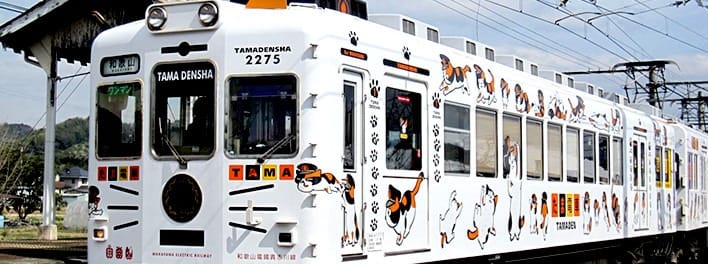
Wakayama City, located in the Kansai region of Japan, is a destination known for its deep historical roots, coastal scenery, and welcoming local culture. Travelers who explore beyond Japan’s major cities often find that Wakayama offers a more personal and immersive experience, shaped by traditions that have been preserved for centuries. The city’s landmarks, regional foods, and community-driven attractions reflect a strong sense of place that many visitors appreciate once they spend time walking its castle grounds or riding its local trains.
One of Wakayama’s most distinctive highlights is the Wakayama Electric Railway and its beloved feline station masters. The story of Tama, the first cat appointed to greet passengers at Kishi Station, is a well-known example of how local initiative can transform a regional railway. Her presence brought renewed attention to a line that had once struggled, and today visitors still come to see the themed trains, the cat-shaped station building, and the successor station cats that continue the tradition. The experience offers insight into how communities in Japan preserve regional identity while creating memorable attractions for travelers.
Discovering Wakayama’s Unique Railway Experience – Wakayama City Tourism
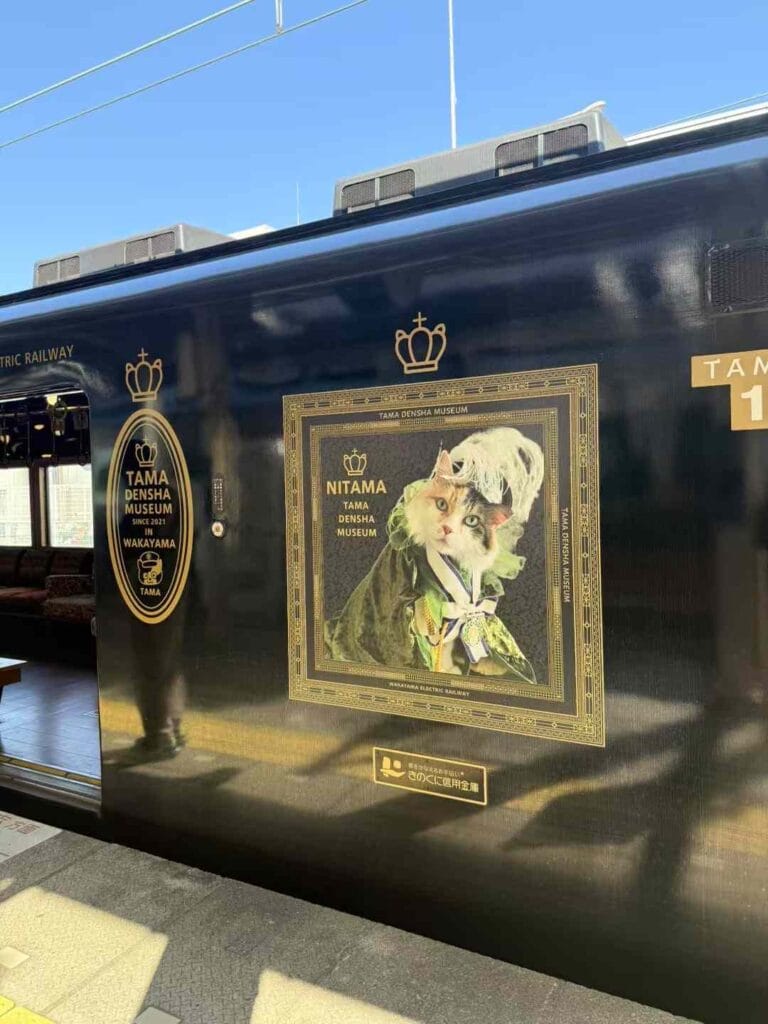
Wakayama City is home to the well-loved Wakayama Electric Railway, a local line that runs along the Kishigawa Line and connects JR Wakayama Station to the rural community surrounding Kishi Station. Although modest in size, this railway has become one of the city’s most recognizable attractions thanks to its themed trains, creative station design, and the long-standing tradition of feline station masters. The most famous of these was Tama, a calico cat whose gentle presence at Kishi Station captured public attention and helped revitalize the railway during a time when passenger numbers were declining. Her role grew from a simple greeting presence to a symbol of local pride, and the community soon introduced themed train cars, cat-inspired station décor, and a welcoming atmosphere that encouraged more travelers to experience the route.
Today, visitors can ride a variety of uniquely designed trains that highlight regional flavors and local character, including cars inspired by toys, fruit, and the beloved station cats. The journey offers a close look at daily life in Wakayama’s quieter neighborhoods, along with views of farmland and gentle countryside. The story of the railway is an example of how community-led ideas can strengthen regional tourism and preserve an important part of local transportation history. For travelers looking for an experience that blends charm, creativity, and cultural insight, the Kishigawa Line is a memorable highlight of any visit to Wakayama City.
Tama: The Feline Station Master Who Captivated the World (Tama Station Master)
Tama, the beloved calico cat known as Tama Station Master, became a global sensation after being appointed the official Station Master of Kishi Station in 2007. She had originally been a stray cat cared for by a local shop owner, yet her gentle personality and calm presence made her an unexpected ambassador for the struggling Kishigawa Line. When she received her honorary title, the aim was to spark interest in the local railway. What followed was far more than anyone expected. Ridership increased, local businesses felt the positive ripple effects, and the entire community experienced a renewed sense of energy. In my view, Tama’s story captures something uniquely heartwarming about regional Japan. Small ideas often grow into something far more meaningful when a community embraces them with sincerity.
Tama’s growing popularity eventually led to her promotion to Super Station Master and later to the title of Honorary Eternal Station Master after her passing in 2015. Visitors can still feel her presence at Tama Shrine, a small yet touching memorial within Kishi Station. Her successor, Nitama, continues the tradition of greeting passengers and preserving the welcoming atmosphere that makes this railway so memorable. For many travelers, a visit to Kishi Station feels less like a stop on a train line and more like a moment of connection with a local story that blends charm, creativity, and genuine community spirit.
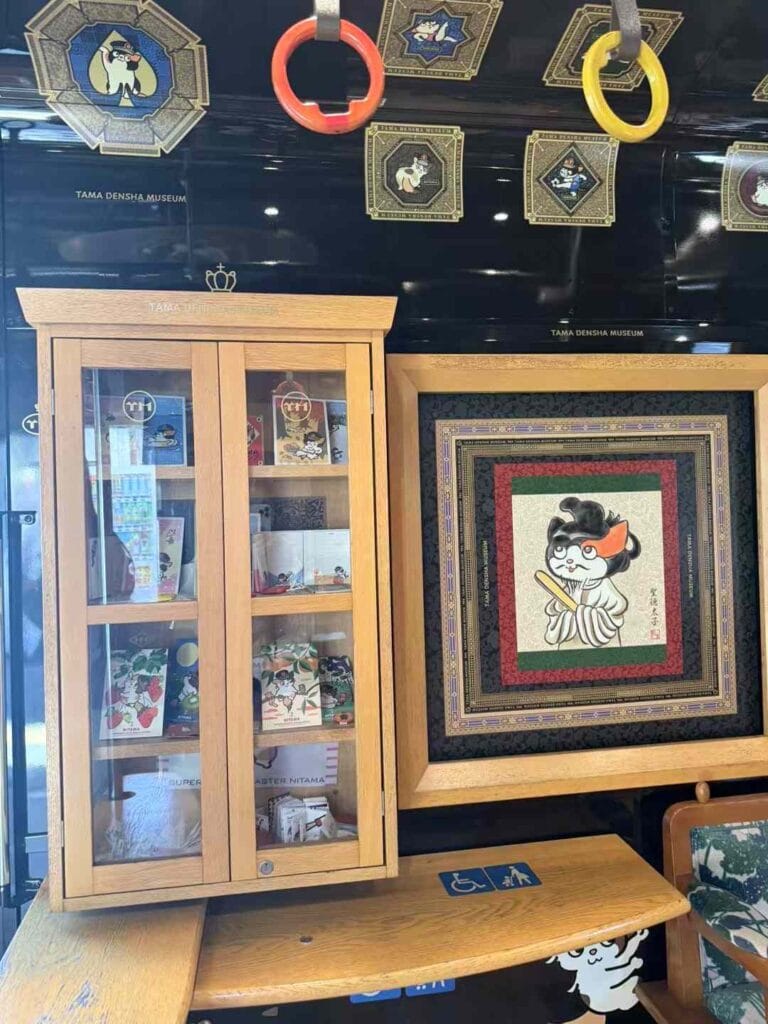
Themed Trains: A Whimsical Journey
The Wakayama Electric Railway features a collection of uniquely themed trains that turn a simple ride along the Kishigawa Line into a memorable part of the journey. Each train was designed to reflect a piece of local culture, community creativity, or regional charm, which makes the experience feel more personal than a typical commuter ride. Travelers often comment that these trains are not only fun to ride but also offer insight into the pride residents take in preserving and celebrating their railway. The attention to detail inside each car, combined with the relaxing countryside scenery outside the windows, creates a travel moment that feels distinctly Wakayama.
Below are some of the themed trains you can encounter on the line:
- Tama Train – Decorated with adorable illustrations of Tama Station Master, this train features cat-themed interiors, from paw-print seats to feline-inspired decorations.
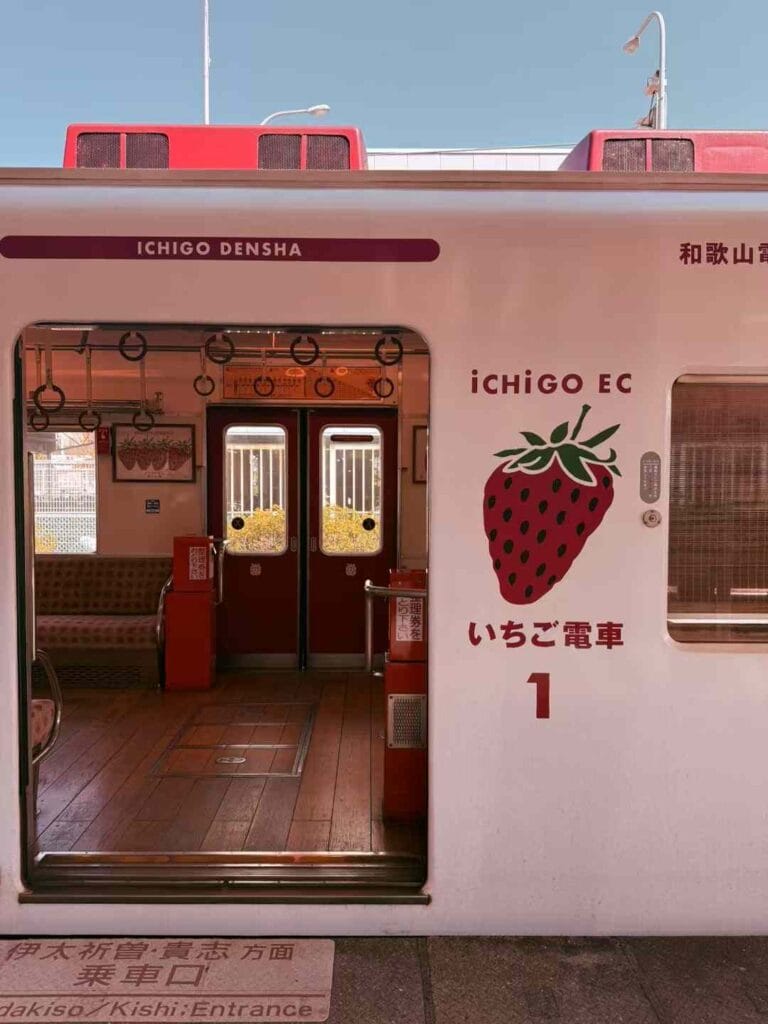
- Strawberry Train (Ichigo Densha) – Highlighting Wakayama’s famous strawberry produce, this train showcases bright red interiors with charming fruit motifs.
- Toy Train (Omocha Densha) – A family favorite, this playful train is filled with toys and vibrant colors, making it a delightful ride for children.
- Umeboshi Train (Umeboshi Densha) – Celebrating Wakayama’s renowned pickled plums, this train highlights local culture and cuisine through artistic design.
A must-have for tourists is the One-Day Free Pass, which allows unlimited rides on the Kishigawa Line, making it convenient to explore the region.
Top Attractions in Wakayama City: Wakayama Travel Guide
Beyond the whimsical railway, Wakayama City offers a wide range of historical sites, natural landscapes, and regional dishes that leave a lasting impression on travelers who take the time to explore. The city’s heritage can be felt in its centuries-old landmarks and traditional neighborhoods, while its coastline and rivers provide peaceful spaces to experience the rhythm of daily life in this part of Kansai. Local cuisine adds another layer of discovery, with flavors that reflect the surrounding sea and fertile countryside. Together, these elements create a destination that feels both culturally rich and warmly inviting.
Wakayama Castle: A Window to the Past
Wakayama Castle is one of the city’s most prominent historical landmarks and offers a clear view into Japan’s feudal past. The fortress dates back to the late 16th century, when it was established under the direction of Toyotomi Hideyoshi’s brother, and it later became an important stronghold for a branch of the Tokugawa family. Its history places it among other significant Japanese castles such as Odawara Castle, which played a vital role in protecting the region east of Kyoto, Shuri Castle in Naha, which served as the royal seat of the Ryukyu Kingdom, and Osaka Castle, known for its massive stone walls and connection to key historical battles. Although parts of Wakayama Castle were lost over time, the main keep was carefully reconstructed to reflect its original architectural character. Visitors can walk through the restored interior, explore seasonal gardens, and enjoy wide views of the city from the upper floors of the keep. The combination of historical depth, cultural significance, and peaceful surroundings makes Wakayama Castle a memorable part of any visit to the region.
Kimiidera Temple: A Serene Escape
Located along the forested slopes of Mount Nagusa, Kimiidera Temple is one of Wakayama’s most cherished spiritual sites and offers sweeping views of Wakayama Bay that feel especially peaceful at sunrise or late afternoon. The temple was founded in the 8th century and has long been known as a place where travelers pause for reflection before continuing deeper into the region. Its grounds feature a large wooden statue of Kannon, the Buddhist deity of compassion, which draws visitors who appreciate both its craftsmanship and its symbolic meaning. Kimiidera is also famous for being one of the earliest places in the Kansai region where cherry blossoms begin to bloom each spring. When the trees surrounding the temple come into full color, the entire complex takes on a soft, almost glowing atmosphere that makes the climb up the stone steps worthwhile. For many visitors, the combination of spiritual history, scenic elevation, and seasonal beauty makes Kimiidera one of the most rewarding stops in Wakayama City.
Kishū Toshogu Shrine: A Historical Landmark
Often referred to as the “Nikko of Kansai,” Kishū Toshogu Shrine is dedicated to Tokugawa Ieyasu, the founder of the Tokugawa shogunate. The intricate carvings and rich architectural details make it a must-visit site for history enthusiasts.
Nature and Scenic Spots
- Tomogashima Islands – A collection of uninhabited islands featuring abandoned fortresses, hiking trails, and stunning coastal views.
- Wakayama Marina City – A seaside resort complex with theme parks, hot springs, and a bustling fish market.
- Kataonami Beach – A picturesque coastline perfect for a relaxing day by the sea.
Savoring Wakayama’s Culinary Delights
Often called the “Nikko of Kansai,” Kishū Toshogu Shrine is one of Wakayama’s most culturally significant landmarks and is dedicated to Tokugawa Ieyasu, the influential leader who established the Tokugawa shogunate. The shrine was built with the intention of honoring his legacy, and its elaborate design reflects the prestige and craftsmanship associated with early Edo period architecture. Visitors immediately notice the intricate wood carvings, layered colors, and decorative motifs that are similar in style to the more famous Toshogu Shrine in Nikko. Walking through the complex gives a clear sense of the respect held for Ieyasu and the lasting influence his leadership had on Japanese history. For travelers who enjoy exploring heritage sites, the shrine offers both artistic detail and historical depth, along with a peaceful wooded setting that adds to the contemplative atmosphere.
Must-Try Dishes:
- Wakayama Ramen – A rich, soy-based pork bone broth ramen served with green onions, bamboo shoots, and roasted pork.
- Mehari-zushi – A unique sushi wrapped in mustard leaves, offering a refreshing and savory taste.
- Umeboshi (Pickled Plums) – Famous throughout Japan, Wakayama’s umeboshi are known for their tangy and salty flavor, often enjoyed with rice or as a snack.
- Kue-nabe (Grouper Hotpot) – A delicacy in Wakayama, this dish features fresh, locally sourced grouper cooked in a hotpot with vegetables and broth.
For an immersive dining experience, visitors can explore Wakayama’s local markets, where fresh seafood and street food stalls offer an authentic taste of the region.
Cultural and Seasonal Events
Throughout the year, Wakayama City hosts a wide range of festivals and cultural events that highlight the region’s lively traditions and strong community spirit. Many of these celebrations have been passed down for generations and offer visitors the chance to experience local customs in a setting that feels both welcoming and deeply rooted in history. Seasonal events often combine religious ceremonies, traditional performances, and regional food specialties, which gives travelers a fuller understanding of how culture and daily life are intertwined in this part of Kansai. Whether it is a vibrant summer gathering or a quieter winter ritual, each festival provides a unique window into the values and creativity of the people who call Wakayama home.
Notable Festivals:
- Wakayama Castle Cherry Blossom Festival (April) – A spectacular celebration featuring light-up displays and hanami (cherry blossom viewing) picnics.
- Kishu Yosakoi Festival (August) – A lively dance festival where participants perform energetic routines in colorful costumes.
- Oto Matsuri (February) – Held at Kamikura Shrine, this fire festival features hundreds of torches carried by participants in a dramatic nighttime procession.
Getting to Wakayama City
Wakayama City is conveniently accessible from major cities like Osaka and Kyoto:
- By Train: The JR Limited Express Kuroshio connects Osaka to Wakayama Station in approximately one hour.
- By Bus: Express buses from Osaka’s Namba and Umeda stations provide a direct and comfortable option.
- By Air: Kansai International Airport is just a short train ride away, making Wakayama an excellent destination for international travelers.
Plan Your Visit to Wakayama City
With its charming railway cats, well-preserved historical landmarks, dramatic coastal scenery, and flavorful regional cuisine, Wakayama City offers a travel experience that feels both distinctive and deeply rooted in local culture. Visitors who spend time here often comment on how naturally the city blends everyday life with centuries of tradition, creating an atmosphere that is warm, welcoming, and easy to explore at a relaxed pace. Whether you are drawn to hands-on cultural encounters, peaceful nature walks, or meaningful historical sites, Wakayama provides opportunities to learn, taste, and experience aspects of Japan that are often missed in larger cities.
If you enjoy history, the city’s castles, temples, and shrines provide valuable insight into the eras that shaped the region. Nature lovers can appreciate the coastline, mountain viewpoints, and quiet temple paths. Food enthusiasts can discover local specialties that reflect the surrounding sea and fertile countryside. This combination of culture, scenery, and hospitality makes Wakayama a destination that rewards curiosity.
So, board the Wakayama Electric Railway, spend a moment with the adorable station masters, and let the journey guide you through an inviting city filled with stories, flavor, and character. For many travelers, Wakayama becomes not just a memorable stop, but a place they look forward to returning to.
Author

Get My Personal Travel Maps
Keep Reading: More Articles You'll Love
 Living in Japan vs Korea – The Ultimate Expat Guide
  Japan Travel Myths vs Reality: What Tourists Still Get Wrong About Japan
  Living in Tokyo vs Zurich – The Ultimate Expat Guide
  The Fascinating Cat Temple of Japan: Gotokuji Temple
  Tourism Destroying Japan Myth — The Truth Behind Viral Tourist Videos and Sanseito’s Narrative
  Matsumoto Itinerary: The Perfect 3-Day Guide Including Kamikochi
  How Hotels Are Ranked in Japan: A Complete Guide to Understanding Japanese Hotel Classification