A lot of people say Japanese food is the best in the world. For me? Honestly, not really. It is good, but there is a catch: you have to be willing to spend a bit of money to get that “incredible” experience everyone talks about.
There is also something most people do not talk about. A large part of everyday Japanese food is actually based on Chinese cuisine. Dishes like ramen, gyoza, and fried rice all come from China and were later adapted in Japan. This does not make them worse, but it is important to understand the real Japanese food origin if you want to see the full picture.
If you just go for the cheap 300-yen plates or settle for convenience store (konbini) food and fast-food chains, the quality is probably not going to be what you expect. We locals sometimes pay very little for a quick dish, but that is just fuel. It is not a real “foodie” experience.
To actually understand why Japanese cuisine is respected worldwide, you need to do two things. First, know where the dishes come from. Second, be willing to spend a bit more for quality.
The real difference appears when you move away from budget chains and start exploring proper restaurants; that is where you see the craftsmanship, ingredient quality, and deep connection to Japanese culture that the country is known for.
🍶 The Izakaya Experience (Small Plates & Social Dining)
The Table Charge & The Raw Truth
When you sit down at an Izakaya, don’t be surprised by a small dish appearing before you even order. This is Otoshi, a mandatory appetizer that acts as a “table charge” (usually 300–800 yen). It’s the price of the seat, so just enjoy it!
As for the food, be brave but smart. You will see Torisashi (raw chicken) and Basashi (raw horse meat). While raw horse is a famous delicacy, raw chicken is high-risk—only touch it if you are at a top-tier, specialized shop. On the bright side, raw eggs here are incredibly safe and high-quality; they are used as a rich, creamy dipping sauce for meats or mixed into rice for a silky finish.
Karaage: The Gold Standard of Fried Chicken
This is not your standard fast-food chicken. Authentic Karaage is marinated deep into the meat with soy, ginger, and garlic, then dusted with potato starch for a light, glass-like crunch. In a good Izakaya, these come out piping hot and so juicy that you have to be careful not to burn your mouth. It is the king of beer snacks.
Yakisoba: The Festival Classic
Yakisoba is a stir-fried noodle dish tossed with a thick, savory sauce and cabbage.
- The Insider Tip: Be careful at Matsuri (festivals like Obon); the stalls there often use cheap, soggy instant noodles. To really enjoy it, order it in a proper restaurant or Izakaya where they sear the noodles on a flat iron grill until they get those delicious, crispy charred bits.
Yakitori & Robatayaki: Grilled Perfection

Yakitori is chicken skewers grilled over binchotan (white charcoal). For a better experience, try Robatayaki. You’ll sit around a hearth where chefs grill seasonal vegetables and whole fish right in front of you, serving them on long wooden paddles. The smoky, charcoal aroma is half the meal.
Onigiri: Beyond the Convenience Store
Forget the plastic-wrapped triangles at 7-Eleven. For a real experience, you need fresh Onigiri from a specialty shop where the rice is still warm and the seaweed is crispy. In an Izakaya, look for Yaki Onigiri—these rice balls are brushed with soy sauce and grilled until they develop a thick, smoky, caramelized crust that cracks when you bite it.
🍽️ The Masterclasses (Dedicated Specialty Restaurants)
Fugu: The Safe Thrill
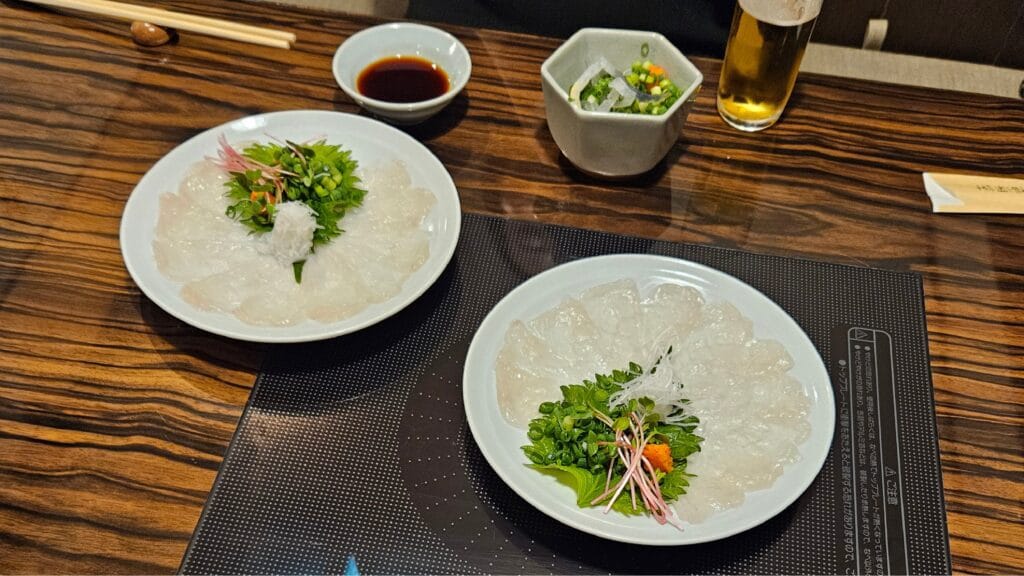
Fugu (pufferfish) is famous for being “deadly,” but in modern Japan, it’s safer than a burger. Chefs have to train for years and be government-licensed just to touch it. It’s nearly impossible to be poisoned in a licensed shop. It is incredibly lean and has a very subtle, clean taste. Try the Tessa (translucent, thin-sliced sashimi)—it’s firm, bouncy, and 100% safe.
Wagyu & Kobe: Don’t Fall for the Scams

Entering a high-end steakhouse is a serious event. Wagyu is famous for its “Shimofuri” (fat marbling) that melts at body temperature.
- My personal favorite in Tokyo is VinIX (Motoazabu), a hidden B1 “Meat Bank” where elite French technique meets in-house aged Tamura Wagyu for an experience far superior to any tourist-trap Kobe steakhouse. From the theatrical “Tresor” safe reveal to the warm, personal service, it is easily one of the best and most unique meals I’ve had since moving to Japan.
- The Scam Alert: “Kobe Beef” is a huge tourist trap and often massively overpriced just for the name. I recommend looking for other high-graded A5 Wagyu (like Miyazaki or Omi beef). You get the same buttery, melt-in-your-mouth quality without paying the “Kobe tax.“
Tonkatsu: The Art of the Deep-Fried Cutlet
Don’t confuse this with a basic schnitzel. A high-end Tonkatsu restaurant uses specific breeds of pork (like Kurobuta or Black Pork) that are thick-cut and remarkably tender. The secret is in the Panko—fresh, oversized breadcrumbs that create a light, airy crunch rather than a heavy grease layer. It’s served with a mountain of finely shredded cabbage and a thick, fruity sauce. If you go to a cheap chain, the meat is thin and chewy; if you pay for the premium version, the fat literally melts on your tongue.
Gyukatsu: The Beef Lover’s Answer

If Tonkatsu is the king of pork, Gyukatsu is the emperor of beef. This is a relatively modern Japanese favorite: a beef fillet (often Wagyu) breaded in panko and flash-fried for only 60 seconds. The result is a crispy golden crust with a center that is completely rare and ruby red. Most places give you a small stone grill (shichirin) at your table so you can sear each slice for a few seconds to your liking. It is a decadent, rich experience that blows standard steak out of the water. My favorite restaurant is in Shinjuku Kabukicho.
Sushi: From Conveyor Belts to Roppongi

For a quick and fun lunch, conveyor belt chains (Kaiten-zushi) like Sushiro are fine. But for a truly world-class meal, you have to go to a master. I highly recommend Fukuzushi in Roppongi. It’s an elegant, legendary spot where the fish quality is incomparable. It’s expensive, but this is where you realize why people obsess over sushi.
Udon & Soba: The Noodle Divide

Soba is earthy buckwheat; Udon is thick and chewy wheat.
- The Kochi Secret: We learned in our cooking class that in the Kochi area, Udon is the soul food! They eat way more Udon than Ramen there. The local style is handmade and has a “mochi-mochi” (ultra-chewy) texture that is incredibly satisfying.
Okonomiyaki: The Savory Pancake Battle

It’s a battle of styles! Osaka style is mixed together, but I prefer the Hiroshima style, which is built in beautiful layers with cabbage, pork, and fried noodles. If you visit Hiroshima, go to Okonomimura—a building with dozens of stalls. It’s the ultimate tip for a real local vibe.
Monjayaki: Tokyo’s Sticky Delight
Often called the “messy” cousin of okonomiyaki, Monja is a Tokyo specialty. The batter is much runnier, and you eat it off the grill with tiny metal spatulas. It’s savory, fun to cook with friends, and develops a delicious burnt crust at the bottom.
Shabu Shabu & Nabe: The Communal Pot
Shabu Shabu is thin meat swished in boiling broth, while Nabe is a hearty, slow-cooked stew. These are the most social meals in Japan—perfect for a long dinner with friends where you cook everything at the table.
Ramen: The Liquid Gold

Ramen isn’t just soup; it’s a labor of love. Every shop has a secret broth, from creamy Tonkotsu (pork bone) to salty Shoyu. The noodles should have a perfect “bite,” and the broth should be rich enough to coat the back of your spoon.
- If you find yourself in Tokyo Station, Tokyo Ramen Street is a must-visit hub, offering a diverse selection of Japan’s most famous regional noodle styles all in one place.
Unagi: The Luxury Eel

Grilled freshwater eel is a delicacy. It’s glazed in a sweet, dark sauce and grilled over charcoal until the meat is buttery and the skin is crisp. It’s expensive, but it’s the ultimate “stamina” food for a hot day.
Oden: Comfort in a Bowl

Oden is a light, dashi-simmered stew with radish, eggs, and fishcakes. We tried this in the iconic Piss Alley (Omoide Yokocho) in Shinjuku. Sitting in a tiny, smoky stall while the steam from the pot hits your face is the peak of Japanese winter “vibes.”
Japanese-Chinese (Chuka): The Fusion Secret
Why eat Chinese in Japan? Because Chuka is its own amazing cuisine. It’s Chinese food adapted for Japanese tastes—less oily and more savory. My Chinese fiancée spots the difference immediately, but as a Swiss person, I just find it incredibly delicious. Try the Mabo Tofu or Ebi-Chili—you won’t regret it.
🍡 Desserts (The Sweet Finish)
Daifuku & Mochi: Soft & Chewy
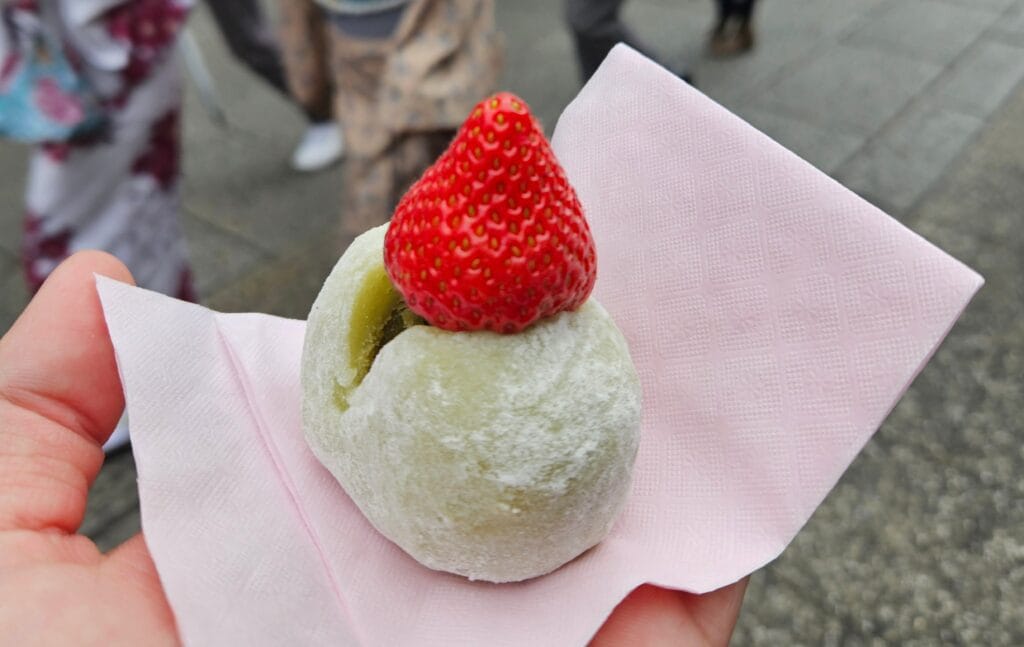
Mochi is the chewy rice cake itself. Daifuku is the version stuffed with sweet fillings like red bean paste or even whole strawberries (Ichigo Daifuku). The texture is unique—stretchy, soft, and satisfying.
Mont Blanc: The European Obsession
Even though it’s originally from the borders of Switzerland, Italy, and France, Japan has perfected the Mont Blanc. It’s a mountain of chestnut purée and whipped cream that is lighter and more artisanal than almost anywhere in Europe. It’s a must-try for any dessert lover.
Baumkuchen: The German Cake Japan Perfected
This layered “tree cake” actually comes from Germany, but Japan took it to another level. Made by slowly baking thin layers on a rotating spit, it creates a beautiful ring pattern when sliced. The Japanese version of Baumkuchen is incredibly soft, moist, and perfectly balanced in sweetness—far lighter than the original. It’s one of the most popular gift sweets in Japan and is found in every department store food hall.
Taiyaki: The Street Food Icon

A fish-shaped waffle cake filled with hot custard or sweet red bean. Watching them being made in heavy iron molds is a classic Japanese experience—best eaten piping hot while you explore the streets.