
The short answer: udon is thick, white and chewy and made from wheat flour, while soba is thin, greyish brown and made mostly from buckwheat. Udon is soft and comforting, soba has a nutty, earthy flavour and is often eaten cold. Both are everyday Japanese foods, cheap, quick and served hot or cold.
Below is a full comparison: ingredients, taste, health, regional styles, the most common dishes and how to order and eat them like a local.
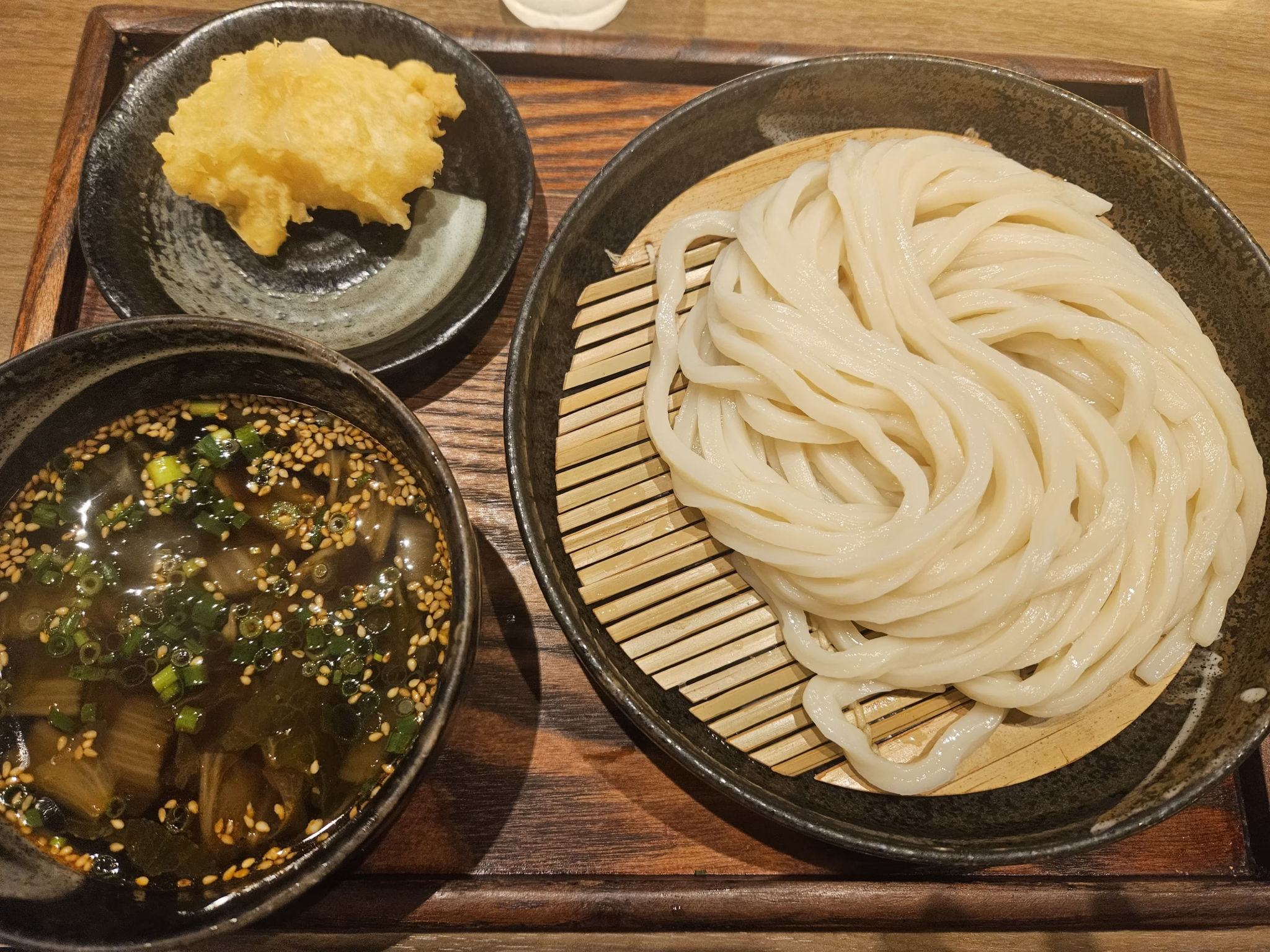
Udon vs Soba at a Glance
| Udon | Soba | |
|---|---|---|
| Main ingredient | Wheat flour, water, salt | Buckwheat flour, often mixed with some wheat |
| Thickness | Thick, round or flat | Thin, similar to spaghetti |
| Colour | White | Light grey to brown |
| Texture | Soft, chewy and springy | Firm with a slight bite |
| Flavour | Mild, takes on the broth | Nutty and earthy |
| Typical serving | Hot broth, often with toppings | Cold with dipping sauce, or hot broth |
| Gluten | Contains gluten | Usually contains some wheat unless 100% buckwheat |
What Is Udon?
Udon noodles are made by kneading wheat flour with salted water, traditionally by stepping on the dough to develop its chewy texture. They are typically served in a light, savoury broth made from dashi, soy sauce and mirin. Because the noodle itself is mild, udon is all about texture and broth.
Common udon dishes include:
- Kake udon: plain udon in hot broth, the simplest version.
- Kitsune udon: topped with sweet fried tofu.
- Tempura udon: with shrimp or vegetable tempura.
- Curry udon: noodles in thick Japanese curry broth.
- Kamaage udon: served in the hot cooking water with a dipping sauce.
- Bukkake udon: chilled or warm noodles with a small amount of concentrated sauce poured over.
To see how the dough is made by hand, take a look at this udon cooking class in Kochi.

What Is Soba?
Soba noodles are made from buckwheat flour. Pure buckwheat dough is fragile, so many shops add wheat flour as a binder. The most common ratio is nihachi soba, about 80% buckwheat and 20% wheat. Juwari soba is 100% buckwheat, with a stronger flavour and a more crumbly texture.
Popular soba dishes:
- Zaru or mori soba: chilled noodles on a bamboo tray with a cold dipping sauce, wasabi and green onion.
- Kake soba: hot soba in broth.
- Tanuki soba: topped with crunchy tempura bits.
- Tenzaru: cold soba served with tempura on the side.
- Toshikoshi soba: soba eaten on New Year’s Eve to wish for a long life and to cut ties with the old year.
At traditional soba shops you will often receive sobayu at the end, the hot water the noodles were cooked in. Pour it into your leftover dipping sauce and drink it like a soup.
Personally, I prefer soba over udon. If you can only try one of them, start with a plate of cold zaru soba.
Which Is Healthier, Udon or Soba?
Soba is usually considered the healthier choice. Buckwheat contains more fibre, protein and minerals than refined wheat flour, and soba has a lower glycaemic effect than white udon. That said, both are fairly light meals. The broth, toppings and portion size make a bigger difference than the noodle: a tempura or curry bowl is much heavier than plain zaru soba.
Two important notes. First, buckwheat allergy can be severe, so tell staff if you are allergic and be careful in shops that cook both noodles in the same water. Second, most noodle broths are based on dashi made with bonito fish flakes, so they are not vegetarian unless the shop says so.
Regional Styles Across Japan
Every region has its own noodle pride. Some well known styles:
- Sanuki udon (Kagawa): square edged, very chewy noodles. Kagawa is famous across Japan as the udon prefecture.
- Inaniwa udon (Akita): thin, smooth, hand stretched udon.
- Kishimen (Nagoya): flat, wide noodles.
- Hoto (Yamanashi): thick flat noodles stewed with pumpkin and vegetables in miso.
- Shinshu soba (Nagano): Nagano’s cool climate is ideal for buckwheat, and it is one of the most famous soba regions.
- Edo soba (Tokyo): the old Tokyo tradition of soba shops with strong dipping sauce.
- Izumo soba (Shimane): darker soba, often served in stacked round dishes.
- Wanko soba (Iwate): tiny portions refilled again and again until you put the lid on your bowl.
I have travelled around Nagano prefecture eight times, and soba is a big part of any trip there. My Nagano itinerary covers the region.
My favourite soba so far was in Matsumoto, where Shinshu soba is the local speciality.

Where to Eat Udon and Soba in Japan
You do not need to find a famous restaurant. Some of the best value noodles are at chains and standing counters:
- Marugame Seimen: a self service udon chain where noodles are made fresh in the shop. You choose a size, add tempura and sides on a tray and pay at the end. It is popular because it is cheap, fast and visibly fresh.
- Hanamaru Udon: another low price Sanuki style chain.
- Standing soba shops (tachigui soba): found in and near train stations. You buy a ticket from a machine, hand it over and get your bowl in a minute or two.
- Traditional soba restaurants: slower, more refined, often with handmade noodles and seasonal tempura.
As a rough guide, a basic bowl at a chain or standing shop costs about 400 to 800 yen, and a meal at a traditional soba restaurant about 1,000 to 2,000 yen or more.
In Tokyo I mostly skipped the big chains and ate at small local noodle shops instead. They are often run by one or two people, and that is where I found the best bowls.

How to Eat Udon and Soba
- Slurping is fine: it cools the noodles and is considered normal, even a sign of enjoyment.
- Cold soba: mix wasabi and green onion into the dipping sauce, dip a small amount of noodles, then eat.
- Do not pour the sauce over cold soba: dip instead.
- Lift the bowl: it is fine to hold a noodle bowl close to your mouth and drink the broth.
- Shichimi: the red spice mix on the table adds heat and aroma.
For more table manners, my Japan etiquette guide is a good read before your trip.
Frequently Asked Questions
What is the main difference between udon and soba?
Udon is made from wheat and is thick and chewy. Soba is made from buckwheat and is thin with a nutty flavour.
Is soba gluten free?
Only juwari soba made with 100% buckwheat is free of wheat, and even then cross contamination is possible. Most soba contains some wheat flour.
Which is healthier, udon or soba?
Soba usually has more fibre, protein and minerals. Toppings and broth matter more than the noodle itself.
Why is Marugame Udon so popular?
It offers freshly made udon at low prices with quick self service and lots of tempura choices, so it feels both cheap and high quality.
Is it rude to slurp noodles in Japan?
No. Slurping noodles is normal in Japan and nobody will mind.
Are udon and soba vegetarian?
Usually not, because the broth is made with fish based dashi. Ask for a vegetarian broth or check for a kombu only dashi.
What do Japanese people eat every day?
Rice, miso soup, fish, vegetables and noodles like udon and soba are everyday staples. Noodles are a typical quick lunch.
Udon and soba are two of the easiest and cheapest Japanese foods to try. Explore more dishes in my Japanese food guide.
Get My Personal Travel Maps


Leave a Reply