
We picked one of the hottest days of the summer to do this, 32 degrees and not a cloud over the valley, which in hindsight was not our smartest decision. By the time we reached the fire pit halfway up, we’d gone through most of our water, my Chinese wife was questioning why exactly we’d chosen a mountain hike over a lake day, and our Japanese friend was the only one of us still moving at a normal pace, quietly thrilled to be walking the same hill that inspired a show she’d grown up with on Sunday mornings back home. That mix, an old Swiss children’s story, a Japanese cartoon crew who once climbed this exact slope with sketchbooks, and three sweaty adults arguing about whether to take the shortcut, is basically the whole appeal of Maienfeld in one afternoon.
Johanna Spyri set her novel here in 1880, and almost a century later a Japanese animation team climbed the same hillside to sketch the hut that would become one of the most recognizable settings in anime history. You can walk that exact route today: up from the reconstructed Heidi Village, past a fireplace and a mountain spring, to a working alpine hut with a restaurant, grazing cows, and a view over the Rhine Valley that made every step of the climb worth it once we finally stopped complaining. This guide walks through the hike from Heididorf up to Heidialp exactly as it played out for us on the ground, what the village below is actually like once you’re back down, why this specific patch of hillside became famous on the other side of the world, and how to turn the whole thing into a full day out from Zurich.
Getting to Maienfeld and Heididorf
Maienfeld sits in the Bündner Herrschaft, the wine-growing corner of Graubünden known for its Pinot Noir, and it’s reachable by train from Zurich in a little over an hour with a change in Sargans or Landquart depending on the connection. From Maienfeld station, brown signposts marked “Heididorf” lead you through the narrow streets of the old town, past the vineyards that ring the village, and up to Heididorf itself, about a twenty-minute walk on a paved road.
If you’re not driving and don’t feel like walking up from the station, there’s a seasonal Heidi Bus that connects the station to Heididorf, but it only runs on Saturdays, Sundays, and public holidays between May and October. On a regular weekday, it simply doesn’t operate, so budget the extra 30 to 40 minutes on foot if you’re visiting midweek. This one detail catches a lot of visitors off guard, because most tourism pages mention the bus without making it obvious that it’s a weekend-only service. Check the day of the week before you plan your schedule around it, and if you’re driving, there’s free parking right at the Hotel Restaurant Heidihof next to Heididorf itself.
What to Pack Before You Start Climbing
This isn’t a technical hike, but it’s also not a flat museum stroll, so it’s worth taking ten minutes before you leave the station to think about what you’re carrying. We’d recommend more water than feels necessary, especially in summer, since large stretches of the upper trail have no shade at all. Sturdy shoes matter more than they might seem to from photos of the route; sneakers are genuinely fine if you’re reasonably active, but this isn’t a path for sandals or thin-soled shoes once you’re past the lower section. A hat and sunscreen make a real difference on a clear day, and if you’re planning to eat at the top, it’s worth carrying a small amount of cash alongside a payment card, since the honesty-based setup at the hut sometimes only has a cash box available.
The Hike from Heididorf to Heidialp

The hike itself starts right at Heididorf and climbs toward the Ochsenberg, the peak better known by its storybook name, Heidialp. Plan on roughly two hours to reach the top at a relaxed pace, longer if you’re stopping often for photos or breaks, and somewhat less if you’re fit and pushing the pace. The path is wide and well maintained for almost its entire length, which makes it approachable for most people, but there are a couple of short, steep shortcuts that cut noticeably off the walking time if you’re willing to trade comfort for a harder push. We stuck to the main path going up and only took a shortcut on the way down, which felt like the right call given the heat.
Sturdy shoes make a real difference here, as does pacing yourself. This isn’t a stroller-friendly gravel path once you’re past the lower section, and the sun exposure on a hot day adds up fast. We hiked it in 32-degree summer heat with almost no shade for long stretches, and while we made it up without any real trouble, it was a genuinely demanding two hours, not a casual walk in the park. If you’re not used to hiking, or if you’re visiting with people who tire more easily, this is a route to respect rather than underestimate. Start earlier in the day if you can, both for the temperature and for the light, since the morning sun on the vineyards below is one of the better views on the whole route.
Where to refill water and take a break
About midway up, before you reach the main rest area, there’s a fountain where you can top up your bottles. It was the only refill point we came across on the entire way up, so treat it as your one guaranteed stop and fill up even if you’re not thirsty yet. It’s easy to walk past without noticing if you’re focused on the climb, so keep an eye out for it rather than assuming you’ll spot it automatically.
A short distance further, a fire pit marks the best lunch spot on the whole route. It’s shaded, flat, and exactly where most hikers stop to eat before tackling the final stretch. If you’re carrying your own food, this is the spot to use it; there’s nowhere else along the trail with the same combination of shade, flat ground, and a proper break in the tree line to look back down over the valley.
The final push to the top
After the lunch spot, take the shorter of the two path options if it’s offered again here. It’s the most scenic section of the entire hike, with the terrain opening up into proper alpine pasture and the hut coming into view well before you actually reach it. This last stretch is steeper than what came before, but it’s also short enough that it doesn’t undo the pacing you’ve built up over the rest of the climb.
Heidialp: The Restaurant, the Hut, and the Anime Connection
At the top, a working alpine hut doubles as a simple restaurant, and the prices are refreshingly fair for a mountain location. A beer runs 5 to 6 Swiss francs, which is hard to find anywhere in the country today, let alone at altitude after a two-hour climb. Because it’s only partially staffed during the summer months and not open every single day, there’s a QR code posted at the trailhead before you start the hike that lets you check whether it’s currently open. It’s worth scanning before you commit to carrying less water on the assumption you’ll be buying drinks at the top.
If the hut happens to be closed when you arrive, it’s not a wasted trip. Drinks are still left out with a printed price list, a QR code for electronic payment, and a small honesty box for cash. This is Switzerland’s trust-based culture in practice: you take what you want, you pay what it costs, and nobody is watching over your shoulder. Treat it accordingly, and don’t be the reason a lovely, low-key arrangement like this eventually needs a lock and a cashier.
Why this exact hut matters
This unassuming mountain hut is the real reason Maienfeld is known well beyond Switzerland, and it’s worth slowing down here rather than treating it as just another lunch stop. In the summer of 1973, a Japanese production team spent roughly ten days scouting locations across Switzerland and Germany, with two of those days specifically in Maienfeld. The group included director Isao Takahata, layout artist and scene designer Hayao Miyazaki, character designer Yōichi Kotabe, and producer Junzo Nakajima. They were preparing what would become “Heidi, Girl of the Alps,” a 52-episode anime series that aired on Japanese television throughout 1974.
Kotabe had never left Japan before that trip, and by his own account decades later, he sketched everything that caught his eye to bring back to the studio, since the schedule left almost no room for a second look at anything. The team climbed this same slope and used the hut on the Ochsenberg as the direct visual reference for Alpöhi’s cottage, the home where Heidi lives with her grandfather in the story. That’s not folklore attached after the fact; it’s a documented detail from the production, confirmed decades later when Kotabe himself returned to the same hillside for a retrospective and pointed out the exact building.
The series became one of the most influential works to come out of what would later be Studio Ghibli, founded a decade later by Miyazaki and Takahata. It’s a major reason the region still sees a steady stream of Japanese visitors today, many of whom make the same climb up to this hut nearly fifty years after the original scouting trip, treating it as something close to a pilgrimage rather than just a stop on a Swiss itinerary.
Cows on the alp
Cattle graze freely around Heidialp in the summer months, and it’s common to walk right through a herd on your way to or from the hut. Keep your distance, especially from calves, since a cow that feels her calf is threatened can turn aggressive fast, and it happens more often than people expect on Swiss alpine trails. Don’t approach them for photos, keep dogs on a short leash or well away from the herd entirely, and if cattle are blocking the path, give them space and time to move on their own rather than pushing through the middle of the group. It sounds like an obvious rule until you’re standing twenty meters from a calm-looking herd with a clear path only on the far side of it.
The ants of the alpine forest
Along the lower part of the trail, keep an eye out for anthills built up against tree trunks and rocks. The mounds here can reach well over a meter tall, built up over years by wood ants working the same nest generation after generation, and they’re a genuinely striking sight if you’re not used to seeing them at this scale, especially for visitors coming from parts of the world where ant colonies stay closer to ground level. It’s a small detail, but it’s one of the things that makes the walk up feel like a proper nature trail rather than just a route to a viewpoint, and it’s worth pointing your camera at even if insects aren’t usually your thing.
What to eat at the top
The hut serves a short menu of regional specialties worth trying if you have the appetite for it after the climb. The nut cake, or Nusstorte, is a signature treat from this part of Graubünden, dense and caramelized with a shortcrust base, and it pairs well with the Linzertorte, an Austrian import that’s become a fixture on Swiss alpine menus over the past century, or the meringue, a classic Swiss dessert usually served with cream. On the drinks side, look for Möhl, a well-known Swiss cider producer from Appenzell, or a simple apple spritzer, known locally as Apfelschorle, if you’d rather stay non-alcoholic after a hot climb. None of it is fancy, and that’s exactly the point: it’s honest mountain food at honest mountain prices, served in a setting most restaurants at this altitude can’t get away with charging so little for.
Heading Back Down
The descent is noticeably easier and faster than the way up, but pay attention: the shortcut turnoff toward Heididorf is easy to miss if you’re moving quickly and not watching for the signage. Missing it just means a longer loop back, not a wrong turn exactly, but it’s worth keeping an eye out if you want to make the most of the time you’ve got left for the village itself. We nearly walked past it ourselves while talking rather than watching the trail markers, so don’t assume you’ll spot it automatically just because you noticed it on the way up.
Heididorf: The Heidi Village Attraction

Where the hike is the authentic, slightly rugged version of the Heidi story, Heididorf itself is the polished, tourist-facing counterpart down in the valley. Entrance costs 14.90 francs per person, and it’s fair to say it’s a small attraction for the price if you have no personal connection to the story. If you’re traveling with people who grew up on the book or the anime, particularly visitors from Japan or elsewhere in Asia where Heidi remains a genuine cultural touchstone, it’s a meaningful stop and worth every franc. We went with a Japanese friend and a Chinese partner, and it was clear within minutes that the emotional weight of walking through Heidi’s world meant a lot more to them than it did to us, which is really the honest way to think about whether it’s worth the entrance fee for you specifically.
Inside, five small buildings make up the core of the village. Some house short films about the Heidi story and its production history, while others recreate specific scenes: a schoolroom modeled on the region’s 1880s village schools, a barn where cattle once lived, Heidi’s own house furnished the way a Grisons farmhouse would have looked in Spyri’s era, and a replica of the very mountain hut you may have just visited on the hike, presented here as the model for Alpöhi’s cottage. Set expectations before you go in: the houses are small and staged rather than sprawling, and they’re nowhere near as spectacular as Ballenberg’s open-air museum, which is the real benchmark in Switzerland for reconstructed historical buildings. A lot of foreign visitors build a whole Swiss itinerary around Heidiland and Ballenberg together, but it’s worth knowing going in that Heididorf is more about the story than the architecture, while Ballenberg is the one to visit if buildings and craftsmanship are what you’re actually after. There’s also a small post office inside the complex, reportedly the smallest in Switzerland, where you can get a Heididorf-specific postmark stamped on postcards, a detail that tends to delight collectors and kids in equal measure.
Outside the paid buildings, goats and chickens roam an open area where you can buy feed and interact with them directly, which tends to be the highlight for younger visitors regardless of whether they know the Heidi story at all. There’s also a public fountain to refill water bottles, useful if you’re heading back out for more walking afterward, and a souvenir shop stocked with Heidi-branded goods, from books and plush toys to regional food products, for anyone who wants a memento of the visit.
Why Heidi Became a Global Phenomenon
It’s worth understanding just how far this story has traveled, because it explains why a small Swiss village draws visitors from across the world rather than staying a local curiosity. Johanna Spyri published Heidi in two parts, in 1880 and 1881, and it has never gone out of print since. According to Heididorf’s own archive, the novel has been translated into more than 55 languages, everything from French and Japanese to Icelandic and Vietnamese, and sold over 60 million copies worldwide, which makes it the best-selling German-language novel of all time. Other sources put the language count as high as 70, and estimates of total copies sold vary depending on whether adaptations, picture books, and abridged editions are counted alongside the original novels, but every serious count lands somewhere in the tens of millions, and most reference sources agree it’s one of the best-selling books in history in any language.
The book found its first major international audience early: an English translation reached the United States in 1884, and by 1936 more than 20 million copies had been sold in America alone, decades before the anime existed. It has since been adapted into more than 15 films across multiple decades and countries, including a well-known 1937 Hollywood version starring Shirley Temple, plus stage productions, an opera, and countless illustrated editions in dozens of markets.
The real explosion in global reach, though, came through animation rather than print. The 1974 Japanese series adapted the novel into those 52 episodes and became a cultural phenomenon across Asia, the Middle East, and parts of Europe, syndicated and rerun for decades after its original broadcast. In Japan specifically, Heidi remains a recognizable reference point across generations; by some counts there have been well over 100 different Japanese editions and adaptations of the story published over the years, a scale of local publishing interest that’s almost unheard of for a foreign children’s book. The production’s attention to real Swiss detail, down to the cowbells and the specific slope of the Maienfeld hillside, is a big part of why the series still feels grounded rather than generic, and it’s directly why the tourism region eventually branded itself “Heidiland” in 1997, building an entire visitor identity around a fictional character rooted in a real place.
Beyond the anime, Heidi has been adapted into live-action films across multiple decades and countries, several stage musicals, and a Japanese theme village of its own in Yamanashi Prefecture, built specifically for fans who can’t make the trip to Switzerland. Key staff from the original production went on to shape Japanese pop culture well beyond animation. Kotabe later joined Nintendo, where his character work influenced the visual style of early Super Mario games, while Miyazaki and Takahata’s Maienfeld trip is often cited as an early example of the location-based realism that would come to define Studio Ghibli’s later films. Few children’s book characters have generated that scale of cross-cultural staying power, and almost all of it traces back to this one hillside above Maienfeld.
Planning Your Day
Between the hike up to Heidialp, lunch at the fire pit or the hut, the walk back down, and a proper visit to Heididorf, budget around five hours for the full experience. That’s enough time to do it without rushing, including the short breaks along the trail, and it comfortably fits into a single day trip if you start reasonably early.
If you’re basing yourself out of Zurich, a little over an hour away by train, this works well as a full day out, especially if you start early to beat the midday heat on the exposed sections of the climb. For an extended trip, Maienfeld also sits close enough to Liechtenstein that the two can reasonably be combined, since Vaduz is a short drive or bus ride further along the Rhine Valley from Maienfeld’s train line, making it possible to tick off an entire country in the same afternoon if that’s the kind of thing you enjoy collecting.
What to do afterward
If you’re heading back toward Zurich in the evening and still have energy left, the city rewards a late arrival. During summer, the Landesmuseum Zürich runs evening bar nights inside the museum itself, which is a good way to close out a day that started on a mountainside with something a bit more social. If you’d rather cool off than go out, Lake Zurich has public swimming spots along its shore that stay busy well into the evening on a warm day; just confirm which lake or bathing area you’re aiming for before you go, since the region has several options depending on which side of the city you’re coming from.
For a broader look at planning around the country, our Switzerland travel guide covers costs, regions, and culture in more depth, and if Zurich is part of your trip beyond just the evening, our Zurich city guide is written for exactly that kind of extended stop.
Common Questions About the Heidi Village Hike
How long is the hike from Heididorf to Heidialp
Plan on about two hours each way at a normal walking pace, so four hours round trip if you’re not stopping for long breaks. Add the fire pit lunch stop and time at the top, and most people spend around five to six hours total once Heididorf itself is included.
Is the Heidi village hike suitable for beginners
It’s approachable for anyone who’s reasonably active, since the main path is wide and not technical, but it’s still a real two-hour uphill climb with long unshaded sections. It isn’t a flat family stroll, and it can be genuinely tough in summer heat, so it suits beginners who are willing to go slowly more than it suits anyone looking for an easy walk.
Is Heididorf worth the entrance fee
That depends on your connection to the story. At 14.90 francs per person, it’s a small attraction rather than a major museum, and it’s most rewarding for visitors who grew up with the Heidi book or the Japanese anime. If you have no personal attachment to the story, the free hike up to Heidialp and the surrounding countryside will likely mean more to you than the paid houses in the village.
Why is Maienfeld connected to the Heidi anime
In 1973, a Japanese production team including Hayao Miyazaki, Isao Takahata, and Yōichi Kotabe traveled to Maienfeld to research locations for the 1974 anime series “Heidi, Girl of the Alps.” They used the alpine hut on the Ochsenberg, now known as Heidialp, as the direct model for Alpöhi’s cottage in the show, which is why the region still draws visitors from Japan today.
Can you visit Heidialp without doing the full hike
The hut is only reachable on foot, so there’s no shortcut by car or bus. It’s roughly two hours up from Heididorf on the main trail, and there isn’t a shorter official route to the top.
A Few Practical Notes Before You Go
Switzerland runs on a trust-based system more than most countries, and Heidialp is a good example of it: unattended drinks, an honesty box, and no one checking whether you paid. It works because people respect it, so treat the hut the same way you’d treat any small business, even when nobody’s there to see you do it.
Pack more water than feels necessary, wear real shoes rather than sandals, check the QR code for the hut’s opening status before you start climbing, and if you’re visiting on a weekday, plan for the walk up from the station rather than counting on the bus. None of these are complicated adjustments, but they’re the difference between a smooth day and a frustrating one on a hike that’s otherwise well within reach of most reasonably fit travelers, and one that we’d genuinely do again even after sweating through it once already.
Author
Get My Personal Travel Maps
Keep Reading: More Articles You’ll Love
 Is Japanese Food Actually Chinese? The Surprising Origins of Japanese Cuisine
  Ballenberg Open-Air Museum: A Journey Through Swiss History
  Alpabfahrt St. Stephan: History, Cows & Visitor Guide
  Busan Travel Guide: Things to Do, See & Eat in Korea
  Matsumoto Itinerary: The Perfect 3-Day Guide Including Kamikochi
  Sokcho & Seoraksan: A Swiss Guide to Hiking, Buddhas, and Buckwheat
  Simmenfälle Lenk: The Complete Waterfall Hiking Guide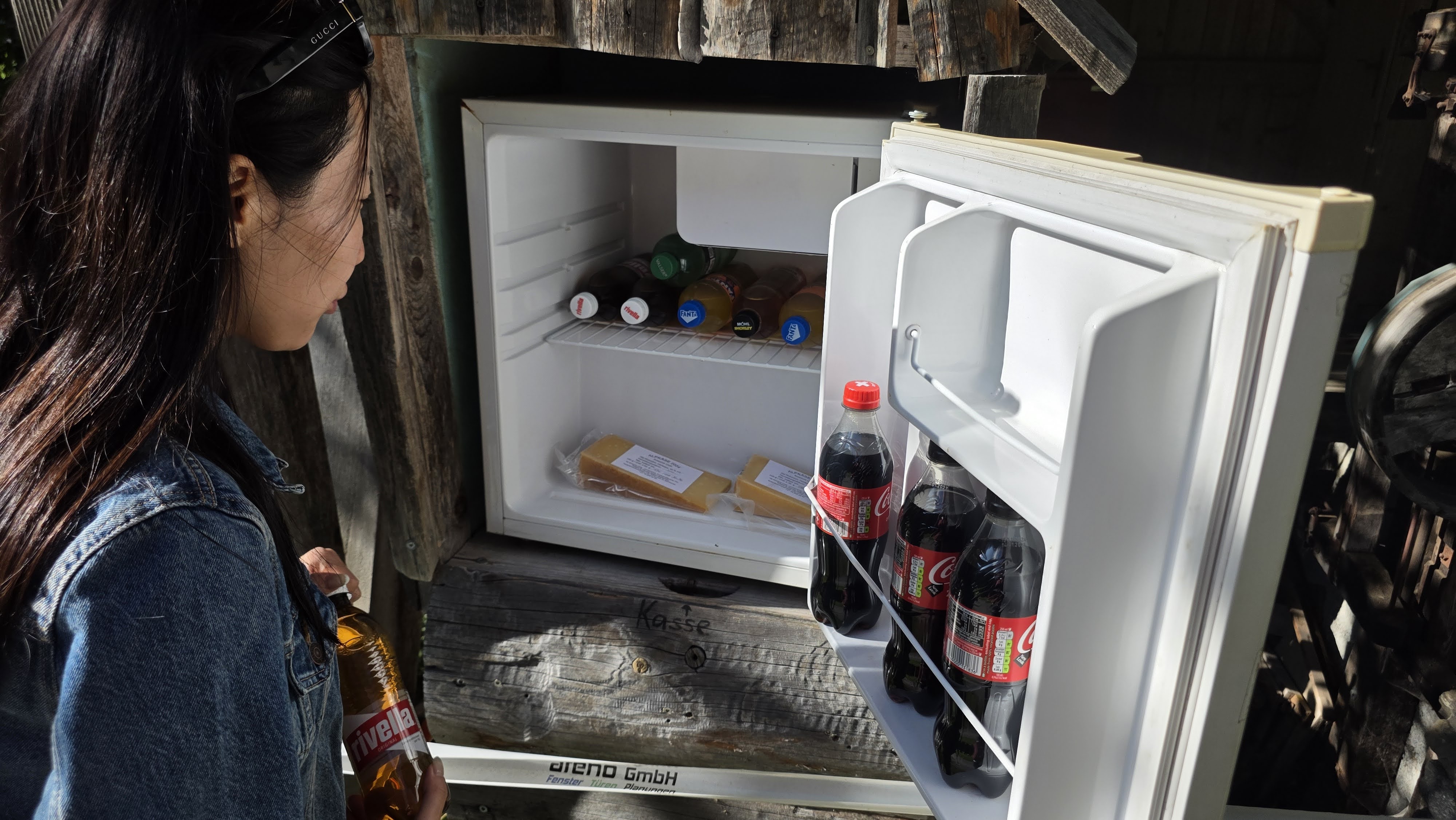

Leave a Reply