
If you spend much time browsing social media or reading travel blogs about Japanese culture for tourists, you’ve probably seen photos of Japanese only signs or notices that say “No Foreigners Allowed.” These images get shared widely and quickly fuel the idea that Japan is secretly unwelcoming, or even hostile, to outsiders. This raises the question: Is Japan foreigner friendly? But if you look beyond viral snapshots and take the time to understand the real context, you’ll discover a very different reality. In fact, when you look at the actual Japan tourism facts and listen to people traveling in Japan as a foreigner, you’ll see that Japan is one of the most welcoming and safe countries you can visit, with millions of tourists enjoying warm hospitality every year.
Where Do “No Foreigners” Signs Actually Appear (Japanese Only Signs)?
In more than two years of traveling around Japan—from Tokyo and Kyoto to smaller towns—I have never personally seen a “No Tourists” or “Japanese Only” sign in a typical restaurant, bar, or shop that caters to everyday customers. When such signs do exist, they are almost always found in very specific types of businesses. For example, certain soaplands (special bathhouses offering adult services), hostess clubs, or girls’ bars prefer Japanese clients. These establishments are tightly regulated, sometimes requiring special licenses to serve foreign customers or facing language barriers that make them reluctant to admit non-Japanese speakers.
These venues are not places most tourists would go in the first place. If you stick to sightseeing, shopping, eating out, or enjoying cultural experiences, you are unlikely to ever see or experience this kind of restriction.
When “Japanese Only” Means “Please Speak Japanese”
One important detail often left out of online discussions is that sometimes a Japanese only sign doesn’t actually mean “We don’t like foreigners.” Instead, it can simply mean the staff feel uncomfortable or embarrassed about not being able to communicate in English or another language. This is a common part of Japanese culture for tourists to understand. I have personally experienced this several times while traveling in Japan as a foreigner. The staff would gesture apologetically and explain that they only speak Japanese and worry that they won’t be able to serve us properly.
In every case, when I assured them that I could speak some Japanese or that we were fine using gestures and simple words, they welcomed us with a smile and made every effort to help. This is a crucial point: language anxiety is not discrimination. It’s simply a practical concern about providing good service and avoiding misunderstandings.
If you can communicate even basic Japanese phrases or show patience, you’ll often find that the door opens and any hesitation quickly disappears. These experiences reflect important Japan tourism facts: most people are happy to help, and Japan is foreigner friendly when you respect the local language and culture. Learning a few simple Japan travel tips before your trip can make a big difference and help you feel more confident exploring places that may at first seem closed off.
Negativity Bias: Why Bad Stories Go Viral
So why does it feel like these negative experiences are everywhere? This is where psychology comes into play. Humans are wired with a phenomenon called negativity bias. Essentially, our brains notice and remember bad news much more vividly than good news because, evolutionarily, being alert to threats helped us survive. As a result, a single photo of an exclusionary Japanese only sign can spread quickly across social media because it confirms people’s fears, reinforces stereotypes, and triggers strong emotions like outrage or disappointment.
Positive experiences, on the other hand, such as a shopkeeper going out of their way to help a tourist find the correct train platform or a restaurant owner patiently explaining the menu to someone traveling in Japan as a foreigner, simply don’t get shared as much. They don’t feel as sensational or newsworthy. A happy story about excellent hospitality is pleasant to read, but it doesn’t generate the same viral reactions or heated debates.
The same amplification pattern appears in other social incidents unrelated to tourism. For example, cases of deliberate bumping behavior known in Japan asぶつかり男 have been reported in domestic media for years. When these incidents occur, they are usually discussed as isolated antisocial acts. Yet when a foreign visitor makes even a minor mistake, it can be framed online as proof that tourists are ruining the country. However, this reactionary stance often blows things out of proportion, feeding directly into the Japanese tourism destroys the country myth that regularly circulates on social media.”
This imbalance in what we see online creates a distorted impression that foreign visitors are causing widespread disruption. In reality, these situations are quite rare, a fact that becomes obvious once the foreigner crime rate is exposed and compared against actual domestic safety statistics.
It’s important to look beyond headlines and viral posts and instead pay attention to actual Japan tourism facts and firsthand experiences. When you consider how many millions of people visit Japan every year and return with positive stories, it becomes clear that the country is not defined by a few negative examples. Instead, it is known for its polite, organized, and friendly approach to welcoming guests.
If you take time to learn a few Japan travel tips and approach every situation with patience and respect, you’ll likely discover that Japan is foreigner friendly and eager to make your stay comfortable.
The Rise of “Foreigner Welcome” and “English OK”
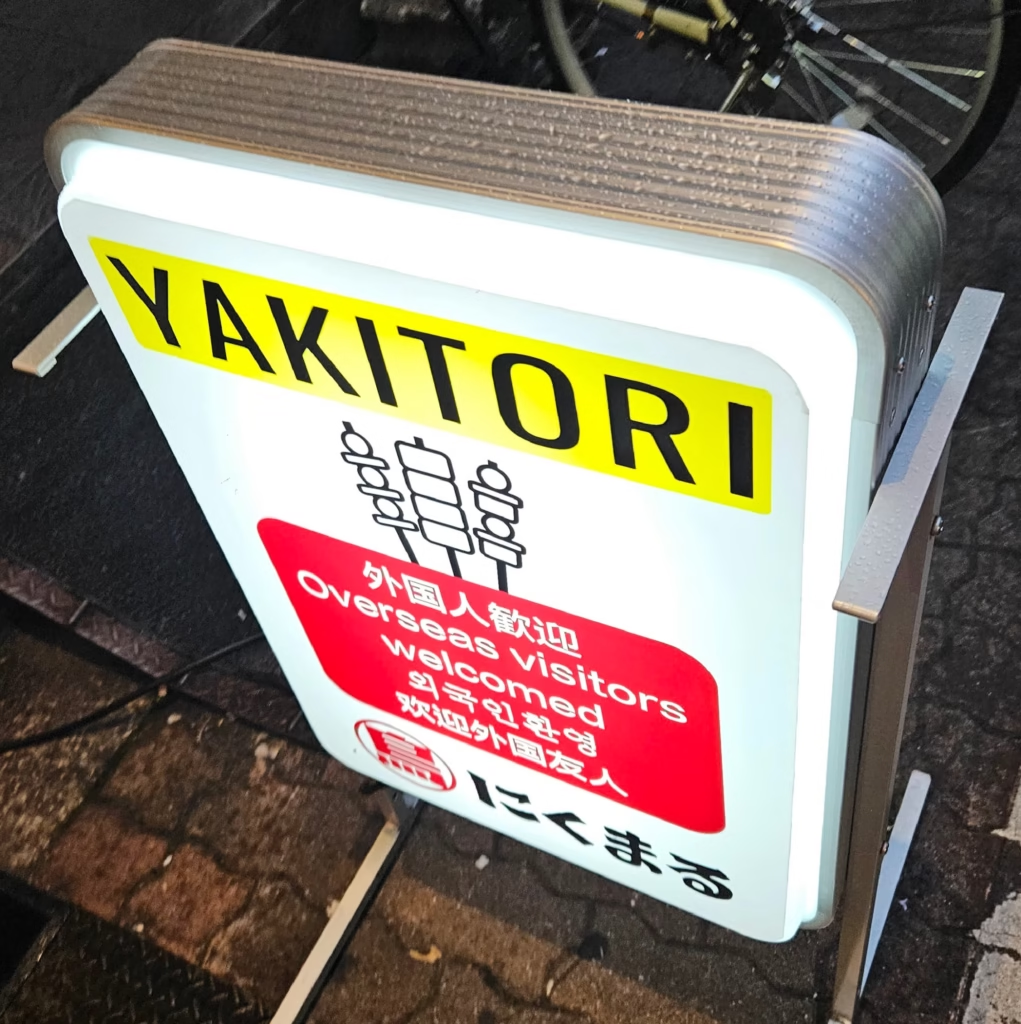
While negativity bias spreads alarming stories, what you will actually see much more often are signs that say “Foreigner Welcome,” “English OK,” or “Menu in English Available.” I personally encounter these signs several times a week. In Tokyo, Osaka, Kyoto, and even in smaller cities, restaurants, cafes, and shops often go out of their way to make it clear that they are happy to serve international guests.
Train stations feature multilingual navigation, restaurants offer seamless tablet ordering systems, and convenience stores utilize advanced self-checkouts. When experiencing these conveniences, visitors often wonder, is Japan living in the future? The reality is a bit more nuanced; while these high-tech systems make travel incredibly smooth, they are actually part of a massive, ongoing push for Japanese digitalisation designed to modernize the country’s retail and transit infrastructure.
Japan’s Politics: The Far Right Is Tiny
Some people assume that if exclusionary signs exist at all, it must mean there is a large nationalist movement behind them. But this is simply not the case. While about 60% of Japanese voters tend to support center-right or conservative parties on economic or cultural issues, the truly far-right nationalist parties are almost irrelevant politically.
In the last elections, the most extreme nationalist party in Japan received only 0.1% of the vote, showing they have virtually no influence. This is in sharp contrast to Germany, for example, where the far-right AfD received 23.1% in the Bundestag elections of 2025. In Germany, the far right has become a major political force. In Japan, it is so small that it barely registers in election results.
This is important context. The existence of a few exclusionary signs does not reflect widespread public opinion or official policy. It is mostly a matter of very specific businesses with special concerns or individuals who are uncomfortable with language barriers.
Your Real Experience: Traveling in Japan as a Foreigner
If you are planning a trip and wondering “Is Japan foreigner friendly?”, the answer is overwhelmingly yes. From my own travels across different regions and countless stories shared by other visitors, the pattern is clear: Japanese people are courteous, helpful, and genuinely proud to share their culture with tourists.
Whether it’s a shopkeeper walking you all the way to the correct train platform when you look confused, a restaurant owner patiently explaining dishes with gestures, drawings, and friendly smiles, or locals eager to practice English and share Japan tourism facts, you will almost always feel safe, respected, and welcome. Even in smaller towns where English is less common, people often do their best to communicate and make you comfortable.
Of course, misunderstandings sometimes happen. But they are rarely about hostility or exclusion. More often, they come from language challenges or uncertainty about etiquette. For example, when you see Japanese only signs, it sometimes simply means the staff feel nervous about serving people who don’t speak Japanese fluently. This is especially true in tiny restaurants or bars where owners worry they can’t explain the menu or customs. If you can speak even a little Japanese or use translation apps, you will often be warmly invited in.
If you take the time to learn a few Japan travel tips and approach situations with respect, you’ll find that people respond with genuine kindness and appreciation. Traveling in Japan as a foreigner is an opportunity to experience warm hospitality and discover how open and welcoming Japanese culture for tourists really is. Most visitors quickly realize that any worries they had were unnecessary, and that Japan is one of the most rewarding countries to explore.
How to Make Your Trip Smoother
Here are some Japan travel tips to help you feel more comfortable:
- Learn a few simple phrases like “Arigatou gozaimasu” (thank you) and “Sumimasen” (excuse me). Even minimal effort is appreciated.
- Be polite and quiet in public spaces, especially on trains and buses.
- Bring cash, as many small businesses still don’t accept credit cards.
- Remove your shoes when entering certain restaurants, temples, and homes.
- Dispose of trash properly, , as bins are often hard to find, and Japan’s waste system already struggles with litter in busy public areas.
- Have patience if communication is slow. Gestures, translation apps, and smiles go a long way.
Following these tips shows respect and helps bridge any cultural gaps.
Japan Tourism Facts: Millions of Happy Visitors
In 2019, before the pandemic, Japan welcomed over 31 million tourists, making it one of the most popular destinations worldwide. Surveys and travel reports consistently rank Japan among the safest, cleanest, and most satisfying countries for international visitors. Whether you are traveling in Japan as a foreigner for the first time or returning to explore more, you will find that most experiences are positive and welcoming. After the borders reopened, tourism quickly rebounded, and many travelers shared stories confirming the same warm hospitality, efficiency, and respect for guests.
Despite what viral photos of Japanese only signs might suggest online, the facts are clear and reassuring: millions of people visit Japan every year without encountering hostility or discrimination. Instead, they discover a country where Japanese culture for tourists is proudly shared, and where locals often go out of their way to help. From spotless trains to polite service staff, Japan is famous for creating an environment that makes every visitor feel comfortable.
If you look beyond the headlines and consider actual Japan tourism facts, it becomes clear that Japan has built a well-deserved reputation as one of the most foreigner-friendly places to travel. By learning a few basic Japan travel tips and approaching new situations with curiosity and respect, you’ll experience firsthand why so many people call Japan their favorite destination.
Conclusion: Don’t Let a Few Signs Shape Your View
The next time you see a photo of a Japanese Only sign, remember the broader reality. Yes, such signs exist in specific contexts—usually adult venues or tiny establishments worried about language barriers. But these are the exception, not the rule.
The vast majority of businesses and people in Japan genuinely welcome foreign visitors. And when a sign does ask for Japanese language only, it often simply means the staff want to avoid misunderstandings. If you’re patient and polite, you will often be able to enter anyway.
If you want to discover the real Japan, don’t let a handful of viral stories stop you. Bring your curiosity, respect the culture, and prepare to be warmly welcomed.
Author

Get My Personal Travel Maps
Keep Reading: More Articles You'll Love
 Is Japanese Food Actually Chinese? The Surprising Origins of Japanese Cuisine
  Japan Travel Myths vs Reality: What Tourists Still Get Wrong About Japan
  Living in Japan vs Korea – The Ultimate Expat Guide
  Tourism Destroying Japan Myth — The Truth Behind Viral Tourist Videos and Sanseito’s Narrative
  Tattoos in Japan: Rules, Culture, Onsen & Changing Attitudes
  Living in Tokyo vs Zurich – The Ultimate Expat Guide
  My First 30 Days in Tokyo: Essential Administrative Steps for International Students