
While many travelers visiting South Korea focus on the futuristic skyline of Seoul or the beaches of Busan, there is another destination that quietly preserves the country’s cultural soul. Hidden in the Honam region, Jeonju is a city where royal history, traditional architecture, and Korean food culture still shape daily life. Often called the spiritual heart of Korean tradition, Jeonju offers a side of the country that feels dramatically different from the fast-paced energy of modern Korea.
Jeonju is the ancestral home of the Yi clan, the royal family that founded the Joseon Dynasty in 1392. Because of this connection, the city became deeply tied to the origins of Korean identity, Confucian culture, and traditional aesthetics. Unlike many cities that rapidly modernized during the late 20th century, Jeonju preserved large parts of its historical center, allowing visitors to experience a rare blend of old and new Korea existing side by side.
At the center of the city lies the famous Jeonju Hanok Village, home to more than 800 traditional Korean Hanok houses. What makes the area unique is that it still feels alive rather than staged for tourism. Residents continue living among the tiled rooftops, traditional tea houses, artisan workshops, and narrow alleyways, creating an atmosphere that feels authentic even during busy travel seasons.
Jeonju has also gained international recognition for preserving a slower and more cultural lifestyle. In 2010, it was designated an International Slow City, and in 2012, it became South Korea’s first UNESCO City of Gastronomy. Food is central to the city’s identity, and many Koreans consider Jeonju the culinary capital of the country. The city is especially famous for Jeonju Bibimbap, which is often viewed as the most authentic and refined version of Korea’s iconic mixed rice dish.
Beyond the food, Jeonju attracts photographers, history lovers, and travelers searching for a more traditional side of South Korea. From panoramic Hanok rooflines and historic shrines to vibrant markets and lantern-lit streets, the city feels like a place where Korea’s past remains fully visible in the present. Whether you are planning a Jeonju itinerary, looking for the best Korean food experiences, or searching for hidden cultural destinations in South Korea, Jeonju offers one of the most immersive experiences in the country.
The Jeonju Hanok Village: Living History
In the heart of modern Jeonju lies one of the most important preserved traditional neighborhoods in the country: the famous Jeonju Hanok Village. Home to more than 800 traditional Hanok houses, the district offers visitors a rare chance to experience Korean architectural heritage on a meaningful scale. Unlike some historical villages that feel heavily commercialized or reconstructed purely for tourism, Jeonju’s Hanok Village still functions as a genuine living neighborhood where residents continue to preserve traditional lifestyles alongside modern businesses, cafés, guesthouses, and cultural workshops.
Walking through the narrow alleys of the village feels like stepping into another era. Wooden facades, stone pathways, tiled rooftops, paper lanterns, and hidden courtyards create an atmosphere that changes dramatically throughout the day. In the early morning, the streets feel calm and almost meditative, while evenings bring warm lights, food aromas, and the sound of visitors exploring the maze-like streets in rented Hanbok.
The village is also one of the best places in South Korea to experience traditional Korean aesthetics up close. Every detail of the Hanok architecture was intentionally designed to create harmony with nature, airflow, sunlight, and seasonal weather changes. This careful balance between beauty and practicality is one of the reasons Hanok architecture remains so admired today.
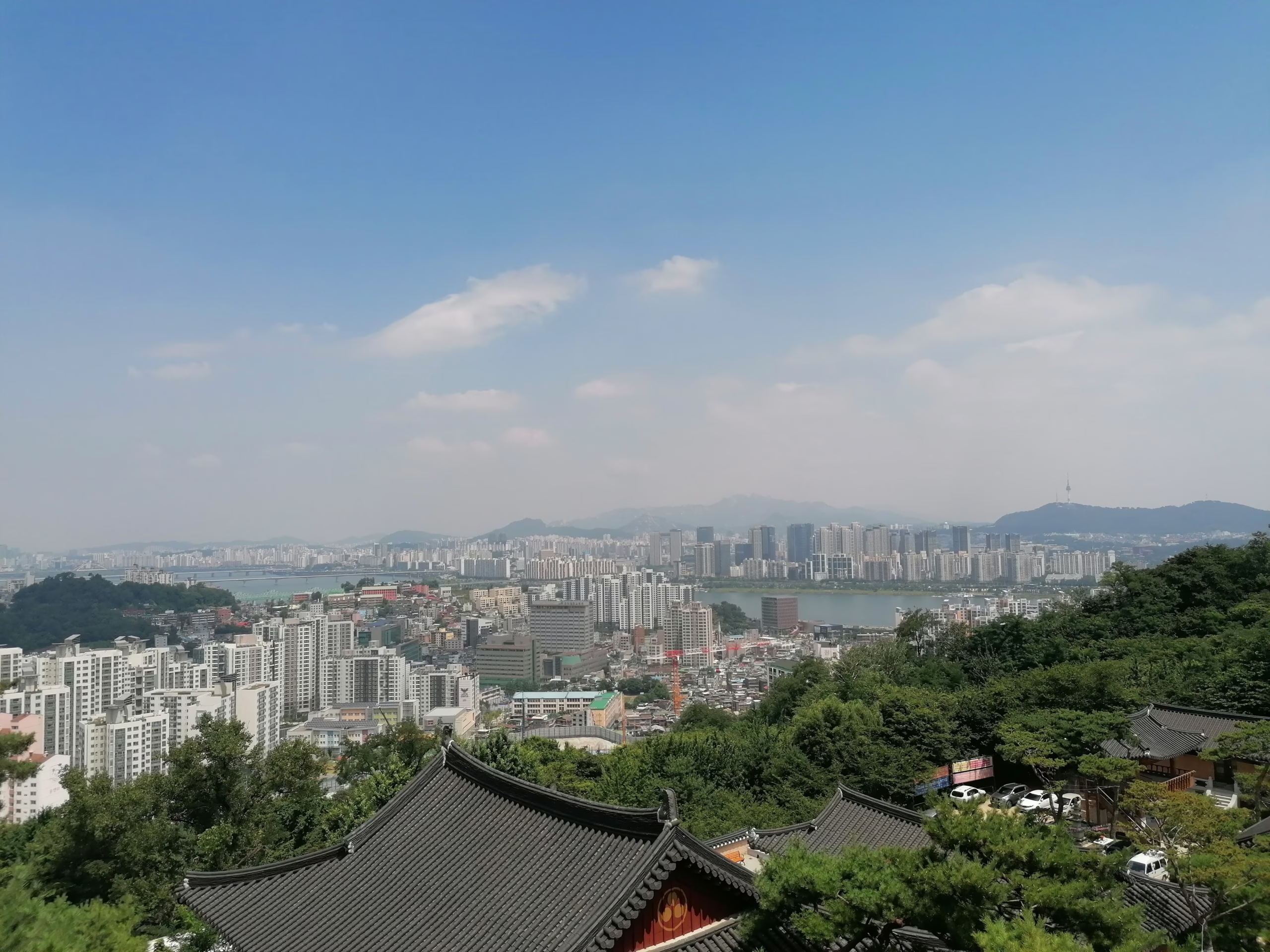
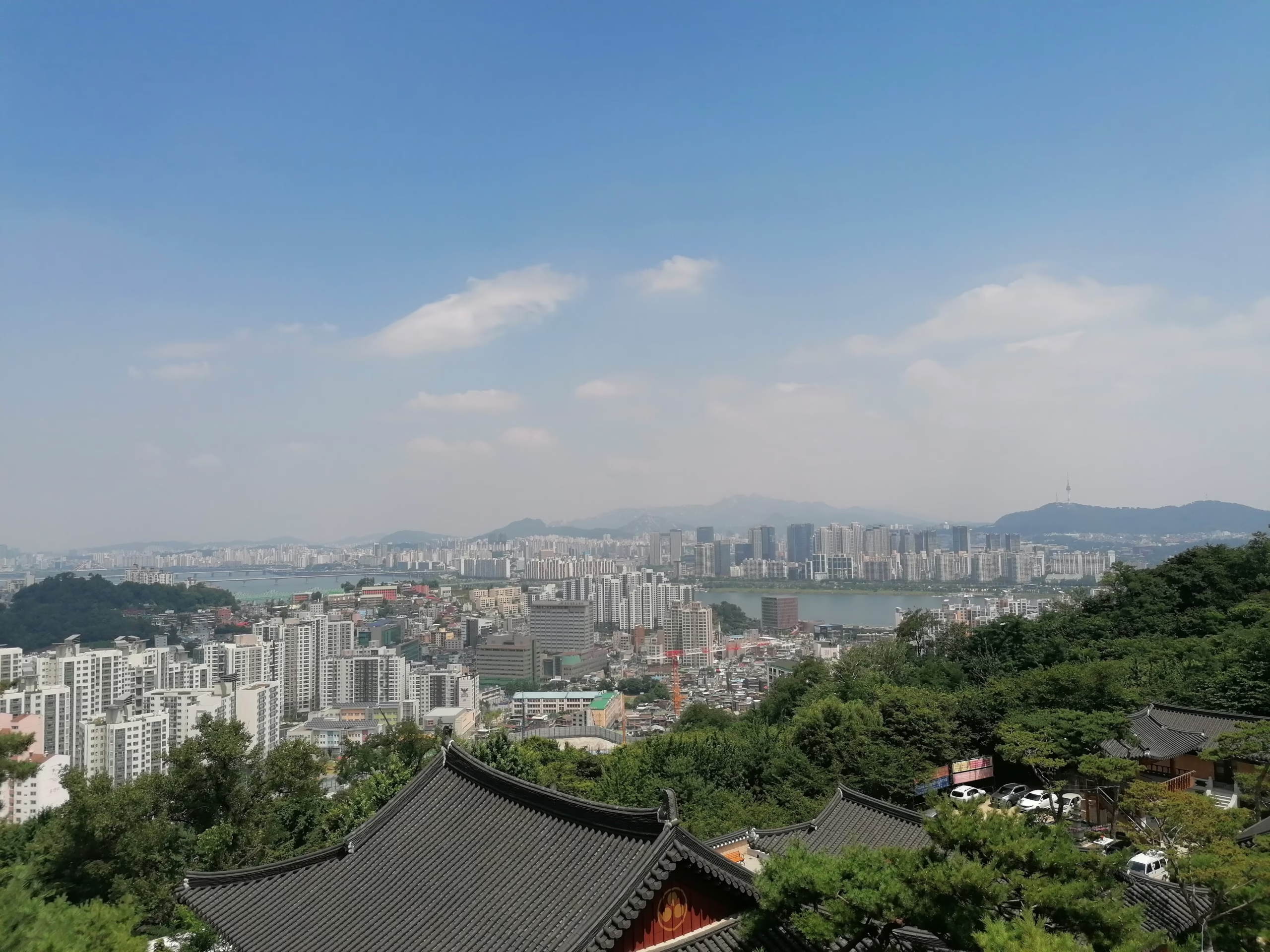
- Omokdae and Imokdae: For the iconic panoramic view of the village’s endless “sea of roofs,” hike up to Omokdae. This historic hilltop site is where King Taejo reportedly celebrated his victory over Japanese invaders in 1380 before eventually founding the Joseon Dynasty. The elevated viewpoint offers one of the most famous photography spots in Jeonju, especially during sunset and autumn foliage season.
- Historical Significance: The Hanok Village expanded significantly during the early 1900s as a symbol of Korean cultural resistance and national pride. As Japanese residents increasingly expanded their influence throughout the city during the colonial era, local Korean families intentionally constructed traditional Hanok homes in the Pungnam-dong and Gyo-dong districts to preserve Korean identity, architecture, and social traditions against outside influence.
- Architectural Harmony: The houses are particularly famous for their elegant Cheoma, the curved roof edges that define traditional Korean architecture. These rooflines were not created purely for visual beauty; they were carefully engineered to regulate sunlight and airflow depending on the season. During summer, the extended curves provided shade and cooling, while in winter they allowed lower sunlight angles to naturally warm the interior spaces.
Gyeonggijeon Shrine
Built in 1410, Gyeonggijeon Shrine was constructed to house the royal portrait of King Taejo, the founder of the Joseon Dynasty. More than just a historical building, the shrine represents the symbolic birthplace of one of Korea’s most influential dynasties. According to the Korean Cultural Heritage Administration, the main hall still enshrines the original portrait of King Taejo, officially designated as National Treasure No. 317. The site has long been regarded as a sacred “blissful land where a new dynasty originated,” reflecting Jeonju’s deep connection to the royal Yi bloodline.
Walking through the shrine grounds feels noticeably calmer than the busy Hanok Village surrounding it. Tall trees, stone pathways, traditional gates, and quiet courtyards create an atmosphere of reverence that contrasts sharply with the modern city outside. The architecture itself follows classic Joseon Dynasty design principles, emphasizing symmetry, restraint, and harmony with nature rather than excessive ornamentation.
One of the most fascinating aspects of Gyeonggijeon is how it connects visitors directly to Korea’s royal history. While many palace sites in South Korea were damaged or reconstructed over time, the preservation of King Taejo’s portrait gives the shrine an unusual historical authenticity. Inside the complex, visitors can also explore smaller museums, royal archives, and historical exhibits explaining the origins of the Joseon Dynasty and Jeonju’s role in shaping Korean identity.
During spring and autumn, the shrine becomes one of the most photogenic locations in Jeonju. Cherry blossoms frame the traditional buildings in spring, while golden autumn leaves create a dramatic contrast against the dark tiled rooftops and wooden structures.
Jeondong Catholic Cathedral
Standing at the entrance of the Jeonju Hanok Village, Jeondong Catholic Cathedral (completed in 1914) is far more than just an architectural landmark. It stands as one of the most historically significant religious sites in South Korea and serves as a powerful monument to the resilience, sacrifice, and endurance of the Korean spirit. Its dramatic mix of red and gray brick architecture immediately contrasts with the surrounding Hanok rooftops, creating one of the most visually iconic scenes in Jeonju.
The cathedral was intentionally built on the former execution grounds of Korean Catholic martyrs, including Paul Yun Ji-chung and James Kwon Sang-yeon, who were executed during the late Joseon period for practicing Catholic funeral rites that challenged the Confucian social order of the time. Because of this history, the site carries a deep emotional and spiritual significance that extends beyond religion itself.
Designed by French priest and architect Victor Louis Poisnel, the cathedral blends Romanesque and Byzantine influences with remarkable elegance. Inside, visitors are greeted by soaring arches, stained-glass windows, and a peaceful atmosphere that feels almost detached from the busy streets outside. Even for non-religious travelers, the cathedral offers a quiet moment of reflection and an important glimpse into Korea’s complex cultural and religious history.
A Site of Sacrifice and Sanctity
The cathedral was intentionally built on the exact site of the Pungnammun Gate execution grounds, where the first Catholic martyrs in Korea, Paul Yun Ji-chung and James Kwon Sang-yeon, were beheaded in 1791. They were executed for performing Catholic funeral rites and burning their family’s ancestral tablets, an act seen as a direct challenge to the Confucian state. In a powerful symbol of rebirth, the stones from the demolished walls of the Jeonju Fortress were later used as the foundation and cornerstones for the cathedral.
Masterful Architectural Fusion
Designed by Father Victor Louis Poisnel, the same architect behind Seoul’s famous Myeongdong Cathedral, Jeondong is a masterpiece of Romanesque and Byzantine styles.
- Interior Beauty: Inside, the cathedral features a grand barrel-vaulted ceiling and intricate stained-glass windows that flood the nave with colorful, reverent light.
- The Facade: Built with gray and red bricks, the structure is crowned by three distinctive bell towers. The central tower features a Byzantine-style dome, while the flanking towers add a sense of harmonious verticality.
Omokdae Viewpoint
For the iconic panoramic shot of the village, walk up to Omokdae. This is the historic site where King Taejo celebrated his victory over Japanese invaders in 1380 before founding the Joseon Dynasty.
A UNESCO City of Gastronomy
Jeonju is famously known as the “Taste City.” The surrounding Honam Plain provides high-quality rice, while the nearby Yellow Sea supplies fresh salt and fish, making it a reference for high-quality traditional Korean food.
The Legend of Jeonju Bibimbap
While found everywhere in Korea, the Jeonju-style Bibimbap is considered the authentic benchmark.
- Balance: The ingredients are selected to harmonize the five cardinal colors (Obang-saek), which represent the five elements of the universe and the five major organs of the human body.
- The Secret Base: Traditionally, the rice is not cooked in plain water but in beef leg bone broth and bean sprout water for a rich, savory depth.
- Symbolic Ingredients: A true Jeonju bowl contains around 30 ingredients, including Hwangpomook (yellow mung bean jelly colored with gardenia) and Gochujang that has been fermented for at least three years.
Nambu Traditional Market
Dating back to the early Joseon era, this market remains the center of local life. According to the Visit Korea Official Portal, it transforms on Friday and Saturday nights into a vibrant Night Market serving everything from steak skewers to traditional octopus tentacles.
Logistics: Getting to Jeonju in 2026
Jeonju is remarkably accessible, making it a seamless addition to any South Korean itinerary.
| From | Mode | Duration | Approx. Cost |
| Seoul | KTX (Seoul Station) | ~1h 50m | ₩34,600 |
| Seoul | Express Bus | ~2h 40m | ₩22,000 |
| Busan | Express Bus (Nopo) | ~3h 00m | ₩20,000 |
| Busan | KTX (Requires transfer) | ~3h 30m | ₩46,000+ |
Pro Tip: If you are traveling from Busan, the Express Bus is generally faster and significantly cheaper than the train, which usually requires a transfer at Osong Station.
Jeonju FAQ
What is Jeonju known for?
Jeonju is the ancestral home of the Yi clan, the royal family that founded the Joseon Dynasty in 1392, and it is best known for preserving a traditional side of Korea. Its Hanok Village, royal history, and food make it one of the country’s cultural highlights, and it is widely seen as Korea’s culinary capital.
What is the Jeonju Hanok Village?
It is one of the country’s best-preserved traditional neighborhoods, home to more than 800 Korean hanok houses. Walking its narrow alleys past wooden facades, tiled roofs, and curved Cheoma rooflines feels like stepping into another era.
Why is Jeonju called a UNESCO City of Gastronomy?
Jeonju was named South Korea’s first UNESCO City of Gastronomy in 2012, and an International Slow City in 2010. The Honam Plain supplies excellent rice and the nearby Yellow Sea provides salt and seafood, which earned the city its nickname, the Taste City.
What makes Jeonju bibimbap special?
Jeonju-style bibimbap is considered the authentic benchmark. The rice is cooked in beef leg bone broth and bean sprout water for extra depth, and a true bowl has around 30 ingredients balanced across the five Obangsaek colors, including Hwangpomook, a yellow mung bean jelly, and gochujang fermented for at least three years.
What is Gyeonggijeon Shrine?
Gyeonggijeon Shrine, built in 1410, was constructed to house the royal portrait of King Taejo, founder of the Joseon Dynasty. Its calm, tree-lined grounds connect visitors directly to Korea’s royal history and are especially photogenic with cherry blossoms in spring and foliage in autumn.
What is Jeondong Catholic Cathedral?
Completed in 1914 at the entrance of the Hanok Village, Jeondong Catholic Cathedral was built on the former execution grounds of Korea’s first Catholic martyrs. Designed by French architect Victor Louis Poisnel, it blends Romanesque and Byzantine styles, with gray and red brick, three bell towers, and stained glass inside.
Where is the best view of Jeonju Hanok Village?
Hike up to Omokdae for the iconic panoramic view of the village’s endless sea of roofs. It is the hilltop where King Taejo is said to have celebrated a victory in 1380, and it is one of Jeonju’s best photo spots, especially at sunset and in autumn.
What is Nambu Traditional Market?
Nambu Traditional Market dates back to the early Joseon era and remains the center of local life. On Friday and Saturday nights it turns into a lively night market serving everything from steak skewers to octopus.
How do you get to Jeonju from Seoul or Busan?
It is very accessible. From Seoul the KTX takes about 1 hour 50 minutes (around 34,600 won) and the express bus about 2 hours 40 minutes. From Busan the express bus is roughly 3 hours. That makes Jeonju an easy addition to most Korea itineraries.
Is Jeonju worth visiting?
Yes, especially if you love history, photography, and food. As an International Slow City it offers a calmer, more traditional side of Korea, from the Hanok Village and royal shrine to the country’s most celebrated bibimbap.
Continue Your South Korea Journey
Jeonju’s traditional hanok village and famous bibimbap are just one part of the story. Whether you’re heading to the rugged coastline or searching for the best local surf, there is so much more to explore:
- The Big Picture: Start with my South Korea Insider Guide for a comprehensive overview of every province.
- East Coast Sunrises: Experience the dramatic Jeongdongjin coastline, famous for having the world’s closest train station to the sea.
- Royal History: Step back in time in Gyeongju, the ancient capital often called a “museum without walls”.
- West Coast Surf: Head to Mallipo for some of the best surfing and sunset views on the Taean Peninsula.
- Southern Coastal Beauty: Discover the quiet island charm and unique architecture of Namhae.
Looking for the best route? View my full South Korea Destination Map to see how all these locations connect for your perfect itinerary.
Author

Get My Personal Travel Maps




Leave a Reply