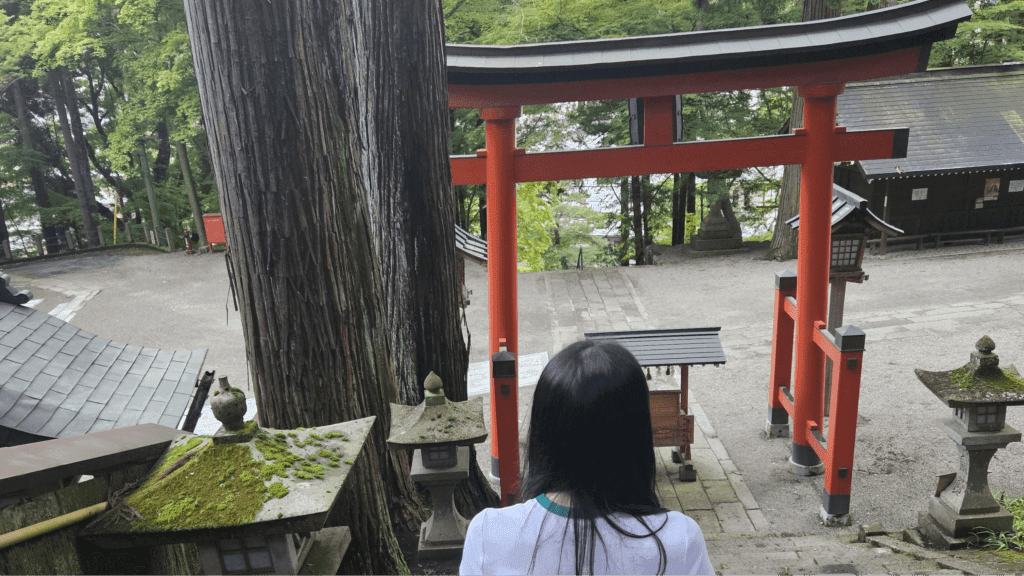
Takayama, a picturesque city tucked into the Japanese Alps, is a destination that rewards travelers who appreciate history, craftsmanship, and quiet mountain scenery. During our recent visit, I spent time exploring the Hie Shrine, a site that holds both cultural and spiritual importance for the local community. The temple is also familiar to fans of Your Name (Kimi no Na wa), since its stone stairway and wooded setting inspired key scenes in the film. As someone who has written about anime locations across Japan, including well known spots such as Saitama’s house from One Punch Man, seeing the Hie Shrine in person offered valuable context for how real environments shape the visual storytelling in anime. It was interesting to compare how different creators draw from recognizable locations while transforming them into something that feels both grounded and imaginative.
Walking through the grounds, I noticed how quickly the atmosphere shifts from the lively streets of Takayama to a calm, shaded sanctuary. The approach to the shrine is lined with towering cedar trees, and the soft sound of wind moving through the forest creates a peaceful setting that invites visitors to slow down. Spending time here helped me understand why this shrine has been respected for centuries. Beyond its connection to popular culture, Hie Shrine offers an authentic glimpse into regional Shinto traditions and the spiritual practices that continue to shape daily life in the Japanese Alps.
For travelers wondering whether Hie Shrine is worth visiting in Takayama, the answer is a clear yes. While many visitors focus on the city’s famous old town and morning markets, the shrine provides a completely different perspective on the region. It combines cultural heritage, natural beauty, and a sense of tranquility that can be difficult to find in more crowded tourist destinations. Whether you are a fan of Your Name, interested in Japanese religious traditions, or simply looking for a peaceful walk surrounded by nature, Hie Shrine is one of Takayama’s most rewarding hidden gems. The shrine can easily be included in a half-day itinerary and offers excellent opportunities for photography, particularly during spring when fresh greenery fills the forest and during autumn when the surrounding leaves transform into brilliant shades of red and gold. Many visitors leave with a deeper appreciation not only for Takayama’s history but also for the strong connection between nature and spirituality that continues to define much of rural Japan.
Hie Shrine: A Link to Your Name and Its Cultural Significance
The Hie Shrine, situated on the sacred Mount Hie, has long been associated with Shinto beliefs and is respected throughout the region as a place of protection. During my visit, I was able to observe how the temple’s architecture, rituals, and wooded surroundings reflect traditions that have shaped local spiritual life for centuries. Its calm atmosphere makes it easy to understand why the community continues to value it as a site for reflection and seasonal ceremonies.
The temple also holds a special place in popular culture because of its prominent appearance in Your Name, a film that resonated with audiences around the world. The story follows two teenagers who mysteriously swap bodies and attempt to navigate each other’s lives while uncovering a much deeper connection. In the film, the temple becomes an important setting where their paths converge and where the narrative begins to reveal its spiritual roots. The animation draws heavily from the real location, capturing the soft light through the trees and the quiet ascent toward the shrine.
For anyone who appreciated the movie, standing at the temple and recognizing details that inspired key scenes adds a meaningful layer to the experience. Seeing the contrast between the cinematic interpretation and the authentic site also offered insight into how anime creators adapt real spaces to support emotional storytelling. This blend of cultural heritage and contemporary media influence makes Hie Shrinean especially rewarding stop for travelers interested in both tradition and film history.
Beyond its significance in the film, Hie Shrine carries deep cultural meaning for the people of Takayama and the surrounding region. It forms part of a long established network of shrines and temples that have been dedicated to protecting the community, safeguarding harvests, and supporting local prosperity for many generations. These sites are woven into the rhythm of daily life, and many families visit them during seasonal festivals or personal milestones. Spending time at Hie Temple made it easy to see why it remains an important spiritual anchor for the area.
Pilgrims and visitors often come to the temple to seek blessings for health, happiness, and success, and the practice of offering prayers here continues to be passed down through each generation. Walking up the ancient stone steps, which have been shaped by centuries of use, gave me a sense of continuity with those who climbed them before. The towering trees surrounding the grounds create a quiet, protective canopy that heightens the temple’s atmosphere of reflection and respect. The entire setting encourages visitors to slow down, take in their surroundings, and appreciate the depth of Japan’s religious traditions.
For anyone interested in understanding how spirituality is experienced in rural Japan, Hie Shrine offers a clear and authentic example. Its combination of architectural simplicity, cultural history, and natural beauty makes it one of Takayama’s most meaningful landmarks, well worth visiting even for travelers who may not be familiar with the film.
The 2-Hour Walk Through the Forest: Nature’s Embrace
After our visit to the Hie Temple, we set off on a 2 hour walk through the forest that surrounds the area. Spending this time on foot gave us a deeper appreciation for Takayama’s natural landscape, which is known for its clean mountain air and well preserved woodland trails. The path was quiet and gently sloped, making it accessible while still offering the feeling of being immersed in nature.
As we continued, the towering cedar and pine trees provided steady shade that softened the midday sun. The forest carried a distinct scent of resin and damp earth, something I have come to associate with alpine regions in Japan. The soundscape added to the calm, with the rustling of leaves, distant birdsong, and the occasional trickle of water from nearby streams. It felt like an ideal environment for slowing down, reflecting on the visit to the temple, and appreciating how seamlessly Takayama blends spiritual heritage with natural beauty. Experiences like this walk help explain why the region has become a favorite among travelers who value culture, nature, and quieter forms of exploration.
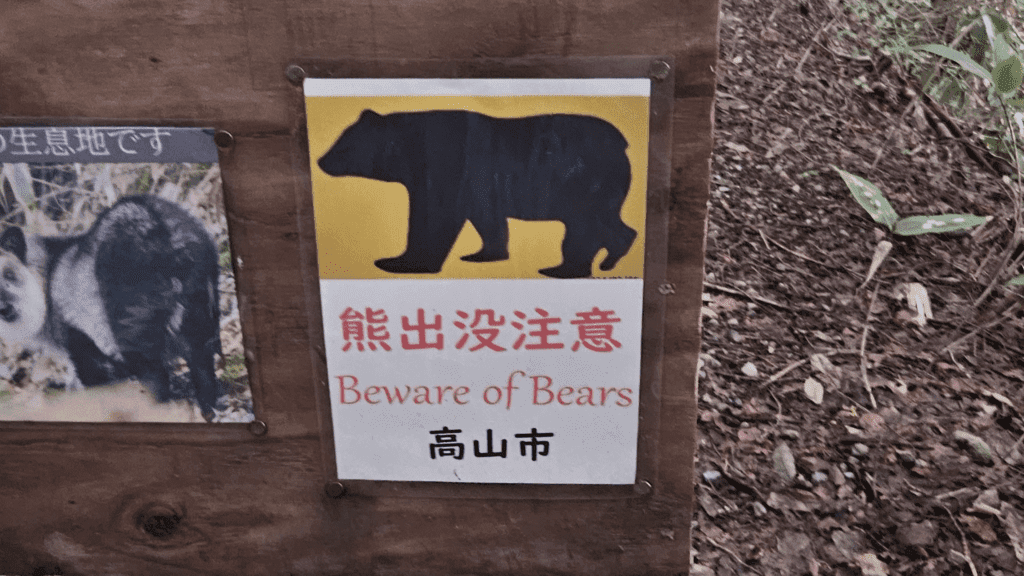
However, while the walk was peaceful, it was not without its practical considerations. The forest around Takayama is known to be home to wildlife, including bears, and local signs make visitors aware of this. We were not overly worried during our walk, especially since the trail felt well used and we did not see any signs of recent animal activity. Still, with the rise in bear encounters reported across Japan in recent years, it is sensible to approach these areas with a bit more preparation.
One of the simplest precautions is carrying a bear bell. The sound alerts wildlife to your presence and reduces the chance of surprising an animal at close range. During a hike we completed in Matsumoto, nearly every local hiker we met had a bell attached to their backpack. Seeing how common they were among experienced walkers gave us confidence that this is a practical and widely accepted measure rather than something meant to cause alarm.
Even though we did not encounter any bears, being aware of our surroundings and following local guidance helped us appreciate the landscape with a healthy sense of respect. These precautions highlight the balance that defines Takayama’s forests. They are beautiful and inviting, yet still part of a living ecosystem that deserves awareness and care from anyone exploring the area.
A Journey of Reflection and Discovery
The combination of the Hie Shrine’s spiritual atmosphere and the raw beauty of the surrounding forest made this experience genuinely memorable. Spending time at the temple created a meaningful connection to Japan’s ancient traditions and offered insight into the quiet rituals that continue to shape daily life in the region. For visitors who appreciated Your Name, the temple resonates on an emotional level as well, since standing in the real location offers a deeper understanding of how the film blends everyday settings with moments of wonder.
The forest walk that followed, although not long, allowed us to reset our pace and experience nature in one of its most untouched forms. The stillness of the trees, the filtered sunlight, and the earthy scent of the trail made it easy to slow down and observe the landscape with genuine appreciation. It also reminded us of the delicate balance between human presence and the natural world, a theme that runs through both the spiritual heritage of Takayama and the wider Japanese Alps.
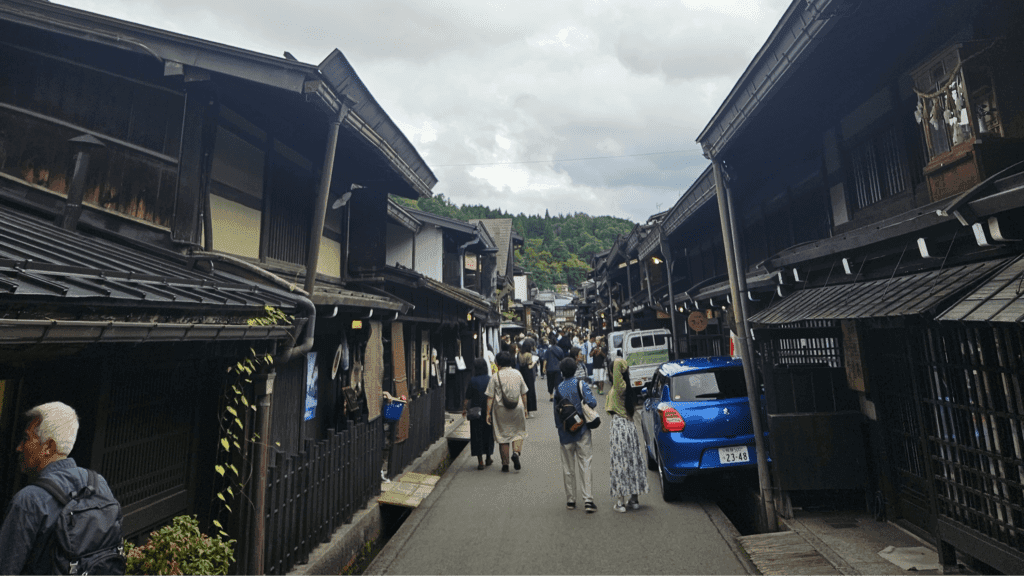
Takayama itself continues to stand out as a destination that speaks to travelers seeking culture and authenticity. Its preserved architecture, local craftsmanship, and mountain surroundings create a sense of place that feels both historic and welcoming. The city also serves as a convenient base for exploring nearby highlights. One of the most notable is Shirakawa-go, a village known for its traditional gassho-zukuri farmhouses and recognized as a UNESCO World Heritage Site. The village is close enough to visit as a day trip, and I can confidently recommend adding it to any Takayama itinerary. Experiencing its thatched rooftops and rural scenery offers valuable context for understanding how mountain communities have lived and adapted through the centuries.
Travelers who enjoy the atmosphere of Shirakawa-go may also appreciate other historic villages across Japan. Near Lake Kawaguchi, the traditional village of Iyashi no Sato Nenba offers a similar glimpse into Japan’s rural past, with reconstructed thatched-roof houses set against the backdrop of Mount Fuji. While smaller and more curated than Shirakawa-go, it provides an accessible alternative for visitors exploring the Fuji Five Lakes region. Likewise, in Fukushima Prefecture, Ouchi-juku near Aizu-Wakamatsu preserves an entire Edo-period post town, where traditional thatched buildings line a wide unpaved main street much as they did centuries ago. Visiting these destinations reveals how different regions of Japan have preserved their architectural heritage while adapting to modern tourism.
From Takayama, it is also an easy continuation onward to Kanazawa, a city known for its gardens, cultural districts, samurai history, and well-preserved architecture. Together, Takayama, Shirakawa-go, and Kanazawa form one of the most rewarding travel routes in central Japan, combining mountain scenery, traditional culture, and some of the country’s best-preserved historic landscapes.
For fans of Your Name, the Hie Shrine stands out as a meaningful stop, but its real world value extends well beyond its connection to the film. It is a place where history, culture, and nature work together to create an experience that feels both grounding and inspiring. The forest surrounding the temple may present its challenges, yet the wildness of the landscape is part of what makes this area so compelling. Approaching it with awareness and respect allows travelers to enjoy its beauty with confidence.
As we made our way back from the walk, we felt a mix of accomplishment and quiet reverence, knowing that we had taken part in an experience that brought together spiritual heritage, natural landscapes, and a touch of contemporary culture. Takayama and the Hie Shrine are more than destinations. They are gateways into the heart of Japan’s traditions, its storytelling, and the mountain environments that continue to shape its identity.
Author
Get My Personal Travel Maps
Keep Reading: More Articles You'll Love
 Is Japanese Food Actually Chinese? The Surprising Origins of Japanese Cuisine
  Living in Japan vs Korea – The Ultimate Expat Guide
  Japan Travel Myths vs Reality: What Tourists Still Get Wrong About Japan
  Tattoos in Japan: Rules, Culture, Onsen & Changing Attitudes
  Matsumoto Itinerary: The Perfect 3-Day Guide Including Kamikochi
  My First 30 Days in Tokyo: Essential Administrative Steps for International Students
  What Is a Koban? Japan’s Police Box System Explained