
Hiroshima Travel Guide: A Complete 3-Day Itinerary for Miyajima, Peace Memorial Park & Local Food
Planning a trip to Hiroshima? This Hiroshima travel guide combines the city’s most important historical sites, its famous food culture, and one of Japan’s most iconic island destinations into a practical 3-day itinerary. Whether you’re visiting Hiroshima for the first time or returning to explore more of western Japan, this guide will help you plan where to stay, what to see, how to visit Miyajima, and where to eat Hiroshima’s famous okonomiyaki and oysters.
After living in Japan for several years and visiting Hiroshima multiple times across different seasons, I’ve refined this itinerary to balance the city’s most significant attractions with local experiences that many visitors miss. You’ll explore the Peace Memorial Park and Atomic Bomb Dome, visit the floating torii gate of Itsukushima Shrine on Miyajima Island, discover Hiroshima Castle, and experience the city’s renowned food scene.
This guide includes:
- A detailed 3-day Hiroshima itinerary
- How to visit Miyajima and Itsukushima Shrine
- Recommended hotels and areas to stay
- The best Hiroshima-style okonomiyaki and local food
- Transportation tips and practical travel advice
- Personal recommendations based on multiple visits
For this itinerary, I personally recommend staying at the Grand Prince Hotel Hiroshima. Having stayed there myself, I found its private ferry service to Miyajima particularly convenient, allowing visitors to avoid the crowds at Miyajimaguchi and travel directly to the island. The hotel also gained international recognition as one of the venues used during the 2023 G7 Hiroshima Summit.
If you’d like to see these destinations before your trip, you can also watch my Hiroshima travel video, where I document the locations, food, and atmosphere featured throughout this guide.
Day 1: History & Heart of Hiroshima
Morning: Peace Memorial Park & Atomic Bomb Dome

Morning: Peace Memorial Park & Atomic Bomb Dome
No visit to Hiroshima is complete without spending time at the Peace Memorial Park and Atomic Bomb Dome. Located in the heart of the city, these sites are among the most important historical landmarks in Japan and attract millions of visitors every year. Together, they preserve the memory of the atomic bombing of August 6, 1945, while serving as symbols of peace and reconciliation.
The Atomic Bomb Dome, originally known as the Hiroshima Prefectural Industrial Promotion Hall, was one of the few structures near the hypocenter that remained partially standing after the explosion. Today, the preserved ruins are recognized as a UNESCO World Heritage Site and have become an enduring symbol of Hiroshima’s recovery.
The first time I stood in front of the Dome, what struck me most was the atmosphere. Despite being surrounded by modern office buildings, busy roads, and the daily life of a major Japanese city, the area feels remarkably quiet and reflective. People speak softly, school groups move respectfully through the park, and visitors from around the world gather to learn about one of the most significant events of the twentieth century.
The Hiroshima Peace Memorial Museum is the centerpiece of the park and should be considered an essential stop. Through photographs, artifacts, survivor testimonies, and detailed historical exhibits, the museum documents the devastating human consequences of the bombing. The experience is powerful and often emotionally challenging, so I recommend setting aside at least two hours for your visit. Afterward, consider taking a walk along the riverside paths that surround the park. They provide a peaceful environment for reflection before continuing your itinerary.
A Personal Reflection: Hiroshima and Nagasaki
Having visited both Hiroshima and Nagasaki, I found the two museums approach the history from slightly different perspectives. Hiroshima’s museum focuses heavily on the experiences of the victims, the destruction caused by the atomic bomb, and the city’s ongoing message of peace. The emotional impact is immense and leaves a lasting impression on most visitors.
Nagasaki’s Atomic Bomb Museum, in my personal opinion, provides somewhat broader historical context regarding the events of World War II and the circumstances surrounding the bombing. Because of this, I found that visiting both cities offered a more complete understanding of this period in history. Rather than competing narratives, the two museums complement one another and encourage visitors to think critically about the human, political, and military dimensions of the war.
If your Japan itinerary allows, I strongly recommend visiting both Hiroshima and Nagasaki. Together, they provide one of the most thought-provoking and educational travel experiences in the country.
Visitor Information
- Recommended visit duration: 2 to 3 hours
- Best time to visit: Early morning to avoid larger tour groups
- Nearest tram stop: Genbaku Dome-mae
- Admission: Atomic Bomb Dome (free), Peace Memorial Museum (ticket required)
- Photography: Allowed in most outdoor areas, but always remain respectful
Most travelers arrive via the Shinkansen from Tokyo, Kyoto, or Osaka. Hiroshima Station is well connected to the city center through the tram network, making it easy to reach the Peace Memorial Park as the first stop on your Hiroshima itinerary.
Afternoon: Hiroshima Castle

Afternoon: Hiroshima Castle
After visiting the Peace Memorial Park, continue your Hiroshima itinerary with a short walk to Hiroshima Castle, one of the city’s most important historical landmarks. Known as Rijō (“Carp Castle”), the fortress offers a fascinating contrast to the modern history explored earlier in the day.
Originally constructed in the 1590s by the powerful feudal lord Mori Terumoto, Hiroshima Castle served as the political and military center of the region for centuries. Like much of the city, the original structure was destroyed during the atomic bombing in 1945. The castle you see today is a carefully reconstructed version completed in 1958, preserving the appearance of a traditional Japanese castle while housing a modern museum inside.f
Although Hiroshima Castle is not one of Japan’s original surviving castles, I still consider it one of the most rewarding castle visits in the country. The combination of samurai history, excellent city views, and its connection to Hiroshima’s postwar reconstruction makes it a worthwhile stop for first-time visitors.
What to See at Hiroshima Castle
Castle Keep (Tenshu)
The main keep contains exhibits on Hiroshima’s feudal history, samurai culture, and the development of the castle town. The top floor observation deck provides panoramic views across Hiroshima City and the surrounding mountains.
Castle Grounds and Moat
The castle is surrounded by wide moats, stone walls, and green spaces that create a peaceful atmosphere in the middle of the city. Walking around the perimeter offers some of the best photo opportunities and a chance to appreciate the scale of the original fortifications.
Gokoku Shrine
Located within the castle grounds, this Shinto shrine is often overlooked by visitors but is worth a brief stop, particularly during festival periods and seasonal celebrations.
Visitor Information
- Recommended visit duration: 1 to 2 hours
- Best time to visit: Late afternoon
- Admission: Castle keep ticket required
- Walking distance from Peace Memorial Park: Approximately 15 minutes
The contrast between Hiroshima Castle and the Peace Memorial Park makes this one of the most interesting afternoons in the city. In just a few hours, visitors can experience both Hiroshima’s feudal heritage and its modern history.
Evening: Hondōri Shopping Street
As the sun begins to set, head to Hondōri Shopping Street, Hiroshima’s main pedestrian shopping and dining district. Stretching through the city center, this covered arcade is filled with restaurants, cafes, local shops, and entertainment venues.
Hondōri is an excellent place to experience modern Hiroshima after spending the day exploring historical sites. The area becomes particularly lively during the evening, when locals gather for dinner, drinks, and shopping.
For dinner, consider trying Hiroshima-style okonomiyaki, the city’s most famous local specialty. Unlike the Osaka version, Hiroshima okonomiyaki is built in layers with cabbage, noodles, egg, and savory sauce, creating a hearty meal that has become synonymous with the city itself.
After dinner, take a walk through the illuminated streets surrounding Hondōri before returning to your hotel. The relaxed atmosphere provides a perfect end to the first day of your Hiroshima itinerary.
Day 2: Miyajima Island Adventure

Morning: Visit Itsukushima Shrine on Miyajima Island
No Hiroshima itinerary is complete without a visit to Miyajima Island and the world-famous Itsukushima Shrine. Designated as a UNESCO World Heritage Site, the shrine is best known for its iconic vermilion torii gate, which appears to float on the water during high tide. It is one of Japan’s most recognizable landmarks and attracts visitors from around the world throughout the year.
The shrine’s origins date back to the 6th century, while many of the structures visible today were built during the 12th century under the patronage of the powerful military leader Taira no Kiyomori. Unlike most shrines in Japan, Itsukushima Shrine was constructed directly above the water on wooden stilts, allowing worshippers to approach the sacred island without setting foot on the land itself. This unique design creates the illusion that the shrine is floating on the Seto Inland Sea.
Having visited Miyajima multiple times, I strongly recommend checking the tide schedule before your trip. During high tide, the famous torii gate appears to float dramatically above the water and offers some of the most iconic photography opportunities in Japan. At low tide, visitors can walk directly beneath the gate and appreciate its impressive scale up close. Both experiences are worthwhile, but they feel completely different.
Beyond the shrine itself, Miyajima offers a combination of history, nature, and local culture that makes it one of the most rewarding day trips in Japan. The island’s free-roaming deer, traditional streets, mountain views, and waterfront scenery encourage visitors to slow down and spend several hours exploring beyond the main attraction.
How to Get to Itsukushima Shrine from Hiroshima
- Take the JR Sanyo Line from Hiroshima Station to Miyajimaguchi Station.
- Transfer to the ferry terminal.
- Board the ferry to Miyajima Island (approximately 10 minutes).
- Walk from the ferry terminal to Itsukushima Shrine.
Visitor Information
- Recommended visit duration: 3 to 5 hours
- Best time to visit: Early morning or late afternoon
- Shrine admission: Ticket required
- Ferry crossing: Approximately 10 minutes
- Photography tip: Check tide times before your visit
For many travelers, Miyajima and Itsukushima Shrine become the highlight of their Hiroshima trip, combining some of Japan’s most beautiful scenery with centuries of history and spiritual significance.
Afternoon: Explore Miyajima Island
After visiting Itsukushima Shrine, spend the rest of the afternoon exploring the island beyond its most famous landmark. While many visitors return to Hiroshima shortly after seeing the floating torii gate, Miyajima rewards those who slow down and wander its quieter streets, temples, and mountain trails.
One of the island’s most impressive sites is Daishō-in Temple, a historic Buddhist temple nestled at the base of Mount Misen. Often overlooked by international visitors, the temple complex features hundreds of stone statues, prayer wheels, and peaceful walking paths surrounded by forested hillsides.
As you continue through the island, take the opportunity to sample Momiji Manju, Miyajima’s most famous sweet. These maple leaf-shaped cakes have been produced on the island for more than a century and are available with traditional red bean filling as well as modern variations such as custard, chocolate, and matcha.
For the best views in the region, take the Miyajima Ropeway toward Mount Misen. From the upper stations and observation areas, visitors are rewarded with panoramic views across the Seto Inland Sea and its many islands. If time and energy allow, the short hike to the summit is well worth the effort.
Throughout the island, you’ll encounter Miyajima’s famous free-roaming deer. While they may appear friendly and photogenic, they can be surprisingly persistent around food. During one of my visits, I watched a deer repeatedly follow a tourist carrying an ice cream cone, making it very clear what it wanted. Keep food secured and avoid feeding the animals.
Evening: Return to Hiroshima
As the afternoon crowds begin to disperse, make your way back to Hiroshima City. If possible, try to catch a late afternoon or early evening ferry, as the views across the Seto Inland Sea can be particularly beautiful as the sun begins to set.
Back in Hiroshima, enjoy a quieter evening after a day of sightseeing. This is a good opportunity to explore the local restaurant scene, take a stroll through the city center, or simply relax before the final day of your itinerary.
If you’re staying outside central Hiroshima, be sure to check the final ferry and train schedules in advance. Missing the last connection can add considerable travel time to your journey back to the city.
Day 3: Local Cuisine & Cultural Immersion
Morning: Hiroshima Beyond the Main Attractions
By your third day in Hiroshima, you’ve likely visited the city’s most famous landmarks. This morning is an opportunity to slow down and experience a different side of the city before continuing your journey.
Start the day with a traditional Japanese breakfast at your hotel or a local café before exploring some of Hiroshima’s quieter neighborhoods. One of the things I appreciate most about Hiroshima is how livable it feels. Despite its historical significance and growing popularity among tourists, much of the city retains a relaxed atmosphere that is noticeably different from Tokyo or Osaka.
Take a walk along the riverside promenades that wind through the city center. Hiroshima is often called the “City of Water” due to the six rivers that flow through its downtown area before reaching the Seto Inland Sea. These waterways create pleasant walking routes and green spaces that are particularly enjoyable during spring and autumn.
If you are interested in local history, consider visiting Shukkeien Garden, one of Hiroshima’s most beautiful traditional landscape gardens. Originally constructed in the early seventeenth century for the ruling Asano clan, the garden features miniature valleys, bridges, tea houses, and carefully designed ponds that create the impression of a much larger landscape. It is one of the best places in Hiroshima to experience traditional Japanese garden design.
For travelers who prefer a slower pace, simply spending the morning exploring the streets around Hiroshima Station or the city center can be rewarding. Away from the major tourist attractions, you’ll discover local bakeries, neighborhood cafés, and everyday scenes that provide a glimpse into modern life in Hiroshima.
After two days of major sightseeing, this quieter morning offers a welcome opportunity to appreciate the city itself rather than rushing between attractions.
Afternoon: Food & Shopping

Hiroshima Oysters: One of the City’s Most Famous Local Specialties
No Hiroshima food guide would be complete without mentioning oysters. Hiroshima Prefecture produces more oysters than any other region in Japan, accounting for well over half of the country’s total production. Thanks to the nutrient-rich waters of the Seto Inland Sea and the rivers flowing down from the Chugoku Mountains, the region provides ideal conditions for oyster farming.
Having tried oysters in several countries, including France and North America, I was surprised by how different Hiroshima oysters tasted. They are noticeably larger than many varieties found elsewhere and have a rich, sweet flavor that sets them apart. Rather than the sharp brininess often associated with oysters, Hiroshima oysters tend to have a softer, buttery texture and a clean finish that appeals even to people who are normally hesitant to try shellfish.
If you spot Kaki-Komachi on a menu, it is worth ordering. This locally developed variety is known for its large size and ability to maintain its quality throughout the year, making it one of Hiroshima’s most sought-after oyster brands.
How to Eat Hiroshima Oysters
Visitors will find oysters prepared in a variety of ways throughout Hiroshima and Miyajima:
- Kaki Furai (deep-fried oysters), one of the most popular local dishes
- Hamayaki (grilled oysters served in the shell)
- Raw oysters during the appropriate season
- Oyster rice dishes and oyster hot pots during winter
My personal recommendation is to try grilled oysters near the waterfront. Freshly prepared over an open flame, they offer one of the most authentic food experiences in Hiroshima.
When Is Oyster Season in Hiroshima?
The best time to enjoy Hiroshima oysters is generally between October and March, when they are at their fullest and most flavorful. During these colder months, many restaurants feature seasonal oyster menus and special dishes that attract visitors from across Japan.
If you are visiting outside the traditional oyster season, you can still find high-quality oysters throughout the year thanks to modern aquaculture techniques and locally developed varieties.
For food lovers, tasting Hiroshima oysters is every bit as essential as trying Hiroshima-style okonomiyaki and should be considered one of the highlights of any visit to the city.
Expert Tip for Miyajima: You will find dozens of oyster stalls near the ferry terminal. While tempting, keep a close watch on your food! Much like the famous residents of Nara Deer Park, the deer on Miyajima are surprisingly bold. I’ve seen them snatch a snack right out of a tourist’s hand—though the Hiroshima deer seem to have a particular “refined” taste for paper maps and snacks!
Where to Eat Oysters in Hiroshima
One of the best things about Hiroshima’s oyster culture is that you can enjoy the local specialty in many different settings, from casual street stalls to dedicated oyster restaurants.
Kakigoya (Oyster Huts) are among the most authentic experiences. These seasonal seafood huts typically operate during the colder months and allow visitors to enjoy freshly harvested oysters grilled directly at their table. Popular with both locals and tourists, they provide a true farm-to-table experience and are often one of the most affordable ways to sample large quantities of Hiroshima oysters.
Within Hiroshima City, you’ll find numerous Kaki-ya (oyster restaurants) serving oysters prepared in every imaginable style, including grilled, fried, steamed, and raw. Many of the best options are located around the Hondōri area and the surrounding side streets, making them easy to visit after a day of sightseeing.
For visitors heading to Miyajima, the streets leading from the ferry terminal to Itsukushima Shrine are lined with oyster stalls and seafood restaurants. Freshly grilled oysters are one of the island’s most popular snacks and offer a perfect introduction to Hiroshima’s most famous local delicacy.
Whether you choose a waterfront oyster hut, a traditional oyster restaurant, or a street-side grill on Miyajima, sampling Hiroshima oysters should be considered an essential part of any Hiroshima food itinerary.
Evening: Experience Hiroshima-Style Okonomiyaki
No Hiroshima itinerary is complete without trying the city’s most famous dish: Hiroshima-style okonomiyaki. While visitors often compare it to the Osaka version, the two dishes are surprisingly different. Instead of mixing the ingredients together, Hiroshima-style okonomiyaki is built in layers, typically consisting of cabbage, batter, pork, egg, and noodles cooked separately before being combined on a hot teppan grill.
The result is a heartier and more complex dish that has become one of Hiroshima’s defining culinary experiences.
Where to Eat Hiroshima-Style Okonomiyaki
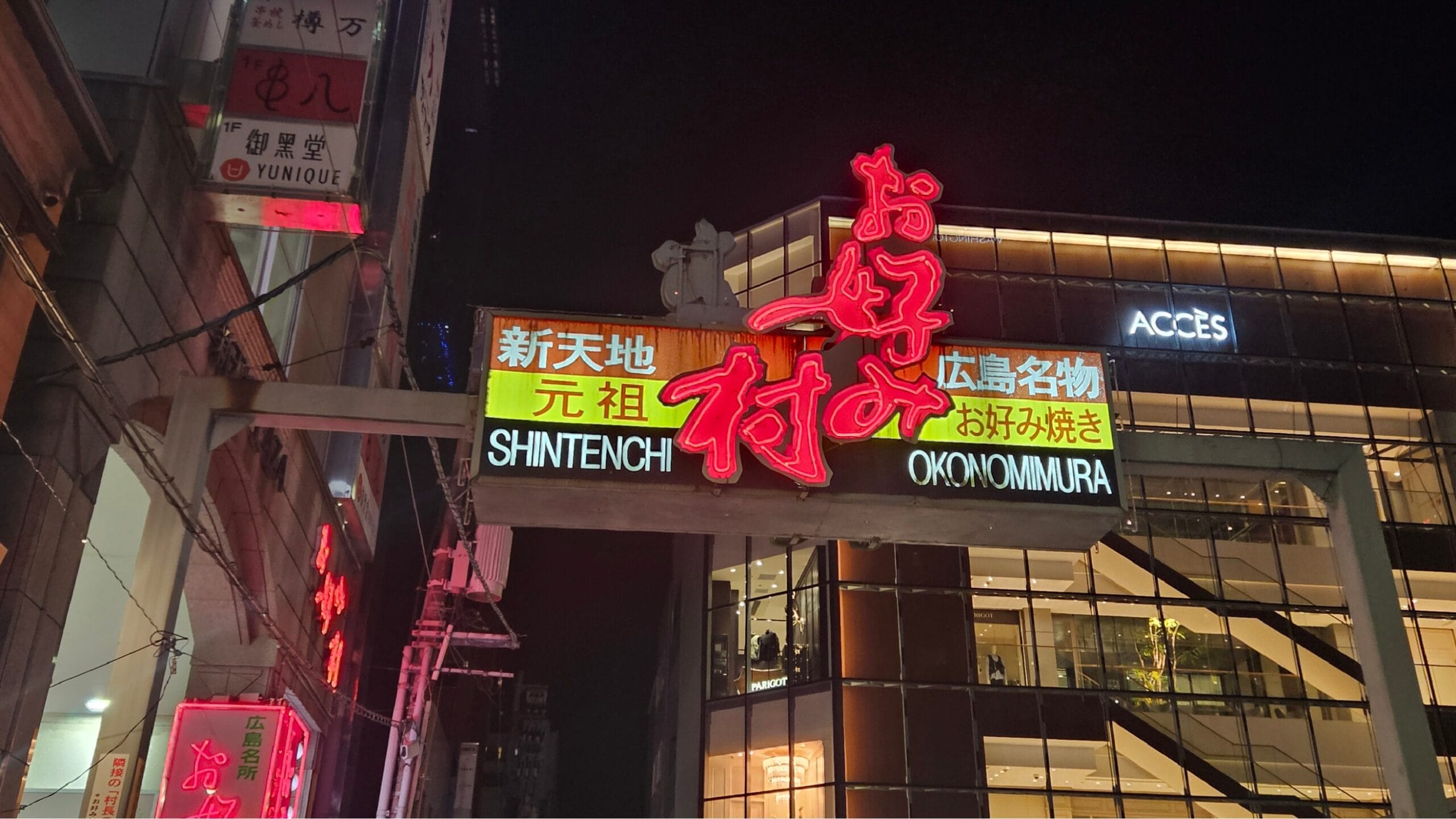
One of my favorite places to enjoy Hiroshima-style okonomiyaki is Okonomi-mura (“Okonomiyaki Village”), a multi-story food hall dedicated almost entirely to the city’s signature dish. Located in central Hiroshima, it brings together numerous independent vendors under one roof, allowing visitors to compare different cooking styles and recipes.
Watching the chefs prepare the meal directly in front of you is part of the experience. The sizzling grill, towering piles of cabbage, and precise cooking techniques showcase why Hiroshima residents take such pride in their local specialty.
If you prefer a quieter atmosphere, you’ll also find excellent family-run okonomiyaki restaurants throughout the Hondōri area and the surrounding side streets. In many cases, these smaller establishments offer some of the most authentic dining experiences in the city.
A Perfect Final Evening in Hiroshima
After dinner, spend some time exploring Hiroshima’s illuminated city center. The rivers that flow through downtown create a pleasant atmosphere after dark, and the city’s relaxed pace makes it ideal for an evening stroll.
If you’re looking for nightlife, the areas around Hondōri and Nagarekawa offer everything from small local bars to modern cocktail lounges. Alternatively, find a riverside viewpoint, enjoy the city lights, and take a moment to reflect on the experiences of the past three days.
From the Peace Memorial Park and Hiroshima Castle to Miyajima, oysters, and okonomiyaki, Hiroshima offers one of the most diverse and memorable city breaks in Japan. Ending your trip with the city’s most famous dish is the perfect way to conclude your Hiroshima itinerary.
Practical Tips for Visiting Hiroshima
Getting Around Hiroshima
Hiroshima’s extensive tram network makes it easy to reach most major attractions, including the Peace Memorial Park, Hiroshima Castle, and Hondōri Shopping Street. While the system is affordable and easy to use, journeys can take longer than expected compared to Tokyo’s train network, especially during rush hour. If you plan to stay outside the city center, allow extra travel time when building your itinerary.
Planning Your Miyajima Visit
Ferries between Miyajimaguchi and Miyajima operate frequently throughout the day, but it is still a good idea to check the final departure times in advance, particularly if you plan to stay on the island until sunset. Visitors interested in photography should also check the local tide schedule before visiting Itsukushima Shrine, as the famous floating torii gate looks dramatically different during high and low tide.
Payment Methods
While credit cards are widely accepted at hotels, major attractions, and larger restaurants, some smaller shops, food stalls, and local establishments still prefer cash. Carrying a reasonable amount of yen can be helpful, particularly when visiting Miyajima or purchasing food from smaller vendors.
Miyajima Deer Etiquette
The deer on Miyajima are one of the island’s most recognizable attractions, but they remain wild animals. Avoid feeding them and keep maps, snacks, and other food items securely stored. While generally harmless, they are known to investigate anything that looks edible.
Visiting the Peace Memorial Museum
The Hiroshima Peace Memorial Museum is one of the most important museums in Japan, but it can also be emotionally challenging. The exhibits contain personal stories, photographs, and artifacts that vividly document the human impact of the atomic bombing. Many visitors consider it the most memorable part of their trip, but it is worth allowing yourself time afterward to process the experience.
Best Time to Visit Hiroshima
Spring (March to May) and autumn (October to November) are generally considered the best seasons to visit Hiroshima. These months offer comfortable temperatures, pleasant walking conditions, and some of the most beautiful scenery around Miyajima and the city’s parks and gardens.
Final Thoughts: Is Hiroshima Worth Visiting?
Absolutely. Hiroshima is one of the most rewarding destinations in Japan because it offers far more than many first-time visitors expect. While the city is internationally known for the Peace Memorial Park and Atomic Bomb Dome, it also combines outstanding local food, beautiful waterfront scenery, historic landmarks, and easy access to one of Japan’s most famous islands.
Over the course of this 3-day Hiroshima itinerary, you’ll experience some of the country’s most important historical sites, explore the UNESCO World Heritage Site of Itsukushima Shrine on Miyajima Island, discover the legacy of Hiroshima Castle, and enjoy local specialties such as Hiroshima-style okonomiyaki and fresh oysters from the Seto Inland Sea.
What I appreciate most about Hiroshima is its balance. Few cities in Japan combine such profound historical significance with such a welcoming atmosphere and vibrant food culture. Despite its importance, Hiroshima often feels less crowded and more relaxed than destinations such as Kyoto, making it an excellent choice for travelers who want a deeper understanding of Japan beyond the usual tourist route.
Whether you’re planning your first trip to western Japan or looking to revisit one of the country’s most fascinating cities, Hiroshima deserves a place on your itinerary. Between its history, culture, cuisine, and natural beauty, it remains one of the destinations that has left the strongest impression on me after years of traveling throughout Japan.
If you’re continuing your journey, be sure to explore my other Japan travel guides for destination ideas, food recommendations, and practical tips to help you plan your next adventure.
Author

Get My Personal Travel Maps
Keep Reading: More Articles You’ll Love
 Is Japanese Food Actually Chinese? The Surprising Origins of Japanese Cuisine
  Exploring Okonomimura: Hiroshima’s Okonomiyaki Tower
  Odawara Castle Guide: What to See, History, Tickets & Travel Tips
  Matsumoto Itinerary: The Perfect 3-Day Guide Including Kamikochi
  Nagasaki Unfiltered: A Deep Dive into Kyushu’s Most Culturally Complex City
  Japan Travel Myths vs Reality: What Tourists Still Get Wrong About Japan
  A Journey Through Kanazawa: Exploring History, Culture, and Beauty


Leave a Reply