The Most Iconic Alleyway in Tokyo Is Also the Most Misunderstood
Let me paint you a picture.
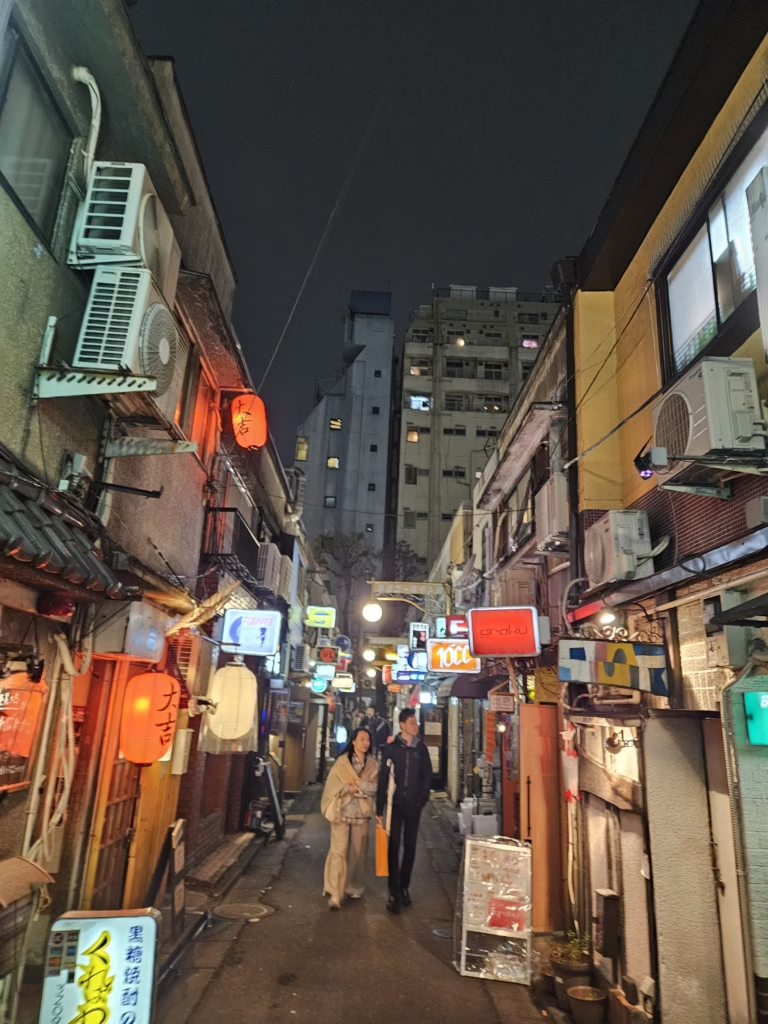
It’s 9 PM on a Friday. You’re standing at the entrance to Golden Gai — Shinjuku’s most famous cluster of six narrow alleys — surrounded by neon light, the smell of yakitori smoke, and the sound of badly sung karaoke bleeding through a door the size of a refrigerator.
A man in his 60s is sitting on a wooden stool outside a bar that fits exactly seven people, nursing a whisky highball, staring at his phone with zero interest in the 40 tourists walking past him with cameras raised.
That contrast — that uncomfortable, fascinating tension between what Golden Gai was and what tourism is slowly turning it into — is exactly what this guide is about.
Because Golden Gai is still extraordinary. It’s also more expensive, more crowded, and more divided than it’s ever been. And if you’re going to visit, you deserve the full picture. If you want to understand Tokyo nightlife beyond Golden Gai, I’ve also put together a complete Tokyo nightlife guide covering the best bars and clubs for every type of night out.
What Is Golden Gai? (And Why Does Everyone Go Crazy For It?)
Golden Gai (新宿ゴールデン街) is a block of approximately 200–280 micro-bars crammed into six narrow alleyways in Kabukicho, Shinjuku. Each bar is typically the size of a walk-in wardrobe — 4 to 8 seats, a counter, a master or mama-san behind the bar, and a very specific theme or vibe.
We’re talking:
- A bar dedicated entirely to French cinema (La Jetée — all Godard, all night)
- A bar for vintage plastic model collectors (Bar Plastic Model)
- A rock music dive where regulars vote on what plays
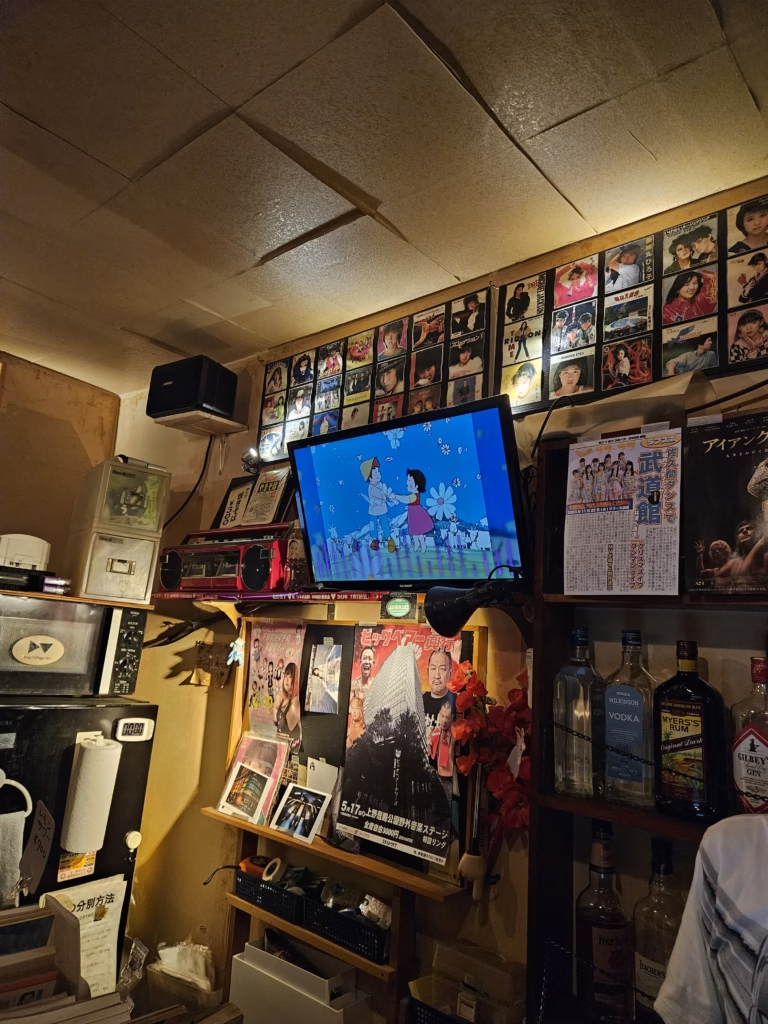
- A bar where the owner has collected 3,000 records and will quietly judge you
- A horror-themed bar called Death Match in Hell where you sit surrounded by skulls and the bartender speaks English
Golden Gai is not a place you go for a generic night out. It’s a place you go when you want to end up in a conversation you didn’t expect, in a room smaller than your bedroom, with a drink in your hand and zero idea what time it is.
That’s the appeal. And it’s real.
The Real History: From Black Market to Bucket-List
Golden Gai’s story doesn’t start with Instagram. It starts in 1945, in the rubble of postwar Tokyo.
1945 – The Black Market Era
After Japan’s defeat in World War II, the area outside Shinjuku Station’s East Exit became a sprawling black market — illegal goods, basic necessities, survival commerce. The American Occupation Forces shut it down in 1949, but it didn’t disappear. It just moved a few hundred meters to where it sits today.
The 1950s – From Survival to Vice
Through the early 1950s, Golden Gai evolved into a red-light district. Tiny wooden structures, narrow alleys, transactions that happened fast and quietly. When Japan’s Anti-Prostitution Law came into effect in 1958, everything changed overnight. The sex trade disappeared. The drinking trade exploded.
The same small buildings that had housed something illicit became bars. And they stayed bars.
The 1960s–1980s – The Creative Golden Age
This is the era that built Golden Gai’s legend. The bars became meeting points for Tokyo’s counter-culture — writers, directors, journalists, political activists, underground filmmakers. If you were someone in Tokyo’s creative world, your regular bar stool in Golden Gai was your second office.
Filmmaker Shohei Imamura was a known regular. Novelists, playwrights, and editors held standing orders at specific bars. The area developed a fierce, protective identity. It was theirs.
The 1980s – The Yakuza Arson Campaigns
During Japan’s economic bubble, developers wanted that land. It sat right next to one of the busiest train stations in the world. The real estate value was extraordinary.
Bar owners began receiving pressure to sell. When they refused, buildings started burning. The yakuza was widely implicated. The response from the Golden Gai community was remarkable: owners formed the Association to Protect Shinjuku Hanazono Golden Gai, and residents and regular patrons began taking nightly volunteer vigils to guard the alleys against arson.
They won. The buildings stood.
If you’re interested in how Japan’s underground culture shaped modern neighbourhoods, my piece on tattoos in Japan, yakuza history and the culture around ink goes deep on the same era.
The 1990s–2000s – Recession and Reinvention
When Japan’s economic bubble burst, many bars closed. The area went quiet. Then, slowly, a new generation of bar owners moved in — younger, more open, some with international backgrounds. The character evolved but the bones remained.
The Social Media Era – The Tourism Explosion
Social media discovered Golden Gai and has not left it alone since. The alleys are now listed on every major “best of Tokyo” roundup. The crowds are significant enough that many locals have stopped going on weekends. For a broader look at how tourism is changing the parts of Japan that locals actually love, my piece on Japan travel myths vs reality is worth a read before your trip.
The Entrance: That Torii Gate and Champion Bar
Here’s what almost every visitor does: they walk into Golden Gai through the most photogenic entrance — the one with the red torii gate — snap a photo, and immediately get pulled into the nearest bar with English signs outside.
That bar, nine times out of ten, is Champion Bar.
And Champion Bar is worth talking about, because it perfectly illustrates what Golden Gai has become.
Champion Bar: The Fun, Chaotic, Totally-Not-Local Experience
Champion Bar is located at the entrance corner, right by the torii gate — which makes it the first thing you see. It’s run by a Japanese-Filipino couple and holds around 25–30 people, enormous by Golden Gai standards. There’s karaoke, English-speaking staff, a crowd that skews heavily tourist, and something genuinely fun happening every night.
The signature gimmick: balloon darts. You buy a ticket, throw a dart at a balloon, and whatever’s inside — a slip of paper — tells you what drink you win or what deal you get. It’s chaotic, silly, loud, and delightful. Exactly the kind of thing that works perfectly at 10 PM.
Here’s the catch nobody writes about:
The balloon game was once beloved by locals as a fun, low-stakes activity at ¥500 per balloon. As tourist numbers surged, the price doubled to ¥1,000 per balloon. The locals who made Champion Bar fun gradually stopped coming because the economics stopped making sense for them. The game now exists almost entirely for tourists who don’t know what it used to cost.
This is the Golden Gai story in one data point. And it’s not unique to Champion Bar — it’s a pattern playing out across the entire district.
To be fair: Champion Bar is still worth a visit. The energy is electric, the karaoke is absurd, and as an introduction to Golden Gai’s atmosphere, it does the job. Just know what you’re walking into: a very good tourist bar, not an authentic local experience. The authentic local experience is two alleys further in, up a steep staircase, in a bar with no English sign and a mama-san who’s been pouring drinks in that same spot since the 1980s.
The Price Problem: Why Golden Gai Has Largely Become a Tourist Zone
Let’s be direct about this.
Golden Gai is increasingly unaffordable for Tokyo locals — and this matters because it’s changing the character of the place you came to see.
The structure of a typical Golden Gai night:
| Cost | Amount |
|---|---|
| Cover charge (per bar) | ¥500–¥2,000 |
| Drinks (each) | ¥700–¥1,500 |
| Otoshi (mandatory small snack) | Often included, sometimes ¥200–¥500 extra |
| Total per bar visit | ¥2,000–¥4,000+ |
If you visit three bars in an evening — a very normal Golden Gai itinerary — you’re looking at ¥6,000–¥12,000 before food. In a country where you can get an exceptional bowl of ramen for ¥900, or drink at a standing bar in Shinjuku for a fraction of the price, this is significant.
The cover charge (席料, sekiryō) is the main friction point. It was always part of Golden Gai’s economics — tiny bars with tiny revenues need a floor to survive. But as tourist demand has validated higher prices, many locals simply don’t come anymore.
A local in his 40s isn’t going to pay ¥1,500 to sit down in a bar where the regulars have been replaced by backpackers and content creators filming their drinks. He’s going to his neighbourhood izakaya where he knows the owner, the beer is ¥400, and nobody asks to photograph him.
This is the quiet tension of Golden Gai right now. It hasn’t died. It hasn’t been demolished — a genuine victory. But the soul of the place — its function as a gathering point for Tokyo’s creative community — has been gradually priced out by the very popularity that was supposed to save it.
Some bars have responded by going explicitly “regulars only.” Around half of the 200+ establishments now have signs indicating they don’t accept walk-in tourists, or charge high enough cover fees to function as a polite no. The other half has adapted to serve tourists — and many of them do it well. But it is a different place than it was a decade ago.
This dynamic isn’t unique to Golden Gai. It’s the same tension at play in Omoide Yokocho just around the corner — another Shinjuku alley that locals built and tourists found.
How to Behave in Golden Gai: The Rules That Actually Matter

Golden Gai has a social code. It’s not written on a sign anywhere, but breaking it will get you ejected faster than you can finish your drink.
1. Don’t Walk In, Survey the Bar, and Walk Back Out
In a six-seat bar, you are the entire atmosphere. The moment you sit down, you’re a guest in someone’s home — a home where every other guest can see you, hear you, and be affected by your energy. Look at the bar from the doorway and if it’s not for you, politely decline to enter. Don’t walk in, look around, and leave.
2. The Cover Charge Is Non-Negotiable
Don’t ask if you can skip it. Don’t negotiate. Don’t act shocked when it appears on your bill. Pay it, factor it into your budget, move on. This is how a business with six seats pays rent in Shinjuku.
3. Always Ask Before You Film
Some bars — particularly tourist-friendly spots — are fine with photos. Others have strict no-phone policies. Ask with: “Shashin wo totte mo ii desu ka?” (写真を撮ってもいいですか?) — “May I take a photo?” If the answer is no, put the phone away completely. No exceptions.
4. Don’t Bring Large Groups
Golden Gai is not built for groups of eight on a bachelorette crawl. A group of five fills an entire bar and changes the dynamic for every other customer. Maximum three to four people per small bar. Split up, meet strangers, regroup later.
5. Talk to People
This is the actual point. The person next to you is also here. The master probably speaks enough English to hold a conversation. Golden Gai has always been about accidental conversation — sit down, order a drink, let something happen.
6. “No Tourists” Signs Mean No Tourists
Some bars have signs indicating they’re for regulars only. Move on — there are 280 bars and plenty that want you. The ones that don’t are trying to protect something real, and respecting that is part of visiting correctly.
If you want a broader understanding of Japanese social codes before you visit — the kinds of unwritten rules that apply everywhere from convenience stores to onsen — my Japan culture guide covers them without the usual sugarcoating.
And while we’re on the topic of places that have a strict vibe: if you’re wondering about Japanese-only signs and how common they actually are, the reality is more nuanced than the internet suggests.
The Ramen You Need After (Or Before — No Judgement)
No night in Golden Gai is complete without ramen. The universe has conveniently placed one of the best ramen shops in Tokyo approximately 90 seconds from the entrance.
Ramen Nagi — The One You Must Try
Niboshi Ramen Nagi (煮干しラーメン 凪 新宿ゴールデン街店 本館) sits at the edge of Golden Gai, up a narrow staircase, second floor. It is tiny. It is always busy. And the ramen is genuinely extraordinary.
The specialty is niboshi ramen — broth built on dried sardines (煮干し), which gives it a deep, funky, intensely savoury character completely unlike the pork broths most Western visitors expect. It’s an acquired taste in the best sense: the first sip might stop you, the second will make you understand, the third will make you wonder how you’ve been eating inferior broth your whole life.
Nagi has a cult following among both locals and serious food tourists. It consistently ranks on Tabelog’s top ramen lists. The queue at 11 PM on a Friday tells you everything.
What to order: The standard niboshi ramen (around ¥900–¥1,000). Adjust the sardine intensity — start at regular if it’s your first time. Add a soft-boiled egg (ajitama). Do not skip the egg.
Practical notes: Cash only. Short wait likely. Don’t bring more than two people unless you’re happy to queue separately.
If ramen is your thing, I’ve also covered Tokyo Ramen Street inside Tokyo Station — a completely different experience but worth knowing about for your wider Tokyo food tour. And for the full picture of what to eat while you’re in Japan, the Japanese food guide covers everything from convenience store gems to serious kaiseki.
The Best Bars in Golden Gai (That Actually Deliver)
Albatross (アルバトロス)
Three floors, Gothic gilt mirrors, chandelier lighting, rumoured to have once been a brothel. The vibe is theatrical and intimate. Cover around ¥500–¥700, a rooftop terrace that shouldn’t exist in this building but does, and a good mix of locals and tourists. A reliable first bar.
La Jetée (ラ・ジュテ)
Named after the 1962 French short film by Chris Marker — the one that inspired 12 Monkeys. Run by a woman who is deeply serious about cinema. Film posters everywhere, carefully curated records, strict no-photography policy. This is the Golden Gai of legend — exactly the kind of bar that should not still exist but does. Go here and be quiet and grateful.
Bar Plastic Model
The walls are covered in vintage plastic model kits — Gundam, tanks, motorcycles. The owner collects them obsessively. You don’t need to know anything about models to enjoy it; the energy is just deeply, specifically, beautifully Japanese in a way that transports you.
Death Match in Hell (地獄のデスマッチ)
Horror decor, fake skulls, English-speaking staff, and an owner who seems to take genuine pleasure in the absurdity. Tourist-friendly in the best way — welcoming, fun, zero pretension. Good for a first visit when you’re still getting your bearings.
Champion Bar
As discussed: loud, chaotic, balloon games (¥1,000 now, was ¥500), karaoke, mostly tourists, genuinely fun. Good opener or closer. Don’t make it your whole Golden Gai experience.
Beyond Golden Gai: Other Shinjuku Nightlife Worth Knowing
If you love the energy of Golden Gai but want to explore more of what Shinjuku and Tokyo’s nightlife scene has to offer, a few places are worth knowing about.
Kabukicho is right next door — the entertainment district that surrounds Golden Gai. I’ve written a full Kabukicho guide that covers what to expect, what to avoid, and where the good stuff actually is. It’s a much wilder experience than Golden Gai and genuinely not for everyone, but worth understanding.
For something completely different on the spectrum of Tokyo nightlife, Decabar offers an unforgettable and very specific kind of evening that I’ll let you discover for yourself. And if you’re curious about Tokyo’s burlesque scene, Tantra Tokyo is one of those places that sounds bizarre on paper and delivers something genuinely theatrical.
On the more unexpected end: Dogenzaka Church Bar in Shibuya is a nun-themed bar that sounds like a gimmick and turns out to be charming. And if you want to feel a muscle girl serve you a drink in Ikebukuro, that’s also very much a thing.
Tokyo is full of places that shouldn’t work and somehow do. Golden Gai is just the most famous of them.
When to Go: The Honest Breakdown
Best night: Tuesday or Wednesday, arriving 8–9 PM. Early enough to get seats, late enough for the bars to be warm. Weeknights have a far higher proportion of actual regulars, and you’ll have much better conversations.
Worst night: Friday or Saturday after 10 PM. The alleys are so crowded you cannot walk without turning sideways. Every tourist-friendly bar has a queue. Many locals avoid the area entirely on these nights.
Best season: Autumn (October–November). Perfect weather, thinner crowds than cherry blossom season, and the Golden Gai atmosphere feels exactly right in cool air and old wood smells. If you’re planning around Tokyo cherry blossom season and visiting then, go to Golden Gai on a weeknight — the weekend crowds in spring are brutal.
Go twice if you can. Once early in your trip to understand the layout. Once toward the end when you’re braver, know a bit more Japanese, and know which specific bar you want to return to.
How to Get There
Golden Gai is a 5–8 minute walk from Shinjuku Station’s East Exit. Walk straight through Kabukicho until you see the red torii gate on your left — you’re there.
From Shinjuku-Sanchome Station (Marunouchi, Fukutoshin, or Toei-Shinjuku lines), take the E2 exit and you’re there in about 2 minutes.
There is no parking. There is no reason to bring a car. This is Tokyo. If you need a broader orientation to the city first, my Tokyo travel guide covers all the major districts and how to move between them.
Budget Breakdown: What a Night Actually Costs
| Scenario | Estimated Cost |
|---|---|
| 1 bar, 1 drink + cover charge | ¥1,500–¥3,000 |
| 3 bars, 1 drink each + covers | ¥5,000–¥10,000 |
| Ramen Nagi after | ¥900–¥1,200 |
| Realistic total for a complete night | ¥6,000–¥12,000 |
Roughly €35–€70 / $40–$80 USD for a full evening. By Tokyo standards this is moderately expensive. By local Tokyo standards for a spontaneous night out, it’s prohibitive for many people — which explains who you’ll find there.
The Honest Conclusion
Golden Gai is still worth visiting. It is one of the most atmospheric places in Tokyo — possibly in all of Asia — and the bars that take it seriously are genuinely special.
But it is also a cautionary tale about what happens to beloved local spaces when they go viral. The balloon game that cost ¥500 now costs ¥1,000. The bars that used to be full of screenwriters are increasingly full of content creators. The mama-san who built her bar around a community of regulars has had to put a “regulars only” sign on the door to protect what’s left of that community.
This doesn’t mean you shouldn’t go. It means you should go respectfully — knowing the history, understanding the economics, making some effort not to be the kind of tourist the place is quietly grieving.
Sit down. Put your phone away. Talk to the person next to you. Drink something you’ve never heard of. Stay longer than you planned.
That’s what Golden Gai is for.
Quick Reference
| Location | Kabukicho, Shinjuku (5 min from East Exit) |
| Hours | Most bars 8 PM – 2 AM+ |
| Best night | Tuesday or Wednesday |
| Spend per bar | ¥2,000–¥4,000 |
| Cover charge | ¥500–¥2,000 (mandatory) |
| Payment | Mostly cash only |
| English menus | Tourist bars yes, authentic bars usually no |
| Photography | Always ask first |
| Ramen nearby | Ramen Nagi (Golden Gai branch) |
| Balloon game | Champion Bar — ¥1,000 per balloon |
| Don’t miss | La Jetée or Bar Plastic Model |
Been to Golden Gai recently? Drop it in the comments — especially if you’ve found bars that are still flying under the radar. I update this guide regularly based on what’s actually happening on the ground.
Author

Get My Personal Travel Maps
Keep Reading: More Articles You’ll Love
 Living in Tokyo vs Zurich – The Ultimate Expat Guide
  Kabukicho Tokyo: The Ultimate Insider Guide to Shinjuku’s Wildest District
  Christmas in Roppongi: Winter Illuminations, Market & Tokyo Tower Views
  Halloween in Tokyo: From Shibuya to Shinjuku and Beyond
  The Ultimate Guide to the Best Furniture Stores in Tokyo: MUJI vs. Nitori vs. IKEA
  Is Tokyo Really Safe? What I Learned Living Here for 3 Years
  Is Japanese Food Actually Chinese? The Surprising Origins of Japanese Cuisine


Leave a Reply