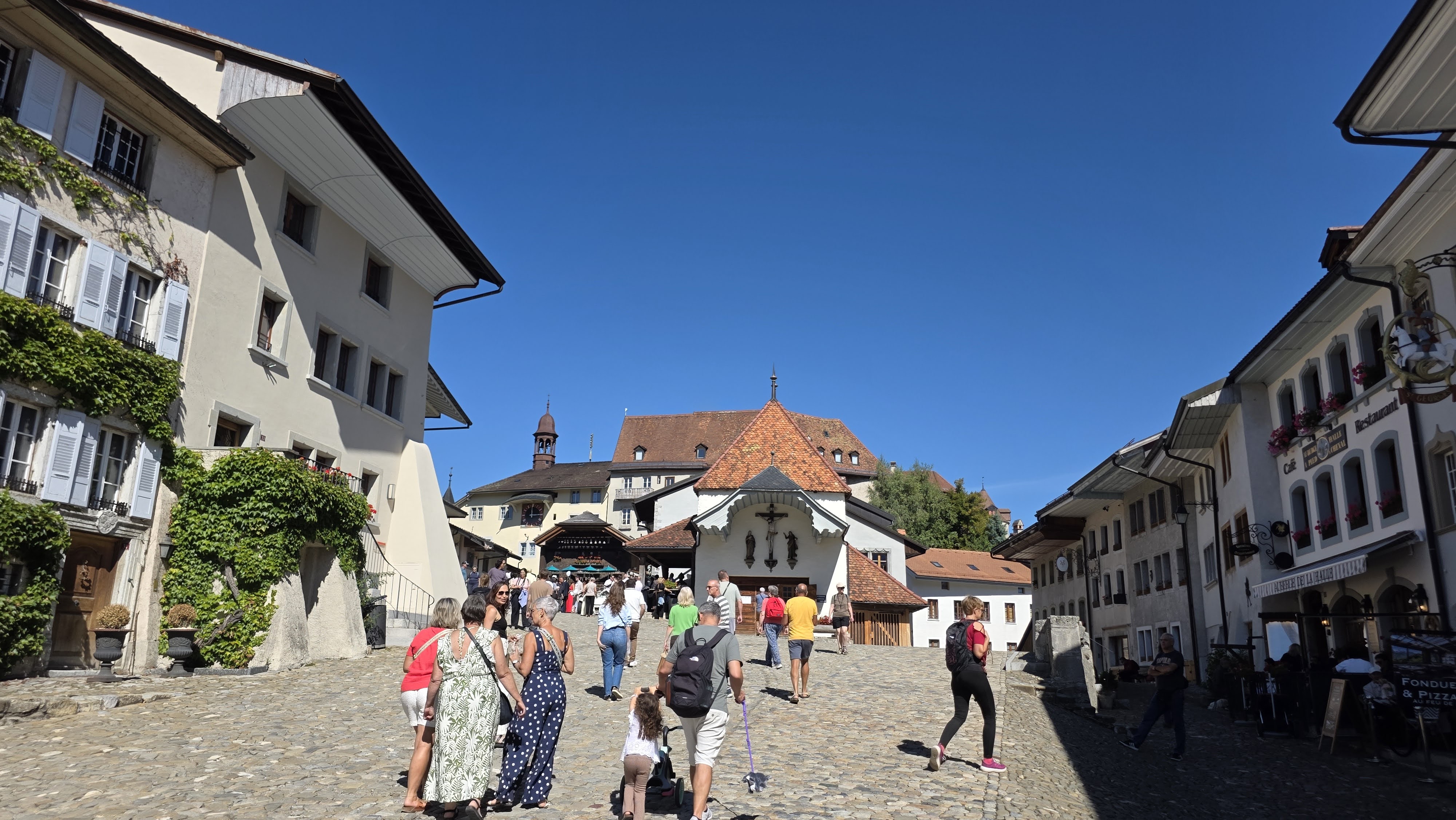
Gruyères looks like it was built for a postcard, and that is more or less the problem people run into when they plan a trip here. The medieval town sitting on its hill in Fribourg canton gets treated as a quick photo stop between Bern and Lake Geneva, when in reality it holds one of the strangest museum combinations in Switzerland, a castle with eight centuries of history, and the cheese that was just named the best in the world. It belongs on the same list as Heididorf in Maienfeld as one of the country’s genuine storybook villages, minus the fictional backstory. We drove there by car, spent the better part of a day working through the old town, and this is what actually matters if you’re planning the same trip.
Getting to Gruyères by Car
Driving is the easiest way to reach Gruyères if you’re already exploring the region around Bern or coming from further west near Neuchâtel. The A12 motorway connects Bern and Fribourg to the area, and from the Bulle-area exits it’s a short drive on regional roads up toward the town.
What surprises a lot of first-time visitors is that you cannot actually drive into Gruyères itself. The medieval core, the part with the cobblestone streets and the château, is closed to traffic entirely. Several car parks sit just below the town, including one near the train station and La Maison du Gruyère cheese dairy, and from there it’s a walk of ten to twenty minutes uphill, including some stairs, to reach the old town gates. Wear shoes you can actually walk in. It’s not a long walk, but it’s not flat either, and the cobblestones inside the walls get slippery when wet.
If you’re coming from further afield, Gruyères pairs naturally with a wider Swiss road trip. It sits roughly equidistant between the lakes of western Switzerland and the alpine passes further south, so it’s an easy stop whether you’re heading toward Europe more broadly, coming down from Zurich, or looping back through the Bernese Oberland. If this is your first stop on a longer Swiss trip, our Swiss guides hub has the rest of the country broken down region by region.
Drones Over Gruyères: What’s Actually Allowed
If you’re bringing a drone, know the rule before you fly it. You are not allowed to fly a drone directly over the town of Gruyères itself. The medieval centre, the castle, and the immediate surroundings fall under restrictions that apply to historic sites and populated areas in Switzerland, and local authorities do enforce this, particularly around the château and the crowded old town streets during high season.
What you can do is fly nearby. The hills and open pastureland just outside the town, away from the built-up core and the castle grounds, are generally fine as long as you’re not inside a restricted zone. Switzerland’s civil aviation office runs an interactive map that shows exactly where restrictions apply nationwide, and it’s worth checking before every flight rather than assuming last year’s rules still hold, since restricted zones do get updated. If you’re unsure whether a specific spot near Gruyères is cleared, that map is the fastest way to confirm it rather than guessing based on how far you are from the walls.
Gruyères Castle: Eight Centuries on a Hilltop
The Château de Gruyères anchors the entire town, and it’s worth the ticket on its own. Built starting in the 13th century, it was home to the Counts of Gruyères for nearly 400 years before passing through several private owners, including a family of Geneva bankers who restored much of what visitors see today. The rooms inside mix austere medieval stonework with surprisingly ornate 19th-century decoration, and the views from the ramparts over the Gruyère valley and the surrounding Pre-Alps are the real payoff of the climb up.
The castle is open year-round: April through October from 9am to 6pm, and November through March from 10am to 5pm, with last entry 45 minutes before closing. Adult tickets run CHF 13, with reductions for seniors and students at CHF 9, children aged 6 to 15 at CHF 5, and a family rate of CHF 29 for two adults and up to three kids. Keep in mind the site has a lot of stairs; wheelchair access is limited to the esplanade, courtyard, and part of the garden depending on the season, and strollers, tripods, and pets aside from assistance dogs aren’t allowed inside.
The HR Giger Museum and Bar
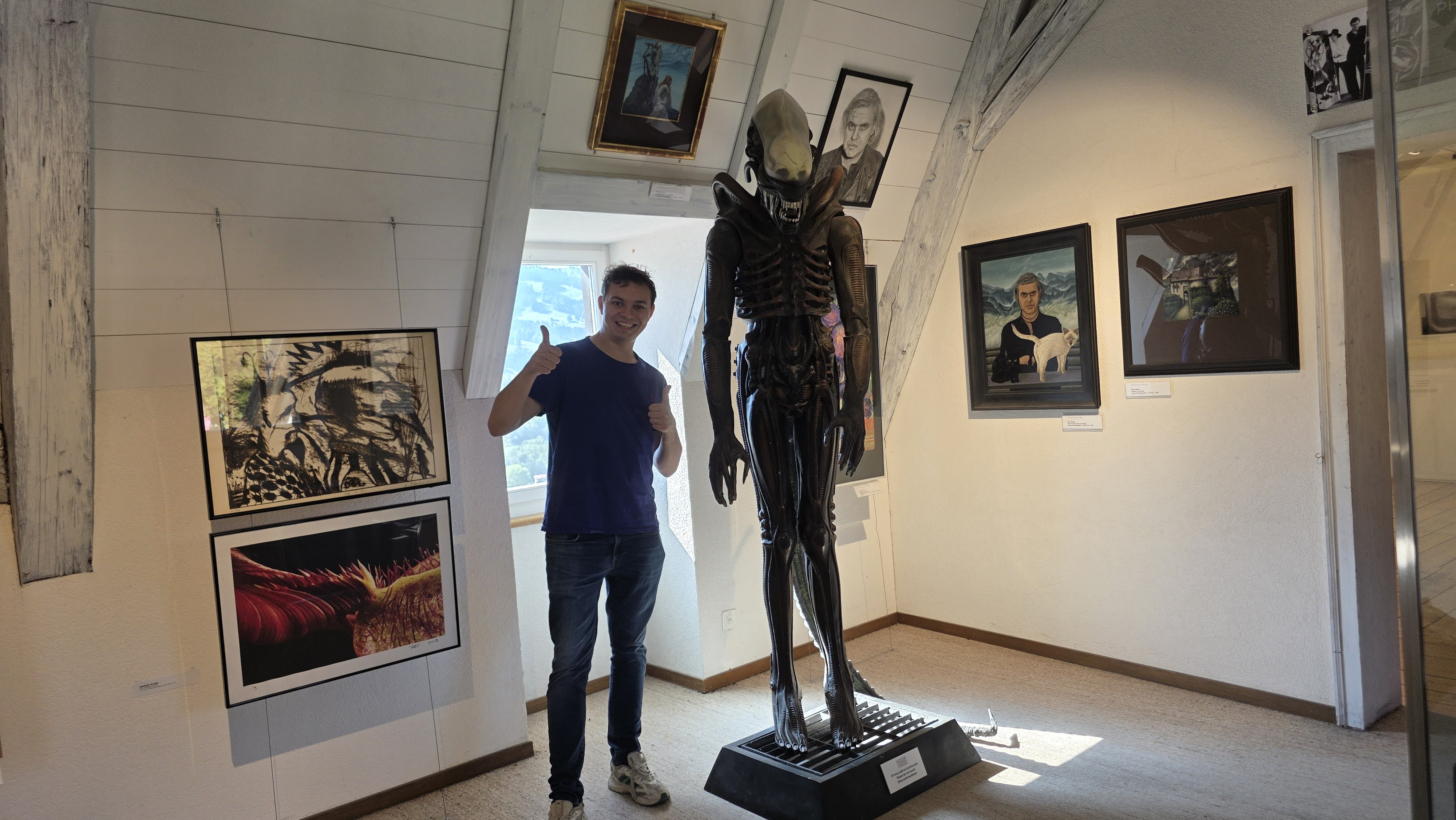
This is the part of Gruyères that catches people off guard, and it’s the reason a fair number of visitors show up who have never heard of the castle at all. Hans Ruedi Giger, the Swiss artist behind the design of the creature in Ridley Scott’s Alien, chose this medieval town as the permanent home for his work, and the museum occupies a 19th-century château right on Rue du Château, just steps from the castle entrance.
Inside, the collection covers Giger’s full range: the biomechanical paintings and sculptures that made him famous, furniture pieces, and props and design work from his film career, all displayed in a building that leans into the unsettling atmosphere of the art itself. Most visitors spend somewhere between thirty minutes and an hour inside. Adult admission is CHF 12.50, with reduced rates of CHF 8.50 for students, seniors, and military, and CHF 4 for children. Note that only the museum shop is wheelchair accessible, since there’s no elevator, and children under 16 need to be with an adult.
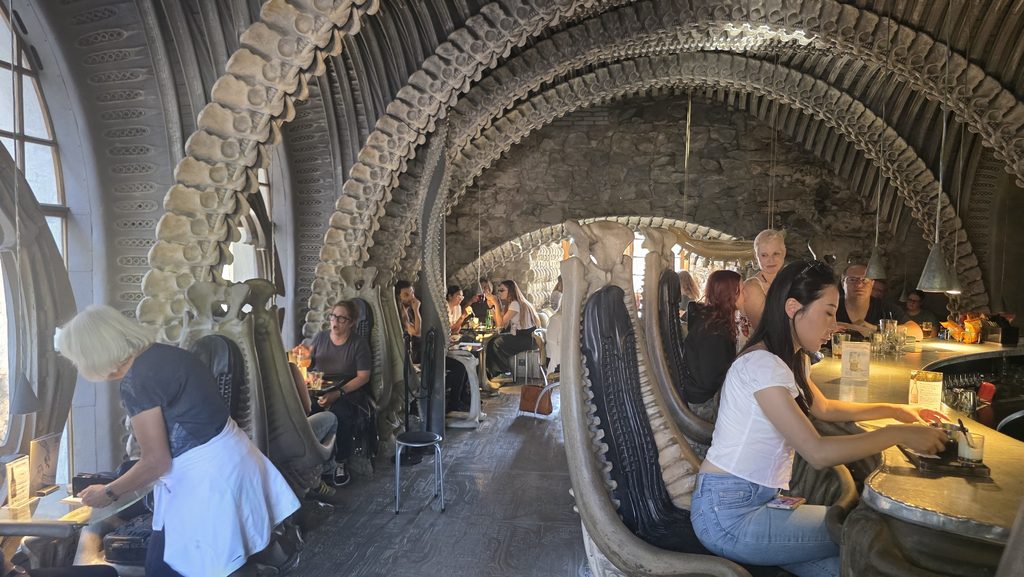
Next door, the HR Giger Bar is worth a stop even if you skip the museum. The interior is built from cast vertebrae-like arches running the length of the ceiling, turning the entire space into a piece of the artist’s biomechanical aesthetic you can actually sit inside and order a drink in. It’s an odd, memorable contrast to the fairy-tale feel of the rest of the town, similar in spirit to how Landesmuseum Zürich’s bar nights turn a formal cultural space into something else after hours, though the Giger Bar keeps that atmosphere permanently rather than just for special events. Order the Alien Coffee while you’re there, it comes both with and without alcohol, so it works whether you’re driving back afterward or not.
One thing to know before you walk in with your phone out: the bar expects you to actually sit down and order something if you want to take photos inside. It’s not posted anywhere obvious, but staff will ask people who wander in just to snap pictures of the arches to either order a drink or move along, which makes sense given how many visitors treat the place as a free photo op rather than an actual bar. Budget for at least a coffee or a drink if photos of the interior are part of why you’re coming.
The Tibet Museum – Fondation Alain Bordier
A few doors down from the Giger Museum sits something entirely different: one of the more significant collections of Himalayan Buddhist sacred art outside of Asia. The Tibet Museum was assembled over roughly forty years by Swiss collector Alain Bordier and houses sculptures, thangka paintings, ritual objects, and manuscripts, many of them centuries old, in a converted historic building at Rue du Château 4.
It’s a quiet, contemplative space, and the contrast with the Giger Museum two doors away is honestly part of what makes a Gruyères museum day so interesting. The museum is open daily from 11am to 6pm between April and October, and on a more limited schedule the rest of the year (Tuesday to Friday afternoons, weekends 11am to 6pm). Adult tickets cost CHF 10, with CHF 8 for students and seniors, and CHF 5 for children aged 6 to 16.
Buying a Combi Ticket
You don’t need to buy separate tickets for everything, and given how close these sights sit to each other, it’s worth planning around the combination options. The castle and the HR Giger Museum offer a joint ticket for CHF 20, a straightforward saving over paying for both separately. The castle also pairs with the Tibet Museum for CHF 18. There isn’t currently a single pass covering all three sites at once, so if you want to see the castle, the Giger Museum, and the Tibet Museum in one visit, you’ll be combining one of the castle combi tickets with a standalone entry to whichever museum it doesn’t include. Ticket counters at each site can tell you the current combination options on the day, since these do get adjusted from season to season.
Gruyère: The World’s Best Cheese, Made Here
No visit to this town is complete without stopping at La Maison du Gruyère, the working cheese dairy just below the old town near the train station, where you can watch the cheesemaking process through viewing windows and taste the finished product yourself. This isn’t a small local claim either: at the World Cheese Awards 2025 in Bern, an 18-month-aged Le Gruyère AOP from the Vorderfultigen dairy in canton Bern, made by cheesemaker Pius Hitz, was crowned world champion out of more than 5,000 cheeses entered from 45 countries. It’s the result of a recipe that traces back to 1115 and a set of production rules that haven’t loosened in the name of convenience.
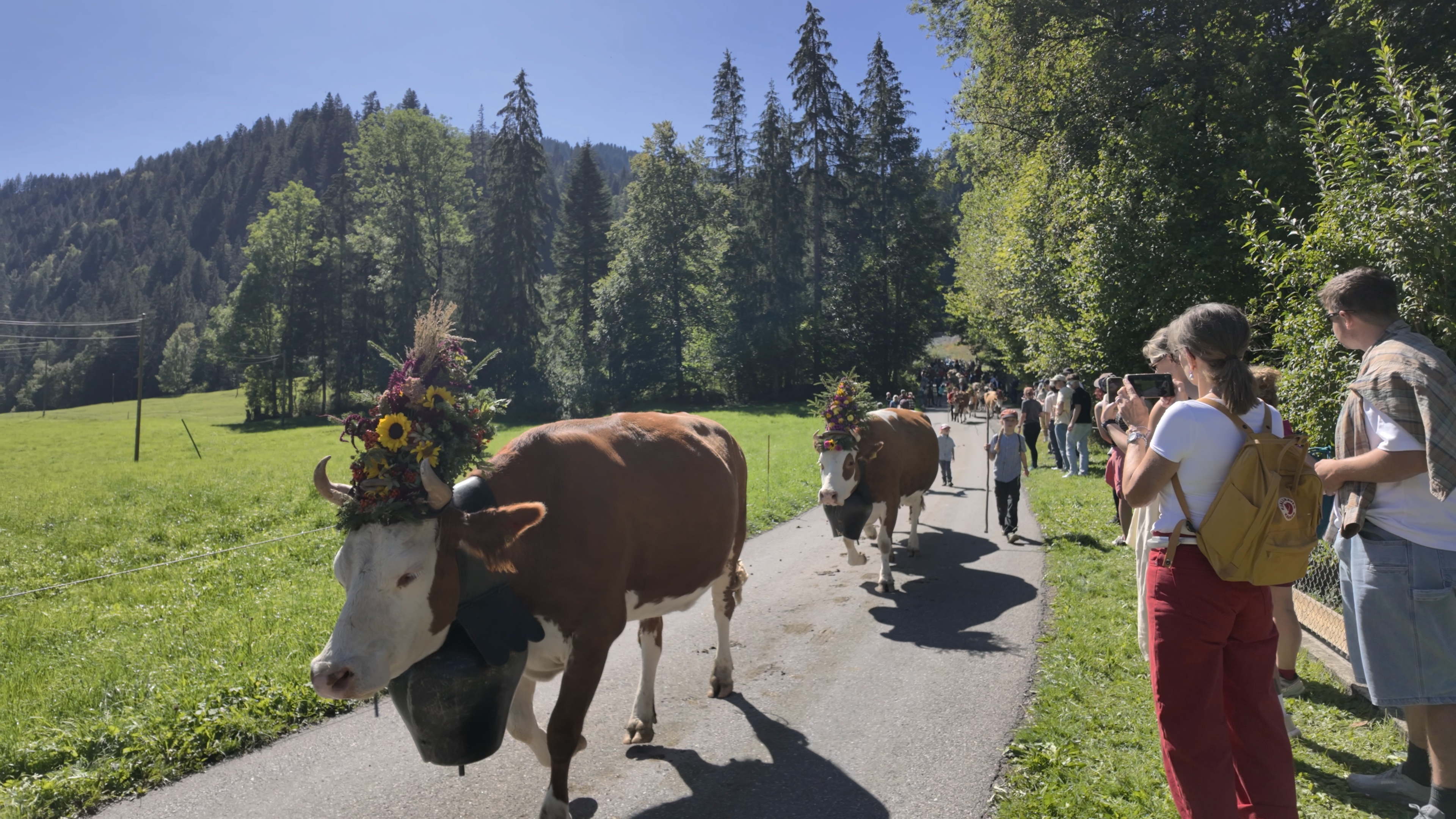
Le Gruyère AOP carries Protected Designation of Origin status in Switzerland, which means it can only legally use that name here if it’s made under a strict set of standards within the historic region covering Fribourg canton and parts of Vaud, Neuchâtel, Jura, and Bern. The rules are specific: raw, unpasteurized milk only, sourced from farms within about 20 kilometers of the dairy, no silage feed, no additives or growth hormones, and production in copper vats capped at 6,600 liters. That raw milk comes down from the same alpine pastures behind traditions like the Alpabfahrt cattle descent in St. Stephan, where herds are still walked down from the high meadows every autumn. Every wheel of Gruyère is stamped with a casein label identifying the dairy and date of production, and it has to age at least five months, usually in natural caves or cellars kept around 12 to 18°C, before it’s ready to sell. That level of control is a big part of why it keeps winning.
One thing worth knowing if you buy a wheel abroad later: the protected name only carries full legal weight in Switzerland and the EU. In the United States, a federal appeals court ruled “gruyère” is a generic cheese style rather than a name tied to this specific place, so cheese labeled “Gruyere” made outside this region can legally be sold there. It doesn’t change anything about what’s in this valley, but it does mean the award-winning original is really only guaranteed when you buy it here, or look for the AOP label wherever you are.
Don’t Skip the Meringues with Double Cream
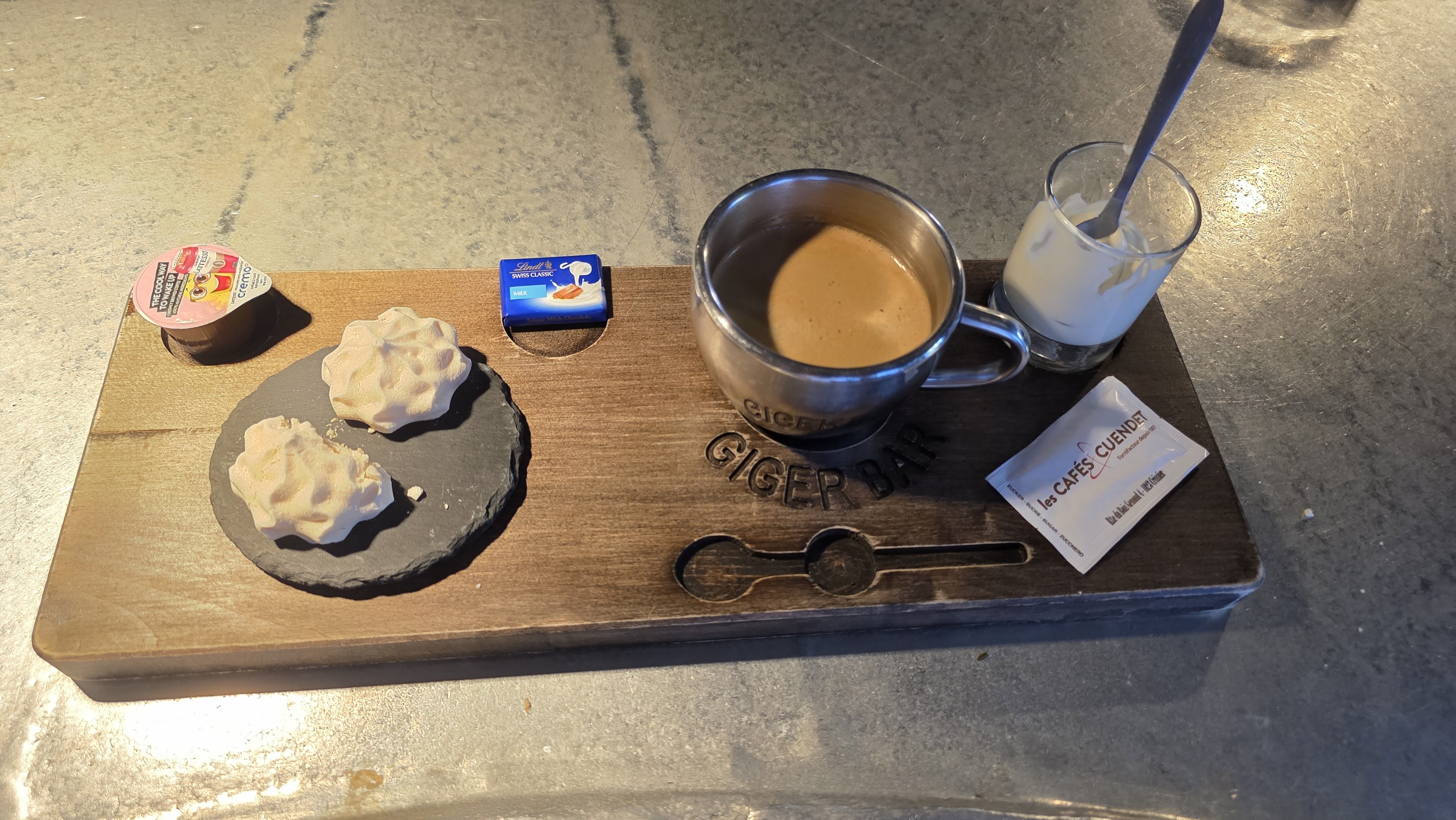
The cheese gets all the attention, but the dessert this region is actually built around is meringue with double cream, and you should order it at least once while you’re here. Crème double de la Gruyère is a thick, unsweetened double cream made in Fribourg canton, with a fat content of around 50%, well above the 45% minimum Switzerland sets for double cream, which is exactly why it holds its shape and texture the way it does. Traditionally it’s brought to the table in a small wooden tub with a wooden spoon, alongside crisp meringue shells you break apart and pile the cream onto yourself.
It’s simple, and that’s the point. The combination goes back to the region’s Bénichon harvest festival, where meringues and double cream have been the closing dessert of the traditional multi-course meal for generations. Almost every café and restaurant in the old town serves a version of it, so it’s less about finding the right place and more about making sure you leave room for it after lunch.
Planning Your Visit
A single day covers Gruyères comfortably if you start early and don’t linger too long over lunch, though it’s easy to see how people stretch it into a slower, half-day-plus-evening visit given how much sits within a five-minute walk of the town gates. Combine the castle with either the Giger Museum or the Tibet Museum depending on which interests you more, save the other for a return trip if you’re in the region again, and leave time at La Maison du Gruyère before you head back to the car park. If you’re building this into a longer Swiss itinerary, the drive pairs naturally with stops around Thun, a day along the Aare river, the peaks near Niederhorn and Lake Thun, or another heritage stop at the Ballenberg open-air museum if you’re working your way through the Bernese Oberland on the same trip.
Author

Get My Personal Travel Maps
Keep Reading: More Articles You’ll Love
 Tuscany Itinerary – Wine, Culture & Culinary Adventures from San Gimignano to Volterra
  6 Hours in Florence: A Walking Tour for Your Layover
  Prague Travel Guide: Sightseeing, Butcher-Shop Dinners, a Medieval Feast, and Tanks Outside the City
  Top 4 Favorite Locations in Kyoto: A Personal Journey Through Japan’s Historic Heart
  Osaka Travel Guide 2025: Takoyaki, Nara Deer Park & Expo Highlights
  Food in Tokyo: From Okachimachi to Akihabara – Hidden Burger, Anime Shopping & Gacha Adventures
  Swimming in the Aare River: The Complete Guide to Switzerland’s Favorite Wild Swim


Leave a Reply