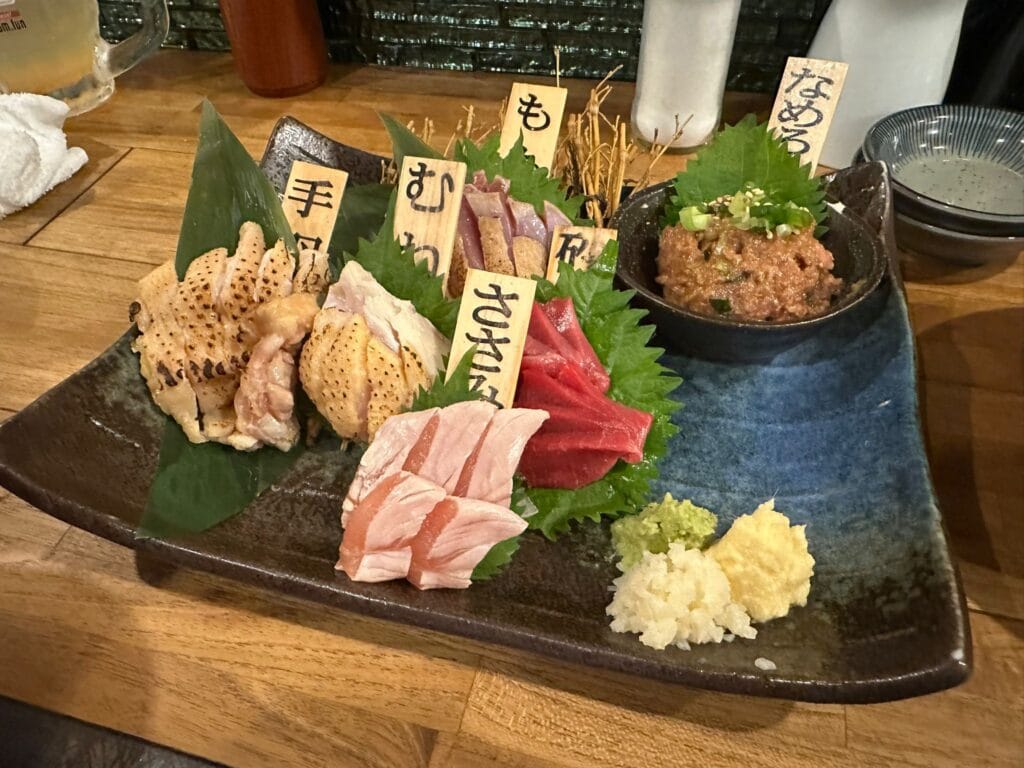
When I first came to Japan i was thinking of Japanese cuisine like sushi and ramen. But Japan’s food culture was very different from what I was expecting. One of the most uncommon and probably most debated is the raw chicken. Torisashi (鳥刺身) is basically raw chicken eaten like sashimi. If you see posts like that online, mostly Japanese arguments, that they don’t eat it at all. The reality is different; Japanese eat raw chicken, otherwise the raw chicken restaurant would not exist! I personally thought it is very dangerous.
My own experiences reflect this contrast. I have eaten raw chicken several times, beginning with an accidental order that turned into a memorable discovery. Since then, I have tried Torisashi intentionally, sometimes introducing it to friends who were convinced it would be unsafe. Their reactions usually shift once they understand how carefully the chicken is sourced, handled, and prepared in restaurants that specialize in serving it.
Japan also offers basashi, or raw horse meat, another dish that many visitors find unusual. Like Torisashi, basashi is deeply rooted in regional culinary traditions and is valued for its texture and clean flavor. Both dishes highlight how Japanese cuisine approaches raw foods with meticulous technique, emphasizing quality, freshness, and expertise. Basashi is more to my taste, since I like horse meat, actually. In Switzerland, we eat Horse mostly cooked; the Japanese eat it raw.
In this article, I share my personal experiences with Torisashi, explain the science and food safety regulations that make it viable in Japan, and offer guidance on where to try it responsibly if you are curious. Understanding these dishes not only broadens your view of Japanese cuisine but also illustrates how cultural practices, food safety standards, and culinary craftsmanship intersect in ways that may feel unfamiliar to visitors.
If you’re interested in understanding how dishes like Torisashi fit into Japan’s wider food culture, I’ve covered similar experiences and regional specialties in my Japanese Food Guide.
My First Experience with Raw Chicken in Japan
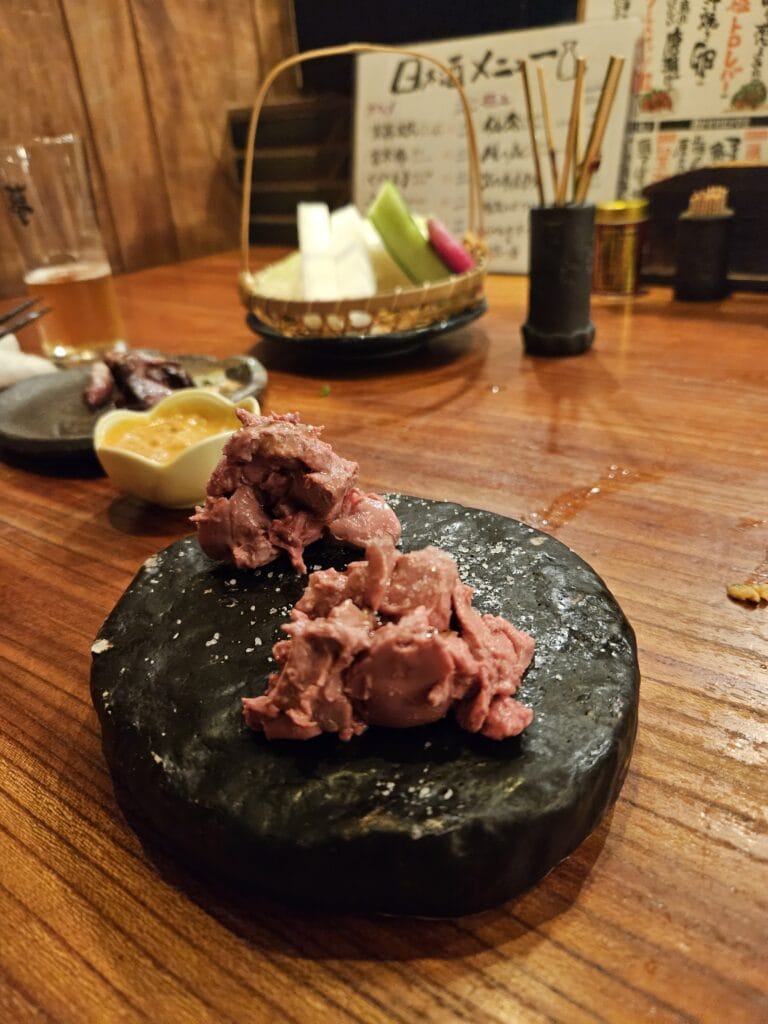
I never planned on eating raw chicken during my first days in Japan. It happened entirely by accident. On my very first day in the country, I visited a small yakitori restaurant, eager to try something authentic and unfamiliar. The menu featured a dish called Liver Extreme (レバーエクストリーム Raw Chicken Japan). The name suggested something bold and intensely flavored, so I assumed it would be a heavily seasoned, grilled skewer like other yakitori items.
When the plate arrived, my expectation shifted instantly. Instead of a grilled dish, the liver was completely raw, glistening on the plate with only a light garnish. It took a few seconds for the realization to sink in. Yakitori restaurants specialize in chicken, not beef or pork. That meant what I had in front of me, and what I had already taken a bite of, was raw chicken liver.
The shock was immediate, but the outcome was surprising. I waited for the familiar symptoms people associate with undercooked poultry, but nothing happened. I felt completely fine. That moment became my introduction to how differently Japan handles certain foods. Restaurants that serve raw chicken follow strict sourcing and preparation standards, using carefully selected meat that is processed under controlled conditions. I had unknowingly stepped into a culinary tradition where technique, freshness, and regulation play a crucial role in making dishes like Torisashi and raw organ cuts possible.
This experience became a foundation for how I approached Japanese cuisine: with curiosity, respect for local expertise, and a willingness to understand the cultural and technical reasons behind dishes that might seem unusual elsewhere.
The Second Time: A Mistake by My Girlfriend
The second time I ate raw chicken happened under completely different circumstances. I was dining with my girlfriend, who speaks both Chinese and Japanese, and we were exploring a small local restaurant known for its traditional dishes. While browsing the menu, she noticed the word Nama (生) listed next to one of the items. Because Nama is often used to refer to Nama Tamago, or raw egg, she assumed the dish simply came with an egg topping and ordered it without a second thought.
It was only when the plate arrived at the table that we realized something was different. Instead of a cooked meal with a raw egg on top, the dish consisted of thinly sliced raw chicken sashimi, neatly arranged and beautifully presented. For a moment, we both sat in silence, trying to process what we were looking at. The restaurant staff had clearly posted that the meat was Nama, but we had misinterpreted the context. Nama referred not to an egg but to the chicken itself.
Despite the initial shock, curiosity won over hesitation. We decided to try it, trusting that restaurants serving raw chicken follow carefully regulated sourcing and preparation standards. The flavor was surprisingly mild and clean, and the texture was softer than expected. Most importantly, we felt completely fine afterward. No discomfort, no illness, nothing unusual at all. The experience reinforced something that many visitors do not realize:
Raw Chicken Japan is safe when prepared by licensed establishments that follow strict hygiene and handling procedures.
This moment became another reminder of how nuanced Japanese cuisine can be and how important it is to understand the terminology and traditions behind certain dishes. It also showed how everyday menu language in Japan can lead to unexpected culinary discoveries, especially when terms like Nama are used in multiple contexts.
Eating Japanese raw chicken dishes to Shock My Friends
Once I realized that raw chicken in Japan is actually safe, I started eating it more often—sometimes just to see my friends’ reactions. Whenever someone visited Japan, I would take them to an izakaya that serves raw chicken and watch their faces when they realized what they were eating. The shock factor was always priceless, but after the initial hesitation, many of them admitted it was surprisingly good.
Is raw chicken safe in Japan? Actually Safe
Yes, but only under specific conditions. Unlike in Western countries, where raw chicken is associated with Salmonella and food poisoning, Japan has strict food safety regulations that make it possible to safely eat raw chicken.
Why Is It Safe?
- High-Quality, Fresh Chicken – Restaurants that serve raw chicken use specially raised chickens that are free from common bacterial infections. These chickens are often sourced from farms that follow strict hygiene protocols.
- Rapid Processing & Storage – The meat is immediately processed after slaughter and kept at low temperatures to prevent bacterial growth.
- Different Bacteria Strains – In Japan, chicken farms test their livestock for harmful bacteria like Salmonella. Some strains of bacteria that cause food poisoning in other countries are not commonly found in Japan’s poultry farms.
- Expert Preparation – Only highly trained chefs are allowed to prepare raw chicken, ensuring that it is sliced correctly and not contaminated by surfaces that have touched the intestines or other bacteria-prone areas.
The Raw Chicken Experiment
A viral Instagram account, RawChickenExperiment, gained attention by documenting a man who ate raw chicken every day for over 100 days. He never got sick, further proving that under proper conditions, eating raw chicken is not inherently dangerous.
Why Do Japanese People Eat Raw Chicken?
- Cultural Tradition – Similar to eating raw fish, raw chicken has been eaten for generations in certain regions of Japan.
- Delicate Flavor – Many Japanese people appreciate the soft texture and subtle taste of raw chicken, often served with soy sauce, wasabi, or sesame oil.
- Premium Ingredient – Not all chicken is eaten raw; only the freshest, highest-quality cuts are used.
Where to eat raw chicken in Japan?
If you’re curious about trying raw chicken, here are some recommended places:
Tokyo:
- Toriki (トリキ) – A famous yakitori restaurant that also serves raw chicken sashimi.
- Imafuku (今福) – A specialty restaurant where you can try premium torisashi.
Kyoto:
- Torisada (鳥佐田) – A long-established restaurant specializing in raw chicken dishes.
Osaka:
- Ichibun (一文) – Known for its authentic izakaya experience with torisashi on the menu.
Or just see here.
The Facts About Eating Raw Chicken in Japan
✅ Not All Chicken Can Be Eaten Raw – Only specific high-quality, farm-raised chickens are safe to eat raw.
✅ Special Handling is Required – Raw chicken is prepared in a strictly controlled environment to reduce bacterial risks.
✅ Popular in Certain Regions – Raw chicken dishes are more commonly found in Kyoto, Osaka, and Tokyo.
✅ It’s Served with Condiments – To enhance the flavor and reduce bacteria risk, it is typically eaten with wasabi, ginger, or soy sauce.
✅ Most Foreigners Are Shocked – Many first-time visitors are surprised by the idea, but those who try it often say it’s better than expected.
Conclusion: Should You Try Raw Chicken in Japan?
Eating raw chicken in Japan might sound extreme to anyone unfamiliar with the country’s food culture, yet dishes like Torisashi occupy a long-standing place in certain regional cuisines. When handled and prepared under strict conditions, raw chicken can be served safely, and Japan maintains specific guidelines to ensure that only restaurants meeting those standards are allowed to offer it. Understanding this context is essential because it explains why a food that many visitors would instinctively avoid is regarded as a delicacy by those who appreciate its texture, freshness, and subtle flavor.
My own experiences reflect the learning curve many foreigners face. From unknowingly eating raw liver on my first day to later surprising friends with Torisashi at specialty restaurants, I learned that the key factor is not the dish itself but the expertise behind it. Japan’s strict sourcing methods, hygiene controls, and rapid farm-to-table handling are what make the dish possible. These safeguards are why I never experienced any negative side effects despite trying raw chicken multiple times. Still, it is a food that requires an open mind and should only be enjoyed in reputable establishments, never improvised at home.
For travelers with a sense of adventure, trying raw chicken can become a memorable highlight. It is not a dish meant for everyone, and it certainly challenges expectations, but it offers a rare look into how Japan approaches ingredients differently from other countries. If you do choose to try it, make sure you visit a restaurant known for serving Torisashi under controlled and certified conditions.
And if you prefer a more familiar culinary experience, Japan offers countless izakayas that deliver excellent food without pushing you outside your comfort zone. One well-known example is the izakaya associated with the aesthetic featured in Kill Bill, a popular choice for visitors who want good food and a cinematic atmosphere. It serves cooked dishes rather than raw chicken, and it can be a great option for those who want to enjoy Japanese dining without venturing into Torisashi.
Author

Get My Personal Travel Maps
Keep Reading: More Articles You’ll Love
 Is Japanese Food Actually Chinese? The Surprising Origins of Japanese Cuisine
  Living in Japan vs Korea – The Ultimate Expat Guide
  Japan Travel Myths vs Reality: What Tourists Still Get Wrong About Japan
  Tattoos in Japan: Rules, Culture, Onsen & Changing Attitudes
  My First 30 Days in Tokyo: Essential Administrative Steps for International Students
  Matsumoto Itinerary: The Perfect 3-Day Guide Including Kamikochi
  Living in Tokyo vs Zurich – The Ultimate Expat Guide


Leave a Reply