Japan is globally known for precision, balance, and elegance in food. Sushi is treated like an art form. Ramen has endless regional variations. Even convenience store meals are surprisingly high quality.
But once you step outside the well-known dishes, you’ll discover a completely different side of Japanese cuisine. A side that is experimental, deeply traditional, and sometimes genuinely shocking.
From raw meat and fermented beans to insects and modern fusion creations, Japan offers some of the most weird Japanese food and unusual food in Japan that challenge expectations in the best possible way.
I’ve personally tried most of the dishes on this list, and what surprised me the most is this: they are not bizarre because they taste bad. In fact, many of them are actually delicious.
They are considered bizarre because:
- some are potentially dangerous
- some have textures or ingredients unfamiliar to most people
- and some are simply very unusual outside Japan
This is not just about shock value. Many of these dishes have been part of Japanese culture for centuries, while others show how creative and experimental the food scene has become.
Here are 10 bizarre foods in Japan you should try at least once.
1. Shirako (Fish Milt)

Shirako is often the first dish that makes people pause. The name translates to “white children,” which already hints that this is not your typical seafood.
It is the milt of fish, most commonly cod, and it is considered a seasonal delicacy during winter. Despite the initial reaction most people have, shirako is highly valued in Japanese cuisine.
What makes it interesting is not just what it is, but how it feels and tastes. The texture is incredibly soft and creamy, almost like a savory custard. When eaten raw or lightly cooked, it melts in your mouth with a subtle sweetness and a mild ocean flavor.
It is often served:
- as sushi
- lightly grilled
- or in hot pots
This is actually one of the few dishes on this list I haven’t tried yet. I’ve pushed myself to try a lot of unusual foods in Japan, but this one is still a mental barrier for me.
👉 It’s not about the taste, it’s about getting past the idea of what it is.
The biggest challenge here is psychological. If you can overcome that, many people say it’s surprisingly delicate and refined.
2. Basashi (Raw Horse Meat)

Raw horse meat, known as basashi, is one of Japan’s most misunderstood dishes. While it might sound extreme, it is treated with the same level of respect as high-quality tuna or beef.
Basashi is usually served thinly sliced, similar to sashimi, and paired with soy sauce, garlic, and sometimes ginger. The meat itself is very lean, with a slightly sweet flavor and a clean finish.
One of the reasons it’s eaten raw is because of its freshness and quality. In regions like Kumamoto, it is considered a local specialty and part of the culinary identity.
The texture is surprisingly tender, not chewy as many expect. Some cuts even have marbling, which adds richness without heaviness.
As a Swiss, this dish is actually nothing unusual for me. Horse meat is also eaten in Switzerland and can be found in many restaurants, especially in Italian-style dishes.
However, in many other cultures, eating horse is seen very differently. In places like the UK, it can feel as controversial as eating a dog. That contrast makes basashi one of the most culturally interesting foods to try.
I also have a personal connection to this dish. The photo here was taken in Ogikubo, a neighborhood in Tokyo where I used to live. I remember going to a small local restaurant and trying basashi there for the first time. It wasn’t just about the food, it was about the atmosphere, the people, and discovering how something that feels unusual at first can quickly become normal in a different culture.
3. Fugu (Poisonous Pufferfish)
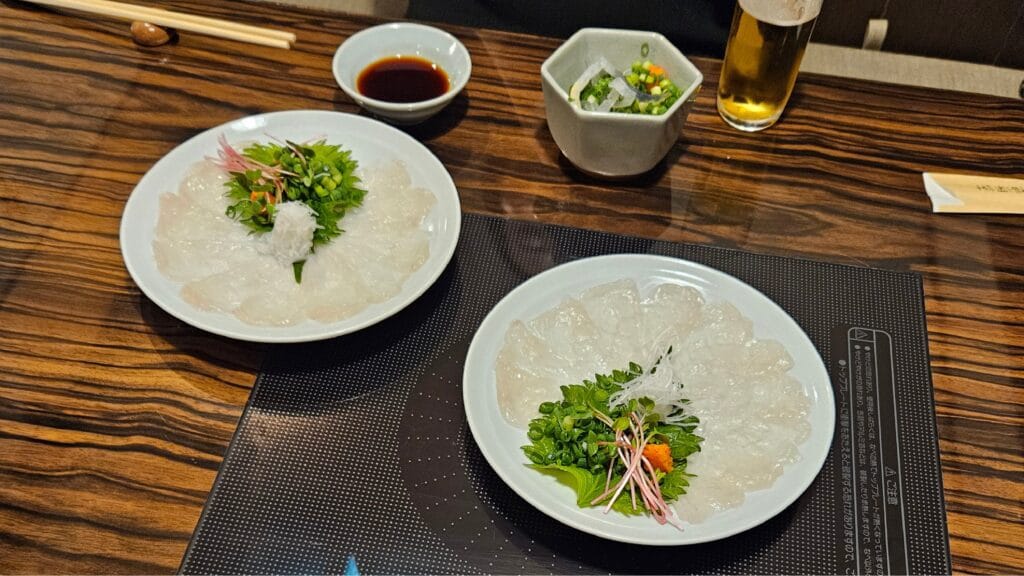
Fugu is probably Japan’s most famous “dangerous” food, and its reputation is well deserved.
The pufferfish contains tetrodotoxin, a deadly poison that can be fatal if not handled correctly. Because of this, chefs must undergo strict training and certification before they are allowed to prepare it.
The preparation itself is incredibly precise. The fish is sliced into thin, almost transparent pieces and arranged beautifully on a plate, often resembling a flower.
Interestingly, the taste is very subtle. It’s light, clean, and slightly chewy. Some people compare it to a delicate white fish with a firmer texture.
This is actually one of the foods I really enjoyed. I had a full fugu meal in Osaka, which is one of the most famous places in Japan to try it. From sashimi to hot pot, the whole experience felt very refined and special.
But the flavor is not the main reason people try fugu. It’s the experience. There is a certain thrill in eating something that carries a history of risk, even though modern regulations make it extremely safe.
It’s also worth mentioning that most serious incidents historically came from unlicensed or private preparation. In licensed restaurants, the safety standards are extremely high. In fact, statistically, you’re more likely to get regular food poisoning than to have an issue with properly prepared fugu.
Fugu represents the balance between danger and mastery, something deeply rooted in Japanese culinary culture.
4. Natto (Fermented Soybeans)

Natto is one of the most polarizing foods in Japan. You will rarely find a middle ground. People either love it or absolutely cannot stand it, which is why it’s often listed among the most weird Japanese food for first-time visitors.
It is made by fermenting soybeans, resulting in a dish that is sticky, stringy, and very strong in smell. When you pick it up with chopsticks, it forms long, web-like strands that stretch between the beans.
Despite its reputation, natto is extremely popular in Japan, especially as a breakfast food. It is often served over rice with soy sauce, mustard, and sometimes raw egg.
The flavor is earthy and slightly bitter, with a deep umami profile. The texture, however, is what most people struggle with, making it one of the most unusual food in Japan from a texture perspective.
Natto is also considered very healthy. It contains probiotics, protein, and nutrients that support digestion and overall health.
Trying natto is almost a cultural milestone. If you can enjoy it, you’ve adapted to one of Japan’s most unique food traditions.
Personally, I have to admit I really don’t like it at all. I’ve tried it more than once, hoping I would get used to it, but the texture is just something I can’t get past.
5. Insect Cuisine in Japan (Grasshoppers & Bee Larvae)
Insect-based dishes in Japan are not just a modern trend, they are deeply rooted in history. In rural and mountainous regions, where access to meat and fish was once limited, insects became an important and practical source of protein.
Two of the most well-known examples are Inago no Tsukudani (grasshoppers) and Hachinoko (bee larvae), both often listed among the most weird Japanese food you can encounter as a traveler.
Inago are cooked in a mixture of soy sauce and sugar, creating a glossy, caramelized coating. The result is a dish that is both sweet and savory, with a crunchy texture similar to small fried shrimp. The flavor itself is surprisingly mild, as the seasoning tends to dominate.
Hachinoko, on the other hand, offers a completely different experience. Instead of being crunchy, bee larvae are soft and tender. They are also simmered in soy sauce and sugar, giving them a slightly sweet, nutty flavor that doesn’t immediately remind you of insects. This makes them one of the most unusual food in Japan for many visitors.
These dishes are especially associated with regions like Nagano, where they have been eaten for generations. While they are less common in big cities today, they still exist as both a traditional food and a curiosity for travelers.
I never actually got the chance to try them myself, mainly because the people I was traveling with were always too disgusted by the idea.
What makes insect cuisine in Japan so fascinating is the mindset behind it. Instead of rejecting insects, they were historically embraced as a natural and sustainable food source.
For many visitors, the biggest challenge is visual rather than taste. Once you get past that initial hesitation, these dishes often turn out to be far more approachable than expected.
6. Shirouo (Live Fish – Eaten Alive)

Shirouo is one of the most extreme food experiences you can have in Japan.
Unlike most dishes, this one is not just about unusual ingredients, it’s about the way it is eaten. Small, transparent fish are served alive, often in a drink or with a dipping sauce, and you consume them while they are still moving.
Yes, you literally eat them alive.
This practice is connected to the concept of extreme freshness in Japanese cuisine. The idea is to experience the fish at its absolute peak, where it is still full of life.
The texture is soft and slippery, and the taste itself is very mild. Most people say you barely notice the flavor, it’s more about the sensation and the experience.
I personally came across this in Fukuoka, where this dish is especially famous. Watching the fish move in the glass before drinking it is definitely something you don’t forget.
👉 But this is also one of the dishes where opinions are very divided.
Some people see it as a fascinating cultural tradition, while others feel uncomfortable with the idea of eating a living animal. It raises questions about where we draw the line between food, experience, and ethics.
If you’re looking for one of the most unusual food experiences in Japan, this is definitely at the top of the list.
7. Sushi Cheese Fondue (Modern Fusion Surprise)

This is where Japan’s creativity really stands out, but not necessarily in a good way.
During a regional campaign by Hama Sushi, a unique concept was introduced: sushi combined with cheese fondue.
Instead of dipping bread into melted cheese like in Switzerland, you dip sushi into a warm, rich cheese sauce.
The dish was part of a themed menu highlighting ingredients and flavors from northern Japan, especially Hokkaido, which is known for its dairy products. The cheese sauce itself was made with a white wine base, giving it a slightly tangy flavor.
At first, the idea doesn’t just sound wrong, it feels wrong. Cheese and raw fish are not a combination most people would naturally accept.
The creaminess of the cheese clashes with the freshness of the fish, and while the acidity from the wine tries to balance it, the overall experience feels forced rather than harmonious.
As a Swiss, I have to admit I was genuinely offended at first. Cheese fondue is something deeply cultural for us, and seeing it turned into a dipping sauce for sushi feels like a complete misuse of the concept.
Japan is also not particularly known for strong European cuisine. Anyone who has eaten at places like Saizeriya knows what I mean. It’s cheap, convenient, but definitely not something you would compare to real Italian food. This dish gave me a similar feeling, just taken to another level.
Honestly, this is less a creative fusion and more what I would call a “food culture collision.” It’s interesting to try once, but not something I would ever go back for.
It’s not about authenticity here, it’s about experimentation, and in this case, it simply doesn’t work.
8. Chicken Sashimi (Torisashi)
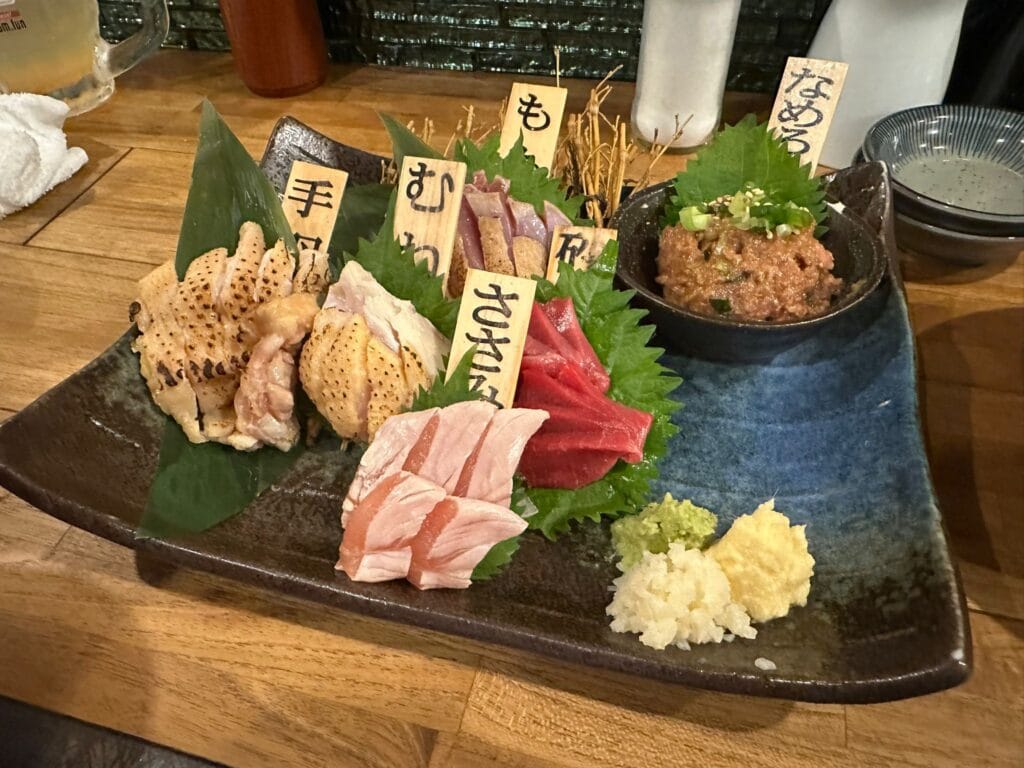
Raw chicken is something most countries strictly avoid due to health risks. In Japan, however, it exists as a carefully controlled specialty.
Known as torisashi, this dish is typically served in regions like Kagoshima, where strict standards for freshness and handling are followed.
The chicken is often lightly seared on the outside while remaining raw inside. This creates a contrast between a slightly firm exterior and a soft interior.
The flavor is very mild and clean, much lighter than cooked chicken. It is usually paired with soy sauce, garlic, or citrus-based sauces to enhance the taste.
Even within Japan, this dish can be controversial. Not everyone is comfortable with it.
For travelers, it represents a deeper level of trust in food quality and preparation. It’s one of those experiences that feels both fascinating and slightly risky.
9. Whale Meat (Kujira)

Whale meat is one of the most debated foods in Japan.
Historically, it was an important protein source, especially after World War II. Today, it is far less common but still available in certain restaurants and traditional settings.
The taste is often compared to beef, but with a stronger, more gamey flavor. The texture can vary depending on the cut and preparation.
Some people try it out of curiosity, others for cultural reasons.
It’s important to understand the context. For Japan, this is not just a controversial topic, but also part of its history and identity. At the same time, practices like whaling and dolphin hunting are heavily criticized internationally and raise serious ethical concerns.
I’ve personally tried it once out of curiosity, but it’s not something I would choose to eat again. For me, the ethical side of it outweighs the experience.
Trying kujira is less about the flavor and more about understanding a complex and controversial cultural issue through food.
10. Wasabi Ice Cream

After all the intense dishes on this list, wasabi ice cream feels almost playful.
It combines the familiar sweetness of ice cream with the distinctive idea of wasabi. Despite what you might expect, it is actually completely sweet and has almost zero spiciness.
The flavor is smooth and balanced. The creaminess takes over entirely, and the wasabi adds more of a subtle aroma than any real heat.
This was actually one of the dishes that really surprised me. I tried it at a wasabi farm near Matsumoto, and I didn’t expect to like it as much as I did.
I’ve been there twice, once with a close friend I travel with a lot, we’ve explored places like South Korea and Taipei together, and another time with my fiancée. Both trips made the experience even more memorable in completely different ways.
You’ll often find wasabi ice cream in tourist areas, food markets, and specialty dessert shops, but trying it directly at a wasabi farm makes it feel much more authentic.
This is definitely one of the easiest “weird foods” to try in Japan. It’s fun, unexpected, and genuinely enjoyable.
Final Thoughts to this weird Japanese food
Japan’s food culture goes way beyond perfection on a plate. It’s about curiosity, history, and constantly trying new things.
Some of these dishes come from traditions that go back hundreds of years, shaped by geography and necessity. Others feel like they were invented yesterday, just to see how far you can push the idea of food.
And that’s exactly what makes eating in Japan so interesting.
It’s not just about what you eat, but what it represents:
- a completely different way of looking at ingredients
- a deep respect for tradition
- and at the same time, a willingness to experiment
Some of these foods I genuinely enjoyed. Others… not so much. But every single one of them was an experience I won’t forget.
And that’s the point.
If you’re traveling through Japan, don’t just stick to sushi and ramen. Try something that feels a bit uncomfortable, a bit unusual.
Because those are usually the moments you remember the most.
Author

Get My Personal Travel Maps
Keep Reading: More Articles You'll Love
 Is Japanese Food Actually Chinese? The Surprising Origins of Japanese Cuisine
  Living in Japan vs Korea – The Ultimate Expat Guide
  Japan Travel Myths vs Reality: What Tourists Still Get Wrong About Japan
  Tattoos in Japan: Rules, Culture, Onsen & Changing Attitudes
  Living in Tokyo vs Zurich – The Ultimate Expat Guide
  My First 30 Days in Tokyo: Essential Administrative Steps for International Students
  Matsumoto Itinerary: The Perfect 3-Day Guide Including Kamikochi