This post contains affiliate links. If you book through them, I may earn a small commission at no extra cost to you. More about this.

Matsumoto sits in the Japanese Alps, in Nagano Prefecture, and it is one of those places that quietly outdoes expectations. It has one of Japan’s few surviving original castles, a genuinely good food scene, old streets worth getting lost in, and the alpine valley of Kamikochi within easy reach. For a city most first-time visitors skip, it packs in a lot.
This three-day itinerary is based on our own trip. It mixes the big sights, the black-walled castle and the Northern Alps, with smaller finds like cycling through wasabi fields and a surprising pocket of Swiss baking, and it lays out the trains, buses and timings that actually matter for getting between them.
Matsumoto Itinerary at a Glance
| Day | Highlights | Good to know |
|---|---|---|
| Day 1 | Ramen lunch, cycling to Daio Wasabi Farm, Swiss Village, izakaya dinner | Rent bikes at Hotaka Station, return them before closing time |
| Day 2 | Kamikochi: Taisho Pond, Kappa Bridge, Myojin Pond, yakiniku dinner | Leave early and reserve the return bus |
| Day 3 | Matsumoto Castle, Nawate Street, Kusama museum, Former Kaichi School | Store big bags in lockers before entering the castle |
| Extra day | Narai-juku post town | Easy half-day trip by train |
Getting there: from Tokyo, the JR Azusa limited express from Shinjuku takes about 2.5 to 3 hours to Matsumoto Station.
Day 1: Arrival, Daio Wasabi Farm & Local Eats
Arrival at Matsumoto
After arriving in Matsumoto around 12:30 PM by train, we immediately appreciated how convenient the city is for visitors. Matsumoto Station is modern, easy to navigate, and located within walking distance of many hotels, restaurants, and attractions. We stayed at The Celecton Matsumoto, which is about a 13-minute walk from the station and provided a comfortable, affordable base for exploring the city over the next three days.
One of Matsumoto’s biggest advantages is its compact layout. Many of the city’s main attractions can be reached on foot, while day trips to places like Kamikochi, Narai-juku, and Daio Wasabi Farm are easily accessible by train or bus. For first-time visitors to Nagano Prefecture, Matsumoto serves as an excellent gateway to both the Japanese Alps and the region’s cultural highlights.

Before starting our afternoon of sightseeing, we stopped for lunch at Mensho Sazou (麺匠 佐蔵), one of Matsumoto’s most popular ramen restaurants. The city is known for regional specialties such as soba, wasabi, and freshwater eel, but a good bowl of ramen is never difficult to find, and this restaurant quickly became one of our favorite meals of the trip.
The rich, flavorful broth paired perfectly with the chewy noodles, while the busy dining room filled with local customers suggested we had chosen well. After a morning of travel, it was the ideal introduction to Matsumoto’s food scene and a great way to begin exploring the city.
Exploring Daio Wasabi Farm

After lunch, we took a short train ride to Hotaka Station before heading to Daio Wasabi Farm, one of Japan’s largest and most famous wasabi farms. The station is clean, easy to navigate, and serves as a convenient starting point for exploring the surrounding Azumino countryside.
Several bicycle rental shops are located directly outside the station, with standard bikes available from around 200 yen per hour and e-bikes from around 300 yen per hour. Since the route to the farm is mostly flat and only a short distance away, a regular bicycle is perfectly sufficient for most visitors.
The ride itself is part of the experience, taking you along peaceful rural roads, crystal-clear streams, and scenic mountain views that showcase a quieter side of Nagano Prefecture.

The staff at the bicycle rental shops were friendly and provided a map highlighting a scenic route that follows the river toward Daio Wasabi Farm. We chose this route and found it to be one of the most enjoyable parts of the day. The ride passes through quiet countryside, alongside crystal-clear streams fed by water from the Japanese Alps, and offers beautiful mountain views throughout much of the journey.
If you plan to cycle here, remember that traffic in Japan drives on the left. While some sections have dedicated cycling infrastructure, much of the route shares the road with local traffic. Fortunately, vehicle traffic was light during our visit and the ride felt comfortable even for casual cyclists.
Once at Daio Wasabi Farm, allow at least 30 to 60 minutes to explore the grounds. Admission is free, making it one of the best-value attractions in the Matsumoto area. The farm is famous for its extensive wasabi fields, where Japan’s iconic green root is cultivated using exceptionally pure spring water flowing from the Northern Alps.
Walking through the farm, visitors follow well-maintained paths lined with streams, wooden bridges, and shaded areas that make the site pleasant even during warmer months. Information boards explain how wasabi is grown, although much of the information is in Japanese. We found that Google Translate worked well for understanding the displays and learning more about the history of wasabi cultivation in the region.
Beyond the fields themselves, there are several food stalls, restaurants, and souvenir shops. The most popular item is undoubtedly the wasabi ice cream, which offers a surprisingly mild balance of sweetness and gentle wasabi flavor. Visitors can also try a variety of wasabi-flavored snacks, sauces, and local products that are difficult to find elsewhere.
This was actually my second visit to Daio Wasabi Farm, and I enjoyed it just as much as the first. While it is not a large attraction, the peaceful atmosphere, beautiful scenery, and unique agricultural setting make it one of the most enjoyable day trips from Matsumoto, especially when combined with a bicycle ride through the surrounding Azumino countryside.
Visit to “Swiss Village”
Before returning to Matsumoto, we made a short detour to Swiss Village, located roughly 10 minutes from Daio Wasabi Farm by bicycle. Despite the name, Swiss Village is not a traditional village but rather a shopping and leisure complex inspired by Alpine architecture. Visitors will find a collection of shops, restaurants, cafés, and open spaces surrounded by views of the nearby mountains.
Nagano Prefecture is frequently referred to as the “Switzerland of Japan” because of its dramatic mountain scenery, cool climate, and outdoor recreation opportunities. While Swiss Village does not closely resemble a real Swiss town, the Alpine-inspired buildings and mountain backdrop create a unique atmosphere that feels quite different from many other attractions in the region.
As someone who grew up in Switzerland, I found the architecture more charming than authentic. Nevertheless, it was an entertaining stop and a fun cultural curiosity. The complex is spacious, easy to explore, and provides a pleasant break during a cycling trip through the Azumino countryside. Depending on your interests, you can spend anywhere from 15 minutes simply taking photos to over an hour browsing shops or enjoying a meal.
One of the main reasons to stop here is convenience. Since it is located so close to Daio Wasabi Farm, it requires very little extra effort to visit. Even if you are not particularly interested in shopping, the open spaces and mountain views make it a relaxing place to stretch your legs before cycling back toward Hotaka Station.
Dinner at a Local Izakaya
After returning our bicycles to Hotaka Station before the 6 PM closing time, we took the train back to Matsumoto and spent the evening exploring the city’s food scene. While attractions such as Matsumoto Castle and Kamikochi receive most of the attention, one of the highlights of visiting the city is undoubtedly the local cuisine. Matsumoto offers an excellent selection of restaurants, ranging from traditional soba shops and ramen restaurants to cozy izakaya and specialty eateries serving regional Nagano dishes.
For dinner, we chose a local izakaya near Matsumoto Station. Izakayas are often compared to pubs or taverns, but the experience is quite different from what many international visitors expect. Rather than ordering a single main course, diners typically share a variety of smaller dishes while enjoying drinks with friends, family, or colleagues. Menus often feature grilled skewers, sashimi, fried chicken, seasonal vegetables, tofu dishes, and local specialties that change throughout the year.
One of the reasons I enjoy visiting izakaya while traveling in Japan is that they often provide a more authentic glimpse into everyday Japanese life than restaurants aimed primarily at tourists. During our visit, the dining room was filled with residents relaxing after work, creating a welcoming and lively atmosphere that felt distinctly different from larger restaurant chains in major cities like Tokyo or Osaka.
Visitors interested in trying regional specialties should keep an eye out for foods unique to Nagano Prefecture. The region is famous for soba noodles, mountain vegetables known as sansai, locally grown wasabi, and high-quality apples. Some restaurants also serve basashi (horse meat sashimi), a specialty found throughout parts of central Japan. More adventurous travelers may even encounter edible insects on the menu. While this may sound unusual to many international visitors, dishes featuring grasshoppers (inago) or other insects have a long history in the mountainous regions of Nagano, where they were traditionally consumed as an important source of protein. Today, they are more of a cultural curiosity than an everyday food, but they remain available in some local establishments for those interested in trying something unique.
One practical advantage of staying near Matsumoto Station is the sheer number of dining options within walking distance. After a day spent cycling through Azumino and exploring Daio Wasabi Farm, it was refreshing to simply wander the surrounding streets and choose a restaurant without needing additional transportation. Many establishments display realistic food models or photo menus outside, making it easier for visitors who do not speak Japanese to decide where to eat.
For those looking for specific recommendations, I have also saved several of our favorite restaurants, cafés, and food stops in the area on my Google Maps guide. Whether you are searching for ramen, izakaya, yakiniku, soba, or unusual local specialties, Matsumoto offers far more culinary variety than many first-time visitors expect.
Book Matsumoto and Nagano experiences
A couple of things on this itinerary are easier with a guided tour or transport sorted in advance, especially the day out to Kamikochi. You can browse current things to do in Nagano on Klook below.
Day 2: Hiking in Kamikochi: Japan’s Alpine Wonderland
Early Start to Kamikochi

The second day of our Matsumoto itinerary was dedicated to Kamikochi, one of the most spectacular natural destinations in Japan. Located within Chubu Sangaku National Park in the Northern Japanese Alps, Kamikochi is famous for its crystal-clear rivers, mountain scenery, and accessible hiking trails. For many visitors, it is the main reason to include Matsumoto in their travel plans.
To make the most of the day, we took an early morning bus from Matsumoto. Private vehicles are not permitted inside Kamikochi, so visitors must enter by bus or taxi from designated transport hubs. During peak seasons, especially in autumn and on weekends, buses can become crowded, making an early departure worthwhile.
Our hike began at Taisho Pond, one of Kamikochi’s most photographed locations. The calm water reflects the surrounding mountains and often provides excellent photo opportunities during the morning when conditions are less windy. From here, we followed the riverside trail toward Kappa Bridge, the most famous landmark in Kamikochi and the central hub for restaurants, shops, and visitor facilities.
The trail between Taisho Pond and Kappa Bridge is well-maintained and suitable for most visitors. Despite being located in the Japanese Alps, this section requires very little hiking experience and involves minimal elevation gain. Most of the route follows flat gravel paths and wooden boardwalks through forests, alongside rivers, and across open areas with stunning mountain views.
Although many travel guides suggest allowing around four hours for the walk between Taisho Pond, Kappa Bridge, and Myojin Pond, we completed the route in approximately two and a half hours while still stopping frequently for photos. Visitors who enjoy photography, wildlife watching, or simply taking their time may want to allow considerably longer.
What impressed me most was the variety of scenery packed into a relatively easy walk. Within a few hours, we experienced alpine rivers, dense forests, wetlands, mountain peaks, suspension bridges, and open valleys. Few places in Japan offer such dramatic mountain scenery while remaining so accessible to casual hikers and families.
From Kappa Bridge to Myojin Pond
After crossing Kappa Bridge, we continued toward Myojin Pond, following one of Kamikochi’s most enjoyable walking routes. Compared to the busier area around Kappa Bridge, this section of the trail felt noticeably quieter and offered a more immersive experience in nature. The path passes through forests, alongside crystal-clear streams, and across several scenic wooden bridges, with frequent views of the surrounding mountain peaks.
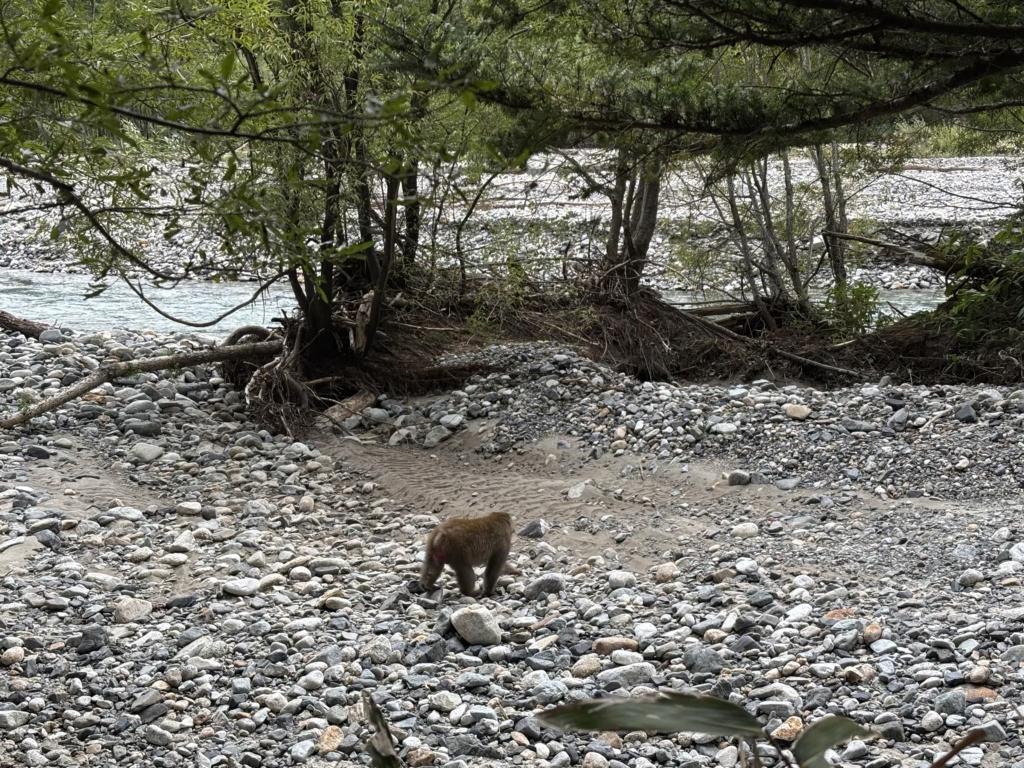
Wildlife sightings can add another memorable element to the experience. During our visit, we encountered a troop of Japanese macaques moving through the forest near the trail. Watching them forage and interact in their natural habitat was one of the highlights of the day and a reminder that Kamikochi remains a protected wilderness area despite its popularity.
Many first-time visitors ask about bears. Asian black bears do live in the surrounding mountains, and it is common to see hikers carrying bear bells. However, the main walking routes between Taisho Pond, Kappa Bridge, and Myojin Pond are heavily visited during the day, making wildlife encounters rare. Throughout our visit, the atmosphere felt very safe, and the sound of bear bells could often be heard in the distance as hikers passed by.
As a Swiss traveler, I was also struck by how familiar parts of Kamikochi felt. The combination of alpine rivers, forested valleys, and snow-capped peaks reminded me of landscapes I grew up with in Switzerland. Yet Kamikochi has a character entirely its own. Traditional Japanese mountain lodges, native wildlife, and the exceptional clarity of the Azusa River create an experience that feels distinctly Japanese rather than simply resembling the Alps of Europe.
Lunch at Kappa Bridge
After spending the morning hiking through Kamikochi, we stopped for lunch near Kappa Bridge, the area’s main visitor hub. This is where most of Kamikochi’s restaurants, cafés, souvenir shops, and visitor facilities are concentrated, making it the most convenient place to take a break before continuing your hike.
One thing that surprised us was just how busy the area became, even on a weekday. By lunchtime, many restaurants had developed noticeable queues, and staff were clearly struggling to keep up with demand. During peak travel periods such as autumn foliage season, Golden Week, and weekends, waiting times can become significantly longer.
Food options around Kappa Bridge range from simple snacks and baked goods to full meals featuring curry rice, soba noodles, Japanese set meals, and regional specialties from Nagano Prefecture. Prices are generally higher than in Matsumoto due to the remote mountain location, but not unreasonably so considering all supplies must be transported into the valley.
If you are planning a day trip to Kamikochi, I would strongly recommend carrying a few snacks and a bottle of water, especially if you intend to continue toward Myojin Pond or explore additional trails. Having something to eat while enjoying the mountain scenery can be a welcome backup if restaurants are crowded.
Important Transport Tips
Before visiting Kamikochi, it is worth understanding a few transport details that can easily catch first-time visitors by surprise.
Season: Kamikochi is only open from around mid-April to mid-November. In winter, the access road is closed and buses do not run.
The most important thing to know is that private vehicles are generally not permitted inside Kamikochi. Most visitors arrive by bus from Matsumoto, Shin-Shimashima Station, or one of the designated park-and-ride facilities outside the valley. As a result, buses can become very busy during peak travel periods, particularly on weekends, public holidays, and during the autumn foliage season.
For the return journey, we found that advance reservations were essential. Depending on the operator and season, return buses may require a reservation, and popular departure times can fill up quickly. If you are visiting during a busy period, I strongly recommend checking schedules and booking transport before your trip rather than assuming seats will be available.
Another detail that surprised us was the train journey between Matsumoto and Shin-Shimashima Station. Unlike many rail services in major Japanese cities, you cannot simply tap in and out using an IC card such as Suica or Pasmo for the entire journey. Visitors should be prepared to purchase the appropriate tickets before boarding and check the latest ticketing procedures before traveling.
I would also recommend keeping an eye on the time while hiking. Kamikochi’s scenery makes it easy to lose track of time, and missing your planned return bus can significantly complicate the journey back to Matsumoto. Before setting out on the trails, make a note of your bus departure time and allow a comfortable buffer to return to the terminal.
Yakiniku Dinner Back in Matsumoto

After a full day of hiking in Kamikochi, we returned to Matsumoto feeling both exhausted and hungry. Rather than searching for another quick meal near the station, we decided to visit Yakiniku Kaishu Minami Matsumoto (焼肉 海州 南松本店), which ended up being one of the most memorable dining experiences of the trip.
For those unfamiliar with yakiniku, the concept is simple: diners grill various cuts of meat themselves at a table-mounted grill. It is a social style of dining that encourages people to share food, try different dishes, and spend time together rather than rushing through a meal. After a long day in the mountains, it felt like the perfect reward.
One of the restaurant’s more unusual features is a 10-yen service where the staff will enthusiastically cheer you on. It’s a small and humorous detail that adds to the relaxed atmosphere and gives the restaurant a memorable local character.
Another highlight was the all-you-can-drink lemon sour option. For just 550 yen, guests can enjoy unlimited lemon sour, a popular Japanese alcoholic drink made with shochu, soda water, and lemon. At 8% alcohol, it was noticeably stronger than versions often served by larger chain restaurants, making it particularly popular with local customers.
Although yakiniku is Japanese in origin, this restaurant also incorporates several Korean-inspired dishes. Alongside grilled meat, the menu includes items such as kimchi, cold noodles, and other Korean barbecue favorites that pair well with the smoky flavors coming from the grill.
What stood out most was the overall value. Compared to similar yakiniku restaurants in larger cities such as Tokyo, portions were generous, prices felt reasonable, and the atmosphere was relaxed and welcoming. The combination of good food, cold drinks, and the satisfaction of completing a full day of hiking made it one of our favorite meals in Matsumoto.
Day 3: Castle, Culture & Swiss Bread
Visiting Matsumoto Castle

Our final day in Matsumoto began at Matsumoto Castle, the city’s most famous landmark and one of Japan’s few surviving original castles. Unlike many castles throughout Japan that were rebuilt using modern materials after wars, fires, or natural disasters, Matsumoto Castle retains much of its original wooden structure dating back to the late sixteenth and early seventeenth centuries. This gives visitors a much more authentic impression of Japan’s feudal era than many reconstructed castles.
One of the first things that stands out is the castle’s striking black exterior, which has earned it the nickname “Crow Castle.” Surrounded by a wide moat and framed by the mountains of Nagano Prefecture, it is easily one of the most photogenic castles in Japan. During our visit, colorful koi fish swam through the moat while visitors gathered along the pathways to admire the reflections of the castle in the water.
For many travelers, the highlight is entering the castle itself. However, it is worth preparing for a slower experience than you might expect. Visitor numbers are carefully controlled, and the narrow wooden staircases create bottlenecks throughout the building. During busy periods, waiting times can become significant. The interior staircases are surprisingly steep, almost ladder-like in some sections, and require careful footing. Visitors with mobility limitations, knee problems, or very young children may find parts of the climb challenging.
Because of the tight spaces inside, large backpacks and bulky items are best stored in the coin lockers near the entrance. We were glad we did, as navigating the staircases would have been much more difficult while carrying bags.
Despite the crowds and slow-moving queues, the interior offers a fascinating glimpse into castle life during Japan’s feudal period. Wooden beams, defensive features, lookout points, and displays of historical weapons help visitors understand how the fortress functioned centuries ago. Unlike reconstructed castles that often feel like museums housed inside modern buildings, Matsumoto Castle still feels like a genuine historical structure.
Even visitors who decide not to enter the castle can still enjoy the surrounding grounds. The castle park is free to explore and provides excellent photo opportunities from multiple angles. During our visit, several performers dressed as ninjas interacted with tourists and posed for photographs, adding a fun and family-friendly atmosphere to the area.
One aspect of Matsumoto Castle that many visitors overlook is its remarkable survival story. During the Meiji era, when many castles across Japan were demolished as symbols of the old feudal system, Matsumoto Castle came close to suffering the same fate. Local residents launched campaigns to preserve the structure, ultimately saving it for future generations. Extensive restoration work throughout the twentieth century ensured that the castle remained one of Japan’s most important historic landmarks.
Exploring Nawate Street (Frog Street)

On our way from Matsumoto Castle to the Matsumoto City Museum of Art, we took a detour through Nawate Street, one of Matsumoto’s most charming and distinctive attractions. Running alongside the Metoba River, this narrow pedestrian street is lined with traditional-style storefronts, small cafés, antique shops, and local food vendors, creating a nostalgic atmosphere that feels very different from modern Japan.
Nawate Street is better known as “Frog Street” due to the countless frog statues, decorations, and souvenirs found throughout the area. The theme is connected to the Japanese word kaeru, which means both “frog” and “to return home.” Because of this linguistic connection, frogs have long been viewed as symbols of safe journeys and good fortune.
During our visit, we spent time browsing small independent shops, looking through antiques, and sampling local snacks while enjoying the relaxed atmosphere. Compared to some of Japan’s more famous historic shopping streets, Nawate felt refreshingly local and uncrowded. Its compact size also makes it easy to visit while walking between several of Matsumoto’s main attractions.
The frog theme has deeper historical roots than many visitors realize. The area was once home to large numbers of Kajika frogs living along the riverbanks. Following a destructive flood in 1959, both the frogs and much of the surrounding district disappeared. In the decades that followed, local residents embraced the frog as a symbol of renewal and recovery, eventually transforming Nawate Street into the unique destination visitors see today.
Although most travelers spend less than an hour here, Nawate Street offers a pleasant break between larger attractions such as Matsumoto Castle and the Matsumoto City Museum of Art. For visitors looking to experience local culture, browse unique shops, and enjoy one of Matsumoto’s most distinctive neighborhoods, it is well worth a short stop.
Matsumoto City Museum of Art: Yayoi Kusama
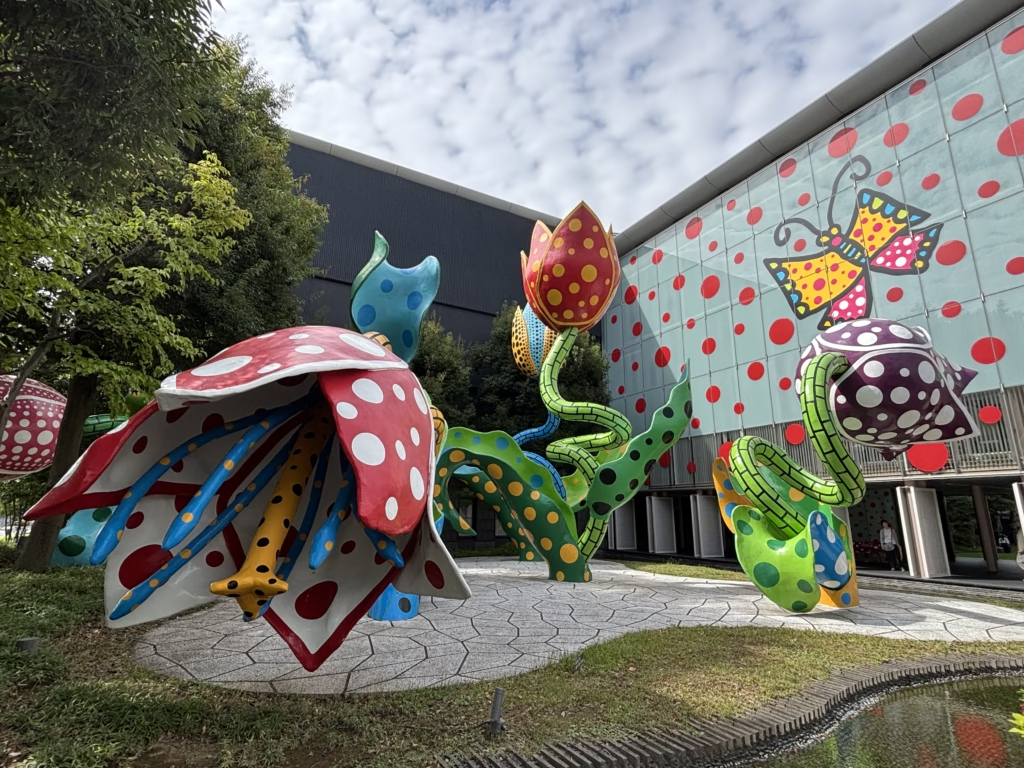
From Nawate Street, we continued to the Matsumoto City Museum of Art, one of the city’s most important cultural attractions and a must-visit destination for fans of contemporary Japanese art. The museum is best known for its connection to Yayoi Kusama, the internationally acclaimed artist who was born in Matsumoto in 1929 and later became one of Japan’s most recognizable creative figures.
Even before entering the building, visitors are greeted by colorful outdoor installations featuring Kusama’s unmistakable polka-dot style. These sculptures have become popular photo spots and immediately signal that this is not a traditional art museum. Inside, the collection includes paintings, sculptures, and other works that showcase the evolution of Kusama’s artistic career and the themes that made her famous around the world.
As someone who was already familiar with Kusama’s work from visiting Naoshima, I found it fascinating to learn more about her connection to Matsumoto and see how strongly the city embraces its most famous artist. The exhibitions provide valuable context for understanding her creative development and global influence.
Beyond the Kusama collection, the museum also features works by other artists connected to Nagano Prefecture and Matsumoto. During our visit, the exhibits included paintings, calligraphy, and contemporary works inspired by the region’s landscapes and cultural heritage. This broader focus helps the museum appeal to visitors even if they are not particularly interested in modern art.
Most visitors can comfortably explore the museum in one to two hours, depending on their level of interest. While dedicated art enthusiasts may spend longer, the museum remains accessible for casual visitors looking to add a cultural stop to their Matsumoto itinerary.

Former Kaichi School

After leaving the Matsumoto City Museum of Art, we made the roughly 30-minute walk to the Former Kaichi School, one of Matsumoto’s most overlooked historical attractions. While many visitors focus exclusively on Matsumoto Castle, this beautifully preserved school building offers a fascinating glimpse into a transformative period of Japanese history.
Built in 1876, the Former Kaichi School is considered one of Japan’s oldest surviving elementary school buildings and is a designated National Treasure. The structure was constructed during the early Meiji period, when Japan was rapidly modernizing and adopting ideas from Europe and North America after centuries of relative isolation.
What immediately caught my attention was the unusual architecture. The building combines traditional Japanese construction techniques with Western-inspired design elements in a style known as giyōfū or “pseudo-Western architecture.” Rather than directly copying European buildings, local craftsmen interpreted foreign styles using familiar materials and techniques. The result is a unique blend of cultures that feels both Japanese and Western at the same time.
Looking closely, visitors can spot details that reveal this fascinating fusion. Traditional roof tiles sit above decorative façades designed to imitate stone and brick architecture, while ornate carvings and distinctly Japanese artistic elements appear throughout the building. The combination reflects Japan’s desire to modernize while maintaining its own cultural identity during the Meiji era.
Even if architecture is not normally your main travel interest, the Former Kaichi School provides valuable context for understanding how quickly Japan transformed during the late nineteenth century. Walking through the building feels like stepping into a period when the country was reinventing itself and experimenting with ideas from around the world.

Inside, the school retains much of the atmosphere of a functioning educational institution, with classrooms carefully preserved to resemble those used by students during the Meiji period. Wooden desks, teaching materials, and historical displays help visitors imagine what daily life was like for children attending school in the late nineteenth century.
Walking through the corridors provides a fascinating glimpse into Japan’s educational transformation during a period of rapid modernization. Subjects such as reading, writing, arithmetic, and even English were gradually being introduced as the country sought to prepare a new generation for a changing world. The exhibits do an excellent job of explaining how education evolved during this pivotal period in Japanese history.
A Swiss Surprise: Züpfe Bread in Matsumoto

One of the most unexpected discoveries during our time in Matsumoto had nothing to do with castles, museums, or mountain scenery. Hidden beneath Laboratorio Coffee is a small bakery operated by a baker who spent approximately twenty years living in Switzerland, including time in Niederbipp in the Canton of Bern.
As a Swiss visitor, I was genuinely surprised to find authentic Züpfe in the middle of Nagano Prefecture. Züpfe is a traditional braided bread that is especially popular in the German-speaking regions of Switzerland and is commonly enjoyed for Sunday breakfast. Its soft texture, rich buttery flavor, and distinctive braided appearance make it one of the country’s most recognizable baked goods.
What makes this bakery particularly special is its authenticity. Rather than simply creating a Japanese interpretation of Swiss bread, the baker follows traditional techniques learned during her years in Switzerland. The result is remarkably close to the Züpfe I grew up eating back home.
Visitors should be aware that this is not a daily offering. The bread is only available once per month, typically on the third Sunday, making it something of a hidden culinary gem. Unfortunately, we discovered this detail too late to purchase a loaf ourselves, but learning about it was fascinating enough that I wanted to include it in this guide for future visitors.
For Swiss visitors in particular, finding authentic Züpfe beneath a café in the Japanese Alps may be one of the most surprising travel experiences Matsumoto has to offer.
Last Ramen Stop Before Tokyo
Before boarding our train back to Tokyo, we made one final food stop at Oboshi Matsumotoeki Building Ten, a ramen restaurant conveniently located inside Matsumoto Station. After three days of sightseeing, hiking, and eating our way through the city, it felt like the perfect way to end the trip.
We ordered the Aka Ramen, a spicy variation featuring a rich broth with a satisfying level of heat. The combination of flavorful soup, springy noodles, and generous toppings made it one of the better station-area ramen meals we have had in Japan. While it may not be a destination restaurant worth traveling across the country for, it is an excellent option for visitors looking for a quick and reliable meal before catching a train.
If you still have time before your departure, Matsumoto Station also offers a variety of souvenir shops selling local products from Nagano Prefecture. Regional snacks, apple-based products, soba noodles, and wasabi-related souvenirs make popular last-minute purchases for travelers heading home.
Narai-juku: A Step Back Into Edo-Period Japan

If you have an extra day in Matsumoto, I highly recommend making the short train journey to Narai-juku, one of the best-preserved post towns along the historic Nakasendo route. Located between Kyoto and Edo (modern-day Tokyo), Narai once served as an important rest stop for merchants, samurai, and travelers crossing the mountains of central Japan. Today, it offers one of the most authentic glimpses into Japan’s Edo-period past.
Our visit began at Narai Station, a small wooden station that immediately set the tone for the day. Within just a few minutes of leaving the platform, we found ourselves surrounded by beautifully preserved wooden buildings lining a long, narrow street that has changed remarkably little over the centuries.
Unlike some of Japan’s more famous historic districts, Narai-juku still feels surprisingly authentic. Many of the traditional buildings continue to house family-run businesses selling lacquerware, handcrafted goods, local snacks, and regional specialties. During our visit, the absence of heavy traffic, modern signage, and large tour groups made it easy to imagine what the town might have looked like hundreds of years ago.
What stood out most to me was the atmosphere. Rather than rushing between attractions, Narai encourages visitors to slow down and simply enjoy the surroundings. We spent our time wandering through quiet side streets, browsing small shops, and admiring the beautifully maintained architecture. The combination of historic wooden buildings, mountain scenery, and peaceful streets created one of the most relaxing travel experiences of our entire trip.
Most visitors can comfortably explore Narai-juku in two to three hours, although history enthusiasts and photographers may want to stay longer. Because of its compact size and direct rail connection, it works particularly well as a half-day or full-day trip from Matsumoto.
Is Matsumoto Worth Visiting?
Before visiting, I expected Matsumoto to be little more than a convenient gateway to Kamikochi and the Japanese Alps. Instead, it became one of the most pleasant surprises of our trip through central Japan.
Over three days, we explored one of Japan’s finest original castles, cycled through the peaceful countryside of Azumino, sampled local food, discovered unexpected cultural gems, and hiked through some of the most spectacular mountain scenery in the country. What makes Matsumoto special is not any single attraction, but the variety of experiences available within such a compact and easily accessible city.
If you’re planning a trip through central Japan, Matsumoto deserves far more than a brief stopover. Give yourself a few days, slow down, and explore beyond the main attractions. You may find, as we did, that it becomes one of the highlights of your journey.
Matsumoto Travel FAQ
How many days do you need in Matsumoto?
Three days is ideal: one day for Daio Wasabi Farm and Azumino, one for Kamikochi and one for Matsumoto Castle and the city. Add a fourth day if you want to visit Narai-juku.
Can you visit Kamikochi as a day trip from Matsumoto?
Yes. Take an early train and bus via Shin-Shimashima, walk from Taisho Pond via Kappa Bridge to Myojin Pond, and reserve your return bus in advance during busy seasons. Kamikochi is only open from spring to mid-November.
How do I get from Tokyo to Matsumoto?
The easiest way is the JR Azusa limited express from Shinjuku, which takes about 2.5 to 3 hours. Highway buses from Shinjuku are cheaper but slower.
Is Daio Wasabi Farm free?
Yes, entry to the farm is free. Budget a little extra for wasabi ice cream and snacks, and rent a bicycle at Hotaka Station to get there.
What is Matsumoto famous for?
Matsumoto is best known for Matsumoto Castle, one of Japan’s few surviving original castles, nicknamed the Crow Castle for its black walls. It is also known as the gateway to Kamikochi in the Northern Alps, the home town of artist Yayoi Kusama, and for the wasabi farms of nearby Azumino.
When is the best time to visit Matsumoto?
Late spring through autumn is best, partly because Kamikochi is only open from around mid-April to mid-November. Summer brings cool alpine hiking, and autumn adds the colours in the mountains. The castle and city are worthwhile year round, but winter closes off the Kamikochi side of the trip.
Is Narai-juku worth visiting from Matsumoto?
If you have a spare half day, yes. Narai-juku is one of the best-preserved post towns on the old Nakasendo trail, a long street of wooden Edo-era buildings that feels like stepping back in time. It is an easy train trip from Matsumoto and pairs well with a more relaxed fourth day.
Author

Get My Personal Travel Maps


Leave a Reply