
If you are wondering whether Joypolis is worth visiting in 2026, the short answer is no. This indoor amusement park in Odaiba once had a reputation for being futuristic and innovative, but today it feels tired, outdated, and unable to compete with the newer entertainment options across Tokyo. What used to be cutting edge now looks more like a relic from the early 2000s, and the experience does not match the relatively high cost of admission.
I visited Joypolis to see whether it still had something unique to offer, especially since Odaiba is known for its modern attractions. Unfortunately, the overall atmosphere felt dim and cramped rather than exciting. Many of the rides rely on old motion simulators and simple arcade mechanics that have not aged well. The visuals look dated, the movements are predictable, and the entire setup lacks the immersive feeling that modern parks in Tokyo now deliver. You can sense that the core technology has not been refreshed in years.
Another major issue is pricing. The entrance fee is already high, but several main attractions require extra payment once you are inside. This quickly pushes the total cost far beyond what the experience is worth. If the rides felt innovative or visually impressive, the higher price might make sense. Instead, the combination of old equipment, long lines, and limited updates leaves you with a feeling that your money could have been much better spent elsewhere.
There is also the question of time. Many people choose Joypolis for rainy days or as a filler activity in Odaiba, but the truth is that Tokyo offers a wide range of indoor entertainment that is superior in every way. TeamLab Borderless provides a modern digital art experience that is far more immersive. Tokyo Dome City and various VR centers deliver more advanced attractions. Even regular gaming arcades in Akihabara or Shinjuku feel livelier and more engaging.
My visit confirmed that Joypolis no longer represents the modern entertainment culture that Tokyo is known for. It feels like an attraction that had its golden age long ago and has not managed to evolve with technological changes. Unless you are visiting for nostalgia or you want to see how an older style of digital amusement park used to look, it is hard to justify a visit today.
If you are planning a trip to Odaiba, you will have a better experience by choosing newer attractions that offer better value, better technology, and a more impressive atmosphere. Joypolis had charm in the past, but in 2026 it simply does not deliver enough to be worth your time or money.
Tokyo has no shortage of better alternatives once you look beyond aging attractions like Joypolis. To help plan modern entertainment, neighborhoods, and experiences that actually reflect today’s Tokyo, I’ve organized everything in my Tokyo Travel Guide.
1. Is Joypolis Worth Visiting in 2026? It Feels Outdated
Tokyo is home to some of the most cutting-edge entertainment experiences in the world, and visitors quickly notice how fast the city updates and reinvents its attractions. Joypolis, however, feels stuck in the past. The park first opened in 1994, and even though it has received occasional updates, the overall atmosphere still resembles something from the early 2000s. The lighting, layout, and design remind you of an older arcade rather than a modern entertainment venue.
What should be its strongest point, the VR and interactive rides, falls short. The headsets, visuals, and motion systems feel dated, and the level of immersion is nowhere near what you would expect in a city known for tech leadership. If you have experienced newer VR attractions in Tokyo or even standard gaming arcades in Akihabara, the gap becomes obvious. The movements in the simulators feel mechanical instead of smooth, and the graphic quality is far behind modern standards.
It also becomes clear that Joypolis has not kept pace with the rapid development of interactive entertainment. Tokyo now offers highly advanced attractions such as TeamLab Planets, where entire rooms respond to your movement, or the new generation of immersive rides at DisneySea that blend animatronics, projection mapping, and motion systems in a way that feels truly modern. Against these newer experiences, Joypolis feels like a place that never fully evolved.
During my visit, the strongest impression was that the park is surviving on nostalgia rather than innovation. The rides were functional, but nothing stood out as exciting or new. For a city that constantly pushes boundaries in art, technology, and themed entertainment, Joypolis no longer reflects the creative energy that defines Tokyo.
2. Hidden Costs: Extra Fees for Certain Attractions at Joypolis
One of my biggest disappointments with Joypolis was the unexpected extra charges. The park uses a pricing system that feels more confusing than it should be. You can either buy a basic entrance ticket and pay individually for each ride or purchase an all-you-can-ride pass. In theory, the full pass should make the experience simple. In reality, it does not. Even with the most expensive pass, several attractions still require extra payment once you are inside.
This creates a situation where you think you have covered everything upfront, only to discover that the rides you were most excited to try are not included. During my visit, I found myself checking signs repeatedly to see which rides the pass actually covered. The lack of clear labeling made it easy to miss details, and you only find out about the extra charge at the ride entrance. It takes away the enjoyment because instead of focusing on the experience, you are constantly trying to figure out what is included and what is not.
For an amusement park, pricing transparency is essential. Visitors want to know exactly what they are paying for, especially in a city where many attractions offer straightforward ticketing. Compared to other parks in Tokyo, which clearly state what is included in their passes, Joypolis feels like it is piecing together its revenue through add-ons and small fees. This nickel-and-diming system makes the experience feel less welcoming and significantly reduces the overall value of your visit.
3. Long Wait Times for Small Attractions at Joypolis
I expected Joypolis to be an indoor amusement park that offered quick and easy fun, the kind of place where you can jump from ride to ride without losing much time. Instead, I found myself standing in long lines for attractions that were far less impressive than advertised. Even the smaller rides had waiting times stretching beyond 40 minutes, which felt unreasonable given how short and simple the experiences were.
What makes this even more frustrating is the comparison with other Tokyo attractions. Recently, I waited around 40 minutes for Thunder Dolphin at Tokyo Dome City, one of the top roller coasters in the city. That wait felt justified because the ride delivers real excitement, height, speed, and a memorable experience. At Joypolis, the same waiting time leads to a VR or motion simulator ride that lasts only a couple of minutes and offers nothing extraordinary. The imbalance between time invested and enjoyment received becomes obvious very quickly.
Standing in line is normal at any amusement park, but there needs to be a payoff at the end. At Joypolis, the payoff simply is not there. The slow-moving lines, combined with outdated attractions, make the experience feel inefficient and disappointing rather than fun or spontaneous.
4. Odaiba’s Limited Food Options Near Joypolis
Another major downside to Joypolis is its location. Odaiba is an artificial island that looks impressive from a distance, but once you walk through the area you quickly notice that it is built more for sightseeing than for authentic local culture. The scenery is pleasant, but when it comes to food, the options are extremely limited. Most restaurants nearby are aimed at tourists and focus on overpriced Western-style dishes that lack character and quality.
If you are hoping to enjoy real Japanese cuisine after your visit, you will likely be disappointed. The area has very few places that serve well-prepared traditional dishes, and the ones that do exist are often crowded or not within convenient walking distance. During my visit, I checked several nearby food spots, and the majority offered generic menu items that you could find in any mall food court. Nothing stood out as worth trying.
Because of this, I strongly recommend eating before you arrive. It saves money and gives you a better overall experience. Tokyo has so many excellent dining options, but Odaiba is not the place to look for them. The lack of good food might not be a deal-breaker for some attractions, but when combined with Joypolis’s already weak value, it becomes another reason why the location does not work in its favor.
Better Alternatives in Tokyo Instead of Joypolis
So, if you’re looking for fun in Tokyo, where should you go instead? Here are some alternatives that provide a much better experience:
- Tokyo Dome City: Free entry, pay-per-ride system, and home to the incredible Thunder Dolphin roller coaster. Plus, there are plenty of great food options nearby.
- DisneySea or Disneyland: More expensive, but worth every yen for the world-class rides, food, and atmosphere.
- Fuji-Q Highland: If you’re willing to take a short trip out of the city, this park is a must-visit for thrill-seekers.
- TeamLab Planets: A stunning interactive art experience that delivers real innovation.
Final Thoughts: Is Joypolis Worth Visiting in 2026?
At the end of the day, is Joypolis worth visiting in 2026? I’d say no. The outdated attractions, long waits, hidden costs, and poor food options make it one of the weakest amusement experiences in Tokyo. If you’re only visiting Tokyo for a limited time, spend your money and time on better attractions. Joypolis might have been exciting decades ago, but today, it simply doesn’t compete with the incredible entertainment options Tokyo has to offer.
Have you been to Joypolis? Let me know your thoughts in the comments!
Author

Get My Personal Travel Maps
Keep Reading: More Articles You’ll Love
 Living in Tokyo vs Zurich – The Ultimate Expat Guide
  Is Japanese Food Actually Chinese? The Surprising Origins of Japanese Cuisine
  Christmas in Roppongi: Winter Illuminations, Market & Tokyo Tower Views
  The Ultimate Guide to the Best Furniture Stores in Tokyo: MUJI vs. Nitori vs. IKEA
 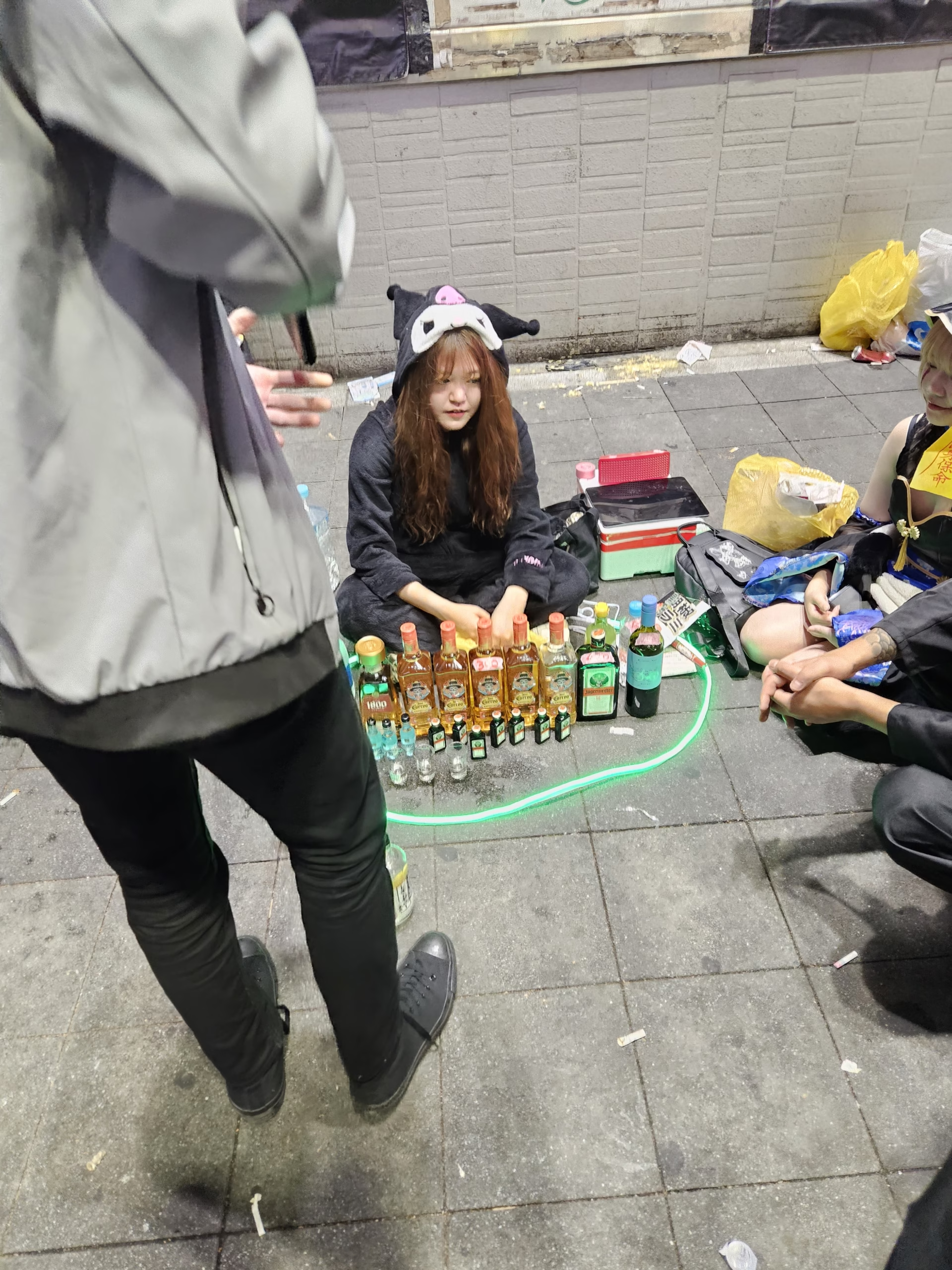 Halloween in Tokyo: From Shibuya to Shinjuku and Beyond
  Food in Tokyo: From Okachimachi to Akihabara – Hidden Burger, Anime Shopping & Gacha Adventures
  Is Tokyo Really Safe? What I Learned Living Here for 3 Years


Leave a Reply