
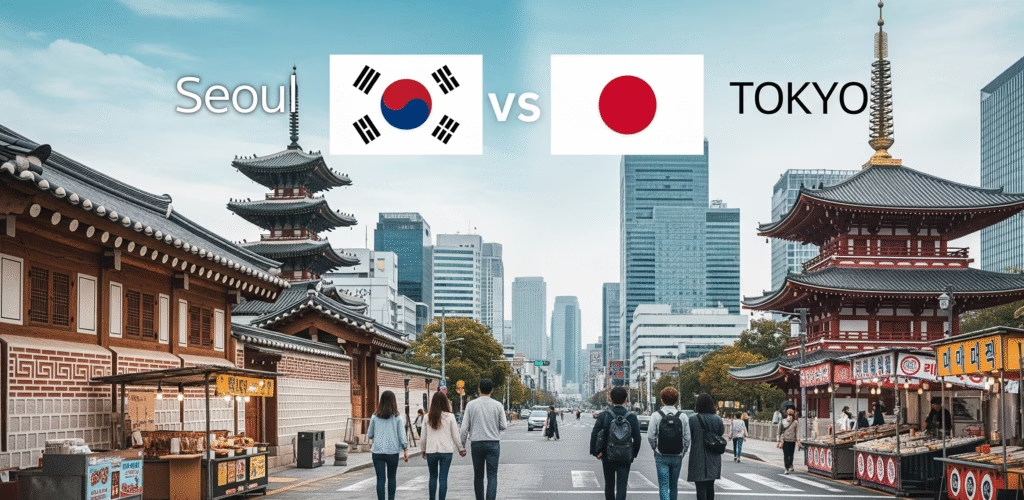
Choosing where to live in Asia can be overwhelming. Japan and South Korea are two of the most popular destinations for expats, digital nomads, and people who love the culture. I’ve been fortunate to live in both countries for extended periods, and I learned firsthand that while they share some similarities, the day-to-day experience is completely different.
This living in Japan vs Korea comparison guide will help you understand exactly what to expect if you’re considering moving to Japan or Korea, pros and cons. From the cost of living in Korea versus Japan 2025 to the taste of everyday meals and the daily life differences between Japan and South Korea, I’ll walk you through all the important factors so you can make the best decision for your lifestyle and priorities. Whether you’re planning a short stay or looking for a long-term expat experience, in Japan, compared to Korea, you’ll find clear information to guide your choice.
I lived in Korea for eight months during my bachelor’s degree exchange and spent over a year in total there. I studied at EWHA University in Seoul, which gave me the chance to experience daily life as both a student and a resident. In Japan, I have now lived for two years (after I was able to get accepted at Waseda) while completing my degree at Waseda University in Tokyo. These experiences allowed me to see firsthand how each country feels, far beyond what you learn from short-term travel or online research.
Cost of Living (All Prices in USD)
One of the first questions anyone asks before moving abroad is: How much will it cost to live there? While both Korea and Japan are developed, relatively expensive countries, there are important differences in housing, food, and daily expenses. This section will give you a clear overview of the cost of living Korea versus Japan 2025, so you can understand what daily life really costs. Whether you’re planning a short stay or considering living in Japan vs Korea long term, knowing these details will help you budget and avoid surprises.
Below you’ll find a clear breakdown of typical costs in USD.
🏡 Housing
Japan
Japan, especially Tokyo and Osaka, is famous for high rental costs. A small studio apartment in central Tokyo typically costs between $860–$1,400 per month, excluding utilities. Older buildings may be cheaper, but often have thin walls and outdated bathrooms.
Korea
Seoul can also be expensive, but you usually get more space for your money. Studios in popular districts range from $540–$970 per month. Korea also offers a unique system called jeonse, where you pay a large refundable deposit instead of monthly rent. This can save money long-term if you have the capital upfront.
If you plan to live centrally, Japan is usually more expensive month to month, while Korea can be cheaper—especially if you choose a jeonse contract. This is one of the key differences you’ll notice when living in Japan vs Korea, as housing costs can impact your budget more than any other factor.
🛒 Groceries and Fresh Produce
Japan
Groceries in Japan are generally high-quality but pricey. Fruits can be shockingly expensive; for example, a single melon can cost $11–$22. Everyday vegetables and packaged goods are more reasonably priced but still higher than in Korea.
Korea
Korea has much cheaper fresh produce. A basket of fruits and vegetables often costs 30–40% less than in Japan. Local markets are everywhere, offering seasonal products at affordable prices. The international stores are nicer than in Tokyo (and more common in Seoul).
🍽️ Eating Out
Japan
A simple meal like ramen or a lunch set costs about $6.50–$11, while a mid-range restaurant can easily be $16–$27 per person. Japan has excellent variety, including sushi, udon, and countless regional dishes. However, if you crave spicy or strongly flavored food, you may feel limited. Forget to find any proper Italian food. The Chinese food is good in Tokyo! Bread is horrible.
Korea
Eating out in Korea is generally cheaper. A filling lunch can cost as little as $4.30–$6.50, and even Korean BBQ with friends often comes out more affordable than a similar meal in Japan. Korean cuisine is known for its strong, diverse flavors. You can find better Italian food than in Tokyo. Bread is horrible.
🚇 Transportation
Japan
Japan’s train systems are famously efficient but not cheap. A monthly commuter pass in Tokyo can cost $65–$130, depending on your route. Long-distance trains like the Shinkansen are very expensive compared to buses.
Korea
Seoul’s subway system is modern and clean, with slightly lower fares. A monthly pass usually costs $43–$75. Intercity buses and trains are much cheaper than in Japan.
💡 Utilities and Internet
Utilities (electricity, water, gas) are similar in both countries, averaging $108–$160 per month for a small apartment. Korea’s ondol floor heating can increase winter costs.
Internet speed is amazing in Korea and acceptable in Japan:
- Korea: Often considered the world’s fastest, with unlimited plans around $22–$32 per month.
- Japan: Typically a bit higher, $32–$54 per month. Tokyo for example is only the 72. fastest city in the world compared with Internet speed.
🏥 Healthcare
Both countries have universal healthcare systems. In Japan, you usually pay 30% of treatment costs, with the rest covered by insurance. In Korea, co-pays can be lower, and private clinics are widely available. When living in Japan vs Korea, you’ll find that the overall quality of care is excellent in both places, but the cost structure and ease of accessing services can feel quite different.
💰 Cost Comparison Table (USD)
| Category | Japan (Tokyo) | Korea (Seoul) |
|---|---|---|
| Rent (1 BR) | $860–$1,400 per month | $540–$970 per month |
| Groceries | High, especially fruit | Cheaper, good local markets |
| Eating Out | $6.50–$27 per meal | $4.30–$16 per meal |
| Transportation | $65–$130 monthly pass | $43–$75 monthly pass |
| Utilities | $108–$160 per month | $108–$160 per month |
| Internet | $32–$54 per month | $22–$32 per month |
| Healthcare | 30% co-pay | 20–30% co-pay |
Verdict:
If you’re budget-conscious, Korea generally offers a lower cost of living, especially for housing, fresh food, and transportation. Japan can feel more expensive overall, but the quality and reliability of services are consistently excellent.
Housing and Accommodation
Finding a place to live is one of the biggest challenges when relocating abroad. Both Japan and Korea have unique systems and cultural expectations around renting, deposits, and apartment standards. Below you’ll find a clear comparison to help you prepare.
Types of Apartments
Japan
In Japan, especially in major cities like Tokyo, apartments tend to be compact. It’s common to find studio layouts called 1R (one room) or slightly larger 1K (one room plus kitchen). Even family-sized apartments can feel small by Western standards. Many buildings are older, with thin walls, basic insulation, and small bathrooms.
Traditional Japanese features are also common, including tatami mat flooring, sliding doors, and deep soaking tubs. Newer high-rise apartments (mansions) offer better amenities but are usually more expensive.
Korea
Korean apartments often feel more modern. Even mid-priced buildings in Seoul typically include features like floor heating (ondol), built-in closets, and modern bathrooms. The average apartment is also a bit larger. High-rise apartment complexes are very common and often have security guards, delivery storage rooms, and underground parking.
Renting Process
Japan
Renting an apartment in Japan involves significant paperwork and multiple fees. You usually need:
- Key money (reikin): A non-refundable gift to the landlord, often equal to 1–2 months’ rent. (That sucks a lot)
- Deposit (shikikin): Typically 1–2 months’ rent, refundable minus cleaning costs. (You loose them too, sucks again a lot)
- Agent fee: Around one month’s rent.
- First month’s rent: Paid upfront.
This means moving in can easily require 4–6 months’ rent in cash. Foreigners sometimes struggle to secure apartments without a Japanese guarantor (hoshounin). Many expats use specialized agencies catering to non-Japanese speakers.
Korea
In Korea, the process is simpler in some ways but unique. You can choose:
- Wolse: Monthly rent plus a deposit (usually 10–20% of the apartment value).
- Jeonse: A large lump-sum deposit (often $50,000–200,000+), with no monthly rent. You get the deposit back when you move out.
Jeonse can be attractive if you have cash savings because you avoid paying rent and only cover utilities and maintenance fees. In recent years, rising real estate prices have made jeonse less common for newcomers, but it remains an option. When comparing the cost of living Korea versus Japan 2025, jeonse is one of the factors that can significantly lower monthly expenses. This unique rental system is something you won’t encounter when living in Japan vs Korea, and it highlights how differently housing works in each country.
Example Prices
Below is a rough idea of typical rent costs for a modern 1-bedroom apartment in a central area, so you can better understand the cost of living Korea versus Japan 2025 and see how prices compare when living in Japan vs Korea.
| Location | Monthly Rent (USD) |
|---|---|
| Tokyo | $1,000–$1,500 |
| Osaka | $800–$1,200 |
| Seoul | $600–$1,000 |
| Busan | $500–$850 |
Keep in mind that prices can be significantly lower in smaller cities or suburban areas.
Furnishing and Appliances
Japan
Apartments are usually unfurnished, meaning no fridge, washing machine, or even ceiling lights. You are expected to supply everything yourself. This can add significant initial costs. Japanese Landlords are super racists and often rent only to people with Japanese passports.
Korea
Most apartments come semi-furnished, often including a fridge, washing machine, air conditioning units, and built-in closets. This reduces the hassle of moving in.
Lease Length and Renewal
Standard leases in both countries are two years. In Japan, landlords generally expect you to renew or move out when your term ends. Renewal fees are common (often one month’s rent).
In Korea, lease extensions are often negotiated with new deposit amounts, especially for jeonse contracts.
Tips for Finding an Apartment
- Japan: Use English-friendly real estate websites like RealEstate Japan or work with agencies specializing in foreign tenants. Be prepared for strict requirements and paperwork.
- Korea: Consider using apps like Zigbang or Dabang, which list thousands of apartments. Many listings have photos and deposit/rent combinations.
Verdict:
Korea tends to offer more modern apartments with fewer upfront costs (if you rent monthly), while Japan requires significant deposits and has more traditional layouts. If you prefer newer buildings and easier move-in, Korea has an edge. For those excited by Japanese design and willing to navigate the extra paperwork, Japan can be rewarding.
Work Culture and Career
Moving abroad isn’t just about sightseeing—it often means adapting to a completely different work environment. While Japan and Korea share some cultural similarities, their office cultures can feel worlds apart from each other and from Western norms. Here’s what you can expect.
Hierarchy and Respect
Japan
Japan is famous for its rigid hierarchy and formality in the workplace. Age, tenure, and job title strongly determine how you speak to colleagues and managers. Even in modern companies, deference to seniority is a core part of professional life.
Politeness is embedded in communication, including using honorific language (keigo) and ritual greetings when arriving or leaving the office.
Korea
Korean companies are also hierarchical, but younger generations are driving change. While respect for seniority remains important, Korean workplaces are evolving faster than Japan’s, with a growing focus on flatter structures, faster decision-making, and more open communication. That said, bowing, formal titles, and respectful language (jondaetmal) are still the norm.
Working Hours and Expectations
Japan
Long working hours are common, and overtime is often unpaid. “Presenteeism”—the expectation to stay late even when you’ve finished your work—is deeply ingrained. Many employees feel they can’t leave before their manager does.
Recently, companies have started promoting work-life balance and reducing excessive hours, but in practice, change has been slow.
Korea
Koreans are also known for hard work and long hours. However, in 2018, the government introduced a 52-hour workweek limit to address burnout and improve quality of life. Compliance varies, but in general, Korea has made more progress toward reasonable working hours than Japan.
Communication Style
Japan
Japanese business communication is famously indirect. You’re expected to “read the air” (kuuki o yomu)—in other words, pick up on unspoken cues rather than say things directly. Conflict is avoided at all costs.
Meetings can feel slow and consensus-driven, with decisions requiring sign-off from multiple departments.
Korea
Korean workplaces are a bit more direct and dynamic. It’s still important to be polite, but feedback can be more straightforward, especially among younger colleagues. Decision-making is sometimes faster, especially in startups and international companies.
Dress Code
Both countries expect a conservative dress style, particularly in traditional industries.
- Japan: Dark suits, white shirts, and ties for men; formal blouses and knee-length skirts for women are standard. Tattoos and unusual hair colors can still be frowned upon in professional settings.
- Korea: Similar expectations, but younger companies are gradually adopting more casual dress codes, especially in tech and creative sectors.
Job Hunting as a Foreigner
Japan
Foreigners often face challenges breaking into the Japanese job market without strong Japanese language skills. Even international companies often expect at least conversational Japanese proficiency. Industries such as English teaching, IT, and translation have more openings for non-Japanese speakers.
Visa sponsorship is usually tied to full-time employment, so securing a job offer before arrival is highly recommended. Also Interviews for full time contracts contain up to 7 steps (as a Software Engineer). At this point is better for a contract position and convert them after one year into a permanent position. In Japan, companies face significant legal and cultural hurdles to terminate employment, making it very rare for someone to be fired unless they have committed a serious wrongdoing.
It is a good idea to read my articles about Black and White companies in Japan to avoid suffering.
Korea
Korea can feel slightly more accessible thanks to higher English proficiency and a growing international business environment. Many foreigners work in education, IT, design, and trade. Korea also has specific visa options like the E-2 (teaching) and D-8 (investment/business) visas.
For highly skilled professionals, the F-series visas provide more flexibility and long-term residency options.
Salaries and Benefits
Salaries can vary widely by industry and experience, but here are some general observations:
| Aspect | Japan | Korea |
|---|---|---|
| Average Salary | $30,000–$50,000/year | $25,000–$45,000/year |
| Annual Bonus | Common (1–2 months’ salary) | Common (1–2 months’ salary) |
| Paid Leave | ~10–20 days per year (In reality you can’t take them) | ~15 days per year (Often you can’t take them) |
| Health Insurance | Universal, high quality | Universal, high quality |
Note that salaries in both countries are typically lower than in the US or Western Europe, but healthcare and pension benefits are solid.
Verdict:
If you value clear communication, slightly shorter hours, and a rapidly modernizing work culture, Korea may be more comfortable. If you are fascinated by traditional etiquette, consensus-driven teamwork, and the formality of Japanese corporate life, Japan can be rewarding—just be prepared for long days and indirect communication.
Universities and Higher Education
If you’re moving abroad to study, or considering pursuing a degree during your time overseas, Japan and Korea both offer excellent universities, though the culture and daily experience can be quite different.
University Culture
Japan
Japanese universities are known for their prestige and focus on rigorous entrance exams. Once admitted, however, the academic environment can feel surprisingly relaxed compared to Western universities. Undergraduate students often describe their college years as a time for building social networks rather than intense study, especially outside technical fields.
Graduate programs, in contrast, tend to be more demanding, with research-focused environments and expectations of strong self-direction. Relationships with professors can be quite formal, and hierarchy still plays a role in how you communicate.
International students are welcomed in many programs, but daily life often requires at least basic Japanese proficiency—especially if you study outside major international universities.
Korea
Korean universities also place a strong emphasis on entrance exams and rankings. Student life in Korea is usually more structured and academically competitive than in Japan. Many Korean students spend long hours in libraries and study rooms, and pressure to maintain high grades is intense. It’s important to note that while Korean universities can feel intense on the surface, it is often surprisingly difficult to actually fail a degree program. In my experience at EWHA University, there were fewer rules for passing and more explicit rules for how to fail.
For example, in one economics course, the requirement to pass the final exam was simply to score at least 1 point out of 45 questions, each being multiple-choice with 4 possible answers. This meant that even if you guessed randomly on every question, you still had a high probability of passing. (1−(0.75)45≈99.99945% chance of passing with guessing)
Campus life is vibrant, with active student clubs, festivals, and sports events. Compared to Japan, Korean universities have made faster progress in offering courses taught in English, especially at top schools like Seoul National University, Korea University, and Yonsei University.
International Programs and Language
Japan
Leading universities such as Waseda, Keio, and the University of Tokyo offer English-language degree programs in fields like business, international relations, and engineering. However, outside these programs, lectures and materials are usually in Japanese.
Many exchange students find that while campus services may offer some English support, daily administration—like signing up for classes or using student portals—still requires Japanese skills.
Korea
Korean universities have rapidly expanded their English-language offerings. Schools like Ewha Womans University, Yonsei University, and KAIST provide entire degree programs in English, making Korea appealing if you don’t speak Korean fluently.
Still, learning some Korean is strongly recommended to navigate campus life, communicate with classmates, and handle paperwork.
Tuition and Costs
Japan
Tuition varies by university, but public institutions generally cost between $5,000–$8,000 per year, while private universities range from $8,000–$15,000 per year. Scholarships are available, especially for high-achieving international students. Cost of living can be substantial, particularly in Tokyo.
Korea
Tuition is often lower in Korea, averaging $3,000–$6,000 per year for public universities and $6,000–$10,000 per year for private institutions. Korea also offers a variety of government scholarships, like the Global Korea Scholarship (GKS), which covers tuition, living expenses, and airfare.
Campus Facilities and Support
Japan
Universities generally offer good facilities, including libraries, research labs, and sports centers. However, student housing can be limited, and many students rent apartments off-campus. International student offices exist but may not provide full English support.
Korea
Korean universities often provide modern dormitories, sometimes with single rooms and amenities like cafeterias, gyms, and study lounges. Campuses usually have dedicated international centers that help with visas, housing, and orientation.
Apply as a foreigner to the Top Universities
Applying for a master’s degree as a foreigner in Japan or Korea is usually a straightforward process, but the details can differ significantly between the two countries. Generally, you start by choosing your program, checking the eligibility requirements, and preparing all the necessary documents like transcripts, recommendation letters, proof of language proficiency, and a statement of purpose. In both countries, you can apply through what’s called the AO (Admissions Office) route, which often involves an interview with your prospective lab or advisor. Especially in research-focused degrees, you don’t just apply to the university as a whole—you typically approach the lab directly, discuss your research plans, and secure a supervisor’s approval before the administration office reviews your final application.
One important consideration for Japan is that many public universities still require you to travel there in person to take an entrance exam. For European applicants, this can be prohibitively expensive, as you may need to book international flights and accommodation just to sit the exam. By contrast, Korea handles almost everything online, which makes the process much more accessible if you are applying from abroad.
The experience is also shaped by how modern or traditional each system is. In Korea, everything is handled online, from submitting documents to receiving your acceptance letter. In contrast, many Japanese universities still rely on a more old-fashioned process, where you print and mail all your paperwork, and sometimes even send additional copies by post after initial acceptance. Once your lab confirms they will take you, the administration office gives final approval, and you can proceed to apply for your student visa.
Here are my guides for the Universities i passed the screening and Lab Interview at Waseda and Yonsei University for Major Computer Science:
Verdict:
If you want a more internationally-oriented campus experience and greater access to English-language degrees, Korea may be more convenient. If you’re drawn to Japan’s academic reputation and cultural immersion, and are ready to learn Japanese, Japan offers excellent opportunities—especially in prestigious programs.
Language and Learning Curve
Language is one of the most important—and sometimes intimidating—parts of moving to Japan or Korea. Even if you’re experienced with learning languages, both Japanese and Korean have unique challenges that can affect everything from your daily shopping to your career prospects.
Difficulty Level
Japanese
Japanese is often perceived as difficult, but many expats find it manageable over time because the grammar is relatively consistent and the sounds are limited. However, the writing system is famously complex, using:
- Kanji (Chinese characters): Thousands of characters to memorize for me probably impossible
- Hiragana: A phonetic script for native words and grammar endings. You can learn this in 2 days
- Katakana: A phonetic script mainly for foreign words. You can learn this in 2 days
This means reading newspapers or official documents can take years of study.
Korean
Korean grammar has similarities to Japanese, but the writing system—Hangul—is considered one of the easiest alphabets in the world. You can learn to read Hangul in just a few days. However, the language has complex honorifics and verb endings, which can be challenging to master fluently.
Usefulness of the Language
Japanese
Learning Japanese has long-term benefits if you are passionate about anime, Japanese pop culture, or plan to work in Japan-related industries. It is also more widely studied internationally, making it easier to find study materials, courses, and communities.
Korean
Korean is less widely spoken outside of Korea. If you’re mainly interested in K-dramas, K-pop, or living in Korea long-term, it is extremely useful. However, it offers fewer career advantages if you leave Korea later.
English Proficiency in Daily Life
Japan
Outside tourist areas and large international companies, English proficiency remains quite low. You will likely need to use Japanese for:
- Banking
- Rental contracts
- Visiting the doctor
- Reading bills and government letters
Many foreigners say that this forced immersion helps them learn faster (for me too). At the same time, it can feel overwhelming during your first months.
Korea
Korea has invested heavily in English education, and younger generations in Seoul often speak conversational English. In daily life, you’ll find more English signage, more bilingual staff in banks and hospitals, and more resources for expats in English. This makes the transition smoother for newcomers.
Learning Curve and Motivation
If you are deciding between the two languages, think about what personally motivates you.
- Japanese is easier to practice through pop culture. Anime, manga, and Japanese video games offer endless material.
- Korean is easier to read and more accessible at a beginner level. Hangul literacy can be achieved in days, which builds confidence early on.
Tips for Learning
For Japanese:
- Start with Hiragana and Katakana immediately.
- Use language apps like Wanikani or Anki to memorize Kanji incrementally.
- Watch Japanese media with Japanese subtitles.
For Korean:
- Learn Hangul right away—don’t rely on Romanization.
- Practice speaking early, as pronunciation matters.
- Use apps like Talk to Me in Korean and HelloTalk.
Verdict:
If you are passionate about anime or plan to work in Japan long-term, Japanese is worth the effort despite the complex writing system. If you want a faster start with reading and smoother day-to-day integration, Korean will feel more beginner-friendly—especially in Seoul, where more people speak English.
Food and Culinary Scene
Food is one of the highlights of living in both Japan and Korea, but the culinary cultures are remarkably different. From everyday meals to dining out with friends, here’s what you can expect.
General Overview
Japan
Japanese cuisine is known for its subtle flavors, emphasis on seasonal ingredients, and meticulous presentation. Meals often include rice, fish, pickled vegetables, and clear soups. While many people find Japanese food healthy and refined, some expats feel it can become repetitive and too mild over time. Also vegetables are completly missing in your restaurant expirience.
Korea
Korean food is famous for its bold flavors, abundant use of chili, and emphasis on sharing dishes. A typical meal includes rice, soup or stew, grilled meat, and multiple side dishes (banchan), often including kimchi. Korean food is considered more diverse and robust in taste.
Dining Out
Japan
Eating out in Japan offers incredible variety if you’re in a big city like Tokyo or Osaka. You’ll find everything from standing sushi bars to high-end kaiseki restaurants. However, the average restaurant tends to focus on one specialty, whether it’s soba, ramen, or tempura.
Costs are moderate to high:
- A bowl of ramen: ~$7–10
- Sushi lunch set: ~$10–15
- Mid-range dinner: ~$20–30 per person
Japan also has excellent international cuisine. In Tokyo, it’s easy to find Thai, Chinese, Italian, and Korean restaurants, which helps break the routine.
Korea
In Korea, dining out is an essential part of life and much more affordable. Korean BBQ, stews, fried chicken, and noodle dishes are everywhere, and portions are generous. Restaurants are often lively and communal.
Typical prices:
- A bowl of kimchi stew (kimchi jjigae): ~$5–7
- Korean BBQ: ~$12–20 per person
- Fried chicken and beer: ~$15–25 for two people
Many places are open late or even 24 hours, making it easy to grab food at any time.
Food Variety and Spice
Japan
Japanese dishes tend to be milder, focusing on umami rather than heavy seasoning. If you prefer spicy food, you’ll find fewer traditional options. While wasabi adds heat to sushi, most dishes are delicately flavored.
Korea
Korean food is famous for its heat. Gochujang (fermented chili paste) and gochugaru (chili flakes) are staples in many recipes. Even side dishes can be spicy, so it can be an adjustment if you’re sensitive to heat.
That said, many restaurants offer less spicy versions, and international food is widely available in Seoul.
Shopping for Ingredients
Japan
Supermarkets in Japan offer high-quality produce and seafood but often at higher prices, especially for fruit. Imported goods can be expensive. If you cook often, costs can add up quickly.
Korea
Korean grocery stores and markets are usually more affordable for fresh vegetables and fruit. Kimchi, sauces, and pre-marinated meats are easy to find. Imported Western products are available but can be expensive outside major international supermarkets.
Dietary Restrictions
Both countries have limited options for vegetarians and vegans, though this is improving slowly:
- Japan: Dashi (fish stock) is used in many dishes, even those that look vegetarian.
- Korea: Kimchi and stews often contain anchovy or beef broth.
In big cities, vegetarian and vegan restaurants are growing, but you still need to ask carefully about ingredients. There was a vegan hype back in 2020 when I studied in Seoul, but most of these restaurants are gone by now.
Personal Perspective
From living in both countries, many expats find Korean food more exciting day to day, while Japanese food feels cleaner and lighter. In Japan, it can be harder to find bold or spicy flavors without seeking out specialty restaurants. In Korea, even the most casual meals are packed with taste.
Verdict:
If you love variety, strong seasoning, and communal dining, Korea will likely feel like a food paradise. If you prefer milder, delicate flavors and a focus on high-quality presentation, Japan offers an unmatched culinary experience—especially if you explore regional specialties.
Social Life and Friendships
No matter how beautiful a country is, the experience of living there depends a lot on the connections you build. While both Japan and Korea have warm, welcoming people, their cultures around socializing and making friends are quite different.
First Impressions and Openness
Japan
Japanese society is famously polite but reserved. People are almost always courteous, but it often takes time to build deeper friendships. Many foreigners describe Japanese acquaintances as friendly but formal, especially at first.
You may find that people don’t invite you home right away or share personal details early in the relationship. Building trust is a slow, step-by-step process, but once you are accepted into someone’s circle, the friendships are genuine and lasting.
Korea
Koreans are generally perceived as more outwardly warm and curious about foreigners. Younger Koreans in particular tend to be more open to making new friends quickly. In social settings like bars, restaurants, and language exchanges, it’s common to strike up conversations with strangers.
Many expats find it easier to feel included in Korea, where group activities and shared meals are a big part of daily life.
Making Friends as a Foreigner
Japan
Foreign communities in Japan can be tight-knit, especially in major cities. English conversation meetups, hobby clubs, and sports groups are popular ways to connect. However, making local friends often requires some Japanese proficiency and patience.
Cultural norms such as avoiding direct disagreement and maintaining harmony can make it harder for newcomers to understand how close they really are to someone. Invitations to after-work drinks (nomikai) are common and can be a first step toward closer bonds.
Korea
Korea offers many channels to meet both locals and other expats. Apps like Meetup, HelloTalk, and local Facebook groups are active and welcoming. Many Koreans are eager to practice English or share Korean culture.
If you work in a company, you’ll quickly find yourself going to group dinners (hoesik) or karaoke outings (noraebang)—both important parts of professional and social life.
Dating and Relationships
Japan
Dating culture in Japan is generally conservative. While dating apps are widely used, relationships often progress slowly. Public displays of affection are less common, and many Japanese people prefer to keep their private lives discreet.
Korea
Korea has a more expressive dating culture, and public displays of affection are common among young couples. Dating apps are hugely popular, and it’s common to have clear “relationship milestones,” such as celebrating 100-day anniversaries.
Foreigners sometimes find the dating scene dynamic and fast-moving, especially in large cities like Seoul.
Community and Expat Networks
Japan
Japan has long-established expat communities, especially in Tokyo, Osaka, and Fukuoka. International schools, embassies, and business groups host frequent events. However, outside the big cities, the foreign population is much smaller, and you may feel more isolated.
Korea
Seoul, Busan, and Daegu all have vibrant expat communities. Because Korea has seen a rapid increase in foreign residents over the past two decades, services and networks for newcomers are improving quickly. It’s easier than ever to find English-speaking doctors, legal help, and cultural programs.
Social Etiquette
Both countries have high-context cultures that value respect and non-confrontation, but there are important differences:
- Japan: Silence is often seen as comfortable. People tend to avoid interrupting, and indirect communication is the norm.
- Korea: Conversations can be more animated, and showing enthusiasm is welcomed. It’s still important to be polite and deferential to older people or seniors at work.
Verdict:
If you prefer a society where friendships grow slowly but deeply, and privacy is highly respected, Japan may be a better fit. If you enjoy spontaneous socializing, faster inclusion, and a more outwardly expressive culture, Korea will likely feel easier and more dynamic.
Safety and Uncomfortable Encounters
When comparing daily life in Japan and Korea, personal safety is generally excellent in both countries—violent crime is very rare, and you can walk around most neighborhoods without fear. However, many women who have lived in both places notice clear differences in how common unwanted attention or creepy behavior is.
Japan
Despite its reputation for politeness, Japan has a serious issue with harassment, especially on public transportation. Upskirt photography (chikan incidents) is a well-known problem, and there are entire women-only train cars during rush hour because groping and inappropriate touching have been so widespread. It is also not unusual for women to be stared at persistently or even followed, particularly in busy stations or quieter streets at night. Some women report being hit or shoved by older men on trains simply for taking up space or because of xenophobic attitudes. These experiences can make daily commuting stressful, and in many cases, perpetrators face little social stigma or consequences. While the overall crime rate is low, it is fair to say that Japan feels noticeably less safe for women when it comes to sexual harassment compared to Korea.
Korea
Korea is not free of creepy behavior, but it tends to be less visible in public spaces. Harassment happens—especially online or in nightlife areas—but it is rarer to be openly followed or touched in public. Creeps exist everywhere, but in Korea, they often keep more to themselves, and there is less tolerance for this behavior in crowded environments. For many women, day-to-day life feels safer, and commuting is less stressful. While caution is always important, the social environment in Korea generally makes it easier to avoid unwanted attention.
Verdict:
If you are a woman considering moving alone, it’s important to be aware that Japan has higher rates of public sexual harassment and less social deterrence against this kind of behavior. Korea is not perfect, but many women find it noticeably safer and more comfortable, especially on public transportation.
Daily Life and Infrastructure
Moving to a new country isn’t just about culture and work—it’s about how smooth your everyday life feels. Both Japan and Korea have excellent infrastructure, but daily conveniences, bureaucracy, and overall organization can differ more than you might expect.
Convenience Stores and Everyday Shopping
Japan
Japanese convenience stores (konbini) are famous for their quality and variety. 7-Eleven, Lawson, and FamilyMart are everywhere, and you can buy everything from fresh meals and banking services to concert tickets. Many stores are open 24 hours.
Supermarkets are clean, well-organized, and stocked with high-quality produce, though prices can be steep.
Korea
Korean convenience stores like GS25 and CU (was formerly Family Mart => that’s why CU and Family Mart have the same colors) are also open 24/7 and have a wide range of food and household items. They tend to have more ready-made Korean meals, instant noodles, and snacks.
Large grocery chains and traditional markets make shopping affordable and easy, especially for fresh produce.
Internet and Mobile Services
Japan
Internet speeds are excellent, but signing up for home internet can be surprisingly bureaucratic. Contracts are usually in Japanese and require multiple documents Mobile plans are relatively expensive, with many contracts requiring a two-year commitment. Prepaid SIM cards are available but cost more per gigabyte.
Korea
Korea is often ranked #1 for internet speed worldwide. Setting up broadband is fast, and many landlords bundle high-speed connections with the apartment. Mobile plans are cheaper than in Japan, with unlimited data packages widely available. Prepaid SIMs are easy to purchase and activate, even as a tourist.
Safety and Cleanliness
Both countries are extremely safe, with low crime rates. You can walk alone at night in most neighborhoods without concern.
- Japan: Streets are not spotless, but littering is relatively rare compared to many countries. Trash sorting rules are strict and can feel complicated at first, which helps keep most areas clean. Still, you will see some rubbish on almost every street, mainly cigarette butts or discarded alcohol bottles. And despite Japan’s reputation for tidiness, there are plenty of exceptions. For example, in Okinawa, I’ve seen hundreds of old car tires dumped in the forest, and in Kyoto, I once came across an abandoned refrigerator deep in the woods.
- Korea: Generally clean, but some areas in Seoul can feel more crowded and less orderly. Trash collection varies by neighborhood. I never saw illegal dumping in South Korea.
Both Japan and South Korea consistently rank as two of the safest countries in the world. However, the ‘feel’ of safety can differ—while Korea feels vibrant and active late into the night, Japan’s safety is rooted in a very high degree of social order. If you’re leaning toward Japan, I’ve written an honest guide on Tokyo safety for tourists and expats that breaks down everything from nightlife scams to which neighborhoods are the most secure.
Government Services and Bureaucracy
Japan
Many expats are surprised by how time-consuming basic bureaucratic tasks can be. Opening a bank account, registering your address, or getting a health insurance card often requires multiple visits and paperwork.
Offices rarely offer full English support, so you may still need help from a Japanese speaker or relocation service. However, many city offices do provide free translation services or interpreters to help foreigners with basic procedures. Even so, simple updates can still take weeks to process.
Korea
Korean bureaucracy is also paperwork-heavy but often faster. More government offices offer English forms or translation assistance. Digital services are well-developed, and you can do much online, including tax filings and visa renewals.
Public Transportation
Japan
Japan’s train systems are considered the best in the world for punctuality and coverage. In Tokyo and Osaka, you can get almost anywhere by train or subway. Buses fill in the gaps, and taxis are reliable but expensive.
Korea
Seoul’s subway is clean, modern, and slightly cheaper than Japan’s. Buses cover areas not served by trains. Taxis are plentiful and far more affordable than in Japan, making them a realistic daily option.
Banking and Payments
Japan
Cash is still king in Japan. While credit cards are becoming more accepted, many places—especially small restaurants—still prefer cash. ATMs are widely available but can have limited hours or foreign card restrictions.
Recently, mobile payment apps like PayPay have become popular, and you’ll often see QR code stickers in stores and restaurants. However, one thing that feels less convenient is the sheer number of competing payment providers—au Pay, Rakuten Pay, Suica, QuickPay, and many others—which can feel confusing and fragmented rather than smart or efficient.
Korea
Korea is highly cashless. You can pay almost everywhere by card or mobile apps like KakaoPay. Bank accounts are relatively easy to set up with the right visa, and ATMs are convenient and English-friendly.
Verdict:
If you value spotless streets, world-class trains, and meticulous order, Japan will likely feel more comfortable—just prepare for paperwork and cash payments. If you prefer faster bureaucracy, better mobile services, and a more digital daily life, Korea has the edge.
Nature and Travel Opportunities
While both Japan and Korea have dense urban centers, their natural landscapes and travel experiences are surprisingly different. If you love spending weekends exploring mountains, beaches, and countryside, here’s what to expect.
Landscapes and Variety
Japan
Japan is incredibly diverse geographically. Within just a few hours of Tokyo, you can reach:
- Snow-capped mountains
- Volcanic lakes
- Subtropical beaches in Okinawa
- Historic temples and shrines surrounded by forests
Every region has its own distinctive scenery and seasonal highlights. The Japanese appreciation for nature is woven into everyday life, from hanami (cherry blossom viewing) in spring to momiji (autumn leaf viewing).
Korea
Korea is more compact, with landscapes dominated by forested hills and mountains. While there is less variety overall, you can still find beautiful spots:
- Seoraksan National Park (rocky peaks and hiking trails)
- Jeju Island (volcanic coastline and waterfalls)
- East Coast beaches
- Historic temples tucked into mountains
Near Seoul, nature can feel less dramatic compared to Japan, and many locals travel further afield to enjoy hiking or seaside trips.
Access and Transportation
Japan
Domestic travel is very convenient, thanks to the Shinkansen (bullet trains) and regional trains that cover almost the entire country. Weekend trips are easy, but they can be costly—especially if you take high-speed trains.
Example travel times from Tokyo:
- Kyoto: ~2.5 hours by Shinkansen
- Nikko: ~2 hours by local train
- Hakone: ~1.5 hours by train and bus
Many expats purchase a Japan Rail Pass to save money on intercity trips.
Korea
Korea has an efficient network of intercity buses and trains. The KTX high-speed train connects Seoul to Busan in about 2.5 hours, usually for much less than a comparable trip in Japan.
Example travel times from Seoul:
- Busan: ~2.5 hours by KTX
- Gyeongju: ~2 hours by train
- Sokcho (Seoraksan): ~2.5 hours by bus
Overall, domestic travel is more affordable and easier to plan spontaneously.
Outdoor Activities
Japan
Outdoor recreation is deeply embedded in the culture. Popular activities include:
- Hiking (hundreds of marked trails)
- Skiing and snowboarding (Nagano, Hokkaido)
- Surfing (Chiba, Shonan coast)
- Hot springs (onsen) in scenic mountain towns
Each season offers something unique, and many locals take weekend trips year-round.
Korea
Korea is a nation of hikers. Even in Seoul, you’ll find well-marked trails up mountains like Bukhansan. Other outdoor activities include:
- Beach trips to Busan or Jeju
- Camping in national parks
- Cycling along the Han River
While there are fewer options for skiing or diverse landscapes, hiking culture is strong, and trails are usually very accessible.
Travel Abroad
Japan
Japan’s location makes international travel to Southeast Asia, Australia, and the US West Coast convenient. Flights can be pricey but frequent.
Korea
Korea’s proximity to China, Vietnam, and Japan makes it an excellent hub for affordable regional travel. Budget airlines offer low-cost connections throughout Asia.
Verdict:
If you love varied natural scenery and seasonal travel experiences, Japan offers endless options, though often at higher costs. If you prefer more affordable trips and an active hiking culture, Korea is a fantastic base for weekend adventures—especially if you don’t mind less variety in landscapes near the big cities.
Japan – Pros and Cons
✅ Pros
- Spectacular Nature and Diversity
From tropical beaches to snowy mountains, Japan’s landscapes are stunning and varied. - High-Quality Infrastructure
Trains, public facilities, and roads are world-class in reliability and cleanliness. - Valuable Language
Japanese is widely studied globally, useful if you love anime, Japanese culture, or related industries. - Rich Traditional Culture
Deep-rooted customs and festivals create a sense of continuity and charm. - International Food Scene in Cities
In Tokyo especially, you’ll find great Chinese, Thai, Italian, and Korean restaurants.
❌ Cons
- Higher Cost of Living
Housing, transportation, and dining can quickly add up, especially in major cities. - More Reserved Society
Friendships often develop slowly, and social norms can feel formal. - More strange Encounters
More creepy people and more harassment in public spaces - Bureaucracy and Slow Processes
Simple tasks like opening a bank account or registering residency often require multiple visits and paperwork. - Cash-Centric Payments
Although improving, many places still prefer cash, which can feel outdated. - Milder Food Flavors
If you love spicy food, you might find traditional Japanese cuisine less exciting.
Korea – Pros and Cons
✅ Pros
- Lower Cost of Living
Rent, groceries, and dining out are more affordable overall. - More Open Social Culture
Friendships and professional relationships can form faster, especially among younger Koreans. - Digital Convenience
Cashless payments, online government services, and fast internet make daily life easier. - Fantastic Food Scene
Bold flavors, affordable meals, and a vibrant dining culture. - More English-Friendly
Especially in Seoul, English proficiency is higher, and more services are available in English.
❌ Cons
- Less Varied Natural Landscapes Near Seoul
While there is beautiful hiking, the scenery can feel less diverse. - Language Limited Outside Korea
Korean is less useful internationally unless you work in Korea or love K-culture. - Occasional Cultural Rigidity
Hierarchy and formality remain strong in workplaces, though they’re changing quickly. - Spicy Food Can Be Overwhelming
Many dishes are heavily seasoned, which isn’t to everyone’s taste.
Quick Takeaway:
- If you love traditional culture, nature variety, and don’t mind formality, Japan will likely feel inspiring.
- If you value modern conveniences, social openness, and a lower cost of living, Korea may be the better choice.
Conclusion and Personal Recommendations
Deciding whether to live in Japan or Korea isn’t only about comparing prices or checking boxes. It’s about imagining the day-to-day life you want and the values you most care about.
Both countries are dynamic, modern, and deeply rooted in tradition. Each offers incredible opportunities to grow personally and professionally, but they deliver very different experiences. This living in Japan vs Korea comparison guide aims to help you see beyond the surface to the realities of daily life.
If you thrive in a setting that feels carefully curated, polite, and rooted in centuries of cultural continuity, Japan will likely inspire you. There’s a quiet beauty to the way Japanese society operates—even if it sometimes feels formal or slow to adapt. You’ll find endless chances to explore spectacular landscapes, learn a language with global reach, and immerse yourself in one of the world’s most influential cultures. For many, this is a big part of why the expat experience Japan compared to Korea feels so unique.
On the other hand, if you prefer a more energetic, outwardly warm environment with a faster pace of change, Korea might feel like a better fit. Seoul, in particular, blends modern technology, exciting food, and a social atmosphere that makes it easier to feel at home quickly. The cost of living Korea versus Japan 2025 is often more affordable, and the convenience of daily life can remove many of the small stresses that add up over time.
Here are a few personal recommendations to guide your choice:
Choose Japan if…
You love nature variety, value structure and formality, and want to learn a language that unlocks Japanese pop culture, business, and travel. If you appreciate tradition, you may find that daily life differences Japan and South Korea are most noticeable in the pace and formality of society.
Choose Korea if…
You prefer a more socially open atmosphere, want lower costs and easier bureaucracy, and enjoy bold, diverse cuisine. For many, moving to Japan or Korea pros and cons come down to how much you value community, convenience, and spontaneity.
Whichever you choose, you will be challenged in the best ways. You’ll learn to navigate cultural nuances, celebrate new traditions, and discover perspectives that will stay with you for life.
If you’re still unsure, consider visiting both countries for a few weeks before making a long-term commitment. Even short-term stays can clarify which environment feels more like home.
I have also written guides comparing Switzerland and South Korea and Japan and Switzerland. These guides together offer a broader perspective on how daily life, culture, and opportunities differ across these three countries.
Author

Get My Personal Travel Maps
Keep Reading: More Articles You’ll Love
 Is Japanese Food Actually Chinese? The Surprising Origins of Japanese Cuisine
  Living in Tokyo vs Zurich – The Ultimate Expat Guide
  Japan Travel Myths vs Reality: What Tourists Still Get Wrong About Japan
  My First 30 Days in Tokyo: Essential Administrative Steps for International Students
  Tattoos in Japan: Rules, Culture, Onsen & Changing Attitudes
  Living in Switzerland vs Korea – The Ultimate Expat Guide
  The Ultimate Guide to the Best Furniture Stores in Tokyo: MUJI vs. Nitori vs. IKEA


Leave a Reply