Kabukicho is loud, neon-soaked, occasionally chaotic, and completely unlike anywhere else in Tokyo. It’s the kind of place that looks overwhelming on Google Maps and delivers even more in real life. Whether you’re chasing cheap izakaya drinks, hunting for the perfect Halloween costume crowd, or just want to absorb one of Asia’s most famous red-light districts without getting scammed, this guide has you covered.
I’ve spent years exploring this neighbourhood. My favourite spots are saved in a curated Google Maps list that you can unlock by subscribing to the newsletter below — it’s the shortcut that took me years to build.
Subscribe and get my free Google Maps lists
What Is Kabukicho? A Quick History

Kabukicho sits in the northeast corner of Shinjuku, Tokyo’s busiest ward. The name, literally “kabuki district,” comes from a post-war plan to build a kabuki theatre here. The theatre was never built. What grew instead was something far more interesting: Japan’s largest entertainment and nightlife district, a dense cluster of host clubs, hostess bars, izakaya, arcades, cinemas, love hotels, and some of the best cheap food in the city.
During the Showa era, Kabukicho earned a reputation as yakuza territory. The Tosei-kai and later Sumiyoshi-kai groups had deep roots here, controlling gambling dens, mizu shobai (water trade, the general term for hostesses, hosts, and adult entertainment), and protection rackets. The neon signs, the narrow alleys, the constant hum of touts, all of it traces back to that era.
By the 2000s, the Tokyo Metropolitan Government launched repeated crackdowns. The most significant was Operation Kabukicho Cleanse (2004-2006), which shut down hundreds of illegal establishments and pushed some of the more overt criminal activity underground. The yakuza presence today is vastly diminished compared to its peak, though it has not vanished entirely.
What you get now is a district that has retained all of its energy and very little of its danger. It is, by most measures, extraordinarily safe for tourists.
Getting to Kabukicho
Shinjuku Station is your gateway. Take the East Exit, and it is a four-minute walk to the Kabukicho entrance gate. You cannot miss the giant red archway that marks the entrance.
If you are coming from Shinjuku-Sanchome Station (Marunouchi, Fukutoshin, or Toei Shinjuku lines), Exit C8 drops you almost directly into the southern edge of the district. This is also the better exit if you plan to visit Shinjuku 2-chome later in the evening.
The Toyoko Kids: A Gathering That Divides Opinion
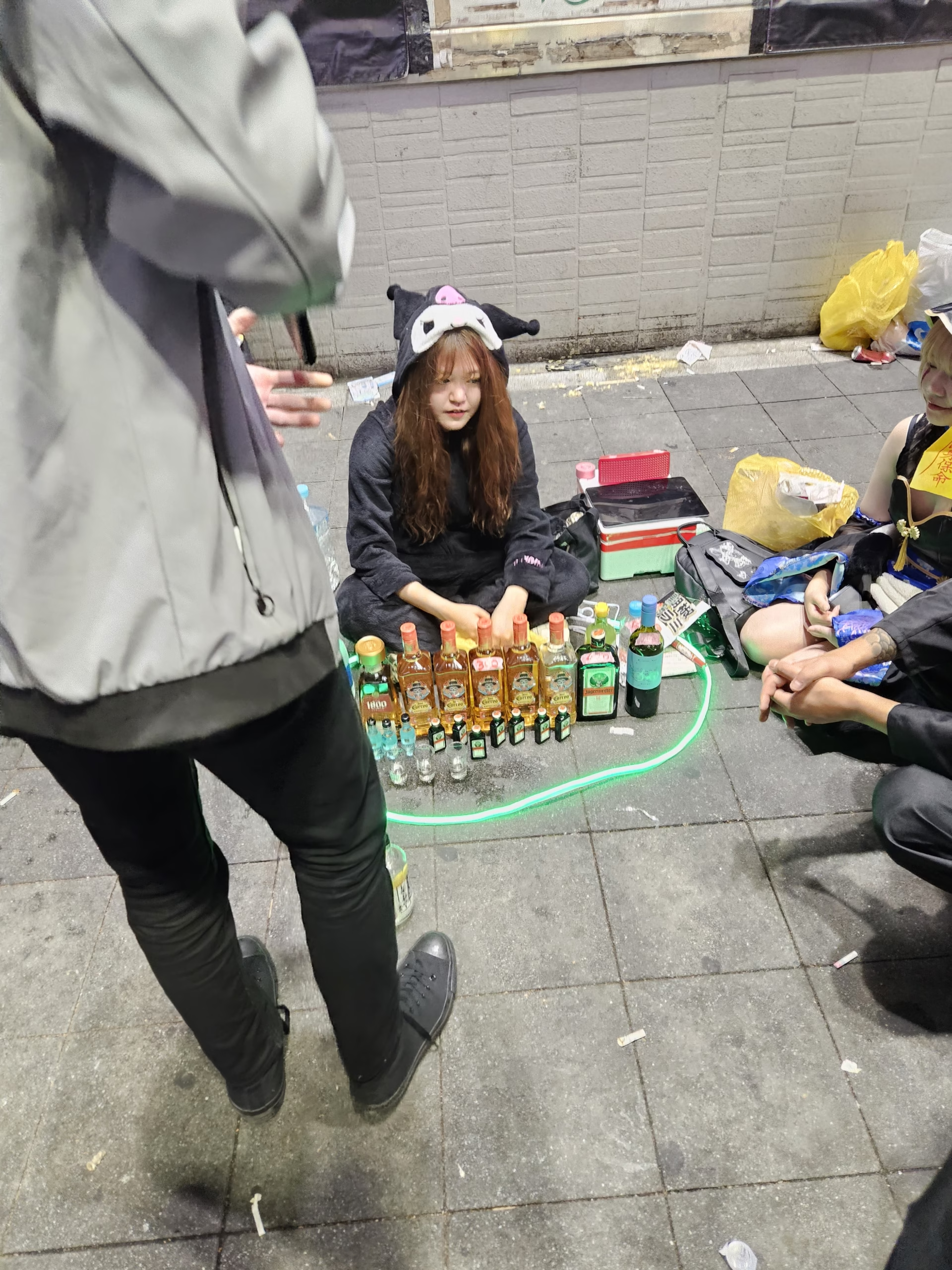
One of the most talked-about phenomena in recent Kabukicho history is the congregation of young people who gather around the area in front of Shinjuku Toho Cinema and Kabukicho Tower. The media began calling them Toyoko Kids (Toyoko because many come from the Tokyu Toyoko train line connecting Tokyo to Kanagawa).
This is not a tourist attraction. It is a visible social problem: young people who have run away from home, left abusive situations, or simply have nowhere to go. Many gather here because it feels safe in numbers. After all, Kabukicho’s 24-hour activity means you can exist here without being moved on, and because aid workers and volunteers regularly bring food to the area.
You will see them, particularly on weekend nights, clustered in groups near the cinema entrance and surrounding areas. Some dress in distinctive fashion: heavy makeup, alt-fashion, cosplay. The image is striking.
Please be respectful. These are often vulnerable young people. Photographing them without permission is not appropriate. The social context speaks to deeper tensions in Japanese society around family pressure, rigid school systems, and the lack of youth support infrastructure.
The presence of the Toyoko Kids has also attracted predatory adults looking to exploit them.
Kabukicho for Halloween: Tokyo’s Best Spot
If you are in Tokyo in late October, Kabukicho is non-negotiable.
Shibuya Crossing was the traditional home of Tokyo Halloween, but the area has increasingly cracked down in recent years: barriers, police, restrictions on alcohol in the streets, and outright bans on costumes in some blocks. Kabukicho has no such restrictions, and the Halloween energy has partly migrated here as a result.
On Halloween weekend, the entire district transforms. Elaborate costumes, themed bar pop-ups, events at clubs and live houses, and an anything-goes atmosphere that genuinely rivals what Shibuya used to feel like at its peak. The neon backdrop and the cinematic alleyways make it one of the most photogenic Halloween environments you will find anywhere in Asia.
Halloween in Shinjuku 2-chome
If you are open to an LGBT+ scene, the area, a short walk south of Kabukicho, centred around Shinjuku 2-chome, is the co-star of Tokyo Halloween. Japan’s largest concentration of gay bars is concentrated here, and the community throws some of the most creative, welcoming Halloween events in the city.
Many bars in 2-chome are tiny, some holding only 10 to 15 people, which makes for an intimate experience completely different from a big club night. The locals are warm, the costumes are exceptional, and the overall atmosphere is inclusive in a way that can feel rare in Japan. The area is worth visiting at any time of year, not just Halloween. For the full Tokyo nightlife picture that connects Kabukicho, 2-chome, Roppongi, and beyond, the Tokyo Nightlife Guide covers it all.
Kabukicho for New Year’s Eve: Where the Countdown Actually Happens Now
If you are in Tokyo on 31 December, Kabukicho is where the street energy is.
Shibuya has cancelled its New Year’s Eve countdown six times now. What began as a Covid safety measure has become an annual policy, with the ward citing rowdy behaviour and street drinking incidents. The Hachiko statue gets fenced off from 6 AM on 31 December, convenience stores stop selling alcohol, and public drinking is banned from 6 PM through 5 AM. The Scramble Crossing, which once drew 120,000 people on New Year’s Eve, now gets police barriers and darkness on the screens at midnight.
Kabukicho has no such restrictions. The district runs 24 hours anyway, and New Year’s Eve is simply another night turned up several notches. The neon does not go dark. The bars do not close. The crowds gather naturally in the streets around the main gate and the fountain plaza, and midnight arrives with noise and energy that Shibuya has been actively trying to prevent for years.
Shinjuku is also stepping into the official void with the Happy New Year Tokyo event at the Tokyo Metropolitan Government Building, featuring large-scale projection mapping, live performances, and an official countdown just after midnight. The building is a ten-minute walk from Kabukicho, which makes it a natural combination: watch the official countdown at the government building, then walk back into Kabukicho for the rest of the night.
For clubs, most venues in and around Kabukicho run ticketed New Year’s Eve events with DJs and open bars. Book in advance if that is the plan — capacity events in this district sell out reliably.
The pattern is the same as Halloween: Shibuya cancels, Kabukicho absorbs the energy. For anyone wanting to actually be on the streets of Tokyo at midnight, Shinjuku is now the default answer.
Izakaya in Kabukicho: Where to Eat and Drink Cheaply
This is where Kabukicho quietly earns its place as one of the best value spots in all of Tokyo.
Tucked into the grid of alleys and side streets are dozens, arguably hundreds, of izakaya ranging from ultra-cheap to slightly more comfortable sit-down spots. The intense competition keeps prices low in a way you simply do not see in Ginza or Shibuya.
What Is an Izakaya
A classic izakaya is a casual Japanese pub that serves food alongside drinks. Think skewers (yakitori), edamame, karaage chicken, gyoza, grilled fish, cold tofu. It is designed for long, relaxed sessions: order a bit, drink a bit, order more. The culture is convivial and unpretentious.
The Drink to Know: Lemon Sour
The lemon sour (レモンサワー) is a highball of shochu, soda water, and lemon: refreshing and dangerously drinkable. In the competition-heavy izakaya scene around Kabukicho, half-litre glasses start from around 80 yen. Standard prices run 150 to 300 yen even outside of promotions. By any international standard, essentially free.
Standing Bars: The Best Value in the Area
If you want to understand how locals actually drink in Shinjuku, standing bars are the answer. You stand at a counter, drinks are poured quickly, and you get the full izakaya experience at the lowest possible price point. I have put together a full guide to standing bars in Shinjuku with specific spot recommendations, including several in and around Kabukicho that I keep returning to.
Sit-Down Izakaya
For sit-down spots, the streets immediately behind the main Kabukicho gate and around the cinema area have solid options at every price point. Look for hand-written signs, plastic food displays, and slightly scruffy facades. These are reliable indicators of a place that spends its budget on food and drink rather than interior design.
Omoide Yokocho (Memory Lane)
Technically adjacent to Kabukicho rather than inside it, Omoide Yokocho is a narrow alley of tiny yakitori stalls dating from the post-war era. It is touristy now but earned that reputation. Grilled skewers, blue smoke, tiny stools, strangers sharing tables.
Girls Bars: What They Are and Why They Are on Every Block
Walk through Kabukicho for ten minutes and you will see them: small, brightly lit bars with female staff visible through the glass, often in conversation with a male customer at the counter. Signs outside advertise low door charges (500 to 1,500 yen) and cheap drinks.
These are Girls Bars (ガールズバー).
A Girls Bar is a legitimate, legal establishment. The concept is straightforward: you pay for drinks and light conversation with female staff who stand on the other side of the bar counter. There is no physical contact. The counter acts as a literal and psychological barrier, placing these establishments firmly apart from hostess clubs or anything more intimate.
The appeal is accessibility. You do not need to be a big spender. You do not need a reservation or an introduction. You walk in, pay a set cover charge, drink, chat, and leave. The conversation is light, the staff are trained to be cheerful and engaging, and the whole transaction is transparent.
What to expect in practice: Most Girls Bars run on a set system, for example 1,000 yen for one hour including one drink. Additional drinks are priced separately. Time limits keep the turnover moving. You will often chat briefly with multiple staff members during a session.
Are they a scam? No, provided you understand what you are paying for. The problem comes when people mistake them for something else, or get drawn by misleading advertising into a much more expensive establishment. Stick to Girls Bars with clear, visible pricing on the door and you will have a straightforward experience.
They appear on almost every block in Kabukicho. For many office workers, they are simply a low-pressure way to have a drink after work. They are part of the social fabric of the district.
Maid Cafes (メイドカフェ)
Maid cafes exist in Kabukicho, but do not expect Akihabara density. Most of the maid cafes in Tokyo are concentrated in Akihabara, which is the established home of otaku culture, you will find dozens there within a few blocks. In Kabukicho you might spot one or two, usually on upper floors with a handwritten sign and a maid handing out flyers at street level. The concept is the same: staff dressed in French maid uniforms greet you as “master” or “princess,” serve drinks and food, draw pictures on your omelette, and occasionally perform songs or dances. It is wholesome, theatrical, and quite unlike anything else in the nightlife district surrounding it. If the maid cafe experience is specifically what you are after, Akihabara is the right destination rather than a Kabukicho detour. But if you stumble across one here and are curious, the pricing is typically transparent and the experience is low-pressure by Kabukicho standards. The full maid cafe guide here covers what to expect, how the pricing works, and which spots are worth your time.
Host Clubs: The Glamour and the Dark Reality
Host clubs are Kabukicho’s most distinctive and most discussed contribution to global nightlife. You have probably seen the photos: young men with elaborate hairstyles, designer suits, and a theatrical elegance that sits somewhere between a J-pop group and a Versailles ballroom.
The basic model: female customers pay for the company and attention of male hosts. The hosts pour drinks, flatter, engage in conversation, and work to become the customer’s chosen favourite. The economics involve expensive champagne towers, “shimei” fees (choosing a specific host costs extra), and a social dynamic that encourages regular return visits. For devoted regulars, bills can reach extraordinary amounts over time.
The top hosts in Kabukicho are genuinely famous within the industry. Some have social media followings in the hundreds of thousands. The competitive world of host ranking, where monthly sales figures are publicly displayed on boards outside establishments, has its own culture and celebrity.
The Dark Side: Debt, Exploitation, and Okubo Park

Okubo Park on a rainy night – the street prostitution the area has become known for, directly linked to the host club debt crisis a short walk away in Kabukicho.This is the part that rarely appears in travel content. It needs to be said directly.
A well-documented pattern exists in which hosts actively approach and recruit vulnerable young women. The recruitment is relational: a host befriends a girl, shows her attention and affection, invites her to the club, and over time builds emotional dependency. The nature of the host club system means her bills accumulate.
When the debt becomes unmanageable, some women are directed, pressured, or actively coerced into street prostitution to pay it off. Okubo Park, a small park a short walk north of Kabukicho near Shin-Okubo station, has become notorious as a location where this plays out. Women stand there at night, often visibly young, often in circumstances they did not choose.
This pipeline, from vulnerable girl to host club customer to debt to street work, has been documented by Japanese investigative journalists, NGOs working with at-risk youth, and the Tokyo Metropolitan Government. Legislation targeting host clubs that profit from this cycle was strengthened in 2024, but the problem persists.
If you visit Kabukicho and see the glamour of the host clubs from the outside, this is the context it exists within. It does not make the entire industry criminal, but it makes the exploitation of the most vulnerable people in the district a structural feature rather than an isolated exception.
Yakuza History in Kabukicho: The Real Story
The yakuza shaped Kabukicho from its earliest days as an entertainment district. Tosei-kai (東声会), a group with roots in the Korean-Japanese community, was dominant here from the 1950s. They were later outcompeted by the larger Sumiyoshi-kai (住吉会), one of Japan’s three largest boryokudan (violent groups, the legal term for yakuza organisations).
At their peak, the groups controlled protection fees from bars and businesses, illegal gambling operations, recruitment pipelines into adult entertainment, and loan sharking targeting both customers and workers in the mizu shobai.
The 2004-2006 crackdown reduced overt activity dramatically. By the 2010s, Japan’s boryokudan exclusion ordinances (暴力団排除条例) made it illegal for businesses to knowingly deal with yakuza members, cutting off major legitimate income streams. Today’s presence is primarily organisational. The visible enforcement and blatant criminality of previous decades have gone underground.
The men in suits you occasionally notice standing quietly outside certain establishments are a remnant of this history. Yakuza in modern Japan are largely trying to stay invisible rather than dominant.
Tattoos, which in Japan carry a historical association with yakuza membership, are another related cultural thread worth understanding before your visit. The tattoos in Japan guide covers the onsen rules, the social history, and the modern reality.
The Nigerian Tout Scam: What You Will Face and How to Handle It
Let’s be direct, because this matters.
As you walk through the main streets of Kabukicho, particularly around the central fountain area and the streets immediately behind it, you will almost certainly be approached by men working as touts for various establishments. Many are Nigerian or West African nationals. They are there because it is a job, and they are very good at it.
The pitch goes like this: “Hey, where are you from? Good timing my friend. We have a special for foreigners tonight: free first drink, beautiful ladies, very cheap.”
They are friendly, relaxed, often funny, and speak multiple languages. The establishments they direct you toward are not free and not cheap.
The common scam structures work like this. Bait and switch pricing means the bar charges far more than quoted once you are inside. Bills of 30,000 to 80,000 yen for one drink plus undisclosed table charges have been reported repeatedly. Fake or confusing menus may be presented in a foreign language or structured so prices are unclear until the end. Aggressive collection at some establishments means staff will not allow you to leave until you pay, which crosses into extortion territory and has been reported to police.
How to protect yourself:
- Do not follow touts. This is the only reliable protection. If you want a bar, find one yourself.
- If someone approaches you, stay polite and keep walking.
- If you do enter somewhere unexpectedly, confirm all charges in writing before you sit down.
- If you feel unsafe or are being prevented from leaving, call the police on 110 or contact the Tokyo Metropolitan Police Foreign Consultation Line on 03-3503-8484.
The vast majority of crime that tourists experience in Kabukicho is in this category. Muggings and physical violence are extremely rare. Your risk is financial, and it is entirely avoidable with prior knowledge.
The presence of these touts is an open secret and a recurring issue. Police periodically increase enforcement, particularly around major holidays. But the touts return. Knowing about them before you arrive is your best defence.
Kabukicho Tower: The District’s New Centrepiece
Tokyo Kabukicho Tower, opened in 2023, is a 48-storey mixed-use skyscraper that now dominates the district skyline. It contains a cinema multiplex (the successor to the cinema long associated with the Toyoko Kids gathering area), live performance venues, hotels, and restaurants across multiple floors.
The restaurants and bars inside the tower are priced higher than what you will find in the alleys, this is deliberate, aimed at a different demographic. But the building itself is worth walking through. The architecture is genuinely impressive, and it has already become a defining feature of the Kabukicho visual landscape.
Robot Restaurant and Its Replacements
Robot Restaurant closed permanently in 2020, and the same team behind it opened its direct successor in late 2023: Samurai Restaurant Time, in the same Kabukicho location, run by the people behind Gira Gira Girls, a girls bar in the same building. Expect stage fighting, live music, elaborate festival floats, taiko drums, and dancers in outrageous costumes telling a story that is deliberately hard to follow, figuring out what is happening is part of the fun. Shows run at roughly 10:50 AM, 2:00 PM, and 4:30 PM and last about an hour and 40 minutes. Tickets run 9,000 yen in advance or 10,000 yen on the day, which includes a meal option, bento boxes, ramen, udon, or sushi.
Kujira Entertainment is the one to know. It is a cyberpunk-themed cabaret bar where the evening is punctuated by performances from showgirls, barmen, and killer clowns, with the performers circulating between shows to take orders and chat with customers. It is open every night from 9 PM until 5 AM, drinks are priced reasonably, and it sits in the basement of the Furinkaikan building at 2-23-1 Kabukicho. It consistently ranks among the top nightlife attractions in the district on Tripadvisor with nearly 760 reviews. This is not a tourist trap. It is a genuine local venue that happens to be foreigner-friendly.
Decabar Z is for a different kind of night. It describes itself as an alternative bar where all subcultures can meet, the only place where a Japanese salaryman has drinks alongside gothic rock bands, Harajuku Lolitas and Gyarus, and classical orchestra conductors. Run by the team behind the longstanding Tokyo Decadance parties, it hosts themed nights regularly, the owner Adrien le Danois has been running it for years, and the bar is open most evenings with no table charge. Drinks run on a ticket system: two tickets for 1,000 yen, seven for 3,000 yen, which is genuinely expensive by Tokyo standards. Theme nights range from 80s synth to S&M evenings to comedy nights.
Kabukicho on a Budget: A Realistic Night Out
One of the most persistent myths about Tokyo nightlife is that it is expensive. In Kabukicho, the opposite is closer to the truth, provided you know where to go and what to avoid.
The district runs on competition. Hundreds of izakaya and bars are packed into a small area, all fighting for the same customers. That pressure keeps prices lower here than almost anywhere else in central Tokyo. A cheap izakaya chain like Torikizoku prices every item at 350 yen, making it possible to eat and drink well for under 2,000 yen without trying particularly hard. At the sharper end of the budget spectrum, places like Medaka in Kabukicho have become local legends for pricing beers as low as 100 to 180 yen depending on the day, and some of the narrower izakaya tucked into the side streets price highballs at 150 yen and lemon sours at 50 yen.
The catch is knowing which buildings to walk into. The bright, English-signposted places on the main drag are priced for tourists. The cheap ones are up stairs, in basements, or in alleys, identified by hand-written signs, plastic food displays outside, and the presence of actual Japanese salarymen at the counter.
Nomihodai (all-you-can-drink) is your other tool. Many izakaya in the area offer two-hour all-you-can-drink courses starting around 1,500 to 2,000 yen per person, usually including unlimited beer, shochu highballs, and lemon sours. Add a tabehodai (all-you-can-eat) option and you can eat and drink as much as you want for two hours for around 3,000 to 3,500 yen. This is the format that most groups of Japanese office workers use on a weeknight.
Here is a realistic breakdown for one person doing Kabukicho properly:
| Item | Cost |
|---|---|
| Train to Shinjuku | 200-400 yen |
| Standing bar drinks (2-3) | 400-800 yen |
| Izakaya food and drinks (2 hours) | 1,500-2,500 yen |
| Lemon sour happy hour | 80-200 yen per glass |
| Late-night ramen | 700-1,000 yen |
| Total | approx. 3,000-5,000 yen but you easy can spend 50 000 yen here |
That is roughly 15 to 25 GBP or 20 to 35 USD for a full evening out, including food and multiple drinks. Compared to equivalent nights in London, Sydney, or Zurich, it is remarkable. This accessibility is a large part of why Kabukicho draws such a wide cross-section of people.
My Google Maps List: Where I Actually Go
Over years of living in Tokyo and exploring Kabukicho seriously, I have built a curated Google Maps list of my favourite spots in and around the district: the izakaya I keep returning to, the bars without tourist pricing, the alleys that most first-timers walk straight past.
This list is available to newsletter subscribers only.
Subscribe to our newsletter!
Sign up below, and you will receive the link immediately. No spam, just occasional updates when I add somewhere new or when something closes. In Kabukicho, turnover is high and the list needs updating regularly.
Day vs. Night: When to Visit
During the day, Kabukicho is quiet and frankly somewhat grungy in flat afternoon light. This is the best time to explore its architectural texture: the layered signage, the cramped stairwells leading to upstairs bars, the shrines tucked between love hotels. Hanazono Shrine on the western edge of the district has been here since the Edo period and offers a genuinely striking contrast to its surroundings.
After 10 PM is when Kabukicho earns its reputation. The neon is at full intensity, the alleys fill up, and the full cast of the district’s characters is present. The energy peaks around midnight on weekends.
For izakaya specifically, the sweet spot is 7 to 9 PM on weekdays, when you can usually get a seat without waiting, and prices are at their most competitive.
Kabukicho vs. Roppongi vs. Shibuya vs. Ikebukuro: Which to Choose
This question comes up constantly and deserves a proper answer rather than a dismissal. All four are legitimate Tokyo nightlife districts. They are not interchangeable.
Kabukicho is Japanese nightlife culture in concentrated form: host clubs, izakaya, mizu shobai, cheap drinks, dense crowds, and a local clientele that includes everyone from salary workers on a Tuesday to cosplay groups on a Saturday night. It has the most layers, the most history, and the widest price range of any district in the city. If you have one night and want to understand something real about how Tokyo’s entertainment culture actually works, this is the right choice.
Roppongi is the traditional expat and foreigner-heavy nightlife area, with large clubs, international DJs, and a crowd that skews heavily toward tourists and English-speaking residents. It is more expensive and more polished, and has its own tout problem that rivals Kabukicho. The difference is that Roppongi’s touts are leading you toward overpriced clubs rather than unlicensed bars. If you want to dance to Western music in a large venue and speak English all night, Roppongi is the path of least resistance. If you want to actually experience Tokyo nightlife, it is probably the worst place to start.
Shibuya is the best answer if clubs and music are the priority. Within ten minutes of the Scramble Crossing you can find a world-class techno club, a 300-yen beer at a standing bar, a late-night ramen counter, and a quiet second-floor whisky bar. WOMB is the benchmark venue, serious techno and electronic nights that rival Berlin clubs for sound quality and DJ bookings. Shibuya skews younger and more fashion-forward than Kabukicho, with less of the mizu shobai culture and more of a pure club and bar scene. It is also considerably less confusing to navigate as a first-timer. The tradeoff is that it lacks the depth and strangeness that makes Kabukicho genuinely interesting.
Ikebukuro is Tokyo’s most underrated and least tourist-heavy option. It is a genuine locals’ scene, less tourist-facing than Roppongi or Shibuya, cheaper than Shinjuku, with a distinct energy rooted in the neighbourhood’s working-class history and anime and manga subculture. It is considered Tokyo’s second-largest red-light district after Kabukicho, though the adult entertainment is concentrated around the north exit and is easy to avoid if that is not what you are after. The west exit side streets have some of the best-value izakaya in the city and a local atmosphere that feels genuinely unperformed. The downside is that you will not find the overwhelming scale of Kabukicho here — it is a more localized array of cozy izakaya, small cocktail bars, and standing ramen shops.
The short version: Kabukicho for depth and culture, Shibuya for clubs and music, Ikebukuro for locals and budget drinking, Roppongi if you specifically want the expat scene and do not mind paying for it. The Tokyo Nightlife Guide covers all four in detail alongside Shimokitazawa, Nakameguro, and the rest of the city’s nightlife map.
What Is Nearby
Golden Gai
A short walk east of the main Kabukicho grid, Golden Gai is one of the most historically loaded pieces of real estate in Tokyo. Six narrow, ramshackle alleys crammed with over 200 tiny bars, some large enough for only four or five customers. The buildings are architectural survivors — what remains of the black market architecture of the 1950s.
Golden Gai’s history begins in 1945 in the wake of the Second World War, when it had a reputation for black market trading and prostitution. The two-story wooden buildings that still stand today were originally brothels. By the 1960s it had transformed into a gathering place for writers, editors, film directors, actors, and cultural figures who became regulars at the literary bars known as bundan-bars. This clientele formed one of the origins of Tokyo’s subculture and underground arts scene.
Then came the bubble economy, and with it an existential threat. In the 1980s, developers eyed Golden Gai’s prime location and there were attempts by the yakuza to burn it down to clear the way for redevelopment. The community fought back. Residents and bar owners formed the Shinjuku Hanazono Golden Gai Preservation Society, taking turns guarding the alleys at night. Their resilience paid off, and Golden Gai survived, cementing its status as a symbol of Tokyo’s ability to preserve its heritage amid rapid change.
Today it is one of the last places in the entire city where you can drink in a building that predates the economic miracle. Many bars have specific themes: jazz, film, particular music genres, manga. The atmosphere is intimate, analogue, and completely unlike anything else in Shinjuku. Foreigners are welcome at most bars — look for English signs on the door, as some smaller spots are regulars-only. Do not photograph inside without asking.
Omoide Yokocho
Most people know Omoide Yokocho as the yakitori alley near Shinjuku Station. Fewer know what it actually is.
It dates back to the late 1940s, with post-war black market roots — tiny shops originally selling goods and food to a recovering, desperate population. Vendors sold food, drinks and daily necessities like clothing and soap that were hard to find elsewhere. The dishes that became the alley’s speciality, broiled pig and beef offal, were popular precisely because they were not rationed. There were no proper licences, no hygiene rules, and for years no toilets either, which is why the alley earned its other name: Piss Alley. That nickname still appears on older maps and some bar signs, worn as a badge of honour.
Much of the original structure was actually rebuilt in 1999 after fire tore through it, so what you are walking through is not literally the 1940s, but the layout, the scale, and the atmosphere are faithful reconstructions of what was there. Many restaurants still pass down original recipes from generation to generation.
Today it is about 60 bars and yakitori stalls crammed into alleys barely wide enough for two people to pass. Charcoal smoke, low stools, strangers sharing tables, skewers of chicken and offal arriving on small plates. It is touristy now, there is no getting around that, but it earned the attention. Go in the evening when the smoke is thick and the salarymen have arrived after work. Walk the whole length first before sitting down anywhere. Many stalls have no English menu and limited space; pointing works fine.
Shinjuku Gyoen
The morning after a night in Kabukicho, Shinjuku Gyoen is where you go to remember that Tokyo contains silence.
The land’s history dates to the Edo period, when it was the estate of a feudal lord. It was originally granted to Kiyonari Naito by Tokugawa Ieyasu in 1590. After the Meiji Restoration it became an agricultural experimental station, then an imperial botanical garden, and finally was completed in 1906 as an imperial garden after being redesigned by Henri Martinet, a professor at the Versailles horticultural school, combining formal French and English landscape styles with a traditional Japanese garden. After the Second World War it was re-designated as a national garden and opened to the public.
What you get today is 58.3 hectares combining three distinct garden styles: a traditional Japanese garden, a formal French garden, and an English landscape garden, all within a ten-minute walk of one of the loudest nightlife districts in Asia. The contrast is jarring in the best possible way.
It is home to around 70 varieties and roughly 900 cherry trees, making it one of Tokyo’s most celebrated hanami spots, with early to late-blooming varieties extending the season from late March into late April. Admission is 500 yen. The cherry blossom guide here covers the best spots within the garden and what to expect at peak season.
Shin-Okubo (Koreatown)
A ten-minute walk north of Kabukicho, Shin-Okubo is one of the most interesting short detours in the Shinjuku area, and one that most first-time visitors skip entirely.
The Korean community began forming here in the 1950s, when the Lotte Corporation established a factory near Shin-Okubo Station. Lotte was founded by Shin Kyuk-ho, a South Korean national who had migrated to Japan, and the factory drew an influx of Korean workers into the neighbourhood. During the economic bubble of the 1980s, the nearby Kabukicho district was booming and many Koreans came to work there while living in the more affordable Shin-Okubo.
It was the 2002 FIFA World Cup, co-hosted by Japan and South Korea, and the massive popularity of Korean TV dramas like Winter Sonata that transformed Koreatown from a residential enclave into a tourist destination. What followed was the full Hallyu effect: K-pop shops, Korean cosmetics chains, cheese dak-galbi restaurants, and food stalls selling tteok and hotteok to queues of Japanese teenagers. The neighbourhood has not lost its original character in the process, Korean language schools, churches, and long-established grocery stores still anchor it.
More recently, the area has attracted Vietnamese, South-East Asian, and Middle Eastern communities too, with a halal food cluster known as Islam Yokocho establishing itself in the backstreets. It is increasingly a genuinely multinational neighbourhood rather than a single-culture destination.
For a Kabukicho visit, Shin-Okubo works best as an early evening stop before the nightlife kicks in: Korean BBQ for dinner, a food stall or two on the way out, then walk back south into Kabukicho as it wakes up.
Safety in Kabukicho: The Honest Picture
Tokyo is one of the safest large cities on earth, and Kabukicho is no exception despite its reputation. Violent crime is extremely rare. The real risks here are specific: financial scams (the tout situation covered above), and overspending in establishments with unclear pricing.
For a broader picture of Tokyo safety, including areas to be thoughtful about and the many things that are genuinely not concerns, see: Is Tokyo Safe for Tourists?
Practical Information
Address: Kabukicho 1-chome and 2-chome, Shinjuku-ku, Tokyo
Nearest station: Shinjuku Station (East Exit), 4 min walk
Also accessible from: Shinjuku-Sanchome Station (Exit C8)
Active hours: 24 hours; peak activity 9 PM to 3 AM
Best days to visit: Thursday to Saturday for maximum atmosphere
Language: Predominantly Japanese; some English at tourist-oriented venues
Cash: Most izakaya and smaller bars are cash only. Bring yen.
ATM: 7-Eleven stores throughout the district have international ATMs.
Is Kabukicho Worth Visiting? Here’s the Honest Answer
Kabukicho rewards people who arrive knowing what they are looking at. The tourist without context gets overwhelmed, possibly gets scammed, and leaves thinking it was mostly neon and noise. The person who arrives informed finds one of the most layered, fascinating urban experiences in Japan.
The cheap izakaya, the extraordinary Halloween energy, the Toyoko Kids gathering near the cinema, the Girls Bars on every corner, the faded yakuza history in the architecture, the host clubs that exist in a world entirely their own, the park nearby where some of the darker consequences of that world play out — all of it is here, layered on top of each other, in a few square blocks of Shinjuku.
I keep coming back. Most people who give it a real chance do too.
The Google Maps list with my specific favourite spots is available to newsletter subscribers below. If you have questions about specific places or want to know whether somewhere is worth visiting, leave a comment, and I will answer.
Subscribe to my newsletter!
Author

Get My Personal Travel Maps
Keep Reading: More Articles You'll Love
 Halloween in Tokyo: From Shibuya to Shinjuku and Beyond
  Living in Tokyo vs Zurich – The Ultimate Expat Guide
  Is Tokyo Really Safe? What I Learned Living Here for 3 Years
  Is Japanese Food Actually Chinese? The Surprising Origins of Japanese Cuisine
  Christmas in Roppongi: Winter Illuminations, Market & Tokyo Tower Views
  The Ultimate Guide to the Best Furniture Stores in Tokyo: MUJI vs. Nitori vs. IKEA
  Standing Bars in Shinjuku: The Ultimate Guide to Tokyo’s Cheapest and Most Authentic Night Out