
This post contains affiliate links. If you book through them, I may earn a small commission at no extra cost to you. More about this.
Planning a Japan itinerary is the hardest part of the trip. There is so much to see that it is tempting to cram ten cities into ten days, and many first-time visitors end up spending more time on trains than enjoying the places. I lived in Tokyo for three years and travelled all over the country, from Hokkaido to Kyushu, so this guide gives you realistic routes for 7, 10 and 14 days, with travel times, where to sleep and what to skip.
Japan Itinerary at a Glance
- 7 days: Tokyo (3 nights), Kyoto (3 nights), day trip to Nara or Osaka.
- 10 days: Tokyo, Hakone or Mount Fuji, Kyoto, Osaka and Nara.
- 14 days: the 10-day route plus Hiroshima and Miyajima, or the Japan Alps.
- Golden rule: at least two nights per base, and no more than one long train ride per day.
- Fly in and out: into Tokyo and out of Osaka (Kansai) saves a full day of backtracking.
Before You Plan: How Japan Travel Works
- The Shinkansen links Tokyo, Kyoto, Osaka and Hiroshima. Tokyo to Kyoto takes about 2 hours 15 minutes, Kyoto to Hiroshima under 2 hours.
- Open-jaw flights (arrive Tokyo, leave Osaka, or the other way round) are often similar in price and save time.
- Luggage forwarding (takkyubin) lets you send suitcases between hotels for a few thousand yen, so you travel light on trains.
- JR Pass: only worth it for routes with several long trips. For a simple Tokyo to Kyoto to Osaka route, single tickets are often cheaper. I explain the numbers in how much a trip to Japan costs.
- Book hotels early for cherry blossom season, Golden Week and autumn leaves.

7-Day Japan Itinerary: Tokyo and Kyoto
One week is enough for the two most important cities. Do not try to add more; you will enjoy Tokyo and Kyoto much more with time to wander.
| Day | Plan | Sleep in |
|---|---|---|
| 1 | Arrive in Tokyo, explore Shinjuku in the evening | Tokyo |
| 2 | Asakusa and Senso-ji, Ueno, Akihabara | Tokyo |
| 3 | Meiji Shrine, Harajuku, Shibuya; evening in Shinjuku or Golden Gai | Tokyo |
| 4 | Shinkansen to Kyoto; Fushimi Inari in the afternoon | Kyoto |
| 5 | Kiyomizu-dera, Higashiyama, Gion in the evening | Kyoto |
| 6 | Day trip to Nara (deer and Todai-ji) or Arashiyama in the morning | Kyoto |
| 7 | Osaka for Dotonbori street food, fly out from Kansai | – |
For Tokyo, my list of things to do in Tokyo and where to stay in Tokyo help you plan the first days. For Kyoto, see my best places to visit in Kyoto and the 3-day Kyoto itinerary.
Popular Tokyo tickets and tours:
10-Day Japan Itinerary: Tokyo, Mount Fuji, Kyoto and Osaka
With ten days you can add Mount Fuji or Hakone and a proper stay in Osaka. This is the route I recommend most to first-time visitors.
| Days | Where | Highlights |
|---|---|---|
| 1 to 3 | Tokyo | Asakusa, Shibuya, Shinjuku, a local neighbourhood like Kichijoji or Koenji |
| 4 to 5 | Hakone or Lake Kawaguchiko | Mount Fuji views, onsen, ryokan night |
| 6 to 8 | Kyoto | Fushimi Inari, Kiyomizu-dera, Gion, Arashiyama, Nara day trip |
| 9 to 10 | Osaka | Dotonbori, Osaka Castle, street food, fly out from Kansai |
For the Fuji part, choose between Hakone with its onsen and ropeway, or Lake Kawaguchiko for the classic Fuji views. A Hakone Freepass covers most transport in the Hakone area. From Hakone, take the Shinkansen from Odawara to Kyoto. In Osaka, my Osaka travel guide covers food, Dotonbori and a Nara day trip.
Compare hotels for each stop of your route:

14-Day Japan Itinerary: Add Hiroshima or the Japan Alps
Two weeks give you time for one more region. Choose based on your interests.
Option A: Hiroshima and Miyajima
| Days | Where |
|---|---|
| 1 to 4 | Tokyo, with a day trip to Kamakura or Nikko |
| 5 to 6 | Hakone or Kawaguchiko |
| 7 to 9 | Kyoto and Nara |
| 10 to 11 | Osaka |
| 12 to 13 | Hiroshima and Miyajima |
| 14 | Fly out from Hiroshima, Osaka or back via Tokyo |
Hiroshima is about 1 hour 30 minutes from Osaka by Shinkansen. The Peace Memorial Park is a powerful visit, and the floating torii of Miyajima is one of Japan’s most famous views. See my Hiroshima travel guide and do not miss Okonomimura for Hiroshima okonomiyaki.
Option B: The Japan Alps and Nagano
| Days | Where |
|---|---|
| 1 to 4 | Tokyo |
| 5 to 6 | Nagano: Zenko-ji and the snow monkeys |
| 7 to 8 | Matsumoto and Kamikochi (summer) or skiing (winter) |
| 9 to 10 | Takayama and Shirakawa-go |
| 11 to 13 | Kyoto |
| 14 | Osaka, fly out from Kansai |
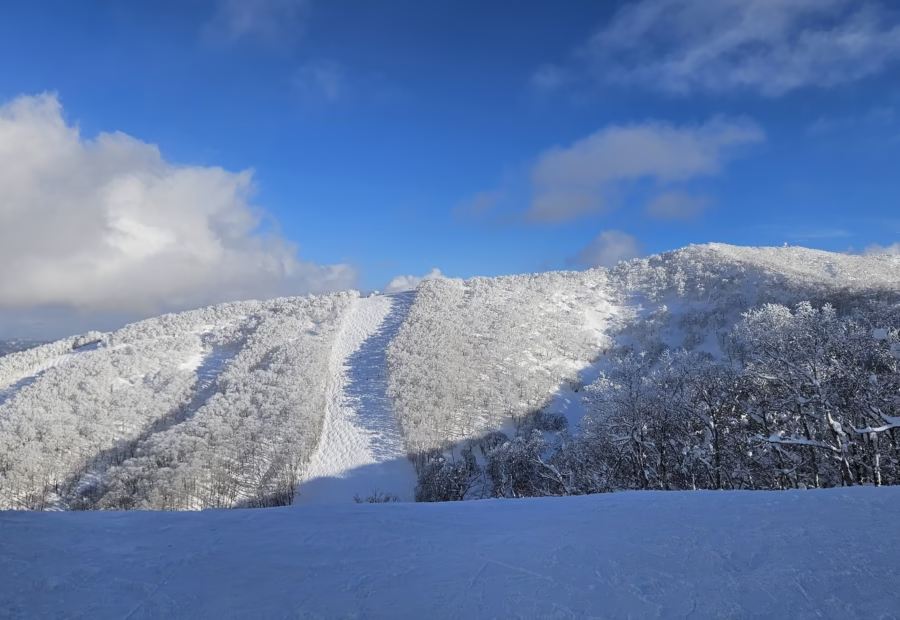
This route shows you rural Japan, mountains and traditional towns. Use my guides to Nagano, the snow monkeys, Matsumoto and Shirakawa-go. In winter, add a ski day; my guide to skiing in Japan shows the options.
Other Routes for Repeat Visitors
- Hokkaido in winter: Sapporo, the Snow Festival, Otaru and ski resorts.
- Kyushu road trip: volcanoes, onsen and the countryside, see my Kyushu road trip and Beppu onsen guide.
- Kanazawa and the Japan Sea coast: gardens, samurai districts and seafood, see my Kanazawa guide.
- Rural Japan: ideas in my countryside guide.

What to Skip on a First Trip
- Trying to see Tokyo, Kyoto, Osaka, Hiroshima, Hakone and Nikko in one week.
- Changing hotels every night.
- Day trips longer than 2 hours each way from your base.
- Booking a JR Pass without checking if your route needs it.
- Visiting famous Kyoto temples only in the middle of the day; go early or late.
Practical Tips for Your Japan Itinerary
- Get mobile data before you land; I compare the options in eSIM vs pocket WiFi.
- Book Shinkansen seats with large luggage space in advance if you carry big suitcases.
- Plan one slow day per week with no fixed program.
- Check the season: cherry blossom, rainy season and typhoon season change your plans. See my guide to the best time to visit Japan.
- Learn a little etiquette before you go; my Japan etiquette guide covers the basics.
For transport on this route, see is the JR Pass worth it? and my Suica and IC card guide, and pack with my Japan packing list.
Frequently Asked Questions About Japan Itineraries
How many days do I need in Japan?
For a first trip, 10 to 14 days is ideal. One week is enough for Tokyo and Kyoto with a day trip, but you will feel rushed if you try to add more.
What is the best Japan itinerary for first-timers?
Tokyo, then Hakone or Mount Fuji, then Kyoto and Osaka, with a day trip to Nara. It covers modern Japan, nature and traditional culture with short train rides.
Should I fly into Tokyo or Osaka?
Either works. The best option is often an open-jaw ticket: arrive in Tokyo and leave from Osaka (Kansai), or the other way round, so you do not have to travel back.
Is the JR Pass worth it for a 7-day trip?
For Tokyo and Kyoto only, usually not. It becomes worth it if you add long trips like Hiroshima and back within the same week.
How long should I stay in Tokyo?
At least three nights, ideally four. Tokyo is huge, and many highlights are spread across different districts.
How long should I stay in Kyoto?
Three nights is a good minimum. It gives you time for Fushimi Inari, Higashiyama, Gion, Arashiyama and a day trip to Nara.
Can I do Tokyo and Kyoto in 5 days?
Yes, but it is tight: three days in Tokyo and two in Kyoto. Focus on a few highlights in each city.
Is Osaka worth visiting if I stay in Kyoto?
Yes, especially for food and nightlife. Osaka is only about 15 to 30 minutes from Kyoto by train, so it works as a day trip or a final stop before flying out of Kansai.
Should I include Hiroshima?
If you have 12 days or more, yes. Hiroshima and Miyajima are moving and beautiful, and the Shinkansen makes the trip easy from Osaka or Kyoto.
What is the best season for this itinerary?
Spring (late March to early April) and autumn (November) are the most beautiful but busiest. May and October are a good balance of weather and crowds.
Final Thoughts
The best Japan itinerary is the one with enough time to enjoy each place. Start with Tokyo and Kyoto, add Mount Fuji and Osaka if you have ten days, and choose Hiroshima or the Japan Alps for two weeks. Slow down, leave room for surprises, and you will want to come back. Start planning with the Japan Insider Hub.
Author

Get My Personal Travel Maps


Leave a Reply